Disclosure: airfryerkitchensupply.com is reader-supported. When you buy through links on our site, we may earn an affiliate commission at no extra cost to you.
Where to buy
Shoppers comparing the best blenders for making frozen drinks will find every pick in this guide on Amazon. Frozen drinks punish weak blenders in public: the ice either survives in chunks or the motor gives up mid-pitcher. Every machine below was chosen because it demonstrably turns ice into drink, and each is sold on Amazon where you can confirm the exact pitcher, reservoir and program set before buying.
The six machines in this guide are: Ninja Professional Plus Blender BN701, Blendtec Classic 575, Margaritaville Key West Frozen Concoction Maker, Oster Extreme Mix Blender, Ninja Professional Blender BL610, CRANDDI K96 Professional Smoothie Blender. Check the current price on Amazon for the model you choose, and check price on Amazon again before ordering if you are comparing configurations, because jar sizes, included cups and colors vary by listing.
Introduction: Ice Is an Ingredient, Not an Obstacle
Shopping for the best blenders for making frozen drinks means shopping for ice performance first and everything else second. A frozen drink is a controlled slush: ice crystals small enough to sip through a straw, suspended evenly in liquid that has not been beaten warm or watery. Achieving that in a home jar requires one of two mechanisms — a stacked crushing blade that pulverizes ice mechanically, or a high-speed vortex that shaves ice progressively finer — and enough motor behind the mechanism to finish a full pitcher without stalling.
Density is where frozen drinks differ from their cousins. A frozen lemonade or a frozen coffee is far thicker than a smoothie, and the mixture resists circulation precisely when the blades need it most. Machines cope in different ways: presets pulse the load to keep it moving, wide jars give the slush room to turn over, and dedicated frozen concoction makers sidestep the problem entirely by shaving ice separately and mixing it in. This guide includes all three philosophies, because the right one depends on whether frozen drinks are your weekend ritual or your whole summer.
One expectation to set now: texture targets differ. Straw-smooth slush, spoonable granita-style crystals, and the soft-serve swirl of a bar frozen drink are three different finishes, and no single setting produces all three. The reviews below name which finish each machine favors, so you can match the machine to the drink in your head. Every pick was verified by brand and model; we print no fixed prices — check the current price on Amazon at the listing.
In this guide
Quick Picks
Six ice-capable machines, from the best all-round frozen drink blender to a dedicated concoction maker and a very-large-batch specialist. Badges tell you the finish each one favors.
- Ninja Professional Plus Blender BN701 — Best Overall: Auto-iQ frozen programs and a 72 oz pitcher: the most complete frozen drink package for home kitchens. Check the current price on Amazon.
- Blendtec Classic 575 — Best Slush Texture: A wide WildSide+ jar and preprogrammed cycles that favor fine, even slush texture. Check the current price on Amazon.
- Margaritaville Key West Frozen Concoction Maker — Best Dedicated Frozen Drink Maker: Shaves ice from an XL reservoir and mixes to programmed drink settings — the party specialist. Check the current price on Amazon.
- Oster Extreme Mix Blender — Best Power Value: 1500 watts, anti-jam technology and iBlend auto programs in a 64 oz Tritan jar. Check the current price on Amazon.
- Ninja Professional Blender BL610 — Best Big-Pitcher Value: The original big-pitcher crusher: 1000 watts and Total Crushing blades at a value tier. Check the current price on Amazon.
- CRANDDI K96 Professional Smoothie Blender — Best for Very Large Batches: An 80 oz, 1500-watt commercial-style machine for households that blend frozen drinks by the gallon. Check the current price on Amazon.
How These Picks Were Chosen
Frozen performance was the gate. Each pick had to reduce a full load of ice to a drinkable, straw-friendly consistency without the user stopping to redistribute the jar — the failure mode that defines cheap frozen drinks. We favored machines whose listings confirm the mechanism: crushing blade stacks, preprogrammed frozen cycles, anti-jam systems, or a separate ice-shaving reservoir.
We also weighted batch behavior. Frozen drinks are social drinks; a machine that only manages one serving at a time fails the brief even if that serving is perfect. Every pick here makes at least a multi-serving pitcher, and two of them — the dedicated Margaritaville and the 80 oz CRANDDI — are built specifically around serving a group.
As with every guide in this program, products were verified: searched by brand and model, matched against the returned listing title, ASIN taken from the response. Spec boxes quote only what those titles state. If a claim about ice performance is not in the listing or in the machine’s established design, we do not print it.
The 6 Best Blenders for Making Frozen Drinks — Reviewed in Detail

Ninja Professional Plus Blender BN701 — Best Overall
The Ninja BN701 takes the top badge because it makes frozen drinks the way home hosts actually make them: load the 72 oz pitcher, press a preset, and serve. Its Auto-iQ programs run the pulse-attack-rest pattern frozen mixtures need, and the Total Crushing blade stack attacks ice through the full height of the pitcher rather than only at the bottom.
Strengths
- Auto-iQ presets automate the pulse pattern frozen drinks need
- 72 oz pitcher serves a group in one cycle
- 1400 peak watts as listed keeps full ice loads moving
Trade-offs
- Texture leans slushy-fine rather than spoonable-coarse
- Large pitcher is a sink commitment to wash
- Preset-led controls limit mid-cycle improvisation
| Specification | Detail (as listed) |
|---|---|
| Motor | 1400 peak watts |
| Pitcher | 72 oz |
| Programs | 3 Auto-iQ presets |
| Cleaning | Dishwasher-safe parts |
The stacked blade design is the BN701’s frozen advantage. In a conventional jar, ice at the top waits for gravity; in the Ninja pitcher, blades at several heights cut simultaneously, so the whole load reduces together and the drink finishes evenly instead of layering — slush at the bottom, cubes at the top. For frozen lemonades, frozen coffees and fruit slushes, that evenness is the difference between a drink and a chore.
Its limit is artistry, not ability. If you want to stop a blend at a precise coarse crystal for a granita-style dessert drink, a preset-first machine gives you fewer mid-cycle levers than a variable-speed premium blender. For the overwhelming majority of frozen drink occasions — pitchers, parties, summer afternoons — the BN701’s combination of size, power and automation is the most complete answer here.
Best for: hosts and families making pitcher after pitcher of frozen drinks / Not suited for: single-serving drinkers or coarse-crystal specialists
Check on Amazon — check the current price on Amazon at the listing.

Blendtec Classic 575 — Best Slush Texture
The Blendtec Classic 575 approaches frozen drinks from the opposite direction: a very wide WildSide+ jar, a blunt powerful blade, and four preprogrammed cycles. The wide jar gives thick slush room to turn over, which is why Blendtec frozen drinks tend to finish with a notably even, fine consistency.
Strengths
- Wide jar geometry keeps thick slush circulating
- Four preprogrammed cycles include frozen-drink patterns
- Self-cleaning cycle — frozen sugar residue washes out easily
Trade-offs
- Fine-texture bias; coarse slush needs manual short cycles
- Premium tier positioning
- Wide jar is awkward for very small batches
| Specification | Detail (as listed) |
|---|---|
| Jar | WildSide+ jar (90 oz total capacity as listed) |
| Speeds | 5 speeds |
| Programs | 4 preprogrammed cycles |
| Cleaning | Self-cleaning |
Circulation is the frozen drink problem, and the WildSide+ jar is a circulation answer. The extra width and the jar’s corner design push the mixture back toward the blade instead of letting it ride the walls, so a thick frozen blend keeps folding rather than cavitating — spinning in place around an air pocket while the top sits frozen. Anyone who has shaken a stalled blender mid-pitcher will appreciate a jar designed to prevent exactly that.
Use the preprogrammed cycles as your baseline and manual five-speed control for adjustments: a shorter cycle for a coarser finish, a repeat cycle for extra-fine slush. The self-cleaning program matters here too, because frozen drinks leave sugary films that harden; a machine that washes itself gets used again tomorrow.
Best for: texture-focused makers who want fine, even slush from a full pitcher / Not suited for: buyers wanting the coarsest snow-cone style crystals
Check on Amazon — check the current price on Amazon at the listing.
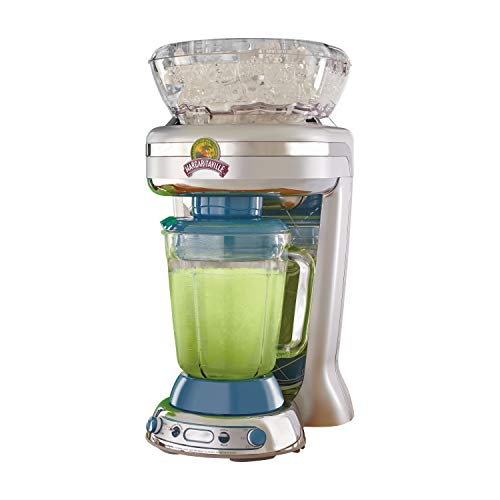
Margaritaville Key West Frozen Concoction Maker — Best Dedicated Frozen Drink Maker
The Margaritaville Key West is not a conventional blender and does not pretend to be: it shaves ice from an XL reservoir and mixes it with your liquid ingredients to one of four programmed drink settings. For frozen drinks as an event — a party where the machine runs all evening — that separation of shaving and mixing is a genuine advantage.
Strengths
- Ice shaving produces bar-style frozen consistency
- XL reservoir supports back-to-back party batches
- Four programmed drink settings standardize results
Trade-offs
- A specialist: not your smoothie or soup machine
- Larger footprint than a standard blender
- Results depend on loading the reservoir and jar correctly
| Specification | Detail (as listed) |
|---|---|
| Programs | 4 programmed drink settings |
| Reservoir | XL ice reservoir |
| Jar | Easy Pour Jar |
Bar frozen drinks taste different because the ice is shaved, not crushed: the crystals are finer and more uniform, so the drink sips smooth instead of crunchy. The Key West reproduces that at home, and the programmed settings hold the ice-to-liquid ratio steady across batches — the second and fifth pitchers taste like the first, which is precisely what a host wants and precisely what freehand blending rarely delivers.
Buy it as a second machine or as a deliberate specialist, not as a household’s only blender. It will not make your morning smoothie or your soup. But judged purely on the frozen drinks brief — repeatable, bar-style frozen drinks for a crowd, with minimal skill required from whoever is operating it — it earns its badge outright.
Best for: party hosts who want repeatable bar-style frozen drinks all evening / Not suited for: anyone needing one blender for every kitchen job
Check on Amazon — check the current price on Amazon at the listing.

Oster Extreme Mix Blender — Best Power Value
The Oster Extreme Mix brings a different kind of frozen insurance: 1500 watts, anti-jam technology, and iBlend auto programs in a 64 oz Tritan jar with a 10-point blade. Anti-jam matters for frozen work because thick slush is exactly where lesser machines seize and demand a stir.
Strengths
- 1500 watts as listed — strong frozen headroom
- Anti-jam technology targets thick-blend stalls
- iBlend auto programs plus a roomy 64 oz jar
Trade-offs
- Less refined manual control than premium rivals
- Value-tier fit and finish
- Tritan jar rather than glass, if that is your preference
| Specification | Detail (as listed) |
|---|---|
| Motor | 1500 watts |
| Jar | 64 oz Tritan jar |
| Blade | 10-point blade |
| Features | Anti-jam technology, iBlend auto programs |
In frozen blending, stalls are not just annoying — they change the drink. Every stop to stir lets friction and room temperature work on the slush, and the restarted blend rarely matches the texture of an uninterrupted one. A system designed to detect and power through resistance keeps the cycle continuous, which keeps the crystals fine and the drink cold. That is the Extreme Mix’s real frozen credential, beyond the wattage headline.
The iBlend programs give beginners a safe starting pattern, and the 64 oz jar is a sensible party size without the storage bulk of the biggest pitchers. Treat it as the power-value pick: near-flagship frozen muscle, a tier below flagship refinement.
Best for: value buyers who want strong, stall-resistant frozen performance / Not suited for: control enthusiasts who blend by ear and dial
Check on Amazon — check the current price on Amazon at the listing.
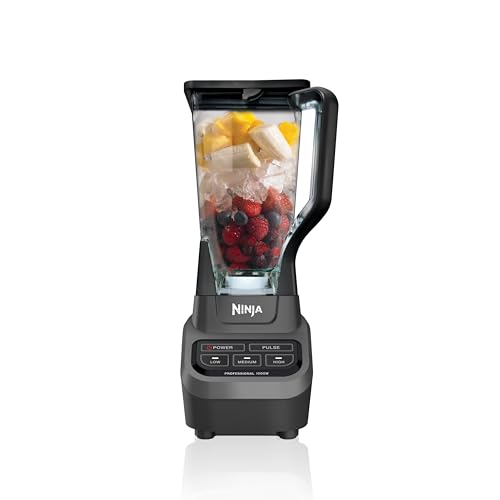
Ninja Professional Blender BL610 — Best Big-Pitcher Value
The Ninja BL610 is the machine that taught a generation of home bars what crushing blades do to ice, and it remains the big-pitcher value benchmark: 1000 watts, Total Crushing technology and a 72 oz pitcher, with dishwasher-safe parts for the morning after.
Strengths
- Proven Total Crushing ice performance
- Full 72 oz pitcher at a value tier
- Simple, durable control scheme
Trade-offs
- No Auto-iQ presets — you run the pulse pattern yourself
- Coarser finish than high-speed vortex machines
- Basic feature set compared with newer Ninjas
| Specification | Detail (as listed) |
|---|---|
| Motor | 1000 watts |
| Pitcher | 72 oz |
| Technology | Total Crushing blade stack |
| Cleaning | Dishwasher-safe parts |
There is a technique to the BL610 and it is simple: pulse in bursts, let the load settle, pulse again, then run steady to finish. Because the blade stack cuts at multiple heights, three or four pulses reduce a pitcher of ice to snow without the bottom turning to water first. Frozen fruit drinks, slushes and big frozen coffees are all squarely in its repertoire, and at pitcher scale it embarrasses many newer, prettier machines.
What you give up versus the BN701 is automation and a measure of finish. Your hands replace the presets, and seed-and-fiber smoothness is not this design’s game. As a dedicated frozen-and-family pitcher at its tier, though, the BL610 remains remarkably hard to beat — which is why it is still here.
Best for: budget-conscious families who will happily pulse by hand / Not suited for: buyers wanting press-and-forget frozen programs
Check on Amazon — check the current price on Amazon at the listing.

CRANDDI K96 Professional Smoothie Blender — Best for Very Large Batches
The CRANDDI K96 closes the list at commercial scale: 1500 watts and an 80 oz capacity, the largest jar in this guide, with a stainless steel blade. This is the pick for frozen drinks made by the gallon — big households, team events, church socials, and anyone tired of blending in shifts.
Strengths
- 80 oz capacity — the largest batch here
- 1500 watts sustains full-load ice crushing
- Commercial-style build brief
Trade-offs
- Oversized for ordinary daily drinks
- Fewer consumer presets and refinements
- Needs storage space smaller kitchens may not have
| Specification | Detail (as listed) |
|---|---|
| Motor | 1500 watts |
| Capacity | 80 oz |
| Blade | Stainless steel blade |
Batch math drives this pick. Four 72 oz pitchers across an afternoon is an hour of blending, washing and reloading; two 80 oz batches is a fraction of that, and frozen drinks served fresh from one big batch taste more consistent than the same recipe made four times. The K96’s power keeps a full, ice-heavy load moving where domestic machines would ask for mercy, and the result is a genuine event machine.
The trade is everyday livability. An 80 oz jar for a two-person Tuesday smoothie is absurd, and the machine’s commercial brief means fewer of the soft touches — named drink programs, personal cups — that consumer models compete on. If your frozen drinking is event-scale, that trade is obviously worth it.
Best for: event-scale frozen drink making and very large households / Not suited for: small kitchens and small batches
Check on Amazon — check the current price on Amazon at the listing.
Comparison Table
Compare finishes as much as specs: the Ninjas crush, the Blendtec circulates, the Margaritaville shaves, and the CRANDDI simply out-sizes the problem. Your preferred frozen texture should drive the choice.
| Pick | Badge | Key spec | Best for |
|---|---|---|---|
| Ninja Professional Plus Blender BN701 | Best Overall | 1400 peak watts | hosts and families making pitcher after pitcher of frozen drinks |
| Blendtec Classic 575 | Best Slush Texture | WildSide+ jar (90 oz total capacity as listed) | texture-focused makers who want fine, even slush from a full pitcher |
| Margaritaville Key West Frozen Concoction Maker | Best Dedicated Frozen Drink Maker | 4 programmed drink settings | party hosts who want repeatable bar-style frozen drinks all evening |
| Oster Extreme Mix Blender | Best Power Value | 1500 watts | value buyers who want strong, stall-resistant frozen performance |
| Ninja Professional Blender BL610 | Best Big-Pitcher Value | 1000 watts | budget-conscious families who will happily pulse by hand |
| CRANDDI K96 Professional Smoothie Blender | Best for Very Large Batches | 1500 watts | event-scale frozen drink making and very large households |
How to Choose the Best Blenders for Making Frozen Drinks
Decide your texture target first. If you picture a bar frozen drink — smooth, sippable, uniform — you want either shaved ice (the Margaritaville route) or a high-circulation jar run long enough to fine the crystals down (the Blendtec route). If you picture a snow-cone-adjacent slush with body and chew, crushing blades (the Ninja route) deliver it faster and cheaper. Neither is better; they are different drinks wearing the same name, and buying the wrong mechanism is the most common frozen drink disappointment.
Capacity second. Frozen drinks are rarely solo: count your typical serving group and buy the pitcher that serves it in one cycle, because a second cycle means the first batch is melting while you blend. Households of four to six land on 64–72 oz; regular party hosts should look hard at the dedicated machine or the 80 oz commercial-style option. Remember that frozen mixtures expand and foam, so the honest working capacity of any jar is below its printed maximum — leave headroom.
Then weigh automation honestly. Presets and programmed settings are not laziness features; in frozen blending they enforce the pulse pattern that keeps slush moving and the timing that keeps crystals consistent. Confident blenders can reproduce that by hand on a BL610. Everyone else — and anyone making drinks while also hosting — should pay for the programs. The price difference between manual and automatic at this tier is small next to a summer of stalled pitchers.
Ice, Liquid and Ratio: The Frozen Drink Formula
Every frozen drink is a ratio problem. Too much ice and the blend stalls, strains the motor and sips watery as the unmixed ice melts in the glass. Too little and you have a cold smoothie with ambitions. A workable home starting point is roughly equal parts ice and everything else by volume, adjusted by ingredient: watery fruits need more ice, dense ingredients like frozen coffee concentrate or thick syrups need less. Change one variable at a time and write down what worked — frozen drink consistency is a recipe skill, and your notebook is the upgrade no machine can sell you.
Ice quality matters more than ice quantity. Fresh, hard, dry ice from the freezer blends finer than wet, half-melted ice that has sat in a party bucket, because surface melt refreezes into clumps and dilutes the drink as it breaks down. If your ice has been sitting out, drain it and expect a slightly looser result. Uniform cube size also helps: a jar of mixed shards and boulders reduces unevenly no matter what is driving the blades.
Finally, protect the cold. Pre-chill the pitcher for big sessions, serve in glasses straight from the freezer when you can, and blend as close to serving as the occasion allows. Friction is real: every extra ten seconds of blending warms the slush measurably, which is why efficient machines that finish fast often serve colder drinks than stronger machines that need three cycles.
Beyond the Classics: Frozen Coffee, Tea and Fruit Coolers
Once a household owns a capable frozen drink machine, the repertoire wants to expand beyond the three classics, and each new category teaches the machine a slightly different lesson. Frozen coffee is the gentlest: the liquid is strong-flavored and thin, the ice is the body, and the skill is sweetening and dairy balance, because cold dulls sweetness and a frozen coffee that tastes right warm will taste flat frozen. Brew the coffee strong, sweeten it before it chills, and blend it cold — a warm base is prepaid melt, and no machine can give that texture back.
Frozen teas and lemonades are the acid test, literally. High-acid drinks attack ice texture beautifully — they make some of the finest slushes — but they also expose imbalance brutally, because there is no fat to round off a heavy hand with the lemon. The discipline is to build the base slightly sweeter and slightly stronger than tastes right in the glass, knowing the ice will dilute it toward balance as it melts. Herbal additions — mint, basil, ginger — should be blended in small quantities and tasted before more is added; a frozen drink concentrates green flavors in a way that surprises everyone the first time.
Frozen fruit coolers, built on watermelon, melon, cucumber and similar watery produce, invert the usual problem: the fruit brings so much water that ice becomes a texture choice rather than a necessity. These drinks are at their best barely frozen — a short blend with a modest amount of ice, served immediately — and they punish over-blending by separating into foam and juice. The lesson across all three categories is the same one this guide opened with: a frozen drink is a ratio with a texture, and the machine’s job is to hold both steady while you learn where your household’s preferences sit. Keep notes. The second summer with a good frozen machine is always better than the first, because the notebook compounds.
Troubleshooting Frozen Texture: Too Icy, Too Thin, Too Warm
Too icy — shards in the glass, a drink that crunches — is the most common frozen complaint, and it has three distinct causes that look identical in the glass. The first is under-blending: the cycle ended while large crystals remained, which a longer steady run fixes. The second is uneven reduction, where the bottom of the jar fined down while the top rode untouched; that is a loading or circulation problem, fixed by pulsing first, loading ice last, and respecting the working line. The third is ice quality: dispenser ice that has partially melted and refrozen into clumps will never reduce evenly, and the fix is in the freezer, not the blender. Diagnose before you adjust, because the three fixes are opposites — more time, better loading, different ice.
Too thin is a ratio confession. Either the ice share was too small for the liquid volume, or the liquid was warm enough to spend the ice on cooling instead of texture, or the drink sat while other things were prepared. Thin frozen drinks can be rescued once — a handful of hard ice and a short pulse — but a rescued drink is never as fine as a correctly built one, because the rescue ice reduces against an already-diluted base. The durable fix is the notebook: record the ratio that produced the thin batch, and change exactly one variable next time. Frozen drinks reward that discipline faster than almost any other kitchen practice, because the feedback is immediate and the variables are few.
Too warm is the subtlest failure, because the texture can look right while the temperature is wrong — and temperature is flavor. Warmth in a frozen drink comes from friction (over-blending), from warm ingredients, and from a warm jar on a hot day. The countermeasures stack: chill the liquid, chill the jar for big sessions, blend in the shortest cycle that achieves the texture, and serve in cold glasses. If a batch must wait, the freezer buys you minutes, not a half hour, and a single short re-pulse before pouring restores most of what waiting took. Treat cold as an ingredient with a budget, and spend it only where it buys texture.
The Freezer Is Part of the Recipe: Prepping Ingredients Ahead
The best frozen drinks are decided hours before the blender runs, in the freezer. Freezing fruit in a single layer on a tray — then bagging it once solid — gives you frozen ingredients that pour freely, measure accurately and blend evenly, instead of a fused brick that forces the machine to spend its first minute breaking a block apart. Banana slices, mango chunks, berries and coffee frozen into cubes all keep for weeks and turn a frozen drink from a production into a two-minute decision. Coffee cubes deserve special mention: they let a frozen coffee stay strong as it melts, solving the dilution problem that plain ice guarantees.
Ice itself benefits from the same forethought. If your freezer’s ice tastes of the freezer — and most does, faintly — it will taste of the freezer in a delicate frozen drink. Fresh trays or a fresh bag for a planned session is a small cost with an outsized effect on clean-flavored drinks like lemonades and fruit coolers. Uniform cube size, as the buying guide noted, also blends more evenly; if your dispenser produces a chaos of shards and boulders, tray ice is the quiet upgrade nobody believes until they taste the difference side by side.
Build the habit as a system: one tray night a week, fruit frozen when it is cheap and ripe, a bag of coffee cubes always in reserve. The machines in this guide are all fast; what slows a frozen drink down is never the blending, it is the hunting for ingredients that are not ready. A stocked freezer turns every pick here into the machine its badge promises — and it turns frozen drinks from an event into a reflex, which is when they are at their best.
The Frozen Evening, Hour by Hour: A Hosting Playbook
Hour zero is preparation, and it decides the evening. The freezer holds hard ice and frozen fruit portions; the liquids are measured and chilling; the machine is on the counter with its jar rinsed and cold if you remembered — and if you did not, a minute of cold water running through it now is worth more than any apology later. Glasses go into the freezer. The recipe ratios are written where the operator can see them. Nothing about this hour is glamorous, and everything about the next three depends on it, which is the entire secret of people who seem to host effortlessly.
Hour one is the first round, and it should be the simplest drink of the night, made at full attention while the kitchen is still calm. This is the batch that calibrates everything: the ice’s condition, the ratio’s accuracy, the machine’s mood. Taste it like a professional — a small spoonful, judged for texture first and balance second — and adjust the written ratio once, now, rather than improvising all evening. Guests read the first round as a promise. Make it a promise the rest of the night can keep.
Hours two and three are rhythm: rounds made fresh, in sizes matched to the glasses actually empty, with the machine rested in the natural pauses of conversation and food. This is where the programmed and dedicated picks in this guide repay their cost most visibly, because the tenth batch needs the same pattern as the first and human attention is no longer available to supply it. Keep the ice discipline — hard ice for blending, the bucket for bottles — and keep the jar rinsed between unlike drinks, because a frozen coffee that follows a frozen lemonade without a rinse will taste like a rumor of both.
The last hour is judgment. Frozen drinks late in an evening should get smaller, not stronger in every dimension, and the host who switches the station to fruit coolers and frozen lemonades for the final rounds is practicing a hospitality that guests remember fondly the next morning. Close the station deliberately: last round announced, machine rinsed while the residue is still soft, ice returned to the freezer. The playbook sounds like work because it is — about twenty minutes of it, distributed — and it is the difference between a frozen drink machine that hosts parties and one that merely survives them.
What Frozen Drinks Do to a Blender Over a Season
A summer of frozen drinks is the hardest service a home blender performs, and it is worth knowing what the season asks of the machine so you can return the favor. Ice is abrasive at the microscopic level: hundreds of cycles will dull a blade’s keenest edge almost imperceptibly, which is why a machine that needed forty seconds in May may want fifty in August for the identical recipe. That is not decline to panic about — it is maintenance information. If your times creep, your ice has likely changed or your blade has softened its edge, and a small extension of the finishing cycle restores the texture while you consider whether the machine’s maker offers blade or jar renewal.
Seals and lids take the season’s second toll. Frozen drinks are sugary, acidic and often colored, and they are blended at the jar’s fullest and most violent, which drives liquid into every seam. A seal rinsed after every session stays supple and odorless; a seal left sugared overnight, repeatedly, stiffens and begins to hold the summer’s flavors permanently. The discipline is the same one this whole cluster teaches — rinse now, wash weekly, dry fully — but frozen drinks raise the stakes because their residue is the stickiest in the kitchen. The machines in this guide with self-cleaning cycles and dishwasher-safe parts were chosen partly with August in mind.
Finally, give the motor its rests across a heavy session, not just within one. Back-to-back pitchers for a party are exactly what the top picks here are built for, but even they appreciate the natural pauses of serving and conversation rather than a continuous concession-stand run. Heat is the long enemy of every motor in this guide, and it accumulates across batches, not just within them. A host who paces the station paces the machine, and a machine paced through the summer will start next summer sounding exactly like itself — which is the real definition of a good frozen drink investment.
A Short Word on Glasses, Straws and Salt-Free Rims
The last details of a frozen drink are decided at the glass, and they are worth the same care as the blend because they are what the drinker actually touches first. A chilled, thick-walled glass protects the texture the machine worked for; a wide straw — or no straw, for the thickest serves — respects the slush’s body instead of fighting it. Serve the drink filled to near the rim, because a half-poured frozen drink melts from the top down in a way that punishes the last sips, while a full glass holds its cold and its balance to the end. If the drink carries a garnish, let it be an ingredient the drink already contains, added at the moment of serving, so the first aroma is a promise the first sip keeps.
None of this requires equipment beyond what a kitchen owns. It requires the host to treat the thirty seconds after blending as part of the recipe rather than as transport — the same lesson the drinks guide in this cluster teaches with its serving section, applied to the coldest drinks in the house. The machines in this guide finish their work in under a minute. The glass, the pour and the garnish decide whether anyone notices how well that minute went.
How to Make Frozen Drinks That Stay Slushy, Not Watery
This sequence works on every machine in this guide, with preset users substituting the frozen program for the manual pulses in steps three and four.
- Chill everything first: cold liquid, cold fruit, hard ice straight from the freezer. Warm ingredients are prepaid dilution.
- Load liquid and flavorings first, frozen fruit second, and ice last, keeping the total below the jar’s working line.
- Pulse three to five times to fracture the ice and start the mixture moving; do not hold the button down on a stalled load.
- Run steady for 30–60 seconds until the surface turns over as one mass and the sound evens out — that pitch change means the crystals are uniform.
- Check consistency with a spoon: it should mound softly and sip through a wide straw. Too thick, add liquid a splash at a time; too thin, add a handful of ice and pulse briefly.
- Serve immediately in cold glasses. If you must hold a batch, park the pitcher in the freezer for no more than about fifteen minutes and re-pulse once before pouring.
One more discipline: blend to order in the largest single batch your jar honestly holds, rather than one giant batch for the whole afternoon. Frozen drinks are at their best in the first minutes, and a machine from this list makes a fresh pitcher faster than a held batch can be rescued. Your guests will taste the difference even if they cannot name it.
Common Buying Mistakes
Using wet, melting ice. Surface melt becomes dilution in the glass and clumps in the jar. Drain party ice and blend with the hardest ice you have
Holding the button on a stalled blend. A stalled motor heats up and cooks the slush around the blades. Pulse, settle, and add a splash of liquid instead
Filling to the printed maximum. Frozen mixtures expand and foam. An overfilled jar blends unevenly and leaks sugary liquid into the base
Blending far ahead of serving. Slush separates and melts from the edges inward. Fresh, smaller batches beat one heroic early batch every time
Judging frozen ability by wattage alone. Mechanism decides texture: crushing stacks, circulation jars and shavers make three different drinks at identical wattages
Final Recommendation
For most kitchens, the Ninja BN701 is the best blender for making frozen drinks: big, automated and evenly crushing, it turns frozen drink night into a one-button routine. Texture purists should take the Blendtec Classic 575; party hosts who want the bar experience should take the Margaritaville Key West; value hunters split between the Oster Extreme Mix for power and the Ninja BL610 for pitcher size; and event-scale makers should go straight to the CRANDDI K96.
Confirm the configuration at the listing and check the current price on Amazon before ordering. For the wider drinks picture, see best blenders for making drinks for the all-round guide, best blenders for making margaritas for the cocktail-specific cut, and best blenders for crushed ice if ice itself is the main event.
Start here: Ninja Professional Plus Blender BN701, Blendtec Classic 575, Margaritaville Key West Frozen Concoction Maker. Check the current price on Amazon for each before you decide.
Best Blenders For Making Drinks Best Blenders For Making Margaritas Best Blenders For Making Green Smoothies Best Blenders For Making Nut Milk
Frequently Asked Questions
What type of blender makes the smoothest frozen drinks?
For the smoothest, bar-style finish, an ice-shaving machine like the Margaritaville Key West leads, followed by high-circulation jars like the Blendtec. Crushing blenders make an excellent slush with slightly more body. All three are legitimately ‘smooth’ — they differ in crystal size, not quality.
How much ice can a home blender really handle?
A full pitcher load is realistic on every pick here if the ice goes in last, the liquid goes in first, and you pulse before running steady. The failure pattern is a dry, ice-only load run continuously — that stalls almost anything.
Why does my frozen drink come out watery?
Usually one of three causes: wet or melting ice, too little ice for the liquid volume, or over-blending, which adds friction heat. Fix them in that order before blaming the machine.
Can I make frozen drinks ahead for a party?
Briefly. Fifteen minutes in the freezer with one re-pulse before serving is the practical limit. Beyond that, texture and dilution both suffer; blending fresh batches is faster than most hosts expect.
Do I need a special machine, or will a good regular blender do?
A good regular blender with genuine ice ability — the Ninjas, Blendtec and Oster here — covers most households completely. The dedicated machine earns its counter space when frozen drinks are a frequent event rather than an occasional treat.
What is the best ice to use in a blender?
Hard, dry, uniformly sized cubes straight from the freezer. Avoid crushed ice from a dispenser that has partially melted and refrozen into clumps, and drain any ice that has been sitting in a bucket.


