Disclosure: airfryerkitchensupply.com is reader-supported. When you buy through links on our site, we may earn an affiliate commission at no extra cost to you.
Where to buy
If you are shopping for the best food mixers for cakes, start with the shortlist below. Every linked model in this guide was checked against Amazon’s own catalogue data for this site before it earned a link, and the listing is where you confirm the exact bowl size, colour and included attachments for the configuration you want. Prices move often in this category, so use the listing rather than any roundup to see what a model costs today.
- KitchenAid Classic Series 4.5-Qt Tilt-Head Stand Mixer K45SS — check the current price on Amazon and confirm the exact configuration on the listing before you order.
- Cuisinart Precision Master 5.5-Quart Stand Mixer SM-50 (Onyx) — check the current price on Amazon and confirm the exact configuration on the listing before you order.
- KitchenAid 7-Quart Bowl-Lift Stand Mixer KSM70 — check the current price on Amazon and confirm the exact configuration on the listing before you order.
- Hamilton Beach 4-Qt Electric Stand Mixer (7 Speeds) — check the current price on Amazon and confirm the exact configuration on the listing before you order.
- Bosch Universal Plus Stand Mixer (500 Watt, 6.5 Quarts) — check the current price on Amazon and confirm the exact configuration on the listing before you order.
- Dash Everyday Stand Mixer (3-Quart) — check the current price on Amazon and confirm the exact configuration on the listing before you order.
If the search that brought you here was best food mixers for cakes, you are probably not shopping for a restaurant. You are shopping for birthdays, Sundays and bake sales — the cakes a home actually produces — and you want a machine that makes them easier and better without taking over the kitchen or the budget. That home lens changes the ranking. Features that dominate professional reviews, like kneading torque for artisan loaves, matter little here; what matters is whether the machine creams butter without a fight, whips cream while you line the tins, fits where your kitchen can keep it, and cleans up before the guests arrive.
So this guide ranks stand mixers the way home bakers use them. Capacity is judged against real home recipes — the two-layer birthday cake, the dozen cupcakes, the family traybake — not against headline quarts. Ease is judged honestly: how the head opens, how the bowl lifts out with batter in it, how the whole thing wipes down. And value is judged across the whole landscape, from a compact starter mixer to a 7-quart celebration machine, because ‘home baker’ describes both the student in a studio flat and the grandparent who bakes for fourteen.
A word of reassurance before the picks: home cake baking is forgiving of equipment and ruthless about sizing. Every machine here will make a good cake; the disappointments come from buying the wrong size for your life — the cavernous bowl for a household of two, the mini asked to feed a football team. Match the machine to your last three months of actual baking and you will be happy with any of them. The reviews below are written to make that match easy.
In this guide
Quick Picks
Short on time? These are the best food mixers for cakes worth a serious look, each chosen for a different kind of baker, budget and counter. The badge beside each name is the same badge used in its full review further down, so you can jump straight to the model that matches how you actually bake.
- Best Overall — KitchenAid Classic Series 4.5-Qt Tilt-Head Stand Mixer K45SS: The dependable default for home cake baking: durable metal construction, ten speeds, 59-point planetary contact and a 4.5-quart bowl matched to everyday cakes.
- Best Value — Cuisinart Precision Master 5.5-Quart Stand Mixer SM-50 (Onyx): A full-size 5.5-quart stand mixer with 12 speeds and the complete whisk-paddle-hook kit in the box — family-size cake capacity at a mid-range tier.
- Best for Celebration Cakes — KitchenAid 7-Quart Bowl-Lift Stand Mixer KSM70: Seven quarts, 11 speeds with a half-speed for folding, and a five-accessory kit including a double flex-edge beater — the home machine for tiered and doubled cakes.
- Best Budget Stand Mixer — Hamilton Beach 4-Qt Electric Stand Mixer (7 Speeds): Planetary mixing, a splash guard and whisk, beater and hook at a budget tier, with an easy-carry handle for cupboard homes — real stand-mixer cake making, affordably.
- Best for Crowd-Size Bakes — Bosch Universal Plus Stand Mixer (500 Watt, 6.5 Quarts): A bottom-drive 6.5-quart design with wire whips and dough hook that takes huge batches in stride — sheet cakes, traybakes and frosting for a crowd.
- Best Compact — Dash Everyday Stand Mixer (3-Quart): A 3-quart, 6-speed tilt-head mini that handles everyday small cakes and lives happily in a drawer-adjacent corner — the starter mixer for small homes.
How These Picks Were Chosen
Each model here was verified against Amazon’s catalogue data through this site’s own product-checking system before receiving a link, and the specifications in this guide — bowl sizes, speed counts, included attachments — come from that confirmed listing data. If a popular model could not be confirmed, it was not linked. Prices are not printed anywhere in this guide, deliberately: mixer pricing shifts with colour, bundle and season, so every pick points to its live listing where you check the current price on Amazon for the exact version you want.
Selection favoured machines home bakers keep, not machines that merely test well. Criteria, in order: cake-task competence (creaming, batter mixing, whipping, buttercream), capacity matched to home recipe sizes, everyday ergonomics (access, weight, cleaning, storage), included kit — a home baker should not need a second purchase to make a first cake — and a spread of sizes and tiers so the list serves a studio flat and a farmhouse kitchen equally. Machines whose appeal was mainly dough power were ranked on their cake manners, because cakes are the subject here.
The 6 Best Food mixers for cakes

Best Overall: KitchenAid Classic Series 4.5-Qt Tilt-Head Stand Mixer K45SS
Ask a room of home bakers which mixer lives on their counter and a version of this machine is the most common answer, for unglamorous reasons: it is metal where it matters, simple to run with floury hands, and sized for the cakes home bakers actually make. The Classic’s 4.5-quart bowl is the quiet star — big enough for the standard birthday layer cake and a batch of buttercream to cover it, small enough that a single sponge batter still engages the beater properly. Ten speeds cover the whole home repertoire, from a slow stir to a fast whip, without a learning curve.
Strengths
- Metal construction shrugs off years of weekly baking without feeling fragile
- 59-point planetary action mixes batters evenly with fewer dead spots
- Tilt-head access suits the scrape-add-check rhythm of home cake recipes
Trade-offs
- 4.5-quart bowl is right-sized, not generous — doubled batters belong in a bigger machine
- Fewer colours and bundle options than the Artisan line above it
- No pouring shield in the standard box on some configurations — check the listing
| Bowl capacity | 4.5 quart |
| Design | Tilt-head, durable metal construction |
| Speeds | 10 speeds |
| Mixing action | 59 touchpoints around the bowl |
The 59-touchpoint planetary action is KitchenAid’s way of saying the beater orbits the bowl in a pattern that keeps contacting fresh mixture, and in home terms it means batters come together evenly with the normal two scrapes rather than constant intervention. The tilt-head design suits the way home recipes are written — add eggs, scrape, add flour, scrape — and the whole machine wipes down in seconds, which matters on a weeknight when the cake is for tomorrow’s school event and the kitchen still has dinner in it.
Its ceiling is the same honesty as its appeal: this is an everyday machine, not a production one. Doubled batters crowd the bowl, and bakers who graduate to tiered celebration cakes will want the bowl-lift capacity further down this list. But most home cake baking is not that. It is a Victoria sponge on Saturday, cupcakes for a class party, a chocolate layer cake for a birthday — and for that repertoire, repeated for years, the Classic is the machine that simply never becomes the problem.
Best for: home bakers who make birthday cakes, weekend sponges and cupcakes regularly / Not suited for: bakers who double recipes often or want the widest colour and attachment range
Check the current price on Amazon for the KitchenAid Classic Series 4.5-Qt Tilt-Head Stand Mixer K45SS in the colour and configuration you want.
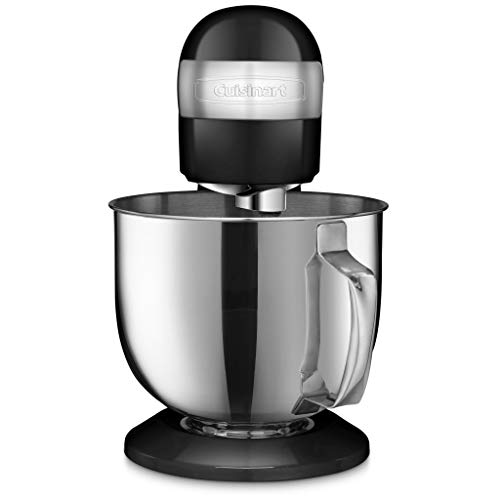
Best Value: Cuisinart Precision Master 5.5-Quart Stand Mixer SM-50 (Onyx)
Home cake baking is often family logistics: a cake big enough for Sunday lunch, cupcakes enough for a classroom, frosting enough that nobody fights over the last slice. The SM-50 in Onyx is built for that scale of generosity. Its 5.5-quart bowl takes the family-size batter that crowds a 4.5-quart machine, the twelve speeds give you a proper slow stir for folding and a fast whip for cream, and the box includes the three tools home cakes actually use — paddle, whisk and, for pizza night, a dough hook — plus the splash guard that keeps flour week off the worktop.
Strengths
- Slightly larger bowl than the Classic class — comfortable for family-size batters
- Splash guard with pour spout keeps flour additions civilised
- Everything a cake baker needs is in the box, including the whisk
Trade-offs
- Frame is lighter than premium rivals; very stiff mixtures can make it shift
- Smaller long-term attachment ecosystem than KitchenAid
- Finish options are limited compared with design-led brands
| Bowl capacity | 5.5 quart stainless steel bowl |
| Speeds | 12 speeds |
| Included | Chef’s whisk, mixing paddle, dough hook, splash guard with pour spout |
What home bakers notice over months is the lack of friction. The dial is easy to read and set, the guard’s pour spout lets you add milk or flour mid-mix without stopping, and the bowl’s size means the standard recipe from any home cookbook fits without arithmetic. Creaming, batter mixing and buttercream all sit comfortably in its working range, and the machine’s lighter weight — a drawback only with stiff dough — is a genuine benefit in homes where the mixer lives in a cupboard and gets carried out for each bake.
Choose it as the family workhorse and it will not embarrass you. The compromises appear at the extremes: marathon dough sessions, or a baker who falls in love with hub attachments and wants the biggest catalogue in the business. For cakes — the subject of this guide — it covers the home repertoire completely, in a colour that hides cocoa dust gracefully, at a tier that leaves budget for good tins and better chocolate.
Best for: families who bake cakes often and want full capacity without flagship cost / Not suited for: attachment collectors or bakers who regularly mix stiff doughs
Check the current price on Amazon for the Cuisinart Precision Master 5.5-Quart Stand Mixer SM-50 (Onyx) in the colour and configuration you want.

Best for Celebration Cakes: KitchenAid 7-Quart Bowl-Lift Stand Mixer KSM70
Every home baker eventually meets the cake that does not fit: the three-tier birthday project, the wedding cake for a friend, the bake-sale weekend where the same batter is needed three times. The KSM70 is the machine for those weekends. Seven quarts of bowl swallows doubled batters whole, the bowl-lift frame keeps heavy mixtures from rocking the head, and the accessory kit is aimed squarely at cake work — including a double flex-edge beater that scrapes the bowl as it turns, which on a batch this size saves real time and real mixture.
Strengths
- Capacity for doubled and tiered-cake batters in a single mix
- Half-speed folding setting protects delicate foams at any scale
- Double flex-edge beater scrapes as it mixes, cutting stops on big batches
Trade-offs
- Large and tall — needs permanent counter space and cabinet clearance
- Small single cakes under-fill the bowl and mix less happily
- Premium tier pricing for capacity many bakers will rarely use
| Bowl capacity | 7 quart |
| Design | Bowl-lift |
| Speeds | 11 speeds, including 1/2 speed for folding |
| Included | Double flex-edge beater and 4 other accessories |
The detail that elevates it from merely big to genuinely cake-suited is the half speed. Folding at scale is harder than folding small — more mixture, more turns, more chances to knock out air — and a dedicated gentle setting lets the machine do the heavy incorporation while you finish by hand. Eleven speeds in total mean the same machine that creams a double batch of butter can also whip a modest bowl of cream, though honesty requires the caveat below: truly small quantities sit low in this big bowl and mix less eagerly than they would in a 4.5-quart machine.
So the KSM70 is a specialist’s generalist: buy it if celebration-scale baking is a real, recurring part of your life, and it will make those projects calmer and better. Buy it aspirationally for standard cakes and you have paid a premium for empty bowl volume and a machine that dominates your counter. Home bakers between those poles are better served by the Classic or the Cuisinart — and can hire this class of capacity later if their baking genuinely grows into it.
Best for: home bakers who make tiered, doubled or celebration cakes several times a year / Not suited for: small kitchens or bakers whose largest bake is a standard layer cake
Check the current price on Amazon for the KitchenAid 7-Quart Bowl-Lift Stand Mixer KSM70 in the colour and configuration you want.

Best Budget Stand Mixer: Hamilton Beach 4-Qt Electric Stand Mixer (7 Speeds)
The budget question in cake mixers is whether cheap means compromised where it counts. This Hamilton Beach answers better than most: it keeps the feature that actually decides batter quality — planetary mixing, where the beater orbits the bowl for full coverage — and includes the full home kit of whisk, flat beater and dough hook plus a splash guard, at a tier the metal flagships cannot approach. For standard home cakes, that combination is not a compromise at all; it is the recipe, executed simply.
Strengths
- True planetary action at a budget tier — batter mixes evenly, not just in the middle
- Complete attachment set and splash guard included, nothing essential missing
- Carry handle and lighter body suit kitchens where the mixer is stored away
Trade-offs
- Seven speeds is a coarser range — folding needs a gentle hand and short bursts
- 300-watt motor is adequate for cakes, not enthusiastic about stiff dough
- Plastic trim and lighter build will not age like an all-metal machine
| Bowl capacity | 4 quart |
| Speeds | 7 speeds |
| Motor | 300 watts |
| Included | Whisk, flat beater, dough hook, splash guard; planetary mixing; easy-carry handle |
Living with it is easy in the ways small kitchens appreciate. The easy-carry handle sounds like a footnote until you are the person lifting the mixer from a low cupboard every Saturday; the 4-quart bowl matches standard recipes; seven speeds, while a coarser ladder than premium machines offer, still spans stir to whip. Cake batters, whipped cream and buttercream all come out as they should. Folding flour in asks for the lowest speed in short, watched bursts — a technique adjustment, not a failure.
The limits are longevity and enthusiasm. The motor is sized for cake work, not for bullying stiff dough, and the lighter construction will show its years sooner than an all-metal machine under heavy weekly use. Judge it on its own terms — an affordable route into hands-free cake making for a home that bakes regularly but not relentlessly — and it is one of the most sensible purchases in this guide.
Best for: budget-conscious home bakers who want stand-mixer convenience for standard cakes / Not suited for: heavy dough bakers or anyone buying a once-in-twenty-years machine
Check the current price on Amazon for the Hamilton Beach 4-Qt Electric Stand Mixer (7 Speeds) in the colour and configuration you want.
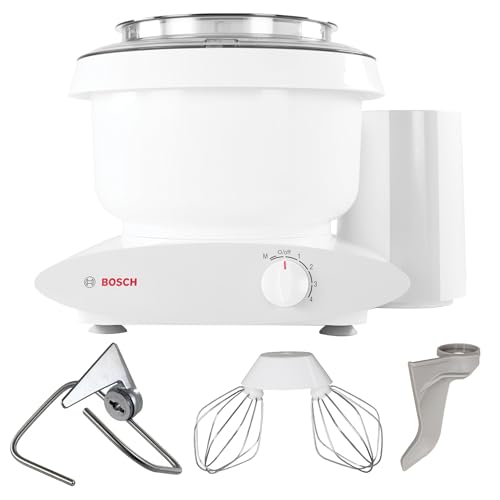
Best for Crowd-Size Bakes: Bosch Universal Plus Stand Mixer (500 Watt, 6.5 Quarts)
Some home bakers are really caterers in disguise: the sheet cake for the team, the traybake for the fundraiser, frosting by the bucket. The Bosch Universal Plus is their machine. Its bottom-drive design — motor beneath, attachments driven from below — leaves the top of the 6.5-quart bowl completely open, so ingredients go in while the machine runs, whips and beaters work the full width, and nothing about a big batch feels like a negotiation with a tilt head. Wire whips for foams and a dough hook are in the bundle, covering both ends of the home repertoire.
Strengths
- Open bowl design makes adding ingredients mid-mix effortless — no head in the way
- Huge working capacity for sheet cakes, traybakes and party quantities
- Bottom drive keeps the centre of the bowl clear for whips and beaters to work
Trade-offs
- Unconventional design has a learning curve for bakers raised on tilt-heads
- Tall batches of light foam behave differently than in a planetary bowl — watch the first few
- Fewer decorative colour choices; it looks like the tool it is
| Bowl capacity | 6.5 quarts |
| Motor | 500 watt |
| Included | Wire whips, dough hook and NutriMill dough hook extender (bundle) |
For cakes at crowd scale, the open bowl changes technique for the better. You can rain flour in gradually across the whole surface instead of through a pouring shield’s slot, watch a foam’s texture develop without stopping the machine, and scrape with a clear view. The 500-watt motor drives the system through thick, full bowls without the strain that makes smaller machines sound apologetic, and the design’s devotees tend to keep these machines for a very long time — it is a platform people commit to.
The adjustment is real, though: speeds, attachment changes and the feel of mixing differ from the planetary mainstream, and your first sponge in it deserves attention rather than autopilot. Small batches are also not its home turf — a single small cake rattles around in that capacity. But for the baker whose problem is reliably too much cake for normal machines, the Universal Plus is not an oddity; it is the answer, and the cakes come out in quantities that end arguments.
Best for: bakers who cook for crowds — sheet cakes, school events, big family gatherings / Not suited for: traditionalists who want a classic tilt-head or mostly bake small cakes
Check the current price on Amazon for the Bosch Universal Plus Stand Mixer (500 Watt, 6.5 Quarts) in the colour and configuration you want.

Best Compact: Dash Everyday Stand Mixer (3-Quart)
Not every home needs a flagship; some need a mixer that fits the kitchen and the life actually being lived. The Dash Everyday is a 3-quart tilt-head stand mixer with six speeds and a stainless bowl, sized for the single-layer cake, the small sponge, the half-dozen muffins — the baking of one- and two-person homes, first flats and holiday cottages. It creams, it whips, it mixes batter hands-free, and then it goes away into a cupboard without a furniture rearrangement.
Strengths
- Genuinely small — fits counters and cupboards that rule out full-size machines
- Perfectly matched to single-layer cakes, small sponges and cupcake half-batches
- Simple controls make it a friendly first mixer for new bakers
Trade-offs
- Standard two-layer batters are at or beyond its comfortable capacity
- Six speeds and a light frame limit it to gentle, cake-weight work
- Not a machine to grow into — keen bakers will upgrade within a couple of years
| Bowl capacity | 3 quart stainless steel bowl |
| Design | Compact tilt-head |
| Speeds | 6 speeds |
Within its scale, it behaves properly. The tilt head gives the same scrape-and-add access as big machines, the bowl size means small quantities actually meet the beaters — a quiet advantage over using a flagship for a half-batch — and the simplicity is a feature for new bakers: fewer speeds, fewer decisions, more baking. Birthday cakes for two, a Victoria sponge for Sunday tea, frosting for a dozen cupcakes: this is its repertoire, and it covers it without complaint.
Be clear-eyed about the boundary, because the machine is: a standard two-layer cake batter is a squeeze, a doubled anything is out of the question, and dough beyond the softest is beyond it too. Bought as a small-home specialist it is charming and useful; bought as a cheap substitute for a family mixer it will frustrate. Many bakers start here, learn they love baking, and upgrade with knowledge — which makes the Dash a good first chapter rather than a wrong turn.
Best for: first-time bakers, small households, dorms and compact kitchens baking small cakes / Not suited for: families, layer-cake regulars or anyone whose recipes come in dozens
Check the current price on Amazon for the Dash Everyday Stand Mixer (3-Quart) in the colour and configuration you want.
Cakes, Frosting and the Two-Batch Rule
A practical pattern emerges in home kitchens that the reviews above assume but deserve stating plainly: most home cakes are two mixing jobs, not one. The sponge or layer batter is the first; the frosting, filling or whipped cream is the second, and it often happens while the layers cool. This is why bowl changes and attachment swaps feature so heavily in real satisfaction — a machine whose bowl lifts out easily, whose whisk swaps in seconds, turns the second job into a pleasure instead of an interruption. It is also why some experienced home bakers keep a hand mixer as a second string: the cream can be whipped in a jug while the stand mixer’s bowl is still frosted with buttercream.
Plan your purchase around that rhythm. If your cakes are frosted, filled and finished — and most celebration cakes are — then the machine’s behaviour across two consecutive jobs matters more than any single specification. Easy-clean bowls, a whisk that is genuinely quick to fit, and controls that do not need a manual on the second use of the day: these are the traits the picks above were quietly ranked by, underneath the badges.
A Note on Noise, Wobble and Other Living-With-It Truths
Home bakers live with their mixers in a way reviewers on deadline do not, so three long-term truths deserve print. First, noise: all stand mixers are audible, geared machines are more so under load, and in open-plan homes the practical answer is timing — cream and whip while the household is awake and active, not beside a sleeping baby. None of the machines here is unusually loud for its class, but none is silent, and a baker who prizes quiet should weight the mid-speed smoothness of the premium machines, which tend to sound less strained at cake workloads.
Second, movement: a stand mixer working a thick batter on a smooth worktop can walk a few millimetres, and light machines walk most. A non-slip mat under the machine, or simply a hand resting on it during the heaviest minute, solves this completely — it is a property of physics, not a defect. Third, wobble: tilt-head machines can develop a slight head movement over years, almost always because the hinge pin has crept; checking and reseating it is a ten-second, tool-light fix that restores the machine. Knowing these three things in advance converts most ‘my mixer is failing’ moments into maintenance moments, which is why this guide mentions them rather than pretending ownership is all first-week impressions.
Comparison Table
| Pick | Badge | Key spec | Best for |
|---|---|---|---|
| KitchenAid Classic Series 4.5-Qt Tilt-Head Stand Mixer K45SS | Best Overall | 4.5-qt tilt-head, 10 speeds | home bakers who make birthday cakes, weekend sponges and cupcakes regularly |
| Cuisinart Precision Master 5.5-Quart Stand Mixer SM-50 (Onyx) | Best Value | 5.5-qt, 12 speeds, full kit included | families who bake cakes often and want full capacity without flagship cost |
| KitchenAid 7-Quart Bowl-Lift Stand Mixer KSM70 | Best for Celebration Cakes | 7-qt bowl-lift, 11 speeds, flex-edge beater | home bakers who make tiered, doubled or celebration cakes several times a year |
| Hamilton Beach 4-Qt Electric Stand Mixer (7 Speeds) | Best Budget Stand Mixer | 4-qt, 7 speeds, 300W, planetary action | budget-conscious home bakers who want stand-mixer convenience for standard cakes |
| Bosch Universal Plus Stand Mixer (500 Watt, 6.5 Quarts) | Best for Crowd-Size Bakes | 6.5-qt bottom-drive, 500W | bakers who cook for crowds — sheet cakes, school events, big family gatherings |
| Dash Everyday Stand Mixer (3-Quart) | Best Compact | 3-qt compact tilt-head, 6 speeds | first-time bakers, small households, dorms and compact kitchens baking small cakes |
Specifications above are limited to figures confirmed in the manufacturer listing data checked for this guide. Where a maker sells the same model in several sizes or bundles, the listing for the exact version is the final word, which is one more reason to check price on Amazon on the precise configuration rather than relying on a headline number.
How to Choose the Best Food Mixers for Cakes at Home
Start with your three most-baked cakes. Write them down — literally — because they define your capacity, and capacity is the decision everything else hangs on. If your list is single sponges, small layer cakes and cupcakes by the dozen, a 3 to 4.5-quart machine will serve you better than a big one: beaters engage small batters properly and the machine stores where your kitchen allows. If your list includes doubled batters, tiered projects or traybakes for a crowd, start at 5.5 quarts and look hard at the bowl-lift and bottom-drive designs, which stay composed when bowls get heavy.
Next, think about where the machine lives, because home mixers are used in proportion to how visible they are. A mixer on the counter gets used weekly; a mixer in a deep cupboard gets used at Christmas. Measure the counter spot — including the height to your wall cabinets with the head tilted or bowl raised — and measure the cupboard if that is the honest plan, then let those numbers veto machines before features seduce you. Weight matters for the same reason: a machine you can carry one-handed will travel to the counter; a heavyweight needs a permanent address.
The features home bakers actually feel
A slow first speed that does not throw flour. A whisk in the box, not sold separately. A bowl with a handle if you pour batter into tins. A splash guard if your kitchen is small and your flour additions are enthusiastic. Controls you can work with buttery fingers. These unglamorous details decide home satisfaction far more than maximum wattage, and they are what the reviews above were written around. Colour, by contrast, matters only if the machine lives on display — in which case it matters completely, and you should buy the one that makes you smile, because that is the one you will use.
Budget tiers for home bakers
Without printing prices — check the current price on Amazon for each — the tiers behave like this. The budget tier buys compact and entry stand mixers that make standard cakes perfectly well and ask patience only at the extremes. The mid-range tier buys the durable mainstream: metal construction, full kits, sizes for family baking; this is where most home bakers should land. The premium tier buys capacity, rigidity and design — worth it for celebration bakers and counter-display kitchens, unnecessary for a standard repertoire. In every tier, the right size beats the higher tier in the wrong size.
What Size Cake Does Each Bowl Really Make?
Manufacturers quote bowl volume; bakers need batter reality. As a working translation: a 3-quart bowl comfortably handles a single-layer cake, a small sponge or six to eight cupcakes’ worth of batter. A 4.5-quart bowl is the classic home size — a two-layer cake, a dozen cupcakes, a standard buttercream batch. At 5.5 quarts you gain headroom for generous family cakes and frosting in one go. Seven quarts and the big bottom-drive bowls are doubled-recipe territory: two cakes at once, tiered projects, sheet cakes for a crowd. In all sizes, plan to fill no more than about two-thirds with batter if you want even mixing.
Frosting deserves its own note, because it is where home batches quietly double. A layer cake’s buttercream — crumb coat, fill, cover, pipe — is a bigger mixing job than the sponge itself, and it is the stage where an undersized bowl forces split batches and mismatched texture. If you frost generously, size for the frosting, not the cake.
How to Set Up Your Mixer Station for a Home Baking Session
Good home cake baking is mostly mise en place. Ten minutes of setup before the mixer starts will do more for your cakes than any single feature on any machine in this guide.
- Clear and claim the counter: mixer at the front edge where you can see into the bowl, ingredients grouped behind it in recipe order, tins greased and lined before anything is mixed. Cake batters wait for no one once the raising agent meets liquid.
- Weigh, do not scoop, your dry ingredients, and keep flour in a wide bowl — wide bowls make gentle folding and flour-adding easier and reduce the dust cloud at first mix.
- Fit the right attachment before ingredients go in: paddle for creaming and batters, whisk for foams and cream. Changing attachments mid-recipe with battered hands is how bowls get dropped.
- Set out a flexible spatula and a small bowl for eggs. Crack eggs into the small bowl one at a time — it keeps shell and the occasional bad egg out of the batter, and makes one-at-a-time adding effortless.
- Cream, mix and whip in the recipe’s order, scraping the bowl at the natural pauses. Work steadily rather than fast; a batter that waits two calm minutes is fine, a foam that waits ten is not — sequence whipped components last where the recipe allows.
- Wash the whisk and beater as soon as the cake is in the oven. Dried batter sets like cement; a thirty-second rinse now is the whole cleaning job, and the kitchen returns to normal before the cake does.
The station habit that separates relaxed home bakers from stressed ones is simply this: the mixer is put away — or wiped and left proudly out — before the cake comes out of the oven. Baking then ends with a cake and a clean kitchen, which is the version of the hobby people repeat weekly.
Common Buying Mistakes
Buying the biggest bowl ‘just in case’. Just-in-case capacity is used monthly at most, while the penalty — small everyday batters mixing poorly in a cavern — is paid weekly. Size for your routine; borrow or batch twice for the annual giant.
Storing the mixer somewhere heroic. If reaching your mixer involves a step stool, a garage trip or moving three other appliances, you will bake less. Buy the machine your storage can present easily, even if that means a smaller one.
Skipping the whisk when comparing prices. Some headline prices exclude the whisk or the guard, and the ‘cheaper’ machine becomes the dearer one at checkout. Compare complete cake-ready kits, not bare machines.
Letting children of the house choose by colour alone. Colour is a fine tiebreaker and a poor foundation. Capacity, access and controls will be felt at every bake for a decade; the colour argument lasts a week. Choose the right machine, then its prettiest finish.
Over-mixing because the machine makes it easy. Hands-free power tempts bakers to let batters run ‘a bit longer’. Gluten does not care that the machine was expensive: mix batters until just combined, finish folds by hand, and let the oven do the rest.
Forgetting the frosting when sizing. As the guide above notes, buttercream for a filled, covered, piped cake is the biggest batch in most home recipes. If your bowl handles the sponge but not the frosting, it does not handle the cake.
Final Recommendation
For most homes, the answer is the KitchenAid Classic: right-sized, metal-built, simple and proven across more home kitchens than any machine here. Families who bake bigger should look at the Cuisinart SM-50 for capacity per money, celebration bakers at the KSM70, crowd bakers at the Bosch Universal Plus, and small or budget-led homes at the Hamilton Beach or the little Dash — each is the best in this guide at the job its badge describes.
Whichever you choose, buy the size your real baking needs, keep the machine where you can see it, and check the current price on Amazon for the exact colour and bundle — listings vary, and the listing is the truth. Then bake the cake you bought it for this week, while the enthusiasm is fresh; home mixers earn their place one ordinary Saturday at a time.
- Best Overall: KitchenAid Classic Series 4.5-Qt Tilt-Head Stand Mixer K45SS — home bakers who make birthday cakes, weekend sponges and cupcakes regularly.
- Best Value: Cuisinart Precision Master 5.5-Quart Stand Mixer SM-50 (Onyx) — families who bake cakes often and want full capacity without flagship cost.
- Best for Celebration Cakes: KitchenAid 7-Quart Bowl-Lift Stand Mixer KSM70 — home bakers who make tiered, doubled or celebration cakes several times a year.
- Best Budget Stand Mixer: Hamilton Beach 4-Qt Electric Stand Mixer (7 Speeds) — budget-conscious home bakers who want stand-mixer convenience for standard cakes.
- Best for Crowd-Size Bakes: Bosch Universal Plus Stand Mixer (500 Watt, 6.5 Quarts) — bakers who cook for crowds — sheet cakes, school events, big family gatherings.
- Best Compact: Dash Everyday Stand Mixer (3-Quart) — first-time bakers, small households, dorms and compact kitchens baking small cakes.
Related guides in this series: Best Food Mixers For Cake Making; Best Food Mixers For Dough; Best Food Stand Mixers; Best Food Mixers For Baking; Best Food Mixers Under $100; Best Glass Bowls For Kitchenaid Stand Mixers.
Frequently Asked Questions
What is the best mixer for cakes for a beginner?
A mid-size tilt-head stand mixer around 4.5 quarts, with a paddle and whisk included, is the friendliest start: it handles standard recipes hands-free, opens easily for scraping, and forgives beginner timing. Bakers on tight budgets or in tiny kitchens can start with a compact model or a good hand mixer and upgrade once they know their repertoire.
How many quarts do I need for a two-layer cake?
A 4.5-quart bowl handles a standard two-layer cake batter comfortably, with room to mix evenly and to make the accompanying buttercream in a second batch. A 5.5-quart bowl does both with more headroom. Smaller bowls can manage the batter alone but will struggle with generous frosting quantities.
Are expensive mixers worth it for home cake baking?
They are worth it for specific reasons — metal longevity, capacity for celebration baking, design you will display — not for categorically better everyday cake. A mid-range machine makes the same standard sponge as a flagship. Spend more when your baking volume, batch size or counter-display plans justify it, not from a fear that cheaper machines bake worse cake.
Can one mixer do cakes and bread?
Yes, within limits. Most stand mixers here include a dough hook and handle moderate bread doughs; heavy or large dough batches favour bowl-lift frames, the Bosch bottom-drive design or a dedicated dough machine. If bread becomes a weekly project, read the dough-specific guide linked above and size for the dough.
Why does my batter curdle when I add the eggs?
Cold eggs hitting creamed butter, or eggs added too quickly, break the emulsion and the mixture looks curdled. Use room-temperature eggs, add them one at a time with full mixing between, and add a spoonful of the recipe flour with an egg if splitting threatens. A slightly curdled batter usually still bakes acceptably — but the fix is easy once you know it.
How long should a home stand mixer last?
A metal-built mainstream machine used weekly should serve for many years with basic care: prompt washing of attachments, an occasional check of the tilt-head hinge pin, and not overloading the bowl. Lighter budget machines trade some of that lifespan for their price, which can still be the right exchange for lighter use.

