Disclosure: airfryerkitchensupply.com is reader-supported. When you buy through links on our site, we may earn an affiliate commission at no extra cost to you.
Where to buy
The best kinds of teapots in this guide are all sold on Amazon, and that is where you can compare capacities, materials, and infuser styles side by side before you commit. Each model named below was cross-checked against Amazon catalog data before it earned a link, so the name and size you see here match the listing you land on. We do not print fixed prices, because teapot prices shift with color, size, and season — use the links to check price on Amazon for the exact version you want.
- HIWARE 1000ml Glass Teapot with Removable Infuser — view on Amazon
- Sweese Porcelain Teapot 27 oz with Removable Stainless Steel Infuser, White — view on Amazon
- suyika Japanese Tetsubin Cast Iron Teapot with Stainless Steel Infuser, 22 oz — view on Amazon
- YXHUPOT Yixing Qingshuini Clay Teapot, 10 oz / 320 ml — view on Amazon
- Frieling 18/8 Stainless Steel Teapot with Infuser, 34 oz — view on Amazon
- Hario ChaCha Kyusu Maru Tea Pot, 700ml — view on Amazon
Ask ten tea drinkers about the best kinds of teapots and you will get ten confident, contradictory answers, because the honest answer is that the best kinds of teapots depend on what the material does to the tea and to your routine. Glass shows you the brew but holds heat poorly. Cast iron holds heat beautifully but weighs a surprising amount when full. Yixing clay actually seasons over time and changes how oolong tastes, which is either the whole point or an unnecessary complication, depending on how you drink. This guide is organized by kind first and model second, because choosing the right material family matters more than choosing between two similar pots inside it.
We picked six teapots that each represent their kind at its best: a borosilicate glass pot for blooming and herbal teas, a porcelain pot for everyday loose leaf, a Japanese tetsubin-style cast iron pot for heat retention, a genuine Yixing clay pot for gongfu brewing, a stainless steel pot for durability, and a Japanese kyusu designed around green tea. If you already know your kind, skip straight to its review. If you are still deciding, the buying guide sections after the reviews walk through heat, flavor, cleaning, and cost of ownership kind by kind, so you can match the material to the teas you actually drink rather than the teas you imagine drinking.
In this guide
Quick Picks
Six kinds, six pots, six different reasons to buy. Each pick below earned its badge by being the clearest expression of its material family, not by being the most expensive pot in it.
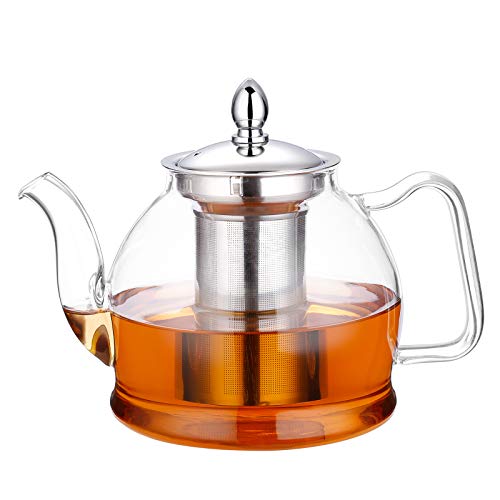
HIWARE 1000ml Glass Teapot with Removable Infuser — Best Glass Teapot
The glass kind at its most useful: a 1000 ml borosilicate pot with a removable infuser that is stovetop safe, so it doubles as its own kettle and puts blooming teas on full display.
Check on Amazon — check price on Amazon.
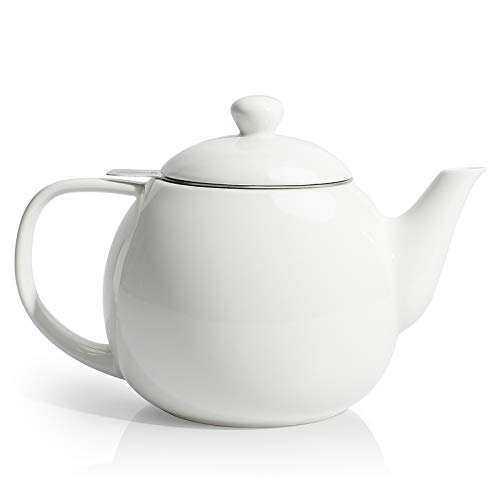
Sweese Porcelain Teapot 27 oz with Removable Stainless Steel Infuser, White — Best Porcelain Teapot for Everyday Loose Leaf
Porcelain is the neutral, no-drama kind, and this 27 oz Sweese is its everyday champion: glazed inside and out, a proper steel infuser, and a size that suits one or two drinkers.
Check on Amazon — check price on Amazon.

suyika Japanese Tetsubin Cast Iron Teapot with Stainless Steel Infuser, 22 oz — Best Cast Iron Teapot
Cast iron is the heat-retention kind, and this enameled tetsubin-style pot keeps tea serving-hot far longer than anything else here while looking like it belongs on the table.
Check on Amazon — check price on Amazon.
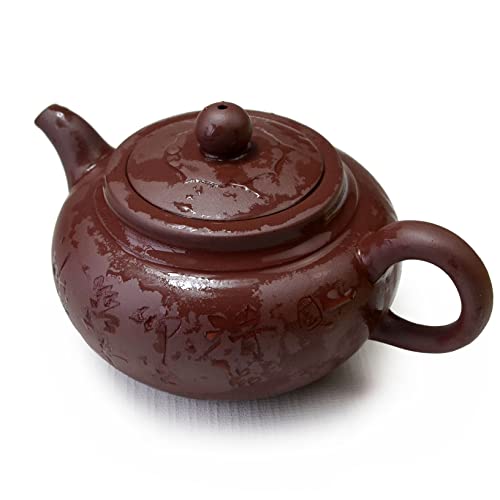
YXHUPOT Yixing Qingshuini Clay Teapot, 10 oz / 320 ml — Best Yixing Clay Teapot for Gongfu Brewing
Yixing is the seasoning kind: unglazed clay that absorbs tea oils and rounds out oolong and pu-erh over months of use. This 10 oz Qingshuini pot is sized exactly for gongfu sessions.
Check on Amazon — check price on Amazon.

Frieling 18/8 Stainless Steel Teapot with Infuser, 34 oz — Best Stainless Steel Teapot
Steel is the indestructible kind. This 18/8 stainless Frieling shrugs off drops, dishwashers, and decades, with a 34 oz capacity for households that brew for a crowd.
Check on Amazon — check price on Amazon.

Hario ChaCha Kyusu Maru Tea Pot, 700ml — Best Japanese Kyusu for Green Tea
The kyusu is the green-tea kind — a side-handled form built for fast, controlled pours of sencha and gyokuro. Hario’s glass ChaCha Maru brings that form to a 700 ml everyday size.
Check on Amazon — check price on Amazon.
How These Picks Were Chosen
We started by dividing the teapot market into the material families that genuinely brew differently: glass, porcelain and ceramic, cast iron, unglazed Yixing clay, stainless steel, and the Japanese kyusu form. Within each family we looked for the model that best represents what that kind does well, with a removable infuser where the brewing style calls for one, a capacity that matches how the kind is actually used, and a listing we could verify against Amazon catalog data.
Every linked pick in this article was cross-checked against Amazon listing data for the airfryerkitchensupply.com catalog before it received a link, and the model name, capacity, and material in each review come from that verified listing data. We excluded novelty pots with painted interiors, pots with infusers too small for leaves to expand, and any pot whose material claims could not be confirmed. Where a kind has a famous traditional maker with no confirmed US listing, we say so in our sources rather than inventing a link.
The 6 Best Kinds of Teapots, One Standout Pot for Each
HIWARE 1000ml Glass Teapot with Removable Infuser — Best Glass Teapot
Glass is the kind to choose when watching the tea matters — blooming teas unfolding, herbal blends changing color, or a pale green tea you do not want to over-steep. The HIWARE represents the family well because it solves glass’s two usual weaknesses honestly: the borosilicate body is stovetop safe, so you can heat water in the pot itself, and the removable infuser lifts out cleanly so the leaves stop steeping when you say so.
Strengths
- Borosilicate glass is stovetop safe, so the pot doubles as a kettle and saves a transfer step
- You can see color and leaf expansion, which makes hitting the right strength far easier for new brewers
- Glass is flavor-neutral and rinses clean, so yesterday’s mint tea never ghosts today’s sencha
Trade-offs
- Glass sheds heat faster than any other kind here, so the second cup cools noticeably without a warmer
- It is the most fragile kind in this guide and will not survive a hard knock against a steel sink
- The handle and lid get warm in stovetop use, so a towel or mitt becomes part of the routine
| Material | Borosilicate glass |
| Capacity | 1000 ml |
| Infuser | Removable infuser included |
| Heating | Stovetop safe |
In daily use the HIWARE’s real advantage is feedback. With black tea you watch the liquor darken and pull the infuser at the shade you like; with blooming tea the pot becomes the centerpiece it is supposed to be. The 1000 ml size is the sweet spot for glass — enough for three generous mugs, not so much that the last cup sits cooling while you finish the first. Pouring is clean, and because the infuser is removable rather than fixed, you can also use the pot as a simple pitcher for iced tea in summer.
Treat glass as a brewing instrument rather than a keeping pot. Brew, remove the infuser, and either serve immediately or move the tea to a pre-warmed mug. Owners who expect glass to behave like cast iron are the ones who end up disappointed; owners who use its visibility as a tool tend to keep this pot in rotation for years.
Best for: blooming, herbal, and visual brewers who serve right away / Not suited for: slow drinkers who want the pot to stay hot on the table for an hour
Check on Amazon — check price on Amazon.
Sweese Porcelain Teapot 27 oz with Removable Stainless Steel Infuser, White — Best Porcelain Teapot for Everyday Loose Leaf
Porcelain is the kind most households should start with. It is fully glazed, so it never absorbs flavors, it holds heat respectably, it goes in the dishwasher without argument, and it suits every tea from Assam to chamomile. The Sweese 27 oz pot represents the family with the details that matter: a removable stainless steel infuser with room for leaves to expand, a spout that pours without dribbling down the side, and a classic white finish that matches any table.
Strengths
- Fully glazed porcelain is completely flavor-neutral and never needs seasoning or special care
- Removable stainless steel infuser gives loose leaves room to open up and lifts out for a clean stop to the steep
- 27 oz is the honest everyday size — two mugs, no waste, no lukewarm leftovers
Trade-offs
- Porcelain chips if it meets tile or granite at speed, and a chipped spout pours badly forever after
- Heat retention is middle of the pack — better than glass, well short of cast iron
- The white finish shows tea staining around the infuser line unless you rinse promptly
| Material | Porcelain |
| Capacity | 27 oz |
| Infuser | Removable stainless steel infuser |
What makes this pot the porcelain pick is not any single feature but the absence of annoyances. The lid sits securely during the pour, the handle stays comfortable, and the infuser basket is deep enough that a heaped spoon of oolong has space to unfurl. Porcelain’s neutrality is a genuine brewing advantage for households that rotate teas: Monday’s lapsang souchong leaves no trace in Tuesday’s delicate white tea, something no unglazed clay pot can promise.
If your household drinks one tea type exclusively, a specialized kind below may serve you better. If you drink a bit of everything and want one pot that never becomes the story, this is it. It is also the kindest kind to give as a gift, because it asks nothing of the recipient — no seasoning ritual, no hand-wash-only rule worth worrying about, no learning curve.
Best for: households that rotate tea types and want one neutral, easy pot / Not suited for: single-tea devotees who want a material that seasons and adds character
Check on Amazon — check price on Amazon.
suyika Japanese Tetsubin Cast Iron Teapot with Stainless Steel Infuser, 22 oz — Best Cast Iron Teapot
Cast iron is the kind you choose when the ritual is slow — a pot that comes to the table and stays hot through a long conversation. This suyika tetsubin-style pot has the family’s defining traits: a heavy iron body that holds heat, an enameled interior that prevents rust and keeps flavors clean, and a stainless steel infuser sized for loose leaf. At 22 oz it is a personal or two-person pot, which suits cast iron well, because a large iron pot full of water becomes genuinely heavy.
Strengths
- Iron holds heat longer than any other kind here, keeping the second and third cups properly hot
- Enameled interior prevents the rust and metallic taste that bare iron can develop
- The weight and finish make it a table piece, not just a brewer — it anchors a tea setting
Trade-offs
- It is heavy even empty and notably heavy full, which matters for anyone with wrist or grip issues
- The enamel can chip if the pot is banged or heated empty, and chipped enamel exposes iron to rust
- Cast iron asks for hand washing and thorough drying — it is the highest-care glazed kind here
| Material | Cast iron, enameled interior |
| Capacity | 22 oz / 650 ml |
| Infuser | Stainless steel infuser included |
The tetsubin distinction matters: traditional tetsubin are bare-iron kettles for heating water, while this enameled style is a teapot for brewing, and the listing confirms the enameled interior that makes brewing in it sensible. Warm the pot with a rinse of hot water before brewing and the iron rewards you by holding temperature through a full session. The pour is deliberate and controlled, and the pot’s thermal mass also smooths out small timing errors — an extra thirty seconds rarely tips a brew into bitterness the way it can in glass.
Be honest about the care routine before buying iron. Rinse, dry, and store it dry, every time. Owners who do that keep these pots for decades; the enamel and iron ask little else. If your kitchen style is load-everything-in-the-dishwasher, porcelain or steel below will make you happier, and there is no shame in that trade.
Best for: slow sessions and anyone whose tea always goes cold in other pots / Not suited for: dishwasher-only households or anyone who finds a heavy pot a burden
Check on Amazon — check price on Amazon.
YXHUPOT Yixing Qingshuini Clay Teapot, 10 oz / 320 ml — Best Yixing Clay Teapot for Gongfu Brewing
Yixing clay is the one kind in this guide that changes the tea on purpose. The unglazed zisha clay is porous, so it absorbs a trace of tea oil with every brew and gradually softens harsh edges, which is why gongfu drinkers dedicate one pot to one tea family. This YXHUPOT pot uses Qingshuini clay in the classic small format — 10 oz is not a limitation but the point, because gongfu brewing is many short steeps from a small pot, not one long steep from a big one.
Strengths
- Unglazed clay seasons over time and genuinely improves oolong and pu-erh with repeated use
- Small 10 oz format is correct for gongfu — concentrated steeps, re-steeped many times
- Clay holds heat well for its size, keeping short steeps at temperature between pours
Trade-offs
- It must be dedicated to one tea family — brewing mint in it once will haunt the clay for months
- Never wash with soap; the porous clay absorbs detergent as happily as tea
- Small capacity frustrates anyone who simply wants a big mug of tea
| Material | Yixing Qingshuini clay (unglazed) |
| Capacity | 10 oz / 320 ml |
| Style | Gongfu, hand-carved detail |
Judge a Yixing pot by its pour and its lid fit, and this one is built for the gongfu table: a fast, clean stream for filling small cups, and a size that lets one drinker work through five or six steeps of the same leaves. The clay’s effect is subtle in the first month and clearer by the sixth — roasted oolongs lose their rough top note, and shou pu-erh tastes rounder. That slow payoff is the kind’s whole appeal, and also why it is wrong for impatient or variety-driven drinkers.
Start the pot with the tea you drink most, rinse it only with hot water, and let it air dry with the lid off. Seasoning is not a weekend project; it is a habit. If that sounds like a pleasure rather than a chore, you are the drinker this kind exists for, and no glazed pot will ever quite substitute.
Best for: gongfu drinkers devoted to oolong or pu-erh / Not suited for: variety drinkers or anyone who washes everything with soap
Check on Amazon — check price on Amazon.
Frieling 18/8 Stainless Steel Teapot with Infuser, 34 oz — Best Stainless Steel Teapot
Stainless steel is the kind for people who are tired of breaking teapots. It cannot chip, crack from thermal shock, or absorb a flavor, and a good steel pot will outlive every other kind in this guide. The Frieling represents the family with the right grade of metal — 18/8 stainless, which resists corrosion and off-flavors — plus a fitted infuser for loose tea and a 34 oz capacity that serves a table without a refill trip.
Strengths
- 18/8 stainless steel is effectively unbreakable in kitchen use and fully dishwasher safe
- Completely flavor-neutral and non-porous — every tea tastes like itself, forever
- 34 oz capacity serves four mugs, the largest practical size in this guide
Trade-offs
- Single-wall steel loses heat faster than cast iron and the exterior gets hot to the touch
- It dents rather than breaks — a dropped pot survives, but carries the scar
- Steel has none of the ceremony of clay or iron; it is a tool, proudly
| Material | 18/8 stainless steel |
| Capacity | 34 oz |
| Infuser | Infuser included |
The Frieling earns its place on details cheaper steel pots skip: the infuser fits its basket seat properly so leaves do not escape into the pour, and the spout geometry pours cleanly even when the pot is full. For offices, busy family kitchens, and anyone brewing on a boat, in an RV, or around enthusiastic children, steel removes the background anxiety that comes with glass and porcelain. Pair it with a tea warmer or cozy if you need long heat, and it covers that weakness cheaply.
One honest note: steel’s neutrality cuts both ways. It will never add the rounded character Yixing gives oolong, and it will never present blooming tea like glass. What it gives back is decades of zero-maintenance service. For a second pot in a serious tea kitchen, or the only pot in a practical one, that trade is easy to defend.
Best for: busy households, offices, and anyone who breaks pots / Not suited for: collectors who want material character in the cup
Check on Amazon — check price on Amazon.
Hario ChaCha Kyusu Maru Tea Pot, 700ml — Best Japanese Kyusu for Green Tea
The kyusu is less a material than a form: a side-handled pot engineered for Japanese green teas, where the pour must be quick, complete, and gentle so the last drop — the most concentrated — is shared fairly. Hario’s ChaCha Kyusu Maru interprets the form in glass at 700 ml, large enough for two or three drinkers, with the wide opening and fine straining the style demands for small, dense green tea leaves.
Strengths
- Side-handle form gives the controlled, complete pour green tea brewing depends on
- Wide opening makes loading fine green leaves and cleaning out spent leaf genuinely easy
- Glass body lets you judge the pale color of sencha and stop the steep at the right moment
Trade-offs
- The form is specialized — it feels awkward and unnecessary for big-leaf black teas
- Glass heat loss matters more for green tea’s repeat steeps unless you work promptly
- Side-handle pouring takes a short learning curve if you have only used Western pots
| Material | Glass (Hario) |
| Capacity | 700 ml |
| Style | Kyusu, side handle |
Green tea punishes the wrong pot: leaves keep steeping in a pot that cannot pour fully dry, and the second cup turns bitter. The kyusu form solves this mechanically, and the Maru’s generous 700 ml size makes it forgiving for households rather than only for solo ceremony. If your tea shelf is mostly sencha, gyokuro, and genmaicha, a kyusu will improve your results more than any upgrade within the Western-pot kinds, because the form itself is the feature.
Treat this as a specialist second pot rather than a household’s only pot. It will brew a black tea without complaint, but its gifts — the dry pour, the leaf handling, the color judgment — only pay out with Japanese greens. Drinkers of those teas will wonder how they managed without one; everyone else should spend on the kind that matches their shelf.
Best for: sencha, gyokuro, and genmaicha drinkers / Not suited for: households that mainly brew black tea in big mugs
Check on Amazon — check price on Amazon.
Comparison Table
| Pick | Badge | Key spec | Best for | Shop |
|---|---|---|---|---|
| HIWARE 1000ml Glass Teapot with Removable Infuser | Best Glass Teapot | 1000 ml borosilicate, stovetop safe | blooming, herbal, and visual brewers who serve right away | Check on Amazon |
| Sweese Porcelain Teapot 27 oz with Removable Stainless Steel Infuser, White | Best Porcelain Teapot for Everyday Loose Leaf | 27 oz glazed porcelain, steel infuser | households that rotate tea types and want one neutral, easy pot | Check on Amazon |
| suyika Japanese Tetsubin Cast Iron Teapot with Stainless Steel Infuser, 22 oz | Best Cast Iron Teapot | 22 oz enameled cast iron | slow sessions and anyone whose tea always goes cold in other pots | Check on Amazon |
| YXHUPOT Yixing Qingshuini Clay Teapot, 10 oz / 320 ml | Best Yixing Clay Teapot for Gongfu Brewing | 10 oz unglazed Yixing clay | gongfu drinkers devoted to oolong or pu-erh | Check on Amazon |
| Frieling 18/8 Stainless Steel Teapot with Infuser, 34 oz | Best Stainless Steel Teapot | 34 oz 18/8 stainless steel | busy households, offices, and anyone who breaks pots | Check on Amazon |
| Hario ChaCha Kyusu Maru Tea Pot, 700ml | Best Japanese Kyusu for Green Tea | 700 ml kyusu form, glass | sencha, gyokuro, and genmaicha drinkers | Check on Amazon |
Read the table by kind, not by rank. The best kind of teapot is the one whose material behavior matches your tea and your patience: glass and kyusu reward attention, porcelain and steel reward none, iron rewards a slow table, and Yixing rewards months of loyalty to one tea.
How to Choose the Best Kinds of Teapots for the Tea You Drink
Start with your tea shelf, not with the pots. Delicate green and white teas want a pot that pours completely and adds nothing — glass, porcelain, or a kyusu. Roasted oolongs and pu-erh are the teas that repay Yixing clay’s seasoning. Strong black teas are forgiving and suit every kind, so black-tea households should choose by lifestyle instead: steel or porcelain for low care, iron for long sessions. Blooming and herbal teas want glass, full stop, because half their pleasure is visual and glass is the only kind that shows it.
Next, be honest about heat. No teapot kind keeps tea hot forever, but the ranking is consistent: cast iron first, then clay and porcelain, then steel, then glass. If your habit is one mug brewed and carried away, heat retention barely matters and you can choose freely. If the pot sits on the table through breakfast or work, iron or a smaller pot you refill will serve you better than a large glass pot going slowly lukewarm.
Capacity deserves the same honesty. A 34 oz pot brewed for one drinker wastes tea and steeps leaves into bitterness while it waits. Match the pot to the session: 10 oz for gongfu, 22 to 27 oz for one or two drinkers, 34 oz and up only when the table is genuinely full. Many committed drinkers end up owning two kinds — a small specialist and a household pot — for less than one large premium pot costs.
Teapot Materials Compared: Heat, Flavor, and Care
Flavor behavior divides the kinds into two camps. Glazed and non-porous kinds — porcelain, glass, and steel — are neutral: they return the tea exactly as the leaves made it, and they can host any tea in sequence. Unglazed Yixing clay is interactive: it absorbs oils, softens edges, and demands dedication to one tea family. Neither camp is better; they answer different questions. Neutral kinds suit explorers, interactive clay suits devotees.
Care follows the same split. Steel and porcelain go in the dishwasher. Glass prefers a gentle hand because of its fragility, not its surface. Enameled iron wants hand washing and real drying to protect its coating. Yixing wants the opposite of cleaning — hot water only, never soap, and patience. Before falling for a kind, picture its care routine on your busiest morning, not your most leisurely one.
Durability is the third axis. Steel effectively cannot be killed. Iron survives drops but its enamel may not. Porcelain and glass are one bad knock from retirement, though both are inexpensive to replace in their everyday tiers. Clay sits between: sturdy in the hand, but a dropped Yixing pot is a genuine loss because its value is the seasoning you built, which no replacement pot can transfer.
Infusers, Spouts, and Lids: The Details That Decide Daily Satisfaction
The infuser matters as much as the pot. Leaves need room to expand — a cramped basket strangles oolong and gunpowder teas that unfurl to several times their dry size. Fine mesh suits small-leaf teas and rooibos; coarser baskets suit large whole leaves. Removable infusers beat fixed strainers for one reason above all: they let you stop the steep exactly, by lifting the leaves out of the water entirely.
Spout behavior is the detail owners mention most after a month. A good spout pours in a clean stream and stops without a dribble running down the pot. You cannot fully judge this from a listing photo, which is one reason this guide favors established models whose pour is a known quantity. Lid fit matters too: a lid that rattles or slips during the pour forces the two-handed, finger-on-lid pour that everyone hates.
Handles decide comfort when the pot is full. A full 34 oz pot is heavy in any material and genuinely demanding in iron. If grip strength is a consideration, favor lighter kinds, smaller capacities, and handle shapes you can hook two fingers through securely. The kyusu’s side handle deserves mention here — it turns pouring into a wrist motion that many people find easier than lifting a full Western pot.
Teapot Kinds by Tea Type: A Practical Matching Table in Words
Green teas, especially Japanese sencha and gyokuro, want low water temperatures, short steeps, and a pot that pours completely dry — the kyusu’s home ground, with small porcelain and glass pots as sound seconds. Chinese greens are slightly more forgiving and suit glass beautifully, since their pale liquor and leaf display are half the experience. White teas, delicate and fluffy, need a roomy infuser and a neutral pot; porcelain and glass again, because clay’s seasoning would paint over the very delicacy you bought the leaves for.
Oolong splits by roast. Light, floral oolongs behave like green teas and thrive in porcelain or glass, where their aroma stays clean. Dark, roasted oolongs are Yixing’s reason to exist — the clay rounds the roast’s rough edges across a season of brewing, and the small pot format suits the many-steep gongfu rhythm. Black teas are the universal donors: every kind in this guide brews them well, so choose by session length — iron for the long table, porcelain for the everyday pot, steel for the unbreakable office brew.
Pu-erh, both shou and aged sheng, belongs with Yixing in the traditional account and rewards it, though a dedicated porcelain pot serves beginners honestly while they learn whether the tea claims them. Herbal and fruit infusions want glass or porcelain — glass for the color show, porcelain for neutrality — and should never meet your Yixing pot, whose clay will remember hibiscus longer than you will. Rooibos, with its fine needles, adds one mechanical demand: a fine-mesh infuser, whichever kind you choose, or the cup fills with red dust.
The Second-Pot Strategy: How Tea Households Actually Grow
Almost no committed tea household ends with one pot, and the order of acquisition matters more than the total spent. The pattern that works: begin with the neutral everyday pot — porcelain for most households — and live with it for a season. Your second pot should answer the loudest complaint the first one raised. Tea going cold points to iron. A growing green-tea habit points to a kyusu. A deepening oolong obsession points to Yixing. Breakage points, bluntly, to steel.
This sequence beats the prestige-first purchase — the expensive specialist bought before the habit exists — because each pot is bought against a known need and earns its shelf space immediately. It also spreads cost across seasons and lets each kind teach you something the next purchase uses. The two-pot shelf that results, one neutral and one specialist, covers the overwhelming majority of home tea drinking better than any single pot at twice the combined price.
Storage and rotation deserve a sentence in the strategy: keep the everyday pot at the counter and the specialist within easy reach, not boxed in a cupboard. Pots that are visible get used; pots that are stored become collection. Neither outcome is wrong, but buyers should choose which one they are funding.
Teapot Care by Kind: The Five-Minute Version
Porcelain and steel ask the least: rinse or wash, dry, done — both tolerate detergent, and steel tolerates the dishwasher indefinitely. Glass asks for gentleness rather than chemistry: a soft sponge, no sudden temperature shocks, and a descaling soak when mineral film clouds the view, since a cloudy glass pot loses the visual advantage that justified it. A paste of baking soda restores the clarity without scratching.
Enameled iron wants a rinse, a thorough dry, and storage with air — never leave it wet overnight, and never heat it empty to dry it, which risks the enamel. Yixing wants the least intervention of all: hot water rinse, spent leaves out promptly, lid off while it dries, and absolutely no soap, ever. Its patina is the point. Kyusu care follows its material — the glass Hario in this guide rinses like any glass pot — plus attention to its strainer, where fine green leaves lodge and sour if ignored.
Across all kinds, one habit pays universally: descale on your water’s schedule, not the calendar’s. Hard water dulls flavors and coats interiors in every material, and a monthly vinegar or citric soak for the neutral kinds keeps every brew tasting like the leaves rather than the kettle’s history.
Teapot Shapes and What They Do to the Brew
Shape is the quiet variable inside every kind. Round pots circulate water as it is poured and suit teas that want movement; tall pots concentrate heat in the column and can over-steep the bottom leaves if left standing; flat, wide pots give large leaves room to open horizontally, which is why oolong drinkers favor them. Spout angle follows shape: a high, curved spout pours gently for delicate teas, while a short, straight spout pours fast for gongfu’s quick fills. None of this outranks material or infuser design, but within a kind, shape is how a pot declares which teas it was born for.
Handle and balance complete the ergonomics. A pot that pours level-heavy when full punishes the wrist across a session; the test in a shop — or in the first week at home, while returns are easy — is a full pot poured one-handed without the lid hand hovering in rescue position. Collectors forgive imbalance for beauty; daily drinkers should not, because the pot you pour comfortably is the pot that gets used when you are tired, which is when tea matters most.
How to Brew Loose Leaf Tea in Any Kind of Teapot
Whatever the kind, the method shares a skeleton. Warm the pot first with a rinse of hot water — this matters most for iron, clay, and porcelain, where a cold pot can drop your brewing temperature by several degrees. Add leaves at roughly one teaspoon per cup as a starting ratio, more for fluffy white teas, less for dense rolled oolongs. Pour water at the right temperature for the tea: just off the boil for black and pu-erh, noticeably cooler for green and white teas, which scald and turn bitter in boiling water.
Steep with the lid on and the clock running. Most black teas want three to five minutes, oolongs two to four across repeated steeps, greens one to three, and herbals five or more. When the time is up, act on your pot’s design: lift the infuser out entirely, or pour every drop into cups or a serving pitcher so the leaves sit dry. Leaves left swimming are leaves still steeping, and the second cup will tell on you.
For repeat steeps — the heart of oolong, pu-erh, and green tea drinking — keep the leaves in the pot, add fresh hot water, and shorten or lengthen the next steep by taste. Good leaves give four or more steeps. Between sessions, empty the pot promptly: rinse neutral kinds with hot water, let Yixing dry with its lid off, and dry iron thoroughly. Ten seconds of care at the end is what separates a pot that serves for years from one that develops off flavors.
Common Buying Mistakes
The most common mistake is buying a kind for how it looks on a shelf rather than how it brews what you drink — a Yixing pot bought for its beauty and then used for peppermint tea is a small tragedy in both directions. Second is size denial: the large pot bought for guests that hosts two drinkers fifty weeks a year. Third is washing unglazed clay with soap, which seasons the pot with detergent. Fourth is judging a pot by its first brew; clay especially needs weeks to show its character. Finally, ignoring the infuser — a beautiful pot with a cramped basket will underperform a plain pot with a generous one, every single session.
Final Recommendation
Short on time? Start your comparison with HIWARE 1000ml Glass Teapot with Removable Infuser, Sweese Porcelain Teapot 27 oz with Removable Stainless Steel Infuser, White, suyika Japanese Tetsubin Cast Iron Teapot with Stainless Steel Infuser, 22 oz — then check price on Amazon for the one that matches your needs.
If you want one answer: most households should start with porcelain — the Sweese if your table is one or two drinkers — because it brews everything honestly and asks for nothing. Add glass when blooming and herbal teas enter your life, iron when your sessions run long, steel when breakage keeps costing you pots, a kyusu when Japanese greens become your focus, and Yixing when one tea family has truly claimed you. The kinds are not rivals; they are tools for different pleasures, and a two-pot shelf covering your main teas beats one prestige pot that suits none of them perfectly.
Keep exploring the shelf with Best Ceramic Teapots, compare the glass specialists in Best Glass Teapots, go deeper on clay with Best Chinese Teapots, or browse the wider shelf at Best Teapots. Tea drinkers who also brew coffee in the morning may enjoy Best 1 Cup Coffee Makers for the other half of the ritual.
Frequently Asked Questions
What is the best kind of teapot for beginners?
Porcelain. It is flavor-neutral, forgiving of timing mistakes, easy to clean, and brews every tea type competently. A porcelain pot with a removable infuser lets a beginner learn how teas differ without the pot itself becoming a variable.
Does teapot material really change how tea tastes?
Yes, in two ways. Unglazed Yixing clay absorbs tea oils and softens the brew over time, which is a real and cumulative effect. The other kinds are neutral, but they differ in heat retention, and temperature changes extraction — so a glass pot and an iron pot brewing the same leaves at different effective temperatures will not taste identical.
Can I brew different teas in a Yixing pot?
You can, but you should not if you want the seasoning benefit. The clay absorbs whatever it brews. Dedicate a Yixing pot to one family — roasted oolong, say, or shou pu-erh — and use a glazed pot for everything else.
Is a glass teapot safe on the stove?
Only if it is borosilicate and listed as stovetop safe, like the glass pick in this guide. Ordinary glass and most decorative glass pots will crack under direct heat. When in doubt, heat water in a kettle and pour it in.
How big should my teapot be?
Match the pot to the session, not the guest list. Ten ounces suits gongfu, 22 to 27 oz suits one or two mug drinkers, and 34 oz suits a full table. Tea left sitting in a large pot over-steeps and cools, so a smaller pot refilled beats a large pot lingering.
How do I stop my teapot spout from dripping?
Pour decisively and level the pot promptly at the end — most drips come from hesitant, half-finished pours. If a pot drips even with good technique, the spout design is at fault, which is why established models with known pour behavior are safer buys than untested decorative pots.

