Disclosure: airfryerkitchensupply.com is reader-supported. When you buy through links on our site, we may earn an affiliate commission at no extra cost to you.
Where to buy
The six smokers below split into two worlds, and it is worth knowing which world you are buying from. The pellet and gravity-fed machines are standard Amazon listings, verified against Amazon’s catalog data before earning a link. The traditional competition world — heavy steel offset pits from fabricators like Lang, Yoder, Lone Star Grillz and Workhorse — sells direct and through dealers, not Amazon; those pits are discussed honestly in the buying guide as unlinked context, because a competition guide that pretended they do not exist would be lying to you. For the linked machines, check price on Amazon for the current figure; nothing is printed here because competition gear pricing moves with freight and season.
- recteq Flagship 1600 Pellet Smoker Grill — Check the current price on Amazon
- Oklahoma Joe’s Highland Reverse Flow Offset Smoker — Check the current price on Amazon
- Traeger Timberline 1300 Wood Pellet Grill & Smoker — Check the current price on Amazon
- Weber Smokey Mountain Cooker 22-inch — Check the current price on Amazon
- Masterbuilt Gravity Series 600 Charcoal Grill Smoker — Check the current price on Amazon
- Traeger Ironwood 885 Wood Pellet Grill & Smoker — Check the current price on Amazon
Competition barbecue is a specific sport with specific demands, and the best competition meat smokers are built around them: a brisket, two pork butts, ribs and chicken that must all finish on a judging schedule, at turn-in quality, after a night of cooking in a field, a parking lot or a fairground — often in wind and cold that would wreck a flimsy backyard cooker. Temperature stability over ten-plus hours, capacity measured in whole packer briskets rather than square-inch marketing, and the ability to recover fast after the door opens for wrapping and spritzing are what separate a competition smoker from a patio toy.
The honest starting point is that ‘competition’ spans two budgets and two philosophies. At the fabricator end sit quarter-inch steel offset pits and insulated cabinet smokers, bought direct, hauled on trailers, and cooked on by most of the teams you see winning — those machines are real, expensive, and mostly not sold on Amazon, and this guide treats them as the benchmark in prose rather than pretending otherwise. At the catalog end sit the pellet flagships, gravity-fed charcoal cookers and proven charcoal bullets below — machines that competitive home teams, and a growing number of sanctioned-event cooks, use to produce turn-in boxes with far less fire-tending. Both paths win trophies; they ask different things of the cook.
Every linked pick here was verified against Amazon’s catalog data, and the spec boxes use only verified figures — cooking area, hopper size, connectivity and temperature range as listed. No prices appear in this article, because they go stale; the links let you check the live numbers yourself.
In this guide
Quick Picks
Six catalog-verified machines that can cook a competition load — plus, in the guide below, the fabricator pits they are all measured against.
- Best Overall — recteq Flagship 1600 Pellet Smoker Grill: 1,667 square inches and a 40 lb hopper on a Wi-Fi pellet platform — the biggest catalog pellet cooker here, and the one that lets a competition cook actually sleep. Check price on Amazon.
- Best Offset — Oklahoma Joe’s Highland Reverse Flow Offset Smoker: a reverse-flow offset with 1,093 square inches — the most accessible route to genuine stick-burner competition flavor in a catalog smoker. Check price on Amazon.
- Best Premium Pellet — Traeger Timberline 1300 Wood Pellet Grill & Smoker: Traeger’s flagship line at 1,300 square inches, with Super Smoke mode and WiFIRE control — the premium pellet option with the deepest support network in the business. Check price on Amazon.
- Best Charcoal Bullet — Weber Smokey Mountain Cooker 22-inch: the porcelain-enameled bullet with two grates and a water pan — the most competition-proven charcoal smoker per dollar ever made. Check price on Amazon.
- Best Gravity-Fed — Masterbuilt Gravity Series 600 Charcoal Grill Smoker: real charcoal flavor with digital control — a gravity-fed hopper and WiFi on a 600 sq in cooker that bridges the offset and pellet worlds. Check price on Amazon.
- Best Mid-Size Pellet — Traeger Ironwood 885 Wood Pellet Grill & Smoker: 885 square inches with Super Smoke and the D2 controller — the right-sized pellet competition cooker for backyard-class teams and serious home competitors. Check price on Amazon.
How These Picks Were Chosen
We chose these picks against a competition checklist, not a backyard one. Each machine had to hold a full competition load — brisket plus butts, or the rib-and-chicken volume of a backyard-class event — run overnight or through a long contest day without babysitting, and produce bark and smoke flavor that judges reward rather than forgive. Machines that are excellent for a Sunday butt but cannot scale to a contest were left to our consumer guide.
We also weighted the logistics that decide contests: how the cooker travels, how fast it recovers temperature after door openings, whether its controller holds a steady line through a cold night, and how much of the cook the machine can carry while the cook sleeps — because in modern competition, the teams that rest beat the teams that don’t, and the cooker is what makes rest possible. Traditional offset craft is honored in the guide section, where the fabricator pits get their due in prose.
- Capacity in contest terms: whole briskets, butts and rib racks in realistic layouts — not just headline square inches.
- Overnight stability: controller quality, insulation and fuel capacity sufficient for a 10–14 hour cook without intervention.
- Smoke quality: clean, judge-pleasing smoke flavor — deep enough for brisket, never the acrid bite of a smoldering fire.
- Recovery and control: how fast the cooker returns to set point after wrapping, spritzing and turn-in box assembly.
- Transport and setup reality: weight, wheels, and whether one or two people can get it comp-ready in a field.
The 6 Best Competition Meat Smokers
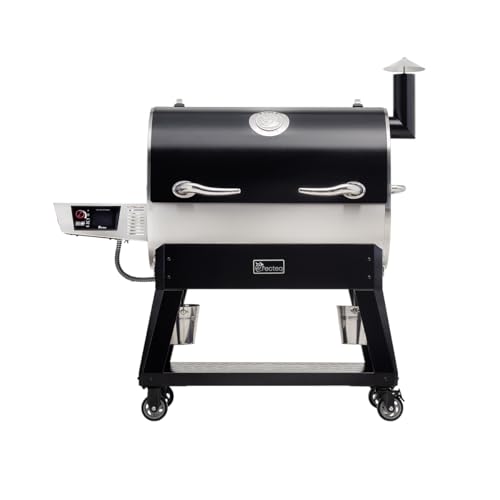
recteq Flagship 1600 Pellet Smoker Grill — Best Overall
The Flagship 1600 is recteq’s largest statement: 1,667 square inches of cooking space, a 40 lb pellet hopper that swallows an overnight cook without a refill, and Wi-Fi control over the whole cook. For a competition team cooking the full four-meat program on pellets, this is the catalog machine that removes the most friction — capacity for brisket, butts and ribs in one chamber, and a hopper sized so the 2 a.m. alarm becomes a choice instead of a necessity.
Strengths
- 1,667 sq in fits a genuine competition load — brisket, butts and ribs with working room
- 40 lb hopper is the overnight specification that matters most in contest cooking
- Wi-Fi monitoring and control let the cook manage the fire from the trailer, the tent or bed
Trade-offs
- It is a large, heavy machine; ‘portable’ means trailer or truck bed and a plan, not a casual lift
- Pellet smoke flavor is cleaner and milder than offset smoke — some traditionalist judges and cooks still prefer stick-burner depth
- Runs on electricity: a competition site needs reliable power or a battery/inverter setup
| Type | Wood pellet smoker grill |
| Cook space | 1,667 sq in |
| Hopper | 40 lb |
| Control | Wi-Fi smart control |
Capacity changes strategy, not just volume. On the Flagship, the whole timeline — brisket on at midnight, butts beside it, ribs in the morning, chicken last — runs in one chamber on one fire, which means one temperature story to manage and no second cooker to feed. The 40 lb hopper is what makes that timeline honest: at typical low-and-slow consumption, it carries the long night without the cook standing in the cold at 3 a.m. shaking pellets down.
The flavor question deserves a straight answer. Pellet smoke at competition temperatures is real wood smoke, and modern pellet teams win with it regularly — but it is a cleaner profile than a well-run offset, and building bark and depth takes deliberate technique: lower temperatures for the first hours, quality pellets, and patience before wrapping. Cooks who accept that trade gain the sleep and consistency that win weekends. Cooks who cannot, should read the offset section below and budget for steel.
Owning the Flagship is a logistics commitment: pellets bought in quantity and stored dry, a cover that actually gets used, and a site-power solution tested before the season. recteq’s support reputation is a genuine part of the purchase — controllers and parts are a phone call, and the owner community’s competition knowledge is deep. Keep the firepot vacuumed on a rhythm and the big chamber’s grease managed, and the machine repays its footprint every single event weekend.
Best for: competition teams cooking the full program on pellets who value sleep and consistency / Not suited for: stick-burner traditionalists or teams without reliable site power
Check on Amazon — check price on Amazon before you buy, since configurations and included accessories change.

Oklahoma Joe’s Highland Reverse Flow Offset Smoker — Best Offset
If the flavor benchmark is offset smoke, the Highland Reverse Flow is the catalog machine that gets a new competition cook closest to it. The reverse-flow design routes heat and smoke under a baffle plate the length of the chamber before it crosses the meat, evening out the hot spots that plague cheap offsets, and 1,093 square inches gives a backyard-class team real room: brisket, butts and ribs in one cook. It asks what offsets always ask — fire craft, attention, wood — and pays back what offsets always pay: depth.
Strengths
- Reverse-flow baffle evens temperatures across the chamber — the single biggest upgrade over entry offsets
- True wood-fire flavor: the reference profile competition brisket is judged against
- 1,093 sq in handles a backyard-class competition load in one chamber
Trade-offs
- You are the controller: splits every 30–45 minutes, through the night, in all weather
- Retail-gauge steel loses heat in wind and cold compared with quarter-inch fabricator pits — plan fuel and shelter accordingly
- Assembly, seasoning and fire-management learning curve are all real; budget your first cooks as tuition
| Type | Reverse flow offset charcoal smoker |
| Cook space | 1,093 sq in |
| Fuel | Charcoal and wood splits |
| Design note | Baffle-plate reverse flow for even heat |
Cooking on the Highland teaches the actual skill of competition barbecue: fire management. A clean fire — small, hot, fed with seasoned splits on a coal bed — produces the thin blue smoke that makes offset brisket famous. The reverse-flow layout forgives some of the learning curve by smoothing the chamber’s temperature map, so a new team can produce even results while their fire craft catches up. That combination — real offset flavor, training wheels built into the airflow — is exactly what a first competition offset should be.
Set expectations about the ceiling honestly. This is a retail offset, not a fabricator pit: the steel is thinner, the doors seal less perfectly, and a January contest in the wind will cost you fuel and sleep that a quarter-inch pit would not. Teams cook their first seasons on machines like this, learn the craft, and either win happily at backyard level or graduate to the fabricator world knowing exactly why. Both are good outcomes.
Highland ownership is a craft routine: season the steel, keep the cooking chamber oiled against rust, manage ash after every cook, and build a seasoned-wood supply a season ahead of your events — dry splits are an ingredient, not an afterthought. Modders add gaskets and tuning tweaks over time, and the pit improves with its cook. Budget a quality cover and a dry wood rack alongside the smoker; they are part of the machine’s real price and its real performance.
Best for: new competition teams who want genuine offset flavor and craft without fabricator pricing / Not suited for: cooks who want to sleep through the night — offsets do not allow it
Check on Amazon — check price on Amazon before you buy, since configurations and included accessories change.

Traeger Timberline 1300 Wood Pellet Grill & Smoker — Best Premium Pellet
The Timberline 1300 is the premium end of the pellet world: 1,300 square inches, WiFIRE app control, Super Smoke mode for the low-temperature hours when smoke uptake matters most, and a 500°F ceiling that lets the same machine finish chicken skin or sear after the smoke. For a competition cook who wants pellet convenience with every refinement the category offers — and a dealer and parts network behind it — this is the benchmark machine.
Strengths
- Super Smoke mode targets the early hours when brisket and butts take on the most smoke
- WiFIRE control and monitoring are mature and well supported
- 500°F max temperature gives the cooker a second life for chicken finishing and hot work between events
Trade-offs
- Premium pricing across the machine, pellets and accessories
- 1,300 sq in is a full contest load for backyard class; pro-division teams cooking volume may want the recteq’s extra room
- Like all pellet cookers, it needs power at the site
| Type | Wood pellet grill & smoker |
| Cook space | 1,300 sq in |
| Max temp | 500°F |
| Control | WiFIRE Wi-Fi app, Super Smoke mode |
Super Smoke is not a gimmick in a competition context; it addresses the pellet cooker’s one honest weakness, smoke intensity, at exactly the phase where it matters. Run the first hours low with enhanced smoke production while the meat is cold and receptive, then raise temperatures to render and finish on schedule. That two-phase rhythm — smoke early, push late — is how experienced pellet teams build bark and color that stand up in a turn-in box.
The Timberline’s other competition virtue is infrastructure. Controllers, auger parts, covers, pellets and knowledgeable dealers are everywhere, and at a contest, the machine you can get a part for on Friday is worth more than a theoretically better machine you cannot. Buy the Timberline for the refinements; keep it for the ecosystem.
Timberline ownership runs on Traeger’s infrastructure: pellets, covers, liners and parts at every outdoor retailer, app updates that keep the controller current, and dealers who can service what they sell. The disciplines are pellet discipline — fresh, dry, one brand per event for predictable burn — and grease discipline in a machine that also grills hot. Owners who keep both describe a flagship that behaves like one for years, at home and on the road.
Best for: competition cooks who want the most refined, best-supported premium pellet cooker / Not suited for: budget-driven teams or cooks who need maximum chamber volume above all
Check on Amazon — check price on Amazon before you buy, since configurations and included accessories change.

Weber Smokey Mountain Cooker 22-inch — Best Charcoal Bullet
No machine in this guide has won more barbecue contests than the Smokey Mountain. The 22-inch model stacks two cooking grates over a water pan and a charcoal ring in a porcelain-enameled bullet, controlled by dampers — a design so effective that generations of competition teams have cooked championship brisket and pork on pairs of them. It burns charcoal, not pellets; it has no electronics at all; and in practiced hands it holds temperature with a steadiness that surprises everyone who underestimates it.
Strengths
- Proven at the highest levels of competition for decades — the results record is unmatched at this tier
- Water pan and charcoal ring deliver remarkably stable long cooks with simple damper control
- Light, transportable and field-repairable: the easiest serious smoker to take to a contest site
Trade-offs
- Capacity per unit is the limit — serious teams run two or three, which is a system, not a single cooker
- No automation: temperature is your dampers, your charcoal arrangement and your attention
- Door and access design make mid-cook maneuvers (wrapping lower-grate meat) a practiced skill
| Type | Vertical charcoal bullet smoker |
| Size | 22-inch, dual cooking grates |
| Body | Porcelain-enameled |
| Control | Temperature control dampers, water pan |
The Smokey Mountain’s competition method is well documented because so many champions learned on it: a full charcoal ring with wood chunks buried in it, lit at one point so the fire creeps slowly for hours; the water pan filled to buffer temperature swings; dampers set once the cooker settles. Run that way, a 22-inch WSM carries a brisket through the night with one or two small adjustments — a standard of stability that embarrasses far more expensive machines.
Its role in a modern team is flexible: a pair handles the big meats while a pellet cooker runs ribs and chicken, or a single unit serves a backyard-class team entire. It is also the finest training smoker in existence — everything it teaches about fire, fuel and airflow transfers directly to offsets and cabinets. If you buy one competition smoker to learn the sport on, this is the one the sport itself recommends.
The Smokey Mountain is the lowest-maintenance serious smoker ever sold: no electronics, no pellets, nothing to update — just porcelain enamel, grates and a water pan. Ownership costs are charcoal, wood chunks and an occasional grate. Keep the vents moving freely, empty ash before it chokes the fire, and store it dry. Teams routinely compete on WSMs older than their youngest member, which tells you everything about the ownership proposition.
Best for: charcoal purists, new competition teams, and as the big-meat cooker in a mixed team setup / Not suited for: cooks who want set-and-forget automation or single-unit maximum capacity
Check on Amazon — check price on Amazon before you buy, since configurations and included accessories change.

Masterbuilt Gravity Series 600 Charcoal Grill Smoker — Best Gravity-Fed
The Gravity Series answers the competition cook’s oldest dilemma: charcoal and wood flavor, pellet-style control. Lump charcoal and wood chunks load into a gravity-fed hopper; a fan, governed by a digital WiFi controller, feeds air to the fire to hold the set temperature. The 600 gives you 600 square inches of cooking space with that system — enough for a backyard-class load — and a flavor profile that comes from actual charcoal, which many judges and cooks still rank above pellets.
Strengths
- Charcoal-and-wood flavor with set-and-forget digital temperature control
- GravityFed hopper burns for long cooks without reloading or fire-tending
- WiFi monitoring fits the modern competition workflow — check the cook from anywhere on site
Trade-offs
- 600 sq in is backyard-class capacity; pro-volume teams will outgrow it as their only cooker
- More moving parts than a bullet or offset — fan and controller need power and care
- Hopper discipline matters: bridging or low-quality lump can interrupt a long cook if you load carelessly
| Type | Gravity-fed charcoal grill smoker |
| Cook space | 600 sq in |
| Fuel system | GravityFed charcoal hopper |
| Control | Digital with WiFi technology |
The gravity concept works because it separates storage from combustion: the hopper holds hours of charcoal above the fire, gravity feeds it down as it burns, and the fan meters the burn rate precisely. The result cooks like a charcoal smoker tastes and a pellet grill behaves — steady temperatures, honest smoke from real wood chunks mixed into the hopper, and a cook who can wrap, rest and prep instead of splitting wood at 4 a.m.
For competition use, treat the 600 as a specialist: it is a superb brisket-and-butt cooker for backyard class, or the flavor anchor beside a larger pellet machine on a bigger team. Load it with consistent lump, mix wood chunks through the hopper rather than only on top, and keep the ash management on schedule. Cooks who run it that way produce the kind of bark that makes people ask which offset you hauled in — the highest compliment this category offers.
Gravity ownership adds two small duties to the charcoal routine: keep the hopper loaded with consistent, quality lump so the feed never bridges, and keep the fan intake and ash system clean so the controller can do its job. Masterbuilt’s parts channel covers the electronics and fan — the components a charcoal purist would call the risk — and owners who keep the hopper discipline describe a cooker that behaves like a pellet grill and tastes like a charcoal pit, season after season.
Best for: competition cooks who want charcoal flavor without fire-tending, at backyard-class scale / Not suited for: high-volume pro teams as a sole cooker, or purists who want zero electronics
Check on Amazon — check price on Amazon before you buy, since configurations and included accessories change.

Traeger Ironwood 885 Wood Pellet Grill & Smoker — Best Mid-Size Pellet
Not every competition team needs sixteen hundred square inches. The Ironwood 885 brings the Timberline’s key competition features — Super Smoke mode, WiFi app control, a 500°F ceiling, the D2 drive system — into an 885 sq in machine that fits backyard-class events, smaller trailers and home competitors who cook the full program in sensible quantities. It is the pellet pick for teams whose limit is logistics, not ambition.
Strengths
- Super Smoke and WiFIRE control — the features that matter — at a more accessible size and tier
- 885 sq in cooks brisket, butts and ribs for backyard-class turn-ins
- D2 controller holds steady lines through long cooks, with the Traeger support network behind it
Trade-offs
- Pro-division volume will crowd it; staging and a second cooker become necessary
- Pellet flavor profile remains cleaner than charcoal or offset smoke
- Needs site power, like every pellet cooker here
| Type | Wood pellet grill & smoker |
| Cook space | 885 sq in |
| Max temp | 500°F |
| Control | D2 controller, WiFi app, Super Smoke mode |
Backyard-class competition is where most of the sport actually happens, and the Ironwood is sized for it precisely. A brisket and two butts overnight, ribs in the morning, chicken to finish — the 885 runs that program without the Tetris of a small cooker or the waste of heating a giant chamber for a modest load. Fuel and pellet consumption follow size, so the whole weekend costs less to run than the flagships.
As a home machine between contests, it is arguably the sweet spot of this entire guide: big enough for parties, refined enough for weeknight grilling at 500°F, and connected enough to run a brisket while you live your life. Teams that outgrow it competitively tend to keep it as the home cooker and add capacity beside it — a graduation pattern that says a lot about the machine.
The Ironwood’s ownership profile is the Timberline’s at a friendlier scale: the same pellet, parts and app ecosystem, the same firepot-and-grease rhythm, in a machine that fits smaller trailers and patios. Its size makes it the cooker most likely to be used weekly at home between events, and weekly use is the best maintenance a pellet grill gets — seals stay supple, pellets stay fresh, and the cook stays sharp for contest season.
Best for: backyard-class competition teams and serious home competitors / Not suited for: pro-volume programs cooking for large turn-in counts on one chamber
Check on Amazon — check price on Amazon before you buy, since configurations and included accessories change.
Comparison Table
| Pick | Badge | Key spec | Best for |
|---|---|---|---|
| recteq Flagship 1600 Pellet Smoker Grill | Best Overall | 1,667 sq in, 40 lb hopper, Wi-Fi | competition teams cooking the full program on pellets who value sleep and consistency |
| Oklahoma Joe’s Highland Reverse Flow Offset Smoker | Best Offset | 1,093 sq in reverse flow offset | new competition teams who want genuine offset flavor and craft without fabricator pricing |
| Traeger Timberline 1300 Wood Pellet Grill & Smoker | Best Premium Pellet | 1,300 sq in, WiFIRE, Super Smoke, 500°F max | competition cooks who want the most refined, best-supported premium pellet cooker |
| Weber Smokey Mountain Cooker 22-inch | Best Charcoal Bullet | 22-inch bullet, dual grates, water pan | charcoal purists, new competition teams, and as the big-meat cooker in a mixed team setup |
| Masterbuilt Gravity Series 600 Charcoal Grill Smoker | Best Gravity-Fed | 600 sq in, gravity-fed charcoal, WiFi | competition cooks who want charcoal flavor without fire-tending, at backyard-class scale |
| Traeger Ironwood 885 Wood Pellet Grill & Smoker | Best Mid-Size Pellet | 885 sq in, Super Smoke, D2 controller | backyard-class competition teams and serious home competitors |
How to Choose the Best Competition Meat Smokers: Capacity, Fuel and the Night
Choose by the cook you must survive: the overnight. Competition brisket and pork go on the evening before turn-ins, and the cooker you choose decides whether you sleep in shifts, sleep properly, or do not sleep at all. Pellet and gravity-fed machines with big hoppers and controllers are sleep machines. Offsets are craft machines that trade your night for flavor depth. Bullets sit between — astonishingly steady once set, but set by your hands. There is no wrong answer; there is only the answer your team can execute at 3 a.m. in October rain.
Capacity second, counted in meats, not inches. A full program — one to two briskets, two butts, three to four rib racks, chicken — needs either one large chamber (the recteq or Timberline class), a gravity or offset in the 1,000 sq in class, or a system of smaller cookers like paired Smokey Mountains, which many veteran teams honestly prefer for the separation it gives each meat. Buy the configuration you can transport, power and clean, because the best cooker is the one that actually arrives at the contest ready to work.
- Sleep-first teams: recteq Flagship 1600 or Traeger Timberline 1300 — hopper capacity plus Wi-Fi control.
- Flavor-first teams: Oklahoma Joe’s Highland Reverse Flow now; a fabricator offset when the budget matures.
- Charcoal traditionalists: one or two Weber Smokey Mountain 22s — the proven system.
- Bridge builders: Masterbuilt Gravity 600 — charcoal taste, digital manners.
The Fabricator Pits: Lang, Yoder and the Direct-Sale World (no link, On Purpose)
Any honest competition guide must name the machines that dominate professional podiums: heavy-gauge offset pits and insulated cabinets from fabricators such as Lang, Yoder Smokers, Lone Star Grillz, Workhorse Pits and similar shops. These are built from thick steel that holds heat through any weather, welded to order, hauled on trailers, and sold direct by their makers — which is why they appear here as prose rather than product links. We verified before writing this guide that these brands do not surface as genuine Amazon listings in the catalog data available to us, and we do not attach links we cannot verify.
Should you buy one? If you are committing to pro-division competition, cooking in serious weather, and budgeting for a trailer pit as a multi-year platform — yes, that is the world where those machines earn their cost, and the catalog cookers above become your practice and support equipment. If you are entering the sport, the sequence that serves most teams best is: learn on a bullet or a catalog pellet cooker, cook a season, then buy steel with knowledge instead of hope. The fabricators will still be there, and you will know exactly which one you want and why.
Smoke Flavor, Bark and Turn-In Reality
Judges score what arrives in the box: appearance, taste and tenderness, in slices and bites that took you fourteen hours to produce. Two technical truths govern most of that score. First, smoke flavor is built early — meat takes on smoke most readily while it is cold and its surface is moist, which is why Super Smoke modes, low first hours and gravity charcoal all aim their effort at the front of the cook. Second, bark is a surface project: rub composition, time unwrapped, and humidity management decide it long before the wrap goes on.
The practical consequence for equipment choice is that control beats brute power. A cooker that holds a steady 250°F with clean combustion for twelve hours will out-cook a hotter, dirtier, more expensive cooker at the judging table every time. That is why this guide’s criteria start with stability and smoke quality — and why the vertical specialists in Best Competition Vertical Pellet Smokers and the everyday machines in Best Consumer Smokers each have their own place in a team’s arsenal.
The Support Cookers: Why Winning Teams Rarely Run One Machine
Watch a seasoned competition team work and you will notice the second cooker. The headline smoker carries the big meats, but the program runs on the support act: a kettle or bullet finishing chicken, a small pellet grill holding ribs at service temperature, a cooker whose only job is to be hot and ready when the schedule compresses in the final hour. Turn-in windows do not forgive a single chamber that is busy doing something else, and the teams that plan capacity in systems — rather than in one heroic machine — are the teams whose boxes go to the table calm and on time.
For a new team, the practical build is staged. Start with one cooker from this guide that covers your big meats and your class honestly. Add the support cooker second — the Smokey Mountain is the classic choice, doubling as a trainer and a chicken specialist — and add monitoring third: multi-probe thermometers and remote alerts before any other electronics. That sequence spends money in the order the score sheet rewards it, and it is how a backyard setup grows into a competition system without a single wasted purchase.
- First purchase: the cooker that carries brisket and pork for your class.
- Second purchase: a support cooker for chicken and holding — the bullet is the traditional answer.
- Third purchase: monitoring — probes and alerts beat any other upgrade at the margin.
Weather: The Contest Variable No Cooker Controls
Every competition cook eventually learns that the forecast is a cooking ingredient. Wind strips heat from thin-wall cookers and pushes offset fires around; cold soaks steel and doubles warm-up times; rain finds the one unsealed seam in a pellet controller. The machines in this guide sit at different points on that exposure curve — insulated and controller-driven cookers shrug off weather that has an offset team building windbreaks at midnight — and a team’s cooker choice is partly a bet on the weather its calendar actually serves.
The practical responses are boring and decisive: arrive with a wind plan (vehicle placement, pop-up walls, cooker orientation), a cold plan (more fuel, longer preheats, insulated blankets where the maker allows them), and a power plan tested under load. Teams lose more trophies to weather logistics than to recipes, and the cooker that fits your worst expected Saturday — not your best — is the cooker this guide has been steering you toward all along.
How to Run an Overnight Competition Cook
The overnight cook is the competition rite of passage. This sequence works across the pellet, gravity and charcoal machines in this guide; offset cooks follow the same skeleton with fire-tending added.
- Afternoon before: trim brisket and butts at home or on site, season, and hold them cold. Inspect the cooker — grates clean, hopper or charcoal ring loaded, probes tested against ice water.
- Evening setup: start the cooker a full hour before the meat goes on. You want a settled, stable temperature and clean smoke, not a machine still climbing when the brisket lands.
- Big meats on: brisket and butts go on fat-side per your method, probes in the thickest part of the flat and the money muscle end of the butt. Note the time; the schedule runs the night, not your nerves.
- The stall hours: when temperatures plateau in the 150s–160s, hold your nerve. This is evaporation doing its work. Spritz if that is your program; otherwise leave the door closed.
- Wrap on color, not clock: wrap when the bark is set and the color is right — the cooker has done the smoke work by then, and the wrap is about moisture and schedule from there.
- Rest like you mean it: finished brisket rests, wrapped and held warm, for at least an hour before slicing — rested meat slices cleaner and stays juicier in the box.
- Ribs and chicken on schedule: work backwards from turn-in times, not forwards from waking up. The timeline card on the trailer wall beats memory at 6 a.m. every single event.
After the event, clean the cooker while the lessons are fresh — ash out, grease managed, grates scraped — and write down what the fire did. Competition cooking improves at the speed of your notes, not your equipment upgrades.
Common Buying Mistakes
- Buying capacity by square inches alone. A chamber’s layout — grate levels, door size, where the heat runs — decides how much of the headline area is usable for whole briskets and rib racks. Count meats, not inches.
- Chasing offset flavor with pellet habits. Each fuel has its own technique. Pellet cooks build flavor with low early temperatures and time; offset cooks with fire quality. Mixing the playbooks produces neither.
- Skipping the power plan. Pellet and gravity cookers need electricity all night. A team that arrives without a tested battery, inverter or generator plan has brought a very expensive charcoal grill with no charcoal in it.
- Opening the door to admire the meat. Every opening costs heat and time the schedule must repay. Probes and cameras exist so the door can stay shut; if you are looking, you are not cooking, as the old line goes.
- Practicing at home differently than you compete. Same cooker setup, same timeline, same boxes. A contest is the worst place to debut a new method, however good it looked on a forum.
- Neglecting grease and ash between events. Grease fires and ash-choked firepots end more competition cooks than bad recipes do. The cleaning hour after each event is part of the entry fee.
Final Recommendation
If your team wants the strongest single catalog machine for a full competition program, the recteq Flagship 1600 is the pick: the capacity is real, the hopper respects your sleep, and the control is contest-grade. The Timberline 1300 is the premium alternative with the deepest support network, and the Ironwood 885 is the right size for backyard class. Charcoal cooks should start — and may happily finish — with the Smokey Mountain 22, while the Gravity 600 serves those who want charcoal flavor with digital manners.
And if your heart is set on a steel offset, start on the Highland Reverse Flow to learn the craft at catalog scale, then graduate to the fabricator world with a season of knowledge. Check price on Amazon for the linked machines before ordering, and keep building the team’s playbook with Best Competition Vertical Pellet Smokers for the cabinet specialists, Best Consumer Smokers for the home side of the sport, Best Custom Bbq Smokers for the built-to-order world, and Best Convection Smokers for the other airflow philosophy.
Shop the shortlist: recteq Flagship 1600 Pellet Smoker Grill, Oklahoma Joe’s Highland Reverse Flow Offset Smoker, Traeger Timberline 1300 Wood Pellet Grill & Smoker.
Frequently Asked Questions
What smoker do most competition teams use?
At professional level, heavy steel offset pits and insulated cabinet smokers from direct-sale fabricators are the most common, with pellet cookers a large and growing share. At backyard level, pellet grills and Weber Smokey Mountain bullets dominate because they balance results, cost and sleep.
Can a pellet smoker really win a barbecue competition?
Yes — pellet teams win sanctioned events regularly. Pellet smoke is milder than offset smoke, so winning pellet cooks build flavor deliberately: low temperatures and smoke modes early, quality pellets, and patience before wrapping.
How big a smoker do I need for competition?
Enough for your program in realistic layouts: a brisket, two butts, several rib racks and chicken across the timeline. That means roughly 900–1,700 sq in in one chamber, or a system of smaller cookers such as paired 22-inch bullets.
Offset or pellet for a first competition smoker?
Pellet if you value sleep, consistency and a shorter learning curve. Offset if the craft and the flavor are the point and you accept fire-tending through the night. Many teams eventually own both and assign meats accordingly.
Do I need Wi-Fi on a competition smoker?
Not need — but it changes the night. Remote temperature monitoring lets a cook rest, prep and manage turn-ins without living beside the cooker, and alerts catch problems while they are still small. At minimum, use a good multi-probe remote thermometer on any cooker.
Why are the famous fabricator pits not linked for sale here?
Because they are sold direct by their makers rather than through standard Amazon listings, and we only link products we can verify in Amazon’s catalog. They are discussed in the guide section so you can research them on their makers’ own sites.


