Disclosure: airfryerkitchensupply.com is reader-supported. When you buy through links on our site, we may earn an affiliate commission at no extra cost to you.
Where to buy
Shopping for the best commercial indoor smokers for restaurants means shopping for freight-class equipment, so this guide links only to verified listings. Every linked pick below is sold through Amazon, which keeps ordering, delivery and returns in one place for a purchase this large. Use the links below to check price on Amazon and confirm the exact configuration before you commit:
- HAKKA Commercial Electric Smoker DSH-S50B — check price on Amazon
- CLIVIA Electric Smoker, 4-Rack Digital Commercial — check price on Amazon
- Masterbuilt 40-inch Digital Electric Smoker with Window and Legs — check price on Amazon
- Smokehouse Big Chief Electric Smoker — check price on Amazon
- EAST OAK 30-inch Electric Smoker, Mist Black — check price on Amazon
- Cookshack AmeriQue-Style Restaurant Smoker Line — sold direct by the manufacturer; see the review below for how to order.
Commercial smokers are freight-class purchases for many buyers, so confirm liftgate delivery, pallet size and who unloads before checkout. A smoker that arrives on a pallet at the kerb is only a bargain if you have the staff and equipment to move it the last fifty feet.
A restaurant that smokes indoors is solving a real estate problem with a cooking technique, and the best commercial indoor smokers for restaurants are the machines that respect both halves of that sentence. The cooking half is easy to describe: electric cabinets, low and steady heat, product that comes out the same on a wet Tuesday as on a slammed Saturday. The real estate half is where projects live or die — a hood or dedicated exhaust, clearances, a landlord’s consent, an insurer’s comfort and a health inspector’s nod. This guide treats the installation as part of the product, because in a restaurant it is.
Restaurant indoor programmes also differ from deli or production smoking in rhythm. The smoker shares a kitchen with a full menu, staff rotate, and service forgives nothing. That favours cabinets with timers and shutoffs, doors that open rarely, and footprints that fit under existing hood runs. It also favours honest menu design: the restaurants that succeed indoors smoke fish, charcuterie, vegetables, bacon and selected cuts on a schedule — production in the quiet hours, service from the hold — rather than trying to replicate a Texas yard under a city hood.
The picks below are the verified electric cabinets that fit that rhythm, plus one famous dealer-sold name discussed in prose. If your building cannot vent, stop here and take the programme outdoors; the general indoor guide in this cluster explains why, and no smoker in this article outranks a fire code.
In this guide
Quick Picks
If you need the short version of the best commercial indoor smokers for restaurants before the detail, start here. Each pick below earned its badge for a different commercial job, and the badge stays the same in the full review further down.
- Best for Charcuterie-Led Restaurants: HAKKA Commercial Electric Smoker DSH-S50B — restaurants building boards, sandwiches and specials on house-cured meats. — Check on Amazon
- Best for Delicate Restaurant Programmes: CLIVIA Electric Smoker, 4-Rack Digital Commercial — restaurants smoking fish, cheese and delicate items on a schedule. — Check on Amazon
- Best for Barbecue-Led Restaurants: Masterbuilt 40-inch Digital Electric Smoker with Window and Legs — restaurants with a serious hood serving smoked barbecue cuts indoors. — Check on Amazon
- Best for Fish and Jerky Specials: Smokehouse Big Chief Electric Smoker — restaurants running a smoked fish or jerky feature at real batch size. — Check on Amazon
- Best for Low-Opening Discipline: EAST OAK 30-inch Electric Smoker, Mist Black — restaurants whose hood capture rewards a door that rarely opens. — Check on Amazon
- Best Dealer-Sold Professional Line: Cookshack AmeriQue-Style Restaurant Smoker Line — restaurants ready to buy through a dealer with installation support. — manufacturer direct, no Amazon listing verified
Restaurant rule of thumb: if the smoker cannot run its main production while the dining room is empty, the concept needs rethinking before the equipment does. Every pick below supports scheduled, low-attention runs for exactly that reason.
How These Picks Were Chosen
Picks were chosen on restaurant criteria: electric heat only; timers, shutoffs and probes that let production run in quiet hours with minimal staffing; stainless or otherwise inspection-friendly construction; and footprints that fit under standard hood runs. Capacity was judged against a restaurant’s smoked programme — features and specials across a week — not against wholesale production.
Every linked pick was verified against the airfry site’s Amazon data before earning a link, with spec boxes quoting only those listings. Cookshack, the name restaurant buyers most often ask about, is covered without a link: its restaurant line is sold direct and through dealers, and it could not be verified through the API in this batch, so it is flagged for final-review verification instead of being given an unverified link.
The 6 Best Commercial Indoor Smokers for Restaurants Reviewed

HAKKA Commercial Electric Smoker DSH-S50B — Best for Charcuterie-Led Restaurants
For the restaurant whose smoked programme is charcuterie — boards, a pastrami sandwich, house bacon — the HAKKA is the production answer: eight racks of electric cabinet, positioned for exactly those products. One or two runs a week cover the programme, in the quiet hours, under the hood it shares with nothing else at 7 a.m.
Strengths
- Eight racks produce a week’s charcuterie in a run or two
- Menu fit is exact: pastrami, sausage, bacon, smoked chicken
- Vertical cabinet respects precious hood space
Trade-offs
- Volume may exceed a small restaurant’s programme
- Indoor installation still needs the full approval path
- Cabinet format limits wide barbecue cuts
| Spec | Detail |
|---|---|
| Racks | 8 racks (per verified listing) |
| Format | Vertical electric smoke oven cabinet |
| Positioning | Listed for pastrami, sausage, bacon and smoked poultry |
| Fuel | Electric with wood chips |
Its restaurant virtue is batch economics. Cured products are patient — they wait for service without losing quality — so a cabinet that produces them in bulk, unattended, turns smoking into a prep task with a notebook instead of a station with a salary. If your menu leans deli, this is the machine the menu is describing.
Ownership and running costs: Ownership is where the HAKKA Commercial Electric Smoker DSH-S50B earns or loses its place after the first month. Its running costs are the ordinary ones for its class — fuel, chips or pellets where relevant, gaskets, probes and the occasional controller or burner part — and none of them should surprise a buyer who budgets a small maintenance line from day one. What protects the economics is routine: a five-minute check on a schedule catches the worn seal, the tired igniter or the ash-choked fire path while it is still a nuisance rather than a lost service. Kitchens that treat this machine as infrastructure, with a named owner and a log, report the familiar pattern of commercial equipment: boring reliability. Kitchens that treat it as a purchase, finished at checkout, meet the other pattern. The HAKKA Commercial Electric Smoker DSH-S50B rewards the first kind of owner, which is precisely the kind a business should be. The verified headline specification — 8 racks (per verified listing) — frames all of it: keep that number in view when you plan loads, staffing and space, and the machine will do the job its badge promises.
Best for: restaurants building boards, sandwiches and specials on house-cured meats / Not suited for: restaurants whose smoked menu is brisket-led
Check the current price on Amazon

CLIVIA Electric Smoker, 4-Rack Digital Commercial — Best for Delicate Restaurant Programmes
The CLIVIA is the restaurant professional’s cabinet in this guide: stainless, digitally controlled from 86°F, and fitted with the 0–12 hour timer and auto shutoff that make unattended production defensible. Smoked fish at dawn, cheese for the board, bacon on a timer — the delicate programme, run like clockwork.
Strengths
- Low 86°F floor handles the fish and cheese a restaurant menu loves
- Timer with shutoff makes overnight production responsible
- Stainless cabinet presents and cleans professionally
Trade-offs
- Four racks caps ambitious programmes
- 248°F ceiling excludes high-heat finishing
- Approvals and ventilation remain the project’s real work
| Spec | Detail |
|---|---|
| Temperature range | 86–248°F digital control (per verified listing) |
| Timer | 0–12 hour timer with auto shutoff |
| Body | Stainless steel cabinet |
| Racks | 4 racks |
Four racks is the honest limit, and for most single restaurants it is the right size: a programme of specials and boards, not a wholesale line. What the CLIVIA sells is not capacity but confidence — the same gentle cook, overnight, with the machine switching itself off. In a restaurant, that confidence is the feature everything else hangs on.
Cleaning and daily care: Cleaning decides how long the CLIVIA Electric Smoker, 4-Rack Digital Commercial stays pleasant to run. Racks and drip paths want attention while they are still warm, when grease wipes rather than chisels; the fire or chip path wants its ash and residue cleared on a fixed rhythm rather than when performance visibly sags. Build both into the closing checklist with initials attached, because commercial cleaning that depends on memory happens exactly as often as memory allows. The good news is that nothing in this machine’s care routine is skilled work — it is timed work, ten minutes in the right places. The bad news is symmetrical: skip those ten minutes for a month and the machine will collect the debt in flavour, in temperature behaviour and eventually in a deep clean that takes an afternoon. Buyers choosing the CLIVIA Electric Smoker, 4-Rack Digital Commercial for restaurants smoking fish, cheese and delicate items on a schedule should cost that daily ten minutes into the decision; it is the real subscription the machine charges. The verified headline specification — 86–248°F digital control (per verified listing) — frames all of it: keep that number in view when you plan loads, staffing and space, and the machine will do the job its badge promises.
Best for: restaurants smoking fish, cheese and delicate items on a schedule / Not suited for: high-volume production kitchens
Check the current price on Amazon
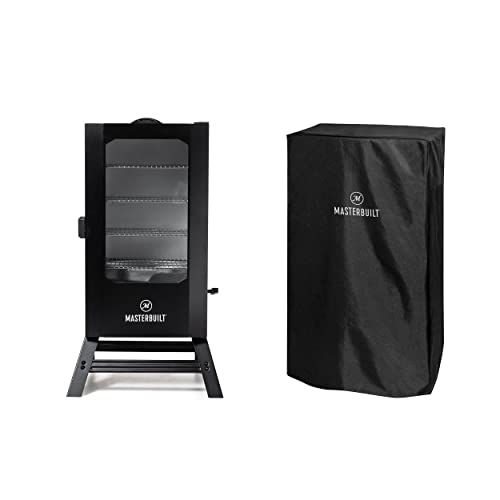
Masterbuilt 40-inch Digital Electric Smoker with Window and Legs — Best for Barbecue-Led Restaurants
Some restaurants want actual barbecue indoors, and for them the Masterbuilt 40-inch is the verified route: the biggest electric cabinet in this guide, digitally controlled, with a window for the pass. Under a hood sized for the job, it runs briskets, butts and ribs on a restaurant schedule.
Strengths
- Largest verified capacity here for restaurants smoking barbecue cuts
- Window supports service-time checks without opening the door
- Digital control keeps rotating staff consistent
Trade-offs
- Barbecue loads are the heaviest smoke and grease duty for a hood
- Window upkeep in a busy kitchen is real
- Not the low-temperature specialist the curing cabinets are
| Spec | Detail |
|---|---|
| Format | 40-inch digital electric vertical smoker (per verified listing) |
| Features | Viewing window and leg kit |
| Control | Digital temperature control |
| Fuel | Electric with wood chips |
The window earns special mention in a restaurant, where the person checking the smoker is often not the person who loaded it. A glance preserves heat and communicates doneness across a shift change better than any note. The demand it makes in return is ventilation honesty: barbecue loads are the heaviest duty in this article, and the installation must be sized for them, not for the fish cabinet you also considered.
Staffing and workflow fit: In a working kitchen the Masterbuilt 40-inch Digital Electric Smoker with Window and Legs is a colleague, and like a colleague it has a temperament the roster must fit. Its demands are predictable — loading, periodic checks, a defined cleaning moment — which makes it easy to write into prep sheets and shift plans. That predictability is worth more than raw capacity in most businesses, because the cook who runs it also runs three other things. Where this machine sits in the workflow matters too: close enough to the pass that checking it costs steps in single digits, far enough from the line’s traffic that its door is not opened by curiosity. Train the routine to two people, write the temperatures and timings on a card that lives with the machine, and the Masterbuilt 40-inch Digital Electric Smoker with Window and Legs becomes the rare station that survives staff turnover intact. That, more than any feature, is what ‘commercial’ means in practice. The verified headline specification — 40-inch digital electric vertical smoker (per verified listing) — frames all of it: keep that number in view when you plan loads, staffing and space, and the machine will do the job its badge promises.
Best for: restaurants with a serious hood serving smoked barbecue cuts indoors / Not suited for: delicate fish and cheese programmes
Check the current price on Amazon

Smokehouse Big Chief Electric Smoker — Best for Fish and Jerky Specials
The Big Chief’s restaurant role is the special: a 50 lb batch of smoked fish for the weekend, a jerky programme for the bar menu, sausage for a standing brunch item. Its low-temperature specialisation and dead-simple operation make it the cabinet a rotating staff cannot really misuse.
Strengths
- 50 lb batches cover a restaurant’s fish or jerky special properly
- Low-temperature specialisation suits delicate menu items
- Foolproof operation for rotating kitchen staff
Trade-offs
- Not a hot-smoking barbecue cabinet
- Basic build beside the stainless professionals
- Ventilation requirements unchanged
| Spec | Detail |
|---|---|
| Capacity | 50 lb capacity (per verified listing) |
| Dimensions | 24.5 x 18 x 12 in (per verified listing) |
| Format | Front-loading electric smoker |
| Fuel | Electric with wood chips |
It is not pretending to be a stainless production plant, and a restaurant should not ask it to be one. As a focused second smoker — or the first smoker of a deliberately narrow programme — its decades-long track record in exactly this work is the recommendation. Restaurants have built beloved specials on far less suitable equipment.
Scaling and menu growth: Buyers rarely stay the size they were, so it is worth asking how the Smokehouse Big Chief Electric Smoker behaves as the programme grows. Its ceiling is honest: when loads regularly fill every rack and the schedule regularly wants a second run, the machine is telling you the programme has outgrown a single unit — at which point it typically becomes the second cooker rather than being replaced, handling overflow, specials or the delicate work while a larger unit takes the core. That graceful second life is a real economic virtue, and it is one reason to choose a recognised design over an obscure one: parts, knowledge and resale interest persist. Plan the growth path when you buy — where a second unit would stand, what it would be — and the Smokehouse Big Chief Electric Smoker stops being a purchase and becomes the first step of a system sized for restaurants running a smoked fish or jerky feature at real batch size. The verified headline specification — 50 lb capacity (per verified listing) — frames all of it: keep that number in view when you plan loads, staffing and space, and the machine will do the job its badge promises.
Best for: restaurants running a smoked fish or jerky feature at real batch size / Not suited for: barbecue-led indoor concepts
Check the current price on Amazon

EAST OAK 30-inch Electric Smoker, Mist Black — Best for Low-Opening Discipline
The EAST OAK’s restaurant case is behavioural: it is engineered to be left alone. Side chip loading, a viewing window and a built-in probe mean a cook can run a full batch with the door opened twice — once to load, once to unload. Indoors, where every opening tests the hood, that discipline is worth capacity points.
Strengths
- Side loader plus window means the door stays shut — ideal under a hood
- Built-in probe supports the logging restaurants should keep
- 725 sq. in. covers a full restaurant programme of cuts
Trade-offs
- Listed for outdoor use — restaurant indoor approval must be won on the installation
- Window cleaning joins the closing list
- Newer brand, thinner service history
| Spec | Detail |
|---|---|
| Cooking space | 725 sq. in. (per verified listing) |
| Chip system | Side chip loader for longer uninterrupted smoking |
| Features | Built-in meat probe and viewing window |
| Fuel | Electric |
The caveat is stated plainly: the listing positions it for outdoor use, so a restaurant installing it indoors carries the approval conversation itself, with the manual and the installer in the room. Where that conversation succeeds, the EAST OAK’s low-attention design fits restaurant rhythm better than any pick here except the timer-equipped CLIVIA.
Who should walk past it: Honesty about fit matters as much as enthusiasm, so here is the other side of the EAST OAK 30-inch Electric Smoker, Mist Black. It is the wrong machine for programmes needing paperwork for indoor-rated equipment, and no discount or deadline changes that. It is also the wrong machine for buyers who will not keep its small routines — the checks, the cleaning, the log — because its design assumes an owner who does. And it is the wrong machine bought for a menu that exists only in ambition: equipment should serve the programme you will actually run this season, with the next season’s growth handled by the scaling path rather than by overbuying today. Buyers whose needs match its badge — Best for Low-Opening Discipline, aimed at restaurants whose hood capture rewards a door that rarely opens — will find it exactly as advertised. Buyers outside that description should take the compliment of a clear ‘not this one’ and choose from the other five with this guide’s blessing. The verified headline specification — 725 sq. in. (per verified listing) — frames all of it: keep that number in view when you plan loads, staffing and space, and the machine will do the job its badge promises.
Best for: restaurants whose hood capture rewards a door that rarely opens / Not suited for: programmes needing paperwork for indoor-rated equipment
Check the current price on Amazon
Cookshack AmeriQue-Style Restaurant Smoker Line — Best Dealer-Sold Professional Line
Cookshack is the name restaurant buyers ask about first, and fairly: its American-made electric smokers have served professional kitchens for decades, with a reputation for precise control and durable cabinets. If you are speccing a serious indoor programme, Cookshack belongs on your quotation list beside the verified cabinets in this guide.
Strengths
- Purpose-built restaurant smokers with a long professional following
- Dealer and direct support suits installed commercial kitchens
- Known for precise electric control in service environments
Trade-offs
- Sold direct and through dealers — no verified Amazon listing for this batch
- Pricing is by quotation, complicating quick comparison
- Installation and support depend on your region’s dealer coverage
It appears in prose for a procedural reason this guide will not hide: the line is sold direct and through dealers rather than through a verified Amazon listing, and it could not be re-verified during this batch. Rather than invent a link, the guide flags it for final-review verification and advises the dealer route — request the quotation, compare total installed cost, and weigh the support network in your area.
Delivery, siting and first month: The first month with the Cookshack AmeriQue-Style Restaurant Smoker Line decides its reputation in the building, so manage it deliberately. Confirm the delivery route and the final position before it arrives — door widths, floor, clearances and the utility it needs — then commission it empty, then with a cheap load, then with the real programme, in that order. Each stage teaches the team something the next stage depends on: the machine’s hot spots, its recovery habits, its voice. Write those lessons down while they are fresh; the card that lives with the machine is the difference between a cooker one person understands and a cooker the whole kitchen runs. Buyers who invest that first month get the boring, profitable years that follow. The Cookshack AmeriQue-Style Restaurant Smoker Line is built for those years — the commissioning is simply how you claim them. The verified headline specification — its verified specification — frames all of it: keep that number in view when you plan loads, staffing and space, and the machine will do the job its badge promises.
Best for: restaurants ready to buy through a dealer with installation support / Not suited for: buyers who need to order equipment online today
Ordering note: this model is sold direct by the manufacturer rather than through a verified Amazon listing, so there is no Amazon link for it here. Order through the maker’s commercial sales channel and get the freight terms in writing.
Comparison Table
| Pick | Badge | Key spec | Best for |
|---|---|---|---|
| HAKKA Commercial Electric Smoker DSH-S50B | Best for Charcuterie-Led Restaurants | 8 racks (per verified listing) | restaurants building boards, sandwiches and specials on house-cured meats |
| CLIVIA Electric Smoker, 4-Rack Digital Commercial | Best for Delicate Restaurant Programmes | 86–248°F digital control (per verified listing) | restaurants smoking fish, cheese and delicate items on a schedule |
| Masterbuilt 40-inch Digital Electric Smoker with Window and Legs | Best for Barbecue-Led Restaurants | 40-inch digital electric vertical smoker (per verified listing) | restaurants with a serious hood serving smoked barbecue cuts indoors |
| Smokehouse Big Chief Electric Smoker | Best for Fish and Jerky Specials | 50 lb capacity (per verified listing) | restaurants running a smoked fish or jerky feature at real batch size |
| EAST OAK 30-inch Electric Smoker, Mist Black | Best for Low-Opening Discipline | 725 sq. in. (per verified listing) | restaurants whose hood capture rewards a door that rarely opens |
| Cookshack AmeriQue-Style Restaurant Smoker Line | Best Dealer-Sold Professional Line | See review | restaurants ready to buy through a dealer with installation support |
For restaurants, read the table as a programme map: HAKKA for charcuterie volume, CLIVIA for delicate low-heat precision with a shutoff timer, the Masterbuilt 40 for barbecue-format production, the Big Chief for fish and jerky tradition, EAST OAK for low-opening discipline, and Cookshack in prose as the dealer-route alternative.
How a Restaurant Should Choose an Indoor Smoker
Start with the menu, written down. List every smoked item you intend to sell for the next year, its batch size and its frequency. That list — not a catalogue — sizes the smoker. A charcuterie board, a smoked fish special and a bacon programme fit a mid-size cabinet beautifully; a whole barbecue menu indoors is a different, larger and more heavily vented project.
Then walk the kitchen with the hood in mind. The smoker lives under exhaust, which means it competes with the range and the fryer for the kitchen’s most contested space. Vertical cabinets win this negotiation. Measure the exact position, the door swing with a pan in hand, and the path a loaded rack takes to the pass. Finally, staff the plan: who loads at 7 a.m., who checks at noon, who cleans at close. A smoker whose routine has no names attached will not keep its routine.
The Restaurant Approval Path: Hood, Code, Landlord, Insurer
Sequence matters. Begin with your local authority’s requirements for electric smoking equipment indoors — many jurisdictions treat it under existing cooking-appliance and exhaust rules, but ‘many’ is not ‘yours’, and the conversation is free. Bring the specific model’s manual; approvals attach to equipment and installation, not to intentions.
Next, the landlord, with the duct route drawn. Then the insurer, with the approval and the cleaning schedule in hand — restaurants that present a documented grease and maintenance plan get easier answers than restaurants that present a purchase order. Only then order the smoker. This order of operations feels slow and is in fact the fastest route: every reversed step risks equipment in storage and a programme announced on a menu it cannot yet serve.
Running a Smoked Programme Inside a Working Restaurant
Schedule production like a prep task, because it is one. Fish and charcuterie runs belong in the morning or overnight; barbecue-format loads belong on the kitchen’s quiet days. Build the week’s smoking into the prep list with the same seriousness as stock and sauces, and the smoker becomes invisible infrastructure instead of a daily negotiation.
Hold and serve honestly. Smoked items hold and reheat with varying grace — fish is same-day food, bacon and charcuterie are patient, brisket wants careful reheating. Design the menu around those truths and quality stays high without heroic effort. And keep the log: temperatures, times, cleaning. In a restaurant, the log is quality control, inspection armour and training material in one notebook.
The Smoked Programme as a Profit Centre
Treated casually, a restaurant smoker is a toy that makes the chef happy. Treated as a profit centre, it is one of the better investments in the kitchen — because smoking transforms inexpensive, patient ingredients into signature items that carry a premium and cannot be bought from a catalogue. Bacon, pastrami, smoked fish and charcuterie share an economic shape: modest raw cost, transformation by time and skill, and a menu price set by story as much as by weight. The smoker is where that transformation happens, on a schedule, in the quiet hours when its labour costs least.
Run the numbers the way you would for any station. Batch yield after smoking and trimming, labour minutes per batch honestly counted, energy and chips, and the menu price the item actually achieves. Programmes that survive this arithmetic get protected in the schedule; programmes that do not get redesigned while the equipment is still young. The arithmetic usually favours the smoker — which is exactly why it should be done, because ‘usually’ is not a costing.
Wholesale is the second act many restaurants miss. A cabinet with spare weekly capacity can supply a sister site, a retail shelf or a local deli with the same products the dining room sells, turning fixed equipment into a small factory. If that future is plausible, size and document for it now: the log-keeping and consistency habits wholesale buyers demand are the same habits this guide recommends for the dining room alone.
Service Integration: From Smoker to Plate Without Drama
The smoker’s output meets its test at the pass, and integration is designed, not discovered. Decide for each smoked item its service form before the first production run: sliced to order or portioned in prep, served warm or at room temperature, reheated by which method and for how long. Smoked fish wants gentleness; bacon wants a pan; pastrami wants steam’s kindness. Writing these decisions into the item’s production sheet means any cook on any shift plates the same dish the chef approved.
Holding is the second design decision. Smoked items are unusually hold-friendly — that is their historical purpose — but ‘holds well’ is not ‘holds forever’, and quality windows should be set, written and enforced with the same seriousness as the cook itself. Date, rotate and taste on schedule; the discipline that makes charcuterie safe is the same discipline that keeps it delicious.
Finally, let the menu breathe with the smoker’s rhythm. Specials that follow the production calendar — the fish that smoked on Tuesday is Thursday’s feature — turn a constraint into a story guests enjoy. Restaurants that market the rhythm (‘smoked in-house every Tuesday’) find the constraint was an asset wearing overalls.
Training, Turnover and the Written Smoker Routine
Restaurant staffing is a river, and any programme that lives in one person’s head is a programme with a resignation date. The smoker routine must therefore be a document: loading maps with photographs, temperatures and times per product, chip quantities, the check rhythm, the cleaning list and the log. Written once, honestly, by the person who knows — then tested by having the newest hire execute it unaided while the expert watches silently. Every place the document fails the test gets rewritten, not explained.
Cross-train deliberately: two people minimum who can run production, everyone on the closing team able to clean and log. Rotate the smoker duty enough that knowledge stays plural but not so much that ownership dissolves — a named primary with a trained deputy is the structure that survives both holidays and departures.
Revisit the document quarterly. Products change, the cabinet’s habits drift with age and season, and the routine should absorb those lessons while they are cheap. The restaurants whose smoked programmes last years are not the ones with the best first month; they are the ones whose binder is in its fourth revision.
Your Decision Checklist as a Restaurant Buyer
Begin with the menu on paper — every smoked item for the next year, its batch size and its weekly rhythm — because a restaurant smoker sized by a menu is a tool, and one sized by a catalogue is a hope. Match the written menu against each candidate’s racks at real spacing, and let the menu, not the showroom, strike the oversized and the undersized alike. Most single restaurants discover their programme fits the mid-size cabinets in this guide with room for one growth item, which is exactly where a buyer wants to land.
Second, the approvals sequence from the guide above — authority, landlord, insurer — completed before ordering, with the chosen model’s manual as the conversation’s subject. Third, the staffing map: who loads in the quiet hours, who checks, who cleans at close, and the second trained name for every role. A candidate whose routine cannot be staffed twice over is eliminated, however perfect its temperature range.
Fourth, service integration: each menu item’s holding window and plating form decided and written, so the smoker’s output meets a plan at the pass rather than an improvisation. Fifth, the costing: batch yields, labour minutes and running costs against real menu prices, reviewed after the first month of production and quarterly thereafter. Restaurants that work this checklist treat the smoker as what it is — a small factory inside the kitchen — and factories, unlike gadgets, get managed. That management, more than the badge on the door, is what the guests eventually taste.
Maintenance Rhythm That Survives a Restaurant Roster
A restaurant’s smoker maintenance must be designed for the staff it has, not the staff it wishes for — which means short tasks, attached to existing rituals, with initials. The closing list carries the daily work: racks and drip system cleaned warm, interior wiped, run logged. The weekly list, owned by the smoker’s named primary, carries seal and temperature verification and the vent-path glance. Nothing on either list exceeds fifteen minutes, because restaurant maintenance that takes longer gets negotiated away by Friday.
Monthly, the primary and one manager review the log together: cook times, yields, any drift in either. That ten-minute meeting is where a failing seal, a drifting controller or a product quietly changing character gets caught while it is still a conversation instead of a complaint. Restaurants run on such meetings for every other station; the smoker deserves the same dignity.
Quarterly, align the deep clean with the paperwork: approvals, insurance conditions, cleaning records and the production sheets revised against what the log has taught. The programme that survives staff turnover is the one whose knowledge lives in these rhythms and documents — the machine itself is almost the least of it.
Questions to Ask Before the Smoker Joins the Kitchen
Ask the menu first: which items, what batch, how often — and does the shortlisted cabinet hold that programme at real spacing with one growth item to spare? Ask the building next, in the guide’s sequence — authority, landlord, insurer — with the specific model named in every conversation. Ask the roster after that: the primary, the deputy, the closing team’s cleaning share, all named rather than assumed.
Ask the pass how each smoked item will be held and plated, and write the answers onto the production sheets before the first run rather than after the first complaint. Ask the numbers last and honestly: yield, labour minutes, running costs against achieved menu prices, with a review date in the diary. A restaurant smoker bought on those answers becomes infrastructure — the highest compliment kitchen equipment can earn — and the questions take one focused hour that the programme will repay weekly for years.
How to Commission an Indoor Smoker in a Restaurant Kitchen
Step 1: Install and verify capture. Position the cabinet under the hood per the approval, then test exhaust capture at the door seam with a smoke pencil or tissue during a seasoning run. Fix capture problems now, while the only thing smoking is an empty cabinet.
Step 2: Season and calibrate. Run the empty heat cycle, then verify the cabinet’s displayed temperature against a reference probe at rack level. Restaurant consistency starts with knowing what the dial actually means.
Step 3: Trial the full programme quietly. Cook each menu item once, off-service, and write down times, temperatures, chip loads and yields. Those notes become the production sheets the whole team cooks from.
Step 4: Train two people, minimum. The smoker’s routine — loading, checking, cleaning, logging — must survive one person’s day off and another’s resignation. Cross-training is the cheapest insurance a small kitchen buys.
Step 5: Put cleaning on the closing list. Racks, drip management, interior wipe and a weekly vent-path check, with initials. What gets initialled gets done; what gets assumed gets greasy.
Common Buying Mistakes
Ordering before approvals. The classic restaurant error. Hood, code, landlord and insurer first — equipment second.
Designing a yard menu for a hood. Indoor programmes win on fish, charcuterie, vegetables and selected cuts. A full Texas menu indoors is a ventilation project disguised as a menu.
Smoking through Friday service. Production belongs in quiet hours. The dining room’s air is part of the product.
One trained person. When the only smoker operator is away, quality walks out with them. Train two, write it down.
Neglecting the grease paper trail. Cleaning that is not logged did not happen, as far as inspectors and insurers are concerned.
Under-sizing the electrical supply. A cabinet sharing a strained circuit trips breakers at the worst hour. Have the circuit checked during installation, not after the first outage.
Final Recommendation
Most restaurants should start with the CLIVIA for a delicate, timer-disciplined programme or the HAKKA when charcuterie volume leads; barbecue-led concepts with a serious hood can step up to the Masterbuilt 40-inch. The general case is made in Best Commercial Indoor Smokers, the full electric field in Best Commercial Electric Smokers and Best Electric Smokers, and the wider cluster at Best Commercial Smokers, with meat-led buying in Best Commercial Meat Smokers and restaurant context in Best Smokers For Restaurants.
Shortlist again, for convenience: HAKKA Commercial Electric Smoker DSH-S50B, CLIVIA Electric Smoker, 4-Rack Digital Commercial, Masterbuilt 40-inch Digital Electric Smoker with Window and Legs. Each link goes to the verified listing used throughout this guide — check price on Amazon there and confirm the configuration before ordering.
Frequently Asked Questions
Do restaurants need permission to smoke indoors?
In practice, yes — the installation must satisfy local fire and health codes, usually the landlord’s terms, and the insurer. Electric equipment under proper exhaust is the standard approved route; confirm your jurisdiction’s specifics before ordering.
What do restaurants actually smoke indoors?
Mostly the low-temperature programme: fish, bacon, sausage and charcuterie, cheese, vegetables and nuts, plus selected barbecue cuts where the hood is serious. The menu should be designed around what indoor equipment does best.
Can an indoor smoker run overnight in a restaurant?
With a timer and auto shutoff, a suitable electrical supply and an approved installation, overnight runs are common — they are how many restaurants keep production out of service hours. The cleaning and logging routine still applies.
How big a smoker does a restaurant need?
Size it from the written menu: batch sizes and weekly frequency of the smoked items. Most single-restaurant programmes fit the mid-size cabinets in this guide; wholesale ambitions are a different equipment class.
Is Cookshack worth the dealer route?
Cookshack’s restaurant cabinets are respected professional equipment sold direct and through dealers. This guide covers the line in prose because it could not be listing-verified in this batch; get a quotation and compare total installed cost against the verified cabinets here.
Will indoor smoking make the whole restaurant smell?
A correctly captured installation and quiet-hours production keep the dining room clear. Poor capture or mid-service production runs are what perfume a restaurant — both are planning failures, not equipment failures.


