An attic fan moves air out of the attic space to help it exchange air with the outside. Common types include roof-mounted, gable-mounted and solar-powered units, each with a different fitting method and control setup. Many include a thermostat or humidity control.
This guide suits homeowners who are planning an attic upgrade and want to understand the options. We have not used these products ourselves; we compare the information in each listing, so confirm details with the maker and a qualified installer where needed.
As an Amazon Associate we earn from qualifying purchases. Links on this site are affiliate links, and they do not change the information we give.
In this guide
Quick Picks
Five attic fans covering each mounting and power type in the guide: two smart gable fans, a simple thermostat gable fan, a solar roof unit and a hybrid solar roof fan.
| Product | Type | Best For |
|---|---|---|
| QuietCool AFG SMT PRO-2.0 Smart Attic Fan for Gable Vents, 1945 CFM | Smart gable fan | Most homes wanting app control |
| QuietCool AFG SMT PRO-3.0 Smart Attic Fan for Gable Vents, 2940 CFM | Smart gable fan, high airflow | Larger or hotter attics |
| Broan-NuTone 353 Gable Mount Attic Ventilation Fan | Electric gable fan | Simple thermostat-only control |
| Broan-NuTone 345SOBK Solar-Powered Attic/Garage Ventilation Fan, 537 CFM | Solar roof/surface fan | Small attics and garages, no wiring |
| iLIVING HYBRID Ready Smart Thermostat Solar Roof Attic Exhaust Fan 14″, 1750 CFM | Hybrid solar roof fan | Sunny roofs wanting thermostat control |
Our Picks
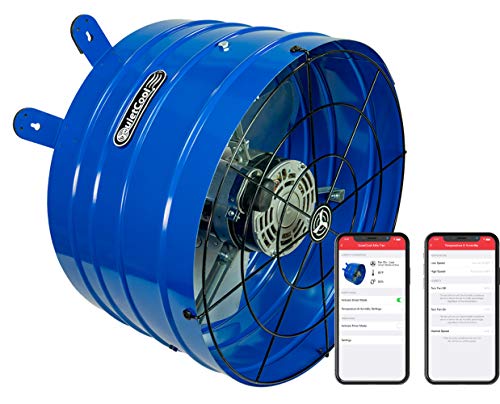
Top pick
1. QuietCool AFG SMT PRO-2.0 Smart Attic Fan for Gable Vents – 1945 CFM – Smart App Control – Thermostat & Humidistat – Plug-and-Play – Two Speed
The PRO-2.0 is the balanced starting point for a gable attic: up to 1,945 CFM from a two-speed PSC motor, with app-based thermostat and humidistat control, so it reacts to both heat and moisture instead of relying on manual switching, a gap the guide warns against. The listing describes plug-and-play fitting with a long power cord and a fire safety shut-off sensor, which simplifies installation where a suitable outlet already exists in the attic, though any new wiring should still go to a qualified electrician. At this airflow it suits small to mid-sized attics, provided the soffit intake area is adequate; without enough intake, any fan can pull air from the living space instead. App control is convenient but adds setup steps compared with a plain thermostat dial. Before ordering, confirm your gable vent dimensions against the housing and check local code notes, exactly as the guide advises.


2. QuietCool AFG SMT PRO-3.0 Smart Attic Fan for Gable Vents – 2940 CFM – Smart App Control – Thermostat & Humidistat – Plug-and-Play – Two Speed
Step up to the PRO-3.0 if your attic is large, dark-roofed or in a hot climate: the listing rates it at 2,940 CFM with a two-speed motor, app control and combined thermostat and humidistat, and quotes a low operating noise figure for a fan of this capacity. That extra airflow only helps if the intake side can feed it, so the guide’s warning applies doubly here: check soffits and baffles first, or the stronger fan will simply pull harder on ceiling gaps. Like the 2.0, it is a plug-and-play gable design with a long cord and safety shut-off, avoiding a roof penetration entirely. The trade-offs are higher power draw on the top speed and a larger housing that must fit the gable opening and clear stored items. It is the pick for homeowners who have measured their attic floor area, found the smaller fans marginal, and want automated control rather than a basic thermostat.
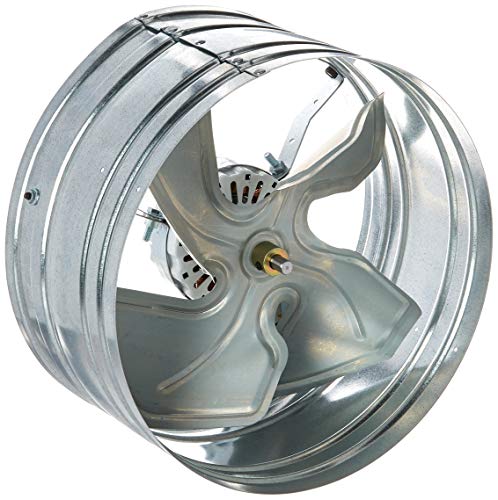
3. Broan-NuTone 353 Gable Mount Attic and Garage Ventilation Fan, 760 CFM
Not everyone wants an app. The Broan-NuTone 353 is a traditional hardwired gable-mount ventilator in galvanised steel with a built-in adjustable thermostat, listed at 760 CFM in the specification data, with some listings quoting higher figures for the same model family, so confirm the exact rating on the product page before sizing your attic. That modest airflow suits smaller attics, garages and partial ventilation jobs, and the simple control set means fewer settings to revisit each season. Steel housing handles attic heat well and the design has been sold for years, which helps with parts familiarity for installers. The compromises are real: no humidity sensing, no remote control, and hardwiring means an electrician for most households, plus the lower airflow will under-serve a big, hot attic. Choose it if you value mechanical simplicity and a metal build over smart features, and pair it with adequate soffit intake as the guide insists.

4. Broan-NuTone 345SOBK Solar-Powered Attic/Garage Ventilation Fan, 28-Watts, 537 CFM, Surface Mount
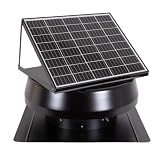
The solar entry in this group, the Broan-NuTone 345SOBK, uses a 28-watt solar panel to drive a surface-mount fan rated at 537 CFM, so it needs no household wiring at all, the main advantage the guide identifies for solar units. That makes it a realistic option for garages, sheds with attic spaces and smaller home attics where running a new electrical line would cost more than the fan. The black surface-mount housing sits on the roof rather than in a gable, so flashing and sealing still need care, and panel position decides performance: a shaded or north-facing slope will rarely deliver the rated output. Airflow is modest, so set expectations accordingly; this supports a ventilation system rather than transforming a large hot attic on its own. There is no battery or hybrid backup in this design, meaning no ventilation after dark. Best where sun is reliable and the space is small.
View Broan-NuTone 345SOBK Solar on Amazon
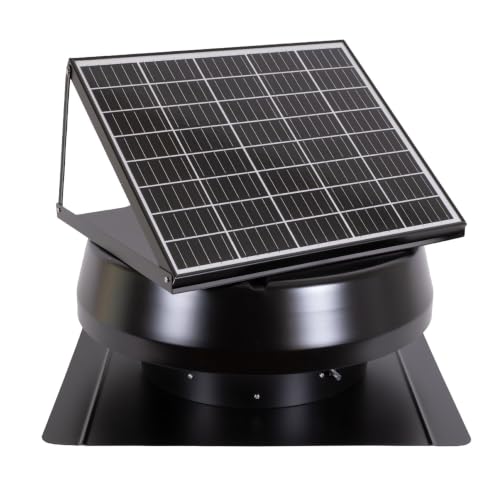
5. iLIVING HYBRID Ready Smart Thermostat Solar Roof Attic Exhaust Fan, 14″, 1750 CFM, 2500 Coverage Area, Black (ILG8SF301)
The iLIVING roof fan was verified directly on its product page: a 14 inch solar unit with a 40 watt adjustable panel, a smart thermostat adjustable from 50 to 122 degrees, an IP68 waterproof brushless motor and airflow quoted at 1,750 CFM covering up to about 2,500 square feet, though the page also cites 1,150 CFM in its summary, so check the current listing figures before sizing. The hybrid-ready design is the differentiator: an optional AC/DC adapter kit, sold separately, allows night running, answering the usual solar weakness. It is a roof-mount unit, so installation means cutting and flashing a roof opening, work the guide says belongs with a qualified installer if you are not confident. The listed noise figure is not especially low, and output still depends on sun exposure. It suits sunny roofs on mid-sized homes where you want solar running costs with a thermostat and an upgrade path to hybrid power.
What to Look For
| Factor | Why it matters | What to check |
|---|---|---|
| Mounting type | Roof and gable units fit differently. | Check which mounting your attic needs. |
| Airflow figure | The maker’s airflow figure helps you compare sizes. | Compare it with your attic area. |
| Power source | Electric and solar units differ in wiring and placement. | Read the power and wiring notes. |
| Controls | A thermostat or humidity control can reduce manual work. | Check which controls are included. |
| Housing material | Metal and plastic housings differ in weight and weather handling. | Read the material description. |
| Noise note | Some makers describe sound levels. | Look for the maker’s own noise note. |
| Install needs | Some jobs need roof or electrical work. | Check what tools and skills are listed. |
Setup and Care Tips
- Read the maker’s instructions and local code notes before you begin.
- Consider hiring a qualified installer for roof or wiring work.
- Check that the attic has enough intake vents for the fan you choose.
- Keep the unit and screen clear of leaves and debris.
- Inspect mounting hardware and seals every season.
Mistakes to Avoid
- Choosing a fan without measuring the attic area.
- Ignoring intake vents and relying on the fan alone.
- Skipping the control type and ending up with manual switching.
- Buying a roof unit when a gable mount suits the house.
- Assuming every home can use the same model.
How Attic Ventilation Works as a System
An attic fan is only one part of a ventilation system. For it to work well, the attic needs a path for air to enter and a path for air to leave. Intake vents are usually placed low, along the eaves or soffits, and the fan or exhaust vents sit high, near the ridge or at the gable ends. When the fan runs, it draws air from the intake to the exhaust, carrying heat and moisture with it.
If the intake openings are too small or blocked, the fan has to pull air from somewhere else. This can include the living space below, through gaps around light fixtures, hatches, or ducts. That is not what most homeowners want. Check the soffits for insulation or paint blocking the openings, and look at whether baffles keep insulation clear of the airflow. Birds’ nests, debris, and screens clogged with dust can also restrict intake.
A good plan starts with an honest look at the whole attic. Note the existing vents, their types, and their locations. Look for signs of poor ventilation, such as stains, damp insulation, or a stale smell. A qualified roofer, a ventilation specialist, or a building professional can assess whether a fan will help or whether passive vents would do the job. Treat the fan as an addition to a balanced system, not a cure for blocked or missing intake.
Roof, Gable, and Solar Types Compared
Each type of attic fan suits different homes. Roof-mounted fans sit on the roof surface, usually near the ridge, and exhaust air directly outdoors. They need an opening cut in the roof and proper flashing to keep out water, so installation is more involved. They suit homes where gable vents are limited or where the roof layout allows central placement.
Gable-mounted fans fit into or behind a gable vent opening on the end wall. They are easier to reach and often simpler to install, but their effect depends on the layout of the attic and the location of the gable. In a long, narrow attic, one gable fan may not move air evenly. Solar-powered units use a panel to run the motor, so they need no wiring to the house, but they depend on sun exposure, and the panel placement matters.
- Roof-mounted: Central placement, needs roof work, requires sound flashing.
- Gable-mounted: Easier access, depends on layout and orientation.
- Solar-powered: No household wiring, depends on sun and panel position.
- Hardwired electric: Reliable power supply, needs a safe electrical connection.
Read the listing for the mounting details, the power requirements, and the roof types it fits. Some roof styles need special flashing, so confirm compatibility before buying.
Sizing and Matching to Your Attic
Sizing starts with the attic floor area, which you can measure or estimate from the house plans. Makers give an airflow figure, and the listing or manual may offer guidance on how to match it to the attic area. Use that as a first check and keep a margin for the type of roof, the color, and the climate. A dark roof in a hot area may call for more airflow than a lighter roof in a mild one.
An oversized fan is not always better. Too much pull without enough intake can cause the problems already described, and it may cycle on and off more than needed. An undersized fan may run all the time without moving enough air. Ask a professional if you are unsure, and bring the dimensions of the attic, the pitch of the roof, and the number and size of existing vents.
Also check the physical size of the fan. The opening must fit between rafters or trusses, and the housing must sit clear of wiring, ducts, and insulation. Measure the space, and compare it with the dimensions in the listing. If your roof has unusual framing, confirm with the installer before you order. Finally, check what the maker says about local codes, as some areas have rules about vent area, electrical connections, or the use of fans with fuel-burning appliances in the house.
Safety and Code Considerations
Attic work carries real risks, from falls and heat to electrical hazards. If you are not comfortable working on a roof or around wiring, hire a qualified professional. Never work alone in a hot attic, wear suitable footwear and protective gear, and step only on solid framing. Turn off power at the breaker before touching any wiring, and use a tester to confirm it is off.
One important concern is back-drafting. If the house has a fuel-burning appliance, such as a furnace, water heater, or fireplace, a strong attic fan can pull air through the living space and affect how exhaust gases leave the house. Ask a qualified professional to check this, and make sure carbon monoxide alarms are installed and working. Follow the maker’s guidance on this point.
Check local building codes and permit requirements before starting. Some areas require permits for roof penetrations or electrical changes. Use the correct wire, connectors, and fixings, and follow the maker’s instructions closely. Make sure any thermostat or humidity control is set according to the manual. After installation, test the fan and watch for unusual noise, vibration, or leaks. If you see signs of damage after a storm, turn the fan off and have it inspected.
Maintenance and Signs of Trouble
Attic fans work out of sight, which makes it easy to forget them. A seasonal check keeps them running well. Inspect the housing, screens, and flashing for damage. Clear leaves, nests, and dust from the intake and exhaust areas. Look at the blades and the motor housing for dirt, which can reduce airflow and create noise. If the maker advises lubrication, follow the instructions closely, and do not oil sealed motors.
Test the thermostat and humidity controls once or twice a year. On a warm day, check that the fan starts when it should and stops when it should. If it runs constantly or never starts, check the settings, then consult the manual. Listen for grinding, squealing, or rattling, which can indicate worn bearings or loose parts. Look for water stains near the unit after rain, which suggest flashing or seal problems.
- Fan runs but moves little air: Check for blocked intake and dirty blades.
- Fan does not start: Check the power, breaker, controls, or panel position for solar types.
- Strong vibration: Check mounting hardware and the balance of the blades.
- Moisture or leaks: Inspect the flashing and seals.
Replace a unit that is damaged, noisy beyond repair, or no longer controllable. Contact a qualified installer for any work on the roof or wiring.
Choosing attic fans With Confidence: A Deeper Look
Start with the job, not the product. Before comparing any attic fans, write down what yours actually has to do in a normal week: who uses it, how often, for how long at a stretch, and what has frustrated you about the option you are replacing. That short list becomes the filter for everything else in this guide. Features that do not serve your list are decoration, while the two or three things on it deserve most of your attention and most of your budget. Readers who skip this step usually end up with an attic fan that is impressive on paper and slightly wrong in daily life, which is the most common reason good products get returned.
Next, audit the space and the routine it has to fit. Measure where the attic fan will live and where it will be stored, note the surfaces, light, moisture, heat or traffic it will face in the roof space above the house, and think about who else will handle it. A choice that fits the room but fights the routine still fails, so picture the busiest, messiest, most rushed version of your day rather than the tidiest one. If other people in the household will use it, their habits count too: the best attic fan for homeowners fighting summer heat trapped overhead is the one everyone can use correctly without a lesson every time.
Airflow matched to attic size
A fan too small for the attic volume stirs the air without changing it; correctly sized ventilation exchanges the hot air at a useful rate. Work out your attic’s size honestly, including the roof pitch volume, and match the fan to it using the maker’s sizing guidance rather than optimism.
Vent area to feed the fan
A fan can only exhaust air that can enter. Adequate intake venting at the eaves is the silent partner of every attic fan, and undersized intake makes the fan pull air from the house instead, taking your cooled air with it. Assess intake before blaming or praising any fan.
Power source and running pattern
Mains-powered fans with thermostats run whenever the attic needs them; solar fans run free in sunshine and rest at night. Match the pattern to your climate and heat problem. A fan that runs exactly when the attic bakes is the goal, whichever way it is powered.
Noise through the ceiling
The fan lives above bedrooms. Vibration and hum transmit through framing, so mounting quality and the fan’s own noise character matter. A powerful fan you switch off for the noise is less useful than a quieter one that runs all summer unnoticed.
Controls and safety features
Thermostats, humidistats and smart controls each automate the fan differently, and a thermal safety shutoff is a worthwhile protection. Choose controls you will set once and trust. In fire-prone regions, discuss attic ventilation choices with local guidance, because ember and smoke considerations can apply.
Compatibility is the quiet deal-breaker. Check the requirements that sit around the attic fan itself: the fittings, power, mounting points, accessories, consumables or companion pieces it assumes, and whether your current setup already provides them. Confirming these details before ordering is dull and decisive in equal measure. It is far cheaper to discover a mismatch on a listing page than on the floor with the packaging open. Keep the product manual or listing open while you check, and measure twice wherever a dimension decides whether something fits, connects or closes properly.
Attic fans in Real Life: Common Situations
A house that bakes upstairs by evening
When bedrooms stay hot hours after sunset, the attic is usually storing the day’s heat above them. Effective exhaust ventilation after a hot day shortens that lag noticeably. Pair the fan with sealed ceiling penetrations so the system cools the attic, not by stealing the house’s air.
A workshop or garage attic problem
Garages and workshops overheat their storage and the rooms beside them. A gable fan sized for the space protects stored items and makes the space workable. Ventilation here is less about comfort and more about everything you store not slow-cooking all summer.
Humid climates and winter moisture
Attic moisture in winter damages insulation and timber as surely as summer heat. Fans with humidity-based control address the damp season too. In cold climates, balance ventilation advice locally, because the goal is removing moist air without creating new problems.
Solar versus mains in a sunny climate
Where roofs bake in reliable sun, solar fans work hardest exactly when needed and cost nothing to run. Where heat lingers into the evening or skies are mixed, mains power with a thermostat keeps working after sunset. Your sunset temperatures decide this more than your midday ones.
How the Picks in This Guide Compare
Use the picks in this guide as a shortlist, not a ranking to obey blindly. Read the review of each option with your own list beside it, and notice which pick keeps answering your specific frustrations. The first pick in a list is rarely the right pick for every reader; it is simply a strong starting point. Cross off options that miss a requirement entirely, however appealing their other qualities are, then compare what remains on the two or three criteria you care about most. That process usually leaves one obvious candidate and one sensible runner-up, which is exactly where a buying decision should end up.
The shortlist above, QuietCool AFG SMT PRO-2.0 Smart Attic Fan for Gable Vents – 1945 CFM – Smart App Control – Thermostat & Humidistat – Plug-and-Play – Two Speed, QuietCool AFG SMT PRO-3.0 Smart Attic Fan for Gable Vents – 2940 CFM – Smart App Control – Thermostat & Humidistat – Plug-and-Play – Two Speed, Broan-NuTone 353 Gable Mount Attic and Garage Ventilation Fan, 760 CFM, Broan-NuTone 345SOBK Solar-Powered Attic/Garage Ventilation Fan, 28-Watts, 537 CFM, Surface Mount, and iLIVING HYBRID Ready Smart Thermostat Solar Roof Attic Exhaust Fan, 14″, 1750 CFM, 2500 Coverage Area, Black (ILG8SF301), covers the main directions a buyer in this category usually faces. Rather than treating them as a ladder from best to worst, treat them as answers to different priorities. Work through them in the order of your own list: find the pick whose review speaks to your biggest frustration first, then check whether its trade-offs touch anything you care about. A trade-off that lands on something you never do is free; a trade-off that lands on your daily routine is a reason to move to the next pick, whatever its position in the list.
Who should start with the QuietCool AFG SMT PRO-2.0 Smart Attic Fan for Gable Vents – 1945 CFM – Smart App Control – Thermostat & Humidistat – Plug-and-Play – Two Speed
Start with the QuietCool AFG SMT PRO-2.0 Smart Attic Fan for Gable Vents – 1945 CFM – Smart App Control – Thermostat & Humidistat – Plug-and-Play – Two Speed if its review above matches the way you actually live with attic fans: the setting it suits, the routine it fits and the compromises it makes. Read its limitations as carefully as its strengths, because every pick in this guide gives something up to be good at something else. If its limitation sits in an area you barely use, it may be your best value in the list. If its strength duplicates something you already own or never need, keep moving, since the right pick is the one whose strengths land on your week, not the one with the longest feature list.
Who should start with the QuietCool AFG SMT PRO-3.0 Smart Attic Fan for Gable Vents – 2940 CFM – Smart App Control – Thermostat & Humidistat – Plug-and-Play – Two Speed
Start with the QuietCool AFG SMT PRO-3.0 Smart Attic Fan for Gable Vents – 2940 CFM – Smart App Control – Thermostat & Humidistat – Plug-and-Play – Two Speed if its review above matches the way you actually live with attic fans: the setting it suits, the routine it fits and the compromises it makes. Read its limitations as carefully as its strengths, because every pick in this guide gives something up to be good at something else. If its limitation sits in an area you barely use, it may be your best value in the list. If its strength duplicates something you already own or never need, keep moving, since the right pick is the one whose strengths land on your week, not the one with the longest feature list.
Who should start with the Broan-NuTone 353 Gable Mount Attic and Garage Ventilation Fan, 760 CFM
Start with the Broan-NuTone 353 Gable Mount Attic and Garage Ventilation Fan, 760 CFM if its review above matches the way you actually live with attic fans: the setting it suits, the routine it fits and the compromises it makes. Read its limitations as carefully as its strengths, because every pick in this guide gives something up to be good at something else. If its limitation sits in an area you barely use, it may be your best value in the list. If its strength duplicates something you already own or never need, keep moving, since the right pick is the one whose strengths land on your week, not the one with the longest feature list.
Who should start with the Broan-NuTone 345SOBK Solar-Powered Attic/Garage Ventilation Fan, 28-Watts, 537 CFM, Surface Mount
Start with the Broan-NuTone 345SOBK Solar-Powered Attic/Garage Ventilation Fan, 28-Watts, 537 CFM, Surface Mount if its review above matches the way you actually live with attic fans: the setting it suits, the routine it fits and the compromises it makes. Read its limitations as carefully as its strengths, because every pick in this guide gives something up to be good at something else. If its limitation sits in an area you barely use, it may be your best value in the list. If its strength duplicates something you already own or never need, keep moving, since the right pick is the one whose strengths land on your week, not the one with the longest feature list.
Who should start with the iLIVING HYBRID Ready Smart Thermostat Solar Roof Attic Exhaust Fan, 14″, 1750 CFM, 2500 Coverage Area, Black (ILG8SF301)
Start with the iLIVING HYBRID Ready Smart Thermostat Solar Roof Attic Exhaust Fan, 14″, 1750 CFM, 2500 Coverage Area, Black (ILG8SF301) if its review above matches the way you actually live with attic fans: the setting it suits, the routine it fits and the compromises it makes. Read its limitations as carefully as its strengths, because every pick in this guide gives something up to be good at something else. If its limitation sits in an area you barely use, it may be your best value in the list. If its strength duplicates something you already own or never need, keep moving, since the right pick is the one whose strengths land on your week, not the one with the longest feature list.
Setup, First Use and Everyday Technique
The first days with a new attic fan tell you most of what you need to know, so treat them as a test period rather than a honeymoon. Set it up properly, use it for its real jobs instead of gentle trials, and notice where you hesitate, adjust or work around it. Small annoyances in week one rarely shrink with familiarity; they usually grow. If something feels wrong, check fit, setup and technique before blaming the product, because a surprising share of disappointments trace back to one skipped step in the instructions or one assumption carried over from the old one.
Care, Cleaning and Storage That Protect Your Attic fan
Inspect vents and screens seasonally
Intake and exhaust openings clog with dust, insulation and insect nests. A seasonal check that vents are clear keeps the fan moving its rated air. Screens torn or missing invite birds and rodents to appreciate your attic as much as you do not.
Listen for changing noise
A fan that grows louder, rattles or cycles oddly is reporting bearing, mounting or control trouble. Catch it early from below by simply paying attention on a quiet evening. Small fixes now prevent a dead fan discovered during a heatwave.
Keep the thermostat honest
Check occasionally that the fan starts and stops around the temperatures you set, especially at the start of summer. Sensors drift and settings get changed during other work. A fan running all night in a cool attic, or silent at noon in a hot one, needs adjustment.
Seal the ceiling plane properly
The fan works best when the attic is ventilated and the house below is sealed from it. Seal gaps around lights, hatches and pipes as appropriate for your home, so the fan exhausts attic air rather than conditioned house air. This pairing is where the real savings live.
Leave electrical work to the qualified
Fans involve wiring in a hot, cramped, dusty space. Installation and repair of the electrical side belong to people licensed for it. Your maintenance role is observation, vent clearing and calling early when behaviour changes.
Keep a simple ownership rhythm. A quick wipe, check or tidy after use, a slightly deeper clean on a regular cycle, and a periodic inspection for wear will keep most attic fans performing the way they did when they arrived. Problems caught early, a loose fitting, a fraying edge, a strange noise, a part that no longer moves freely, are almost always cheaper and easier to fix than the same problems discovered months later. Tie the routine to something you already do, like a weekly clean or a seasonal clear-out, so it actually happens instead of living on a list of good intentions.
Storage is part of ownership, not an afterthought. Where an attic fan rests between uses decides how fast it ages: damp, heat, crushing weight and direct sun quietly undo good materials, while a clean, dry, sensible spot preserves them. Keep the parts that belong together actually together, including the small accessories that vanish into junk drawers and are only missed mid-task. If the original packaging or a simple labelled container suits the shape, use it. Future you, searching at the moment of need, will be grateful for every boring storage decision you make now.
Mistakes That Quietly Ruin a Good Choice
Installing exhaust without intake
This is the category’s defining error. Starved of intake air, the fan depressurises the attic and pulls cooled, paid-for air out of the house through every ceiling gap. The result can be worse bills and a harder-working fan. Intake venting is part of the purchase.
Expecting the fan to cool the house directly
An attic fan cools the attic, which reduces the heat pressing down into the house. It is not air conditioning and will not chill a room on demand. Judged by the right job, a good installation delivers exactly the evening relief it promises.
Sizing by the house, not the attic
Two houses with identical floor plans and different roof pitches have different attic volumes. Use the attic’s own dimensions and the maker’s sizing method. Guessing from the house size under-ventilates steep roofs and wastes money on shallow ones.
Ignoring local fire and code considerations
Attic ventilation interacts with building codes and, in some regions, bushfire or wildfire guidance about embers and openings. Check local requirements before choosing and installing. A fan that breaches a local rule is a problem no amount of airflow justifies.
Problems, Safety and Getting Years of Use
When something goes wrong, troubleshoot in a ladder instead of jumping to replacement. First, check the obvious: correct setup, correct supplies, nothing blocked, worn or installed backwards. Second, return to the manual section for that symptom, because makers document the common failures for their own designs. Third, change one thing at a time so you know what fixed it. If a problem affects safety, involves damage you cannot explain, or keeps returning after honest troubleshooting, stop and get professional help or contact the maker rather than improvising around it.
Safety deserves a deliberate pass with any attic fan. Read the warnings that apply to your household, especially where children, older relatives, pets, water, heat or heights are involved, and set the attic fan up so the safe way is also the easy way. Store accessories and any sharp, hot or heavy parts out of casual reach, and never defeat a guard, lock or limit because it slows you down. Most accidents with household gear happen during rushed, familiar routines, not during careful first uses, so build the habit while you are still paying attention.
Finally, know what finished looks like. An attic fan has done its job when it fades into your routine: it works, it is maintained without drama, and it no longer asks for thought. Replace or upgrade when wear changes performance, when your needs genuinely change, or when repairs stop making sense, not simply because a newer version exists. Keeping notes on what you bought, when, and what you liked or disliked about it turns the next purchase into a five-minute decision instead of a fresh research project, and that, more than any single feature, is what a good guide is for.
One More Round of Practical Checks
A useful extra test is the two-week question: imagine living with this choice on an ordinary, slightly chaotic day a fortnight from now, not on the day it arrives. Novelty hides flaws; routine exposes them. Picture the cleaning, the storage, the other people involved and the moment something small goes wrong. If the choice still looks easy under those conditions, it is probably right. If your imagination keeps adding workarounds, believe it, and look again at the pick you crossed off earlier, because the runner-up often wins once daily reality gets a vote.
Budget thinking works better in reverse. Instead of asking what the cheapest acceptable version costs, ask what failure would cost you: a replacement within the year, a repair, damage to something the product touches, or simply a chore you stop doing because the tool makes it unpleasant. Spending a little more to avoid a likely failure is usually the economical move, while spending more on features your routine never touches is not. The picks in this guide sit at different levels for a reason, and matching the level to your actual frequency of use is the whole game.
FAQ
How do I size an attic fan?
Makers usually give an airflow figure, and the attic floor area is the first number to compare it with. A qualified installer can help with the final choice.
Is a solar attic fan different from an electric one?
Solar units use a panel for power, while electric units connect to household wiring. Each has its own placement and install needs.
Do I need more intake vents if I add an attic fan?
Often yes. The fan pulls air in from somewhere, so the attic should have enough intake openings for it. A professional can help judge the amount.
Where should an attic fan be placed?
Usually high in the attic, near the ridge or on a gable wall, opposite the intake. The best position depends on the attic layout and the product, so follow the maker's guidance.
Can an attic fan pull air from the house?
If intake is poor, it can draw air through gaps from the living space. That is why intake vents and sealing ceiling gaps matter.
How do thermostat and humidity controls work?
A thermostat turns the fan on when the attic reaches a set temperature, and a humidity control reacts to moisture. Check the manual for how to adjust the settings.
Are attic fans noisy?
Noise varies by model and mounting. Look at the maker's notes, and check for vibration after installation, since loose hardware can add noise.
How often should I inspect an attic fan?
A check each season is a good habit, along with a look after severe weather. Keep the screens clear and the fixings tight.
Will an attic fan lower my cooling costs?
It can reduce the heat load your cooling system fights, especially in homes where the attic bakes well above outdoor temperature. The saving depends on your roof, insulation, sealing and climate, so treat any promise of a specific figure with suspicion. The comfort improvement upstairs is usually the clearer win.
When should the fan run?
Whenever the attic is meaningfully hotter than the air it can draw in, which a thermostat handles automatically. Let the control do the thinking, set it sensibly at installation, and check it at the start of each summer. Manual switching is how fans end up off during the heatwave they were bought for.
Is a solar attic fan powerful enough?
Modern solar fans move useful air in strong sun, which coincides with peak attic heat. Their limit is timing: they rest when the sun does. Homes whose heat problem extends into the evening often prefer mains power or a hybrid approach. Match the tool to your attic’s hottest hours.
Can an attic fan cause problems?
Poorly planned ones can: pulling conditioned air from the house, drawing combustion gases where fuel appliances are present, or breaching local fire guidance. All are planning issues, solved by intake venting, ceiling sealing and professional installation where fuel-burning appliances share the building. Done properly, the fan is a simple, safe system.
How loud should it be inside the house?
At most a faint hum in the rooms below when the house is quiet, and many installations are effectively unnoticeable. Noticeable vibration or rattle suggests mounting or balance trouble worth investigating. Judge noise at night in bed, not at noon with the house awake.
Do I still need insulation if I have a fan?
Yes: ventilation and insulation do different jobs and work best together. The fan removes accumulated hot air; insulation slows heat transfer into the rooms. One does not substitute for the other, and the combination is what makes upstairs evenings comfortable.
Questions to Ask Before You Buy
A few answers gathered in advance make every listing easier to read. Write them down before you compare anything.
- What shape is the roof, and is there a clear spot on it or on a gable wall for a unit?
- Where does the attic currently draw in outside air, and how many openings are there?
- Is there an existing electrical run nearby, or would a new line be needed?
- Does the house have insulation or stored items that could block airflow around the fan?
- Who will handle the work: you, a friend with experience, or a licensed trade?
- Do local rules or a homeowners association set limits on roof fittings?
Matching It to Your Space
Attics vary a great deal. A simple gable-end attic with a long open span suits a different layout than a hipped roof with several short sections. Walk the space with a torch and a tape measure, noting the length, width and peak height, plus any walls or boxes that split the area into pockets of still air.
Look at where the fan would sit relative to the openings that let outside air in. Air tends to move along the easiest route, so a unit placed right beside an intake may only pull from that one spot. Spacing them apart gives a fuller sweep across the attic. The maker’s installation sheet normally shows a suggested arrangement, and a local installer can tell you what works with your roof style.
Think about the view from outside too. A roof unit is visible from the street, while a gable unit sits on the wall. If appearance matters to you, compare the housing colors and profile height in the listing images.
Feature Trade-offs
Most choices come down to convenience against effort. The table below sets out the common pairs.
| Choice | Upside | Trade-off |
|---|---|---|
| Solar power | No household wiring run | Needs a good panel position and may depend on daylight |
| Electric power | Steady supply from the house | Needs a proper connection and possibly new cable |
| Built-in controls | Less to adjust by hand | Settings need checking when seasons change |
| Larger housing | More capacity on paper | Heavier, and may need a bigger opening |
None of these is better in every home. A sunny, open roof may suit a solar unit, while a shaded one points toward a wired model. Check the maker’s manual and instructions for the conditions each design is meant for, and ask a qualified installer when a detail is unclear.
Keep the paperwork too. Save the manual, any warranty terms and a photo of the finished fitting, so future maintenance is easier to plan.
The Short Version
Attic fans differ by mounting, power source and controls. Measure your attic, read the maker’s notes carefully, and ask a qualified installer if you are unsure about wiring or roof work.