A bidet seat replaces your existing toilet seat and adds a spray function. We have not used these products ourselves, so this guide does not rank anything. It simply describes the features worth comparing before you choose.
Fit, plumbing and power are the first things to check. After that, look at nozzle design, controls and cleaning features. Measure your toilet and look at the space around it, since some models need a nearby outlet. Before you compare models, walk through your bathroom. Look at the space behind the bowl, the position of the water valve and the distance to an outlet. A narrow cabinet or a tank with an unusual shape can limit which seats fit. Read each maker’s installation notes closely, and keep your measurements handy, since small differences in bowl length matter. Take a few minutes to list your must-have features and the ones you could live without. That simple list makes the table below easier to use, and it keeps you from paying attention to extras that look good in a listing but add little in daily use.
As an Amazon Associate we earn from qualifying purchases. Links on this site are affiliate links, and they do not change the information we give.
In this guide
Quick Picks
| Pick | Product | Best For |
|---|---|---|
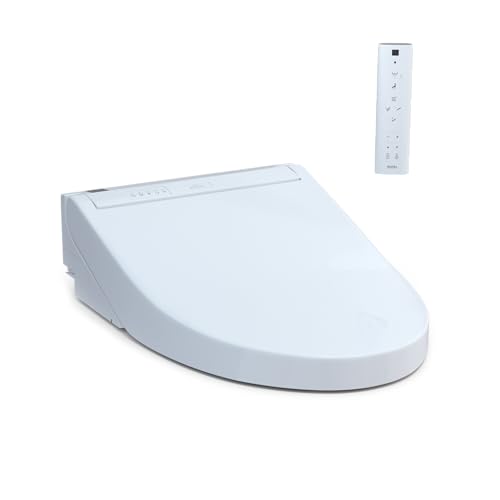
| Best Overall | TOTO Washlet C5 Bidet Seat (Elongated) | PREMIST and EWATER+ wand cleaning from the category leader |
| Best Side-Panel Controls | Bio Bidet BB-600 Ultimate Bidet Seat (Elongated) | Full features without a separate remote to keep track of |
| Best Value Electric | SmartBidet SB-1000 Bidet Seat (Elongated) | Heated seat, warm water and a dryer at a mid-level price tier |
| Best Stainless Nozzle | Brondell Swash 1000 Bidet Seat (Elongated) | An oscillating stainless steel nozzle and a deodorizer |
| Best Non-Electric | Brondell Swash EcoSeat S101 Bidet Seat (Elongated) | Bathrooms with no outlet near the toilet |
Our Picks
Top pick
1. TOTO Washlet C5 Bidet Seat (Elongated)
The Washlet C5, model SW3084#01 in Cotton White, is the reference point for the electric side of the guide’s power question. Two TOTO systems address the hygiene factors in the table: PREMIST sprays the bowl with a fine mist before use so waste rinses away more easily, and EWATER+ cleans the wand after each use, on top of the wand’s self-cleaning cycle. Water temperature, pressure and position are adjustable, the seat is heated, and a warm air dryer and deodorizer are built in, with settings handled by a remote control rather than a side panel. The seat is the elongated shape, so run through the fit section above before ordering: measure from the bolt holes to the front of the bowl and check the clearance behind the seat. It needs a nearby outlet, as the guide’s electric section explains, and installation uses the standard mounting plate and a T-adapter at the shut-off valve.
2. Bio Bidet BB-600 Ultimate Bidet Seat (Elongated)
The BB-600 puts its controls on a side panel attached to the seat, which the guide’s comfort section treats as a real design choice: there is no remote to misplace, and guests can work out the buttons by looking at them. It is a dual-nozzle design, with separate posterior and feminine wash modes, and the nozzle retracts and self-cleans. Seat and water temperatures are adjustable, and the feature list runs to a warm air dryer, a massage wash that cycles the stream, and a slow-closing lid. This elongated version fits the longer bowl shape described in the fit section. Power draw is a consideration for any electric seat, and the manual lists the BB-600 at 660 watts, so a suitable GFCI outlet near the toilet is required, as with every electric pick here. Installation follows the usual pattern of a mounting plate, existing bolts and a T-adapter on the supply line.
View Bio Bidet BB-600 Ultimate Bidet Seat on Amazon

3. SmartBidet SB-1000 Bidet Seat (Elongated)
The SB-1000, in this elongated SB-1000WE version, covers the core electric features at a simpler price tier: a heated seat, warm water with temperature control, a warm air dryer, and adjustable water pressure and nozzle position, all run from a wireless remote. The nozzle is self-cleaning and retracts between uses, matching the hygiene points in the guide’s table, and an energy-saving mode trims power use when the seat is idle, a detail worth having on a device that stays plugged in. The manual rates consumption at 660 watts and specifies a grounded GFCI outlet, so the outlet check in the guide applies here in full. SmartBidet sells the same seat in a round version, the SB-1000WR, which underlines the guide’s main fit warning: confirm your bowl shape first, then pick the matching variant. For many households this is the balanced route into an electric seat.

4. Brondell Swash 1000 Bidet Seat (Elongated)
The Swash 1000, model S1000-EW, stands out on the nozzle-design factor: its nozzle is stainless steel rather than plastic, and it oscillates, moving back and forth during the wash, with a pulsating mode as well. Brondell pairs that with warm water, a heated seat, a warm air dryer and a deodorizer, controlled by a remote, and the lid and seat close slowly rather than slamming. The elongated white body fits the longer bowl shape; measure as the fit section describes, since Brondell’s sizing follows the same bolt-hole and length checks. Like the other electric picks it needs a GFCI outlet within cord reach and connects to the cold supply through a T-adapter, with the tank-style water heating described in the listing. Choose the Swash 1000 if nozzle material and wash motion matter more to you than a side-panel layout, and you want a long-established name in the category.
View Brondell Swash 1000 Bidet Seat on Amazon
5. Brondell Swash EcoSeat S101 Bidet Seat (Elongated)
The EcoSeat S101 is the non-electric answer to the guide’s power question, made for bathrooms where there is no outlet near the toilet and adding one is not practical. It runs entirely on water pressure from the supply line, so there is no heater, no cord and nothing to plug in; the trade-off, as the guide explains, is that the wash uses ambient-temperature water from the cold supply. It is a dual-nozzle seat with a simple control for water pressure, and because there are no electronics, installation is the simplest in this list: mounting plate, existing bolts and a T-adapter. This listing is the elongated version; Brondell sells a round version too, so match it to your bowl using the measurements in the fit section. Pick the EcoSeat if you want the hygiene step up from plain paper with the fewest parts to maintain, and you are comfortable with an unheated wash.
View Brondell Swash EcoSeat S101 Bidet Seat on Amazon
What to Look For
| Factor | Why it matters | What to check |
|---|---|---|
| Toilet fit | Round and elongated bowls need different seats. | Measure bowl length and the bolt hole spacing. |
| Power requirement | Some models need an outlet, while others are non-electric. | Check where the nearest outlet is and the listed power type. |
| Nozzle design | A retractable nozzle with a cover is easier to keep tidy. | Look for a self-cleaning mode described by the maker. |
| Water control | Adjustable pressure and position give more control. | Check how many settings the controls offer. |
| Temperature options | Heated water or a heated seat is a comfort feature. | Check which warming functions are included and how they run. |
| Installation | Fitting should use the existing bolts and a simple water adapter. | Read the included parts list and the shut-off valve size. |
Setup and Care Tips
- Turn off the water supply before fitting and place a towel on the floor.
- Fit the mounting plate first, then slide the seat on and check it is level.
- Flush the water line briefly before the first use, to clear air.
- Wipe the nozzle area and seat with mild soap and a soft cloth.
- Keep the power cord away from wet areas, as the maker’s guide describes.
Mistakes to Avoid
- Buying without measuring the bowl shape and bolt holes.
- Forgetting that the model needs an outlet nearby.
- Using harsh abrasive cleaners on plastic parts.
- Over-tightening the mounting bolts.
- Ignoring the water adapter size on the supply line.
Round or Elongated: Getting the Fit Right
Fit is the first test any bidet seat must pass, and it is one of the most common reasons for returns. Toilet bowls are generally either round or elongated, and the seat has to match. An elongated bowl is longer from front to back, and a round seat on it would leave a gap at the front, while an elongated seat on a round bowl would overhang. Measure from the centre of the bolt holes at the back of the bowl to the front edge, and compare with the measurements in the listing. Also measure the width of the bowl at its widest point.
The bolt holes matter too. Most seats attach with two bolts at the back, and the spacing between them and the position relative to the bowl rim should line up with the mounting plate. Check the listing to see the range of spacing the plate supports. Some bowls have unusual shapes, such as squarer fronts or very wide rims, and some one-piece toilets have a tank that sits close to the bowl and leaves little room behind the seat.
Look at clearance. The lid must be able to open fully without hitting the tank, and the seat must sit clear of any trim or cover on the tank. If your bathroom has a tall cabinet or a narrow alcove, measure the width and depth of that space as well. Keep your measurements written down while you compare so that you do not rely on memory when reading listings.
Powered and Non-Electric Designs
Bidet seats fall into two families, and the difference affects both features and installation. Non-electric models use water pressure from the supply line to power the spray. They are usually simpler, have fewer parts that can fail and need no outlet, which makes them suitable for bathrooms without a socket nearby. Their controls are typically a dial or lever on the side of the seat, and they normally use cold water from the supply unless a separate hot water connection is described.
Electric models plug into a socket and add features such as warm water, a heated seat, a warm air dryer, a deodorising function or a remote control. These add comfort but also add complexity, because there are heating elements, sensors and electronics to take care of. If your bathroom has no outlet near the toilet, check what the maker says about extension cords and electrical safety, and consider asking a qualified electrician about adding a suitable socket instead of improvising.
Think about reliability and repair. Simple designs may be easier to maintain, while electric ones offer more options. Read the listing for details on the cord length, the plug type and any safety features such as a leakage protection device. Always follow the manual’s guidance on keeping power connections dry. If you are unsure, choose a design that matches the facilities you have today.
- Non-electric: no outlet needed, fewer features, simple controls.
- Electric: more comfort options, requires a nearby outlet and careful placement of the cord.
Water Supply, Plumbing and Pressure
Bidet seats connect to the cold water supply that feeds the toilet, usually through a T-adapter fitted at the shut-off valve. Before ordering, look under the tank to find the valve and the size of the connection on it. Listings tell you which fitting sizes the adapter supports, and some include more than one adapter. If your valve is unusual, made of an uncommon material or located in a cramped space, you may need an extra part, and a plumber can advise.
Water pressure varies from home to home. Some seats work well across a wide range of pressure, while others suggest minimum or maximum values in the manual. If your household has noticeably low or high pressure, look for those statements in the listing. Adjustable pressure controls on the seat give flexibility, but they cannot fix a supply problem.
Temperature is another point. Many non-electric seats use cold water only, which can feel strong in cooler months, while models with warm water have an internal heater. If you want warm water but prefer to avoid electric seats, check whether a hot water connection is listed. Do not attempt to connect hot water unless the maker explicitly allows it, as the fittings and materials may not be designed for it.
After installation, check all joints for drips, tighten as the instructions say without over-tightening, and monitor the connection over the following days. If anything leaks, switch off the water and contact the maker or a plumber.
Comfort, Hygiene and Everyday Use
Daily comfort comes from small details. Look at the seat shape and the material, as well as the way the lid and seat close. A slow-closing hinge, often described as soft-close, helps avoid noise and slamming. Consider how the controls are positioned: side panels need to be easy to reach and understand, particularly for children, older family members and guests. Clear labels and simple icons are an advantage.
Nozzle design affects hygiene. Many seats use a retractable nozzle that sits behind a cover when not in use, and some offer separate nozzles or modes for different purposes. A self-cleaning mode, described by the maker, rinses the nozzle before and after use. Treat these descriptions as the maker’s own and check the manual for how to clean the nozzle manually, since many allow you to pull it forward for wiping.
For shared households, think about how many settings people will really use. A model with many pressure and position levels is only helpful if everyone can adjust them easily. Memory settings or a remote may help, but also add things to learn.
For guests, a simple design is often the friendliest. Keep a note near the toilet explaining the controls if the seat has several. Wash your hands after use as normal, and clean the seat and control panel with products the maker allows. Avoid abrasive pads or harsh chemicals, which can dull the finish or damage plastics and seals.
Maintenance and Signs of Wear
A bidet seat needs a little regular attention to stay hygienic and working well. Wipe the seat, the lid and the control panel often with a soft cloth and mild soap. Clean the nozzle as the manual instructs, and clear any limescale around the nozzle area if you live in a hard water region, using only the descaling products the maker approves. Some seats have a removable filter at the water inlet, and it should be cleaned periodically to keep flow steady.
Check connections now and then for drips or moisture, and make sure the mounting bolts remain snug. If the seat starts to shift, tighten the bolts a little at a time, taking care not to over-tighten, which can crack the plastic or the porcelain. For electric models, check the cord for damage and keep it away from standing water.
Signs that parts may need replacing include a weak or uneven spray, water leaking from the seat or the hose, the hinges becoming loose, cracks in the plastic, a heating function that no longer works and unusual smells that do not clear after cleaning. The nozzle, the hose and the filter are common wear items, and the maker may sell spares.
If you find water around the base of the toilet or the electric parts, stop using the seat, turn off the supply and power, and ask the maker or a qualified professional for advice. Do not attempt electrical repairs unless you are qualified.
Choosing Bidet seats Around How You Will Actually Use Them
The most useful way to narrow down bidet seats is to start with a picture of an ordinary week, not with a feature list. Picture where the bidet seat will live and be used: a home bathroom where the seat will be fitted to an existing toilet and used by the whole household. Then picture who will use it, how often, and what usually goes wrong with the version you own now or have used before. Those answers matter more than any single headline feature, because a bidet seat that suits one household can be a poor fit for another even when the listings look similar on the surface.
Consider three common situations. First, a household fitting a first bidet seat to an elongated toilet. Second, someone who wants a non-electric model for a bathroom without a nearby socket. Third, a family that needs controls simple enough for guests to understand. Each situation pushes the decision in a different direction, and each one makes a different compromise acceptable. Writing your own version of these three pictures, in your own words, takes a few minutes and prevents the most common buying mistake with bidet seats: paying for the wrong strengths and then working around the weaknesses every single day.
Once the use case is clear, work through the criteria that genuinely shape daily use: toilet shape and size fit, powered or non-electric operation, water connection requirements, nozzle design, controls, and the cleaning routine for the seat and nozzle. For each one, decide what good enough looks like for you before you look at any particular model. That order matters. If you read listings first, every feature starts to sound essential. If you set your own thresholds first, you can scan a listing quickly, keep the models that clear your bar, and set the rest aside without second-guessing yourself.
It also helps to separate must-haves from nice-to-haves in writing. A must-have is something whose absence would stop you using the bidet seat properly: the right size for the space, the right fit for the person, or a control layout you can manage confidently. A nice-to-have improves a good day but does not rescue a bad fit. With bidet seats, many returns and regrets trace back to a nice-to-have being treated as the deciding factor while a must-have, usually size, fit or upkeep, was never properly checked.
Finally, think about the total routine, not just the moment of use. How long does setup take, where does everything go afterwards, and what consumables, parts or accessories will you need to keep on hand? A bidet seat that is pleasant to use but awkward to clean or store slowly falls out of use. The picks in this guide were chosen to cover different routines, so as you read the reviews above, keep asking which routine sounds most like yours, rather than which product sounds most impressive in isolation.
A Practical Routine: Setup, First Use and Everyday Habits
On the first day, resist the urge to judge bidet seats within the first few minutes. Unpack slowly, read the maker’s instructions all the way through once, and check that every part, fitting and accessory listed is present before anything is thrown away. Keep the packaging until you have completed a first proper use, because missing parts and early faults are far easier to sort out while everything is still together. Photographing how parts fit together as you assemble or set up the bidet seat gives you a personal reference that is often clearer than a diagram.
For the first use, choose an easy, typical task rather than the hardest job you own. With bidet seats, a gentle first run shows you how the controls feel, how the bidet seat behaves in your space, and what you need within reach, without the pressure of a deadline or an audience. Note anything that surprises you: a control that works the opposite way to your instinct, a part that needs more clearance than you expected, or a step in the routine you will want to prepare in advance next time.
From there, build a small repeatable routine. Prepare the same few things in the same order each time, keep the accessories you actually use together in one place, and put everything away while the steps are fresh in your mind. Routines sound dull, but with bidet seats they are what turn a good purchase into a reliable one. Most everyday problems, from lost parts to disappointing results, come from skipped preparation or rushed finishing rather than from the product itself.
Households with more than one user should agree the routine out loud. Who sets it up, who cleans it, where it lives, and what the house rules are for borrowing it or using it for a different job than usual. Shared bidet seats wear out fastest at exactly the points where two people assume the other has done the checking, charging, emptying or cleaning. A short conversation, and a note kept with the bidet seat if needed, prevents most of that friction.
After a month of regular use, revisit your first impressions deliberately. Some features that seemed minor will have become the ones you value, and some headline features may never be touched. That review is useful twice over: it tells you which accessories or spare parts are genuinely worth keeping in stock, and it gives you a clear, honest picture of what you would choose differently, or exactly the same, when the time eventually comes to replace the bidet seat.
Cleaning, Care and Storage in Detail
Care is where bidet seats are won or lost over years rather than weeks. The routine itself is rarely complicated: clean the nozzle and seat with mild products the maker allows, check hoses and connections for drips on a routine schedule, descale or replace filters if your model uses them, and keep the seat hinges and bumpers clean and tight. What matters is doing it little and often. Dirt, moisture, residue and neglect rarely destroy a bidet seat in one dramatic moment; they build up quietly until performance drops, a part sticks or wears, or a smell or stain becomes permanent.
Set a simple rhythm that matches how often you use the bidet seat. A quick tidy after every use, a more thorough clean on a regular cycle, and a deeper check a few times a year for wear, looseness, damage and parts that are approaching the end of their life. Tie the deeper check to something you already do, such as changing a season’s routine or clearing the space where the bidet seat is stored, so it actually happens instead of being endlessly postponed.
Storage deserves the same thought as cleaning. Keep the bidet seat dry, out of harsh sunlight and away from extremes of heat and cold unless the maker says otherwise. Keep small parts, tools and instructions together, ideally in a labelled bag or box kept with the main item. If the bidet seat will sit unused for a long stretch, clean it first, check it over, and store it in the state you would want to find it in, because the next user, often you in a hurry, will not thank you for a problem sealed away in a cupboard.
Safety belongs in the care routine too: turn off the water supply before fitting or removing the seat, follow the maker’s electrical guidance for powered models and local bathroom rules, and test water temperature and pressure settings carefully at first use. Make the checks part of the rhythm rather than a separate chore. Eyes on seals, cords, fastenings, surfaces and moving parts each time you clean will catch most problems while they are still cheap and simple to put right, and will tell you honestly when a part, or the whole bidet seat, has reached the point where replacement is the sensible option.
How the Picks in This Guide Compare for Different Needs
Readers often ask for a single winner, but with bidet seats the honest answer is that each pick in this guide earns its place for a different reader. The comparison below uses only what the reviews above already describe about each model. Use it to match a pick to the situation you pictured earlier, and then re-read that model’s full review before deciding, because the detail in the review, not the summary here, is what should settle the choice.
Best Overall. It is presented in the guide as a tOTO Washlet C5 Bidet Seat (Elongated), aimed at pREMIST and EWATER+ wand cleaning from the category leader. Choose it when that description matches your own situation closely, and when the routine described in its review, including setup, controls and upkeep, sounds like one you would happily repeat. Be more cautious if your space, your users or your main task differ from the ones the review emphasises, because a bidet seat bought for someone else’s priorities rarely feels like a bargain for long, however well it is made.
Best Side-Panel Controls. It is presented in the guide as a bio Bidet BB-600 Ultimate Bidet Seat (Elongated), aimed at full features without a separate remote to keep track of. Choose it when that description matches your own situation closely, and when the routine described in its review, including setup, controls and upkeep, sounds like one you would happily repeat. Be more cautious if your space, your users or your main task differ from the ones the review emphasises, because a bidet seat bought for someone else’s priorities rarely feels like a bargain for long, however well it is made.
Best Value Electric. It is presented in the guide as a smartBidet SB-1000 Bidet Seat (Elongated), aimed at heated seat, warm water and a dryer at a mid-level price tier. Choose it when that description matches your own situation closely, and when the routine described in its review, including setup, controls and upkeep, sounds like one you would happily repeat. Be more cautious if your space, your users or your main task differ from the ones the review emphasises, because a bidet seat bought for someone else’s priorities rarely feels like a bargain for long, however well it is made.
Best Stainless Nozzle. It is presented in the guide as a brondell Swash 1000 Bidet Seat (Elongated), aimed at an oscillating stainless steel nozzle and a deodorizer. Choose it when that description matches your own situation closely, and when the routine described in its review, including setup, controls and upkeep, sounds like one you would happily repeat. Be more cautious if your space, your users or your main task differ from the ones the review emphasises, because a bidet seat bought for someone else’s priorities rarely feels like a bargain for long, however well it is made.
Best Non-Electric. It is presented in the guide as a brondell Swash EcoSeat S101 Bidet Seat (Elongated), aimed at bathrooms with no outlet near the toilet. Choose it when that description matches your own situation closely, and when the routine described in its review, including setup, controls and upkeep, sounds like one you would happily repeat. Be more cautious if your space, your users or your main task differ from the ones the review emphasises, because a bidet seat bought for someone else’s priorities rarely feels like a bargain for long, however well it is made.
If you are torn between two picks, compare them on the three things you cannot change later: size and fit for your space and users, the upkeep routine each one demands, and how each one behaves at the exact task you do most often. Features can be worked around and accessories can be added, but those three fundamentals follow the bidet seat home. If the two are still level, choose the one whose everyday routine sounds simpler, because the bidet seat that is easier to live with is the one that gets used properly and lasts longest.
Troubleshooting, Wear Signs and Knowing When to Replace
When results disappoint, work through the simple causes first before blaming the bidet seat itself. Check the setup against the maker’s instructions, step by step, in good light, without rushing. With bidet seats, a large share of problems trace back to one skipped step: something not fully fitted, not fully cleaned, not fully charged or filled, adjusted for a previous task, or used in a space or condition it was not chosen for. Correcting that one step, and then repeating the task calmly, resolves more issues than any accessory purchase.
Learn the ordinary wear signs for this category and check for them during your deeper cleans. Look for looseness where there was none, surfaces that no longer clean up properly, moving parts that feel gritty, stiff or uneven, fastenings that slip, and any change in sound, smell or behaviour during use. Any of these is information, not failure: caught early, most wear is a replaceable part, a thorough clean or a small adjustment. Ignored, the same wear is what turns a repairable bidet seat into a write-off.
Keep a brief note, on paper or on your phone, of problems, fixes and part changes, with dates. Memory is unreliable about slow changes, and a short record makes patterns obvious: the part that keeps failing, the task that always causes trouble, the season when problems cluster. That record is also genuinely useful if you ever need to contact the maker, because a clear account of what happened, and what you already tried, gets a faster and better answer than a general complaint.
Replacement becomes the sensible conversation when repairs or parts cost a large share of a new bidet seat, when a safety-related part is damaged, when the maker no longer supports the model with parts or guidance, or when your needs have simply changed and the old bidet seat no longer fits your life. None of those is a failure of the original purchase. Bidet seats that have been used, cared for and finally replaced at the right moment have done exactly the job they were bought for, and your notes from owning one make the next choice far easier than the first.
A short planning checklist. Before you order, measure the space where the item will be used and stored, write down the main task and the main user, list the parts or supplies you will need in the first month, and decide where small accessories will live. Four lines on paper prevent most mismatched purchases, because they force the practical questions to be answered while returning or exchanging is still a simple option rather than a necessity.
Think about the season ahead. Many products in this category work harder, or face harder conditions, at particular times of year. If you are buying just before that busy season, allow time to learn the routine on easy tasks first, and order any spare parts or supplies before you need them urgently. If you are buying in the quiet season, use the breathing room to compare carefully and set everything up properly, so the first busy week is not also your first week of ownership.
Teach the next user properly. If someone else will use the item, a five-minute handover beats a written warning every time. Show them the setup order, the one mistake to avoid, and where things are stored. Most damage and most disappointing results in shared households come from a confident guess by someone who was never shown, not from carelessness, and a short demonstration removes that risk almost entirely.
Judge it after ten real uses. First impressions of a new purchase are noisy: everything feels different simply because it is new. A fairer test is ten ordinary uses, spread across your normal routine, noting what got easier, what still annoys you and what you stopped using altogether. That record, kept honestly, is the best guide to whether you chose well, and the best brief you will ever write for choosing its replacement one day.
Keep the paperwork together. The manual, the receipt and any notes about parts or settings belong in one place, ideally with the item or in a single folder for household products. When something goes wrong months later, the answer is very often already printed in the manual you kept, and the date on the receipt settles questions about support quickly. Five minutes of filing at the start saves a frustrating search later.
Buy for the space you have, not the space you want. It is easy to picture a tidier, larger or better organised home while shopping, and then to buy for that imaginary home. Measure and plan for the rooms, cupboards and routines you actually have today. A product that fits your real life gets used daily; a product bought for an idealised version of your home tends to be worked around, stored awkwardly and quietly resented.
One more habit worth building. With bidet seats, small consistency beats occasional perfection. A brief check before use, a brief tidy after use, and an honest note when something changes will keep the bidet seat performing as the maker intended for far longer than any occasional deep effort, and will make every future decision about parts, accessories or replacement a straightforward one based on evidence rather than guesswork.
One more habit worth building. With bidet seats, small consistency beats occasional perfection. A brief check before use, a brief tidy after use, and an honest note when something changes will keep the bidet seat performing as the maker intended for far longer than any occasional deep effort, and will make every future decision about parts, accessories or replacement a straightforward one based on evidence rather than guesswork.
More Questions Buyers Ask About Bidet seats
How long should bidet seats realistically last?
There is no honest single figure, because lifespan follows use and care far more than age. A bidet seat used gently, cleaned on a routine and stored properly will usually serve far longer than the same model used hard, skipped on cleaning and stored damp or cramped. Judge yours by its condition and behaviour, the wear signs described above, rather than by the calendar, and replace parts promptly when they begin to affect use.
What should I check first when a bidet seat stops working as expected?
Go back to the maker’s instructions and check the basics in order: correct setup, correct settings for the task, cleanliness, and the condition of the parts that wear. Work through one check at a time and test after each change, so you learn which step mattered. If a problem involves power, heat, water or anything the manual warns about, stop and follow the maker’s guidance or contact them, rather than experimenting.
Are accessories and spare parts worth buying in advance?
Only the ones your own routine proves you need. After a month of use you will know which parts wear, which accessories you reach for and which extras would sit in a drawer. Keeping one spare of a small, essential, wear-prone part is sensible for many bidet seats; buying a large bundle of extras on day one usually is not, because you end up storing options for a routine you never settled into.
Can one bidet seat suit a whole household or group?
Often yes, provided the fundamentals fit everyone who will use it: size, controls everyone can manage, and a routine the whole household will actually follow. Where users differ a lot in size, strength, experience or needs, be honest about who the main user is and choose for them first. A bidet seat chosen as a compromise for everyone can end up suiting nobody, while one chosen for its main user usually serves occasional users perfectly well too.
What is the best way to compare two listings for bidet seats side by side?
Put the same headings down the side of a page: size and fit, the criteria that matter for your main task, upkeep, parts and support, and what is actually included. Fill each column only from what the listing and the maker’s own information state, and mark anything unclear as unclear rather than assuming the better answer. The model with fewer unclear marks on the headings you care about is usually the safer choice, even if the other listing sounds more exciting.
FAQ
Do I need a plumber to fit one?
Many models use existing bolts and a simple T-adapter, so people often fit them with basic tools. If you are unsure about the plumbing, ask a qualified plumber.
What is the difference between a seat and an attachment?
A seat replaces your whole toilet seat and often adds controls, while an attachment sits under your existing seat and is usually simpler.
Will a bidet seat fit any toilet?
Not always. Fit depends on the bowl shape, bolt hole spacing and clearance around the tank. Measure your toilet and compare it with the listing before ordering.
Do I need a socket in the bathroom?
Only for electric models. Non-electric designs use water pressure and need no power, but they offer fewer comfort features.
Can I install a bidet seat myself?
Many people do, as most models use existing bolts and an adapter at the shut-off valve. If you are unsure about plumbing or electrics, ask a qualified professional.
Does a bidet seat work with low water pressure?
It depends on the model and the supply. Check the pressure information in the listing and the manual, and remember that the seat's controls cannot fix a weak supply.
How do I clean the nozzle?
Follow the manual, which often explains how to extend the nozzle for wiping. Use mild soap and a soft cloth, and avoid abrasive cleaners.
Why does the water feel cold?
Many non-electric seats use the cold supply only. If you want warm water, check for models that describe a water heater, and read the electrical requirements.
What should I do if I notice a leak?
Turn off the water supply and any power, dry the area and check the connections. If the leak continues, contact the maker or a plumber.
How long does a bidet seat last?
It depends on the model, use and care. Look for information on parts, support and spares in the listing, and keep up with cleaning.
The Short Version
Begin with your bowl shape and the outlet question, then compare nozzle design, controls and installation details. Choose features you will actually use.