A cluster mailbox groups several mail compartments into one unit, and it is common in apartment complexes and shared drives. Buying one involves more than choosing a size, since local postal rules often shape what you can install. Whatever you choose, the same habit applies: write down your must-have features before browsing, so that attractive photos do not pull you away from what you actually need.
We have not used these products ourselves, so this guide offers no verdict on any particular unit. It describes the features to compare and the questions to ask your local postal service before you order. Installation is a project in its own right. A good unit still needs a level base, clear access and the right mounting hardware. Property managers and homeowners alike benefit from gathering local requirements, measuring the site and agreeing on a compartment plan before comparing listings.
As an Amazon Associate we earn from qualifying purchases. Links on this site are affiliate links, and they do not change the information we give.
In this guide
Quick Picks
| Pick | Product | Best For |
|---|---|---|
| 1 | Salsbury Industries 3316SAN-U Cluster Box Unit, 16 A-Size Doors | Best for Large Complexes |
| 2 | Salsbury Industries 3308SAN-U Cluster Box Unit, 8 A-Size Doors | Best for Small Complexes |
| 3 | Salsbury Industries 3312GRY-U Cluster Box Unit, 12 A-Size Doors | Best Mid-Size Option |
| 4 | Salsbury Industries 3313 Cluster Box Unit, 13 B-Size Doors | Best for Larger Mail |
| 5 | Salsbury Industries 3506ASU Surface-Mounted Vertical Mailbox, 6 Doors | Best Wall-Mount Option |
Our Picks

1. Salsbury Industries 3316SAN-U Cluster Box Unit, 16 A-Size Doors — Best for Large Complexes
The Type III unit is the largest standard configuration in Salsbury’s 3300 series: sixteen A-size tenant doors (12-3/4 inches wide by 3-1/8 inches high) plus two parcel lockers, in a cabinet 30-1/2 inches wide, 62 inches high and 18 inches deep, pedestal included. Salsbury is licensed by the USPS to manufacture cluster box units, and the series is built from heavy-duty aluminium with stainless hardware and a powder-coated finish; this listing is the sandstone colour. Front master doors give the carrier access to all compartments at once. At about 175 pounds, plan the base and the delivery route in advance. Confirm the door count against your households plus spares, and confirm local postal approval before ordering, as the guide stresses.

View Salsbury Industries 3316SAN-U Cluster Box Unit, 16 A-Size Doors on Amazon
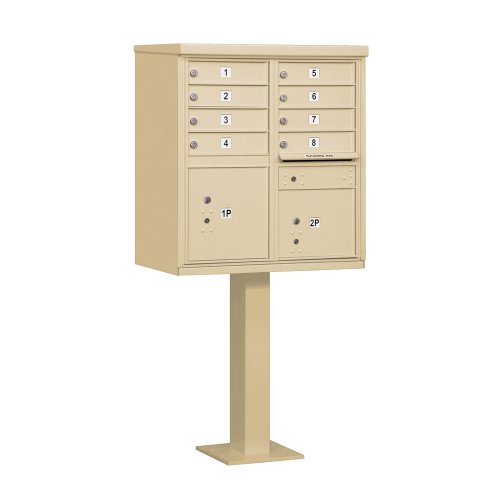
2. Salsbury Industries 3308SAN-U Cluster Box Unit, 8 A-Size Doors — Best for Small Complexes
The Type I unit halves the tenant count for smaller sites: eight A-size doors and two parcel lockers in the same 30-1/2 by 62-inch cabinet footprint as its larger siblings. The listing describes front loading through two master door panels, an outgoing mail compartment, and provision for the USPS-installed master lock, with each tenant door carrying its own lock and keys supplied. Aluminium construction and the sandstone powder coat suit outdoor pedestals in shared drives and small apartment blocks. Because capacity cannot be expanded later, count current households carefully and weigh the guide’s advice about spare compartments before settling on the eight-door size. It is the natural fit for a small block or a short shared driveway. Six finishes are offered across the series for matching site colours.
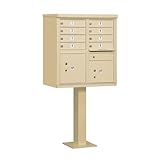
View Salsbury Industries 3308SAN-U Cluster Box Unit, 8 A-Size Doors on Amazon
3. Salsbury Industries 3312GRY-U Cluster Box Unit, 12 A-Size Doors — Best Mid-Size Option
The Type II configuration sits between the two above: twelve A-size tenant compartments and one parcel locker, in the grey finish, which is one of six standard finishes in the series. It shares the 3300 series construction — aluminium cabinet, stainless hardware, pedestal mounting and front carrier access — so the site preparation in the guide is identical: a level base, a clear approach for residents and the carrier, and labelling agreed before installation. Twelve doors suit a mid-size block where sixteen would leave rows empty but eight would force a second unit later. Check the parcel locker size against the packages your residents actually receive, since a single locker is shared by the whole unit, and that is the detail most often underestimated, as the mistakes section notes.
View Salsbury Industries 3312GRY-U Cluster Box Unit, 12 A-Size Doors on Amazon
4. Salsbury Industries 3313 Cluster Box Unit, 13 B-Size Doors — Best for Larger Mail
Most cluster doors are A-size, sized for letters and small flats; the Type IV unit instead fits thirteen B-size doors, which the maker lists at 12-3/4 inches wide by 4-7/8 inches high, with compartments that take catalogues, magazines and padded envelopes without folding. It keeps the same cabinet dimensions, aluminium build and pedestal format as the rest of the 3300 series, and includes a parcel locker. Choose it where residents receive bulkier post — small business units are a typical case — and discuss door size with your local postal contact, because the guide’s first step, confirming local requirements, matters more for less common door sizes. The trade-off is three fewer households served than the 16-door A-size model. Tenant doors are numbered for labelling, as across the 3300 series.
View Salsbury Industries 3313 Cluster Box Unit, 13 B-Size Doors on Amazon
5. Salsbury Industries 3506ASU Surface-Mounted Vertical Mailbox, 6 Doors — Best Wall-Mount Option
Not every site can take a pedestal: this six-door vertical mailbox surface-mounts to a wall, for covered entries, lobbies and retrofits where digging a base is not an option — the wall-mount alternative the FAQ contrasts with pedestal units. It is part of Salsbury’s 3500 vertical series in aluminium, with a USPS access master door so the carrier can service all compartments from the front. Six compartments suit a small conversion or office building, and the vertical format keeps the unit’s footprint off the floor entirely. Surface mounting still needs a sound wall and correct fixing heights, and approval for USPS delivery at the location should be confirmed with the local office before purchase, as with every unit in this list.
View Salsbury Industries 3506ASU Surface-Mounted Vertical Mailbox, 6 Doors on Amazon
What to Look For
| Factor | Why it matters | What to check |
|---|---|---|
| Compartment count | The number of boxes must match the households served. | Count units and consider a few spare slots. |
| Material and finish | Weather exposure affects how well a unit lasts. | Read the maker’s stated material and coating. |
| Parcel capacity | Larger packages need a place to go. | Check for parcel lockers or oversized compartments. |
| Locks and keys | Each compartment needs a reliable closing mechanism. | Look at the lock type and how keys are supplied. |
| Mounting style | Pedestal and wall-mount units install differently. | Check the base type and fixing instructions. |
| Local approval | Postal services often have rules for shared mailboxes. | Contact your local office to confirm requirements before ordering. |
Setup and Care Tips
- Confirm local postal requirements before you buy or install.
- Choose a mounting spot with clear access for delivery and residents.
- Follow the maker’s instructions for the base and fixings.
- Clean the surface with a mild cleaner and soft cloth.
- Label compartments clearly so mail goes to the right place.
Mistakes to Avoid
- Ordering before checking with your local postal office.
- Underestimating how many compartments you need.
- Ignoring parcel size when picking a model.
- Mounting the unit in a spot that is awkward to reach.
- Skipping the base preparation and fixing it to uneven ground.
Postal Requirements to Ask About First
Before you compare styles or finishes, find out who has the final say on what you can install. In many places the postal service sets rules for shared and cluster boxes, and some require specific approved designs, set heights, distances from the road or particular types of lock. Rules differ by country and region, and they can also differ between local offices, so the safest approach is to ask your local postal contact rather than rely on a listing statement or on what a neighbour did.
Prepare a short list of questions. Ask whether a cluster unit is permitted at your site, whether the unit must carry a particular approval or marking, and who supplies and holds the keys or locks. Ask about the height of the delivery slots, how far the unit must sit from the kerb or the road edge, and whether it needs a parcel locker. Ask who is responsible for the base and for ongoing maintenance, and whether there is an approved installation procedure.
Get answers in writing where possible, keep copies with your purchase records, and share them with whoever manages the property. If you are a property manager, check whether an owners’ association, local council or planning office has additional requirements, such as setback rules, accessibility guidelines or lighting.
- Is the unit style acceptable at this address?
- What mounting height and location are required?
- Who supplies locks and keys?
- Are there rules for parcel compartments?
Only once you have these answers should you begin comparing models.
Planning Compartments and Parcels
Choosing the number of compartments is partly a headcount and partly a forecast. Count the households or units served, add spaces for management, shared mail or future occupancy, and consider whether any compartments will be vacant for a time. A couple of spare compartments can save you from replacing the unit if the property changes, but excess units add cost and take up room.
Compartment size deserves as much attention as number. Standard letter slots suit most mail, but magazines, large envelopes and small packages need deeper or taller spaces. Check the interior dimensions in the listing, not just the outer measurements, and compare them with the items that residents commonly receive. Some units include a larger compartment or a parcel locker that can hold bigger deliveries, which reduces the number of missed parcels and doorstep thefts.
Ask how parcels will be handled in your area. In some places, couriers leave packages in a locker that can be opened with a code or key, while in others, parcels are left elsewhere. Understand the local arrangement before paying for features that may not be used.
Think about accessibility. Compartment height matters to people using wheelchairs or those who find it hard to bend or reach. Check the maker’s description of the height of the lowest and highest compartments, and ask whether any local accessibility rules apply to your installation.
Materials, Weather and Security
A cluster mailbox lives outdoors, so its material and finish determine how it ages. Aluminum is often chosen for being lighter and resistant to rust, while steel is strong but needs a protective coating to resist corrosion. The finish, whether powder-coated, painted or plated, shields the surface from rain, sun and salt. Read the maker’s description of the material, the finish and the seals around doors, since gaps can let in water.
Consider your climate. Areas with heavy rain, snow or coastal air are tougher on metal and hardware than dry, mild areas. Look for drainage holes, sloped tops and door seals that suit your conditions. Hot sun can fade colours and heat the interior, which matters for items that are sensitive to temperature.
Security involves locks, doors and the structure. Each compartment should have a lock appropriate to your needs and a way to get replacement keys. Check how the locks are fitted and whether they are replaceable. Sturdy doors, hinges that are not exposed and a strong frame resist tampering. A unit that is anchored firmly to its base is harder to remove.
Visibility also contributes to security. A well-lit spot that is visible from nearby homes discourages theft, while an isolated or dark location invites it. If lighting is needed, consult an electrician or the local authority about the right approach, and avoid improvised wiring.
Site Preparation and Installation Planning
The unit is only as steady as the base it sits on. For pedestal units, this normally means a concrete pad or footing prepared to the maker’s directions. Check how deep and wide the base should be, the type of anchor bolts required and how long the concrete must cure before you add the unit. Ground conditions matter: soft soil, slopes and areas that flood require extra planning. Local frost conditions can also influence the depth of footings, and a local contractor or the maker’s guidance can help.
Before digging, check for underground utilities such as gas, water, power and communication lines. Most regions have a service that marks buried utilities for free or on request, and contacting them is a basic safety step. Do not dig without confirmation.
Plan the layout. Leave room in front of the unit for residents to stand, open doors and queue without blocking a road or footpath. Make sure the path to the unit is level, well drained and safe in bad weather. Consider snow clearing and where plowed snow will go.
Gather the right tools and hardware, and be sure you have help for lifting, as cluster units can be heavy. If the job involves concrete, drilling into masonry or lifting heavy parts, think about hiring an experienced installer. Keep the maker’s instructions on site and follow them in order, double-checking that the unit is level before final tightening.
Labelling, Upkeep and Long-Term Management
Once the unit is installed, a little organisation keeps it running smoothly. Label each compartment clearly with the unit number or name, using weather-resistant labels that will not fade or peel in the sun. Keep a record of which key belongs to which compartment, and store the master list safely. If the postal service or management company holds spare keys, note who to contact.
Create a simple process for tenant changes. When a resident leaves, collect the key, update the label and re-key the lock if the system allows it. This prevents former occupants from accessing new residents’ mail. Keep a stock of labels and a spare lock or two if the maker sells them.
Inspect the unit at regular intervals. Check for loose bolts, rust spots, damaged doors, sticking locks and signs that the base is cracking or settling. Clean the surface with mild soap and water and a soft cloth, avoid abrasive pads, and lubricate locks with a product the maker approves. Clear weeds, snow and debris from around the unit to keep access safe.
Signs of replacement include doors that no longer close securely, widespread corrosion, locks that cannot be repaired and a base that has shifted. Report problems to the right party promptly, as delaying repairs can put residents’ mail at risk. If your property has a management committee, schedule an annual check and keep notes about repairs and costs for future budgeting.
Before You Order: Rules, Permissions and Access
A cluster mailbox is not only a product choice. In most places it is also a matter of local postal standards, and the rules decide what you are allowed to install. Check these points before you spend time comparing models.
- Postal approval: Confirm with your local postmaster or the official postal service guidance which unit types, door sizes and placements are accepted for your delivery route.
- Property rules: Homeowner associations, building managers and city codes may specify color, location or foundation requirements.
- Accessibility: Doors and parcel compartments should be reachable for residents, and official guidance may set height ranges for the openings.
- Carrier access: The delivery person needs a safe way to reach the unit from the street.
- Key control: Decide who will hold master keys and replacement keys.
Do not assume that a unit sold online will be accepted for your address. A short call or email before purchase can save you from having to return a heavy item.
Understanding Door Counts and Parcel Space
The number of doors is only part of the story. When you look at a listing, read how the units are divided and what each compartment can hold.
Standard mail doors are meant for letters and flat items. Larger parcel compartments are used to hold packages that will not fit through the smaller doors, and a carrier typically leaves a key for the resident to retrieve the parcel. If your community receives many packages, a unit with extra parcel lockers may suit you better than one with the maximum number of mail doors.
Count the households you serve and add a spare door or two for growth or for a management office. Divide the doors by the number of residents you expect to join over the next several years.
Next, think about the foundation. Most cluster units are heavy when loaded and expect a level, stable base. The maker’s installation sheet or the local postal guidance describes the pad or post requirements, and a contractor can pour and level a pad if you need one. Never rely on loose ground, because a tilted unit can make doors stick and locks misalign.
Finally, check the lock type and replacement process. Knowing how to get new keys in advance is far easier than discovering it after one goes missing.
Care and Upkeep Through the Seasons
Once the unit is in place, a few simple habits keep it working. Wipe the surface with mild soap and water, check that hinges move freely, and clear leaves and snow from the front. Look at the locks twice a year and replace any that stick.
Keep the installation sheet and key numbers in a safe file so the next manager can find them.
Choosing cluster mailboxes With Confidence: A Deeper Buying Guide
The shortlists above give you the contenders. This section slows the decision down and looks at what actually separates a purchase you will be pleased with for years from one that quietly disappoints — written for renters, families in compact homes, and anyone whose wardrobe has outgrown the storage the home came with. None of it depends on any single model: apply these tests to every pick in this guide and the right choice for your situation usually becomes obvious.
Start with where the cluster mailboxes will live and work: a bedroom corner, a hallway wall, a spare-room alcove, or inside an existing closet that needs a better internal layout. Then be precise about the exact width, depth, and height of the space — including skirting boards, door swings, and sloping ceilings — plus the real volume of what you own after a honest declutter, not before it. Buyers who write those two things down before comparing models make measurably better decisions than buyers who start with features, because features only matter in the context of a real space and a real pattern of use.
Measure the space, then measure your clothes
Storage products fail in two predictable ways: they do not fit the space, or they fit the space but not the wardrobe. Measure both. Count hanging garments and their lengths, folded stacks, shoes, and the awkward items — boots, bags, hats — that never have a home. The picks in this guide divide space in different proportions, so match the layout to your actual mix rather than to the styled photograph that made you click.
Weight capacity is about the whole system
A rail, shelf, or frame is only as strong as its fixings and the wall or floor behind it. Freestanding designs spread load through their frame, while wall-mounted systems trust your wall studs and anchors. Be honest about what you will load: winter coats, denim, and shoe collections are heavy, and a system run permanently at its limit sags, loosens, and eventually fails. Choose a pick with comfortable headroom above your real load.
Adjustability buys you years
Wardrobes change — children grow, jobs change dress codes, hobbies arrive with their own gear. Shelves and rails that move without tools, and systems that accept extra components later, adapt instead of being replaced. When comparing the picks above, look at how each one reconfigures: a design that only works in its photographed arrangement is a risk, however handsome it looks on day one.
Open, closed, or a mix
Open storage is quick to use and keeps clothes visible, which suits everyday items you rotate constantly. Closed storage protects occasion wear and out-of-season pieces from dust and light. Many households end up happiest with a mix, and several picks in this guide combine both. Think about dust levels in your home, whether the storage sits in a bedroom or a hallway, and how much visual calm matters to you before deciding.
Assembly and reversibility
Consider how the system arrives and what installing it commits you to. Renters need designs that leave walls untouched or easily repaired; owners can consider fixed systems that feel built-in. Also think one move ahead: furniture you may take with you should break down and rebuild without damage. The most suitable pick is often the one whose installation matches your tenure in the home, not simply the largest one that fits.
Cluster mailboxes in Real Life: Common Ways They Are Used
Specifications describe a product on its first day; use cases describe its life. Here are the patterns of use that the picks in this guide are actually bought for, and what each pattern rewards. Find the one closest to your own plans and let it steer your choice — a pick that is perfect for one of these patterns can be merely adequate for another, and knowing your pattern is worth more than any single feature.
A small bedroom with no fitted wardrobe
In a room where the builder provided nothing, a freestanding system has to do everything: hang, fold, and hide the clutter of daily life. Anchor the layout with hanging space for the clothes you wear weekly, then let shelves and boxes absorb the rest. Picks in this guide that combine rails with shelving suit this setting best, because a rail alone leaves folded clothes homeless and shelves alone leave shirts crushed.
Taming an existing closet
Many closets fail not from lack of space but from one long rail and a floor of shoes. A system that adds a second rail level, vertical dividers, or shelving in the dead space above and below transforms the same square footage. Measure the closet’s interior precisely — door frames steal inches — and choose components that use height, which is the dimension most closets waste.
Entryway and hallway duty
Coats, shoes, school bags, and dog leads all land within two steps of the front door. Storage designed for this zone needs to be shallow, tough, and quick: hooks and rails at heights children can reach, and nothing so precious that wet coats worry you. Several picks above translate well to entry duty even if photographed in bedrooms, provided their depth suits a hallway.
Seasonal rotation and guest duty
A spare-room or under-stair system earns its place twice a year when wardrobes rotate, and again when guests need somewhere to hang clothes. Designs that assemble without permanent fixing shine here, because the same unit can serve as overflow in winter and guest storage in summer. Label boxes by season as you pack them and the twice-yearly swap becomes an hour’s calm work instead of a weekend of chaos.
Getting the Most From Your Cluster mailboxes: Use, Care, and Keeping It Working
Most disappointment with products like these is not caused by the product at all, but by small gaps in setup and routine care that compound over months. The habits below apply across the picks in this guide; where a manufacturer’s own instructions differ for your specific model, follow theirs — they know their materials and mechanisms — but the rhythm of regular, light attention rather than occasional rescue applies everywhere.
Dust little and often
Open storage shows dust quickly, especially on shoulders of seldom-worn clothes. A weekly pass with a microfibre cloth over rails and shelf tops keeps dust from settling into fabric, and a monthly shake-out of stored items keeps everything fresher. Closed boxes should be opened and aired a few times a year so contents never develop that shut-away smell.
Check fixings twice a year
Screws, brackets, and connectors loosen gradually under daily loads, and the first sign is often a slight wobble people ignore. Twice a year, work through the fixings with the right driver, re-tighten anything that has eased, and check wall anchors for movement. Ten minutes of this prevents the dramatic failure — a rail of coats on the floor — that loosening eventually causes.
Keep weight where the design expects it
Heaviest items belong low and close to uprights or wall fixings, not cantilevered at the far end of a shelf or rail. Redistribute loads when you reorganise: shoe collections and storage boxes low, light garments high. If a shelf bows visibly, it is telling you the load is wrong, not that it needs one more book added to the stack.
Protect clothes in long storage
Garments stored for a season should go away clean, since invisible soiling attracts pests and sets stains. Use breathable covers rather than sealed plastic for natural fibres, and cedar or lavender sachets if you like them, refreshed when their scent fades. Storage furniture itself should be dry before clothes go in — a unit assembled in a damp room needs airing first.
How the Picks in This Guide Compare With Each Other
With the criteria above in mind, here is how the shortlist divides up. This comparison uses only what each product’s own review in this guide already says about it — its intended role and strengths — so you can match a pick to your pattern of use without re-reading the whole guide.
Salsbury Industries 3316SAN-U Cluster Box Unit, 16 A-Size Doors is positioned in this guide as best for Large Complexes. Choose it if that role matches the pattern you identified in the use cases above, and value it for doing that job well rather than for being all things to all buyers. If your needs sit between two picks, the deciding question is which compromise you will notice weekly: the strength you use every day should win over the strength you might use twice a year. Readers who shortlist two finalists and re-read just those two reviews usually decide within minutes, because the difference that matters to them personally stands out once the field is narrowed.
Salsbury Industries 3308SAN-U Cluster Box Unit, 8 A-Size Doors is positioned in this guide as best for Small Complexes. Choose it if that role matches the pattern you identified in the use cases above, and value it for doing that job well rather than for being all things to all buyers. If your needs sit between two picks, the deciding question is which compromise you will notice weekly: the strength you use every day should win over the strength you might use twice a year. Readers who shortlist two finalists and re-read just those two reviews usually decide within minutes, because the difference that matters to them personally stands out once the field is narrowed.
Salsbury Industries 3312GRY-U Cluster Box Unit, 12 A-Size Doors is positioned in this guide as best Mid-Size Option. Choose it if that role matches the pattern you identified in the use cases above, and value it for doing that job well rather than for being all things to all buyers. If your needs sit between two picks, the deciding question is which compromise you will notice weekly: the strength you use every day should win over the strength you might use twice a year. Readers who shortlist two finalists and re-read just those two reviews usually decide within minutes, because the difference that matters to them personally stands out once the field is narrowed.
Salsbury Industries 3313 Cluster Box Unit, 13 B-Size Doors is positioned in this guide as best for Larger Mail. Choose it if that role matches the pattern you identified in the use cases above, and value it for doing that job well rather than for being all things to all buyers. If your needs sit between two picks, the deciding question is which compromise you will notice weekly: the strength you use every day should win over the strength you might use twice a year. Readers who shortlist two finalists and re-read just those two reviews usually decide within minutes, because the difference that matters to them personally stands out once the field is narrowed.
Salsbury Industries 3506ASU Surface-Mounted Vertical Mailbox, 6 Doors is positioned in this guide as best Wall-Mount Option. Choose it if that role matches the pattern you identified in the use cases above, and value it for doing that job well rather than for being all things to all buyers. If your needs sit between two picks, the deciding question is which compromise you will notice weekly: the strength you use every day should win over the strength you might use twice a year. Readers who shortlist two finalists and re-read just those two reviews usually decide within minutes, because the difference that matters to them personally stands out once the field is narrowed.
One final comparison habit is worth adopting: check the practicalities that surround each pick — dimensions, care requirements, and what is included — side by side, because those are the differences that survive after the excitement of delivery fades. The best cluster mailboxes for you is the one whose daily reality fits your space, your routine, and your patience, and by that measure there is a right answer in the list above for almost every buyer.
More Mistakes to Avoid Before You Buy
Buying before decluttering
Storage bought for a wardrobe you are about to halve is wasted money and wasted space. Sort first: what leaves, what stays, what genuinely needs hanging. The picks in this guide span a wide range of capacities, and the right size only becomes obvious after the sort, when you know whether you need a compact rail or a full wall of shelving.
Ignoring door swings and drawers
A system can fit its alcove perfectly and still fail because a drawer cannot open past a door, or a wardrobe door cannot close on a deep shelf. Sketch the space with doors and drawers open, not just closed dimensions, and check the clearances the manufacturer specifies for your chosen pick before ordering.
Loading it all on day one
Filling every rail and shelf immediately hides problems: overloaded rails bow, and crowded clothes wrinkle and mildew. Load gradually over the first week, watch how the frame responds, and leave breathing room — clothes stored with a little space around them stay fresher and are far easier to choose from on a busy morning.
Taken together, these mistakes share a theme: they are all decisions made in a hurry, before measuring, before reading the care requirements, or before thinking honestly about how the cluster mailboxes will be used in an ordinary week. Slow down for the measurements and the manual, and the picks in this guide will reward you. Rush, and even an excellent product can end up feeling like the wrong one.
FAQ
Do I need approval to install a cluster mailbox?
Often yes, since postal services set rules for shared boxes. Contact your local office before buying so the unit you choose is acceptable.
What is the difference between a pedestal and a wall-mount unit?
Pedestal units stand on a base set in the ground, while wall-mount units attach to a structure. The right one depends on your site and local rules.
Can I install a cluster mailbox myself?
Some owners do, but many places have rules about who may install and where. Ask your local postal contact first, and consider a professional for the base and anchoring.
How many spare compartments should I plan for?
There is no fixed rule. A few spare slots can help with turnover and future needs, but balance that against cost and space.
Are cluster mailboxes suitable for large packages?
Only some include larger compartments or parcel lockers. Check interior dimensions and ask how deliveries are handled locally.
What base do I need for a pedestal unit?
It usually needs a prepared pad or footing as described by the maker. Follow the instructions and check local conditions such as soil and frost.
How do I handle keys when a tenant moves out?
Collect the key, update the label and re-key the lock if possible. Keep a record of keys and who holds them.
Do I need to check for underground utilities before digging?
Yes. Contact your local utility marking service before digging for the base, and do not start until the lines are marked.
How often should the unit be inspected?
Check it regularly and after severe weather, looking at doors, locks, bolts and the base. Fix problems promptly.
How do I stop an open rail or rack from looking messy?
Visual calm comes from consistency more than from hiding things. Group clothes by type and length, keep hangers matching, and leave a little empty space at the ends rather than packing tight. Boxes or baskets in one colour for small items make shelves read as tidy even when their contents are miscellaneous. A weekly two-minute straighten prevents the slow drift into clutter that makes open storage look chaotic.
Can freestanding storage damage floors?
It can if weight concentrates on small feet, especially on wood or laminate. Use the felt pads or floor protectors supplied or sold for the purpose, spread heavy loads across the frame as the instructions direct, and lift — never drag — the unit when you move it. On carpet, check after the first week that the frame has settled evenly and is not leaning as the pile compresses.
What is the best way to use vertical space?
Work in zones: everyday items between knee and eye level, occasional items above, heavy items below. Doubling hanging rails in one section — shirts above, trousers below — is the single most effective vertical trick in most wardrobes. Just keep a stable step stool nearby if high shelves are part of the plan, because storage you cannot reach safely is storage you will not use.
How do I keep stored clothes smelling fresh?
Start with clean clothes and a dry, aired unit. Airflow is the main defence: avoid packing so tightly that air cannot move, open closed storage periodically, and refresh any scented sachets you use. If a musty smell develops, empty the section, wipe surfaces with a barely damp cloth, let everything dry fully, and only then reload — covering the smell without drying the cause never works for long.
Should I choose a system that can expand later?
If your household is changing — children, a move, a new work wardrobe — expandability is worth prioritising. Systems built from repeatable components let you add a shelf or rail section instead of replacing the whole unit. Check that the range you choose is a continuing line rather than a one-season design, so the extra parts will still be available when you need them.
How much weight can I really put on a clothes rail?
Only the manufacturer’s stated limit for your specific pick, distributed evenly rather than bunched at the centre. As a practical habit, if the rail visibly flexes when loaded or the fixings creak, it is overloaded regardless of numbers. Spread heavy garments toward the ends near the supports, and move the heaviest categories — coats and denim — to the strongest section of the system.
A last piece of advice for anyone choosing between the finalists in this guide: revisit the measurements and the pattern of use you identified at the start, and score each finalist against those two things alone. It is easy, late in a decision, to be swayed by a feature that sounds impressive but answers a problem you do not have. Your space and your routine are fixed facts; the right choice is the pick that fits them with the least friction, and that is true whether you buy today or after another week of thought.
It also helps to think about the second year, not just the first week. In the first week, everything about new cluster mailboxes feels like an improvement. In the second year, what matters is whether the care routine has become an easy habit, whether the size still suits how your household has changed, and whether the product has settled into daily life so completely that you stop noticing it — which is, for equipment like this, the highest compliment there is. Choose the pick whose second year you can picture most comfortably.
Finally, keep the documentation that comes with your purchase, and note the date you put the product into service. A few lines in a notebook — when it was installed, what the first impressions were, when you performed each bit of maintenance — turn guesswork into knowledge the next time you shop in this category. Experienced buyers are not luckier than beginners; they simply remember, in writing, what their last purchase taught them, and they let those lessons steer the next one.
A Practical Planning Checklist Before You Order
Work through this checklist in order and you will catch nearly every problem that leads to returns in this category. First, confirm the space: measure it twice, note any obstructions, and compare the figures with the dimensions of your shortlisted picks rather than their photographs. Second, confirm the fit with your life: who will use the cluster mailboxes daily, who will clean or maintain it, and where the accessories and consumables it needs will live. Third, confirm what is included in the box and what you must supply yourself, because a purchase that needs three extra items on day one is a different purchase from the one you budgeted for.
Fourth, think through delivery and placement before the order is placed. Will the packaged item pass through your doors, stairs, and gates? Where will it stand while you unpack and assemble or install it, and where will the packaging go? Fifth, read the care requirements one more time with your real routine in mind — not the routine you intend to start, but the one you actually keep in a busy month. A product whose care fits your real routine will still be performing well long after a fussier product has been quietly abandoned.
Sixth, decide in advance what would make you return or exchange the item: a dimension that does not fit, a level of noise or effort you did not expect, a finish that clashes with the room. Naming your deal-breakers before delivery makes the decision calm if it arises, instead of a debate conducted around a half-assembled product. Seventh and last, photograph the space and keep your measurements with the order confirmation, so that if you do need to contact the seller you have every fact to hand.
The Short Version
Count the compartments you need, check material and parcel space, and confirm local postal rules before ordering. Plan the base and mounting spot in advance for a smooth installation. Take your time, compare listings side by side, and keep notes on the measurements and details that matter most to you, since a calm, methodical comparison usually leads to a better fit than a quick decision.