Disclosure: airfryerkitchensupply.com is reader-supported. When you buy through links on our site, we may earn an affiliate commission at no extra cost to you.
Where to buy
Every linked pick in this guide to the best chicken smokers for competition bbq was verified against Amazon catalog data for this storefront before writing, and each link goes straight to that model’s Amazon product page. Check the live listing for the exact finish, size, and configuration you want, and check price on Amazon at checkout rather than trusting any number printed in a review, because prices shift with promotions too often for a printed figure to stay honest. Competition cookers travel, so check the listing for the exact configuration — drum, cart, and grate options change between listings of the same model — and order early enough to run several practice cooks before an event.
- Oklahoma Joe’s Bronco Pro 21.5-inch Charcoal Drum Smoker — Check the current price on Amazon
- Weber Smokey Mountain Cooker 22-inch — Check the current price on Amazon
- Oklahoma Joe’s Bronco 18-inch Charcoal Drum Smoker — Check the current price on Amazon
- Masterbuilt Gravity Series 1150 Digital Charcoal Grill and Smoker — Check the current price on Amazon
- Kamado Joe Classic Joe Series II 18-inch — Check the current price on Amazon
- Dyna-Glo Wide Body Vertical Offset Charcoal Smoker DGO1890BDC-D — Check the current price on Amazon
The best chicken smokers for competition bbq are not simply the biggest smokers or the most expensive ones, because competition chicken is the most unforgiving category on the circuit. Judges score appearance, taste, and tenderness from a small sample, the skin must be bite-through rather than rubbery or shattering, and the whole cook happens inside a tight turn-in window that punishes any cooker that drifts, flares, or takes too long to recover after the door opens. A cooker that cruises beautifully through a twelve-hour brisket can be the wrong tool for chicken entirely.
That is why this guide judges smokers on chicken-specific evidence: how fast and cleanly they run in the hotter smoking zone chicken prefers, how evenly they treat a full load of thighs or halves, how quickly they recover temperature when you open them to move, sauce, or box meat, and how repeatable they are when you must hit the same result away from home, on a schedule, with no second chances. Six verified cookers make the cut, and they win for different reasons — drums for direct-heat character, bullets for gentle evenness, kamados for skin, and controlled charcoal for repeatability.
One honest note before the picks: no cooker wins a chicken category by itself. Brining or injecting, trimming, temperature discipline, and boxing are skills layered on top of the hardware. What the right smoker does is remove excuses — it holds its zone, treats the whole grate fairly, and behaves the same in a contest parking lot as it did in your driveway during practice.
In this guide
Quick Picks
Oklahoma Joe’s Bronco Pro 21.5-inch Charcoal Drum Smoker — Best Overall for Competition Chicken. A heavy-duty drum that cooks chicken with direct radiant character from the charcoal bed below, hangs or racks full loads of thighs and halves, and recovers fast between door openings. Check price on Amazon.
Weber Smokey Mountain Cooker 22-inch — Best for Bite-Through Skin Control. The two-grate bullet whose humid, gentle environment and huge knowledge base make chicken timing and skin texture unusually predictable — a favorite practice and contest cooker. Check price on Amazon.
Oklahoma Joe’s Bronco 18-inch Charcoal Drum Smoker — Best Budget Drum. The smaller Bronco keeps the drum formula — direct heat, fast recovery, hanging or rack cooking — in an 18-inch, 284-square-inch package that suits solo competitors and small teams. Check price on Amazon.
Masterbuilt Gravity Series 1150 Digital Charcoal Grill and Smoker — Best for Repeatable Temperatures. Digital charcoal control on a stated 1,150-square-inch chamber: set the chicken zone, let the fan hold it, and spend contest morning on trimming and boxing instead of vent work. Check price on Amazon.
Kamado Joe Classic Joe Series II 18-inch — Best for Skin and Finishing Heat. Ceramic heat control that smokes chicken gently, then finishes it with serious radiant heat for skin — plus the fuel efficiency to practice often without burning a budget in charcoal. Check price on Amazon.
Dyna-Glo Wide Body Vertical Offset Charcoal Smoker DGO1890BDC-D — Best for Full-Slate Volume. A shelf-stacked vertical cabinet fed by an offset firebox — the volume pick for teams cooking chicken in quantity, running test batches, or feeding the whole crew from the same fire. Check price on Amazon.
How These Picks Were Chosen
These picks were chosen on chicken-specific criteria, not general smoker rankings: performance in the hotter zone chicken prefers, evenness across a full load of pieces, recovery speed after opening, skin-friendly heat character, and repeatability under a turn-in clock. Every linked model was verified against Amazon catalog data for this storefront before writing; quoted cooking areas come from those listings, and no prices or rating figures are printed because both change too often to stay honest.
The six split deliberately by strategy — drums for direct-heat character, a bullet for controlled texture, a kamado for skin and finishing heat, a gravity-fed cooker for process repeatability, and a cabinet for volume — because competition chicken is won by at least four different philosophies, and the right pick is the one that matches yours.
The 6 Best Chicken Smokers for Competition BBQ
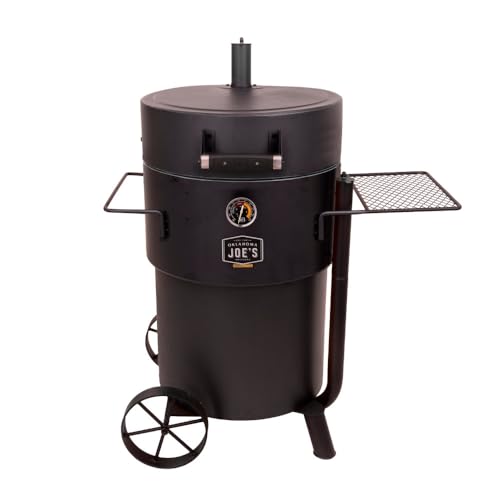
Oklahoma Joe’s Bronco Pro 21.5-inch Charcoal Drum Smoker — Best Overall for Competition Chicken
Drum smokers built the modern competition chicken category, and the Bronco Pro shows why. In a drum, the meat cooks above a charcoal bed with no water pan or diffuser in the way on many setups, so drippings hit the coals and return as that distinctive direct-heat flavor judges recognize instantly. The listing states 366 square inches of cooking area on the 21.5-inch Pro, which in chicken terms means a full competition load — a dozen-plus thighs trimmed and arranged, or several halved birds — in one organized layer.
It suits the competitor who cooks chicken as a headline category rather than an afterthought: someone who wants fast recovery, strong color, and the option to hang birds or run racks depending on the weekend’s plan.
Strengths
- Direct-heat drum character gives chicken distinctive flavor and color
- Fast temperature recovery after opening — critical inside turn-in windows
- Stated 366 sq. in. fits a full competition chicken load in one layer
Trade-offs
- Direct heat is less forgiving — placement and timing need practice
- Drum shape limits very large mixed loads compared with cabinets
- Heavy-duty build is substantial to transport to events
| Spec | Detail |
|---|---|
| Format | Charcoal drum smoker and grill, 21.5-inch |
| Cooking area | 366 sq. in. (per listing) |
| Fuel | Charcoal with wood chunks |
| Style | Direct-heat capable drum cooking |
Chicken rewards what drums do naturally. The cook runs hotter than a brisket cook, the fat renders and drips, and the skin tightens over direct radiant heat instead of steaming in a humid cabinet. Thighs — the dominant competition cut — come off a well-run drum with even mahogany color and skin that bites cleanly, provided the cook manages the two drum disciplines: arranging pieces so the center and edge trade fairly, and resisting the urge to open the lid and admire them, because every opening costs heat the drum must rebuild.
The Pro sizing matters for teams. A single layer that holds the whole chicken entry means one cook, one timing plan, and no second batch racing the clock. Run the same load, the same fuel, and the same vent settings in practice until the cook is boring — boring is what wins when the turn-in clock is running.
Best for: Competitors who want drum character, fast recovery, and a full chicken load in one layer / Not suited for: Cooks who want the gentlest, most hands-off chicken cook possible
Check the current price on Amazon

Weber Smokey Mountain Cooker 22-inch — Best for Bite-Through Skin Control
The Smokey Mountain approaches competition chicken from the opposite direction to a drum: control over drama. Its water pan steadies the cooking environment, its two grates let you stage thighs below and finish above (or run a full slate across both levels), and its temperature manners are so well documented that a competitor can find a proven chicken process for this exact cooker in an afternoon of reading.
It suits the methodical competitor — the cook who wins on repeatability, who practices a process until it is automatic, and who would rather have a gentle cooker that never surprises them than a fiery one that occasionally dazzles.
Strengths
- Two grates stage and hold a full chicken slate with a clear workflow
- Water-pan humidity supports even cooking and controlled skin texture
- Exceptionally stable temperatures reduce contest-day surprises
Trade-offs
- Gentler environment means skin technique (dry brine, finish heat) matters more
- Lower-grate access mid-cook is awkward under a loaded top grate
- Slower recovery than a drum after long lid openings
| Spec | Detail |
|---|---|
| Format | Vertical bullet smoker, 22-inch |
| Cooking levels | Dual cooking grates |
| Fuel | Charcoal with wood chunks |
| Environment | Water pan for humidity and stability |
Bite-through skin is a texture problem before it is a flavor problem, and the bullet’s steadiness is a texture weapon. A competitor can hold the exact zone that renders fat from under the skin without scorching the surface, then finish with a short hotter phase or a careful sauce set, cook after cook, because the cooker does not wander. The two-level layout also solves a real contest logistics problem: thighs can rest and hold on one level while the pieces destined for the box finish on the other.
The trade is intensity. Bullet chicken tastes clean and smoky rather than direct-fired, and some judges’ palates reward the drum character more. Know your circuit, practice both presentations if you can, and let scores — not fashion — decide which cooker travels.
Best for: Methodical competitors who win on repeatability and skin texture control / Not suited for: Cooks chasing direct-fired drum flavor above all else
Check the current price on Amazon

Oklahoma Joe’s Bronco 18-inch Charcoal Drum Smoker — Best Budget Drum
Not every competitor needs the Pro’s capacity. The 18-inch Bronco, listed at 284 square inches, runs the same drum playbook — charcoal bed below, meat above, drippings flavoring the fire — in a cooker that is easier to transport, quicker to heat, and kinder to a first-season budget. For a solo cook or a small team whose chicken entry is a single careful batch of thighs, that size is a feature, not a compromise.
It suits new competitors entering the chicken category seriously, and established cooks who want a dedicated chicken drum that leaves their big cooker free for the large meats.
Strengths
- True drum cooking character at the accessible end of the range
- Stated 284 sq. in. matches a focused single-batch chicken entry
- Smaller drum heats and recovers quickly inside tight timelines
Trade-offs
- Less room for error — a full load crowds faster than on the Pro
- Smaller capacity limits cooking for a crowd at home
- Direct heat still demands practice before it rewards you
| Spec | Detail |
|---|---|
| Format | Charcoal drum smoker and grill, 18-inch |
| Cooking area | 284 sq. in. (per listing) |
| Fuel | Charcoal with wood chunks |
| Style | Direct-heat capable drum cooking |
A dedicated chicken cooker is a legitimate competition strategy, and this is the economical way to run it. While brisket and pork occupy the main smoker on their own long schedules, the Bronco handles chicken on chicken’s schedule — hotter, shorter, and timed backwards from turn-in. That separation removes the classic contest failure where chicken waits on a cooker still busy being a brisket oven.
Practice matters even more at this size, because a smaller drum’s edge and center zones are closer together and loads crowd sooner. Trim uniformly, arrange deliberately, and learn exactly how your comp load fits before the season starts. Do that work and the small Bronco punches well above its footprint.
Best for: New competitors and small teams who want a dedicated chicken drum / Not suited for: Teams cooking large chicken volumes or big home gatherings
Check the current price on Amazon
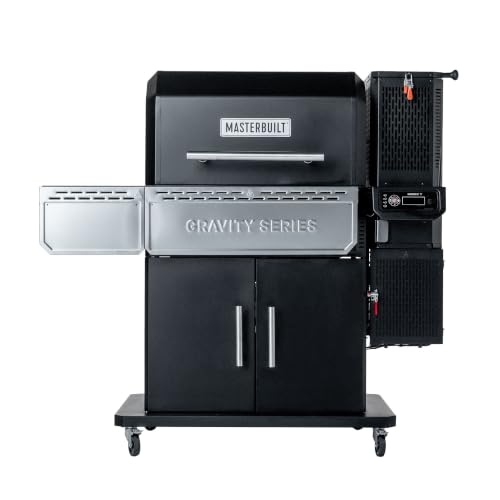
Masterbuilt Gravity Series 1150 Digital Charcoal Grill and Smoker — Best for Repeatable Temperatures
The Gravity Series 1150 attacks competition chicken’s biggest variable — temperature discipline — with a controller. Charcoal feeds from a gravity hopper, a digital fan holds the set point, and the listing states 1,150 square inches of cooking area, so a team can run chicken alongside holding space without a second cooker. Wood chunks layered in the hopper keep the smoke unmistakably charcoal-and-wood rather than pellet-mild.
It suits the competitor whose other categories already demand attention, and who wants chicken to run on a documented, repeatable program: same set point, same load, same timeline, every event.
Strengths
- Controller-held temperatures make the chicken timeline highly repeatable
- Stated 1,150 sq. in. covers chicken plus holding room in one cooker
- Real charcoal and wood chunks, not pellets, drive the flavor
Trade-offs
- Electronics and fan need power and weather protection at events
- More components to maintain than a purely mechanical drum or bullet
- Direct-fired drum character is milder than a true drum cook
| Spec | Detail |
|---|---|
| Format | Gravity-fed digital charcoal smoker |
| Cooking area | 1,150 sq. in. (per listing) |
| Fuel | Charcoal hopper with wood chunks |
| Control | Digital fan control with WiFi (per listing) |
Repeatability is a scoring strategy. When the cooker holds its zone within a narrow band for the entire cook, the competitor can tune the variables that actually differ between events — the chicken itself, the brine timing, the sauce set — instead of compensating for a cooker that ran hot in practice and cool at the contest. The Gravity 1150’s insulated chamber (per the listing) also blunts the wind and cold that bully thin steel on exposed contest sites.
The honest costs are complexity and character. You are trusting a fan, a board, and a power source on contest morning, so carry spares and a backup plan. And the flavor, while genuinely charcoal-fired, is cleaner and less direct than a drum’s. Teams that win with process pick this cooker; teams that win with fire pick the drums — both podiums are real.
Best for: Process-driven teams who want chicken on a repeatable, controller-held program / Not suited for: Competitors who distrust electronics on contest day
Check the current price on Amazon

Kamado Joe Classic Joe Series II 18-inch — Best for Skin and Finishing Heat
The kamado’s competition chicken case rests on skin. Ceramic walls store heat and radiate it evenly from all sides, so chicken cooks in a surrounding heat that tightens and colors skin more evenly than a one-direction fire. Then, when the cook calls for a finishing burst — the final minutes that set sauce and crisp edges — the same cooker answers with high radiant heat no cabinet can match.
It suits the detail-focused cook, often a solo competitor or a home cook entering local events, whose entries live or die on appearance and skin texture, and who practices frequently enough to exploit the kamado’s efficiency.
Strengths
- Surrounding ceramic heat colors and tightens skin evenly
- Finishing heat on demand for setting sauce and crisping edges
- Outstanding fuel efficiency makes frequent practice cooks cheap
Trade-offs
- 18-inch grate limits the size of a single competition load
- Temperature overshoot is slow to correct in a ceramic mass
- Heavy and fragile to transport compared with steel drums
| Spec | Detail |
|---|---|
| Format | Ceramic kamado grill and smoker, 18-inch |
| Fuel | Lump charcoal with wood chunks |
| Included | Cart and side shelves (per listing) |
| Grates | Stainless steel cooking grates |
Kamado chicken technique is about restraint twice over: restraint with wood, because the efficient cooker concentrates smoke quickly, and restraint with temperature changes, because ceramic rewards cooks who approach a target from below and then leave the vents alone. Master those two habits and the cooker produces chicken with unusually even color — the first thing a judge sees — and skin with a clean, set finish.
Transport is the practical warning. Ceramic travels badly compared with a steel drum, so many kamado competitors cook at home events, cook on a teammate’s steel for away events, or invest in careful padding and a two-person lift routine. Judge the cooker on your calendar, not just your palate.
Best for: Detail cooks who prioritize appearance and skin, and practice often / Not suited for: Teams hauling cookers long distances on a tight budget
Check the current price on Amazon
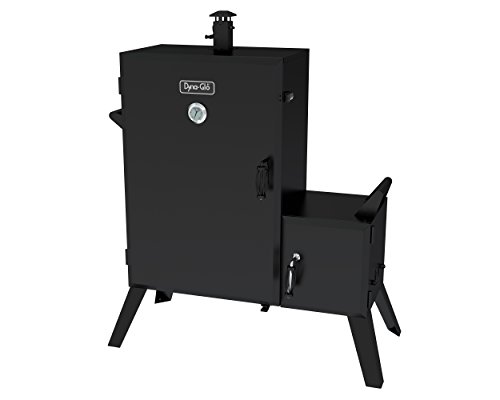
Dyna-Glo Wide Body Vertical Offset Charcoal Smoker DGO1890BDC-D — Best for Full-Slate Volume
Some competition chicken programs are volume programs: multiple test batches during practice season, a full slate plus crew food on contest weekend, or a team cooking chicken for vending alongside the judged entry. The Dyna-Glo Wide Body’s stacked-shelf cabinet, fed by a side offset firebox, is built for that arithmetic — shelf after shelf of thighs, halves, and wings in a patio-sized footprint.
It suits the high-volume cook who values throughput and is willing to manage shelf rotation as the price of capacity, rather than the minimalist who cooks one perfect dozen.
Strengths
- Stacked shelves hold the largest chicken volume on this list
- Offset firebox keeps direct flame away from loaded shelves
- Vertical footprint travels and parks more easily than long offsets
Trade-offs
- Shelf-to-shelf temperature differences require rotation discipline
- Lightweight cabinet loses heat in wind and cold; fuel use rises
- Not the tool for a single small, precision batch
| Spec | Detail |
|---|---|
| Format | Vertical offset cabinet smoker |
| Firebox | Side-mounted offset |
| Fuel | Charcoal with wood chunks or splits |
| Layout | Multiple stacked shelves |
Volume changes how you judge a cooker. Evenness across one grate matters less than a workflow: which shelf runs hottest, how rotation is sequenced, and how the comp dozen is selected from a larger cooked field. Smart teams cook more chicken than they turn in and box the best — a strategy that needs exactly this kind of capacity, and one the small precision cookers cannot support.
The cabinet’s compromises are the familiar ones for its class: manage the door seal from day one, expect to rotate, and budget extra fuel in bad weather. In exchange you get the only cooker here that treats chicken as a batch process — and for the right team, that is the winning frame.
Best for: Volume programs that cook extra chicken and box the best pieces / Not suited for: Minimalists cooking one small precision batch at a time
Check the current price on Amazon
Comparison Table
| Pick | Badge | Key spec | Best for |
|---|---|---|---|
| Oklahoma Joe’s Bronco Pro 21.5-inch Charcoal Drum Smoker | Best Overall for Competition Chicken | 21.5-inch drum, 366 sq. in. | Competitors who want drum character, fast recovery, and a full chicken load in one layer |
| Weber Smokey Mountain Cooker 22-inch | Best for Bite-Through Skin Control | 22-inch bullet, dual grates, water pan | Methodical competitors who win on repeatability and skin texture control |
| Oklahoma Joe’s Bronco 18-inch Charcoal Drum Smoker | Best Budget Drum | 18-inch drum, 284 sq. in. | New competitors and small teams who want a dedicated chicken drum |
| Masterbuilt Gravity Series 1150 Digital Charcoal Grill and Smoker | Best for Repeatable Temperatures | Gravity charcoal, 1,150 sq. in., digital control | Process-driven teams who want chicken on a repeatable, controller-held program |
| Kamado Joe Classic Joe Series II 18-inch | Best for Skin and Finishing Heat | 18-inch ceramic kamado with cart | Detail cooks who prioritize appearance and skin, and practice often |
| Dyna-Glo Wide Body Vertical Offset Charcoal Smoker DGO1890BDC-D | Best for Full-Slate Volume | Wide-body vertical offset cabinet | Volume programs that cook extra chicken and box the best pieces |
How to Choose the Best Chicken Smokers for Competition BBQ
Choose by strategy first. If your scores say appearance and skin carry your entry, weight the kamado and bullet. If taste comments praise fire character, weight the drums. If your timeline falls apart under pressure, weight the controller-held gravity cooker. If your program cooks volume and selects the best pieces, weight the cabinet. The cooker should amplify the way you already cook well, not force a new identity on contest weekend.
Then check the unglamorous logistics. Will it travel in your vehicle without damage? Can one person load it at 5 a.m.? Does it need power your site may not have? How fast does it recover after the three openings a chicken cook actually requires — load, move or baste, and box? Those answers decide contests more often than headline specifications do.
- Drums: fastest recovery and direct flavor; demand placement and timing practice.
- Bullets: gentlest control and texture; demand skin-finishing technique.
- Kamados: best skin and finishing heat; demand careful transport.
- Gravity-fed: most repeatable timeline; demand power and electronics care.
- Cabinets: most volume; demand shelf-rotation discipline.
Why Is Competition Chicken Harder Than It Looks?
Chicken is small, which sounds easy and is actually the trap. Small pieces cook fast, so the window between underdone, perfect, and dried out is measured in minutes. Skin adds a second, independent problem: the meat can be perfect while the skin is rubbery, or the skin can shatter while the meat overcooks. Add a fixed turn-in time, a box that must look immaculate, and judging from a bite or two, and chicken becomes the category with the least room for a cooker’s bad habits.
That is why recovery and evenness outrank raw capacity in this guide. A cooker that drops hard when you open it to arrange pieces, or that cooks the back row noticeably darker than the front, taxes exactly the minutes and the appearance points you cannot spare. Practice cooks exist to expose those habits at home, where they are cheap, instead of at an event, where they are not.
Building a Turn-In Timeline Around Your Cooker
Work backwards from the box. Decide when chicken must be sauced, when it must rest, and when it must be at its peak — then schedule the cook so the cooker’s natural pace lands the meat there without rushing. Drums run the shortest timelines and forgive a late start least; bullets and kamados hold a steadier, more plannable pace; the gravity cooker’s timeline is the most clock-like of all. Write the timeline down, rehearse it in practice with the actual comp load, and adjust the plan — not the cooker settings — when the rehearsal disagrees.
Include the boring minutes in the plan: time to light and stabilize, time for the cooker to recover after loading cold meat, time to select the box pieces from the cooked field. Competitors lose chicken categories in those unlisted minutes far more often than in the headline cook itself.
Practice Cooks: Turning a Good Cooker Into a Scoring Cooker
A competition cooker earns its keep in practice, not at the event. Run the identical load — same piece count, same trim, same brine or injection timing — until your results repeat, changing one variable per cook and logging fuel, weather, vent or controller settings, and scores you give yourself on appearance, skin, and tenderness. Five disciplined practice cooks teach more than a season of improvisation, and they reveal your cooker’s true recovery time, hot spots, and fuel appetite with your load, not a reviewer’s.
Practice the box, too. Arrange the entry, close the lid, carry it the distance a runner would, and open it again. Chicken that looked perfect on the grate can shift, sauce can pool, and garnish can wilt. The teams that rehearse the unglamorous last fifty feet are the ones whose entries arrive looking like the plan.
Thighs, Halves, or Whole Birds: Matching the Entry to the Cooker
The cut you turn in should influence the cooker you travel with. Thighs — the circuit’s dominant entry — reward even, piece-by-piece control: drums arrange them in a single deliberate layer, bullets stage them across two grates, and cabinets let you cook a field and select. Halved chickens reward cavity-side heat management and presentation space; they sit happily on bullets and kamados where the heat surrounds rather than blasts. Whole birds are the appearance gamble — spectacular when the skin is flawless, unforgiving when it tears — and they favor the gentle, even environments of a bullet or kamado over a drum’s direct fire.
Skin strategy follows the cut. Thighs are often cooked skin-on with meticulous trimming and a finish that sets the skin bite-through; halves and whole birds lean on dry brining and rendering time. Each cooker in this guide has a natural partner cut — the drums for thighs, the kamado and bullet for halves and presentation birds, the gravity cooker for whichever cut your process has standardized — and forcing the opposite pairing is how good cooks produce mediocre boxes with excellent equipment.
Decide your entry first, practice it on your cooker until the pairing is boring, and resist mid-season cut changes. Judges reward mastery of one presentation far more reliably than novelty across three.
Setting Sauce and Building the Box
Sauce is a finish, not a mask, and the setting stage is where cookers differ in ways scoresheets notice. A dunked or brushed thigh needs a short, controlled heat phase to set the glaze tacky rather than wet — drums and kamados deliver that phase natively with their finishing heat, bullets do it with a brief hotter stage or a careful transfer, and the gravity cooker does it by simply raising the set point for the final minutes. However your cooker achieves it, rehearse the exact minutes: an unset sauce smears in the box, and an over-set sauce tightens, darkens, and drags appearance scores down with it.
Box building is choreography. Decide the arrangement in practice — how many pieces, which orientation, how the garnish frames them — and build the same box every time, selecting pieces by color and skin first and tenderness as the qualifier. Keep the box closed once built; every reopening cools the entry and invites second thoughts. Carry it level, walk it calmly, and hand it over like the previous fifty feet went exactly to plan — because you rehearsed them until they did.
After the event, score your own box from a photograph before the official scores arrive. Appearance drift between practice boxes and contest boxes is one of the most fixable leaks in a chicken program, and it is invisible until you compare pictures side by side.
Contest Logistics: Power, Weather, and Travel
A competition cooker lives a harder life than a patio cooker, and logistics decide whether its cooking virtues ever get to matter. Steel drums and bullets travel like equipment — strapped, stacked around, indifferent to a bumpy load-in. A kamado travels like furniture: padded, upright, two people, and a genuine plan for the last fifty feet across grass. The gravity cooker travels well physically but arrives with a dependency — power — so its team packs the extension leads, the spare probe, and the backup plan for a dead fan with the same seriousness as the chicken itself.
Weather is the second logistics exam. Wind leans on lightweight cabinets and offsets, rain threatens electronics and charcoal stocks, and cold stretches every timeline you rehearsed in a warm driveway. The teams that cope share a pattern: a canopy they can actually anchor, fuel stored dry off the ground, and practice cooks deliberately run in imperfect weather so contest-day conditions are a variation, not a surprise. Insulated and controller-held cookers forgive the most here, which is part of their competition case beyond the cooking itself.
Finally, pack the cooker kit as a kit: vents and tools, spare gaskets or latches for your model, a thermometer you trust, gloves that fit, and the log book. The best chicken cooker at the event is very often simply the one whose team can run it identically away from home — and identity, in the end, is a packing discipline.
Reading Judges’ Feedback and Adjusting the Cooker Program
Scoresheets talk, and a good team translates them into cooker decisions rather than recipe panic. Appearance deductions with comments about uneven color point at the cooker and the arrangement: pieces are crowding, a hot zone is unmapped, or the load is too big for one honest layer — answers that live in grate layout and load size, not in a new rub. Taste comments about bitterness point at the fire: wood too green, smoke too thick during the saucing phase, or a cooker run with its vents choked. Tenderness comments split by direction — dry points to timeline and finishing heat, while under-rendered skin points back to the rendering phase and the cooker’s ability to hold the hotter zone without spiking.
The discipline is to change the cooker variable before the recipe variable, because the cooker variable is the one that repeats. If color is uneven at three straight events on a drum, the answer is a rotation protocol or a smaller, better-arranged load, practiced until the color evens out — not a darker sauce to hide it. If the gravity cooker produces perfect tenderness but the team craves more fire character, the answer is a wood-chunk strategy in the hopper, tuned across practice cooks, not a wholesale cooker change in July.
Keep the feedback with the log book, event by event, and review the season whole before buying anything. Most teams discover their cooker was never the problem — their process around it was — and the few who find a genuine hardware ceiling find it with evidence, which makes the next purchase the most confident one they have ever made. The six cookers in this guide each support a full scoring program; the program, faithfully logged and honestly adjusted, is what turns any of them into a trophy.
One final translation habit: separate the judges you can learn from from the variance you cannot. A single low taste score among consistent highs is a palate, not a pattern. Three events of the same comment is a pattern, and patterns — in color, in smoke, in timing — are the cooker program asking to be adjusted. Answer patterns. Ignore weather.
How to Run a Competition Chicken Cook, Step by Step
Timings vary with piece size and cooker, so treat this as the sequence and discipline rather than a stopwatch recipe — your practice log supplies your numbers.
- Trim and prep uniformly. Even pieces cook evenly; ragged pieces force compromises. Prep the day before where your process allows, so contest morning is execution, not invention.
- Season and rest consistently. Whether you brine, inject, or dry-season, hold the timing constant between practice and the event — consistency is the entire point.
- Stabilize the cooker before loading. Bring it to your chicken zone and let it settle; loading cold meat into a still-climbing cooker scrambles every timeline after it.
- Arrange deliberately. Space pieces for airflow, place them with your cooker’s hot and cool zones in mind, and note the arrangement so you can repeat it.
- Cook mostly closed. Open for planned moves only — a rotation, a baste, a sauce set — and work quickly and gently when you do.
- Finish for skin and sauce. Use your cooker’s finishing strength — drum heat, kamado radiation, a brief hotter phase — to set sauce and skin without pushing the meat past tenderness.
- Select and box the best. Cook more than you turn in where capacity allows, choose the pieces with the best color and skin, and box them in the arrangement you rehearsed.
After turn-in, write the debrief while it is fresh: what the cooker did, what the clock did, and what you would change. That page, reviewed before the next event, is worth more than any accessory you can buy.
Common Buying Mistakes
Buying capacity instead of recovery. A huge cooker that takes forever to recover after opening loses more chicken contests than a modest drum that snaps back. For chicken, recovery and evenness beat raw area.
Practicing with a different load than you compete with. Six thighs in practice and eighteen at the event is a different cook — different recovery, different airflow, different timing. Practice the comp load or the practice does not count.
Chasing skin with heat alone. Blasting chicken to fix rubbery skin usually scorches sauce and dries edges. Skin is built earlier — drying, seasoning, rendering at the right pace — and only finished with heat.
Opening the cooker to check constantly. Every admiring look costs heat and time, and chicken’s short cook magnifies the loss. Trust the process you rehearsed; check at planned points only.
Changing three things after one bad score. One event is a sample of one. Change a single variable, practice it, and let several results — not one judge’s palate — steer the program.
Final Recommendation
For most competitors, the Oklahoma Joe’s Bronco Pro is the chicken cooker to beat: drum flavor and color, fast recovery, and room for a full slate in one layer. The 18-inch Bronco runs the same strategy for less, as a starter or a dedicated chicken drum. The Weber Smokey Mountain is the control freak’s champion, the Kamado Joe Classic Joe Series II the skin specialist, the Masterbuilt Gravity Series 1150 the repeatability machine, and the Dyna-Glo Wide Body the volume play. Match the cooker to your strategy, then practice until the cook is boring — boring, repeated on schedule, is what a first-place chicken box looks like from the inside.
Keep exploring the cluster: Best Charcoal Wood Smokers Best Charcoal And Wood Smokers Best Charcoal Bbq Smokers Best Ceramic Smokers Green Egg Best Charcoal Vertical Smokers Best Affordable Backyard Smokers
Frequently Asked Questions
What temperature is best for competition chicken?
Chicken is usually smoked hotter than brisket or pork — in the upper smoking range rather than the lowest — because skin texture and fat rendering demand it, and because the short cook benefits from momentum. The exact set point is part of your process: pick one your cooker holds well, practice at it, and let tenderness and skin, not a universal number, be the judge.
Why is my smoked chicken skin rubbery?
Rubbery skin is usually a rendering and moisture problem: the skin stayed too cool or too wet for the fat beneath it to render and the surface to set. Drying the skin before cooking, seasoning with time to work, cooking in the hotter smoking zone, and finishing with a brief hotter phase all help. Every cooker in this guide can produce bite-through skin once its particular finishing strength is used deliberately.
Is a drum smoker really better for chicken?
Better for a particular style, yes. Drums cook with direct radiant heat and dripping-driven flavor that many judges reward, and they recover fast. But bullets, kamados, and controlled charcoal all win chicken categories with different strengths. The drum is the most chicken-specialized shape here, not the only scoring one.
How much chicken should I cook for a competition entry?
More than you turn in, if your cooker and budget allow. Cooking a larger field lets you select the best-colored, best-skinned pieces for the box and leaves the rest for the crew. That selection step is a real scoring advantage — and it is why the volume and capacity notes in each review matter.
Can I use the same smoker for chicken and the big meats?
Yes, and many teams do — but the schedules collide. Brisket and pork run long and low; chicken runs shorter and hotter, timed backwards from its turn-in. A second, chicken-dedicated cooker (the smaller Bronco exists for exactly this) removes the collision. If you run one cooker, plan the whole weekend’s timeline around that shared constraint.
What wood is best for competition chicken?
Mild to medium fruitwoods and oak are the common choices, because chicken absorbs smoke quickly and strong woods like mesquite can dominate a short cook. Whatever you choose, keep it constant between practice and events, and keep it restrained — chicken shows excess smoke faster than any other category.


