Disclosure: airfryerkitchensupply.com is reader-supported. When you buy through links on our site, we may earn an affiliate commission at no extra cost to you.
Where to buy
Every linked pick in this guide to the best above range microwaves was verified against Amazon’s catalog on 2026-11-21, so the model names and specs below are the models you will actually land on: GE 1.6 Cu.Ft Over-the-Range, Midea 1.7 Cu.Ft Over-the-Range, LG 1.7 Cu.Ft Over-the-Range EasyClean, Samsung 1.1 Cu.Ft Smart SLIM Over-the-Range, GE Profile 1.2 Cu.Ft Low Profile Over-the-Range, BLACK+DECKER 1.7 Cu.Ft Over-the-Range. Above-range (over-the-range) models combine a microwave with the range hood, so venting figures are verified alongside cooking specs. Check the current price on Amazon from any pick’s link, because finishes and configurations rotate through the catalog during the year.
The best above range microwaves — over-the-range models, in full — do two jobs at once: they microwave, and they are your range hood. That double duty is why this category confuses shoppers. A model can be a fine microwave and a weak hood, or a superb hood wrapped around a small oven, and the right choice depends on which job your kitchen needs more. This guide ranks six verified OTR models across that whole trade-off, from the balanced GE to a Samsung that is honestly a pro-strength hood with a microwave attached.
Start by deciding what your range actually produces. A household that boils, simmers and sautés lives comfortably inside 300 CFM of venting. A household that sears steaks, blackens fish and stir-fries over high heat needs 400 CFM or more, ducted outside if at all possible — no microwave feature compensates for a kitchen full of smoke. The picks below are ordered so both households find their answer early.
Installation standardness was the third ranking lens: models that follow the common 30-inch mounting pattern keep replacement simple and handymen fast, which is worth real money over an appliance’s life. Every model and figure here was verified against Amazon’s catalog on 2026-11-21, with capacities, wattages and vent figures taken from the listing listings themselves. Where a listing was light on a spec, the review says so rather than guessing — check that spec on the listing page before you order.
In this guide
Quick Picks
Best Overall: GE 1.6 Cu.Ft Over-the-Range Microwave (Stainless Steel) — The balanced benchmark: 1000W, 300 CFM, LED lighting and the deepest service network in the class.
Best Value: Midea 1.7 Cu.Ft Over-the-Range Microwave (Stainless Steel) — Family capacity, 300 CFM and an 18-menu library at the friendly end of the tier.
Best Easy-Clean Interior: LG 1.7 Cu.Ft Over-the-Range Microwave with EasyClean (Stainless Steel) — LG’s EasyClean cavity turns the worst cleaning job in the kitchen into a wipe-down.
Best Smart and Strongest Vent: Samsung 1.1 Cu.Ft Smart SLIM Over-the-Range Microwave — A 550 CFM hood with Wi-Fi, voice control and sensor cook in a slim body — a range hood that also microwaves.
Best Low-Profile Design: GE Profile 1.2 Cu.Ft Low Profile Over-the-Range Microwave — Slim body, undiminished 1000W and a 400 CFM vent for kitchens short on clearance.
Best Big-Capacity on a Budget: BLACK+DECKER 1.7 Cu.Ft Over-the-Range Microwave (Stainless Steel) — Full 1.7 cu.ft OTR format with vent and light at the friendliest price tier in the guide.
How These Picks Were Chosen
Candidates had to be true 30-inch over-the-range models with integrated venting and cooktop lighting — countertop ovens with trim kits were excluded. Each model was verified, and vent figures were only used where the Amazon listing states them. We then ranked on the balance of the two jobs: microwave competence (capacity, power, controls) and hood competence (CFM, lighting, filter practicality), with installation standardness as a tiebreaker.
We also weighed what ownership looks like after installation day: filter access, light quality and how the controls behave for the second and third people in the household, not just the buyer. An OTR serves everyone who cooks under it, including the ones who never read a manual.
The list deliberately spans the category’s real shapes: two full-size mainstream models, an easy-clean family model, a slim smart hood-first model, a low-profile design model and a budget full-size model. If your kitchen does not match one of those shapes, the buying guide below will tell you which compromise to make.
- Verified model, capacity and vent figures for every pick, checked 2026-11-21
- Ranked on both jobs — microwave and range hood — not on cooking specs alone
- Ducted versus recirculating realities addressed in the guide, not hidden
- No prices or fixed ratings printed — check price on Amazon at the listing
The 6 Best Above Range Microwaves, Reviewed

GE 1.6 Cu.Ft Over-the-Range Microwave (Stainless Steel) — Best Overall
The GE 1.6 is the over-the-range microwave against which the class is measured: 1000 watts, a 300 CFM vent that handles everyday cooking steam and smoke, LED cooktop lighting and a 12.8-inch turntable in a 30-inch stainless body. It is not the most powerful vent or the smartest oven here; it is the most balanced, backed by the deepest service network in the category. For a straightforward like-for-like replacement, this is the default answer.
Strengths
- 300 CFM ventilation covers the great majority of home cooking without pro-style noise
- LED cooktop lighting is a genuine daily upgrade over older halogen or incandescent bulbs
- GE’s parts and service network is the deepest in the OTR category
Trade-offs
- Serious wok and sear cooks will want the 400–550 CFM models further down this list
- No sensor-cooking headline features at this tier; the spec is deliberately mainstream
- Stainless front needs the usual fingerprint maintenance
Key specs
- Power: 1000W
- Capacity: 1.6 cu.ft
- Ventilation: 300 CFM hood vent
- Lighting: LED cooktop lighting
- Turntable: 12.8″ removable (per Amazon listing)
Installation is where this GE earns quiet praise: it follows the standard 30-inch OTR pattern — rear template, top cabinet bolts, a choice of recirculating, rear or top exhaust — so a like-for-like swap is a two-person afternoon rather than a remodel. Venting can be converted for ductless kitchens with the charcoal filter route, which matters in apartments and condos where outside ducting is impossible.
As a microwave it covers the family brief: capacity for a full casserole, presets for the weekly rotation, and a turntable sized for dinner plates. The controls are the conventional membrane style, which guests and teenagers operate without a manual — an underrated virtue in a shared kitchen.
Choose the GE if your cooking is steamy rather than smoky. Boiling pasta, simmering sauces and weeknight stir-fries sit comfortably inside 300 CFM; a household that blackens fish nightly should read the Samsung Slim and GE Profile reviews before deciding.
Best for: Most 30-inch range kitchens that want the proven, balanced OTR package / Not suited for: Cooks who sear hard enough to need a 400+ CFM vent
Check the current price of the GE 1.6 Cu.Ft Over-the-Range Microwave (Stainless Steel) on Amazon

Midea 1.7 Cu.Ft Over-the-Range Microwave (Stainless Steel) — Best Value
Midea’s 1.7 cu.ft OTR is the value play that does not feel like one: family-size capacity, 1000 watts, 300 CFM venting and an 18-menu auto cook library behind a smart touch panel. The menu count is the headline — this oven tries to have a button for everything — and for preset-driven households that breadth is worth more than brand prestige. It is the most microwave you can hang over a range at the friendly end of the category.
Strengths
- 1.7 cu.ft capacity handles family casseroles and large plates
- 18 auto cook menus, the longest list in this guide
- 300 CFM venting matches the class standard set by the GE
Trade-offs
- Brand service network is thinner than GE’s or Samsung’s in some regions
- Touch panel styling is modern but shows every fingerprint
- Menu breadth includes some programs most households will never touch
Key specs
- Power: 1000W
- Capacity: 1.7 cu.ft
- Ventilation: 300 CFM
- Menus: 18 auto cook menus
- Controls: Smart touch panel (per Amazon listing)
The Midea’s case is arithmetic: capacity and venting equal to the class leaders, a longer menu library, at the value end of the tier. Kitchens being renovated on a budget — where the range, counters and cabinets are all competing for the same money — are exactly where this oven belongs.
Daily behavior is conventional in the good ways: ten power levels, a turntable that fits real plates, and cooktop lighting for the range below. The touch panel’s learning curve is a weekend, not a month, and the preset library covers the frozen and fresh staples a family actually cycles through.
The honest caveat is aftercare. Midea is a giant globally but its US appliance service footprint is still growing; if you live far from a service center, weigh that against the savings. For most buyers the math still favors the Midea — just make it a conscious trade rather than a surprise.
Best for: Budget remodels that want family capacity and a long menu list / Not suited for: Buyers who prioritize the strongest possible venting
Check the current price of the Midea 1.7 Cu.Ft Over-the-Range Microwave (Stainless Steel) on Amazon
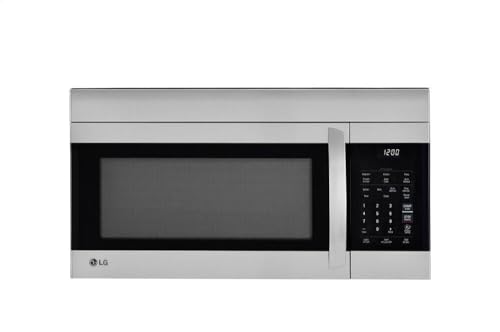
LG 1.7 Cu.Ft Over-the-Range Microwave with EasyClean (Stainless Steel) — Best Easy-Clean Interior
Every OTR owner knows the real maintenance job is not the door or the panel — it is the ceiling of the cavity after a soup eruption. LG’s EasyClean interior is the answer this guide takes most seriously: an enamel-style surface designed so baked-on splatter wipes off with a damp cloth instead of a chisel and a prayer. In a 1.7 cu.ft stainless body sized for families, it is the low-scrubbing pick.
Strengths
- EasyClean interior genuinely reduces the effort of the worst cleaning job in the kitchen
- Family-size 1.7 cu.ft cavity in a standard 30-inch format
- LG’s OTR fit and finish is consistently tidy at this tier
Trade-offs
- The Amazon listing is light on venting detail; confirm CFM on the listing page if venting is your priority
- EasyClean helps with splatter, not with neglected grease film on the vent filters
- Stainless exterior still needs normal fingerprint care
Key specs
- Capacity: 1.7 cu.ft
- Interior: EasyClean enamel (per Amazon listing)
- Finish: Stainless steel
- Format: 30″ over-the-range
The way to value EasyClean is in minutes per month. A conventional cavity after a month of family use needs a steam soak and a scrub; the LG’s surface releases the same splatter with a wipe in most cases. Over a decade of ownership that is the difference between a chore you do and a chore you avoid until it becomes archaeology.
As an oven, the LG covers the family brief in the standard way — family capacity, turntable cooking, range lighting and venting in the class’s mainstream band. Nothing about the cooking side asks for compromise; the interior is simply the tiebreaker that matters every single week.
Pair this pick with the filter habit described in the care section: the cavity may forgive you, but the grease filters above the range still want a monthly degrease. Do that one job and this is the lowest-maintenance OTR in the guide.
Best for: Messy cooks and families whose microwave interior is a weekly crime scene / Not suited for: Buyers who need verified maximum venting specs for heavy searing

Samsung 1.1 Cu.Ft Smart SLIM Over-the-Range Microwave — Best Smart and Strongest Vent
The Samsung SLIM inverts OTR priorities: a slim 1.1 cu.ft cavity traded for a 550 CFM hood vent — the strongest in this guide — plus Wi-Fi, voice control, sensor cooking and an LED light bar. It is built for kitchens where the range works hard and the microwave’s job is mostly reheating, melting and side dishes. If smoke is your problem and space is your constraint, nothing else here is close.
Strengths
- 550 CFM venting is near-pro extraction in a slim OTR body
- Wi-Fi and voice control for hands-full cooking moments
- Slim profile frees headroom and visual space above the range
Trade-offs
- 1.1 cu.ft cavity will not take large casseroles or big serving bowls
- Smart features need your network and your patience to set up
- Premium positioning: you pay for the vent and the brains, not for size
Key specs
- Capacity: 1.1 cu.ft
- Ventilation: 550 CFM hood vent
- Smart: Wi-Fi, voice control
- Cooking: Sensor cook
- Lighting: LED light bar (per Amazon listing)
Judge this oven as a range hood first. Five hundred fifty CFM moves the smoke from a hard sear out of the kitchen instead of redistributing it, and in ducted installations it transforms how a small kitchen feels after frying. The slim body also changes the sightlines: more headroom, less visual bulk, and a light bar that actually illuminates the back burners.
The smart layer is genuinely useful in one specific way — voice and app control when your hands are covered in dough or raw chicken — and decorative the rest of the time. Sensor cook, though, is a daily feature: it watches humidity and stops reheats at the right moment more reliably than fixed timers.
The capacity trade is real and should be made consciously. Households whose microwave is a reheating and side-dish tool will never miss the missing half cubic foot. Households that cook family mains in the microwave should take the GE or Midea and accept their venting as the compromise instead.
Best for: Serious stovetop cooks in compact kitchens who need real venting plus smart controls / Not suited for: Families who need a large cavity for casseroles
Check the current price of the Samsung 1.1 Cu.Ft Smart SLIM Over-the-Range Microwave on Amazon

GE Profile 1.2 Cu.Ft Low Profile Over-the-Range Microwave — Best Low-Profile Design
GE Profile’s low-profile OTR is the design solution to a common geometry problem: not enough vertical room above the range for a full-size microwave that still vents properly. It trims the body height, keeps 1000 watts and a 400 CFM vent — stronger than the standard GE — and lands in the premium Profile finish. For kitchens with cabinets or a bulkhead crowding the range wall, it is the pick that fits without giving up extraction.
Strengths
- 400 CFM venting beats the standard class figure while the body stays slim
- Low-profile design solves real clearance problems above ranges
- Profile-tier finish and LED lighting suit renovated kitchens
Trade-offs
- 1.2 cu.ft capacity is a deliberate trade for the slim body
- Tall mugs and big bowls need a height check against the slimmer cavity
- Premium tier pricing for a smaller cavity is a conscious, design-led spend
Key specs
- Power: 1000W
- Capacity: 1.2 cu.ft
- Ventilation: 400 CFM hood vent
- Lighting: LED
- Profile: Low-profile 30-inch body (per Amazon listing)
Low-profile OTRs exist because modern kitchens keep stealing the microwave’s space: taller ranges, decorative hoods that did not work out, cabinets hung lower than the old standard. The GE Profile answers with engineering rather than apology — the vent is stronger than the mainstream model in this guide, and the cooking power is undiminished.
The cavity asks for one habit change: check the height of your tallest regular items. Standard mugs and bowls are fine; the oversized soup tureen is not. Most owners adapt in a week and never think about it again, while enjoying the extra headroom at the stove every single day.
If your kitchen’s constraint is width or budget rather than height, this is the wrong premium to pay — the standard GE above is your oven. If the constraint is vertical, the Profile is the rare design pick that is also the engineering pick.
Best for: Kitchens with limited clearance above the range that still cook seriously / Not suited for: Anyone whose microwave must double as the family’s main casserole oven
Check the current price of the GE Profile 1.2 Cu.Ft Low Profile Over-the-Range Microwave on Amazon

BLACK+DECKER 1.7 Cu.Ft Over-the-Range Microwave (Stainless Steel) — Best Big-Capacity on a Budget
BLACK+DECKER’s 1.7 cu.ft OTR delivers the full-size format — family capacity, 1000 watts, vent fan with cooktop light, one-touch auto cook and ten power levels — at the friendliest end of the category. It is the pick for rental properties, house flips and budget family remodels where the OTR must simply be big, complete and dependable without consuming the renovation budget.
Strengths
- Full 1.7 cu.ft family capacity at the value end of the OTR tier
- Vent fan and cooktop light cover the two jobs an OTR must do besides cooking
- One-touch auto cook and child lock keep the daily spec complete
Trade-offs
- Fit and finish are functional rather than premium
- Vent performance is class-standard, not a heavy-searing solution
- No sensor or smart features at this tier
Key specs
- Power: 1000W
- Capacity: 1.7 cu.ft
- Power levels: 10
- Ventilation: Vent fan with light
- Safety: Child safety lock (per Amazon listing)
The rental and flip math is where this oven wins. Tenants and buyers check that the OTR is stainless, full-size and working; they do not check for sensor cooking. The BLACK+DECKER spends its budget on the format and the checklist, and skips the features that do not change a property’s value.
For an owner-occupied budget kitchen the same logic mostly holds, with one question to answer honestly: do you sear and fry hard several times a week? If yes, venting is worth real money and the Samsung or GE Profile earns its premium. If your range work is weeknight-normal, this oven’s vent and light will do their jobs without complaint.
Installation follows the standard pattern, and the brand’s manuals and support are easy to reach — the two things that matter when a property is not your own kitchen and a handyman is doing the fitting.
Best for: Rentals, flips and budget family kitchens needing full OTR capacity / Not suited for: Design-led kitchens wanting premium finishes and smart features
Comparison Table
| Pick | Badge | Key spec | Best for |
|---|---|---|---|
| GE 1.6 Cu.Ft Over-the-Range Microwave (Stainless Steel) | Best Overall | 1000W, 1.6 cu.ft, 300 CFM vent, LED cooktop lighting, 12.8-inch turntable | Most 30-inch range kitchens that want the proven, balanced OTR package |
| Midea 1.7 Cu.Ft Over-the-Range Microwave (Stainless Steel) | Best Value | 1000W, 1.7 cu.ft, 300 CFM vent, 18 auto cook menus, smart touch panel | Budget remodels that want family capacity and a long menu list |
| LG 1.7 Cu.Ft Over-the-Range Microwave with EasyClean (Stainless Steel) | Best Easy-Clean Interior | 1.7 cu.ft, EasyClean enamel interior, stainless steel | Messy cooks and families whose microwave interior is a weekly crime scene |
| Samsung 1.1 Cu.Ft Smart SLIM Over-the-Range Microwave | Best Smart and Strongest Vent | 550 CFM hood vent, Wi-Fi, voice control, sensor cook, LED light bar, slim profile | Serious stovetop cooks in compact kitchens who need real venting plus smart controls |
| GE Profile 1.2 Cu.Ft Low Profile Over-the-Range Microwave | Best Low-Profile Design | 1000W, 1.2 cu.ft, 400 CFM vent, low-profile body, LED lighting | Kitchens with limited clearance above the range that still cook seriously |
| BLACK+DECKER 1.7 Cu.Ft Over-the-Range Microwave (Stainless Steel) | Best Big-Capacity on a Budget | 1000W, 1.7 cu.ft, vent fan with light, one-touch auto cook, 10 power levels | Rentals, flips and budget family kitchens needing full OTR capacity |
How to Choose the Right Above Range Microwave
Measure first, and measure the right things: the width between cabinets (30 inches is the standard this whole guide assumes), the height from cooktop to the bottom of the mounting space, and the depth of the cabinets — an OTR that projects far beyond shallow cabinets looks and feels wrong. Your old unit’s dimensions are the safest template if you are replacing like for like.
Decide your venting route before you fall for a CFM figure. Ducted outside, a vent performs near its rating. Recirculating through charcoal filters — the only option in many apartments — every vent performs far below it, mostly moving steam and some odor around. If you must recirculate, prioritize the microwave side of the bargain and keep expectations for smoke modest; if you can duct, CFM becomes the most important number on this page.
Match capacity to your real dishes. The 1.6–1.7 cu.ft models take family casseroles and big plates; the slim 1.1–1.2 cu.ft models take plates, mugs and side dishes but not the big bowl. There is no technique that fixes a cavity your dishes do not fit.
Finally, weight the lighting. You will use the cooktop light every day you cook, long after the novelty of any cooking preset fades. LED lighting — on the GE, the Samsung’s light bar and the GE Profile — is brighter, cooler and longer-lived than the bulbs in the OTR you are replacing.
CFM Explained: How Much Venting Do You Actually Need?
CFM — cubic feet per minute — measures how much air the hood moves. The mainstream OTR band is 300 CFM, which clears steam, boiling vapor and light sauté smoke from a standard range. Four hundred CFM, as on the GE Profile, adds real headroom for frequent frying. The Samsung SLIM’s 550 CFM enters territory that handles hard searing and wok work, provided the duct run is short and actually leads outside.
Two honest caveats. First, duct length, elbows and a restrictive wall cap all eat CFM, so installation quality can matter more than the number on the box. Second, very strong vents in tight, well-sealed homes can need make-up air consideration — a question for your installer, not a reason to fear the Samsung, but a reason to mention it during the install quote.
Standard, slim and low-profile are the three body shapes in this category, and the labels describe geometry, not quality. Standard bodies (GE, Midea, LG, BLACK+DECKER here) carry the big cavities and the conventional look. Slim and low-profile bodies (Samsung, GE Profile) cut vertical height to fit tight spaces and free headroom, paying for it with cavity volume. Neither shape is better; each is the answer to a different kitchen’s measurements.
Noise scales with CFM and with speed setting. All of these vents are civilized on low and assertive on high; the practical habit is to start the vent before the pan gets hot and let it run a few minutes after cooking, which clears more smoke at lower, quieter speeds than a late blast on maximum.
How to Install an Over-the-Range Microwave Safely
An OTR install is a two-person job with a stud finder, a drill and patience. The microwave hangs from a wall bracket and bolts up into the cabinet above; it also needs its own electrical supply at the cabinet. If any of that sentence worries you, hire the install — it is a standard, reasonably priced job for appliance installers and handymen.
- Step 1: Kill power to the old unit at the breaker, and confirm the cabinet above can carry the load — the microwave’s weight hangs partly from it.
- Step 2: Remove the old OTR with a helper supporting its weight as the top bolts come out; these units are heavier than they look.
- Step 3: Find and mark the studs, mount the wall bracket level, and drill the cabinet floor using the manufacturer’s template.
- Step 4: Configure the blower for your venting route (top, rear or recirculating) before lifting the unit — this is a bench job, not a ladder job.
- Step 5: Lift the microwave onto the bracket with your helper, feed the cord through the cabinet, and drive the top bolts while the helper holds the unit level.
- Step 6: Connect ducting if fitted, restore power, and test all three systems: microwave (cup of water), vent (tissue at the intake should pull), and cooktop light.
- Step 7: Fit or replace the grease filters and, for recirculating installs, the charcoal filter, and record the filter part numbers for future orders.
Common Buying Mistakes
- Buying maximum CFM for a recirculating installation and expecting ducted performance.
- Measuring width but not height — the low-profile picks exist because this mistake is so common.
- Choosing a slim, small cavity for a household that cooks family mains in the microwave.
- Ignoring the lighting and discovering the new OTR lights the range worse than the old one did.
- Reusing ancient, grease-logged ducting and blaming the new vent for weak extraction.
The most expensive OTR mistake is venting optimism: paying for extraction your duct route cannot deliver. Walk the duct path — or admit there is not one — before you rank the picks. A close second is buying a slim designer model for a household whose cooking life revolves around a large casserole dish: the first big family meal becomes a geometry lesson, and return shipping on an OTR is nobody’s idea of a good weekend.
Grease Filters, Charcoal Filters and Keeping the Vent Honest
The metal mesh grease filters above the range are the hardest-working consumable in this category. Wash them monthly — hot water, degreasing dish soap, or the dishwasher — because a clogged filter quietly strangles even a 550 CFM vent. If a filter is damaged or missing, replace it; running without one coats the blower and duct in grease.
Recirculating installs add a charcoal filter that absorbs odors; it cannot be washed back to life and wants replacing on the schedule in your manual, typically a couple of times a year in busy kitchens. When a recirculating kitchen starts smelling stale despite cleaning, the charcoal filter is the first suspect.
Wipe the vent’s exterior intake area weekly and the cooktop light lens whenever it dims. Ten minutes a month keeps an OTR performing like the model you researched instead of the neglected appliance it can become.
Ducted vs Recirculating: The Decision That Shapes Everything
If your kitchen has any path to the outside — through the wall behind the range or up through the cabinet and roof — ducting is the single most valuable upgrade in this entire guide, worth more than any model upgrade. Ducted, the mainstream 300 CFM models perform respectably and the strong vents become transformative.
If ducting is impossible, choose your OTR as a microwave first and a vent second: prioritize cavity, controls and lighting, run the vent early and on schedule, and lean on a window or a portable fan for the hardest searing sessions. The slim Samsung still earns its place in recirculating kitchens for its lighting and sensor cooking, but buy it with clear eyes about what recirculation cannot do.
Electrical and Cabinet Requirements Nobody Mentions
An OTR needs a power outlet inside the cabinet above the range, on a circuit that can carry the microwave’s draw — and in many jurisdictions and manuals, that means a dedicated circuit. Older kitchens sometimes have the outlet; sometimes they have a hardwired hood connection instead. Check before install day, because discovering a missing outlet with the old microwave already on the floor is how afternoons die.
The cabinet itself is structural here: the microwave’s front weight hangs from bolts driven up into the cabinet floor, and the wall bracket carries the back. Particleboard cabinets in poor condition, or a cabinet that is itself loosely fixed to the wall, are reasons to reinforce or to hire the job out. The wall side matters too — the bracket must hit studs or proper anchors, not just drywall optimism.
Finally, measure the cabinet depth against the oven’s depth. Standard cabinets are shallower than a full-size OTR body, so the oven’s front projects a few inches beyond the cabinet face by design; that is normal. What is not normal is a decorative valance or a deeper side panel fouling the door swing — walk the door’s arc mentally before the unit is on the bracket.
Matching the Six Picks to Six Real Kitchens
Kitchen one is the standard suburban replacement: a twenty-year-old OTR died, the cabinets are staying, the duct goes up and out, and dinner is weeknight-normal. That kitchen should buy the GE 1.6 and stop shopping. Its vent matches the cooking, its size matches the old cavity, its install matches the old footprint, and its service network matches a decade of future Tuesdays. Overthinking this kitchen’s choice is the only way to get it wrong.
Kitchen two is the budget family remodel, where the OTR budget is whatever survives the counters and the range. That kitchen should buy the Midea for its menu library and capacity, or the BLACK+DECKER if the budget tightens further, and spend the savings on getting the duct run right — elbows minimized, cap unobstructed — because installation quality will decide how either oven actually performs as a hood.
Kitchen three cooks hard in a small footprint: a keen home cook, a compact galley, fish and steaks several nights a week. That kitchen should buy the Samsung SLIM, duct it properly, and accept the small cavity as the price of a kitchen that no longer smells of last night’s dinner. If the same cook has a clearance problem rather than a space problem — cabinets hung low over a tall range — the GE Profile is the variation on the same answer, trading some extraction for a full-size-ish presence and Profile finish.
Kitchen four is the family kitchen where the microwave interior is a permanent archaeological site of soup explosions and cheese eruptions. That kitchen should buy the LG EasyClean and institute the monthly filter wash; the combination is the lowest-maintenance ownership experience in this guide. And kitchen five — the rental, the flip, the in-law suite — should buy the BLACK+DECKER, install it cleanly, and put the saved money into the things tenants and buyers actually inspect.
Notice what none of these kitchens bought on: a preset count, a styling flourish, or a smart feature in isolation. OTR satisfaction is decided by fit, venting route and the match between cavity and cooking — the order this guide has used from the first section.
Living With an OTR: Noise, Light and the Daily Routine
An OTR is the appliance you interact with most indirectly: its light is on while you cook dinner, its vent hums through every sauté, and its clock is the one the household reads. That is why the small qualities in this guide — LED brightness, vent noise on low, a clock you can dim — matter out of proportion to their spec-sheet size. When you compare the picks, imagine them at 6 p.m. on a Tuesday, not in a showroom.
Vent noise deserves a realistic expectation. Every OTR is audible on high; the question is whether low speed is quiet enough to leave running through a meal, because the habit of starting the vent early and leaving it on is what actually keeps a kitchen clear. The mainstream models here are all civilized on low. The strong vents earn their noise only when you ask for maximum extraction.
The light bar and LED systems are the upgrade owners mention most after a month, ahead of any cooking feature. A range lit properly is safer and more pleasant, and it is the one OTR improvement that pays out at every single cooking session, including the ones where the microwave itself never runs.
Cooking Family Meals in an Over-the-Range Microwave
The full-size picks here — 1.6 and 1.7 cu.ft — are genuine family ovens: a 9-by-13 casserole fits the format, and 1000 watts cooks it at the pace recipes assume. Use the same disciplines as any microwave: even layers, covers for steam, a stir or rotation halfway for dense dishes, and standing time as part of the recipe rather than an afterthought.
Where OTR cooking differs from countertop cooking is height. Loading a heavy, hot casserole at shoulder height demands two hands, dry oven mitts and a clear landing spot on the range or counter below. Households with shorter cooks or mobility limits should weigh that honestly — it is the one ergonomic argument for a countertop oven, and no badge in this guide overrides it.
Sensor and preset programs, where fitted, are best used for the repetitive jobs — reheating plates, steaming vegetables, popcorn — and manual time-and-power for everything precious. The ovens here all cover both modes; the art is knowing which jobs to delegate.
What Changes When You Replace a Twenty-Year-Old OTR
Owners replacing an older unit notice four upgrades at once: LED cooktop lighting that actually shows the food, vents that are quieter at useful speeds, controls that include sensor or one-touch logic the old oven lacked, and cavities sized for modern plates. The install footprint, happily, has barely changed — which is why like-for-like replacement is the most common path and why the standard-pattern GE tops this list.
One regression to check: some older OTRs had larger cavities than today’s slim design models. Measure your most-used dish against the new cavity before assuming the replacement swallows it. The full-size picks here — GE, Midea, LG, BLACK+DECKER — will not surprise you; the slim picks ask for the tape measure first.
Final Recommendation
For most kitchens the answer is the GE 1.6 Cu.Ft Over-the-Range: balanced cooking, honest 300 CFM venting and the service network to back a decade of use. Budget family remodels belong with the Midea or the BLACK+DECKER, messy cooks with the LG EasyClean, serious searers in tight kitchens with the Samsung SLIM, and clearance-starved ranges with the GE Profile Low Profile.
Compare the rest of the microwave family in our companion guides: Best All Around Microwaves, Best Air Fryer Microwaves, Best Affordable Microwaves, Best 900w Microwaves and Best Affordable Countertop Microwaves. Check the current price on Amazon, walk your vent duct route before you commit to a CFM figure, and open the cabinet above your range to confirm the outlet and mounting surface are ready for install day.
Related guides
Frequently Asked Questions
What does ‘above range’ mean — is it the same as over-the-range?
Yes. Above-range and over-the-range (OTR) describe exactly the same format: a microwave mounted over the cooktop that also works as the range hood, with venting and cooktop lighting built in as standard equipment on every single model in this guide.
How much CFM do I need over a standard electric range?
For boiling, simmering and ordinary sautéing, 300 CFM — the figure on the GE and Midea here — is enough. Frequent frying and searing justifies 400 CFM or more, and hard wok work is what the Samsung’s 550 CFM is for, ideally ducted outside.
Can I install an OTR microwave where there is no duct?
Yes — every model here can recirculate, with the blower reconfigured at install time and a charcoal filter fitted. through charcoal filters. Expect it to manage steam and some odor rather than truly extract smoke, and replace the charcoal filter on schedule.
Will a slim OTR fit my casserole dish?
Probably not a large one, and probably not a tall stockpot-style bowl either. Slim models like the Samsung 1.1 and GE Profile 1.2 trade cavity size for their profile; measure your dish. The 1.6–1.7 cu.ft models in this guide are the casserole-safe picks.
Is OTR installation a DIY job?
It is a two-person job involving studs, cabinet drilling, vent configuration and a heavy lift. Confident DIYers do it with the template and a helper; everyone else should hire it — it is a standard, fixed-scope job for installers.
Do over-the-range microwaves need a dedicated electrical circuit?
In most homes, yes — the manual will call for a properly grounded outlet on its own circuit inside the cabinet above the range, because a 1000W microwave plus its vent and light is a substantial load. If your kitchen lacks the outlet, an electrician visit is part of the install budget.
How often do the grease filters need cleaning?
Monthly for busy kitchens, and every couple of months for light ones. A clogged grease filter strangles vent performance regardless of the CFM on the box, and it is a ten-minute wash in hot soapy water or the dishwasher.


