Disclosure: airfryerkitchensupply.com is reader-supported. When you buy through links on our site, we may earn an affiliate commission at no extra cost to you.
Where to buy
Every battery in this guide to the best 12 volt battery for camping was verified against Amazon’s own catalog data before it was included, so each linked model is a real, currently listed product with the capacity and chemistry its listing states. Use the links in this box, in the Quick Picks, and in each review to check live availability, and check the current price on Amazon rather than trusting any figure quoted elsewhere.
- ECO-WORTHY 12V 100Ah LiFePO4 Battery with Bluetooth — Check the current price on Amazon
- Renogy 12V 100Ah Deep Cycle AGM Battery — Check the current price on Amazon
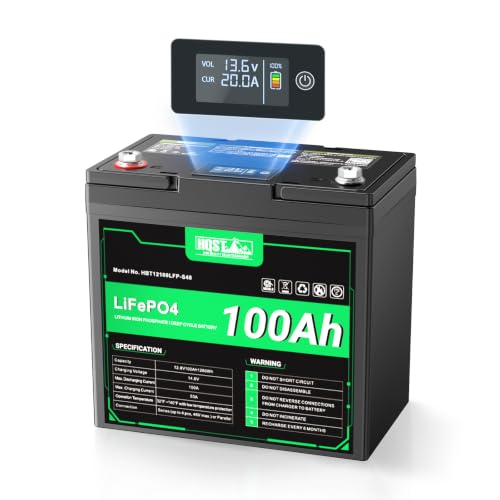
- HQST 12V 100Ah LiFePO4 Battery (Group 22NF Mini) — Check the current price on Amazon
- Renogy 12V 200Ah Deep Cycle AGM Battery — Check the current price on Amazon
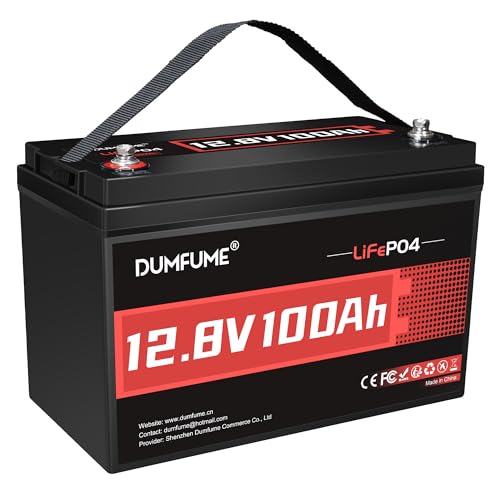
- Dumfume 12V 100Ah LiFePO4 Battery (Group 31) — Check the current price on Amazon
- GOLDENMATE 12V 10Ah LiFePO4 Battery (IP67) — Check the current price on Amazon
The best 12 volt battery for camping is the one whose usable energy matches your camp’s actual appetite — no more, because every extra amp-hour is weight you carried in; no less, because a battery that dies on the second night teaches the lesson at the worst possible time. Modern camping loads are modest but relentless: a 12-volt fridge cycling day and night, LED lighting, phones and cameras, maybe a small inverter for a laptop. Added up honestly, most camps draw somewhere between 30 and 80 amp-hours a day, and that range, more than any brand preference, should choose your battery.
Chemistry frames the choice. Lithium iron phosphate (LiFePO4) batteries deliver nearly all of their rated capacity, weigh about half what lead-acid does per usable amp-hour, recharge quickly, and shrug off the partial-charge life that camping imposes. AGM batteries cost less up front and charge from anything, but only about half their rating is comfortably usable, they are heavy, and they age quickly if repeatedly run deep. The six picks below span both chemistries and three size classes, because camps range from a one-person tent with a light and a phone to a family basecamp running a fridge for a week.
Recharging is the other half of the system, and this guide treats it as part of the purchase. A battery paired with a modest solar panel becomes a power system that runs indefinitely in decent sun; a battery without any recharge plan is a countdown timer. The buying guide works through the daily-energy arithmetic and the solar pairing in plain terms, and the how-to section covers setting up a camp power system that is safe around tents, food, and weather.
One honest note on expectations: a single 12-volt battery is not a household. It will run the fridge, the lights, and the devices beautifully. It will not run an electric heater, a kettle, or air conditioning in any useful way, and no battery in this guide pretends otherwise. Camp power rewards loads chosen for efficiency, and the campers who get the most from these batteries are the ones who count their watts before they pack.
A final framing point before the picks: this guide treats the battery as a multi-year piece of kit, because that is what it is. The difference between the cheapest and the most suitable battery in the right class is small against five or ten seasons of trips, while the difference between the right class and the wrong one is paid on every single trip. Choose the class with the arithmetic, then let price and features order the picks inside it.
In this guide
Quick Picks
Six verified camping batteries for real camps: three 100Ah-class lithium and AGM anchors, a 200Ah capacity king, a compact lithium, and a pocket pack for light-duty camps.
- Best Overall — ECO-WORTHY 12V 100Ah LiFePO4 Battery with Bluetooth: A camping-named 100Ah lithium with a state-of-charge display, Bluetooth monitoring, and low-temperature protection. Check price on Amazon
- Best Budget — Renogy 12V 100Ah Deep Cycle AGM Battery: The established solar-brand AGM: 100Ah of lead-acid capacity for car campers who never carry the battery far. Check price on Amazon
- Best Compact — HQST 12V 100Ah LiFePO4 Battery (Group 22NF Mini): Full 100Ah lithium capacity in a mini Group 22NF case at 25.11 lb, with an LED meter and low-temp protection. Check price on Amazon
- Best Capacity — Renogy 12V 200Ah Deep Cycle AGM Battery: Two hundred amp-hours for the basecamp that measures trips in weeks: about 100 usable amp-hours of AGM. Check price on Amazon
- Best Value Lithium — Dumfume 12V 100Ah LiFePO4 Battery (Group 31): The no-frills 100Ah lithium: 1,280Wh, a 100A BMS, and a 15,000+ cycle claim in a standard Group 31 case. Check price on Amazon
- Best for Light-Duty Camps — GOLDENMATE 12V 10Ah LiFePO4 Battery (IP67): A weather-sealed 10Ah lithium for the tent camp that runs lights and phones, not a fridge. Check price on Amazon
How These Picks Were Chosen
Every pick was verified through the Creators API against Amazon’s live catalog: the brand, model, capacity, and chemistry in each review come from the listing title the API returned, and only API-confirmed models carry a purchase link. Where a listing states a BMS rating, a weight, or a cycle count, we quote it; where it does not, the review does not invent one.
Selection then weighed what decides camping service: usable amp-hours per pound carried, depth-of-discharge tolerance under daily cycling, recharge friendliness with solar, low-temperature behavior for shoulder-season trips, and the practical details — state-of-charge visibility, case size against standard battery boxes, and terminal style — that decide whether a battery is pleasant to live with at a campsite.
We also weighted honesty of role. The smallest pick in this guide is a 10Ah pack, and it is included for genuinely light camps, not as a cheaper way to buy the 100Ah experience. Each review states the camp size its battery actually serves, and the verdict lines are written to steer you away from a mismatch in either direction.
- Usable amp-hours: lithium ≈ full rating, AGM ≈ half rating for long life
- Weight per usable amp-hour, because camp gear is carried, not installed
- Daily-cycling tolerance and realistic cycle life
- Solar recharge compatibility and charge acceptance
- State-of-charge visibility and low-temperature protection on lithium picks
- Verified listing: brand, model, and capacity confirmed in Amazon catalog data
The 6 Best 12 Volt Battery for Camping Picks

ECO-WORTHY 12V 100Ah LiFePO4 Battery with Bluetooth — Best Overall
The ECO-WORTHY takes the top spot because it is specified like a camping battery rather than a generic one: its listing names camping and solar off-grid use, its 100A BMS will never be troubled by camp loads, its low-temperature protection guards the shoulder-season trip, and — the detail campers actually live with — it shows its state of charge on a display and over Bluetooth, so “how much power do we have?” stops being a guess made by headlamp. A 100Ah lithium is the sweet spot for a fridge-and-lights camp: roughly two to three days without sun, indefinitely with a modest panel.
Strengths
- SOC display plus Bluetooth: real visibility into remaining energy
- Low-temperature charge protection for cold-weather trips
- 100Ah of nearly fully usable lithium capacity at half the weight of equivalent AGM
Trade-offs
- Premium tier pricing compared with no-frills 100Ah lithium
- Bluetooth monitoring is a convenience, not a necessity; simple camps may not value it
- Still a substantial battery to carry to walk-in sites
| Specification | Detail |
|---|---|
| Capacity | 100Ah |
| Chemistry | LiFePO4 |
| BMS | 100A, with low-temperature protection (per API listing title) |
| Monitoring | SOC display and Bluetooth (per API listing title) |
| Intended use (per listing) | RV, camping, solar off-grid |
The display is not a gimmick, and here is why: the single most common camping battery failure is not a dead battery, it is a misjudged battery — a camp that ran the fridge hard on day one believing the pack was fuller than it was. A state-of-charge readout converts power management from folklore into a number, and campers adapt instantly: dim the lights, shade the fridge, angle the panel. Visibility is a capacity multiplier.
Low-temperature protection deserves its sentence too. Lithium should not be charged below freezing, and a BMS that enforces that protects the battery from its owner on the frosty morning when the solar panel wakes up before the camp does. For spring and autumn camping, that protection is the difference between a battery that ages gracefully and one quietly damaged by its own charging system.
As a system anchor it pairs naturally with a 100–200 watt panel and a small pure-sine inverter for the occasional AC load, while running the fridge and lights directly on 12 volts where they belong. That is the modern camp power pattern, and this battery sits at the center of it without a single weak point.
If you buy one battery for camping this decade, the combination of capacity, visibility, and protection here is the one to beat.
Best for: Fridge-and-lights camps, solar users, and anyone who wants to see their remaining power / Not suited for: Ultralight walk-in camps, or buyers who want the cheapest 100Ah lithium regardless of features
Check the current price on Amazon

Renogy 12V 100Ah Deep Cycle AGM Battery — Best Budget
Car camping changes the battery equation: when the battery travels in a vehicle and moves ten metres to the tent, AGM’s weight stops mattering and its lower price starts to. The Renogy 100Ah AGM is the budget anchor of this guide — a deep-cycle battery from an established solar brand, with a low 3% self-discharge rate that suits gear stored between trips. Plan on roughly 50Ah of lifespan-friendly usable capacity: a fridge for a day and a half, or lights and devices for a long weekend.
Strengths
- Lowest up-front cost per headline amp-hour in this guide
- Renogy’s solar ecosystem: panels, controllers, and support from one brand
- Low self-discharge suits stored-between-trips duty
Trade-offs
- Heavy — a two-hand lift that belongs in car camps, not walk-in sites
- Half-capacity planning rule: 100Ah on the label, about 50Ah in gentle service
- Ages fast if run deep or stored discharged; the least forgiving chemistry here
| Specification | Detail |
|---|---|
| Capacity | 100Ah |
| Chemistry | Deep cycle AGM (lead acid) |
| Self-discharge rate | 3% (per API listing title) |
| Max discharge current | 1,100A (per API listing title) |
The honest way to frame this battery is cost per season for the occasional camper. If you camp six weekends a year, recharge promptly, and never run it below half, it will serve for years at the lowest entry price in the guide, and its compatibility with every charger and solar controller ever made keeps the rest of the system cheap too.
The trap is frequency. The same battery cycled hard every weekend — run to empty by a fridge, recharged late, stored flat — will be a shadow of itself within a couple of seasons, at which point the lithium it was bought instead of looks inexpensive. Camping frequency, more than budget, should make this decision, and the guide’s lithium picks exist for the high-frequency end of the hobby.
Its solar manners are good: AGM accepts charge from the simplest PWM controllers, tolerates the partial-charge pattern of cloudy trips better than folklore suggests provided it gets a full charge at home afterwards, and its low self-discharge means the battery you charged in May is still ready in June.
For the car camper with a fridge and a fair-weather habit, this remains the value default — bought with open eyes about its weight and its discharge discipline.
Best for: Car campers and occasional users wanting fridge power at the lowest entry cost / Not suited for: Walk-in sites, frequent deep cycling, or anyone who stores gear discharged
Check the current price on Amazon
HQST 12V 100Ah LiFePO4 Battery (Group 22NF Mini) — Best Compact
The HQST solves a specific geometry problem: standard 100Ah lithium batteries come in Group 24 or 31 cases sized for vehicles, and camp battery boxes, trailer tongues, and tidy van corners are often smaller. This pack puts the full 1,280Wh into a mini Group 22NF case at a stated 25.11 lb, adds an LED meter for state of charge, and keeps low-temperature protection. If your camp power lives in a tight box, this is the battery that fits without giving up capacity.
Strengths
- Full 100Ah capacity in a notably smaller, lighter case
- LED meter gives at-a-glance state of charge without an app
- Series/parallel capability lets the system grow into a bank later
Trade-offs
- Mini case means non-standard dimensions; measure your box before ordering
- No Bluetooth monitoring for those who want data on their phone
- Compact high-density packs reward careful terminal and cable management in tight spaces
| Specification | Detail |
|---|---|
| Capacity | 100Ah (1,280Wh) |
| Chemistry | LiFePO4 |
| Case size | Group 22NF Mini (per API listing title) |
| Weight | 25.11 lb (per API listing title) |
| Features (per listing) | LED meter, low-temp protection, series/parallel capable |
Twenty-five pounds for 100 usable amp-hours is the number to hold onto. The AGM route to the same usable energy weighs roughly three times as much, and even among lithium rivals the mini case is meaningfully easier to carry one-handed to a picnic table or a tent vestibule. For campers who move their power around the site during the day — chasing sun with a panel, moving the fridge into shade — that portability is a daily quality-of-life win.
The LED meter covers the essential visibility job without pairing, passwords, or a phone. It will not give the data-rich picture the ECO-WORTHY’s Bluetooth does, but at a campsite, “three bars left” is usually the whole question, answered at a glance in the dark.
Series and parallel capability is the sleeper feature: a camper who outgrows one battery can add a second for a 200Ah system without replacing the first. Batteries that can grow with the hobby are cheaper in the long run than batteries that must be swapped out whole.
Measure first, and if the mini case fits your box, this is arguably the most carry-friendly full-size camping battery in the guide.
Best for: Campers with tight battery boxes, trailer and van builds, and one-handed carrying / Not suited for: Buyers who want Bluetooth data, or boxes built only for Group 24/31 cases
Check the current price on Amazon

Renogy 12V 200Ah Deep Cycle AGM Battery — Best Capacity
Some camps are expeditions: a hunting basecamp, a family site occupied for a fortnight, a work crew’s lighting and refrigeration far from any socket. The Renogy 200Ah AGM is the capacity pick for those camps — roughly 100 usable amp-hours within gentle discharge limits, enough for a fridge and full camp loads across four or five sunless days, or far longer with solar support. It is a battery that lives where it is unloaded and does not move again until the trip ends.
Strengths
- Largest capacity in this guide; multi-day autonomy without sun
- Low self-discharge suits standby and basecamp duty
- Simple charging from any controller or generator charger
Trade-offs
- Very heavy: a two-person lift and a permanent spot for the trip’s duration
- Lead-acid economics: you buy capacity cheaply and replace it sooner than lithium
- Oversized for ordinary weekend camping in every dimension
| Specification | Detail |
|---|---|
| Capacity | 200Ah |
| Chemistry | Deep cycle AGM (lead acid) |
| Self-discharge rate | 3% (per API listing title) |
| Max discharge current | 2,000A (per API listing title) |
The comparison that matters is against two 100Ah lithiums. The Renogy delivers similar usable energy for less money, at roughly triple the weight and a fraction of the cycle life. For a battery that cycles twenty nights a year at a basecamp, that trade can be entirely rational — cycle life is consumed by use, and low-use applications never collect lithium’s longevity dividend.
For high-use applications the same math inverts, which is why this pick is framed by trip pattern rather than by price. A battery bank for a seasonal cabin or a monthly basecamp is a good home for big AGM capacity; a battery cycled daily belongs in lithium, and no purchase price changes that chemistry fact.
Plan the logistics honestly: this battery wants a trolley or a second pair of hands, a ventilated spot out of the living space, and cables sized like infrastructure. Installed with that respect, it disappears into the camp’s routine — the fridge hums, the lights come on, and nobody thinks about power for days.
That disappearance is the product. Basecamps run on morale, and nothing protects morale like power that is simply never a topic.
Best for: Basecamps, hunting camps, and long static trips with vehicle access / Not suited for: Weekend campers, walk-in sites, or daily-cycling power systems
Check the current price on Amazon
Dumfume 12V 100Ah LiFePO4 Battery (Group 31) — Best Value Lithium
If the ECO-WORTHY’s display and Bluetooth do not tempt you, the Dumfume is the same essential proposition — 100Ah of lithium, 1,280Wh, a 100A BMS, a standard Group 31 case that fits common battery boxes — without the monitoring layer, and its listing names camper and solar use. It suits the camper who manages power by habit and arithmetic rather than by app, and who would rather the money go into capacity than features.
Strengths
- Full 100Ah lithium capacity and 100A BMS in a standard Group 31 case
- 15,000+ cycle claim is the highest in this guide
- Simpler and typically keener-priced than feature-rich rivals
Trade-offs
- No state-of-charge display: you manage by voltage, a shunt meter, or experience
- No low-temperature protection stated in the listing title
- Group 31 case is larger than the HQST mini for the same capacity
| Specification | Detail |
|---|---|
| Capacity | 100Ah (1,280Wh) |
| Chemistry | LiFePO4 |
| BMS | Built-in 100A |
| Case size | Group 31 |
| Rated cycles | 15,000+ (per API listing title) |
There is a respectable school of camping that distrusts features, and this battery is its champion. A display is one more thing to fail; a Bluetooth radio is one more parasitic draw; a plain battery with a serious BMS and a standard case is a tool that does one job for a very long time. The 15,000-cycle claim, even discounted heavily for optimism, points at a pack built for daily cycling across years.
The missing low-temperature protection in the listing deserves honest handling: for summer camping it is irrelevant, and for winter camping the discipline is manual — do not charge below freezing — which experienced cold-weather campers already practice with any lithium battery, protected or not. Buyers who want the battery itself to enforce the rule should take the ECO-WORTHY or HQST instead.
State of charge is the other manual discipline. A cheap plug-in voltmeter, read at rest, gives a fair picture with lithium’s flat curve being the caveat — voltage stays deceptively steady until late in the discharge. Many owners add an inexpensive shunt-based meter and recover all the visibility of the premium picks for a fraction of the difference.
As a value proposition in the strict sense — usable amp-hours and cycle life per unit of money — this is the strongest battery in the guide.
Best for: Experienced campers who manage power by meter and habit, and solar builders / Not suited for: Buyers who want built-in charge visibility or enforced low-temperature protection
Check the current price on Amazon

GOLDENMATE 12V 10Ah LiFePO4 Battery (IP67) — Best for Light-Duty Camps
Not every camp has a fridge. The solo tent camper, the bikepacker with a basecamp, the festival camper: their loads are LED lights, a phone or two, a camera battery, maybe a small fan — a few amp-hours an evening. For them a 100Ah battery is absurd, and this sealed 10Ah lithium, whose listing names camping and lights directly, is the correctly sized answer: weatherproof, featherweight, and good for several evenings of light-duty power per charge.
Strengths
- IP67 sealing for tent and tarp life in real weather
- Featherweight: carries in a pack side pocket class of space
- 5,000+ cycle rating for nightly light-duty use across years
Trade-offs
- 10Ah is lights-and-phones energy; a 12V fridge would empty it in hours
- No stated BMS rating in the listing; keep loads modest and fused
- Easy to outgrow if the camp acquires a fridge next season
| Specification | Detail |
|---|---|
| Capacity | 10Ah |
| Chemistry | LiFePO4 |
| Ingress protection | IP67 waterproof (per API listing title) |
| Rated cycles | 5,000+ (per API listing title) |
Right-sizing is a virtue this guide keeps returning to, and this pick is its smallest expression. A 10Ah lithium delivers its full rating, so the honest budget is about 10 amp-hours: that is three evenings of LED lighting and phone charging for a small camp, or one evening plus a fan on a hot night. Campers whose spreadsheet looks like that should not carry five times the battery they need.
The IP67 case is the feature that elevates it above a generic small pack. Tent life is wet life — condensation, rain through a vestibule, a bottle leak in the gear bin — and a sealed battery removes power from the list of things weather can ruin. Paired with a small folding solar panel, it becomes a self-sustaining lights-and-phones system of almost no weight.
Its limit is equally clear, and the review states it without apology: the day a 12-volt fridge joins the camp, this battery retires to lights duty and a 100Ah-class battery takes over the main role. Bought knowingly, it will serve for years in the role it was sized for.
For the light camp, it is not the cheap option. It is the correct one.
Best for: Tent campers running lights and devices, and ultralight basecamps / Not suited for: Any camp with a 12V fridge, or groups with many devices
Check the current price on Amazon
Comparison Table
Compare usable amp-hours and weight, not headline capacity alone: the lithium picks deliver nearly their full rating at roughly half the AGM weight per usable amp-hour, and that difference decides what you can carry.
| Pick | Badge | Key spec | Best for |
|---|---|---|---|
| ECO-WORTHY 12V 100Ah LiFePO4 Battery with Bluetooth | Best Overall | 100Ah LiFePO4, 100A BMS, Bluetooth + SOC display | Fridge-and-lights camps, solar users, and anyone who wants to see their remaining power |
| Renogy 12V 100Ah Deep Cycle AGM Battery | Best Budget | 100Ah AGM, 3% self-discharge, solar battery | Car campers and occasional users wanting fridge power at the lowest entry cost |
| HQST 12V 100Ah LiFePO4 Battery (Group 22NF Mini) | Best Compact | 100Ah LiFePO4, 25.11 lb, Group 22NF mini case | Campers with tight battery boxes, trailer and van builds, and one-handed carrying |
| Renogy 12V 200Ah Deep Cycle AGM Battery | Best Capacity | 200Ah AGM, 3% self-discharge | Basecamps, hunting camps, and long static trips with vehicle access |
| Dumfume 12V 100Ah LiFePO4 Battery (Group 31) | Best Value Lithium | 100Ah LiFePO4, 1,280Wh, 100A BMS, Group 31 | Experienced campers who manage power by meter and habit, and solar builders |
| GOLDENMATE 12V 10Ah LiFePO4 Battery (IP67) | Best for Light-Duty Camps | 10Ah LiFePO4, IP67 waterproof, 5,000+ cycles | Tent campers running lights and devices, and ultralight basecamps |
How to Choose a 12 Volt Battery for Camping
Do the daily-energy audit first; it takes five minutes and decides everything. List your loads with their draws and hours: a typical 12V fridge averages around 1–2 amps across a day (it cycles), LED lighting a few amps for the evening, phone charging about an amp-hour each, a small fan a few amps on a hot night. Total the amp-hours, then size the battery so one day’s use is no more than about half of a lithium battery’s rating or a quarter of an AGM’s, leaving reserve for the cloudy day and the late arrival.
Then decide your recharge story. No recharge: the battery must hold the whole trip, which pushes you up a size class. Solar recharge: the battery becomes a buffer of one to two days, and a panel in the 100–200 watt class keeps most camps balanced in summer sun. Vehicle recharge on driving days suits touring trips. Each story is legitimate; the mistake is buying the battery without choosing one.
- Audit daily amp-hours honestly, fridge first — it is usually the largest load
- Lithium usable ≈ full rating; AGM usable ≈ half rating
- Size for one day at ≤50% of a lithium battery, with a day of reserve beyond that
- Pair with 100–200W of solar for trips beyond three days
- Weight decides chemistry for walk-in camps; price can decide it for car camps
- State-of-charge visibility is worth real money on trips longer than a weekend
Finally, buy the battery box, fuse, and cables with the battery. A camping power system is a small electrical installation that lives outdoors, and the accessories that make it safe and weatherproof are part of the purchase, not an afterthought.
Solar Pairing: Turning a Battery into a System
A panel in the 100-watt class, in decent summer sun, returns roughly 30–40 amp-hours a day through a charge controller — enough to balance a lights-and-devices camp and to stretch a fridge camp’s battery across a long trip. A 200-watt class setup roughly doubles that and is the common pairing for a 100Ah lithium running a fridge indefinitely in good weather. None of this requires a large or complicated system: panel, controller, battery, fused loads.
Chemistry interacts with solar in one important way. Lithium charges fast and efficiently, absorbing nearly everything a panel offers until it is full, which suits the short solar day. AGM charges in stages and absorbs slowly near full, so a lead-acid camp battery often ends the day at 90-something percent even in good sun — one more reason the daily audit should leave margin with AGM. A controller with the correct profile for your chemistry is not optional garnish; set it wrong and both capacity and lifespan suffer.
Panel placement is the free capacity most camps leave on the table. A panel flat on the ground in partial shade may return half its potential; the same panel angled toward the sun, clear of the tree line’s shadow path, and re-aimed once at midday, returns nearly all of it. On a long trip, the camper who moves the panel twice a day effectively owns a larger system than the camper with a bigger panel bolted flat and forgotten.
Battery Boxes, Fuses, and the Small Hardware That Matters
The battery is the expensive part of camp power, but the small hardware decides whether the system is safe and pleasant. A battery box contains a tip-over, protects terminals from the metal tent pole or spanner that would otherwise eventually find them, and gives the whole system a handle and a home. A fuse at the positive terminal is the difference between a chafed cable and a fire. A master switch lets you kill the whole system when you leave camp, ending parasitic draws from idle USB chargers and inverter standby.
Cable quality is the quiet variable. Thin, long cables to a fridge waste energy as heat and make the fridge’s low-voltage cutout trigger early, which campers then misdiagnose as a battery problem. Short, generous-gauge, properly crimped cables are cheap; buy them once, with the battery, and the system simply works. Label the positive lead at both ends while you are at it — in a dark tent, red tape is worth more than memory.
None of this hardware is exciting, and all of it together costs a small fraction of the battery. It is listed here because in our experience the difference between a camp power system people praise and one they curse is almost never the battery brand. It is whether these small things were done.
Cold, Heat, and Altitude: Camping Conditions That Matter
Lithium’s one hard rule is charging temperature: below freezing, charging damages the cells, so protected batteries refuse and unprotected ones must be managed by hand — charge in the warmest part of the day, keep the battery in the tent or vehicle overnight, and let solar start after the sun has warmed the camp. Discharge in the cold is fine, merely a little reduced. AGM tolerates cold charging but cranks and delivers less when cold, and both chemistries age faster stored in hot vehicles between trips. None of these are reasons to avoid a chemistry; all of them are reasons to handle the one you chose with its rules in mind.
Three Camp Profiles, Three Right Answers
The weekend car camper with a fridge: two days, 40–60 amp-hours total. The Renogy 100Ah AGM covers it at the lowest entry cost if the weight never leaves the car’s orbit; the Dumfume 100Ah lithium covers it with days to spare and a fraction of the lifting. The week-long solar basecamp: the ECO-WORTHY 100Ah with its display becomes the camp’s power station, because a week of energy management is a week of wanting to know the number. The light tent camp: the GOLDENMATE and a folding panel, a system that fits in a stuff sack and runs lights and phones indefinitely.
Notice that budget alone never made any of these decisions. Trip length, carry distance, load list, and recharge plan made them, and price merely chose within the class those factors selected. That is the correct order of operations for every battery in this guide.
If your profile is a hybrid — car camping now, a fridge next season, solar the year after — buy the battery that fits the destination, not the departure. Batteries are multi-year purchases, and the HQST’s expandability and the lithium picks’ cycle life both reward buying for the camp you are growing into.
How to Set Up a Safe 12 Volt Camp Power System
A camp power setup is simple DC wiring, but it lives outdoors, around water, food, and sleeping people, so the safety details are the setup. Work through them in order and the system will be boring in the best way.
Keep the whole system outside the sleeping space where practical: battery in a ventilated box in the vestibule, trailer, or vehicle, with cables run to the loads. Lead-acid batteries can vent small amounts of gas when charging, and any battery deserves to be somewhere a short cannot reach bedding or fuel.
- Place the battery in a proper battery box, level and secured so it cannot tip or slide, out of standing water and direct all-day sun.
- Fit an inline fuse within a few centimetres of the positive terminal, sized modestly above your total camp load, and use it as the single point every load draws through.
- Run loads directly on 12 volts wherever possible — fridge, lights, USB chargers — and use an inverter only for the occasional load that truly needs mains power, switching it off when idle.
- Size cables for the fridge run especially: voltage drop on a long thin cable makes fridges cycle badly and waste energy, so keep runs short and gauge generous.
- Connect solar through a charge controller set to your battery’s chemistry profile — never panel directly to battery — and position the panel for the longest sun window, re-aiming at midday on long trips.
- Protect every connection from weather: sealed connectors or a junction box, cables off the ground, and no connections sitting in tent-floor puddles.
- Check state of charge each evening and adjust the next day’s plan — panel angle, fridge setting, light discipline — while there is still time to act on the information.
- At trip’s end, recharge the battery fully (AGM) or to a healthy storage level (lithium) within a day, and store it cool, dry, and out of the vehicle’s heat.
That evening check is the habit that separates campers who “always have power” from campers who tell stories about dead fridges. The battery does not manage itself; a thirty-second glance does.
Pack the charger even on solar trips. One rainy front can erase two days of panel output, and a vehicle or generator charge through the proper charger is the recovery plan that turns a power emergency into an inconvenience. Systems with a backup plan are the ones that never need it dramatically.
Common Buying Mistakes
Sizing by headline amp-hours. A 100Ah AGM gives about 50 usable amp-hours; a 100Ah lithium gives nearly 100. Camps sized on the label alone go dark a day early, every time.
Forgetting the fridge never sleeps. Lighting is an evening load; a fridge draws around the clock. It is almost always the largest line in the energy audit, and the one most often underestimated.
Buying the battery without a recharge plan. For trips beyond two or three days, the panel and controller are not accessories — they are the difference between a power system and a countdown.
Running everything through an inverter. Inverting 12V to mains and back down for devices that run on DC wastes energy at both conversions. Run DC loads on DC; save the inverter for what truly needs it.
Storing the battery discharged after the trip. The post-trip week is when camping batteries die: an AGM left flat sulfates, and even lithium prefers not to sit empty. Recharge within a day of getting home.
Charging lithium below freezing. On cold trips, charge in the warm part of the day and keep the battery insulated or indoors overnight. Protected batteries enforce this; unprotected ones rely on you.
Final Recommendation
For most campers, the ECO-WORTHY 12V 100Ah LiFePO4 is the recommendation: the right capacity class, real state-of-charge visibility, low-temperature protection, and a listing that names camping as its purpose. Value-focused lithium buyers should take the Dumfume; tight-space builders, the HQST mini; budget car campers, the Renogy 100Ah AGM; long static basecamps, the Renogy 200Ah; and light tent camps, the GOLDENMATE — each the right answer to a different, honestly stated camp.
The rest of this batch applies the same verified, arithmetic-first approach to neighboring jobs: the capacities here reappear as lighting power in Best 12 Volt Battery For 100 Watt Led, the small sealed packs do water duty in Best 12 Volt Battery For A Kayak and sonar duty in Best 12 Volt Battery For Fish Finder, and the seasonal small-battery story is told in Best 12 Volt Battery For Game Feeders. Count your amp-hours, choose your recharge story, and camp power stops being a worry.
Frequently Asked Questions
What size battery do I need for camping with a 12V fridge?
A fridge typically uses 30–50 amp-hours a day. For a weekend without recharge, a 100Ah lithium (nearly fully usable) is the comfortable answer; an AGM needs roughly double the rating for the same usable energy. With solar support, the 100Ah class sustains a fridge camp indefinitely in decent sun.
How long will a 100Ah battery run a camping fridge?
As a rule of thumb, a 100Ah lithium runs a typical 12V fridge for about two to three days; a 100Ah AGM for about one to one and a half days within gentle discharge limits. Hot weather and frequent opening shorten both figures.
Is lithium worth it for camping?
For anyone who carries the battery or camps frequently, yes: half the weight per usable amp-hour, far longer cycle life, and fast solar charging. For car campers on a few weekends a year, AGM’s lower price remains a rational choice.
What size solar panel pairs with a 100Ah camping battery?
A 100-watt panel balances a lights-and-devices camp; 200 watts is the common pairing for sustaining a fridge camp in good sun. Always connect through a charge controller set to your battery’s chemistry.
Can I run a camping battery inside my tent?
Keep the battery in a ventilated box outside the sleeping area where practical, and never charge a lead-acid battery in a sealed sleeping space at night. Lithium in a battery box in the vestibule is the common, sensible pattern.
How should I store a camping battery between trips?
Recharge it within a day of returning home. Store AGM fully charged with a monthly top-up; store lithium at a partial-to-full charge in a cool, dry place. Never store any battery discharged or in a hot vehicle for long.


