Disclosure: airfryerkitchensupply.com is reader-supported. When you buy through links on our site, we may earn an affiliate commission at no extra cost to you.
Where to buy
Comparing the best allen and heath mixers? Every mixer below was verified in Amazon’s catalog data before inclusion, and each listing is where to confirm the current configuration, bundle and availability for your region. Our Best Overall is the Allen & Heath ZED-10FX. The range in this guide runs from the ZED-6 compact at one end to the ZED-16FX at the other, with the recording-focused ZEDi-10FX, the band-ready ZED-12FX and the digital CQ-18T covering the middle. Pro-audio pricing moves with promotions and bundles, so check price on Amazon at the listing rather than trusting any figure printed elsewhere.
Why Allen & Heath Has a Reputation Other Brands Have to Argue With
Ask a working sound engineer to name the best allen and heath mixers and the conversation starts from respect rather than marketing. Allen & Heath is a British company that has built mixing consoles since the early 1970s, and its name travels from project studios to touring rigs to houses of worship on the strength of three things: microphone preamps that sound clean and musical at real-world gain levels, build quality that survives being transported and used by strangers, and a design philosophy that keeps the signal path honest instead of decorating it. The ZED series is where that philosophy meets buyers who do not have a touring budget — small analog mixers built to the company’s standards rather than to a price-point spreadsheet.
This guide covers the range the way buyers actually meet it. At the small end, the ZED-6 and ZEDi-10FX serve solo performers, streamers, podcasters and home studios. In the middle, the ZED-10FX and ZED-12FX are the gigging-musician and small-band workhorses. At the top of this list, the ZED-16FX scales to full bands and venues, and the CQ-18T represents the company’s compact digital direction for buyers ready to trade knobs for a touchscreen and total recall. Every pick is a current, verifiable Allen & Heath product; what differs is the size of the job each one is honestly built for, and the reviews below are organized around exactly that.
In this guide
Quick Picks
- Best Overall: Allen & Heath ZED-10FX — 10 channels with onboard FX and USB, the classic small-format A&H for gigs and studios. Check the current price on Amazon
- Best Compact: Allen & Heath ZED-6 — an ultra-compact 6-input mixer with the brand’s preamp quality in its smallest analog form. Check the current price on Amazon
- Best for Recording: Allen & Heath ZEDi-10FX — a hybrid mixer and 4×4 USB interface with studio-quality FX, built for home studios. Check the current price on Amazon
- Best for Small Bands: Allen & Heath ZED-12FX — 12 channels with 6 mono inputs, FX and USB for working bands. Check the current price on Amazon
- Best for Larger Bands and Venues: Allen & Heath ZED-16FX — 16 channels of touring-quality analog mixing with onboard FX and USB. Check the current price on Amazon
- Best Digital: Allen & Heath CQ-18T — a compact digital mixer with a 7-inch touchscreen, WiFi and Bluetooth for modern live workflows. Check the current price on Amazon
How These Picks Were Chosen
We verified the Allen & Heath range in catalog data and selected for coverage of the real buying questions rather than for spec-sheet maximalism. A buyer cross-shopping this brand is deciding among three axes: how many inputs their act actually needs, whether the mixer must double as a recording interface, and whether they want analog immediacy or digital recall. The six picks map those axes deliberately — two compact analogs, one recording hybrid, two band-size analogs, one compact digital — so that the right answer exists in this guide for a solo streamer, a four-piece band and a venue engineer alike. Within each role we favored the model with the strongest claim to it, and we state the trade-offs plainly, including the places where a rival brand’s equivalent is the smarter buy for a specific workflow; brand loyalty is not a specification.
The 6 Best Allen and Heath Mixers

Allen & Heath ZED-10FX — Best Overall
The ZED-10FX is the model that defines the range for most buyers: a 10-channel analog mixer with onboard effects, USB I/O for recording and playback, and inputs arranged for the real world — mic, line and DI-capable channels for instruments alongside stereo channels for keys and playback. It suits gigging singer-songwriters, small ensembles, podcast-plus-music studios and venues that need one honest mixer for everything. Buyers running a full band with a drum kit to mic should step up to the 12FX or 16FX; buyers who only ever connect two sources should save money with the ZED-6.
Strengths
- Allen & Heath preamp quality and musical EQ at the range’s most versatile size.
- Onboard FX plus USB I/O covers live sound and simple recording in one box.
- DI-capable inputs welcome guitars and bass without extra hardware.
Trade-offs
- USB is stereo in/out rather than multitrack — serious recording wants the ZEDi-10FX or a dedicated interface.
- Ten channels fill quickly once drums enter the picture.
- Analog workflow means no saved scenes; every show is dialed in by hand.
| Spec | Detail |
|---|---|
| Channels | 10-channel analog mixer |
| Inputs | Mic/line/DI plus stereo line channels |
| Effects | Onboard FX |
| USB | USB I/O for stereo recording and playback |
What makes this the overall pick is the absence of a wrong note at its size. The preamps flatter vocals, the EQ is the kind you can operate by ear in a dark room, the effects are tasteful rather than theatrical, and the build feels like it expects to be carried to work. For the largest number of buyers reading a guide with this title, this is the mixer they mean. Check the current price on Amazon
Best for: gigging musicians and small studios wanting one versatile A&H / Not suited for: full drum-kit bands or multitrack recording

Allen & Heath ZED-6 — Best Compact
The ZED-6 distills the brand into its smallest analog form: an ultra-compact 6-input mixer for the solo performer, the streaming desk, the rehearsal room and the small presentation setup. Its case is simple — if your world is a microphone, an instrument and a playback source, you should not pay for channels you will never patch. What you should not do is buy it as a band mixer and discover the arithmetic at the first rehearsal.
Strengths
- Genuine A&H build and preamp character in a truly portable format.
- Simple, immediate controls with nothing to learn.
- The most accessible entry point into the brand.
Trade-offs
- No onboard FX and no USB — this is a pure analog utility mixer.
- Six inputs is a hard ceiling that growing acts outgrow.
- Not a recording solution on its own.
| Spec | Detail |
|---|---|
| Channels | 6-input ultra-compact mixer |
| Type | Analog, no FX, no USB |
| Role | Solo, streaming, rehearsal, presentation |
Compact mixers are where cheap brands cut the deepest, which is precisely why this one matters: the ZED-6 keeps the preamp and construction standards that make the badge mean something, in the size a solo act actually carries. Bought for the right job, it is a decade-long tool. Check the current price on Amazon
Best for: solo performers, streamers and small setups / Not suited for: bands or recording-first buyers
Allen & Heath ZEDi-10FX — Best for Recording
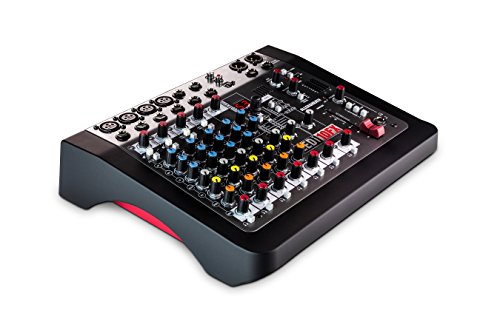
The ZEDi-10FX is the hybrid of the range: a compact analog mixer that is also a 4×4 USB audio interface, with studio-quality onboard effects. That combination is aimed squarely at the home studio and the content creator who performs live sometimes and records constantly — the mixer sits at the center of the desk, handles monitoring and live duties with real knobs, and captures multitrack audio to the computer when the session starts. Live-only engineers can save with the ZED-10FX; recording-only buyers might still prefer a dedicated interface, but they will miss the mixer.
Strengths
- 4×4 USB interface built in — genuine multitrack capture, not just a stereo sum.
- Studio-quality FX onboard for tracking and live use.
- Analog immediacy with digital plumbing: no menu-diving mid-session.
Trade-offs
- Four USB channels is a home-studio scale, not a full-band tracking rig.
- Priced above its live-only sibling for capability live-only users will not touch.
- Still a compact input count for ensemble work.
| Spec | Detail |
|---|---|
| Channels | Compact hybrid mixer/interface |
| USB | 4×4 USB audio interface |
| Effects | Studio-quality onboard FX |
| Role | Home studio, streaming, small live |
The hybrid category exists because the modern small studio is also a stage, a stream and a podcast, sometimes in the same evening. The ZEDi-10FX is Allen & Heath’s answer, and its multitrack USB is the detail that separates it from the many mixers whose “USB recording” means a stereo file of the whole mix. Check the current price on Amazon
Best for: home studios and creators who record as much as they perform / Not suited for: full-band multitrack tracking

Allen & Heath ZED-12FX — Best for Small Bands
The ZED-12FX scales the formula to working-band size: 12 channels with 6 mono inputs and 3 stereo channels, onboard FX and USB I/O. That input layout maps to a real four-piece — vocals, guitars, bass, keys and a partially mic’d drum kit — without the channel-count panic of the compact models. It is the gigging band’s ZED, and its trade-off is the mirror of its strength: solo and duo acts are paying for capacity they will never patch.
Strengths
- Channel layout sized for real small-band instrumentation.
- Onboard FX for vocals and instruments, with USB for recording the gig or the rehearsal.
- Built to be transported and set up by non-engineers weekly.
Trade-offs
- Bigger and heavier than the compact picks — a considered carry, not a backpack mixer.
- Stereo USB only, as with its smaller sibling.
- Full drum kits with many mics will still push its input count.
| Spec | Detail |
|---|---|
| Channels | 12 channels: 6 mono, 3 stereo |
| Effects | Onboard FX |
| USB | USB I/O |
| Role | Small bands, venues, rehearsal spaces |
Bands buy mixers at the moment the rehearsal room outgrows the old one, and the ZED-12FX is the size that ends the argument for most of them: enough inputs to mic the essentials, effects that make vocals presentable in any room, and construction that treats the van as a workplace rather than a threat. Check the current price on Amazon
Best for: working small bands and the venues that host them / Not suited for: solo acts or large productions

Allen & Heath ZED-16FX — Best for Larger Bands and Venues
The ZED-16FX is the top of this guide’s analog range: 16 channels of touring-quality mixing with onboard FX and USB I/O. Sixteen channels is where a full band with a properly mic’d kit, multiple vocalists and stereo keys stops negotiating and starts mixing, and where houses of worship and school venues find their ceiling comfortably handled. It is a serious board for serious use, and its size and price are honest reflections of that; nobody should buy it for a podcast.
Strengths
- Input count that ends channel rationing for full bands.
- Touring-quality build and sound from a company whose large consoles work nightly.
- Onboard FX and USB complete a self-contained live rig.
Trade-offs
- The largest, heaviest and most expensive analog pick here.
- Analog scene-free workflow: every event is set by hand and ear.
- Overkill — financially and physically — for small-format work.
| Spec | Detail |
|---|---|
| Channels | 16-channel analog mixer |
| Effects | Onboard FX |
| USB | USB I/O |
| Role | Full bands, worship, schools, venues |
The case for the 16FX is headroom as a quality of life: spare channels for the guest vocalist, the extra tom mic, the playback laptop and the announcements mic, all patched at once, all week. Engineers who have mixed on the edge of a too-small board will recognize that as the real product being sold. Check the current price on Amazon
Best for: full bands, worship teams and fixed venues / Not suited for: portable small-format work

Allen & Heath CQ-18T — Best Digital
The CQ-18T is the range’s modern direction in a compact box: a digital mixer with a 7-inch touchscreen, built-in WiFi and Bluetooth connectivity, designed for engineers who want scenes, recall and remote control from a tablet at the back of the room. It suits tech-comfortable bands, venues with rotating operators, and anyone whose show benefits from saved settings. Analog loyalists — a legitimate constituency — should take the ZED that fits and enjoy their knobs.
Strengths
- Total recall: save and reload complete mixes per band, venue or event.
- Touchscreen plus WiFi control frees the engineer from behind the board.
- Compact digital format with modern connectivity including Bluetooth.
Trade-offs
- A screen-based workflow that analog hands must learn.
- Digital convenience is a premium over equivalent analog channel counts.
- Depends on its control ecosystem; a dead tablet is a workflow problem analog never has.
| Spec | Detail |
|---|---|
| Type | Compact digital mixer |
| Display | 7-inch touchscreen |
| Connectivity | WiFi and Bluetooth built in |
| Role | Modern live sound, installed venues |
Digital mixing wins when the same system must become three different shows in a week — the wedding band’s Saturday, the church’s Sunday, the school’s Monday — each recalled in seconds instead of re-dialed in an hour. The CQ-18T brings that capability into an Allen & Heath box small enough to carry, and for the right operator it is the most capable pick in this entire guide. Check the current price on Amazon
Best for: tech-comfortable engineers and multi-use venues / Not suited for: analog-first users who want a knob per function
Comparison Table
| Pick | Badge | Key spec | Best for |
|---|---|---|---|
| ZED-10FX | Best Overall | 10ch analog, FX, USB | Gigging musicians, small studios |
| ZED-6 | Best Compact | 6-input analog | Solo, streaming, rehearsal |
| ZEDi-10FX | Best for Recording | Hybrid, 4×4 USB, FX | Home studios, creators |
| ZED-12FX | Best for Small Bands | 12ch, 6 mono + 3 stereo, FX, USB | Working bands |
| ZED-16FX | Best for Larger Bands | 16ch analog, FX, USB | Full bands, venues, worship |
| CQ-18T | Best Digital | Digital, 7″ touchscreen, WiFi | Multi-use venues, recall workflows |
How to Choose an Allen & Heath Mixer
Count your inputs honestly, then add two. List every source in your biggest realistic setup — each vocal, instrument, drum mic and playback device — and buy the size that covers it with a couple of channels spare for the guest, the extra mic and the thing you forgot. Channel rationing is the most common regret in this category, and it is entirely predictable at the kitchen table.
Decide what USB means for you. On the ZED line, standard USB I/O moves a stereo mix to and from a computer: perfect for recording a gig or rehearsal as a stereo file and for playing backing tracks. The ZEDi-10FX’s 4×4 interface records channels separately for real mixing later. Those are different products wearing similar badges, and confusing them is the classic disappointment in this range — choose by whether you record performances or productions.
Analog or digital is a workflow question, not a quality question. Analog ZEDs offer a knob or fader for everything, instant familiarity, and nothing to boot or update. The CQ digital offers scenes, recall and remote control at the cost of a screen-based workflow. Bands with one operator and one show belong analog; systems serving many shows and operators belong digital.
Budget in tiers. The compact tier buys the brand’s sound for small setups. The mid tier — the 10FX and 12FX — is where most working musicians should land, with FX and USB included. The upper tier buys channel count in analog, or the digital ecosystem in the CQ. Across all tiers you are paying for preamps, build and support that outlast fashion; buy the tier your input count dictates and resist paying for channels as a status symbol.
How to Set Up a ZED Mixer for a Gig
Start with every gain down and every fader down — the discipline that prevents the one loud surprise every engineer remembers. Patch microphones first, then instruments and DI sources, then stereo playback, keeping a written or mental map of what lives on each channel. Set gains one source at a time: have the performer play or sing at real performance level, bring the gain up until the channel is healthy and strong without clipping on the loudest moment, then pull back a touch for headroom. Build the mix on faders with EQ subtractive first — cut the frequencies that muddy before boosting the ones that flatter — and add effects last, in smaller amounts than your enthusiasm suggests, because a room adds its own reverb for free. Ring out the monitors or mains gently if feedback threatens, by raising level slowly and cutting the offending frequency rather than the whole mix. Save the laptop recording for after the mix stands up, and if the mixer is a CQ, save the scene the moment the soundcheck ends. That sequence, in that order, is most of live sound; the mixer in front of you is built to make it feel straightforward.
Common Buying Mistakes
- Counting channels by the number in the model name alone. A “12-channel” mixer mixes mono and stereo channels; count mic inputs for your actual sources.
- Assuming all USB mixers record multitrack. Most record the stereo mix; true multitrack needs an interface-class model like the ZEDi-10FX.
- Buying for the band you wish you had. A 16-channel board for a duo is money and weight spent on empty strips.
- Ignoring the case and the carry. A gigging mixer lives in transit; budget for protection as part of the purchase.
- Skipping the monitor question. How you will feed monitors or in-ears matters as much as the main mix; check aux sends against your plan.
- Chasing features over preamps. At this brand’s level the sound of the input stage is the product; effects lists are the garnish.
Final Recommendation
Most buyers should start and end at the ZED-10FX: it is the range’s center of gravity, the size at which the brand’s preamps, EQ, effects and build all arrive together without paying for capacity or technology a small act will not use — and the mixer most likely to still be earning its place in the rig a decade from now, without complaint or apology. Solo and streaming buyers should take the ZED-6, recording-led buyers the ZEDi-10FX, working bands the ZED-12FX, full bands and venues the ZED-16FX, and multi-show digital workflows the CQ-18T. Comparing across brands and sizes? See Best Alternative Audio Mixers, Best 10 Channel Mixers, Best 12 Channel Audio Mixers, Best 16 Channel Mixers and Best 16 Channel Digital Mixers List.
Preamps and EQ: What People Mean by the Allen & Heath Sound
Two components carry a mixer’s reputation, and both are worth understanding before you spend. The microphone preamp is the first thing your voice or instrument meets, and its job is to add a great deal of gain while adding almost nothing else — no hiss worth mentioning, no harshness when a singer leans in, no collapse when a drum is louder than expected. Allen & Heath’s small-format preamps are praised because they behave like the ones in the company’s larger consoles: clean at sensible levels, forgiving at hot ones, and quiet enough that a soft source recorded at home does not arrive wrapped in noise. The EQ is the second component, and the house style is often described as musical, which translates to practical behavior: the controls seem to find useful changes quickly, cuts clean up mud without hollowing the source, and boosts flatter rather than shout. Neither quality appears in a specification table in a way a spreadsheet can rank, which is why this brand is so often bought on the testimony of people who have mixed on one. The practical takeaway for a buyer comparing across brands is to weight the input stage above the feature list — effects and connectivity can be added around a mixer, but the preamp and EQ are the mixer, and every sound you ever make through it passes through both.
The Wider Allen & Heath Range, Briefly
This guide concentrates on the ZED and CQ models most buyers meet first, but the catalogue is wider and two neighboring families deserve a mention for orientation. The Xone series is the company’s DJ line — mixers like the Xone:23, a 2-plus-2 channel DJ mixer, built for club and performance DJ workflows with the same build philosophy pointed at a different craft. The QU series sits above the CQ as the company’s established compact digital range for larger channel counts and more demanding installed work. Neither family displaces the picks above for the buyers this guide serves; they matter because they show the depth behind the badge. A company whose DJ mixers are club standards and whose digital consoles run theatres is not borrowing credibility for its small analog boards — the small boards are where much of that credibility was built, one rehearsal room and one small venue at a time.
One Mixer, Two Lives: Live Work and Home Recording
Many buyers in this range quietly intend the mixer to do double duty, and the ZED line rewards the intention if it is planned honestly. Live, the mixer is a performance instrument: gains set for the room, effects for the voice, a stereo USB feed capturing the night for review. At home, the same board becomes the front end of a small studio — and the discipline transfers in both directions. The live habit of setting gains carefully makes home recordings cleaner; the studio habit of listening closely makes live mixes better. The limits are the ones already flagged: stereo USB captures the mix, not the parts, so a buyer whose home life is production rather than performance documentation should start at the ZEDi-10FX and its multitrack interface, or accept a dedicated interface beside the mixer. What the double-duty buyer should not do is buy a live-only board, discover the stereo limitation mid-project, and blame the mixer for a specification that was printed on it all along. Decide which life leads, buy for that one, and let the other be the bonus it usually turns out to be.
Care, Transport and Longevity
These are working tools, and their longevity is mostly a story of handling. Transport a gigging mixer in a padded case or at minimum a padded bag, because the knobs, faders and corner edges that take transit damage are exactly the parts you touch all night. Keep liquids on a different surface from the board — the oldest rule in live sound, broken weekly by someone — and blow or brush dust from fader slots rather than letting it grind into the tracks. At home, a cover keeps a studio mixer clean and its controls honest for years. Cables deserve the same respect as the mixer: strain-relieved, coiled rather than kinked, and tested before the gig rather than during it, since most “mixer problems” at small shows are cable problems wearing a disguise. Treat the board this way and an Allen & Heath will typically outlast the act’s first three sets of strings, straps and stage clothes combined — which is the economic foundation under the brand’s reputation, and the reason so many of its small mixers are bought second-hand with confidence by the next band coming up.
Troubleshooting: The Problems That Are Not the Mixer
A short field guide saves most support calls. Buzz or hum on one channel: suspect the cable or the source first — swap the cable, then the channel; a hum that follows the cable was never the mixer. A channel that crackles when touched: usually a worn cable or a dirty connector, cleaned or replaced in minutes. Everything sounds distorted at high level: gain staging — some stage in the chain is being driven too hot; walk the signal path from source to master and find the first red light. The USB recording is silent or missing: check the computer’s input selection and the mixer’s USB routing before suspecting hardware; this is the most common and most curable issue in the hybrid workflow. Effects audible in the recording but not the room, or the reverse: a routing setting, not a fault — consult the manual’s signal-flow diagram once and the logic stays with you. Working through that order — cables, gain, routing, then hardware — resolves the overwhelming majority of small-mixer mysteries, on this brand and every other.
Gain Staging: The Ten-Minute Skill That Makes Any of These Mixers Sound Expensive
More mixes are ruined by gain staging than by equipment, and the fix is a habit rather than a purchase. Every stage a signal passes through — the source, the channel preamp, the EQ, the fader, the master — has a comfortable range, and the art is keeping the signal healthy at every stage rather than starved at one and screaming at the next. Set the channel gain so the loudest real moment of the performance sits strong but safely below clipping, because a preamp driven into distortion cannot be cleaned up downstream by any fader. Run channel faders near their middle travel, where their resolution is finest, instead of pinning them at the bottom to compensate for excessive gain. Keep the master at a sensible level and let the amplifiers or powered speakers do the final lifting, rather than forcing the mixer to shout into them. The audible result of this discipline is a mix that sounds open and calm even when it is loud, with vocals that sit naturally instead of fighting the instruments — and it costs nothing but attention, on a ZED-6 or a ZED-16FX alike. Engineers are not born with this instinct; they acquire it the first time a recording of their own show teaches them, and every buyer of this guide can acquire it in the first week by recording a rehearsal and listening with honest ears.
Streaming and Podcast Setups on an Allen & Heath
The streaming desk is where compact mixers now earn much of their living, and the A&H entries here fit it in two distinct ways. The ZED-6 serves the simplest serious setup — one microphone, one instrument or guest source, one playback feed — with the virtue that a hardware mixer puts level, tone and muting under your fingers instead of inside a software panel you must alt-tab to reach mid-sentence. The ZEDi-10FX serves the creator who records and edits: its multitrack USB lets voice and sources land on separate tracks for real post-production, while the analog surface still runs the live monitoring with zero latency fuss. Two practical notes decide success in this role. First, monitor on headphones from the mixer itself rather than from the computer, so what you hear is what the microphone hears, without delay. Second, treat the room before the equipment: a treated corner and a well-placed microphone on a ZED-6 will beat an untreated room on any mixer in this guide, every time, and the money difference belongs in panels and placement before it belongs in channels.
Houses of Worship, Schools and Community Venues
A large share of these mixers will spend their lives in institutions, and the buying logic there has its own shape. The operators are volunteers or students, the events are weekly, and the system must sound good in hands that change every year. Analog ZEDs suit that reality with a legibility no screen matches: a new volunteer can be taught the board in one session because every function is visible and labeled, and nothing can be hidden inside a menu by the previous operator. The 12FX and 16FX map to the typical instrumentation of a worship band or school ensemble, and their USB gives the institution rehearsal recordings for free. The CQ-18T earns its place in the same buildings when one system must serve many event types — its scenes let the experienced engineer build the mixes and the volunteer merely recall them, which is the correct division of labor. Whichever direction an institution chooses, the durable advice is identical: buy the size that covers the biggest annual event, label the channels in plain language, and keep a one-page house setup sheet with the board. Institutions do not lack equipment nearly as often as they lack that sheet.
Buying an Allen & Heath New vs Used
Few small mixers hold the used market’s respect like this brand, which creates a real decision. A used ZED at a fair price can be an excellent buy — the construction genuinely supports a second career — provided you test like an engineer rather than a hopeful: run a microphone through every channel and listen for crackle as each gain and fader moves, check every input and output with a known-good cable, test the effects and the USB connection with a laptop, and inspect the corners and control surfaces for the drops and spills that tell a board’s true biography. Price in the absence of a warranty and the possibility of a service visit, and a used flagship can still beat a new budget mixer on sound. Buy new when the mixer will earn money, serve an institution, or anchor a studio — the warranty, the known history and the current bundles usually justify it — and buy from the listing with the clearest return terms, because even the best brand ships an occasional dud and the first week is when you want the paperwork painless.
The Supporting Kit: Cases, Cables and Power
A mixer’s working life is supported by unglamorous purchases that deserve a paragraph of the budget. A fitted padded case or a quality gig bag is the highest-value accessory for any board that travels; it costs a fraction of the mixer and prevents the majority of the damage mixers ever suffer. Cables are the second: buy fewer, better balanced cables rather than a bulk bag of the cheapest, label both ends, and carry one spare of every type you depend on — the spare is the difference between a story and a cancelled show. A small surge-protected power strip dedicated to the audio rig keeps the mixer, the laptop and the powered speakers on one clean supply and one switch. A headphone set you trust, kept with the board, is the engineer’s reference instrument for everything from gain staging to troubleshooting. None of this is exciting, and all of it together is what “professional” actually looks like at small-mixer scale: not the badge on the board, but the absence of preventable failures around it.
Frequently Asked Questions
Are Allen & Heath mixers good for beginners?
Yes, particularly the ZED analogs: the layout is logical, the EQ is forgiving to learn on, and the build survives beginner handling. A beginner who will grow should buy one size up from their current input count rather than the exact fit.
What is the difference between the ZED-10FX and ZEDi-10FX?
Recording depth. The ZED-10FX’s USB moves a stereo mix to and from a computer. The ZEDi-10FX is a 4×4 USB interface that records channels separately for multitrack production, with studio-grade effects. Live-only users want the first; home-studio users want the second.
Do I need a separate audio interface with a ZED mixer?
For stereo recording of a mix or performance, no — the USB models handle it. For multitrack recording beyond the ZEDi’s four channels, or for a recording-only setup, a dedicated interface remains the right tool.
Analog ZED or digital CQ: which lasts longer?
Both are built for work. Analog boards age mechanically and remain repairable for a very long time; digital boards add software lifecycles to consider but gain capability through their ecosystem. Choose by workflow; durability is a strength of the brand in both directions.
How many channels does a four-piece band need?
Typically 10 to 12 mixer channels once vocals, instruments, a partially mic’d kit and playback are counted — which is why the ZED-12FX is this guide’s small-band pick, and why full drum mic’ing pushes a band to the 16FX.
Can a ZED mixer run a small venue’s installed system?
Yes; the ZED range is a common sight in small venues, schools and houses of worship precisely because it is reliable, sounds good and can be operated by non-specialists. For venues with rotating operators and multiple event types, the CQ-18T’s scene recall may serve better.
Is the ZED-10FX still worth it over cheaper rivals with more features?
For buyers who mix live sound regularly, yes — and the reasoning is the theme of this guide. Feature lists can be matched or beaten at lower prices; what is harder to match is the combination of preamp quality, EQ behavior, construction and support that determines how the mixer sounds in year one and whether it is still working in year eight. If your use is occasional and light, a cheaper rival is a rational buy and our alternative-mixers guide covers the strongest of them honestly. If the mixer is a weekly tool, the A&H premium is the kind that amortizes.
What else do I need to use one of these mixers for live sound?
At minimum: microphones and stands for your sources, balanced cables to connect them, and a way to hear the result — powered speakers or a power amplifier with passive speakers — plus headphones for setup and troubleshooting. The mixer is the center of the system, not the whole of it, and budgeting the chain honestly at the start prevents the classic outcome of an excellent board feeding inadequate speakers.
How do I choose between the ZED-12FX and the ZED-16FX?
Count the drum kit. A four-piece band that mics kick, snare and a pair of overheads alongside vocals and instruments fits the 12FX with discipline and no room for guests. The same band wanting individual tom mics, a second guitarist’s amp mic, a dedicated announcements channel and spare capacity for the unexpected belongs on the 16FX. The price difference between them is smaller than the cost of outgrowing the smaller board in a year, which is the calculation that should drive the decision.
Can I connect a ZED mixer to powered speakers directly?
Yes — that is the standard small-venue arrangement. The mixer’s main outputs feed the powered speakers’ line inputs, levels are set so the mixer runs in its comfortable range and the speakers provide the final volume, and the whole system is gain-staged as one chain. It is the setup most of these mixers will live in, and it is a strength of the format that nothing else is required between the board and the audience.
Where does the CQ-18T make the least sense?
In the hands of a single act with a single, unchanging show and an operator who thinks in knobs. That user pays the digital premium for recall they will never use and trades away the instant, visible control the ZED line gives them. Digital earns its premium in variety — many shows, many operators, many rooms — and the honest buyer matches the tool to the workload rather than to the novelty.
What is the first thing to do when a new mixer arrives?
Test every channel with a microphone and a known-good cable before the first real session, register the warranty, and — if the board will travel — fit it into its case and confirm the fit while returning anything is still painless. Twenty minutes of verification on day one is the cheapest insurance in live sound, and it converts the first gig from a debut into a formality.
Does Allen & Heath support its small mixers with parts and service?
Yes — the brand’s support and parts channels are part of what the premium buys, and they are a material difference from anonymous budget boards when a fader or power supply eventually needs attention. Keep your model and serial details recorded with the board’s case, and a service conversation years from now becomes a short one.


