Disclosure: airfryerkitchensupply.com is reader-supported. When you buy through links on our site, we may earn an affiliate commission at no extra cost to you.
Where to buy
All six sets below are sold on Amazon, spanning plain, hard-anodized and recycled aluminium — because aluminium is not one material in cookware, and the differences decide how a set cooks and lasts. The strongest starting points are the T-fal Ultimate Hard Anodized 17-Piece Set, Ninja NeverStick Premium 12-Piece C39800, Rachael Ray Cucina 12-Piece Aluminum Nonstick. Also linked in this guide: the Tramontina PrimaWare 18-Piece Nonstick, Farberware EcoAdvantage 13-Piece Ceramic Set, Ninja NeverStick 8-Piece C38000. Check the current price on Amazon for each pick before you order, and confirm the exact configuration on the product page, because bundles and colourways change.
Introduction
The best aluminum cookware sets exploit the metal’s defining gifts: aluminium heats fast, spreads heat willingly, weighs little and costs far less than stainless or copper. It is also soft, reactive in its bare form, and — critically — not magnetic, so plain aluminium sets do not work on induction. This guide ranks six aluminium sets across their three real families: hard-anodized for durability, coated plain aluminium for lightness and value, and recycled aluminium for buyers counting material footprint.
Hard-anodized aluminium deserves its own mental category. Anodizing electrochemically hardens the surface, making bodies far more resistant to warping, corrosion and wear, and giving nonstick coatings a foundation that dramatically extends their life. Most of this guide’s top picks are anodized for exactly that reason, while the plain-aluminium picks earn their places on lightness and coverage rather than longevity.
Every set was verified, and every review states which aluminium family it belongs to and what that means for your hob, your cooking and its lifespan. Read the family first and the brand second — in aluminium cookware, that order predicts satisfaction.
In this guide
Quick Picks
- Best Overall Aluminum Set — T-fal Ultimate Hard Anodized 17-Piece Set: The aluminium benchmark: hard-anodized bodies, deep coverage and heat-indicator frypans at an accessible tier.
- Best Premium Aluminum — Ninja NeverStick Premium 12-Piece C39800: The premium aluminium execution: hard-anodized NeverStick bodies with a 500°F oven rating and a durability-first coating.
- Best Lightweight — Rachael Ray Cucina 12-Piece Aluminum Nonstick: The featherweight pick: plain aluminium bodies anyone can lift, with warm enamel colours and grippy handles.
- Best Coverage Value — Tramontina PrimaWare 18-Piece Nonstick: The equip-from-zero aluminium set: eighteen pieces covering every vessel at the guide’s lowest commitment.
- Best Recycled Aluminum — Farberware EcoAdvantage 13-Piece Ceramic Set: The recycled-body pick: aluminium given a second life under a PFAS-free ceramic surface, in a complete 13-piece list.
- Best Compact Premium — Ninja NeverStick 8-Piece C38000: The compact NeverStick: eight core pieces in the same hard-anodized durable system for smaller households.
How These Picks Were Chosen
Assessment classified each set by aluminium type before judging it: hard-anodized sets were weighted on body substance and coating system; plain aluminium sets on lightness, coverage and value honesty; recycled-body sets on construction credibility. Hob compatibility was checked explicitly, since aluminium’s induction limitation is the category’s most expensive misunderstanding.
The resulting six cover the category’s honest range — the hard-anodized benchmark, the premium nonstick system in two coverages, the lightweight enamel line, the maximum-coverage starter, and the recycled-body ceramic set — so every aluminium buyer profile has a deliberate pick rather than a leftover.
The 6 Best Aluminum Cookware Sets

T-fal Ultimate Hard Anodized 17-Piece Set — Best Overall Aluminum Set
T-fal’s Ultimate line is the aluminium set this guide measures others against: hard-anodized bodies that cure plain aluminium’s softness, a durable nonstick interior, seventeen pieces including a griddle, and heat-indicator frypans that signal correct preheating. On gas, electric coil and radiant hobs it is the complete, durable, fairly tiered answer to the aluminium brief.
Strengths
- Hard-anodized bodies resist the warping that shortens plain aluminium sets’ lives
- Heat-indicator frypans protect both food and coating from cold-pan and overheat errors
- Deepest useful coverage here, including the breakfast griddle
Trade-offs
- Aluminium construction means no induction use without a magnetic base — check your hob first
- Nonstick interior is finite-life; the bodies will outlast the coating
- Dark onyx finish hides wear, so inspect the surface deliberately
| Specification | Detail |
|---|---|
| Pieces | 17 (per Amazon title) |
| Body | Hard anodized aluminium nonstick (per Amazon title) |
| Includes | Griddle, fry pans, saucepans, sauté pan (per Amazon title) |
Anodizing is the whole story here. Raw aluminium dents, warps and reacts; anodized aluminium shrugs off years of daily service while keeping the metal’s fast, even heating and low weight. That is why this set can be both the affordable pick and the durability pick simultaneously.
Live with it inside its design — medium heat, indicator-guided preheats, and a separate searing pan for maximum-heat work — and it is the aluminium set most likely to still be your daily set in five years.
Best for: Gas and electric households wanting aluminium’s best durable form / Not suited for: Induction owners
Check the current price on Amazon
Ninja NeverStick Premium 12-Piece C39800 — Best Premium Aluminum
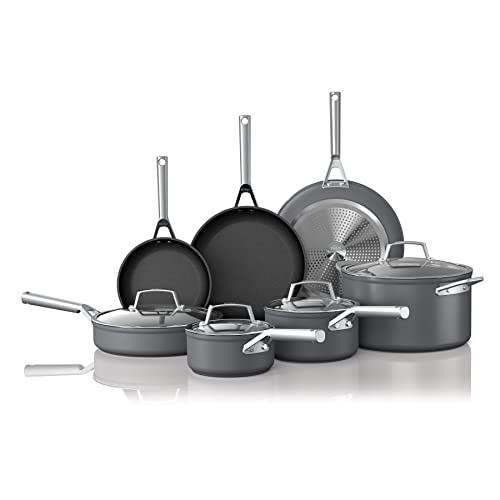
Ninja’s NeverStick Professional is aluminium cookware executed at its most serious: hard-anodized bodies, a coating system engineered against scratching and flaking, and an oven rating to 500°F per its listing — a figure most nonstick, and much aluminium cookware, never reaches. It is the pick for buyers who want aluminium’s lightness and speed without accepting aluminium’s usual fragility.
Strengths
- Hard-anodized substance with the category’s most durability-focused coating system
- 500°F oven rating enables finishes plain nonstick sets forbid
- Even, fast aluminium heating with a premium fit and finish
Trade-offs
- Highest tier in this guide — check price on Amazon
- Still aluminium under the anodizing: no induction without a magnetic base variant
- Heavier than plain aluminium sets, though lighter than stainless equivalents
| Specification | Detail |
|---|---|
| Pieces | 12 (per Amazon title) |
| Body | Hard-anodized aluminium nonstick (per Amazon title) |
| Oven safe | To 500°F (per Amazon title) |
The NeverStick argument is cost per year within the aluminium family. Bargain aluminium sets are replaced; this set is maintained. Its oven rating also changes cooking: a frittata starts on the hob and finishes in the oven in the same pan, the workflow aluminium nonstick usually interrupts.
Choose it when aluminium is your deliberate material — for weight, speed or an electric hob’s preferences — and you want that material’s best current execution rather than its cheapest.
Best for: Aluminium loyalists wanting the premium, durable execution / Not suited for: Induction owners and bargain-first buyers
Check the current price on Amazon

Rachael Ray Cucina 12-Piece Aluminum Nonstick — Best Lightweight
The Cucina set is plain aluminium used honestly: thin, light bodies that heat in moments and lift without effort, nonstick interiors for easy daily cooking, and enamel exteriors in kitchen-warming colours, listed here in Agave Blue. It makes no durability promises it cannot keep — instead it offers the most comfortable daily cooking in this guide for cooks who value lightness above all.
Strengths
- Lightest handling here — a genuine quality-of-life advantage used three times a day
- Fast, responsive heating ideal for eggs, sauces and quick weeknight cooking
- Comfortable handles and friendly colours suit everyday family kitchens
Trade-offs
- Plain aluminium warps most readily — heat gently and cool before washing
- Not induction compatible
- Enamel and coating reward careful storage without stacking abuse
| Specification | Detail |
|---|---|
| Pieces | 12 (per Amazon title) |
| Body | Aluminum nonstick (per Amazon title) |
| Exterior | Enamel, Agave Blue listing |
Weight is not a trivial specification. For cooks with wrist or grip limitations, smaller cooks, and anyone lifting a full stockpot of pasta water, a light set is the difference between cooking happily and avoiding the kitchen. The Cucina is ranked for that reader without apology.
Treat it gently — medium heat, no thermal shocks, protectors in the cupboard — and plain aluminium serves far longer than its reputation. Treat it roughly and it will confirm every warning; the metal is honest that way.
Best for: Cooks prioritising light weight and fast, easy daily cooking / Not suited for: High-heat searing cooks and induction owners
Check the current price on Amazon
Tramontina PrimaWare 18-Piece Nonstick — Best Coverage Value
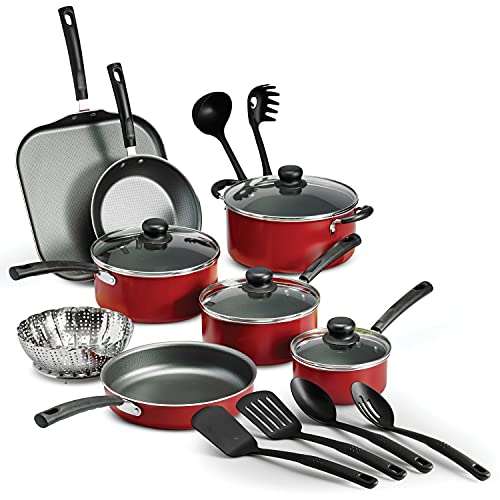
PrimaWare is aluminium’s coverage champion: eighteen pieces of light nonstick cookware spanning every vessel a new kitchen needs, at the most accessible tier in this guide. Our verification noted this listing’s stock fluctuates by seller, so confirm the exact box contents on the product page — at this tier, bundles drift. As a starter set that teaches you your own cooking, nothing here covers more ground for less commitment.
Strengths
- Widest vessel coverage here — a complete kitchen in one box
- Light pans the whole household can handle confidently
- Low commitment while you learn which premium pans your cooking deserves
Trade-offs
- Thinnest bodies here; heat discipline decides its lifespan
- Bundle contents vary — verify the piece list before ordering
- Not induction compatible
| Specification | Detail |
|---|---|
| Pieces | 18 (per Amazon title) |
| Body | Aluminium nonstick |
| Colourway | Red listing (per Amazon title) |
The starter-set strategy deserves respect: cook for a year in a complete, inexpensive aluminium set and you will know precisely which two pans to buy seriously next. PrimaWare’s breadth makes it the best classroom in this guide, and gentle households routinely get years from it directly.
If the exact 18-piece box is unavailable when you check, the T-fal Ultimate above is the durable step-up rather than an unknown substitute bundle of similar size.
Best for: First kitchens, students and renters equipping from zero / Not suited for: Experienced cooks replacing a serious set
Check the current price on Amazon

Farberware EcoAdvantage 13-Piece Ceramic Set — Best Recycled Aluminum
EcoAdvantage is the aluminium set for buyers counting material footprint: bodies built from recycled aluminium, a ceramic nonstick cooking surface, and thirteen pieces of honest household coverage from a long-established brand. Aluminium recycling is genuinely energy-frugal compared with new metal, which makes this set’s construction story substantive rather than decorative.
Strengths
- Recycled aluminium bodies reduce the set’s new-material footprint
- Ceramic PFAS-free surface for delicate, easy-release cooking
- Complete coverage from a mainstream, supportable brand
Trade-offs
- Ceramic prime is finite — medium heat preserves it
- Light recycled bodies share plain aluminium’s warping cautions
- Not induction compatible
| Specification | Detail |
|---|---|
| Pieces | 13 (per Amazon title) |
| Body | Recycled aluminium with ceramic nonstick (EcoAdvantage line) |
Aluminium is one of the most recyclable cookware metals, and a set built on that loop is the coherent choice for eco-ranked buyers who still want aluminium’s lightness and price. The cooking is competent modern ceramic: slick with delicate foods, happiest at medium heat.
Against the GreenLife sets in our nonstick guide, EcoAdvantage’s distinction is the recycled body and Farberware’s support network. Against plain aluminium rivals here, its ceramic surface serves buyers avoiding traditional coatings.
Best for: Eco-minded buyers wanting light aluminium with a ceramic surface / Not suited for: Induction owners and maximum-lifespan shoppers
Check the current price on Amazon
Ninja NeverStick 8-Piece C38000 — Best Compact Premium
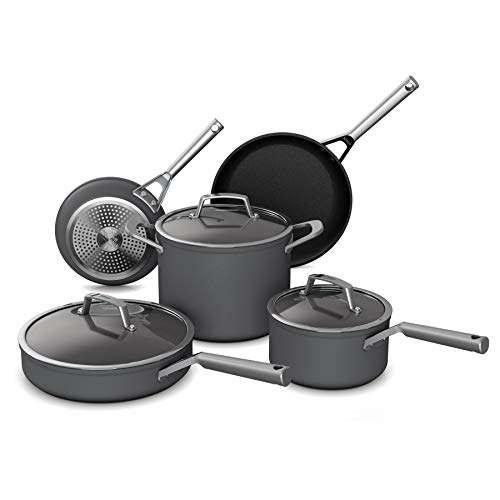
The 8-piece NeverStick set distils the premium aluminium formula to its core vessels: hard-anodized bodies and the NeverStick durability system in a box sized for couples and small kitchens. Our cache note for this ASIN records it plainly — this set is the traditional NeverStick surface, not ceramic — which is exactly what durability-first buyers are choosing it for.
Strengths
- Premium hard-anodized aluminium quality without paying for unused vessels
- Durability-first coating system in a compact, storable box
- Core coverage that pairs well with one stainless or cast iron searing pan
Trade-offs
- Eight pieces means deliberate gaps — keen cooks will add a piece or two
- Premium per-piece tier, as with the larger NeverStick box
- No induction compatibility from the aluminium body
| Specification | Detail |
|---|---|
| Pieces | 8 (per Amazon title) |
| System | NeverStick hard-anodized nonstick (C38000) |
Compact premium is an underrated strategy: eight pieces you use daily, in the best aluminium execution, beat eighteen pieces of which ten gather dust. This set plus a single heavy searing pan is, for many two-person households, a complete and excellent kitchen.
Choose between this and the 12-piece NeverStick purely on vessel count from your real cooking fortnight. The construction, coating and ownership experience are the same system at two sizes.
Best for: Couples wanting premium aluminium in core coverage only / Not suited for: Large families needing a complete one-box kitchen
Check the current price on Amazon
Comparison Table
| Pick | Badge | Key spec | Best for |
|---|---|---|---|
| T-fal Ultimate Hard Anodized 17-Piece Set | Best Overall Aluminum Set | 17-piece hard-anodized aluminium nonstick, griddle included | Gas and electric households wanting aluminium’s best durable form |
| Ninja NeverStick Premium 12-Piece C39800 | Best Premium Aluminum | 12-piece hard-anodized aluminium, oven safe to 500°F | Aluminium loyalists wanting the premium, durable execution |
| Rachael Ray Cucina 12-Piece Aluminum Nonstick | Best Lightweight | 12-piece plain aluminium nonstick, enamel exterior | Cooks prioritising light weight and fast, easy daily cooking |
| Tramontina PrimaWare 18-Piece Nonstick | Best Coverage Value | 18-piece aluminium nonstick, widest coverage | First kitchens, students and renters equipping from zero |
| Farberware EcoAdvantage 13-Piece Ceramic Set | Best Recycled Aluminum | 13-piece recycled aluminium, ceramic nonstick | Eco-minded buyers wanting light aluminium with a ceramic surface |
| Ninja NeverStick 8-Piece C38000 | Best Compact Premium | 8-piece hard-anodized NeverStick, compact coverage | Couples wanting premium aluminium in core coverage only |
Plain vs Hard-Anodized vs Recycled: Choosing Your Aluminum
Plain aluminium is the lightest and cheapest form: fast, friendly, and the most prone to warping and dents. It suits gentle cooking, light-use kitchens and buyers prioritising weight or budget above lifespan. Hard-anodized aluminium keeps the metal’s speed and lightness while hardening the body against warping and wear — it is the correct default for daily cooking and the foundation of this guide’s top picks.
Recycled aluminium performs like the plain metal it was reclaimed into, with a materially smaller production footprint; choose it when the eco ranking matters and your heat habits are gentle. Across all three families, remember the hob rule: aluminium is not magnetic, so none of these sets works on induction unless a specific model states a magnetic induction base — none ranked here claims one, and our induction guide exists for those kitchens.
Getting the Best From Aluminum Cookware
Aluminium rewards moderate heat. Its conductivity means medium settings deliver what other metals need high for, and sparing the maximum protects bodies from warping and coatings from early death. Preheat briefly, cook, and let pans cool before washing — thermal shock is the warping mechanism owners blame on the metal itself.
For bare or worn aluminium, avoid long storage of acidic foods in the pan; transfer tomato sauces and citrus dishes to a serving or storage vessel. Anodized and coated interiors are far less reactive, but the habit costs nothing and protects every finish in this guide.
How to Test, Season and Store Aluminum Pans
Test flatness on arrival: set each pan on a flat surface or your hob and check for rocking. A new pan that rocks will only worsen; exchange it immediately rather than hoping heat cycles will cure it.
For nonstick aluminium, wash warm, dry fully, and wipe a trace of oil over the surface before first use if the maker directs it. For any aluminium pan, the first cooks at medium heat teach you its response — aluminium is faster than most cooks expect.
Build the medium-heat habit deliberately for the first fortnight: eggs, sauces and sautés all cook at settings lower than instinct suggests, and the pans will repay the discipline for years.
Store with protection. Aluminium’s softness means rim dents come from cupboard knocks and stacking; hang pans or separate them with protectors, and never use a pan as storage for other metal utensils.
Common Buying Mistakes
The category mistake is buying aluminium for an induction hob — it will not heat, at any quality level, without a magnetic base. The second is judging aluminium sets as one material: a hard-anodized set and a thin plain set share a word and almost nothing else in service life.
Third is thermal abuse: empty pans on maximum heat and cold water on hot pans warp aluminium faster than any other common error. Fourth is stacking unprotected, denting rims and chipping coatings in the cupboard. Every one of these is a habit, not a fate — which is good news, because habits are free to fix.
Final Recommendation
For most gas and electric households, the T-fal Ultimate Hard Anodized 17-piece is the best aluminum cookware set: durable bodies, full coverage, fair tier. Step up to Ninja NeverStick — 12-piece for full coverage, 8-piece for compact premium — for aluminium’s most durable execution. Choose the Cucina for lightness, PrimaWare for first-kitchen coverage, and EcoAdvantage for recycled construction with a ceramic surface. Check price on Amazon, verify the piece list, and confirm your hob is not induction before ordering.
Induction owners and stainless-curious buyers will find their guides linked below.
Start your shortlist here: T-fal Ultimate Hard Anodized 17-Piece Set Ninja NeverStick Premium 12-Piece C39800 Rachael Ray Cucina 12-Piece Aluminum Nonstick. Check price on Amazon for each, read the configuration carefully, and buy the one whose trade-offs you can live with longest.
Best All Clad Cookware Sets Best Affordable Cookware Sets Best Affordable Non-stick-cookware-sets Best Affordable Nonstick Cookware Sets Best Affordable Induction Cookware Sets
Living With Each Pick: Aluminium Ownership Notes
T-fal Ultimate Hard Anodized 17-Piece Set
Ultimate owners settle into aluminium’s best routine: fast preheats, the indicator’s quiet guidance, and a griddle that becomes weekend furniture. The anodized bodies stay flat year after year — the detail that separates this set’s long-term accounts from thin aluminium’s — and the coating’s lifespan tracks the household’s heat discipline with almost comic fidelity. Medium-heat homes report a set that still feels new in year three.
Ninja NeverStick Premium 12-Piece C39800
NeverStick owners describe aluminium that feels permanent: substantial in the hand, unbothered by the oven’s upper reaches, and coated with a system that shrugs off the utensil drawer. The set’s prime stretches long enough that owners forget it is nonstick until a guest comments on the release. It is the aluminium set recommended between friends who have burned through cheaper ones.
Rachael Ray Cucina 12-Piece Aluminum Nonstick
Cucina owners cook the most, by their own account, because the set asks the least of them: light to lift, fast to heat, easy to wash, cheerful to look at. Cooks managing grip or wrist issues call it the set that kept them cooking. Its owners are also the guide’s best advertisement for gentle heat — the households that keep this light set flat and slick for years are simply the ones that never blast it.
Tramontina PrimaWare 18-Piece Nonstick
PrimaWare owners are equipping and learning, and their long-term reports split into two happy endings: the gentle household still cooking in it years later, and the ambitious household that used it as a classroom, learned its repertoire, and upgraded two proven pans to premium versions. Both outcomes justify the purchase, which is the definition of a good starter set.
Farberware EcoAdvantage 13-Piece Ceramic Set
EcoAdvantage owners bought the recycled story and stayed for a competent ceramic set: light, slick with delicate foods, and easy to live with in smaller kitchens. The grey finish ages gracefully in appearance even as the ceramic prime follows its natural curve, and owners refresh the frypan while the saucepans serve on — the set-as-system pattern this guide recommends throughout.
Ninja NeverStick 8-Piece C38000
The compact NeverStick’s owners are minimalists with standards: eight pieces, all premium, all used weekly, typically beside one heavy searing pan. The set demonstrates that aluminium’s premium tier is about execution, not piece count. Owners report the same long prime as the 12-piece, with the added satisfaction of a cupboard that contains nothing idle.
Aluminium and Heat: Conductivity, Hot Spots and Hob Pairings
Aluminium conducts heat roughly twice as eagerly as stainless steel, which is why aluminium pans preheat fast and respond quickly — and why thin aluminium shows hot spots over a small burner or a fierce flame ring. Body thickness and anodizing are the mitigations: a substantial anodized base spreads a burner’s output across the cooking surface, while a thin stamped base maps the flame onto your food. When you handle the picks in this guide, the weight difference between the T-fal and NeverStick bodies and the lightest sets is that physics made tangible.
Hob pairing follows from the metal. Gas flatters aluminium, spreading flame heat that the metal then evens out. Radiant and coil electric suit it well, with the flatness caveat — a warped base on a flat hob is a rocking, uneven pan, which is why the cooling habit matters. Induction is the exception that defines the category: without a magnetic base, aluminium simply does not heat, and no technique changes that. Our induction guide exists for those kitchens.
Oven use separates the families further. Bare and anodized aluminium tolerate serious oven heat, limited mainly by handles and coatings; the NeverStick’s 500°F rating in this guide is the aluminium nonstick ceiling worth noting. Phenolic handles and delicate coatings lower other sets’ ceilings, so check your chosen set’s stated limit rather than assuming the metal’s.
When Aluminium Is the Wrong Answer (and What to Buy Instead)
Honest guides name their category’s limits. Aluminium is the wrong answer for induction kitchens without magnetic bases, for cooks whose style is sustained maximum-heat searing in the same pan daily, and for buyers seeking a single set to hand down across decades — stainless clad owns that brief, and our All-Clad and affordable guides rank it. It is also the wrong answer where a household’s storage means pans will be knocked about daily; aluminium dents where stainless merely marks.
It is the right answer — often the best answer — where weight, speed, price or any two of those three govern the purchase, which describes most real kitchens most of the time. The households happiest with aluminium are the ones that chose it deliberately for those virtues and cook within its one real discipline: respect the heat, and the metal will do the rest.
The hybrid kitchen remains the connoisseur’s solution: aluminium nonstick for the delicate daily work, one heavy pan in iron or steel for violence, and nothing else required. Several picks in this guide are sized and priced precisely to play the aluminium role in that partnership.
Aluminium Thickness, Gauges and Why Weight Tells the Truth
In aluminium cookware, weight is information. A pan’s heft reflects its gauge — the thickness of its base and walls — and gauge predicts warping resistance, hot-spot behaviour and service life more reliably than any marketing term. When you compare the picks in this guide, the hard-anodized sets feel substantial because they are: their bases carry enough metal to spread a burner’s output and to stay flat through years of thermal cycles.
Thin aluminium is not dishonest aluminium — it is a different tool. It heats fastest, lifts easiest and suits the gentle, quick cooking it was designed for, from eggs to reheats. Its failures occur when it is asked to do thick aluminium’s work: sustained high heat, heavy searing, daily family volume. Matching the gauge to the job is the entire skill of buying this category well.
A practical test at purchase: set the pan on a flat surface and press its centre and rim. Flex, rocking or a tinny note predicts a short, uneven life; solidity and silence predict the opposite. Online, the equivalent test is reading the construction statements in the listing — the verified listings behind this guide name their bodies plainly, and that plainness correlates with substance.
Aluminium in a Mixed-Metal Kitchen: The Division of Labour
Few experienced kitchens are single-metal, and aluminium’s happiest role is within a division of labour. Aluminium nonstick takes the delicate daily work — eggs, fish, sauces, reheats — where its release and lightness shine and its heat limits are never approached. A heavy iron or steel pan takes searing and oven violence. Stainless, where present, takes acidic sauces and deglazing. Each material does what it is best at, and none is blamed for another’s job.
Building that division deliberately is cheaper than buying one heroic set. An aluminium set from this guide, chosen at the coverage your delicate cooking needs, plus one heavy pan, typically costs less than a premium full set in any single material — and cooks better across the whole repertoire. The Cucina or PrimaWare beside a cast iron skillet is a genuinely excellent kitchen wearing a modest price.
Revisit the division yearly. Cooking changes — a household discovers stir-frying, takes up bread, develops a sauce habit — and the correct response is a targeted addition, not a new set. Aluminium’s affordability makes it the natural material for those experiments: a new aluminium piece is a small wager on a new habit, and the habit, not the pan, is the point.
Choosing by Household: Who Should Buy What
For a student or first flat
PrimaWare’s coverage or the Cucina’s lightness, by whether the kitchen lacks vessels or the cook lacks strength. Either equips a real kitchen in one purchase at a survivable tier.
For a busy family on gas
The T-fal Ultimate: anodized durability, a griddle for weekends, and coverage for simultaneous cooking. It is the family aluminium default for good reason.
For the aluminium loyalist upgrading
NeverStick, sized by household — 8-piece for couples, 12-piece for families. It is the upgrade that ends the replacement cycle aluminium buyers know too well.
Aluminium and Acidic Foods: The Practical Rule
Bare aluminium reacts with acidic foods over long contact, picking up metallic notes and dulling its surface; anodized and coated aluminium — every pick in this guide — presents a finished barrier that makes ordinary cooking a non-issue. The practical rule is about storage, not cooking: simmer the tomato sauce, then move it to a serving or storage vessel rather than keeping it in any aluminium pan overnight.
The rule costs nothing and protects flavour and finish alike. It also generalises gracefully: no cookware material, stainless included, is at its best as long-term acidic storage. Cook in aluminium with confidence; store in glass or ceramic with the same confidence.
Recycling and End-of-Life for Aluminium Sets
Aluminium is the most recyclable material in this guide’s universe: it re-melts indefinitely with a fraction of its original production energy, which is why recycled-body sets like the EcoAdvantage pick are substantive rather than symbolic. When an aluminium set finally retires, its bodies have genuine scrap value and a real recycling pathway — check local schemes, as coated pans are handled differently by different programmes.
Retire pieces by condition, as throughout this guide: the warped, the flaking, the handle-loose. Sound saucepans outlive tired frypans in every aluminium family, and redeploying them — to a second kitchen, a new cook, a camping kit — extracts the metal’s full service before its full recycling. Aluminium bought well is used long and then used again as something else; that is a respectable life for a pan.
Aluminium for Specific Cooks: A Field Guide
The breakfast cook is aluminium’s natural citizen: eggs, pancakes, bacon-adjacent work and reheats, all at moderate heat, all benefiting from fast response and easy release. A light aluminium frypan in confident hands outperforms heavy cookware at this shift simply because it is picked up without thought and washed without resentment. The Cucina and the T-fal griddle exist for this cook, and they serve breakfast better than sets three times their tier serve dinner.
The sauce cook benefits from aluminium’s conductivity in a different way: custards, caramels and reductions respond instantly to heat changes, and the metal’s eagerness lets a skilled hand ride the edge of a boil without overshooting. Anodized saucepans are the sweet spot — finished surfaces, fast response, no reactivity worries for ordinary sauces — and they are why so many working kitchens keep aluminium saucepans beside premium everything else.
The volume cook — soups, pasta water, batch grains — cares about two aluminium virtues: lightness under load and heating speed for large liquid volumes. A full stockpot is the heaviest lift in home cooking, and aluminium cuts that lift meaningfully while bringing the water to temperature faster than thick steel. For older cooks and smaller cooks, that difference is not convenience; it is continued independence in the kitchen.
The outdoor and second-kitchen cook — camping stoves, holiday rentals, garden kitchens — values aluminium’s shrug: it dents rather than breaks, costs little to replace, and heats on any flame. PrimaWare’s coverage and the detachable systems in our other guides serve this cook deliberately, and aluminium’s long camping heritage is the category’s quiet proof of durability under genuinely rough handling.
The common thread is that aluminium rewards being chosen for a reason. Cooks who can name their shift — breakfast, sauce, volume, travel — buy the right aluminium and keep it for years. Cooks who buy it as generic cheapness get generic results. This guide’s picks are organised by those reasons precisely so the naming is easy.
Reader Questions, Answered in Depth
Is aluminium cookware being phased out is a question that circulates periodically, usually attached to a new material’s marketing. The factual answer is that aluminium remains the world’s most used cookware metal by volume, because its combination of conductivity, lightness and cost has no rival at scale. What has changed is the finish: bare aluminium has given way to anodized and coated forms — every pick in this guide — which answer the reactivity and durability criticisms that fuelled the rumours. The metal is not disappearing; it is maturing.
Readers ask why professional kitchens use aluminium if stainless is superior, and the premise deserves gentle correction: professional kitchens use both, for different stations, exactly as this guide recommends for homes. Aluminium rules the high-volume, moderate-heat stations — sauces, sautés, pasta — where its response and lightness serve a cook working pans for hours. Stainless and iron rule searing and acidic long cooking. The professional pattern is not a verdict on one metal; it is a division of labour this guide has simply translated to domestic scale.
The weight question inverts with age and strength, and readers ask it plainly: what should a cook with arthritis or reduced grip buy. The answer in this guide is the Cucina’s honest lightness, supplemented by two-handle designs for heavy lifts and a rule that no pot travels far full. Cookware that hurts to use is cookware that will not be used, and a light aluminium set that keeps someone cooking independently is worth more than any premium specification in this entire series of guides.
On induction, the question is whether an adapter plate makes aluminium viable, and the technical answer is that it makes it possible while surrendering the hob’s efficiency and the pan’s response — the two things each technology exists to provide. This guide’s position is firm: buy magnetic cookware for an induction hob, from the linked induction guide, and let aluminium serve the hobs it suits. Adapters are a bridge for a beloved single pan, not a strategy for a set.
Warping anxiety produces the question of whether all aluminium eventually warps, and the answer distinguishes the families one last time: thin plain aluminium under thermal abuse warps readily; hard-anodized bodies under the habits in this guide stay flat for years. The variable is rarely the metal’s fate and almost always the household’s heat discipline. That is encouraging news, because discipline is free and transferable to every pan you will ever own.
Which set, to close, has the guide’s customary short answer: T-fal Ultimate for most households, NeverStick for the premium execution at two sizes, Cucina for lightness, PrimaWare for coverage, EcoAdvantage for recycled construction with ceramic. Aluminium chosen by reason — weight, speed, coverage, footprint — satisfies for years. Aluminium chosen by price alone satisfies until the first warped base, which is why this guide exists.
A Final Word on the Working Metal
Aluminium is the working metal of the world’s kitchens — fast, light, forgiving of budgets and honest about its limits. It does not pretend to be heirloom steel or magnetic clad, and judged on its own terms it has no superior for the daily, moderate, human cooking most households actually do. The sets in this guide were chosen to represent those terms at their best: anodized where durability matters, light where weight matters, broad where coverage matters, recycled where footprint matters.
The metal asks one discipline in return — respect for heat — and pays for it with years of uncomplaining service. Households that learn that single habit in the first fortnight routinely keep aluminium sets far beyond the category’s reputation, and wonder what the warnings were about. The warnings were about the other habit, and you are now equipped to avoid it.
Name your reason, choose the family that serves it, verify the box, and cook. Aluminium will do the rest, quickly and lightly, for a long time.
One More Consideration: Handles, Lids and the Small Print
Aluminium sets are often decided by their small print, and two details deserve a final look before ordering. Handles determine whether a light pan stays light in use: a long, well-shaped handle on a full saucepan is a safety feature, and oven limits are usually set by handle material rather than by the aluminium body — check the stated ceiling for your chosen set rather than assuming the metal’s tolerance applies to the whole pan.
Lids are the second detail. A lid that serves two vessels is worth more than two single-fit lids, glass lids trade a little toughness for the ability to watch a simmer, and a set whose lids are sold separately supports the refresh pattern this guide recommends. Read those two lines of any listing — handles and lids — and you will know more about living with the set than its headline piece count ever tells you.
One last habit ties every section of this guide together: spend the first fortnight cooking in the set deliberately — a sauce in the saucepan, eggs in the frypan, a full stockpot lifted with care — so the gauge, the handles and the heat response prove themselves against your real cooking while returns are still simple. Aluminium judged honestly in that fortnight, and heated gently thereafter, will repay the judgement for years.
Frequently Asked Questions
Does aluminum cookware work on induction hobs?
Plain and hard-anodized aluminium are not magnetic and do not work on induction unless the specific model is built with a magnetic induction base. None of the sets ranked here claims one; induction owners should use our dedicated induction guide.
What is hard-anodized aluminum, and is it worth it?
Anodizing hardens aluminium’s surface electrochemically, making bodies far more resistant to warping, corrosion and wear while keeping the metal light and fast-heating. For daily cooking it is worth the modest premium over plain aluminium in almost every case.
Is aluminum cookware safe for everyday cooking?
Modern aluminium cookware — anodized or coated, as every pick here is — presents a finished, stable cooking surface rather than bare reactive metal. Avoid storing acidic foods for long periods in any aluminium pan as a simple, costless precaution.
Why did my aluminum pan warp?
Usually thermal shock or overheating: an empty pan on maximum heat, or cold water hitting a hot pan. Preheat on medium, cook at moderate settings, and let pans cool before washing to keep bases flat.
Aluminum or stainless steel — which should I choose?
Aluminium wins on weight, speed and price; stainless wins on longevity, searing and induction compatibility. Many strong kitchens use aluminium nonstick for delicate daily cooking beside one stainless or cast iron pan for high-heat work.
How long should an aluminum set last?
Hard-anodized sets with cared-for coatings serve for years of daily use; thin plain aluminium sets give shorter service, especially under high heat. The habits in this guide’s how-to section are the main lifespan variable.

