Disclosure: airfryerkitchensupply.com is reader-supported. When you buy through links on our site, we may earn an affiliate commission at no extra cost to you.
Where to buy
Every pick in this guide to the best and easy to use blenders was confirmed through Amazon’s own product data before it earned a link, so the model names and capacities below match what you will actually receive. Use the shortlist here to jump straight to a product page, or read the full reviews further down for the trade-offs behind each badge.
- Ninja Professional Blender BL610 — Best Overall: Check the current price on Amazon
- Hamilton Beach Power Elite 58148AG — Best Budget: Check the current price on Amazon
- nutribullet Turbo Personal Blender — Best for Single Servings: Check the current price on Amazon
- Vitamix 5200 — Best Simple Premium: Check the current price on Amazon
- KitchenAid K400 with Tamper KSB4028 — Best Dial Control: Check the current price on Amazon
- Oster Classic Series 8-Speed — Best Classic Glass Jar: Check the current price on Amazon
If you are shopping for the best and easy to use blenders, the honest starting point is that power is no longer the hard part. Even mid-priced countertop blenders now crush ice and frozen fruit without drama. What separates a blender you reach for every morning from one that migrates to the back of a cupboard is friction: how many buttons stand between you and a smoothie, whether the jar pours without dribbling down the counter, whether the lid needs two hands and a firm word, and whether cleanup takes thirty seconds or a scrub brush and patience. This guide ranks ease of use first and raw performance second, because a slightly less powerful blender that cleans itself will make more smoothies in a year than a stronger one that feels like a chore.
That framing changes the winners. Preset programs earn their place here only when they genuinely remove decisions — press one button, walk away, come back to a finished blend. Simple dials score well because you can adjust them mid-blend with wet hands. Personal blenders score well because the blending cup becomes the drinking cup, deleting a transfer and a wash entirely. What scores badly, and what we filtered out, are blenders with crowded button panels where half the keys do nearly the same thing, jars that only lock in one fiddly orientation, and lids that seal so aggressively you need a towel for grip. Every pick below was confirmed against Amazon’s product data, and each review states plainly who the machine suits and who should skip it.
Key Takeaways
- Ease of use is mostly cleanup and loading order, not wattage — every pick here can be rinsed clean in under a minute with the warm-water self-clean routine.
- For most households the Ninja BL610 is the easiest full-size option: four controls, self-circulating blades, dishwasher-safe parts.
- Solo drinkers should buy a personal blender instead of a small full-size one; blend-in-cup removes the transfer and most of the washing.
- Dials suit varied cooking, labelled buttons suit repeated jobs, and presets only help when they stop the cycle themselves at the right texture.
In this guide
Quick Picks
Ninja Professional Blender BL610 — Best Overall
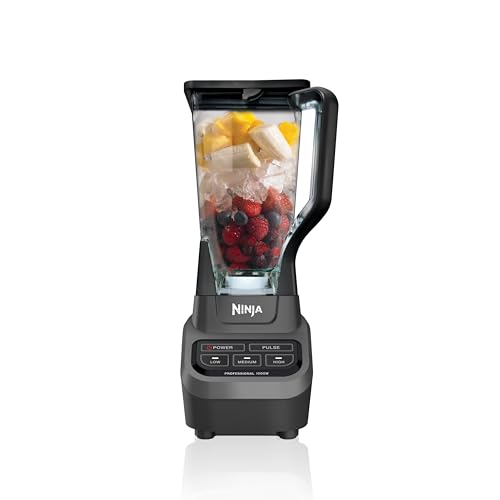
Three speeds, a pulse button, and nothing else to learn. The stacked blade assembly pulls frozen fruit down instead of leaving it spinning on top, so a family-size smoothie needs no stopping, shaking, or tamper work. Check the current price on Amazon
Hamilton Beach Power Elite 58148AG — Best Budget
A glass-jar blender at a budget tier whose Wave Action system keeps ingredients moving toward the blades, so its modest motor delivers smoother results than its spec sheet suggests. Twelve functions sound like a lot, but the buttons are clearly labelled by job. Check the current price on Amazon
nutribullet Turbo Personal Blender — Best for Single Servings
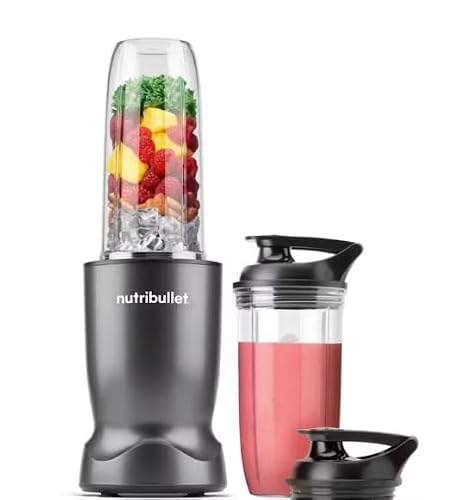
There is no panel at all: push the cup down and twist, and it blends. The cup you blend in is the cup you drink from, with flip-top lids included, which makes it the lowest-friction option here for one person. Check the current price on Amazon
Vitamix 5200 — Best Simple Premium
A variable-speed dial, a high-speed switch, and a self-cleaning routine with warm water and a drop of soap. The 5200 proves that premium and simple are not opposites — the dial gives you control without menus. Check the current price on Amazon
KitchenAid K400 with Tamper KSB4028 — Best Dial Control
A chunky five-speed dial plus three honest presets — ice crush, icy drinks, smoothie — and a motor that senses load and holds speed. It is the middle path: guidance when you want it, a dial when you do not. Check the current price on Amazon
Oster Classic Series 8-Speed — Best Classic Glass Jar
The blender your parents understood instantly: eight labelled speeds, a six-cup glass jar, and an all-metal drive that has kept this design in production for years. Familiarity is itself an ease feature. Check the current price on Amazon
How These Picks Were Chosen
We built the shortlist by starting with the full-size and personal blenders verified, then scoring each one on a simple friction audit. First, control clarity: can a first-time user make a smoothie within a minute of unboxing, without opening the manual? Second, cycle honesty: do the presets actually stop on their own at a sensible texture, or do they just run a timer you could have managed yourself? Third, handling: jar weight when full, handle comfort, lid effort, and whether the jar sits on the base in any orientation or only one. Fourth, cleanup: dishwasher-safe parts, self-cleaning cycles that work with a drop of soap and warm water, and blade assemblies that do not trap food underneath where a sponge cannot reach.
Performance still mattered as a floor. Each pick had to handle the three jobs easy-use buyers actually do: fruit smoothies with frozen ingredients, crushed ice for drinks, and sauces or soups without leaking at the lid. Models that needed constant tamper work for a basic smoothie lost points, because needing a tool and a technique is the opposite of easy. We also weighted long-term ease: replacement jars and lids that are easy to find, and designs that have been sold in the same form for years, so the muscle memory you build is not orphaned by a redesign. Price was treated as a tier signal only — this guide does not print static prices, and each pick is positioned as budget, mid-range, or premium so you can check the current price on Amazon against your own budget.
The 6 Best Easy to Use Blenders
Ninja Professional Blender BL610 — Best Overall
The BL610 is the blender we hand to people who say they do not want to think about blending. Its control panel is almost aggressively plain — three speeds and pulse — yet the stacked Total Crushing blade column does the thinking mechanically, circulating ingredients so you rarely intervene. It suits households making big smoothie batches and frozen drinks several times a week, and first-time blender owners who want one machine that simply works.
Strengths
- Stacked blades circulate ingredients, so frozen blends finish without stopping to stir
- Only four controls total — three speeds plus pulse — so there is nothing to misconfigure
- All removable parts are dishwasher-safe and the pitcher is light for its size
Trade-offs
- No preset programs, so soup and smoothie textures rely on your timing
- Loud at full speed, like most high-power blenders in this class
- Pitcher is plastic rather than glass, which some buyers dislike for hot liquids
| Specification | Detail |
|---|---|
| Motor | 1000 watts |
| Pitcher | 72 oz, dishwasher-safe |
| Controls | 3 speeds + pulse |
| Blade system | Stacked Total Crushing assembly |
In daily use the BL610’s ease comes from forgiveness. Add ingredients in roughly the right order, choose speed two, and the blade column creates a vortex that keeps frozen strawberries and ice moving through the cutting zone instead of riding above it. Where single-blade bargain blenders need the jar lifted and shaken, this one usually finishes unattended. The pitcher locks on without a alignment ritual, the lid presses on rather than threading, and the pour spout is genuinely drip-resistant when you pour slowly. Cleanup is the other half of its appeal: a warm-water rinse handles most residue, and the blade assembly lifts out so nothing hides underneath. It is not the quietest or the most refined machine here, and cooks who want a heated soup cycle or a dozen programs should look at the premium picks. But judged purely on how little friction stands between ingredients and a finished drink, it earns the top badge.
Ownership details reinforce the verdict. The blade assembly lifts straight out of the pitcher, so the dishwasher — or a bottle brush — reaches everything, and the pitcher itself is light enough to handle one-handed when full of water for cleaning. The lid’s pour spout has a flip cap that actually seals, which sounds minor until you have shaken a lesser blender’s contents across a counter. Spare pitchers and blade assemblies are widely stocked, so an accident does not end the appliance. Noise is the one daily tax: at full speed it is assertively loud, though most smoothie cycles finish in under a minute, which keeps the tax brief. For a machine whose entire pitch is low friction, the details line up unusually well.
Best for: families and beginners who want one simple, powerful blender for daily smoothies and frozen drinks / Not suited for: buyers who want preset programs, glass jars, or quiet operation
Check the current price on Amazon

Hamilton Beach Power Elite 58148AG — Best Budget
The Power Elite is the pick for buyers who want easy on a budget and prefer a glass jar. Its 700-watt motor is the weakest here on paper, yet the Wave Action jar shape continuously folds the mixture down into the blades, which is exactly the help a smaller motor needs. It suits smoothie drinkers, sauce makers, and smaller households whose blending is daily but not heavy-duty.
Strengths
- Wave Action jar geometry reduces the stop-and-stir routine common in budget blenders
- Glass jar resists staining and odours and pours cleanly from a proper spout
- Buttons are labelled by task — puree, crush ice, mix — rather than abstract numbers
Trade-offs
- 700 watts struggles with thick frozen blends unless liquid goes in first
- 40 oz jar is small for family batches
- No self-clean program, though the jar and lid are dishwasher-safe
| Specification | Detail |
|---|---|
| Motor | 700 watts peak |
| Jar | 40 oz glass |
| Functions | 12 blending functions |
| System | Wave Action continuous circulation |
Ease of use at the budget tier is mostly about not fighting the machine, and the Power Elite avoids the two classic budget fights. The first is stratification, where liquid blends at the bottom and frozen chunks float untouched; the ribbed jar walls keep the mixture turning over, so a standard smoothie finishes in one cycle. The second is the mystery panel, and here the labelled functions genuinely help a new user: press the button that names your job. Where it asks for cooperation is loading order — liquid first, soft ingredients next, frozen last — and giving thick mixtures a pulse or two before a sustained run. Do that and it is a calm, predictable appliance. The hinged pouring lid is a small detail that matters daily, because you can add ingredients mid-blend without removing the whole lid. For the tier, that combination of glass, guidance, and low effort is why it holds the budget badge.
Two ownership points deserve emphasis. First, the glass jar’s weight cuts both ways: it feels stable and premium on the counter, but a full jar is a two-hand pour for smaller users, which slightly tempers the ease story for arthritic hands — the handle is well shaped, which helps. Second, the hinged lid insert for adding ingredients is a feature owners consistently praise, because mid-blend additions are where basic blenders usually demand a full stop. The base wipes clean, the buttons are sealed against splashes, and the whole machine stores compactly. None of this is glamorous, and all of it is what budget ease actually consists of: nothing about the daily routine ever quite annoys you.
Best for: budget buyers and smaller households who want a glass jar and guided, labelled controls / Not suited for: large families or anyone blending thick frozen mixtures daily
Check the current price on Amazon
nutribullet Turbo Personal Blender — Best for Single Servings
For a single smoothie, every other blender in this guide asks you to dirty a full-size jar. The nutribullet Turbo deletes that step. Its 1000-watt base drives cups of 32 and 24 ounces, and the extractor blade screws on in seconds. It suits commuters, gym-goers, dorm rooms, and anyone whose blending is one serving at a time, several times a day.
Strengths
- Push-and-twist operation has literally no settings to learn
- Blend-in-cup design with travel lids removes transferring and extra washing
- 1000 watts is strong for a personal blender, handling frozen fruit credibly
Trade-offs
- Cup capacity caps you at one or two servings per blend
- Not suited to hot liquids or large soup batches
- Blade base needs a careful rinse so residue does not dry under the gasket
| Specification | Detail |
|---|---|
| Motor | 1000 watts |
| Cups | 32 oz and 24 oz included |
| Lids | 2 flip-top travel lids |
| Operation | Push-down activation, no dial or panel |
The Turbo’s ease argument is arithmetic: fewer parts, fewer steps, fewer dishes. Morning routine testing is where personal blenders earn loyalty, and this one’s routine is fill, twist, blend for under a minute, swap the blade for a travel lid, and leave. The 1000-watt motor matters because weaker personal blenders stall on frozen mango and ice, forcing the shake-the-cup routine that breaks the spell. This one powers through standard smoothie loads, though very thick mixtures still benefit from enough liquid to start the vortex. Its limits are honest ones: it will not serve a family’s breakfast, it should not be used for hot soup, and the blade assembly deserves a prompt rinse. Within its lane — one person, one drink, zero ceremony — nothing else in this guide is easier, and that is exactly the badge it carries.
The Turbo’s supporting details are worth knowing before purchase. The cups are sized for real smoothies rather than tasting portions, and the flip-top lids seal well enough for a gym bag — a claim not every personal blender survives. The base is stable and compact, the blade base rinses cleanest under a strong tap immediately after use, and the whole system stores in a fraction of a full-size blender’s footprint. Its motor’s strength shows most with frozen fruit: where 250 to 600 watt personal blenders labour and need shaking, the Turbo usually finishes a standard frozen smoothie in a single uninterrupted run. That reliability is what converts a gadget into a habit, and habit is the entire point of the personal format.
Best for: solo smoothie drinkers, commuters, and small kitchens where one serving is the whole job / Not suited for: families, hot-soup makers, or anyone needing batch capacity
Check the current price on Amazon

Vitamix 5200 — Best Simple Premium
The Vitamix 5200 is the premium pick for buyers who find program menus harder, not easier. One dial sweeps through variable speeds, a switch jumps to high, and that is the entire interface — yet the machine underneath handles everything from nut butter to hot soup. It suits cooks who blend daily, keep appliances for a decade, and want control they can feel rather than settings they must remember.
Strengths
- Single-dial control is intuitive and adjustable mid-blend with one hand
- Self-cleaning cycle genuinely works: warm water, a drop of soap, one minute
- Laser-cut stainless blades and a powerful motor handle hard jobs without strain
Trade-offs
- Premium tier pricing, positioned well above the rest of this guide
- No one-touch programs, so results depend on your speed choices
- Tall 64 oz container may not fit under low wall cabinets
| Specification | Detail |
|---|---|
| Container | 64 oz, BPA-free |
| Controls | Variable speed dial + high switch |
| Blades | Laser-cut stainless steel |
| Cleaning | Self-cleaning cycle |
Calling a Vitamix easy to use surprises people who equate ease with automation, but the 5200’s dial is the most forgiving interface here once you understand one habit: start low, ramp up. That single gesture prevents the splashing and air pockets that make other blenders feel temperamental, and because the dial is analogue you adjust by sound and look rather than by cycling menus. The tamper, often cited as a complication, actually removes the hardest part of thick blends — instead of stopping and scraping, you push the mixture down while it runs. Cleanup seals the argument: the self-clean cycle is not a gimmick on this machine, and the container comes out genuinely clean. You pay a premium tier price for build quality and longevity rather than features, and there are no presets to hide behind. For a confident home cook, that trade is the easiest long-term ownership in this guide.
A word on the ownership arc, because the 5200’s ease compounds over years. There is no program board to obsolesce, no touch panel to delaminate, and the container, tamper, and lid are shared across a huge installed base, so replacements and advice are permanently available. The dial’s detents are positive and glove-friendly, the tamper stores in the lid plug opening, and the power cord wraps under the base for tidy counters. The learning investment is front-loaded — a week of ramping speeds and tamper technique — after which operation becomes genuinely thoughtless. Buyers who measure ease across a decade rather than a first weekend will find this the easiest machine in the guide to live with.
Best for: daily blenders who want premium durability with a simple, tactile control scheme / Not suited for: buyers who want one-touch programs or a compact, under-cabinet profile
Check the current price on Amazon

KitchenAid K400 with Tamper KSB4028 — Best Dial Control
The K400 suits buyers who like a dial’s simplicity but appreciate a machine that compensates for load. KitchenAid’s Intelli-Speed control keeps blade speed steady as ingredients thicken, so a smoothie does not bog down halfway. With a tamper included and presets that map to real jobs, it fits households that blend varied loads and want consistent results without studying technique.
Strengths
- Intelli-Speed motor control maintains speed under load for even textures
- Three presets correspond to real tasks rather than novelty functions
- Sturdy dial is easy to operate with wet or messy hands
Trade-offs
- Heavier base than most rivals, so it prefers a permanent counter spot
- Presets help, but thick mixtures still benefit from tamper use
- Mid-to-premium tier positioning, above the Ninja and Hamilton Beach picks
| Specification | Detail |
|---|---|
| Controls | 5-speed dial + 3 preset programs |
| Presets | Ice Crush, Icy Drinks, Smoothie |
| Motor control | Intelli-Speed load sensing |
| Includes | Tamper |
The K400’s ease story is consistency. On blenders without load sensing, a blend that starts fast can labour as the mixture thickens, leaving the user to guess at speed changes; the K400 quietly handles that adjustment itself, which is why its smoothies come out uniform even when ingredient ratios vary. The presets are restrained and well chosen — three jobs people actually repeat — and the dial remains the primary control, so nothing about the machine feels buried in software. The included tamper acknowledges thick blends honestly instead of pretending the vortex solves everything. In the kitchen it feels like an appliance from a company that also makes stand mixers: weighty, deliberate, and finished in colours people leave on the counter. If your definition of easy is ‘same result every time with minimal attention’, the K400 makes a strong case for its badge.
The K400’s supporting cast matters to its ease case. The jar’s asymmetric design works with the blade to fold ingredients, reducing the dead corners that make some blenders need constant tampering, and the tamper itself is included rather than sold as an accessory — a small honesty more brands should copy. The die-cast-style dial has a satisfying, deliberate action that is easy to hit accurately mid-blend. The base’s weight, noted as a trade-off for storage, is an ease feature in place: the machine does not walk across the counter under load. Add the self-cleaning friendliness of a wide jar mouth, and the K400’s consistency story extends from blending results to the whole routine around them.
Best for: households wanting consistent results with a simple dial and a few useful presets / Not suited for: anyone needing a lightweight blender they will store away after each use
Check the current price on Amazon

Oster Classic Series 8-Speed — Best Classic Glass Jar
Some buyers find modern touch panels less easy than the blenders they grew up with, and the Oster Classic exists for them. Eight push-button speeds, a Crush Pro 4 blade, and a glass jar that fits a standardised, widely available ecosystem of Oster parts make operation and ownership straightforward. It suits traditional kitchens, gift buyers for less technical users, and anyone who values repairability.
Strengths
- Push-button speeds are unambiguous and work without looking at a screen
- All-metal drive system is a durability standout at this tier
- Glass jar and Oster’s parts ecosystem make replacements easy to source
Trade-offs
- 700 watts is adequate, not powerful — frozen loads need liquid and patience
- Eight buttons include some speeds you will rarely distinguish
- Design and noise levels reflect its classic engineering
| Specification | Detail |
|---|---|
| Motor | 700 watts |
| Jar | 6-cup glass |
| Drive | All-metal drive |
| Blade | Crush Pro 4 stainless blade |
Ease has a memory component: a control layout you already understand costs zero learning, and the Oster’s row of speeds is the layout several generations learned on. Each button is a commitment — press it and the machine does exactly that, with no modes or menus altering behaviour. The all-metal drive deserves emphasis in an ease guide because breakdowns are the ultimate friction; plastic drive sockets are a common failure on budget blenders, and Oster’s metal coupling is why examples of this design run for many years. Performance is honest mid-pack: smoothies, shakes, sauces, and ice for drinks all work, while very thick frozen blends ask for liquid first and a pulse routine. The glass jar pours well and cleans in the dishwasher. Buy it for straightforward operation and long, repairable service rather than for speed records.
What keeps the Oster relevant in an ease guide is predictability across time. The buttons do the same thing on day one and day three thousand; the jar fits the same Oster ecosystem your replacement parts will come from; and the all-metal drive means the most common budget-blender death simply is not scheduled. It is also genuinely easy to hand to a guest or a grandparent — the interface explains itself. Its ease ceiling is performance-related: thick frozen loads ask for the liquid-first, pulse-start routine described in this guide’s how-to section. Master that thirty-second technique and the Classic delivers a calm, familiar routine that modern panels rarely match for sheer legibility.
Best for: traditional users, gift buyers, and anyone who values a repairable classic design / Not suited for: power users blending thick frozen mixtures or nut butters regularly
Check the current price on Amazon
Comparison Table
| Pick | Badge | Key spec | Best for | Where to check |
|---|---|---|---|---|
| Ninja Professional Blender BL610 | Best Overall | 1000W, 72 oz pitcher, 3 speeds + pulse | families and beginners who want one simple, powerful blender for daily smoothies and frozen drinks | Check price on Amazon |
| Hamilton Beach Power Elite 58148AG | Best Budget | 700W, 40 oz glass jar, Wave Action | budget buyers and smaller households who want a glass jar and guided, labelled controls | Check price on Amazon |
| nutribullet Turbo Personal Blender | Best for Single Servings | 1000W personal, 32 oz + 24 oz cups | solo smoothie drinkers, commuters, and small kitchens where one serving is the whole job | Check price on Amazon |
| Vitamix 5200 | Best Simple Premium | 64 oz, variable dial, self-cleaning | daily blenders who want premium durability with a simple, tactile control scheme | Check price on Amazon |
| KitchenAid K400 with Tamper KSB4028 | Best Dial Control | 5-speed dial, 3 presets, Intelli-Speed | households wanting consistent results with a simple dial and a few useful presets | Check price on Amazon |
| Oster Classic Series 8-Speed | Best Classic Glass Jar | 700W, 6-cup glass, all-metal drive | traditional users, gift buyers, and anyone who values a repairable classic design | Check price on Amazon |
How to Choose an Easy to Use Blender
Start by naming your friction, because ‘easy’ means different things in different kitchens. If your blender lives in a cupboard, weight and setup dominate: a personal blender or a light pitcher model wins before any feature comparison begins. If it lives on the counter, controls and cleanup dominate. If you blend for children or a partner who never reads manuals, labelled buttons and presets dominate. Write down the one annoyance that made you shop, and let it veto candidates — a blender that fixes your actual annoyance will feel easier than a technically superior one that does not.
Next, separate automation that helps from automation that decorates. A preset helps when it ends the cycle by itself at the right texture, as smoothie and self-clean programs do. It decorates when it merely renames a speed. Dials help when you blend varied loads, because you can respond to what you see; buttons help when you repeat one job, because one press reproduces it. Neither is universally easier — match the interface to your habits. Finally, test the unglamorous parts in product photos and specifications: lid style, jar handle size, whether the blade assembly removes for washing, and whether replacement jars exist. Ease is a five-year property, not a first-week impression.
Understanding Blender Controls: Dials, Buttons, and Presets
A variable-speed dial, like the Vitamix 5200’s, gives continuous control and teaches technique quickly: start slow to pull ingredients in, then climb. Its weakness is repeatability — your smoothie depends on your ramp. Fixed buttons, like the Oster’s eight speeds, trade nuance for certainty; speed four today is speed four next month. Preset programs add a timer and a speed curve tuned to a job, which is why the KitchenAid K400’s three presets work well: each corresponds to a texture target, not a marketing label. Touch panels look clean and wipe clean, but they can ignore wet fingers and hide functions in menus, so hands-on cooks often rate them below physical controls for real ease.
One more control matters and is rarely advertised: the pulse. A responsive pulse lets you rescue a blend — knocking down a floating chunk or folding in herbs at the end — without committing to a full cycle. Every pick in this guide has a usable pulse or an equivalent low-speed control. When comparing models elsewhere, treat a missing or mushy pulse as a warning sign, because it is the control experienced users reach for most after the main dial.
Capacity and Format: Full-Size, Personal, or Immersion?
Full-size pitchers in the 40 to 72 ounce range suit families and batch cooking, and their ease cost is washing a big jar for a small job. Personal blenders invert the trade: the 24 to 32 ounce cup is the serving, cleanup is one cup and a blade base, but batch cooking is impossible and hot liquids are off the table. Immersion blenders are the easiest of all to store and wash, and they blend soup directly in the pot, yet they ask you to hold the tool and manage the blend actively, which is more technique, not less. Many households end with two formats — a countertop machine for batches and a personal or immersion tool for daily small jobs — and that pairing is often easier overall than one compromised all-rounder.
Measure your cabinets before choosing a full-size model. Tall containers like the Vitamix 5200’s classic jar may not slide under standard wall cabinets, turning every use into a relocation. Low-profile jars exist for exactly this reason. Also weigh the full jar, not the empty one: 64 ounces of smoothie is heavy, and a comfortable handle plus a controlled pour spout matter more to daily ease than another hundred watts.
How to Use a Blender Without Fighting It: Loading, Blending, and the 30-Second Clean
Step 1 — Load in the easy order. Liquid first, then soft ingredients, then powders, then frozen items and ice on top. Liquid at the blades starts the vortex immediately, which prevents the air pocket that makes new users think a blender is broken. Step 2 — Start low. Begin at the lowest speed for five to ten seconds so ingredients settle into the blades, then increase. Jumping straight to high throws food onto the lid and walls where the blades cannot reach it. Step 3 — Listen. A healthy blend sounds even; a rattling, labouring note means the mixture is too thick — add liquid a spoonful at a time, or pulse twice and continue. Step 4 — Stop on time. Most smoothies finish in 45 to 60 seconds; over-blending warms the mixture and thins delicate emulsions.
Step 5 — Clean immediately, the easy way. Rinse the jar, fill it a third full with warm water, add one drop of dish soap, and blend on medium for 30 seconds. Rinse again and air-dry. This routine, done while the residue is fresh, replaces nearly all scrubbing and is the single habit that makes any blender feel easy to own. For personal blenders, rinse the blade base right after pouring, before sugars dry under the gasket. Never immerse a motor base, and let blades stop fully before reaching anywhere near them with a spatula.
Cleaning and Maintenance: Keeping Easy Blenders Easy
The self-clean rinse described in the how-to section handles daily life, but a monthly five-minute routine keeps any blender in this guide performing like new. Remove the blade assembly or cup base and wash the gasket separately — gaskets trap a film that rinsing alone misses, and that film is the source of the stale smell owners blame on plastic. Inspect the gasket for nicks while it is off; a damaged gasket is the usual cause of new leaks on an older machine, and replacements are inexpensive for every brand ranked here. Wipe the motor base with a damp cloth, never immerse it, and check that the drive socket is free of dried smoothie, which can make a jar seat imperfectly and rattle.
Jar care divides by material. Glass jars tolerate any detergent and the dishwasher’s hottest cycle, but dislike thermal shock — let a jar used for hot soup cool before a cold rinse. Plastic jars and cups prefer the top rack and non-abrasive sponges; scouring clouds them, and clouding is cosmetic but permanent. Blades need no sharpening on any pick here — they are designed to pulverise or shear at speed — but a blade assembly that has loosened or a bearing that grinds should be replaced, not endured, because both symptoms precede leaks. Finally, descale nothing: blenders have no water path. If your machine has a self-clean program, it is a convenience cycle, not a maintenance substitute for the gasket check above. Ten attended minutes a month is the full price of keeping an easy blender easy for years.
Easy Blending for Different Households
The right easy blender depends on whose hands use it. For households with older users or anyone with reduced grip strength, the priorities reorder themselves: a lighter jar, a lid that presses rather than twists, and buttons that can be read without glasses — the Oster’s push-buttons and the Hamilton Beach’s labelled functions serve this household better than any touch panel, and a personal blender’s small cups beat a full jar’s weight outright. For households with children old enough to make their own smoothies, the safest easy design is the one with the fewest exposed decisions: a personal blender’s push-down cup or a preset machine’s single smoothie button, with the jar stored assembled so there is no blade handling in the routine.
For shift workers and early risers, ease includes the clock: a blender whose cycle finishes in under a minute and whose cleanup is a rinse respects a schedule in a way a technically superior ten-minute routine never will, which is why the personal format keeps winning this household. And for the household that hosts — the blender as party infrastructure — ease means capacity plus forgiveness: the Ninja’s big pitcher and stir-free circulation, producing round after round without the host performing technique in front of guests. None of these households is wrong; each simply prices a different friction highest. Identify your household honestly, and the shortlist in this guide reorders itself.
Common Buying Mistakes
Mistake 1: Buying power you do not need and features you will not touch. A dozen programs look impressive in a listing and intimidating on a Tuesday morning. Count the jobs you actually do weekly and buy for those. Mistake 2: Loading frozen ingredients first. Ice directly on the blades with no liquid beneath is the top cause of stalls and the false belief that a blender is underpowered. Mistake 3: Ignoring the lid. A lid that needs excessive force, or one that leaks at blending speed, will annoy you hundreds of times; prioritise designs with simple press-on or clearly threading lids. Mistake 4: Letting residue dry. Ten minutes of drying turns a 30-second rinse into a scrubbing session, and dried smoothie under a blade gasket is the main source of stale flavours. Mistake 5: Filling past the max line. Blends expand as they aerate; an overfilled jar leaks, under-blends, and makes a simple job messy. Mistake 6: Storing the jar assembled with the lid sealed. Trapped moisture breeds odours; store parts dry and loosely assembled.
Final Recommendation
For most households, the Ninja BL610 is the recommendation: four controls, a pitcher that circulates ingredients for you, and dishwasher-safe everything make it the easiest full-size ownership here. On a budget, the Hamilton Beach Power Elite adds a glass jar and guided buttons at a budget tier. Solo drinkers should skip full-size machines entirely and take the nutribullet Turbo, whose blend-in-cup routine is the fastest path from ingredients to door. Buyers investing for the long term get two different kinds of simple: the Vitamix 5200’s timeless dial, or the KitchenAid K400’s load-sensing consistency. The Oster Classic remains the right answer for anyone who wants the familiar push-button layout and a machine built to be repaired, not replaced.
Keep exploring the cluster before you decide: compare the value angle in Best Bargain Blenders, the smoothie specialists in Best Affordable Blenders, the family-feeding options in Best Baby Food Blenders, and the bar-duty machines in Best Bartender Blenders. Whichever you choose, check price on Amazon on the day you buy, and adopt the load-low, clean-immediately routine from the how-to section — technique, more than any feature, is what makes a blender easy.
Shortlist for a final price check: Ninja Professional Blender BL610 — Check the current price on Amazon · Hamilton Beach Power Elite 58148AG — Check the current price on Amazon · nutribullet Turbo Personal Blender — Check the current price on Amazon
Related guides
Frequently Asked Questions
What makes a blender easy to use?
Few and clear controls, a jar that circulates ingredients without constant stirring, a lid that seals without force, and cleanup that takes under a minute — ideally a self-clean cycle or dishwasher-safe parts. In practice, cleanup and loading order matter more to daily satisfaction than motor wattage.
Is a blender with presets easier than one with a dial?
For repeated single jobs, yes: one press reproduces the same cycle. For varied cooking, a dial is often easier because you respond to what you see and hear. Many buyers are happiest with a hybrid like the KitchenAid K400 — a primary dial plus a few honest presets.
Why does my blender leave chunks at the top?
Usually loading order or too little liquid. Put liquid in first, frozen ingredients last, start on low speed to establish the vortex, then increase. Stacked-blade designs like the Ninja BL610 reduce the problem mechanically, but no blender fully escapes it with a very dry load.
Are personal blenders easier than full-size blenders?
For one serving, decisively: you blend in the cup you drink from, so there is no transfer and almost no washing. They cannot handle family batches or hot liquids, so they replace a full-size blender only when single servings are genuinely your whole routine.
How do I clean a blender in under a minute?
Rinse, fill a third with warm water, add a single drop of dish soap, blend 30 seconds, rinse, and air-dry. Done immediately after use, this prevents the dried residue that makes blenders feel like hard work. Remove and rinse blade gaskets weekly to stop odours.
Do I need a tamper for easy blending?
Only for thick mixtures like nut butter, hummus, or very dense smoothies. A tamper lets you push ingredients into the blades while the machine runs, which is easier than stopping and scraping. For ordinary smoothies and drinks, correct loading order makes a tamper unnecessary.


