Disclosure: airfryerkitchensupply.com is reader-supported. When you buy through links on our site, we may earn an affiliate commission at no extra cost to you.
Where to buy
Every pick in this guide to the best baby food blenders was confirmed through Amazon’s own product data before it earned a link, so the model names and capacities below match what you will actually receive. Use the shortlist here to jump straight to a product page, or read the full reviews further down for the trade-offs behind each badge.
- NutriBullet Baby Complete Food-Making System NBY-50100 — Best Overall System: Check the current price on Amazon
- BEABA Babycook Solo 4-in-1 — Best Steam-and-Blend for Food: Check the current price on Amazon
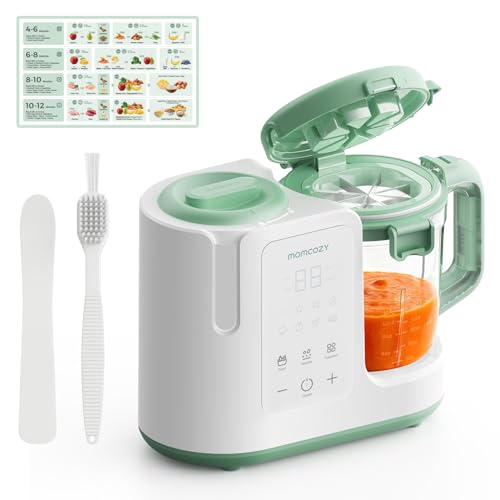
- Momcozy AutoMeal Baby Food Maker — Best for Texture Stages: Check the current price on Amazon
- Grownsy Baby Food Maker — Best Budget Food Maker: Check the current price on Amazon
- Bear Baby Food Maker Steamer & Blender — Best for Varied Menus: Check the current price on Amazon
- nutribullet Baby Steam + Blend NBY50200 — Best Complete Mid-Tier: Check the current price on Amazon
The best baby food blenders are judged by a stricter standard than ordinary blenders, because their output goes to the most demanding critic in the house, in textures that must be exactly right: completely smooth at the start, progressively textured later, and consistent from the first spoonful of a batch to the last frozen portion thawed three weeks later. This guide ranks six machines confirmed through Amazon’s product data on how well they handle the full arc of homemade baby food — the steaming, the blending, the portioning, and the reheating — rather than on any single impressive cycle.
Two philosophies compete here. Steam-and-blend systems like the BEABA Babycook line own the whole process in one bowl, which keeps cooking liquid, timing, and cleanup under one lid. Blend-and-store systems like the NutriBullet Baby assume your kitchen already cooks the food and compete on portioning: batch bowls, dated storage cups, and freezer trays. Neither is universally better; the right choice is the one that removes the step you personally skip. What follows is frank about batch sizes, texture ceilings, and the month-eight question — what does this machine do when purees end — because a baby food blender is a one-year relationship, not a one-month purchase. No medical or nutritional claims are made; this guide covers preparation equipment and technique only.
Key Takeaways
- Baby food is a system, not a blend: cooking, texture control, portioning, and reheating all count, and the best pick is the one that removes the step you personally skip.
- The NutriBullet Baby leads on portioning; the BEABA Solo leads on the full steam-to-reheat lifecycle in one bowl.
- Buy for stage-three textures (soft lumps), not just stage-one purees — pulse or staged settings decide how long the machine stays useful.
- Grainy puree is a cooking problem, not a blender problem: steam until completely soft before judging any machine.
In this guide
Quick Picks
NutriBullet Baby Complete Food-Making System NBY-50100 — Best Overall System
The most complete food-making system here: a 32 oz batch bowl for cooking sessions, a short cup for quick blends, and the storage cups and freezer tray that turn blending into a week’s supply. Check the current price on Amazon
BEABA Babycook Solo 4-in-1 — Best Steam-and-Blend for Food
Steam, blend, defrost, and reheat in one 37 oz bowl — up to 27 servings in 20 minutes or less. For food production specifically, the reheat function makes it the centre of the frozen-stash routine. Check the current price on Amazon
Momcozy AutoMeal Baby Food Maker — Best for Texture Stages
Three automatic texture stages — smooth, medium, chunkier — produced by a machine that steams and blends unattended, then cleans itself. Texture progression, the hard part of baby food, is the built-in feature. Check the current price on Amazon
Grownsy Baby Food Maker — Best Budget Food Maker
Steam-and-blend food making at a budget tier, with an elevated BPA-free basket that keeps food above the water for even cooking and clean consistency control. Check the current price on Amazon
Bear Baby Food Maker Steamer & Blender — Best for Varied Menus
Dual-layer baskets steam two different foods in one cycle — the menu-variety pick — in an 18.5 oz one-step unit that also warms bottles and sterilises small items. Check the current price on Amazon
nutribullet Baby Steam + Blend NBY50200 — Best Complete Mid-Tier
The only mid-tier pick that includes its portion cups: steam, pulse-blend to the texture you choose, and portion into 2 oz and 4 oz cups from the same box. Check the current price on Amazon
How These Picks Were Chosen
Candidates were confirmed through Amazon data and scored against the actual jobs of baby food production. Texture performance came first: a genuinely smooth puree from fibrous vegetables, and controlled chunkier results later, via pulse or staged settings. Second, batch fit: servings per session against the cooking rhythm each machine implies. Third, the supporting system — storage cups, freezer trays, defrost and reheat functions — because baby food is a logistics exercise as much as a cooking one. Fourth, daily usability: one-handed operation, dishwasher-safe parts, and cleaning that does not punish daily use.
We excluded adult blenders with baby marketing and any product whose baby relevance was a colour scheme. Materials standards were checked at the listing level — BPA-free food-contact parts are universal among the picks — and every model had to handle the category’s staple ingredients: root vegetables, fruits, legumes, and soft proteins once cooked. Pricing is expressed as tiers only, with no static prices or fixed ratings printed, in line with this site’s standing rules; check the current price on Amazon when you have a shortlist, because bundles including storage accessories change the real comparison.
The 6 Best Baby Food Blenders

NutriBullet Baby Complete Food-Making System NBY-50100 — Best Overall System
Judged on baby food as a whole system rather than a single blend, the NutriBullet Baby leads this guide. The 32 oz batch bowl produces a serious session’s worth of puree, and the included storage ecosystem — portion cups and a freezer tray — means the session ends with labelled meals, not a bowl of optimism in the fridge. It suits organised batch cookers who steam ingredients in a pot as part of family cooking.
Strengths
- Batch bowl plus short cup cover both cooking sessions and single meals
- Storage cups and freezer tray included — the full portioning loop in one box
- Push-down operation is fast and genuinely one-hand friendly
Trade-offs
- No integrated steamer; ingredients must be cooked before blending
- Small quantities blend best in the short cup, not the batch bowl
- Bright produce stains plastic if parts sit unwashed
| Specification | Detail |
|---|---|
| Batch bowl | 32 oz |
| System | Batch bowl, short cup, storage cups, freezer tray |
| Steam | No — blend and store |
| Operation | Push-down activation |
Baby food succeeds or fails as logistics, and this is the only pick designed end-to-end as logistics. The blending itself is strong — the extractor blade reduces well-steamed vegetables and fruits to a smooth puree, and short pulses handle the lumpier later stages — but the storage system is the differentiator: portions freeze in the tray, travel in the cups, and thaw in known quantities, so a Sunday session becomes five calm weekday meals. The missing steamer is a real fork in the road: households that already steam will never miss it, while households that do not should choose a Babycook below and accept buying storage separately. As a food system for the organised kitchen, it earns the top badge.
The system’s quiet strength is how it handles the middle of the week. Anyone can cook on Sunday; the NutriBullet Baby’s cups and tray make Wednesday effortless, because portions thaw in known sizes and the short cup blends a fresh top-up — a ripe avocado, a banana — in seconds when the plan changes. That flexibility is why owners describe it as a routine rather than an appliance. Its parts are also individually replaceable at ordinary prices, which matters when a cup is dropped or a gasket tires mid-year. For the organised kitchen that already cooks, it remains the most complete answer this guide can give, and its top badge is a systems judgement, not a blending one.
Best for: batch-cooking parents with an existing steaming routine who want blending and storage unified / Not suited for: parents who want cooking and blending in a single appliance
Check the current price on Amazon

BEABA Babycook Solo 4-in-1 — Best Steam-and-Blend for Food
For parents whose priority is the food itself — cooked and blended in one vessel, then defrosted and reheated in the same ecosystem — the Babycook Solo is the benchmark. Its 37 oz bowl produces up to 27 servings, and the four-function design covers the full life of a portion from raw ingredient to served meal. It suits from-scratch cooks who want one appliance owning the process.
Strengths
- Full portion lifecycle in one machine: steam, blend, defrost, reheat
- Generous 37 oz bowl and up to 27 servings per session
- Cooking liquid stays in the bowl for precise consistency control
Trade-offs
- Premium tier within the category
- Storage cups and trays are separate purchases
- Single bowl means varied menus take sequential sessions
| Specification | Detail |
|---|---|
| Capacity | 37 oz |
| Functions | Steam, blend, defrost, reheat |
| Cycle | 20 minutes or less |
| Yield | Up to 27 servings |
The Solo’s food credentials rest on control. Because steaming and blending share a bowl, the liquid that cooked the food is the liquid that thins the puree — the oldest technique in puree-making, automated. Defrost and reheat then close the loop that other machines leave open, so the appliance that made the food also serves it, day after day, without extra pans. Texture range runs from first purees to soft solids by blending time, which rewards a little practice. The honest costs are the premium tier and the accessories you will add: storage is your own system to build. For a parent committed to homemade food across the whole first year, that combination of control and lifecycle coverage is why the Solo anchors this guide’s steam-and-blend side.
Food-focused buyers should note how the Solo handles the two purees that defeat lesser machines. Fibrous vegetables — green beans, peas with their skins — emerge smooth when steamed fully and blended with patience, because the blade and bowl sustain a proper vortex rather than flinging the load to the walls. Thick mixtures like lentil or bean purees stay manageable because the cooking liquid is right there to meter in. These are the sessions that decide whether homemade food feels professional or frustrating, and the Solo passes them with the calm of a design that has been refined across years of production. That depth, more than any single feature, is the premium tier’s justification.
Best for: from-scratch cooks wanting one machine for cooking, storing workflow, and reheating / Not suited for: budget buyers or those who want storage included in the box
Check the current price on Amazon
Momcozy AutoMeal Baby Food Maker — Best for Texture Stages
Most baby food machines make puree and leave texture progression to your improvisation. The Momcozy builds it in: three automatic stages that mirror the weaning arc, executed by a one-step steam-then-blend cycle in its 15 oz cup. It suits parents who want the texture decisions made reliably by the machine, in fresh small batches.
Strengths
- Auto 3-stage textures map directly to weaning progression
- One-step automatic steam-then-blend sequence
- Self-cleaning keeps a daily-use machine ready daily
Trade-offs
- 15 oz capacity is small for batch cooking
- Automatic stages offer less fine manual control
- Frequent sessions needed as appetites grow
| Specification | Detail |
|---|---|
| Cup | 15 oz |
| Textures | 3 automatic stages |
| Blades | 6-blade design |
| Cleaning | Self-cleaning function |
Texture is where homemade baby food most often goes wrong — too thin for too long, or lumps introduced before a baby is ready — and the AutoMeal’s staged automation is a considered answer. Stage selection replaces guesswork with a repeatable programme, and because the machine runs unattended, the small cup size fits a rhythm of frequent fresh batches rather than weekly marathons. The six-blade design produces a properly smooth stage one, which is the result cheap processors most often fumble with fibrous vegetables. Accept the capacity ceiling and the reduced manual finesse, and this is the most guidance a baby food machine currently offers — valuable precisely in the months when parents feel least expert.
The Momcozy’s staged textures deserve a practical illustration. Stage one produces the thin, silky puree of the first weeks; stage two, selected as swallowing strengthens, arrives noticeably thicker with body; stage three leaves the soft granularity that encourages chewing. Because the stages are programmes, a grandparent or partner reproduces your exact result without your notes — consistency across caregivers is an underrated feature in a feeding routine. The self-clean cycle then resets the machine for the next small batch, which is the rhythm this 15 oz cup demands. It is the most guided food-making experience in this guide, and guidance is precisely what its buyers are purchasing.
Best for: parents who want guided texture progression and fresh small batches with minimal attention / Not suited for: batch cookers and families needing large single sessions
Check the current price on Amazon

Grownsy Baby Food Maker — Best Budget Food Maker
The Grownsy makes the essential baby food workflow — steam in a basket, blend in the same unit, adjust with the cooking liquid — available at a budget tier. It suits families watching total baby-gear spend, and it is a sensible way to test a homemade routine before investing in premium hardware.
Strengths
- Full steam-and-blend food workflow at a budget tier
- Elevated basket for even steaming and liquid control
- BPA-free parts, sized for starting solids and weaning prep
Trade-offs
- Smaller batches than the premium bowls
- No defrost, reheat, or storage extras included
- Accessory ecosystem is limited compared with the big brands
| Specification | Detail |
|---|---|
| Functions | Steam and blend |
| Basket | Elevated, BPA-free |
| Tier | Budget |
| Stage | Starting solids, 6+ months |
The Grownsy’s food-making fundamentals are correct in the ways that matter: the elevated basket steams evenly, the blend happens in the cooking vessel so liquid control is preserved, and the resulting purees from properly softened produce are smooth enough for first foods. What the budget tier removes is everything around that core — batch scale, reheating, included storage, automation. For the first months, when a baby’s total daily intake is a few ounces, that core is genuinely sufficient, and many families will graduate to family-food mashing before the machine’s limits matter. It is the rational first purchase for the undecided, and a perfectly capable only purchase for the small-batch household.
A realistic Grownsy week looks like this: three or four modest sessions, each producing a few days of one food, building a rotating stash without a single marathon. That rhythm suits the early months beautifully, because appetites and accepted flavours change weekly and small batches waste less when a flavour is refused. The machine’s simplicity is also a form of reliability — fewer programmes and parts mean fewer ways for a tired parent to mis-set a cycle at midnight. Buyers should simply go in clear-eyed about the ceiling: when appetites double, sessions multiply, and that is the moment this budget pick has either paid for itself as a test or graduates to a second-location role.
Best for: budget-conscious families and parents testing the homemade routine / Not suited for: heavy batch cookers or buyers wanting a complete accessory system
Check the current price on Amazon

Bear Baby Food Maker Steamer & Blender — Best for Varied Menus
Variety is the underrated challenge of baby food: babies benefit from rotating flavours, but single-bowl machines cook one food at a time. The Bear’s dual-layer baskets steam two ingredients simultaneously, halving the sessions a varied freezer stash requires. It suits parents building diverse menus in a compact kitchen.
Strengths
- Two foods steam at once in dual-layer baskets
- One-step processing keeps the routine simple
- Bottle warming and sterilising extend its usefulness
Trade-offs
- 18.5 oz total capacity limits batch size
- Blending is competent rather than class-leading
- Multi-function design means more surfaces to keep clean
| Specification | Detail |
|---|---|
| Capacity | 18.5 oz |
| Baskets | Dual-layer steam baskets |
| Extras | Bottle warmer, sterilising |
| Materials | BPA-free |
Menu variety sounds like a luxury until you are three weeks into weaning with a freezer containing forty portions of one rejected flavour. The Bear’s stacked baskets are a structural answer: two foods per cycle means a rotating stash accumulates twice as fast, and combination purees can be steamed as components and blended together or apart. The bottle-warming and sterilising functions broaden the machine’s daily relevance in compact homes. Its limits are scale and ultimate smoothness — well-steamed food blends fine, but the Bear is not the tool for the silkiest possible first puree from fibrous greens. As a variety engine for small kitchens, it occupies a niche none of the bigger bowls address.
The Bear’s menu math is compelling once you run it. A single-bowl machine producing one food per session needs six sessions for six flavours; the Bear’s dual layers halve that, and its one-step processing keeps each session short. Over a month of stash-building, that is hours returned — the scarcest currency in a new parent’s economy. The bottle functions then keep the machine in daily service between food sessions, which matters for justifying its counter space in a small home. Its blending is the honest trade: competent on steamed produce, not the tool for the silkiest fibrous puree. Buy it as a variety-and-versatility engine and it performs exactly as badged.
Best for: parents prioritising menu variety and compact multi-function value / Not suited for: large-batch cookers or buyers chasing the smoothest possible puree
Check the current price on Amazon

nutribullet Baby Steam + Blend NBY50200 — Best Complete Mid-Tier
The Steam + Blend is the completeness pick at a mid tier: cooking, texture-controlled blending, and storage in one purchase. Its pulse cycle is the food-relevant feature — deliberate control as textures advance — and the included cups keep portions honest. It suits parents who want the Babycook-style workflow with the NutriBullet ecosystem’s practicality.
Strengths
- Steam, blend, and storage in a single box
- Pulse cycle for controlled texture progression
- Dishwasher-safe, BPA-free throughout
Trade-offs
- Basket batches are moderate, not marathon-sized
- No dedicated defrost and reheat programme
- Newer model with a developing accessory range
| Specification | Detail |
|---|---|
| Functions | Steam and blend, pulse cycle |
| Storage | 2 oz and 4 oz cups included |
| Materials | BPA-free, dishwasher-safe |
| Basket | Integrated steamer basket |
Food-making is a chain, and this is the mid-tier pick with no missing link: the food is steamed, blended with real texture control, and portioned into the two cup sizes that correspond to actual appetites, all from one box. The pulse cycle matters more with every month — early on it is unused, later it is how you produce the mashed, fork-friendly textures that bridge purees and family food. Batch size is the compromise against the BEABA bowls, and there is no reheat specialisation. For the household cooking a few times a week and valuing a complete, dishwasher-friendly system over maximum volume, it is the balanced choice in this guide.
What the Steam + Blend understands is that baby food spending is cumulative. The machine, the cups, the spare bowl, the tray — rival systems assemble their true price across several purchases, while this box states it once. Its pulse control then carries the texture year without accessory upgrades, and its dishwasher-safe construction keeps the daily cost in minutes near zero. The compromises are scale and the absence of a reheat programme, both acceptable to the few-sessions-a-week household it targets. In a guide full of excellent specialists, this is the generalist that loses least — and for many families, losing least across every category is the definition of the right purchase.
Best for: mid-tier buyers wanting cooking, texture control, and storage in one system / Not suited for: maximum-volume batch cookers or reheat-focused routines
Check the current price on Amazon
Comparison Table
| Pick | Badge | Key spec | Best for | Where to check |
|---|---|---|---|---|
| NutriBullet Baby Complete Food-Making System NBY-50100 | Best Overall System | 32 oz batch bowl + full storage system | batch-cooking parents with an existing steaming routine who want blending and storage unified | Check price on Amazon |
| BEABA Babycook Solo 4-in-1 | Best Steam-and-Blend for Food | 37 oz, 4-in-1 full lifecycle | from-scratch cooks wanting one machine for cooking, storing workflow, and reheating | Check price on Amazon |
| Momcozy AutoMeal Baby Food Maker | Best for Texture Stages | 15 oz, 3 auto textures, self-cleaning | parents who want guided texture progression and fresh small batches with minimal attention | Check price on Amazon |
| Grownsy Baby Food Maker | Best Budget Food Maker | Steam+blend, budget tier | budget-conscious families and parents testing the homemade routine | Check price on Amazon |
| Bear Baby Food Maker Steamer & Blender | Best for Varied Menus | 18.5 oz, dual-layer, multi-function | parents prioritising menu variety and compact multi-function value | Check price on Amazon |
| nutribullet Baby Steam + Blend NBY50200 | Best Complete Mid-Tier | Steam+blend, pulse, cups included | mid-tier buyers wanting cooking, texture control, and storage in one system | Check price on Amazon |
How to Choose a Baby Food Blender
Start with the step you most want to eliminate. If it is cooking separately, choose a steam-and-blend machine; if it is portioning and organising, choose a blend-and-store system; if it is attention itself, choose the automatic. Second, size honestly: translate bowl capacity into servings and servings into days, using your baby’s current appetite plus growth, not today’s smallest portions. Third, verify the texture ceiling and floor — the machine must make a truly smooth first puree and a deliberately lumpy later one, or its useful life is a few months. Fourth, count what is in the box: storage cups, trays, and spare bowls are part of the real price of every system.
Fifth, consider the second year and the second child. Defrost and reheat functions, durable bowls, and available spare parts stretch a purchase across siblings, which is how premium tiers justify themselves in this category. Finally, keep the decision in proportion: every pick here makes good baby food when the ingredients are cooked soft and the liquid is managed well. You are choosing a workflow, not a nutritional outcome — the food is the same; the effort is what varies.
The Texture Ladder: Matching Your Blender to Each Stage
Stage one is smoothness above all: purees thin enough to swallow without chewing, blended long with generous cooking liquid. Every pick here achieves it from properly steamed produce; failures at this stage are almost always undercooking, not under-blending. Stage two thickens the puree and keeps it uniform — less liquid, full blends, a consistency that coats a spoon. Stage three introduces soft lumps: this is where pulse cycles and automatic texture stages earn their keep, because controlled short bursts leave pea-sized softness instead of either soup or chunks. Stage four is fork-mashed family food, where several of these machines retire gracefully into reheating and small-job duty.
When you shop, map the machine’s controls onto that ladder. A single-speed puree maker covers stages one and two. Pulse control covers three. Automatic staged machines cover one to three at a button press. If you plan to follow the ladder at home for the full first year, buy for stage three, not stage one — it is the stage most machines cannot improvise.
Batch Cooking Baby Food: A Realistic Weekly System
A workable system looks like this: one or two cooking sessions a week, each producing two or three foods; portions frozen in 2 oz cups for new or small servings and 4 oz cups for staples; a simple label habit — food and date — that takes ten seconds and saves every future guess. Thaw tomorrow’s portions in the fridge tonight, reheat only what will be eaten, and rotate oldest first. The machines in this guide differ mainly in how many sessions that system costs: the big bowls do it in one, the compact automatics spread it across the week in near-zero-effort instalments.
Build variety deliberately — it is easier to introduce new flavours in small test batches before committing a full bowl, a mistake this guide’s mistakes section returns to. Keep one familiar staple in the freezer at all times for the days when a new food is refused. And remember that the system, not the session, is the achievement: a modest machine used inside a consistent routine outperforms a flagship used sporadically, every time.
How to Use a Baby Food Blender for Perfect Purees
Step 1 — Cook until completely soft. Whether you steam in the machine or in a pot, the test is a fork sliding through with zero resistance; this single step decides smoothness more than any blade. Step 2 — Blend with the cooking liquid nearby. Start with a few spoonfuls of steaming liquid in the bowl and add as you blend — the target for first foods is a puree that falls off a spoon in slow ribbons. Step 3 — Check like a professional. Rub a little puree between finger and thumb; any grit means more cooking next time and more blending this time. Sieve only if you must — a well-cooked blend should not need it. Step 4 — Cool and portion promptly. Spoon into cups or trays while fresh, label with food and date, refrigerate the next day’s portions and freeze the rest flat. Step 5 — Advance textures deliberately. Each week or so, shorten the blend or use a pulse setting to leave a little more body, matching your baby’s growing chewing skills. Step 6 — Clean immediately. Rinse bowl and blade at once; dried puree is the enemy of both hygiene and your willingness to cook again tomorrow.
Baby Food Blenders for Special Jobs: Travel, Grandparents, and Second Homes
Not every baby food blender is bought for a primary kitchen, and the secondary-use cases have their own logic. For grandparents’ houses and second homes, the priorities invert: the machine will be used intensely for a weekend and then sit idle, so simplicity and price outrank ecosystems — the Grownsy’s budget steam-and-blend, or a NutriBullet Baby whose cups can travel with the baby, are the natural picks. For travel itself, the honest advice is that these are countertop appliances; the portable solution is pouches and portions made ahead, with the machine’s job being to stock them before the trip. Several picks here support that workflow directly through their freezer trays.
There is also the hand-me-down calculation. Baby food machines have a naturally short first career — roughly a year — which makes durability and brand support a form of generosity: a BEABA or NutriBullet system with available spare parts serves a sibling, a friend, or a resale buyer instead of a landfill. When you compare tiers, that second life is real value, and it is one more reason this guide weights established ecosystems over anonymous novelty at similar prices. Buy the machine your routine needs; buy it from a line that will still sell its gaskets in three years.
Reading Baby Food Blender Listings Without Being Misled
Listings in this category reward scepticism in three specific places. First, serving counts: a claim like ‘up to 27 servings’ assumes the smallest first-food portions, so translate every yield into ounces and compare ounces to ounces — this guide’s spec boxes do that translation for you. Second, function counts: ‘4-in-1’ should name its four functions (here: steam, blend, defrost, reheat), and any count that cannot be itemised is decoration. Third, texture language: ‘makes purees to solids’ should be backed by a mechanism — pulse control, staged programmes, or variable blending time — or it is a hope rather than a specification.
Materials claims deserve the same treatment. ‘BPA-free’ should attach to the food-contact parts specifically, and dishwasher-safe should say which parts, since a machine whose bowl is hand-wash only has a different daily cost than its headline suggests. Finally, check what is not in the box: storage cups, spare bowls, and trays are where rival systems recover their margins. The picks in this guide were screened on exactly these points, which is why their spec boxes list capacities, functions, and included storage in plain terms — the three numbers that decide satisfaction in this category.
From Purees to Family Food: The Machine’s Second Year
Somewhere around the first birthday, the puree era ends and owners discover whether their machine has a second act. The strongest second acts in this guide belong to the machines with reheating and texture range. A Babycook’s defrost and reheat functions keep it on the counter for toddler portions, steamed vegetables, and small sauces long after its blending prime. A pulse-equipped machine like the nutribullet Steam + Blend graduates to mashing family food — soft potatoes, beans, cooked grains — into the textured side dishes toddlers actually eat. Even the compact automatics find work: small batches of dips, fruit sauces for yoghurt, and the occasional single-portion blend a big family blender handles badly.
The machines retire when their one skill — silky puree in small amounts — is the one skill nobody needs, which is why this guide weighted texture range and secondary functions so heavily in its badges. There is a household-level lesson in that weighting: baby equipment is bought under time pressure for an urgent present, but the purchases that satisfy are the ones that also imagined the near future. If you are choosing between two finalists today, let the second year break the tie. The machine that reheats, mashes, and warms will still be earning its counter space when the puree trays are packed away — and that, in the end, is what value means in this category.
Cost Per Week: Pricing Baby Food Machines Honestly
Baby gear pricing distorts judgement because the usage window is short and intense, so it helps to convert every tier into cost per week of actual service. A premium steam-and-blend machine used daily across a full first year — and again for a second child — spreads its tier across a hundred weeks of breakfasts, lunches, and dinners; at that denominator, the difference between the premium and budget picks becomes a trivial weekly figure, and the deciding factors revert to workflow and durability, where the premium machines genuinely lead. A budget machine used for the same hundred weeks is cheaper still, of course — provided it survives the distance, which is the uncertainty its tier prices in.
The calculation flips for short or uncertain usage. A family testing homemade food for the first time, or planning to move quickly to baby-led weaning with mostly family foods, has a denominator of perhaps twenty weeks; at that scale the budget picks’ weekly cost is a fraction of the premium tier’s, and their simpler feature sets lose nothing the household will miss. The automatic small-batch machines sit in their own column: their weekly cost buys attention rather than capacity, and only the household that truly cooks daily in small amounts collects the full value. None of this requires a spreadsheet — just the honest question of how many weeks, realistically, the machine will work. Answer that, and the tier chooses itself.
Common Buying Mistakes
Mistake 1: Blaming the blender for undercooked food. Grainy puree means the steaming was short, not the motor weak — cook softer, then judge. Mistake 2: Adding all the liquid at once. A watery puree cannot be thickened; add steaming liquid gradually and stop at ribbons-off-the-spoon. Mistake 3: Freezing a full batch of an untested food. Make a small first batch of every new ingredient; commit the big bowl only to proven favourites. Mistake 4: Ignoring portion sizes. Freezing everything in one large container forces wasteful thawing; 2 oz and 4 oz portions match real appetites. Mistake 5: Staying on stage-one textures too long. A puree-only routine outstays its welcome; use pulse and staged settings to progress. Mistake 6: Letting labels slide. Unlabelled frozen cubes are a mystery within a fortnight — food and date, every time, takes ten seconds.
Final Recommendation
For most families, the decision is between the NutriBullet Baby’s complete blend-and-store system and the BEABA Babycook Solo’s complete steam-to-reheat lifecycle — choose by whether your kitchen already steams. The nutribullet Steam + Blend splits the difference at a mid tier with storage included, the Momcozy automates the texture ladder in small fresh batches, the Grownsy covers the fundamentals at a budget tier, and the Bear builds menu variety fastest with its dual-layer baskets.
Keep reading within the cluster: the blender-focused roundup at Best Baby Blenders, the steam-centred comparison at Best Baby Blenders And Steamer, the family machines you will graduate to in Best And Easy To Use Blenders, and the wider value field in Best Affordable Blenders. Check the current price on Amazon for your final choice, comparing complete bundles — in baby food, the box with the storage cups included is often the cheaper system by the second month.
Shortlist for a final price check: NutriBullet Baby Complete Food-Making System NBY-50100 — Check the current price on Amazon · BEABA Babycook Solo 4-in-1 — Check the current price on Amazon · Momcozy AutoMeal Baby Food Maker — Check the current price on Amazon
What Grandparents and Caregivers Should Know About Your Machine
Baby food systems fail socially more often than mechanically: a grandparent or caregiver, faced with an unfamiliar machine at a hungry moment, improvises — and improvisation is where textures go wrong and portions get wasted. The defence is a one-page routine taped inside the cupboard door nearest the machine: which foods are in the freezer and where, how long to defrost or reheat and by which method, the texture your baby is currently on, and the two or three combinations that are guaranteed accepts on a difficult day. Note the machine’s one quirk — every model has one, whether it is a lid that must click twice or a basket that seats in one orientation — because the quirk is what a new user will otherwise discover mid-crisis.
Choose with this audience in mind if grandparents will be regular users: one-handed operation, labelled stages, and defrost-and-reheat functions all matter more in a caregiver’s hands than in yours, because you have the practice they lack. The machines in this guide were scored partly on exactly that legibility. A feeding routine that survives a change of operator is a system; one that only works in its inventor’s hands is a performance — and babies, unimpressed by performances, vote accordingly at every meal.
Related guides
Frequently Asked Questions
What is the difference between a baby blender and a baby food blender?
In practice, very little — the terms overlap. Guides labelled baby food tend to emphasise the full production system: cooking, texture stages, portioning, and storage, while baby blender guides emphasise the machines themselves. The products ranked here serve both descriptions.
How smooth should a first puree be?
Completely smooth and thin enough to fall slowly off a spoon, with no lumps or grit when rubbed between your fingers. Achieve it by steaming ingredients until fully soft and blending with the cooking liquid added gradually. Follow your paediatric guidance on when and what to introduce.
Can baby food blenders make food for the whole family?
They are sized and tuned for baby portions, so family quantities overwhelm them. Several graduate into useful second jobs — reheating portions, warming bottles, blending sauces in small amounts — but your regular blender remains the family tool.
How long can homemade baby food be frozen?
Use your local food-safety guidance for exact storage times, label every portion with food and date, rotate oldest first, and thaw in the fridge rather than on the counter. Portioning into small cups keeps thawing matched to appetites and reduces waste.
Do I need a steamer if my baby blender does not include one?
You need some way to cook ingredients until completely soft — a steamer basket over a pot, or the steaming you already do for family meals, both work. The built-in steamer’s advantage is consolidation: one vessel, one timed cycle, and the cooking liquid kept for blending.
When should I move from purees to chunkier food?
As your baby’s chewing develops over the first year, progressively shorten blends or use pulse and staged texture settings to leave soft lumps. Machines with pulse control or automatic stages handle this progression; single-texture machines are outgrown sooner.


