Disclosure: airfryerkitchensupply.com is reader-supported. When you buy through links on our site, we may earn an affiliate commission at no extra cost to you.
Where to buy
Every pick in this guide to the best 110 volt e nail options was verified live before inclusion. Every controller in this guide was verified on Amazon through the Creators API before it earned a place here. Prices on PID controller kits move constantly, so no prices are printed in this article — use the links below to check the current price on Amazon for each kit, and read the kit contents line on the listing with unusual care, because in this category what ships in the box — controller only, or controller plus relay, sensor and heat sink — is the difference between a working setup and a parts order.
- 110V PID Digital Temperature Controller Kit with Accessories — Best Overall
- FOGGING FUN 110V PID Temperature Controller Kit — Best Named-Brand Kit
- PID Temperature Controller Kit 0-999°C (110V) — Best Wide Temperature Range
- Inkbird PID Temperature Controller Kit (100-240V) — Best Dual Voltage
- CGELE PID Temperature Controller Kit (AC 100-240V) — Best Alternative Component Kit
- Electric Rig Ceramic Element Controller (Variable Voltage, PID) — Best for Electric Rigs
Shopping for the best 110 volt e nail starts with understanding what an e-nail actually is. Strip away the branding and an e-nail is a temperature control system: a PID controller reading a thermocouple, driving power to a heating coil that wraps a nail or banger, holding it at a set temperature instead of letting a torch heat it unevenly and cool from the first second. The 110 volt part is the controller’s power supply — these kits run on standard North American household current — and it is why the same PID hardware appears in espresso machines, kilns, sous-vide rigs and laboratory hotplates.
That shared hardware is the honest shape of this market. Amazon sells relatively few dab-branded e-nail kits under that exact name, and a great many verified 110 volt PID temperature controller kits — controller, solid-state relay, K-type thermocouple and heat sink — that are the functional core of an e-nail build. This guide is built on those verified kits, plus one ceramic-element electric rig controller, and it is transparent about the model: you are buying the control system, and the coil and nail are matched to it as separate, standard components. Anyone who tells you a controller kit alone is a complete dab station is selling you a surprise second purchase.
Why bother over a torch? Consistency and safety. A torch heats a nail past your target and lets it fall through the usable window in seconds, and the window is guesswork without a thermometer. A PID controller holds a set temperature indefinitely, session after session, which means repeatable results, no open flame on the table, and no butane in the house. The six kits below were all verified live on Amazon with matching titles; they differ in completeness, voltage flexibility and intended rig, and the buying guide explains how to match a controller to a coil safely.
In this guide
Quick Picks
Best Overall — 110V PID Digital Temperature Controller Kit with Accessories: The straightforward pick: a digital PID controller kit specified for 110V, sold with accessories — the core of a home e-nail build on standard household current.
Best Named-Brand Kit — FOGGING FUN 110V PID Temperature Controller Kit: A branded 110V PID controller kit with accessories — the same one-purchase control core, from a named seller, for buyers who prefer a brand on the box.
Best Wide Temperature Range — PID Temperature Controller Kit 0-999°C (110V): A 110V PID kit with a stated 0–999°C control range and a screw temperature-control accessory — headroom far beyond e-nail temperatures for multi-use builders.
Best Dual Voltage — Inkbird PID Temperature Controller Kit (100-240V): The complete, honestly specified kit: Inkbird PID controller, 40DA solid-state relay, K-type thermocouple and heat sink, on wide 100–240V power.
Best Alternative Component Kit — CGELE PID Temperature Controller Kit (AC 100-240V): The same complete formula from CGELE: PID controller, SSR 40DA relay, K-type thermocouple and black heat sink, on 100–240V power.
Best for Electric Rigs — Electric Rig Ceramic Element Controller (Variable Voltage, PID): The purpose-built entry: a PID temperature controller for an electric rig with a ceramic element and variable voltage — the closest listing here to a dedicated e-rig controller.
How These Picks Were Chosen
Picks were chosen on the criteria that decide whether a controller kit becomes a working e-nail or a drawer of parts. First, power: the kit had to be a genuine 110 volt class controller or a wide-voltage unit that covers North American household current, because that is the keyword’s promise and because a controller wired for the wrong mains voltage is a hazard, not a bargain.
Second, verified identity and completeness. Each kit was searched through the Creators API on this site’s own Amazon connection, and an ASIN was attached only where the returned title matched the kit intended. Where a title states the contents — solid-state relay rating, thermocouple type, heat sink — those contents are printed in the spec box; where it does not, this article does not invent them, and the analysis says what to confirm on the listing.
Third, honesty about the category. This is an adult product category sold for use with legal concentrates where they are legal, and the guide treats it plainly and without hype: no health claims, no miracle language, just temperature control hardware judged as hardware. Kits that were only loose components with no controller, and nail-drill or manicure products that search engines confuse with e-nails, were excluded.
The 6 Best 110 Volt E Nail Controller Kits Worth Buying
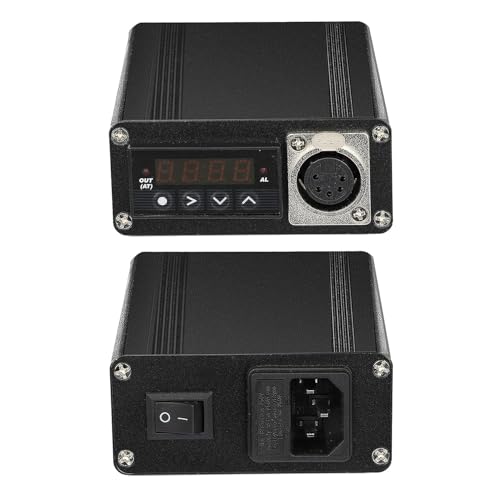
110V PID Digital Temperature Controller Kit with Accessories — Best Overall
If you want the e-nail control core without a research project, start here: a digital PID controller kit built for 110V mains and sold with accessories. It suits builders who will match it with a standard coil and nail and want the controller side settled in one purchase.
Strengths
- Specified for 110V, matching North American household current directly
- Digital PID control holds a set temperature instead of cycling around it
- Kit format with accessories reduces the parts-hunting for a first build
Trade-offs
- Coil and nail are matched separately — confirm connector and coil compatibility before ordering
- Accessory contents vary by listing; read the kit contents line carefully
- Enthusiasts wanting wide-voltage travel use should look at the dual-voltage kits below
| Power | 110V |
| Type | Digital PID temperature controller kit |
| Includes | Accessories (confirm contents on listing) |
| Use | E-nail / heating control builds |
A PID controller earns its name from how it drives power: rather than switching the heater fully on and off around the setpoint — which overshoots and sags — it proportions output as temperature approaches the target and settles into a hold that typically stays within a few degrees. On an e-nail that steadiness is the entire product: the nail sits at your chosen temperature for the whole session, the first draw and the last draw meet the same surface, and the ritual of torch, wait, guess and hope disappears. As a kit purchase, the discipline is in the details the listing does state and the ones you must confirm: the controller is the brain, but the system works only when the thermocouple type, the output device and the coil you pair it with agree. Buy this as the centre of a build, budget the coil and nail as deliberate second decisions, and you get the repeatable, flame-free setup that makes people abandon torches permanently.
For a first build, the wisest companion purchase is patience: assemble the controller, run it empty through a full heat cycle, and learn its display and buttons before the first real session. Controllers reward that hour with years of invisibility — the setpoint simply holds, the coil simply glows its steady duty, and the ritual around your session becomes about anything except temperature. That disappearance is what you are buying, and this kit delivers it at the straightforward end of the market.
Best for: First-time e-nail builders who want a 110V controller core in one kit / Not suited for: Buyers expecting a complete plug-and-play dab station in a single box
Check the current price on Amazon

FOGGING FUN 110V PID Temperature Controller Kit — Best Named-Brand Kit
The FOGGING FUN kit covers the same brief as the overall pick — a 110V PID controller with accessories — under a named brand, which matters to buyers who want a seller’s storefront, documentation and support trail behind a mains-powered device.
Strengths
- Named brand with a storefront behind a mains-voltage product
- 110V specification matches household current without conversion
- Kit-with-accessories format suits a first build
Trade-offs
- Same category caveat: coil and nail are separate decisions
- Confirm the exact accessory list on the listing before ordering
- Branding does not change the need to match thermocouple and coil correctly
| Power | 110V |
| Type | PID temperature controller kit |
| Includes | Accessories (confirm contents on listing) |
| Brand | FOGGING FUN |
With mains-powered electronics, a brand is not vanity — it is accountability. A named seller has manuals to publish, questions to answer on the listing, and a reputation attached to whether the controller holds temperature and survives its first year. Functionally this kit plays the same role as the overall pick: the PID brain of an e-nail, reading its sensor and driving a coil to a held setpoint on 110V household power. The buying work is identical too — verify what the accessories actually are, confirm the sensor type, and plan the coil and nail as matched components rather than afterthoughts. Where two kits tie on paper, the tie-breakers are documentation quality and the clarity of the listing itself: a seller who states contents precisely is telling you how they will behave if something is wrong. On those grounds this branded kit earns its place as the alternative anchor for a build.
A branded kit also buys a paper trail worth keeping: save the listing details, the manual and your wiring notes together, because the day you change coils or move the setup to a new rig, those documents turn a head-scratching hour into a ten-minute job. FOGGING FUN’s storefront presence means the questions future-you will have are askable — an unglamorous advantage that separates accountable sellers from anonymous ones in every electronics category, and doubly so at mains voltage.
Best for: Builders who prefer a named brand behind mains-powered electronics / Not suited for: Buyers wanting an all-in-one station with coil and nail included
Check the current price on Amazon

PID Temperature Controller Kit 0-999°C (110V) — Best Wide Temperature Range
Most e-nail work happens in a narrow band of temperatures, but some builders run one controller across several rigs — an e-nail today, a heat-press or kiln project tomorrow. This kit’s stated 0–999°C range and screw-fitting sensor accessory suit that multi-use builder.
Strengths
- Very wide stated control range covers e-nail and far hotter applications
- Screw-fitting temperature accessory suits fixed installations
- 110V specification for standard household current
Trade-offs
- Range far beyond e-nail needs is wasted on a single-purpose build
- Screw sensor format suits some rigs better than coil-wrapped nails — match carefully
- Confirm relay and output details on the listing for your coil
| Range | 0-999°C (manufacturer figure) |
| Power | 110V |
| Accessory | Screw temperature control accessory |
| Type | PID controller kit |
Range is a proxy for ambition. A controller honest about a 0–999°C span is built around a sensor and output chain that treat an e-nail’s working temperatures as the easy middle of their envelope, and the screw-fitting sensor tells you the intended world: fixed, mounted installations where the probe bolts to the heated mass. For a pure e-nail, that format can be a feature or a friction depending on your rig — a screw probe reads the mass it is bolted to faithfully, while coil-based nails usually read through the coil’s own sensor arrangement. The lesson generalises across this whole guide: the controller is only ever as accurate as its sensor placement, and matching sensor format to your hardware matters more than any headline range. Buy this kit if your bench hosts more than one heated project, or if your rig genuinely uses a screw-in probe; single-purpose e-nail builders are better served by the simpler kits above.
The screw-sensor format finds its best home in fixed rigs — a dedicated station where the controller, sensor and heated mass are installed once and left married. Builders who set up that way report the deepest satisfaction with wide-range kits like this: the system becomes furniture, calibrated to one job, and its generous range means the same controller can be re-tasked years later to a hotter project without replacement. Flexibility, bought once, is this kit’s real product.
Best for: Multi-use builders running one controller across several heated rigs / Not suited for: Single-purpose e-nail builds using standard coil sensors
Check the current price on Amazon
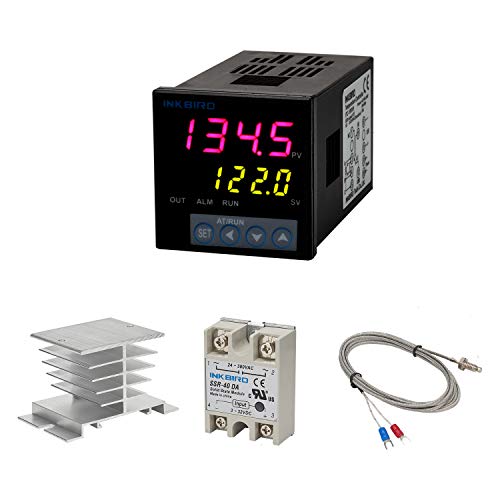
Inkbird PID Temperature Controller Kit (100-240V) — Best Dual Voltage
Inkbird is a name temperature-control hobbyists already trust from brewing and aquarium gear, and this kit is the most completely specified on the list: controller, 40DA solid-state relay, K-type thermocouple and a heat sink, all named in the title, on power that covers 110 volt homes and most of the world.
Strengths
- Full kit contents stated plainly — relay, sensor and heat sink included
- Wide 100–240V input suits 110V homes and travel or relocation
- Inkbird has an established reputation in temperature control
Trade-offs
- Assembly is a real wiring task — this is a kit, not an appliance
- 40DA relay is generously rated; the heat sink must still be fitted properly
- General-purpose kit: e-nail coil matching remains your job
| Power | 100-240V AC |
| Relay | SSR 40DA solid state relay |
| Sensor | K-type thermocouple |
| Cooling | White heat sink included |
Completeness is this kit’s argument, and for a certain buyer it is decisive. The solid-state relay is the component that actually switches mains power to your coil thousands of times a session; a named 40DA unit with a proper heat sink is the difference between a controller that runs cool for years and one that cooks its own relay in a summer. The K-type thermocouple is the industry default — cheap, tough, accurate enough at e-nail temperatures, and replaceable anywhere. Wide-voltage input quietly future-proofs the build: the same controller works on 110 volt household current today and on 220 volt mains if life moves it. The honest cost is assembly. You are wiring mains voltage, and while the task is well documented and the components are standard, it demands care, insulated connections and respect. If that sentence excites rather than worries you, this is the best kit here; if it worries you, buy a pre-assembled controller and do not apologise for it.
Inkbird’s wider reputation in brewing and fermentation control follows this kit into the e-nail world usefully: the same households often run both hobbies, and a controller ecosystem you already understand — the menus, the tuning behaviour, the alarm logic — is worth real money in learning time. If your bench already speaks Inkbird, this kit is not just the complete one; it is the fluent one, and fluency is a safety feature around mains-powered heat.
Best for: Confident builders who want a complete, name-brand component kit / Not suited for: Anyone uncomfortable wiring mains-voltage components
Check the current price on Amazon
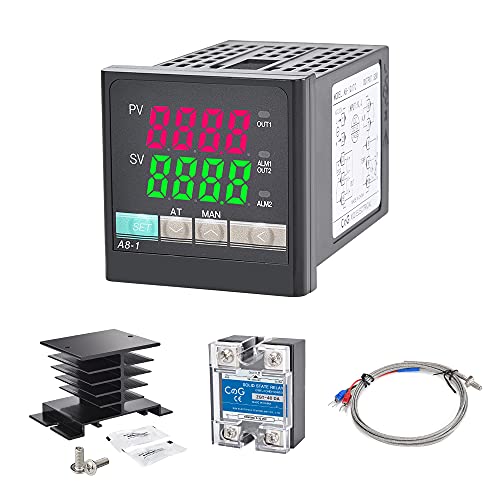
CGELE PID Temperature Controller Kit (AC 100-240V) — Best Alternative Component Kit
CGELE’s kit mirrors the Inkbird formula part for part — controller, 40DA relay, K-type sensor, heat sink, wide-voltage input — giving component-kit buyers a second established listing to compare on price movement, stock and delivery on the day they buy.
Strengths
- Complete stated contents: relay, sensor and heat sink in the box
- Wide 100–240V input covers 110V household current
- Standard K-type sensor is cheap and easy to replace
Trade-offs
- Kit assembly with mains wiring, as with the Inkbird
- General-purpose hardware — coil matching is on the builder
- Two near-identical kits here means choosing on listing details
| Power | AC 100-240V |
| Relay | SSR 40DA solid state relay |
| Sensor | K-type thermocouple sensor |
| Cooling | Black heat sink included |
When two kits share a parts list, the rational buyer compares everything around the parts: the clarity of the wiring documentation, the questions answered on the listing, stock and delivery, and the seller’s history with electrical goods. The underlying hardware proposition is proven — a PID controller driving a solid-state relay, sensing through a K-type thermocouple, holding an e-nail coil at a set temperature with a steadiness no torch technique can match. The heat sink is not a garnish: solid-state relays shed heat proportional to the current they switch, and a sink fitted with proper contact is what lets a 40DA relay loaf through e-nail loads indefinitely. Treat the assembly as the small electrical project it is — power off while wiring, connections insulated and strain-relieved, first power-up supervised with the sensor attached — and either of these component kits becomes the reliable heart of a flame-free setup.
The CGELE kit’s ownership case rests on standardisation: every wearing part in it — the K-type sensor above all — is a commodity component replaceable in days from countless sources, which makes this a controller you can keep alive indefinitely rather than a product with a lifespan. Builders who think in decades rather than product cycles should weigh that heavily; the cheapest controller is the one you never have to replace, and standard parts are how you get there.
Best for: Builders comparing the established complete-kit listings / Not suited for: Plug-and-play buyers or anyone avoiding mains wiring
Check the current price on Amazon

Electric Rig Ceramic Element Controller (Variable Voltage, PID) — Best for Electric Rigs
Most of this list is general-purpose control hardware adapted to e-nails; this entry is the specialist — a PID temperature controller built for an electric rig with a ceramic element, with variable voltage control, aimed at users of that specific rig style.
Strengths
- Purpose-built for electric rig use rather than adapted from general hardware
- Ceramic element pairing matches the rigs this controller serves
- Variable voltage PID control for held, repeatable temperatures
Trade-offs
- Specialist fit: confirm your rig and element match before ordering
- Listing detail is brief — compatibility questions matter more here
- Less flexible for unrelated heating projects than the general kits
| Type | Electric rig temperature controller (PID) |
| Element | Ceramic element |
| Control | Variable voltage temperature control |
| Use | Electric rig / e-nail setups |
Specialisation cuts both ways, and this controller is the clearest example on the list. For the owner of a compatible ceramic-element electric rig, a controller designed for exactly that hardware removes the matching puzzle the general kits impose: the element type is assumed, the control scheme is variable-voltage PID, and the whole unit exists to hold a rig at temperature. For everyone else, that same specialisation is a wall — this is not the controller to buy speculatively for a coil-and-banger setup it was not described for. The buying discipline is therefore simple and strict: verify your rig, your element and the connection against the listing, and ask the seller the compatibility question directly if any doubt remains. Matched correctly, a dedicated controller is the most appliance-like experience in this guide. Matched wrongly, it is a return. That honesty is why it sits last rather than first: it is the best pick for a narrow group, and the wrong pick for everyone else.
One discipline governs this specialist controller: verify compatibility before the order, in writing, with the seller if necessary — rig model, element type, connection. Buyers who do that one piece of homework get the most appliance-like experience in this guide, a controller that simply belongs to its rig. Buyers who skip it get a return label. The product is not hiding anything; it is specialised, and specialisation rewards the precise.
Best for: Owners of compatible ceramic-element electric rigs / Not suited for: Coil-and-nail builders or anyone unsure of their rig’s compatibility
Check the current price on Amazon
Comparison Table
| Pick | Badge | Key spec | Best for |
|---|---|---|---|
| 110V PID Digital Temperature Controller Kit with Accessories | Best Overall | 110V PID controller kit with accessories | First-time e-nail builders who want a 110V controller core in one kit |
| FOGGING FUN 110V PID Temperature Controller Kit | Best Named-Brand Kit | 110V PID kit with accessories, branded | Builders who prefer a named brand behind mains-powered electronics |
| PID Temperature Controller Kit 0-999°C (110V) | Best Wide Temperature Range | 0-999°C range, 110V, screw sensor accessory | Multi-use builders running one controller across several heated rigs |
| Inkbird PID Temperature Controller Kit (100-240V) | Best Dual Voltage | 100-240V, SSR 40DA, K-type thermocouple, heat sink | Confident builders who want a complete, name-brand component kit |
| CGELE PID Temperature Controller Kit (AC 100-240V) | Best Alternative Component Kit | AC 100-240V, SSR 40DA, K-type sensor, heat sink | Builders comparing the established complete-kit listings |
| Electric Rig Ceramic Element Controller (Variable Voltage, PID) | Best for Electric Rigs | Ceramic element e-rig, variable voltage PID controller | Owners of compatible ceramic-element electric rigs |
How to Choose the Best 110 Volt E Nail Controller for Your Setup
Decide first whether you are buying an appliance or a project. Complete controller kits with stated contents — relay, thermocouple, heat sink — are projects: standard, well-documented projects, but mains wiring all the same. If your skills and comfort cover that, the component kits here offer the best value and the most repairable setups. If they do not, the correct purchase is a pre-assembled controller unit, and no saving justifies improvising with household current.
Then match the sensing chain to your hardware. The controller, its thermocouple type and your coil or element must agree: K-type is the default across this list, sensor format — probe, screw or coil-integrated — must suit your nail or rig, and the relay’s rating must comfortably exceed your coil’s draw, with the heat sink fitted. Finally, treat temperature range claims sensibly: e-nail work lives in a modest band, and a controller’s steadiness inside that band matters infinitely more than a four-figure maximum.
- 110V kits for North American homes; 100–240V kits if the setup may travel
- Relay rating must exceed coil draw, and the heat sink must actually be fitted
- Sensor type and format must match your nail, coil or rig element
- Steadiness at working temperature beats headline maximum range
- If mains wiring worries you, buy pre-assembled — that is the right call, not a compromise
E-Nail Temperatures: Finding and Holding Your Setting
A held temperature changes how you think about a session. Instead of a nail cooling through a window, you choose a point in the window and stay there: lower settings favour flavour and smoothness, higher settings favour complete, fast vaporisation of larger amounts, and the same setting gives the same result every time — which lets you actually learn your preference instead of re-guessing it nightly. Change one variable at a time, in small steps, and give a new setting a full session before judging it.
Two safety habits belong with that freedom. A PID controller will hold a hot nail indefinitely, including when you forget it — so build the off-switch into your routine, keep the hot zone clear of anything flammable or clumsy, and never leave a powered e-nail unattended. And let the hardware be boring: a controller that simply holds temperature, in an enclosure that stays cool, on a stable surface, is the entire goal.
PID Control, Explained Without the Engineering Degree
PID stands for proportional, integral, derivative — three ways a controller corrects the gap between the temperature it wants and the temperature it measures. A simple thermostat bangs fully on and fully off, so temperature saws above and below the target. A PID controller eases power as the target approaches, learns how the system drifts, and anticipates — which is why a PID-held nail feels still while a thermostat-controlled one hunts. Most kits arrive with sensible default tuning for typical loads, and auto-tune routines can adapt the controller to your specific coil and nail mass.
The practical takeaway is that steadiness is a system property: controller tuning, sensor placement and the thermal mass of the nail all contribute. A massive nail changes temperature slowly and holds a session beautifully; a light one responds fast and forgives setting changes. Neither is wrong — but sensor placement that reads the mass you actually dab on is what makes the displayed number mean something.
Torches vs E-Nails: An Honest Comparison
The torch is not obsolete. It is cheap, portable, works anywhere, and in skilled hands with an infrared thermometer it can be precise. Its costs are the ritual itself — butane refills, a flame on the table, a nail that begins cooling the second the flame leaves, and a temperature you estimate rather than know. For occasional use, those costs may be entirely acceptable.
The e-nail’s case is repetition and environment: daily users, indoor users, and anyone who values an identical session each time get the most from it, and households that would rather not store butane or wave a torch indoors get a safety argument as well as a convenience one. Neither choice is a moral position. Buy for your frequency: occasional and portable points to the torch; daily and stationary points, decisively, to the controller kits in this guide.
Coils, Nails and the Parts Around the Controller
The controller is the brain, but the session happens at the nail, and the parts around the controller deserve the same deliberate buying. Coils come in sizes matched to nails and bangers — the coil must fit its nail snugly, because a loose coil heats unevenly, reads its temperature from the wrong place, and makes the controller’s precision meaningless. Flat and barrel coils suit different nail styles; the correct purchase is the one specified for your exact hardware, confirmed before ordering, never approximated.
Nail materials are the other deliberate choice: quartz is the flavour favourite and the most fragile, titanium is the durable workhorse that holds heat longest, and hybrid designs try to split the difference. None of this changes the controller advice in this guide — it completes it. A careful builder buys the controller for steadiness, the coil for fit, and the nail for preference, in that order, and ends with a system whose weakest part was chosen, not stumbled into.
Keeping a Setup Consistent Over Years
The long game with an e-nail is consistency of the whole chain, not the controller alone. Coils age and their fit loosens; thermocouples drift after years of thermal cycling; a nail’s mass changes character as it seasons. The owners who keep a setup honest treat it like an instrument: a periodic check that the displayed temperature still behaves sensibly against a known reference, a coil refitted or replaced when its embrace slackens, and notes — actual written notes — of the settings that worked, because memory is the least reliable component in any rig.
That record-keeping is the enthusiast’s real edge. A controller holds a number perfectly; only your notes hold what the number meant — which material, which nail, which result. Keep them together with the manual and the wiring notes from build day, and the setup becomes a system you understand rather than a device you operate.
Budgeting a Complete Setup Honestly
Because this category sells in parts, a honest budget paragraph prevents the commonest disappointment. The controller kit is the first line, not the total: add the coil matched to your nail, the nail or banger itself if you do not own one, and the small hardware of the build — enclosure, cable, fittings. Buyers who price the system, rather than the first box, choose better at every step, because the temptation to economise on the coil — the part that touches the nail and carries the heat — disappears when its cost was expected from the start.
The running costs, by contrast, are close to zero: electricity measured in pennies per session, a thermocouple every few years, a coil when its fit finally loosens. Compare that with the torch’s ledger — butane in perpetuity, a nail heat-cycled toward replacement, the occasional scorched surface — and the e-nail’s economics explain its converts. The expensive day is the first one; every day after is cheaper than the flame it replaced.
Resist, finally, the upgrade treadmill the hobby will offer you. A steadier controller, a finer nail, a more beautiful rig — each exists, and each matters less than the session discipline this guide has repeated: matched parts, learned controls, an off-switch habit. The setup you understand completely will outperform, in your actual life, the superior setup you are still figuring out.
The Ritual Is the Point
It is easy, in a guide full of controllers and relays, to lose sight of what the hardware serves: a ritual that people value precisely because it is unhurried and repeatable. The torch made that ritual partly about fire management; the e-nail returns it to the session itself. Temperature held, setup familiar, nothing to babysit — the technology’s success is measured by how completely it disappears, and every pick in this guide was chosen for its ability to disappear in its own way: the simple kits by having nothing to learn twice, the complete kits by being repairable forever, the specialist controller by belonging to its rig.
Buy accordingly and the purchase closes behind you. There will always be a newer controller and a finer nail; there does not need to be a better ritual than the one that already works, at the temperature you already chose, in the setup you already understand. Consistency, in this category, is not the absence of ambition — it is the achievement the whole apparatus exists to deliver.
How to Set Up a 110 Volt E Nail Controller Safely
An e-nail setup is a small electrical installation that then sits hot on your table, so it earns a careful first hour. These steps assume a kit build; pre-assembled units skip the wiring steps but keep every safety and testing step.
- Lay out every component before touching a wire — controller, relay, heat sink, thermocouple, coil — and confirm each matches the kit’s stated contents and your nail or rig.
- Wire with the power disconnected, following the kit documentation exactly: mains input to the controller, output through the solid-state relay to the coil, thermocouple to its dedicated terminals with polarity respected.
- Mount the relay on its heat sink with proper contact, and house the assembly in a suitable enclosure with ventilation, strain-relieved cables and no exposed mains connections.
- Fit the coil or element to the nail or rig snugly — a loose coil heats unevenly and reads wrong — and position the sensor so it reads the mass you will actually use.
- First power-up is supervised and empty: set a modest temperature, watch the controller climb and settle, and confirm it holds without wild overshoot before any real session.
- Confirm the displayed temperature behaves sensibly as you raise and lower the setpoint in small steps, and learn the controller’s buttons before you need them mid-session.
- Place the rig on a stable, heat-safe surface with the hot zone clear, cable routed where it cannot be snagged, and the power switch within easy reach.
- Adopt the shutdown ritual from day one: controller off at the end of every session, every time, no exceptions for later.
Careful wiring, a supervised first heat, a stable surface and an absolute off-switch habit — that is the whole safety architecture of an e-nail. Build it once, properly, and the system becomes the most boring, repeatable part of your setup, which is exactly what temperature control is for.
Common Buying Mistakes
Expecting a controller kit to be a complete station. Kits are the control core. Coil, nail or rig elements are matched components — budget and plan for them as deliberate purchases, not surprises.
Mismatching the sensor. A controller reading the wrong thermocouple type displays confident nonsense. Confirm sensor type and format before ordering, not after wiring.
Undersizing or overheating the relay. The relay switches your coil’s full current continuously. Respect its rating and fit the heat sink; a cooked relay fails hot and silent.
Chasing maximum temperature range. E-nail work lives in a modest band. Steadiness inside that band is the feature; a huge headline range is marketing.
Leaving a held temperature unattended. A PID controller’s virtue — holding heat indefinitely — is a hazard without an off-switch habit. Off, every session, every time.
Improvising mains wiring. If the wiring steps worry you, that feeling is information. Buy a pre-assembled controller instead of learning mains safety by experiment.
Final Recommendation
For most builders, the straightforward 110V PID kit leads this list because it settles the controller question in one purchase on household current, with the FOGGING FUN kit as the branded alternative. Confident builders who want every component named and standard should choose between the Inkbird and CGELE complete kits — relay, K-type sensor and heat sink in the box, on flexible wide-voltage power. The wide-range kit suits multi-project benches, and the ceramic-element rig controller is the specialist pick for owners of that specific hardware.
Whichever route you take, respect the two disciplines of this category: match the sensing chain to your hardware, and treat mains wiring and held heat with the seriousness they deserve. Do that, and an e-nail delivers what a torch never can — the same temperature, held indefinitely, session after session.
Start with 110V PID Digital Temperature Controller Kit with Accessories, or FOGGING FUN 110V PID Temperature Controller Kit if your needs are narrower, and keep PID Temperature Controller Kit 0-999°C (110V) on the shortlist as the alternative.
Related guides in this series: Best 110 Volt Electric Heater, Best 110 Volt Dust Collector, Best 110 Volt Dryer, Best 110 Volt Winches, Best 110 Volt Air Compressor, Best 110 Volt Spa.
Frequently Asked Questions
What exactly is an e-nail?
An e-nail replaces the torch in a dab setup with electricity: a PID temperature controller drives a heating coil fitted to a nail or banger and holds it at a set temperature indefinitely. Instead of heating past a target and cooling through it, the nail simply stays where you set it, session after session, with no open flame and no butane.
Is a PID controller kit a complete e-nail?
No — it is the control core. A complete setup also needs the coil or element matched to the controller and sensor, and the nail, banger or rig it heats. Listings that state their contents — controller, solid-state relay, thermocouple, heat sink — are telling you exactly which parts of that system you are buying. Budget and plan the remaining components as deliberate purchases.
What temperature should I set?
Preferences in this category are personal and concentrate-dependent, and the honest answer is to start low, increase in small steps across sessions, and keep notes — the controller’s repeatability is what makes that learning possible. Lower settings are generally associated with flavour, higher settings with faster, more complete vaporisation of larger amounts. Your manual and your own experience, in that order, are the guides.
Can I leave an e-nail on between sessions?
You should not. A PID controller’s virtue — holding temperature indefinitely — means a forgotten e-nail is a hot object on your table indefinitely. Build the off-switch into the end of every session, keep the hot zone clear of anything flammable, and never leave a powered unit unattended. The ritual takes two seconds and is the category’s most important habit.
What does PID actually do better than a simple controller?
A simple thermostat switches fully on and off, so temperature saws above and below the setpoint. A PID controller proportions power as it approaches the target and corrects for drift, so the nail settles and holds within a few degrees. On an e-nail that steadiness is the product: the same surface temperature for the first draw and the last.
Is building a kit safe for a beginner?
The components are standard and the builds are well documented, but they involve wiring mains voltage, and that deserves respect rather than bravado. If you are comfortable with careful electrical work — power off while wiring, insulated connections, heat sink fitted, supervised first power-up — a kit is a sound project. If any of that worries you, buy a pre-assembled controller; that is the correct decision, not a lesser one.


