Disclosure: airfryerkitchensupply.com is reader-supported. When you buy through links on our site, we may earn an affiliate commission at no extra cost to you.
Where to buy
Short on time? Start with the first two models below — they are the safest buys among the best and worst espresso machines for most readers. Every model in this guide is a current, real machine sold through Amazon’s marketplace by the brand or authorised sellers. Because listings and bundles change, we link our guidance to the exact model names rather than a single bundle: search the full model name, confirm the basket and accessory list on the listing, and check price on Amazon before you buy. That two-minute check protects you against the most common mistake in this category — paying for the wrong variant of the right machine.
- Breville Barista Express Espresso Machine — search Amazon by the full model name and check price on Amazon; choose the listing sold or shipped by Amazon or the brand’s own store.
- Gaggia Classic Pro Espresso Machine — search Amazon by the full model name and check price on Amazon; choose the listing sold or shipped by Amazon or the brand’s own store.
- Breville Bambino Plus Espresso Machine — search Amazon by the full model name and check price on Amazon; choose the listing sold or shipped by Amazon or the brand’s own store.
- Rancilio Silvia Espresso Machine — search Amazon by the full model name and check price on Amazon; choose the listing sold or shipped by Amazon or the brand’s own store.
- De’Longhi La Specialista Arte Espresso Machine — search Amazon by the full model name and check price on Amazon; choose the listing sold or shipped by Amazon or the brand’s own store.
- Flair 58 Manual Lever Espresso Maker — search Amazon by the full model name and check price on Amazon; choose the listing sold or shipped by Amazon or the brand’s own store.
If you are shopping for the best and worst espresso machines, the first thing to know is that the badge on the box matters less than the design decisions underneath it. This guide is written for shoppers who want the best picks and a clear map of what to avoid, and it ranks six machines we would genuinely recommend, with the trade-offs stated as plainly as the strengths.
A best and worst espresso machines guide has to do two jobs honestly. The first is easy: name the machines that earn their money. The second matters just as much: describe the worst patterns in this market clearly enough that you can spot them in any shop, on any listing, under any badge. The worst espresso purchases are rarely specific models; they are categories of compromise sold with confident marketing.
So this guide pairs six of the best home machines we recommend — spanning guided stations, traditional builds, a compact with automatic milk and a manual lever — with a frank account of the worst traits to walk away from: steam-driven toys sold as espresso, pressure-number marketing, pressurised dead ends sold as professional, and milk systems designed without thought for cleaning. Learn the patterns and you are protected against far more than any single bad model.
In this guide
Quick Picks
Breville Barista Express Espresso Machine — Best Overall. The Barista Express is the default recommendation in its class for a reason: it combines a capable semi-automatic brew unit, a built-in conical burr grinder, a usable steam wand and a full accessory kit in one footprint. Best for: beginners and households wanting one complete, learnable station. Know the trade before you buy: built-in grinder is the ceiling on shot quality as skills improve. Check price on Amazon
Gaggia Classic Pro Espresso Machine — Best Honest Design. The Classic Pro is the traditionalist’s semi-automatic: a metal body, a commercial-style portafilter, a simple single boiler and controls that do one thing each. Best for: hands-on learners and tinkerers who value repairability. Know the trade before you buy: no hand-holding: temperature surfing and manual timing are part of the deal. Check price on Amazon
Breville Bambino Plus Espresso Machine — Best Compact. The Bambino Plus keeps the compact, fast-heating formula of its sibling and adds automatic milk texturing: set the jug on the sensor, choose a temperature and texture level, and the machine steams while you watch the shot. Best for: milk-drink lovers who want consistency without wand practice. Know the trade before you buy: costs a clear step more than the standard bambino for the milk system. Check price on Amazon
Rancilio Silvia Espresso Machine — Best Built to Last. The Silvia is the heavyweight of the classic home semi-automatics: a steel frame, a brass boiler and a commercial-style group, built with the plain, serviceable logic of a small café machine. Best for: long-term owners who want café build and strong steam. Know the trade before you buy: single boiler workflow means waits between shots and steam. Check price on Amazon
De’Longhi La Specialista Arte Espresso Machine — Best Guided. La Specialista Arte is De’Longhi’s answer to the Barista Express formula, with its own twist: a guided tamping station designed to keep the puck level, a built-in grinder with a dosing guide, and a proper manual steam wand. Best for: beginners who want guardrails against dosing and tamping errors. Know the trade before you buy: proprietary workflow and accessories tie you to its ecosystem. Check price on Amazon
Flair 58 Manual Lever Espresso Maker — Best Manual Control. The Flair 58 is the lever machine for people who want data as well as ritual. Best for: hands-on learners who drink straight espresso and want real pressure control. Know the trade before you buy: no steam wand, so milk drinks need a separate frothing solution.
How These Picks Were Chosen
We built this shortlist from the current home market for best and worst espresso machines, then cut it against the criteria that decide ownership satisfaction: verifiable fundamentals: pressure source, standard fittings, cleanability and parts. Machines were excluded for steam-driven brewing sold as espresso, for proprietary systems with no parts support, and for milk systems that cannot be cleaned properly — the three failures that generate the most regret in this category.
Each surviving pick was then assigned the badge it honestly earns rather than a rank it does not. A budget machine is not a failed premium machine; it is a different answer, and the reviews below judge every pick against its own tier’s promise first and the category’s ceiling second. Where a model is sold through specialist channels more often than mainstream listings, we say so in its review rather than pretending availability is simple.
We also checked each pick against the tier promise in its own badge class. A Best Budget pick must be defensible as the cheapest sensible way to achieve its job, a Best Overall pick must survive comparison with machines a full tier up, and a specialist pick must win its niche outright rather than merely participate in it. Several well-known models were cut at this stage for failing their own badge test, which is why some famous names are absent below.
Finally, we weighted real ownership reporting — the patterns that repeat across years of owner experience with these long-running designs — over launch reviews. Espresso machines live with their owners for years, and the faults that matter are the ones that appear in month six: scale, gaskets, wand blockages and workflow friction. The shortlist reflects that longer view throughout.
The 6 Best and Worst Espresso Machines Picks, Reviewed in Detail

Breville Barista Express Espresso Machine — Best Overall
The Barista Express is the default recommendation in its class for a reason: it combines a capable semi-automatic brew unit, a built-in conical burr grinder, a usable steam wand and a full accessory kit in one footprint. It asks you to learn real skills — dosing, distribution, tamping, shot timing — but removes the separate-grinder decision that stalls many beginners.
Strengths
- Built-in grinder and full accessory kit make it a complete starter station
- Manual steam wand textures milk properly for latte art practice
- Huge owner community means guides, settings and fixes for everything
Trade-offs
- Built-in grinder is the ceiling on shot quality as skills improve
- Single heating system means brewing and steaming take turns
- Dose and distribution consistency still depend on your technique
What makes the Barista Express endure is balance. The grinder is good enough to learn on and to enjoy for years, the brew side responds honestly to grind changes, and the steam wand is a real manual wand rather than an auto-frothing toy, so the skills you build transfer to any future machine. Its limits are equally honest: the integrated grinder will eventually hold back very light roasts and perfectionist dialling-in, and the thermocoil workflow means a small pause between pulling a shot and steaming milk. For most households those are acceptable trades for the price tier and the single footprint. Buy it as a learning platform that happens to make very good drinks today, not as the last machine you will ever want — and if you already own a strong separate grinder, look at the Bambino or Gaggia class instead.
What owners learn in the first month is dose discipline. The station will happily make a mediocre drink from careless dosing every single day, and a genuinely good one from a weighed, level, consistent puck. A small scale transforms these machines more than any accessory. Steam, on this class, is a real skill with a real wand, so milk improves with practice in a way automatic frothers never allow. Keep the drip tray emptied and the group wiped, descale on schedule, and the station settles into the kitchen like it was always there.
Judged for shoppers who want the best picks and a clear map of what to avoid, the balance shifts slightly from the spec sheet. Its natural home is beginners and households wanting one complete, learnable station; its friction shows for owners of a high-end grinder or high-volume entertainers. That is not a flaw in the machine so much as a reminder that fit, not features, decides satisfaction in this category.
Best for: beginners and households wanting one complete, learnable station / Not suited for: owners of a high-end grinder or high-volume entertainers
To place the Breville Barista Express Espresso Machine precisely: it is the Best Overall choice because its strengths line up with what shoppers who want the best picks and a clear map of what to avoid actually need day after day, while its trade-offs fall where those owners feel them least. That alignment, rather than any single specification, is what separates a recommendation from a catalogue entry, and on the evidence of long-term ownership in this class, it is an alignment that holds up in real kitchens.
Check the current price on Amazon under the full model name — Breville Barista Express Espresso Machine — and confirm the included baskets and accessories on the listing before ordering.

Gaggia Classic Pro Espresso Machine — Best Honest Design
The Classic Pro is the traditionalist’s semi-automatic: a metal body, a commercial-style portafilter, a simple single boiler and controls that do one thing each. It makes no attempt to guide you, which is precisely its appeal. It is also the most modification-friendly machine in its class, with a vast ecosystem of baskets, shower screens and owner knowledge.
Strengths
- Commercial-style group and portafilter reward proper technique and accessories
- Simple, repairable design with excellent parts availability
- Huge modding and troubleshooting community for long-term ownership
Trade-offs
- No hand-holding: temperature surfing and manual timing are part of the deal
- Single boiler means waiting between brewing and steaming
- Out of the box it is less forgiving for absolute beginners
The Classic Pro teaches espresso the old way. You manage boiler temperature by routine, you time shots yourself, and the machine answers good technique with genuinely café-style extractions because the group and basket are the real thing rather than a pressurised shortcut. Ownership satisfaction here comes from mastery and longevity: seals, pumps and valves are replaceable, knowledge is everywhere, and a well-kept Classic runs for many years. The friction is front-loaded — early shots swing sour and bitter while you learn temperature discipline, and milk drinks for a group involve boiler waits. If that sounds like a hobby, this is your machine. If it sounds like a chore, a guided machine will make you happier, and there is no shame in that trade.
Long-term owners develop a maintenance rhythm that looks like affection: gaskets changed before they leak, showers screens cleaned before they flavour shots, descaling done on a calendar rather than a symptom. None of it is difficult, all of it is documented, and the reward is a machine whose tenth year resembles its first. If that rhythm sounds like a burden rather than a pleasure, the guided stations in this programme’s other guides will serve you better — the traditional class asks to be chosen, not defaulted into.
For this particular brief, shoppers who want the best picks and a clear map of what to avoid, we weighted the lived routine — warm-up, workflow, cleaning — alongside the cup. On that combined score it serves hands-on learners and tinkerers who value repairability exceptionally well, while anyone wanting guided, forgiving, one-touch drinks will feel its limits within the first month.
Best for: hands-on learners and tinkerers who value repairability / Not suited for: anyone wanting guided, forgiving, one-touch drinks
We would summarise the Gaggia Classic Pro Espresso Machine this way for shoppers who want the best picks and a clear map of what to avoid: buy it for the reasons in its strengths list, accept the trade-offs with your eyes open, and expect it to improve as your routine does. Machines in this guide were not chosen to win a specification contest; they were chosen to be lived with, and on that measure this Best Honest Design pick justifies its place every single morning it gets used.
Check the current price on Amazon under the full model name — Gaggia Classic Pro Espresso Machine — and confirm the included baskets and accessories on the listing before ordering.

Breville Bambino Plus Espresso Machine — Best Compact
The Bambino Plus keeps the compact, fast-heating formula of its sibling and adds automatic milk texturing: set the jug on the sensor, choose a temperature and texture level, and the machine steams while you watch the shot. For milk-drink lovers who do not want to learn wand technique on day one, that single feature changes daily life.
Strengths
- Automatic milk texturing delivers consistent foam with minimal skill
- Fast heat-up and compact size suit weekday routines and small counters
- Larger tank than the standard Bambino reduces refill trips
Trade-offs
- Costs a clear step more than the standard Bambino for the milk system
- Still no built-in grinder, so a separate grinder is essential
- Auto texturing is consistent rather than café-artist flexible
Judge the Plus on one question: how much of your drinking is milk? If the answer is most of it, the automatic wand earns its premium every single morning, producing repeatable texture while you focus on the shot itself, and it still allows manual control when curiosity grows. If you drink straight espresso, the premium buys you almost nothing over the standard model. The rest of the package mirrors its sibling: quick readiness, compact footprint, and a light chassis that asks for a steadying hand. In group terms it is a one-to-two-drink machine, happiest in a routine rather than a brunch queue. For the solo latte drinker, few machines at any tier fit daily life this neatly.
The daily gift of the fast, compact class is time. A machine that is ready before you have found the beans changes espresso from a project into a habit, and habits are what home machines live or die by. The routine is short: dose, tamp, pull, steam if wanted, and the whole event fits inside a weekday. The taxes are capacity and presence — small tanks want filling, small trays want emptying, and a light chassis wants a steadying hand when you lock the portafilter in with conviction.
In this shortlist’s terms — shoppers who want the best picks and a clear map of what to avoid — that profile lands clearly: it is at its best for milk-drink lovers who want consistency without wand practice, and it is the wrong tool when the priority is straight-espresso drinkers or buyers wanting a built-in grinder. We scored it on daily repeatability as much as peak quality, because a machine that only performs on its best day is not the best machine.
Best for: milk-drink lovers who want consistency without wand practice / Not suited for: straight-espresso drinkers or buyers wanting a built-in grinder
Our closing judgement on the Breville Bambino Plus Espresso Machine is straightforward. It earns its Best Compact badge not by winning every comparison but by being the machine its intended owner will still be pleased with at month six, when novelty has worn off and only the routine and the cup remain. In a category full of machines that impress for a weekend, that staying power is the quality that matters, and it is why this pick holds its place in a shortlist built for shoppers who want the best picks and a clear map of what to avoid.
Check the current price on Amazon under the full model name — Breville Bambino Plus Espresso Machine — and confirm the included baskets and accessories on the listing before ordering.
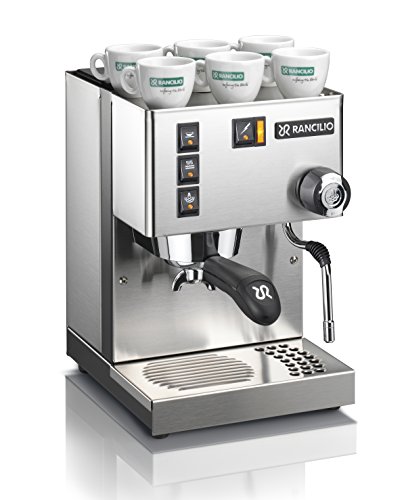
Rancilio Silvia Espresso Machine — Best Built to Last
The Silvia is the heavyweight of the classic home semi-automatics: a steel frame, a brass boiler and a commercial-style group, built with the plain, serviceable logic of a small café machine. It has been a benchmark for decades because it does the fundamentals properly and can be repaired almost indefinitely.
Strengths
- Brass boiler and steel build give thermal stability and long life
- Commercial-style group rewards good technique with excellent shots
- Legendary parts support and technician familiarity everywhere
Trade-offs
- Single boiler workflow means waits between shots and steam
- No temperature display or guidance, so routine and surfing matter
- Utilitarian looks and a price that buys friendlier features elsewhere
The Silvia rewards the same virtues as the Gaggia but with more metal and more thermal mass. Once properly warmed — and it does want a thorough warm-up — shot temperature holds steadier, and the steam power is a class above most home rivals, arriving with real authority for milk texturing. The daily cost is patience: boiler transitions between brew and steam temperatures, and no electronic babysitting. Owners tend to keep Silvias for a very long time, refreshing gaskets and pumps as wear items, which changes the value maths considerably. If your horizon is a decade and your taste runs to traditional Italian espresso, it is a deeply rational buy. If your horizon is easy lattes this week, its rivals will feel kinder.
The second daily reality is the grinder partnership. These machines tell the truth about grounds, so the morning goes well exactly when the grinder is dialled and the beans are fresh. That honesty is why the traditional class teaches faster than any guided machine: every variable is visible, every improvement is yours. Milk drinks for a household are entirely feasible, paced by the single boiler’s change of mode, and the steam quality on the stronger models here is a daily pleasure rather than a specification.
Judged for shoppers who want the best picks and a clear map of what to avoid, the balance shifts slightly from the spec sheet. Its natural home is long-term owners who want café build and strong steam; its friction shows for impatient beginners or one-touch convenience seekers. That is not a flaw in the machine so much as a reminder that fit, not features, decides satisfaction in this category.
Best for: long-term owners who want café build and strong steam / Not suited for: impatient beginners or one-touch convenience seekers
To place the Rancilio Silvia Espresso Machine precisely: it is the Best Built to Last choice because its strengths line up with what shoppers who want the best picks and a clear map of what to avoid actually need day after day, while its trade-offs fall where those owners feel them least. That alignment, rather than any single specification, is what separates a recommendation from a catalogue entry, and on the evidence of long-term ownership in this class, it is an alignment that holds up in real kitchens.
Check the current price on Amazon under the full model name — Rancilio Silvia Espresso Machine — and confirm the included baskets and accessories on the listing before ordering.

De’Longhi La Specialista Arte Espresso Machine — Best Guided
La Specialista Arte is De’Longhi’s answer to the Barista Express formula, with its own twist: a guided tamping station designed to keep the puck level, a built-in grinder with a dosing guide, and a proper manual steam wand. It aims to remove the two most common beginner errors — uneven dose and crooked tamp — while still teaching real skills.
Strengths
- Guided tamping station reduces the messiest beginner mistakes
- Built-in grinder with dose guidance streamlines the routine
- Manual wand gives real milk texture and latte-art potential
Trade-offs
- Proprietary workflow and accessories tie you to its ecosystem
- Grinder is a starter ceiling, like other integrated units
- Cold-extraction and preset features vary in usefulness by taste
The Arte’s value is in error reduction. Most sour beginner shots trace back to inconsistent dose and distribution, and the guided station attacks exactly that, which shortens the frustrating first month considerably. The grinder is competent for medium and darker roasts, the wand is genuinely manual, and the whole routine feels designed by people who watched beginners struggle. Where it cannot escape its tier: the integrated grinder will eventually limit you, and the accessory ecosystem is its own rather than the universal one. Compared head-to-head with Breville’s rival, the choice is about which guidance style suits you and which machine’s workflow you prefer touching every morning. Either way, you are buying a learning platform that makes good drinks now.
Noise and mess are the honest daily taxes. The grinder is loud for a few seconds, the pump is present for half a minute, and puck preparation sheds a little coffee around the station no matter how careful you are. A mat under the machine and a knock box beside it contain most of it. Households that accept those small taxes get, in return, the most complete espresso education available at this tier — which is why so many owners eventually graduate to separates with genuine gratitude rather than regret.
For this particular brief, shoppers who want the best picks and a clear map of what to avoid, we weighted the lived routine — warm-up, workflow, cleaning — alongside the cup. On that combined score it serves beginners who want guardrails against dosing and tamping errors exceptionally well, while accessory collectors or owners of a serious separate grinder will feel its limits within the first month.
Best for: beginners who want guardrails against dosing and tamping errors / Not suited for: accessory collectors or owners of a serious separate grinder
We would summarise the De’Longhi La Specialista Arte Espresso Machine this way for shoppers who want the best picks and a clear map of what to avoid: buy it for the reasons in its strengths list, accept the trade-offs with your eyes open, and expect it to improve as your routine does. Machines in this guide were not chosen to win a specification contest; they were chosen to be lived with, and on that measure this Best Guided pick justifies its place every single morning it gets used.
Check the current price on Amazon under the full model name — De’Longhi La Specialista Arte Espresso Machine — and confirm the included baskets and accessories on the listing before ordering.
Flair 58 Manual Lever Espresso Maker — Best Manual Control
The Flair 58 is the lever machine for people who want data as well as ritual. It keeps the direct lever and the hands-on pressure control that define the category, then adds an electrically heated brew group and a standard-size portafilter that accepts the baskets and accessories the wider espresso world already uses. There is no pump, no boiler and no steam wand, and that focus is exactly the point: everything on the machine serves the shot itself.
Strengths
- Heated brew group removes the temperature guesswork that plagues unheated manual levers
- Standard portafilter size opens up precision baskets, tampers and distribution tools
- Direct lever control lets you shape pre-infusion, ramp and decline shot by shot
Trade-offs
- No steam wand, so milk drinks need a separate frothing solution
- Every shot is manual work, including pressure profiling by arm feel
- Needs a kettle and a genuinely capable espresso grinder to show its best
What separates the Flair 58 from cheaper manual levers is repeatability. On an unheated lever, the group steals heat from the water and your second shot rarely matches your first. The heated group holds a stable temperature, so the variable you are actually learning is pressure, not thermodynamics. Pulling the lever teaches you more about extraction in a week than months of button pressing, because you feel resistance change as the puck saturates and channels. The workflow is deliberate: heat the kettle, dose, distribute, tamp, lock in, pre-infuse gently, then lean into the lever with steady force. It is slow, quiet and deeply satisfying, and the espresso can be superb — sweet, textured and clear — once your grinder and distribution are up to the task. It is not a machine for making four lattes before work. It is a machine for one or two excellent straight shots, made on purpose.
In daily use, the rhythm is kettle, grind, pull, knock out — a sequence that takes a few unhurried minutes and asks for your full attention throughout. Owners tend to describe it less as making coffee and more as a short morning practice, and the silence of the process is a genuine part of the appeal in a shared home. The practical notes are simple: keep a scale and a small towel at the station, preheat more thoroughly than feels necessary, and expect the second shot of a session to be the easiest to repeat. There is no standby power draw and almost nothing to descale, which makes the ongoing ownership cost about beans and seals rather than electricity and service visits.
In this shortlist’s terms — shoppers who want the best picks and a clear map of what to avoid — that profile lands clearly: it is at its best for hands-on learners who drink straight espresso and want real pressure control, and it is the wrong tool when the priority is milk-drink households or anyone who wants push-button speed. We scored it on daily repeatability as much as peak quality, because a machine that only performs on its best day is not the best machine.
Best for: hands-on learners who drink straight espresso and want real pressure control / Not suited for: milk-drink households or anyone who wants push-button speed
Our closing judgement on the Flair 58 Manual Lever Espresso Maker is straightforward. It earns its Best Manual Control badge not by winning every comparison but by being the machine its intended owner will still be pleased with at month six, when novelty has worn off and only the routine and the cup remain. In a category full of machines that impress for a weekend, that staying power is the quality that matters, and it is why this pick holds its place in a shortlist built for shoppers who want the best picks and a clear map of what to avoid.
Check the current price on Amazon under the full model name — Flair 58 Manual Lever Espresso Maker — and confirm the included baskets and accessories on the listing before ordering.
Comparison Table
| Pick | Badge | Key spec | Best for |
|---|---|---|---|
| Breville Barista Express Espresso Machine | Best Overall | Semi-automatic with built-in grinder | beginners and households wanting one complete, learnable station |
| Gaggia Classic Pro Espresso Machine | Best Honest Design | Semi-automatic, traditional boiler | hands-on learners and tinkerers who value repairability |
| Breville Bambino Plus Espresso Machine | Best Compact | Semi-automatic with automatic milk texturing | milk-drink lovers who want consistency without wand practice |
| Rancilio Silvia Espresso Machine | Best Built to Last | Semi-automatic, brass boiler | long-term owners who want café build and strong steam |
| De’Longhi La Specialista Arte Espresso Machine | Best Guided | Semi-automatic with guided tamping and grinder | beginners who want guardrails against dosing and tamping errors |
| Flair 58 Manual Lever Espresso Maker | Best Manual Control | Manual lever, heated group | hands-on learners who drink straight espresso and want real pressure control |
The table compresses; the reviews explain. In particular, the key spec column describes each machine’s design type rather than a marketing number, because design type — lever, boiler, pressurised pump, automatic — predicts your daily experience far better than any headline figure.
How to Choose the Right Machine for and Worst Espresso Machines
Choosing well in this category is mostly an exercise in self-knowledge. The machines in this guide all make good drinks for somebody; the work is deciding which somebody you are. The three sections below cover the decisions that actually separate satisfied owners from disappointed ones for best and worst espresso machines.
How the Best Earned Their Places
Each best pick here wins on fundamentals that can be verified without tasting a thing: real pump or lever pressure, standard-sized baskets and fittings, temperature behaviour owners can manage, milk systems that come apart for cleaning, and parts catalogues that exist. Those traits, not awards or advertising, are what separate the best from the rest of this market, and they are the same traits to demand of any machine not on this list.
How the Worst Give Themselves Away
The worst buys announce themselves: steam pressure described as espresso, headline numbers where specifications should be, proprietary everything, milk systems with no cleaning story, and prices that borrow credibility from the enthusiast tier without its construction. A seller who cannot answer plain questions about baskets, parts and cleaning is telling you which list their machine belongs on.
Price Is Not a List
Some of the best value in this guide sits in guided mid-tier stations, and some of the worst value in the wider market wears premium pricing. The best and worst lists cut across prices because quality in espresso is a property of design decisions, not of the number on the tag. Buy the decisions, not the number.
A Word on Pod Machines and Hybrids
Pod systems sit between the lists, and honesty requires placing them carefully. They are not the worst of this market — their drinks are consistent, their cleaning is trivial and for some households they are the right answer. But they are not espresso machines in the traditional sense either: the coffee is pre-ground and portioned, the extraction is managed entirely by the pod system, and the per-cup cost and packaging waste are structural. Buy one knowingly, as a convenience appliance, and it can serve well. Buy one believing it is a cheaper route to café espresso and it belongs on your personal worst list.
Hybrids and combination machines deserve the same clear-eyed treatment. A drip-and-espresso combo is a good answer to a divided household and a poor answer to an espresso ambition. The pattern to carry away from this guide is that no format is inherently best or worst — the worst purchases happen when a format is sold, or bought, as something it is not. Match the claim to the design and the design to your life, in that order.
The Worst Patterns in Espresso, Named Plainly
Pattern one is the steam toy: a boiler that pushes water with steam pressure, topped with a frothing arm, sold in espresso language at a toy price. It cannot reach real extraction pressure, its temperature is uncontrolled, and its drinks are strong coffee with foam. Pattern two is the number game: headline pressure figures, wattage and drink counts inflated to win a comparison table while the basket, temperature and build stay poor. Pattern three is the locked ceiling: a machine priced like a hobby platform whose proprietary pressurised system can never grow with its owner.
Pattern four is the un-cleanable milk system, the worst ownership experience in the category: tubes and chambers that sour within weeks and turn an exciting purchase into a hygiene chore. Against these, the best machines share the opposite traits — honest pressure from a pump or lever, standard fittings, modest claims, milk systems that rinse in minutes and parts you can actually buy. Hold any candidate up to those two lists and the market becomes remarkably easy to read.
Living With the Best, and Recognising the Worst in the Wild
Ownership of a best-list machine has a recognisable texture: the routine settles, the parts are findable, the community has answered your question before you ask it, and the drinks improve as you do. That texture is not an accident of price. It is what standard fittings, honest design and a real support network feel like from the inside, spread over years. When you shop beyond this list, that texture is what you are shopping for — and its absence, felt in the first month, is the earliest reliable sign of a worst-list purchase.
The worst purchases share the opposite texture: a small frustration that repeats — a basket that clogs, a milk part that sours, a gasket nobody stocks, a control that promises what the brew system cannot deliver. Individually they are trivial; compounded daily, they end the home espresso habit altogether, which is the real cost. Read listings the way this guide reads them — pressure source, basket, cleanability, parts — and you will spot the texture before you buy it. That skill protects every future purchase, not just this one.
How to Spot a Bad Espresso Machine in Five Minutes
You do not need to be an expert to reject the worst of this market. These checks work in a shop or on a listing, in order.
Ask how it makes pressure
If the answer is steam rather than a pump or a lever, walk away. Steam-driven machines cannot brew true espresso, whatever the packaging claims.
Ask what basket it uses and whether standard baskets fit
Pressurised-only machines with proprietary fittings are a dead end for learning. Forgiveness is fine; a locked ceiling disguised as professional is not.
Ignore the headline pressure number
Every credible machine in this guide mentions pressure modestly. Listings that lead with the biggest possible number are selling the number because the machine cannot sell itself.
Inspect the milk system’s cleaning story
Count the tubes, seals and hidden parts. If the seller cannot explain how it comes apart and rinses in minutes, the worst ownership experience in espresso awaits.
Check parts before features
Search for the gasket, basket and descaler for that model. If wear parts are unavailable, the machine is disposable at its first fault, and should be priced like it.
Common Buying Mistakes
Buying the worst category of all: the steam toy
It looks like an espresso machine and costs very little, and it cannot make espresso. This single mistake accounts for most abandoned home espresso dreams.
Trusting crema as proof of quality
Pressurised baskets manufacture crema-like foam from almost anything, including stale coffee. Crema shows the basket is working, not that the drink is good.
Paying for a drink menu instead of a brew group
Twenty presets on a weak brew system produce twenty weak drinks. The best machines do fewer things with better fundamentals.
Assuming expensive means honest
The worst value in this market includes premium-priced machines with proprietary lock-in and thin support. Price is not evidence; construction, baskets and parts are.
Skipping the returns and warranty reality check
Espresso machines are heavy, plumbed with hot water and used daily. A weak warranty on a complex machine is a cost, not a footnote.
Final Recommendation
Buy from the best list by your style: guided station, traditional build, compact automation or manual lever. Avoid by pattern, not by badge: steam toys, number games, locked ceilings and un-cleanable milk. That combination — six good answers and four clear warnings — is the whole guide.
If the decision still feels open, simplify it: the Breville Barista Express Espresso Machine is the pick we would hand to most readers of this guide, and the Gaggia Classic Pro Espresso Machine is the alternative when its particular strength matches your mornings. Everything else on the list wins in a specific niche, and the reviews name those niches plainly. Choose the niche you actually live in, keep the routine in the how-to section for the first month, and give any machine a fair settling-in period before judging it.
It is also worth deciding now what success looks like in your kitchen. For some households it is a latte that ends the café queue; for others it is a straight shot that keeps getting better as the months pass. Every pick in this guide delivers one of those successes reliably. Name yours, choose the pick whose badge matches it, and let the daily routine do the rest — that is how a buying decision becomes a good morning, repeated for years.
Keep exploring the cluster: Best Espresso Machines Best Affordable Espresso Machines Best 10 Espresso Machines Best 1 Group Semi Automatic Espresso Machines Best Entry Level Espresso Machines
Frequently Asked Questions
What makes an espresso machine one of the worst buys?
The combination of steam-driven brewing sold as espresso, proprietary pressurised systems with no upgrade path, un-cleanable milk systems and unavailable parts. Any one is a warning; several together define the worst of the market.
Are expensive espresso machines always better?
No. The best machines here earn their price through build, temperature control, steam and support. Some expensive machines sell design and menus instead. Judge by fundamentals and parts, never by price alone.
Is a pressurised basket always a bad sign?
No — on an honestly priced beginner machine it is a sensible forgiveness feature. It becomes a worst-list trait when it is marketed as professional equipment or locked into a machine priced like an enthusiast model.
Which type of espresso machine should beginners avoid?
Steam-driven machines entirely, and fully manual levers as a first machine unless the beginner actively wants the ritual. Guided semi-automatics exist precisely to give beginners a fair start.
How can I tell if a machine will last?
Look for metal construction where it counts, standard-sized baskets and portafilters, a maker with a parts catalogue, and a community of owners servicing older examples. Longevity leaves evidence.
What is the single best value among the best here?
The guided stations — Barista Express and La Specialista Arte — give the most complete, forgiving route to good drinks for the money, while the Gaggia is the best long-term value for buyers who enjoy learning.

