Disclosure: airfryerkitchensupply.com is reader-supported. When you buy through links on our site, we may earn an affiliate commission at no extra cost to you.
Where to buy
Pour over gear is sold everywhere coffee is sold, and every verified pick below links to its Amazon listing so you can check the current price on Amazon — prices on small brew gear swing with promotions more than you would expect. One pick, the Hario V60, is covered without a link: our product data feed was rate-limited every time we tried to verify its listing, and we do not publish links we have not verified. It is easy to find on Amazon by name.
- Kalita Wave Dripper 155 — check the current price on Amazon
- Hario V60 Ceramic Dripper 02 — sold on Amazon; check price on Amazon (listing details vary)
- OXO Brew Pour Over with Water Tank — check the current price on Amazon
- Melitta Porcelain Single Cup Pour-Over — check the current price on Amazon
- Chemex Classic 6-Cup — check the current price on Amazon
- Bodum Pour Over 17oz — check the current price on Amazon
The best 1 cup pour over coffee makers share a trait no electric machine can copy: they put you in direct control of the water, the timing and the extraction, one cup at a time. A dripper, a filter, a kettle and four unhurried minutes produce a cup with a clarity that pod and drip machines rarely match — and the whole kit costs less than a month of pods. This guide covers the six single-cup pour over setups we recommend, from the flat-bed Kalita Wave to the classic Chemex, with honest notes on which ones forgive beginners and which ones reward technique.
Set expectations correctly before the picks. Pour over is a manual method: there is no button, no timer built in, and your first cups will be worse than your twentieth. The variables — grind size, water temperature, pour pattern, ratio — are the point for enthusiasts and the barrier for everyone else. If your mornings are a sprint, a pod machine from our 1 cup coffee makers guide will make you happier. If you enjoy the ritual, or want the cheapest possible route to genuinely excellent coffee, read on.
Every dripper below was checked against Amazon’s product data feed for this site. Where verification failed — the Hario V60, ironically the most famous dripper in the world — the pick is written up in full but carries no purchase link, and we say so in its review.
In this guide
Quick Picks
Six ways to brew one excellent cup by hand, from the most forgiving flat-bed dripper to the glass icon. Badges tell you the job each one does best.
- Kalita Wave Dripper 155 — Best Overall: The flat-bed dripper that forgives your pour: three small holes and a wavy filter keep the water level steady, so even extraction does not depend on perfect kettle technique. — Check on Amazon
- Hario V60 Ceramic Dripper 02 — Best for Coffee Enthusiasts: The enthusiast’s cone: one large drainage hole and spiral ribs give you total control — and total responsibility. In skilled hands it brews the brightest single cup in this guide.
- OXO Brew Pour Over with Water Tank — Best for Beginners: Pour over with training wheels that actually work: fill the top tank and the Rainmaker shower head drips the water evenly for you — no gooseneck technique required. — Check on Amazon
- Melitta Porcelain Single Cup Pour-Over — Best Budget Classic: The original single-cup pour over, in porcelain: a simple #2 cone dripper that sits on your mug, uses the cheapest filters in coffee, and has worked for generations. — Check on Amazon
- Chemex Classic 6-Cup — Best for Brewing for Two: The museum-piece glass brewer whose thick filters produce the cleanest cup in coffee — sized here at 6 cups, but just as happy brewing one large or two small cups. — Check on Amazon
- Bodum Pour Over 17oz — Best Paper-Free: A glass carafe with a permanent stainless mesh filter — no paper to buy, ever — sized at 17 oz for one generous cup, with a cork grip for handling. — Check on Amazon
How These Picks Were Chosen
We shortlisted the single-cup pour over brewers that dominate this niche — cone drippers, flat-bed drippers, immersion-style brewers and small carafe sets — then verified each against Amazon listing data feed for this site, matching brand and model to live listing titles before adding any link. One model (Hario V60) could not be verified after repeated attempts because the listed rate-limit errors; it is included on merit and clearly marked as unlinked.
Selection criteria: (1) true single-cup competence — the brewer must shine at 250–350 ml, not merely tolerate it; (2) forgiveness — how badly a mediocre pour still tastes; (3) filter ecosystem — cost and availability of the papers it needs, or a credible paper-free design; (4) build and heat retention, since a small brew loses temperature fast; and (5) cleanup, because a dripper that is annoying to rinse gets retired to a cupboard. Badges reflect the role each brewer genuinely fills.
The 6 Best 1 Cup Pour Over Coffee Makers
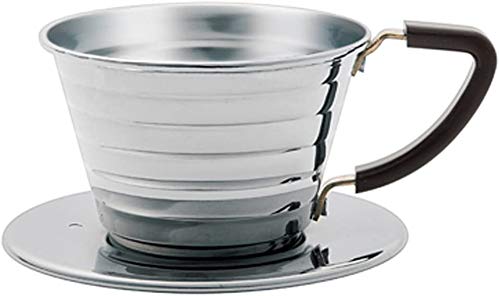
Kalita Wave Dripper 155 — Best Overall
The Kalita Wave 155 is the single-cup pour over we hand to beginners and the one many experienced brewers quietly keep using. Its flat bottom and restricted flow mean the water pools evenly instead of channeling through wherever you happened to pour. It suits one person brewing 250–350 ml cups who wants café-level clarity without a learning cliff. It does not suit anyone brewing for a crowd — step up to the 185 size for two-plus cups — and its proprietary wave filters cost more than standard cones.
Strengths
- Flat-bed design gives even extraction with an ordinary, imperfect pour
- Size 155 is purpose-built for one cup (roughly 250–350 ml)
- Available in steel, ceramic and glass to match your heat and durability priorities
Trade-offs
- Kalita wave filters are proprietary and pricier than Melitta-style cones
- Steel version (this listing family) can be hot to handle and shows water spots
- Small capacity — a big mug drinker will outgrow the 155 quickly
| Capacity | 1–2 person (size 155) |
| Bed style | Flat bed, three drainage holes |
| Filter | Kalita Wave 155 filters |
| Series | Kalita Wave (Japan) |
The Wave’s secret is hydraulic, not magical. A normal cone dripper drains as fast as you pour, so the brewer’s hand controls extraction. The Wave’s flat bed and three small holes restrict outflow, letting a shallow pool form above the coffee bed; that pool evens out your pouring sins and keeps contact time consistent from cup to cup. The ridged ‘wave’ filter also holds the paper off the dripper walls, which keeps flow steady and reduces the papery channeling that plagues cheap cones. In the cup, the signature is sweetness and balance rather than the bright high notes a V60 can pull — many drinkers prefer exactly that. Use a medium-fine grind, water just off the boil, and a simple two-or-three pour structure; the dripper does the rest. The 155 takes Kalita’s small wave filters, which are widely stocked online but rarely in supermarkets, so keep a spare pack. If you regularly brew for two, the larger Wave 185 (also verified in our research) uses the same idea at 16–26 oz scale.
Filter economics deserve a final word. Wave filters are the one recurring cost that gives buyers pause, and the honest math is that they add a modest amount per cup over generic cones — meaningful only if you brew several cups a day for years. Most owners decide the consistency is worth it. If it is not, the Melitta below is your dripper. Either way, buy filters in multi-pack quantities; the per-pack price drops and the run-out risk disappears.
Best for: beginners and everyday brewers who want even, sweet cups without perfect technique / Not suited for: multi-cup households or anyone who resents proprietary filters
Hario V60 Ceramic Dripper 02 — Best for Coffee Enthusiasts
The V60 is for the brewer who wants a hobby, not just a beverage. Its single large hole means flow rate is governed by your grind and your pour, so every variable is yours to tune — thrilling if you like dialing in a new coffee, frustrating if you want the same cup half-asleep. It suits single-cup brewers who own a gooseneck kettle and a scale. It does not suit beginners looking for forgiveness, and it will punish a standard kettle and guesswork dosing more than any pick here.
Strengths
- Maximum control over extraction — the reference cone for technique-driven brewing
- Ceramic body holds heat well and looks the part on the counter
- Uses widely available, inexpensive V60 02 paper filters
Trade-offs
- Steepest learning curve here; bad pours taste obviously worse
- Effectively requires a gooseneck kettle and a scale to shine
- Covered without a purchase link — we could not verify its listing through our data feed
| Size | 02 (single to double cup range) |
| Bed style | Cone, single large drainage hole |
| Filter | Hario V60 02 paper filters |
| Material | Ceramic (this version) |
No dripper has a deeper technique literature than the V60: bloom times, pulse pouring, swirl and drawdown are all documented rituals, and they exist because the design exposes everything. The spiral ribs lift the filter off the cone wall so air and water escape evenly, and the single large hole removes the safety net entirely. Brewed well — medium-fine grind, aggressive bloom, steady spiral pours — a V60 cup is the clearest expression of a coffee’s character in this roundup, with acidity and aromatics the flat-bed Kalita smooths over. Brewed casually, it under-extracts into sour thinness. That honesty is why it is the enthusiast pick rather than the overall pick. A note on sourcing: Hario sells ceramic, glass, plastic and metal V60s; the plastic version is the budget legend and insulates surprisingly well, while ceramic is the heat-retention and aesthetics choice. We could not verify a current listing through the site’s product feed despite repeated attempts (the API rate-limited every try), so this review carries no purchase link — search Amazon for the model name and buy from Hario’s official storefront.
If you buy one accessory with a V60, make it the gooseneck kettle; if two, add a basic kitchen scale. Dosing by weight (a common starting point is around 15 g of coffee to 250 g of water) turns the V60 from moody to repeatable within a week of practice.
Best for: enthusiasts who enjoy dialing in grind, ratio and pour technique / Not suited for: beginners or anyone brewing half-asleep without a gooseneck kettle
Note: we could not verify a current Amazon listing for this model through our product data feed at research time, so it is covered here without a purchase link — check price on Amazon directly.

OXO Brew Pour Over with Water Tank — Best for Beginners
OXO built this for the pour over curious who do not own — and do not want to own — a gooseneck kettle. You add hot water to the tank, the shower head distributes it over the grounds at a controlled rate, and gravity does the rest. It suits one-cup brewers who value repeatability over ritual. It does not suit technique enthusiasts, who will find the fixed drip rate limiting, and it brews into your mug rather than a carafe, so serving is strictly one cup at a time.
Strengths
- Shower-head tank removes pouring technique from the equation
- Uses standard #2 cone filters — cheap and sold everywhere
- Dishwasher safe and sized for exactly one good mug
Trade-offs
- Fixed drip rate means less control than a true manual dripper
- Plastic construction lacks the heirloom feel of ceramic or glass
- One mug at a time, with no carafe option
| Format | Dripper with auto-drip water tank |
| Distribution | Rainmaker shower head |
| Filter | #2 cone filters |
| Care | Dishwasher safe |
The honest way to describe the OXO is that it automates the one skill pour over demands — even water distribution — and leaves you the parts that are easy: grind, dose, wait. The tank’s shower head rains water across the bed in a pattern a beginner’s kettle cannot match, and because the flow is metered by the tank rather than your wrist, cup-to-cup consistency is the best in this roundup for a new brewer. The trade is ceiling: you cannot slow the drip for a finer grind experiment or speed it for a coarse one, so the flavor range is narrower than a V60’s. For most people that is the right trade. It takes #2 cone filters, the same papers a Melitta uses, which keeps running costs at the floor of the category. Cleanup is a rinse or a trip through the dishwasher. If you have bounced off manual brewing before because your cups were inconsistent, this is the dripper designed for you — and many owners later graduate to a V60 or Kalita with their confidence built.
One more audience for the OXO: offices and dorm desks, where a kettle is shared and technique is nobody’s priority. It tolerates water from a communal hot-water dispenser better than any manual dripper here, because distribution is handled by the tank. It also packs flat-ish and survives being knocked around a drawer — the ceramic and glass picks in this guide do not travel, and this one genuinely can.
Best for: beginners who want pour over flavor without learning kettle technique / Not suited for: enthusiasts who want full manual control

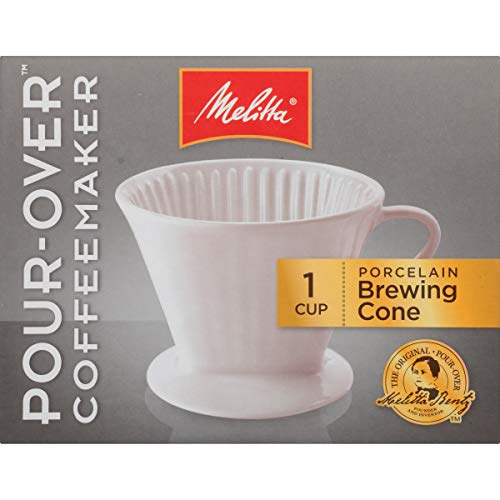
Melitta Porcelain Single Cup Pour-Over — Best Budget Classic
Melitta invented the paper-filter pour over, and this porcelain cone is the timeless version of it. It suits traditionalists, budget brewers and anyone who wants a dripper that will outlive them. The porcelain holds heat better than Melitta’s plastic cones and feels substantial in the hand. It does not suit the impatient — porcelain needs preheating and careful handling — and its single-hole cone rewards a steady pour more than the Kalita does.
Strengths
- Porcelain build holds heat and will last decades with basic care
- Uses #2 cone filters — the cheapest, most available filters in coffee
- Dead simple: no parts, no settings, nothing to break
Trade-offs
- Heavy and breakable compared with plastic or steel drippers
- Single-hole cone is less forgiving than the Kalita flat bed
- Needs a preheat rinse to avoid stealing heat from a small brew
| Material | Porcelain |
| Filter | #2 cone filters |
| Format | Single-cup cone dripper (sits on mug) |
| Viewing | Window slot to watch cup fill level on many versions |
There is a reason this design has survived since 1908: it is coffee brewing reduced to essentials, and in porcelain it gains the one thing the plastic versions lack — thermal mass. Preheat it under the tap or with kettle water and the cone holds temperature through the brew instead of leeching it, which matters enormously at single-cup volumes where every degree is a larger share of the total heat. The extraction character is classic Melitta: a single drainage hole and ribbed walls produce a rounded, full cup, slightly less bright than a V60, slightly less sweet than a Kalita, and deeply familiar to anyone raised on drip coffee. Technique demands are modest — a slow, steady pour in circles, a brief bloom, and you are most of the way there. Filters are the running-cost champions of this guide: #2 cones are sold in every supermarket for very little per hundred. If you want one dripper to buy once and use forever, and you accept porcelain’s weight and fragility, this is it.
Worth knowing: Melitta’s cone geometry is the ancestor of nearly every drip machine basket ever made, so if you grew up on drip coffee, this dripper tastes like home in a way the more exotic options deliberately do not. That familiarity is a legitimate reason to choose it. It is also the easiest dripper in this guide to find filters for in a physical store at 9 p.m. on a Sunday, which is a real-world feature no spec sheet captures.
Best for: traditionalists and budget brewers who want a buy-it-for-life dripper / Not suited for: travelers or anyone likely to drop their brewer

Chemex Classic 6-Cup — Best for Brewing for Two
A candid sizing note: the Chemex ‘6-cup’ is a 30 oz brewer, and it earns its place in a 1-cup guide because it is the pour over icon many single drinkers actually buy — brewing one generous mug or two small cups in the same vessel they serve from. It suits design lovers and clean-cup chasers. It does not suit the clumsy (it is one piece of glass), the rushed (its thick filters brew slowly), or anyone counting pennies on filters.
Strengths
- Chemex bonded filters are extra thick — the cleanest, most sediment-free cup here
- Brewer and server in one beautiful glass vessel
- Scales from one large mug to two or three small cups gracefully
Trade-offs
- All-glass body is fragile and loses heat quickly without a warmer
- Proprietary filters are the priciest papers in this roundup
- Slower drawdown — not a weekday-rush brewer
| Capacity | 6-cup Classic (about 30 oz) |
| Material | Borosilicate glass with wood collar |
| Filter | Chemex bonded filters |
| Design | One-piece brewer-server |
Chemex coffee tastes different for a measurable reason: its bonded filters are substantially thicker than standard papers, stripping out more oils and fine sediment. The result is a tea-like, sparkling cup that flatters light-roast and floral coffees and can make heavy, oily roasts taste thin — know your preference before buying. The brewing ritual is the slowest here: a coarse-medium grind, a patient bloom, and gentle pours that keep the water level steady, with total times stretching past four minutes for a full pot. At single-mug volumes it behaves better than its size suggests, though the wide cone means small brews spread thin — a slightly finer grind compensates. Ownership realities: the glass is one knock from tragedy, the wood collar and leather tie want occasional care, and the vessel needs a cozy or warmer if the coffee will sit. As an object it is unmatched — it is literally in museum collections — and for the drinker who brews one beautiful cup on a slow morning, that matters.
Heat management is the Chemex skill nobody mentions: preheat the vessel generously, brew, and serve immediately, or invest in the matching warmer if your mornings involve lingering over the pot. The glass that makes it beautiful also sheds heat faster than any other brewer here. Owners who adapt — smaller batches, prompt serving — are evangelists. Owners who brew a full pot and wander off come back to lukewarm coffee and blame the brewer.
Best for: clean-cup chasers and design lovers brewing one large or two small cups / Not suited for: rushed mornings, clumsy hands, or oily dark-roast devotees

Bodum Pour Over 17oz — Best Paper-Free
The Bodum suits the paper-averse: campers tired of packing filters, minimalists who hate consumables, and drinkers who prefer the heavier, oil-rich cup that metal filtration gives. The 17 oz size is the true single-serving version of Bodum’s pour over line (a 34 oz sibling exists for two). It does not suit clean-cup purists — mesh lets fines and oils through by design — and the glass carafe needs the same care as the Chemex.
Strengths
- Permanent stainless filter: zero ongoing filter cost or waste
- 17 oz size is honestly single-serving, unlike most “small” brewers
- Cork grip makes the hot glass carafe safe to pour
Trade-offs
- Mesh filtration leaves sediment and oils — a heavier, less clean cup
- Glass carafe is breakable and loses heat
- Filter needs thorough rinsing to avoid stale-oil flavors
| Capacity | 17 oz |
| Filter | Reusable stainless steel mesh (permanent) |
| Material | Borosilicate glass, cork grip |
| Origin | Made in Portugal |
Metal-filter coffee is a different beverage from paper-filter coffee, and Bodum leans into it: the stainless mesh passes the aromatic oils and a whisper of fine sediment that paper strips out, producing a cup with more body and a slightly rustic edge — closer in spirit to a French press, but cleaner. Whether that is a feature or a flaw is entirely about your palate. The practical wins are real: no filter inventory, no running out on a Sunday morning, nothing to throw away, and a filter that rinses in seconds (give it a proper soapy wash weekly, because trapped oils go stale and will flavor every cup). The carafe itself is classic Bodum — borosilicate glass with a cork collar that genuinely works as insulation for your hand. Brew with a medium-coarse grind to keep drawdown brisk and sediment low, pour slowly, and let the cup settle for a moment before the last sip. For one person who hates buying filters, this is the end of the search.
A note on grind for the Bodum: because the mesh cannot trap fines the way paper does, the quality of your grinder shows up in the cup more than with any other pick here. A decent burr grinder producing uniform medium-coarse grounds makes this brewer sing; a blade grinder’s dust-and-boulders mix makes it muddy. If a burr grinder is in your future plans anyway, the Bodum’s ceiling rises with it.
Best for: paper-free brewers who like a full-bodied cup and zero consumables / Not suited for: clean-cup purists or anyone who hates sediment
Comparison Table
| Pick | Badge | Key spec | Best for |
|---|---|---|---|
| Kalita Wave Dripper 155 | Best Overall | Flat-bed 155, 1–2 cup size | beginners and everyday brewers who want even, sweet cups without perfect technique |
| Hario V60 Ceramic Dripper 02 | Best for Coffee Enthusiasts | Cone dripper, single-hole control | enthusiasts who enjoy dialing in grind, ratio and pour technique |
| OXO Brew Pour Over with Water Tank | Best for Beginners | Auto-drip tank, #2 cone filters | beginners who want pour over flavor without learning kettle technique |
| Melitta Porcelain Single Cup Pour-Over | Best Budget Classic | Porcelain #2 cone, single cup | traditionalists and budget brewers who want a buy-it-for-life dripper |
| Chemex Classic 6-Cup | Best for Brewing for Two | Glass brewer-server, thick bonded filters | clean-cup chasers and design lovers brewing one large or two small cups |
| Bodum Pour Over 17oz | Best Paper-Free | 17 oz, permanent steel mesh filter | paper-free brewers who like a full-bodied cup and zero consumables |
Use the table to compare roles at a glance, then read the full review of any pick you are seriously considering — the trade-offs matter more than the headline spec.
How to Choose the Best 1 Cup Pour Over Coffee Maker
Pour over drippers look interchangeable and brew very differently. Three decisions — bed shape, filter type and material — determine almost everything about your daily experience.
Cone vs Flat Bed: The Forgiveness Decision
Cone drippers (V60, Melitta) drain through a single hole, so extraction speed is set by your grind and pour. They offer the highest ceiling and the lowest floor. Flat-bed drippers (Kalita Wave) restrict drainage mechanically, pooling water evenly and forgiving sloppy pours. For a first dripper, forgiveness wins more often than ceiling: choose the Kalita or the OXO if you are new, the V60 if you already know you enjoy the process, and the Melitta if you want the classic middle path.
Paper, Thick Paper or Metal: The Filter Decision
Standard papers (Melitta, V60, Kalita) balance cleanliness and body, and cost little per cup — except Kalita’s proprietary waves, which cost noticeably more. Chemex’s thick bonded filters produce the cleanest cup and the highest filter cost. Metal mesh (Bodum) costs nothing forever and lets oils and fines through, trading clarity for body. There is no wrong answer, but there is a wrong match: clean-cup drinkers hate metal, body drinkers find Chemex cups thin, and everyone hates running out of proprietary filters — stock accordingly.
Material: Ceramic, Steel, Glass or Plastic
At single-cup volumes, heat management is half the battle. Ceramic (Melitta, V60 ceramic) holds heat best but is heavy and breakable. Stainless steel is durable and travel-friendly. Glass (Chemex, Bodum) is beautiful, neutral and fragile, and loses heat fastest. Plastic insulates surprisingly well and is the budget veteran’s choice, though it lacks ceremony. Whatever you choose, preheat it — a cold dripper under 300 ml of water steals degrees you cannot spare.
The Kit Around the Dripper: What You Actually Need
A dripper alone does not make pour over. The honest starter kit is: a kettle (gooseneck strongly preferred for cones, optional for Kalita and unnecessary for the OXO), a scale for dosing coffee and water by weight, and a grinder — because pre-ground coffee stales fast and pour over exposes it. If budget forces sequencing, buy the dripper and scale first, use a standard kettle carefully, and add the gooseneck and a burr grinder as you go. Every pick in this guide works with that staged approach except the V60, which really does want the gooseneck from day one.
Ratios and Recipes for One Cup
Work by weight and the method becomes repeatable. A widely used starting point for a single cup is about 15 g of coffee to 250 g of water for a balanced cup; go a little stronger (less water) for milk drinks or weaker for delicate light roasts. Bloom with roughly twice the coffee’s weight in water for 30–45 seconds, then pour the rest in two or three stages, keeping the water level steady rather than flooding or starving the bed. Total brew time for one cup usually lands between two and three and a half minutes depending on the dripper — Kalita and OXO at the forgiving end, Chemex at the slow end. Change one variable at a time and taste; that discipline, not gear, is what makes pour over improve week over week.
Water, Temperature and the Variables That Matter Most
Pour over has a reputation for fussiness because it exposes variables that machines hide. In practice only three matter much. First, water temperature: just off the boil for most coffees, a touch cooler for dark roasts that extract easily. You do not need a thermometer forever — boiling, then waiting half a minute, lands in the right zone, and a temperature-control kettle removes the guesswork entirely. Second, grind freshness: coffee ground minutes before brewing tastes categorically better than coffee ground days before, whatever dripper you use. Third, ratio consistency, covered in the recipe section above. Nail those three and your pour pattern can be merely decent; the Kalita and OXO exist precisely to make ‘merely decent’ enough.
The variable beginners overrate is the recipe itself. Bloom ratios, pulse counts and swirl rituals circulate endlessly online, but they are fine-tuning on top of temperature, freshness and ratio. A new brewer who masters the big three with a simple two-pour routine will out-brew a recipe collector with stale beans every single morning. Buy the dripper that matches your temperament, learn its one recipe well, and let the internet’s forty-variable methods wait until you are curious rather than confused.
The Grinder Question: Why It Matters More Than the Dripper
Experienced pour over brewers repeat one piece of advice until it becomes a cliché: spend on the grinder before the dripper. The reasoning is mechanical. Extraction depends on particle size, and a grinder that produces a wide spread of particle sizes — dust alongside chunks — extracts them unevenly no matter which dripper holds them: the dust over-extracts bitter while the chunks under-extract sour, in the same cup. A uniform grind lets any of these drippers do their job. This is why the Bodum’s mesh and the V60’s open cone, the two least-filtering designs here, benefit most visibly from a burr grinder upgrade, and why the Kalita and OXO, which manage flow for you, are the kindest to pre-ground coffee and basic grinders.
Practical guidance: if you are starting from zero, buy the dripper and a bag of coffee ground at a local roaster for pour over, and brew it within two weeks. If you like the ritual, a hand grinder is the budget-friendly next step and suits single-cup volumes perfectly — grinding 15 g by hand takes under a minute. Electric burr grinders earn their counter space when the household brews daily or for several people. What you should not do is buy a second dripper hoping it fixes cups that a grinder would have fixed first; in pour over, the dripper is the cheapest variable and rarely the limiting one.
And the gooseneck kettle question belongs in this section too, because it is really a control purchase: for cone drippers like the V60 it is effectively required, since the open drainage turns a gushing standard spout into uneven extraction. For the Kalita Wave it is strongly recommended but survivable without one, and for the OXO it is unnecessary by design, because the tank distributes the pour for you. Sequence your purchases in that order — dripper, then grinder, then kettle — and each step will make a bigger difference than the last gadget you read about.
Pour Over vs Machines: An Honest Cost and Time Comparison
Time first: a single pour over cup takes about four minutes of semi-attention, against roughly a minute of effort and a few minutes of waiting for a pod machine. If that difference decides your mornings, buy the machine — our 1 cup coffee makers guide covers them. Cost runs the other way, decisively: pour over’s per-cup cost is the coffee itself plus a paper filter worth very little, while pods multiply the coffee cost several times over. Across a year of daily cups, the dripper pays for a very good grinder with the savings. The middle path many households land on is both: a dripper for weekends and a small machine for weekday sprints. Neither choice is a compromise — they are different tools for different mornings, and this guide’s job is to make the dripper half of that pairing the right one.
How to Brew a Single Cup of Pour Over, Step by Step
This is a reliable baseline recipe for any dripper in this guide; adjust grind first when a cup tastes off.
- Heat more water than you need. Fill the kettle beyond your 250 g target — you will use the extra for preheating. Bring it just off the boil.
- Preheat everything. Set the filter in the dripper and rinse it thoroughly with hot water. This washes out paper taste and warms the dripper and mug. Discard the rinse water.
- Dose and level. Add about 15 g of medium-fine coffee (finer for V60, a touch coarser for Chemex and Bodum), give the dripper a gentle shake to level the bed, and tare your scale.
- Bloom. Pour about 30–40 g of water in slow circles, wetting all the grounds, and wait 30–45 seconds. The bed will swell and bubble — that is gas escaping, and it makes room for even extraction.
- Pour in stages. Add water in two or three pulses, pouring in slow spirals from the center outward, keeping the level steady. Avoid pouring directly down the edges, which bypasses the coffee.
- Draw down and taste. When the last pour is in, give the dripper one gentle swirl to level the bed. Let it drain fully — the bed should look flat, not cratered. Taste, and adjust: sour and thin means grind finer or pour slower next time; bitter and heavy means coarser or faster.
Care and Troubleshooting for Pour Over Gear
Pour over equipment is blessedly simple, but three problems recur. Problem: the brew stalls and takes forever → your grind is too fine or your filter is clogged with fines; coarsen the grind and pour more gently. Problem: cups taste papery → rinse the filter more thoroughly before brewing, especially thick Chemex papers. Problem: coffee tastes muddy from a metal filter → the mesh is holding stale oils; wash it with hot soapy water or a coffee-equipment cleaner, and grind slightly coarser. Glass and ceramic need only a rinse and an occasional soapy wash; never put a hot glass brewer under cold water. Store paper filters flat and dry — a damp or kitchen-odor-absorbing filter will flavor the cup before the coffee gets a chance.
Common Buying Mistakes
Pour over failures are almost never the dripper’s fault. These are the mistakes that make good gear taste bad:
- Skipping the rinse. An unrinsed paper filter adds a cardboard note to every cup, and an unpreheated dripper steals the heat a small brew cannot spare.
- Dosing by spoon instead of weight. Scoops vary wildly; a cheap scale is the single biggest consistency upgrade in pour over.
- Pouring with a standard kettle on a V60. A gushing spout destroys bed structure. Use a gooseneck for cones, or choose a forgiving dripper.
- Grinding too fine to ‘get more flavor’. Fine grinds stall drawdown and over-extract into bitterness. Flavor comes from balance, not maximum extraction.
- Buying proprietary filters one pack at a time. Kalita and Chemex papers run out at the worst moments. Keep a spare pack; your future self says thanks.
- Expecting café results on day one. Pour over is a skill. Budget two weeks of daily brews before judging any dripper in this guide.
Fix those six and the differences between these drippers become what they should be — matters of taste and ritual, not sources of frustration.
Final Recommendation
Start with the Kalita Wave 155 if you want the best balance of flavor and forgiveness — it is the dripper we recommend first and the one beginners outgrow slowest. Choose the OXO Brew Pour Over if technique is a dealbreaker, the Melitta Porcelain if you want the classic buy-it-for-life cone, and the Hario V60 when you are ready to chase the brightest cup and accept the learning curve. The Chemex 6-Cup is the beautiful clean-cup option that doubles for two, and the Bodum 17oz ends filter buying forever.
Prefer a machine to make the cup for you? Compare the electric and pod options in our related guides:
- Best Overall: Kalita Wave Dripper 155
- Best for Beginners: OXO Brew Pour Over with Water Tank
- Best Budget Classic: Melitta Porcelain Single Cup Pour-Over
- Best for Brewing for Two: Chemex Classic 6-Cup
- Best Paper-Free: Bodum Pour Over 17oz
Best 1 Cup Coffee Makers Best 12 Cup Coffee Makers Best 10 Cup Coffee Makers Best 12 Cup And K Cup Coffee Makers Best 12 Cup Thermal Coffee Makers
Related guides
- Best 4 7 Cup Coffee Makers
- Best 4 Oz Coffee Makers
- Best Brazilian Coffee Makers
- Best Brewstation Coffee Makers
Frequently Asked Questions
What do I need besides the dripper to start pour over?
A kettle (gooseneck preferred for cone drippers), a kitchen scale, filters matched to your dripper, and coffee — ideally freshly ground. The OXO is the exception that works well with a standard kettle because its tank distributes the water for you.
Which pour over dripper is most forgiving for beginners?
The Kalita Wave 155 and the OXO Brew Pour Over, for different reasons: the Kalita’s flat bed evens out imperfect pours, while the OXO removes pouring from the equation entirely with its shower-head tank.
Why does my pour over coffee taste sour or bitter?
Sour and thin usually means under-extraction — grind finer, use hotter water, or slow the pour. Bitter and heavy means over-extraction — grind coarser or pour faster. Change one variable at a time so you know what fixed it.
How much coffee should I use for one cup of pour over?
A good starting point is about 15 g of coffee to 250 g of water. Adjust from there: a little more coffee for a stronger cup or for milk drinks, a little less for delicate light roasts.
Are metal filters as good as paper filters?
They are different rather than better. Metal mesh (like the Bodum) lets oils and fine sediment through for a heavier, fuller cup and costs nothing to run. Paper gives a cleaner cup. Choose by the cup style you prefer.
Can I brew two cups with a 1 cup dripper?
Not well — small drippers are designed around a shallow bed, and doubling the dose makes extraction uneven. For two cups, step up to the Kalita Wave 185 or the Chemex 6-Cup, both covered in this guide.


