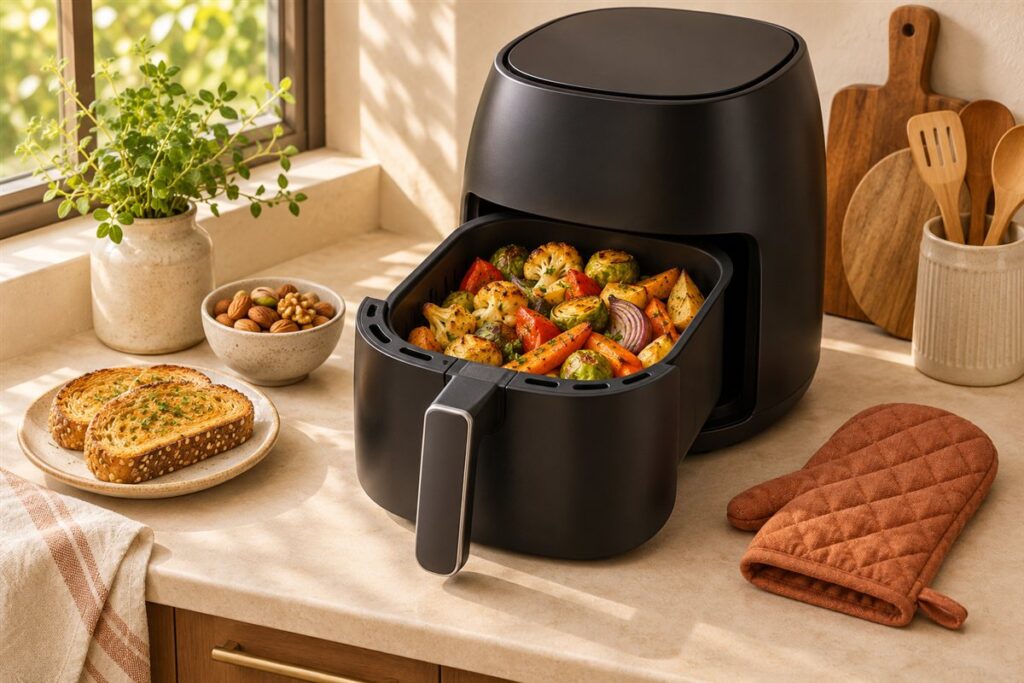
An accessory is worth buying when it solves a problem you have more than once a month. Anything else is likely to sit in a drawer. Use the questions below to sort the useful from the unnecessary.
Ask These Questions First
- What do I cook most often? Frozen snacks, vegetables, chicken, or baked goods each point to different tools.
- What annoys me now? Sticking, hard cleanup, or burnt fingers are good signs that a tool could help.
- Will it fit my model? Check the interior size in the maker’s guide.
- Can I clean it easily? A simple shape is more likely to get used.
- Do I have room to store it?
Items That Many Cooks Find Useful
Experience varies, but a few categories come up often in home kitchens.
- A pair of tongs with a firm grip for turning food.
- A liner or parchment sheet made for air fryer use, if cleanup is your main complaint.
- A small baking pan that fits with space around it, for anyone who bakes.
- An oil sprayer, for those who want a thin coat of oil without pouring.
Items That Depend on Your Habits
Racks and skewer sets are great if you cook meat and vegetables in layers or on sticks, but add little if you mostly reheat leftovers. Molds suit people who make egg bites or small cakes. A plate gripper helps if your basket is deep and you often lift hot dishes.
Multi-piece kits can work if they match several of your needs. Look at the list of contents and cross off anything you would not use.
Warning Signs of a Poor Fit
- The item touches the heating area or fan opening.
- It covers most of the basket and blocks airflow.
- It has no stated heat limit.
- The size is not listed.
When in doubt, follow the manual for your air fryer and the instructions for the accessory.
A Simple Way to Decide
Write down two columns, one for problems and one for tools. If a tool does not match a problem you can name, leave it out. If you find yourself reaching for a workaround more than once a week, such as using a fork to flip food, that tool has probably earned a place. Revisit the list after a month of cooking, since habits change as you try new recipes.
Materials and Heat Limits Worth Checking
Whatever an accessory is for, the material decides whether it is safe and durable inside a hot, fast-moving chamber. Metal items such as racks and pans tolerate high heat but can scratch coated baskets. Silicone is flexible and easy to clean, yet quality and heat tolerance differ, so look for a stated temperature limit. Paper products made for air fryers should be shaped and sized so they cannot lift into the airflow.
A heat limit should be clearly printed on the product or its listing. If it is missing, treat the item with caution. Compare the stated limit with the highest temperature your unit can reach, not just the settings you use most. Also check whether the product is described as food-safe, and read any notes about washing.
- Check for coatings that might flake under heat.
- Avoid items with glued parts, plastic handles, or decorations that were not designed for heat.
- Look for smooth edges that will not catch on the basket.
When a listing offers a material but no care guidance, look for the maker’s instructions or ask before buying. A cheap accessory that warps or smells in the first week is not a bargain.
Getting Size and Fit Right
Many accessory problems are really sizing problems. An item that is too large blocks airflow or presses against the heating area, while one that is too small shifts around and tips. Start with the interior of your air fryer: measure the width, depth, and height of the cooking space, not the outside of the unit. Then compare with the accessory’s listed dimensions, including any raised handles.
Leave space around the item. Air needs room to move around food, so a pan that fills the basket from side to side can lead to uneven cooking. Check that the top of the accessory sits well below the heating element, particularly for tall racks or stacked setups. If you are buying for a dual-zone unit, confirm the item suits one drawer, not the combined space.
- Check the shape of the basket, since round and square units suit different accessories.
- Make sure you can remove the item with oven mitts when it is hot.
- Test fit before you cook by placing the item in the empty, cold basket.
If the listing does not state the size, ask the seller or choose another product.
Liners, Pans, and Baking Accessories
Liners and baking accessories are the most frequent additions, and they come with the most mistakes. Perforated parchment liners and silicone mats can reduce sticking and make cleaning easier, but they should lie flat and be weighed down by food. An empty liner in a preheating unit can lift into the element, so place food on it before the unit runs, or skip it during preheat.
Check how a liner affects airflow. Solid mats can block the holes that let hot air pass, so cooking may be slower or less crisp. Perforated versions allow more flow. Think about the food: wet, saucy dishes may benefit from a pan or mold, while crisp foods like fries tend to do better with open airflow.
Baking pans, cake tins, and egg molds work for those who bake. Choose ones that fit with clearance and are made of a suitable material. Handle them with care when removing them, since contents and pans stay hot for some time. If you do not bake, leave them off your list. A small, well-chosen pan that you use weekly is better than a set of ten that you never touch.
Tools for Handling, Turning, and Lifting
Small handling tools often make the biggest difference in daily use, because they address safety and comfort. Tongs with a firm grip and heat-resistant tips let you turn food without burning your fingers or scratching the basket. Look for tools with a coating or tip that is gentle on the basket surface, and avoid sharp metal that could scratch a nonstick finish.
A plate gripper or lifting tool helps with deep baskets and hot dishes. Long oven mitts protect your forearms when you reach into a hot chamber. A small silicone brush or pump sprayer helps with applying a thin layer of oil. Think about how you take food out: if you tip the basket into a bowl, a heat-safe bowl and a steady hand are enough; if you serve straight from the pan, a lifting tool matters more.
- Choose tools with comfortable, non-slip handles.
- Pick tools that you can wash easily.
- Store them near the air fryer so you use them.
Whatever you choose, keep tools clear of the heating element and the vents while the unit is running.
Kits, Bundles, and Avoiding Clutter
Accessory kits promise value, but their usefulness depends on how many pieces you will use. Start by reading the contents list and cross off anything that does not fit your cooking style or your unit. A kit with several items you will use can be sensible, whereas a large set of items you will not touch only takes up space.
Check that each piece in the kit lists a size and a heat limit. Some bundles contain items in a single universal size that may not suit your basket. Look at the material, the cleaning instructions, and whether the pieces nest or stack for storage. Consider how you would wash them all, because a kit with many small parts can be tiresome to clean.
It can also help to stagger purchases. Buy one or two items, use them for a month, and then decide what else is missing. This approach avoids duplication and shows which items earn their place. Once you have a tidy set that suits your cooking, resist adding more unless a real problem appears. Replace accessories that warp, flake, or become sticky, and keep your manual to hand to check anything unfamiliar.
FAQ
Should I buy accessories when I first get an air fryer?
It is usually better to cook for a few weeks with the basket alone. You will quickly learn which problems are real and which accessories would help.
Are accessories made for one brand usable in another?
Sometimes, but only if the size and heat limit suit your model. Compare measurements and read both manuals before trying.
Are silicone accessories safe in an air fryer?
Many are designed for it, but quality varies. Look for a stated heat limit that suits your unit and follow the maker's care instructions.
Can I use a regular baking pan in the basket?
Possibly, if it fits with space around it and its material tolerates the heat. Check both the pan's instructions and your air fryer manual.
Do liners affect how crisp food gets?
They can, because solid liners block airflow. Perforated versions let more air through, and open baskets are usually best for crisp food.
Is a rack worth buying?
It is helpful if you cook in layers or want fat to drain below food. If you mostly reheat leftovers, you may not need one.
How do I clean accessories with many small parts?
Soak them in warm soapy water, then use a soft brush. Check whether they are dishwasher safe before using one.
Should I buy a kit or single items?
A kit is useful only if you will use most of the pieces. Individual items let you add tools as your needs become clear.
What should I do with accessories that no longer fit?
Check whether they suit another appliance, but do not use them in an air fryer if the fit or heat limit is unclear. Recycle or discard worn items properly.
The Short Version
Buy an accessory only when it solves a repeated problem and fits your model. Begin with simple tools such as tongs or liners, and add others as your cooking habits show a need.