Disclosure: As an Amazon Associate, airfryerkitchensupply.com earns from qualifying purchases. Links on this page are affiliate links; they cost you nothing extra. Prices and availability change often, so check the current Amazon listing before you buy.
This kitchen trash can pros and cons guide exists for one reason: a kitchen trash can is used more often than almost any other object in the room, yet it is usually bought in about five minutes. In the first stretch of this kitchen trash can pros and cons, the short answer is simple — match the can to your space, your cooking and your cleaning routine, and be honest about odor, which comes from residue inside the can itself far more than from the bag you just tied shut.
Key Takeaways
- Odor starts with residue in the can, the inner bucket and the lid hinge — cleaning the can matters as much as changing the bag.
- Step cans are simple and durable; sensor cans are convenient but add batteries, adapters and false triggers.
- Fit standard bags properly or budget time and money for custom liners.
- Measure footprint, lid swing and pedal travel before choosing a capacity.
- Keep cleaning chemicals and batteries away from children, especially in under-sink placements.
In this guide
Kitchen Trash Can Pros and Cons: The Pros in Daily Life
Treat placement as part of the product, not an afterthought when you think about lid mechanisms and daily opening, since the floor under and behind the can quietly collects splashes that only show up when you finally pull the can out. Keep a small caddy of spare bags, a washable cloth and a mild cleaner nearby so the quick wipe actually happens. A can that suits lid mechanisms and daily opening in a quiet showroom can still disappoint at home if the surrounding routine — cooking style, cleaning habits, floor space and who empties it — was never part of the decision, so judge lid mechanisms and daily opening against your own busiest evening rather than an ideal one.
Start with where the can will actually live when you think about lid mechanisms and daily opening, because sensor lids trade a mechanical problem for an electrical one, with batteries, adapters and a lens that needs wiping. Write the bag size and battery type on a label inside a cabinet door so replacements are never a guessing game. A can that suits lid mechanisms and daily opening in a quiet showroom can still disappoint at home if the surrounding routine — cooking style, cleaning habits, floor space and who empties it — was never part of the decision, so judge lid mechanisms and daily opening against your own busiest evening rather than an ideal one.
Picture the worst load first: raw chicken packaging on a hot evening when you think about lid mechanisms and daily opening, since a bag that fits badly will slip, tear and leave a sticky ring that no scented liner can hide for long. Write the bag size and battery type on a label inside a cabinet door so replacements are never a guessing game. A can that suits lid mechanisms and daily opening in a quiet showroom can still disappoint at home if the surrounding routine — cooking style, cleaning habits, floor space and who empties it — was never part of the decision, so judge lid mechanisms and daily opening against your own busiest evening rather than an ideal one.
Start with where the can will actually live when you think about lid mechanisms and daily opening, because hands are often wet, floury or holding a hot pan, so the opening method matters more than the brochure suggests. If the can will sit under a sink, keep cleaning chemicals and spare batteries in a separate, child-safe spot away from small hands. A can that suits lid mechanisms and daily opening in a quiet showroom can still disappoint at home if the surrounding routine — cooking style, cleaning habits, floor space and who empties it — was never part of the decision, so judge lid mechanisms and daily opening against your own busiest evening rather than an ideal one.
Think about the can as a small appliance that works every single day when you think about lid mechanisms and daily opening, because odor rarely comes from the bag itself; it comes from residue that leaks, drips and dries inside the can, on the inner bucket and around the lid hinge. If the can will sit under a sink, keep cleaning chemicals and spare batteries in a separate, child-safe spot away from small hands. A can that suits lid mechanisms and daily opening in a quiet showroom can still disappoint at home if the surrounding routine — cooking style, cleaning habits, floor space and who empties it — was never part of the decision, so judge lid mechanisms and daily opening against your own busiest evening rather than an ideal one.
Start with where the can will actually live when you think about lid mechanisms and daily opening, because hands are often wet, floury or holding a hot pan, so the opening method matters more than the brochure suggests. Choose the simpler mechanism when two cans otherwise tie, because simple parts are easier to clean, repair and live with. A can that suits lid mechanisms and daily opening in a quiet showroom can still disappoint at home if the surrounding routine — cooking style, cleaning habits, floor space and who empties it — was never part of the decision, so judge lid mechanisms and daily opening against your own busiest evening rather than an ideal one.
Consider how your household really cooks on a busy weeknight when you think about lid mechanisms and daily opening, because sensor lids trade a mechanical problem for an electrical one, with batteries, adapters and a lens that needs wiping. Retire a bag at the first leak instead of pressing it down, and rinse the bucket the same day rather than promising yourself later. A can that suits lid mechanisms and daily opening in a quiet showroom can still disappoint at home if the surrounding routine — cooking style, cleaning habits, floor space and who empties it — was never part of the decision, so judge lid mechanisms and daily opening against your own busiest evening rather than an ideal one.
Kitchen Trash Can Pros and Cons: The Cons Nobody Mentions at the Shelf
Look past the showroom finish and picture week three at home when you think about cleaning the can itself, not just the bag, since the floor under and behind the can quietly collects splashes that only show up when you finally pull the can out. Keep a small caddy of spare bags, a washable cloth and a mild cleaner nearby so the quick wipe actually happens. A can that suits cleaning the can itself, not just the bag in a quiet showroom can still disappoint at home if the surrounding routine — cooking style, cleaning habits, floor space and who empties it — was never part of the decision, so judge cleaning the can itself, not just the bag against your own busiest evening rather than an ideal one.
Picture the worst load first: raw chicken packaging on a hot evening when you think about cleaning the can itself, not just the bag, since the floor under and behind the can quietly collects splashes that only show up when you finally pull the can out. If the can will sit under a sink, keep cleaning chemicals and spare batteries in a separate, child-safe spot away from small hands. A can that suits cleaning the can itself, not just the bag in a quiet showroom can still disappoint at home if the surrounding routine — cooking style, cleaning habits, floor space and who empties it — was never part of the decision, so judge cleaning the can itself, not just the bag against your own busiest evening rather than an ideal one.
Treat placement as part of the product, not an afterthought when you think about cleaning the can itself, not just the bag, because a soft, controlled lid close protects sleep, conversations and the hinge itself over thousands of cycles. Choose the simpler mechanism when two cans otherwise tie, because simple parts are easier to clean, repair and live with. A can that suits cleaning the can itself, not just the bag in a quiet showroom can still disappoint at home if the surrounding routine — cooking style, cleaning habits, floor space and who empties it — was never part of the decision, so judge cleaning the can itself, not just the bag against your own busiest evening rather than an ideal one.
Look past the showroom finish and picture week three at home when you think about cleaning the can itself, not just the bag, since tall packaging, melon rinds and party trays test real capacity in a way that flat, tidy test loads never do. If the can will sit under a sink, keep cleaning chemicals and spare batteries in a separate, child-safe spot away from small hands. A can that suits cleaning the can itself, not just the bag in a quiet showroom can still disappoint at home if the surrounding routine — cooking style, cleaning habits, floor space and who empties it — was never part of the decision, so judge cleaning the can itself, not just the bag against your own busiest evening rather than an ideal one.
Remember that the lid, not the body, does most of the daily work when you think about cleaning the can itself, not just the bag, because odor rarely comes from the bag itself; it comes from residue that leaks, drips and dries inside the can, on the inner bucket and around the lid hinge. Write the bag size and battery type on a label inside a cabinet door so replacements are never a guessing game. A can that suits cleaning the can itself, not just the bag in a quiet showroom can still disappoint at home if the surrounding routine — cooking style, cleaning habits, floor space and who empties it — was never part of the decision, so judge cleaning the can itself, not just the bag against your own busiest evening rather than an ideal one.
Consider how your household really cooks on a busy weeknight when you think about cleaning the can itself, not just the bag, because hands are often wet, floury or holding a hot pan, so the opening method matters more than the brochure suggests. Retire a bag at the first leak instead of pressing it down, and rinse the bucket the same day rather than promising yourself later. A can that suits cleaning the can itself, not just the bag in a quiet showroom can still disappoint at home if the surrounding routine — cooking style, cleaning habits, floor space and who empties it — was never part of the decision, so judge cleaning the can itself, not just the bag against your own busiest evening rather than an ideal one.
Remember that the lid, not the body, does most of the daily work when you think about cleaning the can itself, not just the bag, since a bag that fits badly will slip, tear and leave a sticky ring that no scented liner can hide for long. Write the bag size and battery type on a label inside a cabinet door so replacements are never a guessing game. A can that suits cleaning the can itself, not just the bag in a quiet showroom can still disappoint at home if the surrounding routine — cooking style, cleaning habits, floor space and who empties it — was never part of the decision, so judge cleaning the can itself, not just the bag against your own busiest evening rather than an ideal one.
kitchen trash can buying guide
Models Worth a Closer Look
The models below are named. Each sits at a different qualitative tier, and none should be judged on a headline feature alone; judge the whole routine of opening, bagging, cleaning and emptying.

simplehuman Rectangular Step Can
The simplehuman Rectangular Step Can sits in the premium tier of this category. In daily use its appeal is practical rather than theatrical: a lid action that suits full hands, a body shape that either hugs a cabinet end or slides under a sink, and an inner bucket or liner system that can be washed properly when — not if — a bag leaks. Best for: households whose routine matches its opening style and footprint. Not suited for: buyers expecting any can, however clever its lid, to cancel out skipped cleaning.
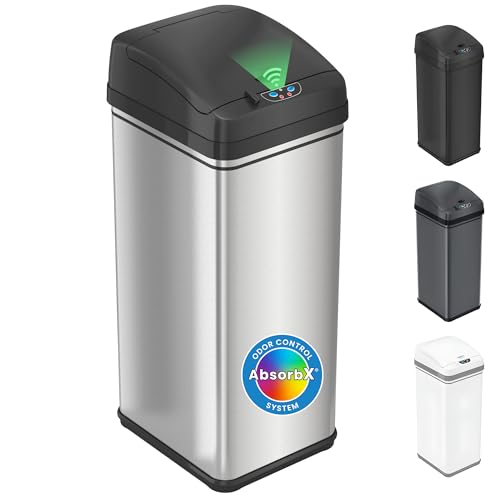
iTouchless Sensor Trash Can
The iTouchless Sensor Trash Can sits in the mid-range tier of this category. In daily use its appeal is practical rather than theatrical: a lid action that suits full hands, a body shape that either hugs a cabinet end or slides under a sink, and an inner bucket or liner system that can be washed properly when — not if — a bag leaks. Best for: households whose routine matches its opening style and footprint. Not suited for: buyers expecting any can, however clever its lid, to cancel out skipped cleaning.
Glad Stainless Steel Step Can
The Glad Stainless Steel Step Can sits in the mid-range tier of this category. In daily use its appeal is practical rather than theatrical: a lid action that suits full hands, a body shape that either hugs a cabinet end or slides under a sink, and an inner bucket or liner system that can be washed properly when — not if — a bag leaks. Best for: households whose routine matches its opening style and footprint. Not suited for: buyers expecting any can, however clever its lid, to cancel out skipped cleaning.

Rubbermaid Premium Step On
The Rubbermaid Premium Step On sits in the entry-level tier of this category. In daily use its appeal is practical rather than theatrical: a lid action that suits full hands, a body shape that either hugs a cabinet end or slides under a sink, and an inner bucket or liner system that can be washed properly when — not if — a bag leaks. Best for: households whose routine matches its opening style and footprint. Not suited for: buyers expecting any can, however clever its lid, to cancel out skipped cleaning.
Kohler Step Can
The Kohler Step Can sits in the premium tier of this category. In daily use its appeal is practical rather than theatrical: a lid action that suits full hands, a body shape that either hugs a cabinet end or slides under a sink, and an inner bucket or liner system that can be washed properly when — not if — a bag leaks. Best for: households whose routine matches its opening style and footprint. Not suited for: buyers expecting any can, however clever its lid, to cancel out skipped cleaning.

Brabantia NewIcon
The Brabantia NewIcon sits in the premium tier of this category. In daily use its appeal is practical rather than theatrical: a lid action that suits full hands, a body shape that either hugs a cabinet end or slides under a sink, and an inner bucket or liner system that can be washed properly when — not if — a bag leaks. Best for: households whose routine matches its opening style and footprint. Not suited for: buyers expecting any can, however clever its lid, to cancel out skipped cleaning.
What the Trade-Offs Mean for Different Households
Picture the worst load first: raw chicken packaging on a hot evening when you think about children, pets and everyday safety, since a bag that fits badly will slip, tear and leave a sticky ring that no scented liner can hide for long. Keep a small caddy of spare bags, a washable cloth and a mild cleaner nearby so the quick wipe actually happens. A can that suits children, pets and everyday safety in a quiet showroom can still disappoint at home if the surrounding routine — cooking style, cleaning habits, floor space and who empties it — was never part of the decision, so judge children, pets and everyday safety against your own busiest evening rather than an ideal one.
Remember that the lid, not the body, does most of the daily work when you think about children, pets and everyday safety, since tall packaging, melon rinds and party trays test real capacity in a way that flat, tidy test loads never do. Keep a small caddy of spare bags, a washable cloth and a mild cleaner nearby so the quick wipe actually happens. A can that suits children, pets and everyday safety in a quiet showroom can still disappoint at home if the surrounding routine — cooking style, cleaning habits, floor space and who empties it — was never part of the decision, so judge children, pets and everyday safety against your own busiest evening rather than an ideal one.
Start with where the can will actually live when you think about children, pets and everyday safety, because sensor lids trade a mechanical problem for an electrical one, with batteries, adapters and a lens that needs wiping. Choose the simpler mechanism when two cans otherwise tie, because simple parts are easier to clean, repair and live with. A can that suits children, pets and everyday safety in a quiet showroom can still disappoint at home if the surrounding routine — cooking style, cleaning habits, floor space and who empties it — was never part of the decision, so judge children, pets and everyday safety against your own busiest evening rather than an ideal one.
Think about the can as a small appliance that works every single day when you think about children, pets and everyday safety, since tall packaging, melon rinds and party trays test real capacity in a way that flat, tidy test loads never do. Retire a bag at the first leak instead of pressing it down, and rinse the bucket the same day rather than promising yourself later. A can that suits children, pets and everyday safety in a quiet showroom can still disappoint at home if the surrounding routine — cooking style, cleaning habits, floor space and who empties it — was never part of the decision, so judge children, pets and everyday safety against your own busiest evening rather than an ideal one.
Ask who else uses this can, including kids, guests and tired adults when you think about children, pets and everyday safety, since tall packaging, melon rinds and party trays test real capacity in a way that flat, tidy test loads never do. Choose the simpler mechanism when two cans otherwise tie, because simple parts are easier to clean, repair and live with. A can that suits children, pets and everyday safety in a quiet showroom can still disappoint at home if the surrounding routine — cooking style, cleaning habits, floor space and who empties it — was never part of the decision, so judge children, pets and everyday safety against your own busiest evening rather than an ideal one.
Start with where the can will actually live when you think about children, pets and everyday safety, because hands are often wet, floury or holding a hot pan, so the opening method matters more than the brochure suggests. Write the bag size and battery type on a label inside a cabinet door so replacements are never a guessing game. A can that suits children, pets and everyday safety in a quiet showroom can still disappoint at home if the surrounding routine — cooking style, cleaning habits, floor space and who empties it — was never part of the decision, so judge children, pets and everyday safety against your own busiest evening rather than an ideal one.
Think about the can as a small appliance that works every single day when you think about children, pets and everyday safety, since pedal feel under socks, slippers and work boots tells you more about durability than any polished product photo. Choose the simpler mechanism when two cans otherwise tie, because simple parts are easier to clean, repair and live with. A can that suits children, pets and everyday safety in a quiet showroom can still disappoint at home if the surrounding routine — cooking style, cleaning habits, floor space and who empties it — was never part of the decision, so judge children, pets and everyday safety against your own busiest evening rather than an ideal one.
is a kitchen trash can worth it
How the Trade-Offs Change by Mechanism
Think about the can as a small appliance that works every single day when you think about pedals, hinges and long-term durability, since the floor under and behind the can quietly collects splashes that only show up when you finally pull the can out. If the can will sit under a sink, keep cleaning chemicals and spare batteries in a separate, child-safe spot away from small hands. A can that suits pedals, hinges and long-term durability in a quiet showroom can still disappoint at home if the surrounding routine — cooking style, cleaning habits, floor space and who empties it — was never part of the decision, so judge pedals, hinges and long-term durability against your own busiest evening rather than an ideal one.
Look past the showroom finish and picture week three at home when you think about pedals, hinges and long-term durability, since the floor under and behind the can quietly collects splashes that only show up when you finally pull the can out. Retire a bag at the first leak instead of pressing it down, and rinse the bucket the same day rather than promising yourself later. A can that suits pedals, hinges and long-term durability in a quiet showroom can still disappoint at home if the surrounding routine — cooking style, cleaning habits, floor space and who empties it — was never part of the decision, so judge pedals, hinges and long-term durability against your own busiest evening rather than an ideal one.
Consider how your household really cooks on a busy weeknight when you think about pedals, hinges and long-term durability, since a bag that fits badly will slip, tear and leave a sticky ring that no scented liner can hide for long. Retire a bag at the first leak instead of pressing it down, and rinse the bucket the same day rather than promising yourself later. A can that suits pedals, hinges and long-term durability in a quiet showroom can still disappoint at home if the surrounding routine — cooking style, cleaning habits, floor space and who empties it — was never part of the decision, so judge pedals, hinges and long-term durability against your own busiest evening rather than an ideal one.
Think about the can as a small appliance that works every single day when you think about pedals, hinges and long-term durability, since tall packaging, melon rinds and party trays test real capacity in a way that flat, tidy test loads never do. Write the bag size and battery type on a label inside a cabinet door so replacements are never a guessing game. A can that suits pedals, hinges and long-term durability in a quiet showroom can still disappoint at home if the surrounding routine — cooking style, cleaning habits, floor space and who empties it — was never part of the decision, so judge pedals, hinges and long-term durability against your own busiest evening rather than an ideal one.
Picture the worst load first: raw chicken packaging on a hot evening when you think about pedals, hinges and long-term durability, since a bag that fits badly will slip, tear and leave a sticky ring that no scented liner can hide for long. Wipe the rim and hinge area weekly, wash the inner bucket monthly, and dry everything fully before a fresh bag goes in. A can that suits pedals, hinges and long-term durability in a quiet showroom can still disappoint at home if the surrounding routine — cooking style, cleaning habits, floor space and who empties it — was never part of the decision, so judge pedals, hinges and long-term durability against your own busiest evening rather than an ideal one.
Think about the can as a small appliance that works every single day when you think about pedals, hinges and long-term durability, since pedal feel under socks, slippers and work boots tells you more about durability than any polished product photo. Choose the simpler mechanism when two cans otherwise tie, because simple parts are easier to clean, repair and live with. A can that suits pedals, hinges and long-term durability in a quiet showroom can still disappoint at home if the surrounding routine — cooking style, cleaning habits, floor space and who empties it — was never part of the decision, so judge pedals, hinges and long-term durability against your own busiest evening rather than an ideal one.
Look past the showroom finish and picture week three at home when you think about pedals, hinges and long-term durability, since a bag that fits badly will slip, tear and leave a sticky ring that no scented liner can hide for long. Write the bag size and battery type on a label inside a cabinet door so replacements are never a guessing game. A can that suits pedals, hinges and long-term durability in a quiet showroom can still disappoint at home if the surrounding routine — cooking style, cleaning habits, floor space and who empties it — was never part of the decision, so judge pedals, hinges and long-term durability against your own busiest evening rather than an ideal one.
how to choose a kitchen trash can
Buying Smart Despite the Drawbacks
Remember that the lid, not the body, does most of the daily work when you think about bags, liners and the cost of a bad fit, because sensor lids trade a mechanical problem for an electrical one, with batteries, adapters and a lens that needs wiping. Wipe the rim and hinge area weekly, wash the inner bucket monthly, and dry everything fully before a fresh bag goes in. A can that suits bags, liners and the cost of a bad fit in a quiet showroom can still disappoint at home if the surrounding routine — cooking style, cleaning habits, floor space and who empties it — was never part of the decision, so judge bags, liners and the cost of a bad fit against your own busiest evening rather than an ideal one.
Consider how your household really cooks on a busy weeknight when you think about bags, liners and the cost of a bad fit, because a soft, controlled lid close protects sleep, conversations and the hinge itself over thousands of cycles. Measure twice, including lid swing and pedal travel, and leave breathing room so heat and moisture do not build up around the can. A can that suits bags, liners and the cost of a bad fit in a quiet showroom can still disappoint at home if the surrounding routine — cooking style, cleaning habits, floor space and who empties it — was never part of the decision, so judge bags, liners and the cost of a bad fit against your own busiest evening rather than an ideal one.
Think about the can as a small appliance that works every single day when you think about bags, liners and the cost of a bad fit, since tall packaging, melon rinds and party trays test real capacity in a way that flat, tidy test loads never do. Measure twice, including lid swing and pedal travel, and leave breathing room so heat and moisture do not build up around the can. A can that suits bags, liners and the cost of a bad fit in a quiet showroom can still disappoint at home if the surrounding routine — cooking style, cleaning habits, floor space and who empties it — was never part of the decision, so judge bags, liners and the cost of a bad fit against your own busiest evening rather than an ideal one.
Consider how your household really cooks on a busy weeknight when you think about bags, liners and the cost of a bad fit, since pedal feel under socks, slippers and work boots tells you more about durability than any polished product photo. Keep a small caddy of spare bags, a washable cloth and a mild cleaner nearby so the quick wipe actually happens. A can that suits bags, liners and the cost of a bad fit in a quiet showroom can still disappoint at home if the surrounding routine — cooking style, cleaning habits, floor space and who empties it — was never part of the decision, so judge bags, liners and the cost of a bad fit against your own busiest evening rather than an ideal one.
Think about the can as a small appliance that works every single day when you think about bags, liners and the cost of a bad fit, because sensor lids trade a mechanical problem for an electrical one, with batteries, adapters and a lens that needs wiping. Wipe the rim and hinge area weekly, wash the inner bucket monthly, and dry everything fully before a fresh bag goes in. A can that suits bags, liners and the cost of a bad fit in a quiet showroom can still disappoint at home if the surrounding routine — cooking style, cleaning habits, floor space and who empties it — was never part of the decision, so judge bags, liners and the cost of a bad fit against your own busiest evening rather than an ideal one.
Ask who else uses this can, including kids, guests and tired adults when you think about bags, liners and the cost of a bad fit, because sensor lids trade a mechanical problem for an electrical one, with batteries, adapters and a lens that needs wiping. Choose the simpler mechanism when two cans otherwise tie, because simple parts are easier to clean, repair and live with. A can that suits bags, liners and the cost of a bad fit in a quiet showroom can still disappoint at home if the surrounding routine — cooking style, cleaning habits, floor space and who empties it — was never part of the decision, so judge bags, liners and the cost of a bad fit against your own busiest evening rather than an ideal one.
Remember that the lid, not the body, does most of the daily work when you think about bags, liners and the cost of a bad fit, since pedal feel under socks, slippers and work boots tells you more about durability than any polished product photo. Retire a bag at the first leak instead of pressing it down, and rinse the bucket the same day rather than promising yourself later. A can that suits bags, liners and the cost of a bad fit in a quiet showroom can still disappoint at home if the surrounding routine — cooking style, cleaning habits, floor space and who empties it — was never part of the decision, so judge bags, liners and the cost of a bad fit against your own busiest evening rather than an ideal one.
how to clean a kitchen trash can
Strengths and Trade-Offs
- Strength: a well-fitted can makes sorting, bagging and wiping faster every day.
- Strength: a removable inner bucket turns a leak from a disaster into a rinse.
- Strength: a calm, controlled lid protects the room’s peace and the hinge’s life.
- Trade-off: sensor convenience brings batteries, adapters and occasional false triggers.
- Trade-off: custom liners fit beautifully but tie you to one bag system.
- Trade-off: larger capacity means heavier, smellier loads if you wait too long to empty it.
Setup, Care and Maintenance Essentials
Remember that the lid, not the body, does most of the daily work when you think about cleaning the can itself, not just the bag, because a soft, controlled lid close protects sleep, conversations and the hinge itself over thousands of cycles. Test the spot with a cardboard outline before you commit, and open nearby drawers and doors to confirm nothing clashes. A can that suits cleaning the can itself, not just the bag in a quiet showroom can still disappoint at home if the surrounding routine — cooking style, cleaning habits, floor space and who empties it — was never part of the decision, so judge cleaning the can itself, not just the bag against your own busiest evening rather than an ideal one.
Ask who else uses this can, including kids, guests and tired adults when you think about cleaning the can itself, not just the bag, since tall packaging, melon rinds and party trays test real capacity in a way that flat, tidy test loads never do. Measure twice, including lid swing and pedal travel, and leave breathing room so heat and moisture do not build up around the can. A can that suits cleaning the can itself, not just the bag in a quiet showroom can still disappoint at home if the surrounding routine — cooking style, cleaning habits, floor space and who empties it — was never part of the decision, so judge cleaning the can itself, not just the bag against your own busiest evening rather than an ideal one.
Ask who else uses this can, including kids, guests and tired adults when you think about cleaning the can itself, not just the bag, because hands are often wet, floury or holding a hot pan, so the opening method matters more than the brochure suggests. Wipe the rim and hinge area weekly, wash the inner bucket monthly, and dry everything fully before a fresh bag goes in. A can that suits cleaning the can itself, not just the bag in a quiet showroom can still disappoint at home if the surrounding routine — cooking style, cleaning habits, floor space and who empties it — was never part of the decision, so judge cleaning the can itself, not just the bag against your own busiest evening rather than an ideal one.
Treat placement as part of the product, not an afterthought when you think about cleaning the can itself, not just the bag, since tall packaging, melon rinds and party trays test real capacity in a way that flat, tidy test loads never do. Test the spot with a cardboard outline before you commit, and open nearby drawers and doors to confirm nothing clashes. A can that suits cleaning the can itself, not just the bag in a quiet showroom can still disappoint at home if the surrounding routine — cooking style, cleaning habits, floor space and who empties it — was never part of the decision, so judge cleaning the can itself, not just the bag against your own busiest evening rather than an ideal one.
Start with where the can will actually live when you think about cleaning the can itself, not just the bag, since tall packaging, melon rinds and party trays test real capacity in a way that flat, tidy test loads never do. Test the spot with a cardboard outline before you commit, and open nearby drawers and doors to confirm nothing clashes. A can that suits cleaning the can itself, not just the bag in a quiet showroom can still disappoint at home if the surrounding routine — cooking style, cleaning habits, floor space and who empties it — was never part of the decision, so judge cleaning the can itself, not just the bag against your own busiest evening rather than an ideal one.
Picture the worst load first: raw chicken packaging on a hot evening when you think about cleaning the can itself, not just the bag, because hands are often wet, floury or holding a hot pan, so the opening method matters more than the brochure suggests. If the can will sit under a sink, keep cleaning chemicals and spare batteries in a separate, child-safe spot away from small hands. A can that suits cleaning the can itself, not just the bag in a quiet showroom can still disappoint at home if the surrounding routine — cooking style, cleaning habits, floor space and who empties it — was never part of the decision, so judge cleaning the can itself, not just the bag against your own busiest evening rather than an ideal one.
how to clean a kitchen trash can
The Trade-Offs in Daily Life: Where a Kitchen Trash Can Earns Its Place and Where It Does Not
Buying a kitchen trash can takes an afternoon; living with it happens at the kitchen floor space or cabinet it will occupy, while containing daily food waste without smells taking over the room, and that daily reality is what this section judges. So work backwards from daily life: fix the routine, the space and the people in your mind first, and only then weigh the features that looked persuasive on a product page. Start with the capacity against how often your household is willing to take waste out. If that check fails, stop there, since the remaining virtues of any kitchen trash can are built on a foundation your home has already rejected. Read the included-parts list as carefully as the feature list. Many disappointing first days with a kitchen trash can are simply the discovery that an essential accessory was never in the box.
Attention is a budget too. A kitchen trash can that needs remembering, scheduling, monitoring or special handling spends it, so count that cost alongside the physical ones. If a guest can use the kitchen trash can correctly without instruction, the design is intuitive; if they cannot, expect the same friction, softened only by habit, in your own routine. Dead heats between two candidates are broken by weaknesses, not strengths: pick the kitchen trash can whose compromises fall on the jobs you do least often. Edge cases matter here: a household that recycles and composts, where one large bin serves nobody well. A kitchen trash can chosen with that situation in mind will not need replacing the first time life deviates from the brochure.
- Decide which trade-off your household tolerates most easily.
- Score every advantage by how often your household will feel it.
- Mark each disadvantage with whether a simple habit can manage it.
- Weigh daily frictions more heavily than rare inconveniences.
- Re-read the verdict imagining your busiest week, not your calmest.
Spaces lie in photographs and tape measures do not, so record the available dimensions, the swing and access clearances, and the route the kitchen trash can takes through the door before it ever arrives. Apply this thinking to real candidates, such as the simplehuman Rectangular Step Can or the iTouchless Sensor Trash Can: open the current listing, confirm the dimensions, parts and care details, and only then judge the photographs. Problems deserve a sequence, not a panic. Check the simple, free causes first, in the order a technician would, and only suspect the kitchen trash can itself once those are ruled out. Beware of solving a problem you do not have, because the largest or most elaborate version of a kitchen trash can adds cleaning, storage and cost in effort to a routine a simpler version would have served perfectly.
Check for duplicated function in your own home first, because the item you already own that does part of this job changes what the new kitchen trash can actually needs to be. The second check is whether the lid action, bag fit and opening size suit messy, hands-full moments, a point shoppers skip because it is hard to judge from photographs, yet it is painfully obvious within the first week of ownership. Every item leaves a footprint on the home beyond its dimensions: noise, mess, heat, moisture, effort or visual clutter.
Frequently Asked Questions
How often should I wash the can itself, not just change the bag?
Wash the inner bucket about monthly, and sooner after any leak. Wipe the rim, lid underside and hinge weekly, because dried drips in those spots are the usual source of the smell people blame on the bag. Always dry the bucket fully before fitting a fresh liner, since trapped moisture restarts odor quickly.
Does a sensor lid make a kitchen more hygienic?
Not by itself. A sensor lid reduces touch, which helps with messy hands, but hygiene still depends on washing the bucket, cleaning the sensor lens gently so it reads correctly, and handling raw-meat packaging carefully. A basic step can that gets cleaned regularly is more hygienic than a neglected sensor can.
Why does my kitchen still smell after I take the trash out?
Because residue stays behind: leaked liquid in the bucket base, splashes under the lid and grime around the hinge. Remove the bag, wash and dry the bucket, wipe the lid and hinge, and check the floor beneath the can. If the smell survives a proper wash, inspect the seal and the area behind the can.
Are custom liners worth it compared with standard bags?
Custom liners fit without slipping or bunching, which reduces leaks and frustration, but they commit you to one system. Standard tall kitchen bags cost less and are available everywhere, provided the can has a way to hold them snugly. Choose based on whether fit problems, not the can itself, are your main complaint.
Where should I keep cleaning chemicals and spare batteries?
Away from children and away from food waste handling. Under-sink cans sit close to stored chemicals, so keep those bottles in a latched or high cabinet, store sensor-can batteries separately and safely, and never let children play with the pedal, lid or cleaning supplies stored nearby.
What should I do immediately after a bag leaks?
Remove the bag carefully, rinse the inner bucket the same day, wash it with warm soapy water, dry it completely and wipe the lid hinge and rim. Check the floor under the can as well. Leaving leaked liquid to dry is exactly how a can develops a permanent background smell.
Final Verdict and Related Reading
Choose the can that fits your measured space, your hands and your cleaning habits, and treat washing the can itself as part of owning it. Do that, and this category quietly stops being a source of smells, spills and small daily irritations.