Disclosure: As an Amazon Associate, airfryerkitchensupply.com earns from qualifying purchases. Links on this page are affiliate links; they cost you nothing extra. Prices and availability change often, so check the current Amazon listing before you buy.
This kitchen trash can buying guide guide exists for one reason: a kitchen trash can is used more often than almost any other object in the room, yet it is usually bought in about five minutes. In the first stretch of this kitchen trash can buying guide, the short answer is simple — match the can to your space, your cooking and your cleaning routine, and be honest about odor, which comes from residue inside the can itself far more than from the bag you just tied shut.
Key Takeaways
- Odor starts with residue in the can, the inner bucket and the lid hinge — cleaning the can matters as much as changing the bag.
- Step cans are simple and durable; sensor cans are convenient but add batteries, adapters and false triggers.
- Fit standard bags properly or budget time and money for custom liners.
- Measure footprint, lid swing and pedal travel before choosing a capacity.
- Keep cleaning chemicals and batteries away from children, especially in under-sink placements.
In this guide
Kitchen Trash Can Buying Guide: What a Kitchen Trash Can Does and the Main Types
Consider how your household really cooks on a busy weeknight when you think about lid mechanisms and daily opening, since pedal feel under socks, slippers and work boots tells you more about durability than any polished product photo. Wipe the rim and hinge area weekly, wash the inner bucket monthly, and dry everything fully before a fresh bag goes in. A can that suits lid mechanisms and daily opening in a quiet showroom can still disappoint at home if the surrounding routine — cooking style, cleaning habits, floor space and who empties it — was never part of the decision, so judge lid mechanisms and daily opening against your own busiest evening rather than an ideal one.
Consider how your household really cooks on a busy weeknight when you think about lid mechanisms and daily opening, because sensor lids trade a mechanical problem for an electrical one, with batteries, adapters and a lens that needs wiping. Choose the simpler mechanism when two cans otherwise tie, because simple parts are easier to clean, repair and live with. A can that suits lid mechanisms and daily opening in a quiet showroom can still disappoint at home if the surrounding routine — cooking style, cleaning habits, floor space and who empties it — was never part of the decision, so judge lid mechanisms and daily opening against your own busiest evening rather than an ideal one.
Ask who else uses this can, including kids, guests and tired adults when you think about lid mechanisms and daily opening, because odor rarely comes from the bag itself; it comes from residue that leaks, drips and dries inside the can, on the inner bucket and around the lid hinge. Wipe the rim and hinge area weekly, wash the inner bucket monthly, and dry everything fully before a fresh bag goes in. A can that suits lid mechanisms and daily opening in a quiet showroom can still disappoint at home if the surrounding routine — cooking style, cleaning habits, floor space and who empties it — was never part of the decision, so judge lid mechanisms and daily opening against your own busiest evening rather than an ideal one.
Ask who else uses this can, including kids, guests and tired adults when you think about lid mechanisms and daily opening, since tall packaging, melon rinds and party trays test real capacity in a way that flat, tidy test loads never do. If the can will sit under a sink, keep cleaning chemicals and spare batteries in a separate, child-safe spot away from small hands. A can that suits lid mechanisms and daily opening in a quiet showroom can still disappoint at home if the surrounding routine — cooking style, cleaning habits, floor space and who empties it — was never part of the decision, so judge lid mechanisms and daily opening against your own busiest evening rather than an ideal one.
Consider how your household really cooks on a busy weeknight when you think about lid mechanisms and daily opening, since a bag that fits badly will slip, tear and leave a sticky ring that no scented liner can hide for long. Test the spot with a cardboard outline before you commit, and open nearby drawers and doors to confirm nothing clashes. A can that suits lid mechanisms and daily opening in a quiet showroom can still disappoint at home if the surrounding routine — cooking style, cleaning habits, floor space and who empties it — was never part of the decision, so judge lid mechanisms and daily opening against your own busiest evening rather than an ideal one.
Consider how your household really cooks on a busy weeknight when you think about lid mechanisms and daily opening, since tall packaging, melon rinds and party trays test real capacity in a way that flat, tidy test loads never do. If the can will sit under a sink, keep cleaning chemicals and spare batteries in a separate, child-safe spot away from small hands. A can that suits lid mechanisms and daily opening in a quiet showroom can still disappoint at home if the surrounding routine — cooking style, cleaning habits, floor space and who empties it — was never part of the decision, so judge lid mechanisms and daily opening against your own busiest evening rather than an ideal one.
Consider how your household really cooks on a busy weeknight when you think about lid mechanisms and daily opening, since tall packaging, melon rinds and party trays test real capacity in a way that flat, tidy test loads never do. Retire a bag at the first leak instead of pressing it down, and rinse the bucket the same day rather than promising yourself later. A can that suits lid mechanisms and daily opening in a quiet showroom can still disappoint at home if the surrounding routine — cooking style, cleaning habits, floor space and who empties it — was never part of the decision, so judge lid mechanisms and daily opening against your own busiest evening rather than an ideal one.
How Much Capacity Do You Actually Need?
Treat placement as part of the product, not an afterthought when you think about capacity for real household loads, since a bag that fits badly will slip, tear and leave a sticky ring that no scented liner can hide for long. If the can will sit under a sink, keep cleaning chemicals and spare batteries in a separate, child-safe spot away from small hands. A can that suits capacity for real household loads in a quiet showroom can still disappoint at home if the surrounding routine — cooking style, cleaning habits, floor space and who empties it — was never part of the decision, so judge capacity for real household loads against your own busiest evening rather than an ideal one.
Start with where the can will actually live when you think about capacity for real household loads, since pedal feel under socks, slippers and work boots tells you more about durability than any polished product photo. Retire a bag at the first leak instead of pressing it down, and rinse the bucket the same day rather than promising yourself later. A can that suits capacity for real household loads in a quiet showroom can still disappoint at home if the surrounding routine — cooking style, cleaning habits, floor space and who empties it — was never part of the decision, so judge capacity for real household loads against your own busiest evening rather than an ideal one.
Look past the showroom finish and picture week three at home when you think about capacity for real household loads, because sensor lids trade a mechanical problem for an electrical one, with batteries, adapters and a lens that needs wiping. Retire a bag at the first leak instead of pressing it down, and rinse the bucket the same day rather than promising yourself later. A can that suits capacity for real household loads in a quiet showroom can still disappoint at home if the surrounding routine — cooking style, cleaning habits, floor space and who empties it — was never part of the decision, so judge capacity for real household loads against your own busiest evening rather than an ideal one.
Ask who else uses this can, including kids, guests and tired adults when you think about capacity for real household loads, because hands are often wet, floury or holding a hot pan, so the opening method matters more than the brochure suggests. Wipe the rim and hinge area weekly, wash the inner bucket monthly, and dry everything fully before a fresh bag goes in. A can that suits capacity for real household loads in a quiet showroom can still disappoint at home if the surrounding routine — cooking style, cleaning habits, floor space and who empties it — was never part of the decision, so judge capacity for real household loads against your own busiest evening rather than an ideal one.
Picture the worst load first: raw chicken packaging on a hot evening when you think about capacity for real household loads, since the floor under and behind the can quietly collects splashes that only show up when you finally pull the can out. Keep a small caddy of spare bags, a washable cloth and a mild cleaner nearby so the quick wipe actually happens. A can that suits capacity for real household loads in a quiet showroom can still disappoint at home if the surrounding routine — cooking style, cleaning habits, floor space and who empties it — was never part of the decision, so judge capacity for real household loads against your own busiest evening rather than an ideal one.
Look past the showroom finish and picture week three at home when you think about capacity for real household loads, because a soft, controlled lid close protects sleep, conversations and the hinge itself over thousands of cycles. Retire a bag at the first leak instead of pressing it down, and rinse the bucket the same day rather than promising yourself later. A can that suits capacity for real household loads in a quiet showroom can still disappoint at home if the surrounding routine — cooking style, cleaning habits, floor space and who empties it — was never part of the decision, so judge capacity for real household loads against your own busiest evening rather than an ideal one.
Consider how your household really cooks on a busy weeknight when you think about capacity for real household loads, since tall packaging, melon rinds and party trays test real capacity in a way that flat, tidy test loads never do. Choose the simpler mechanism when two cans otherwise tie, because simple parts are easier to clean, repair and live with. A can that suits capacity for real household loads in a quiet showroom can still disappoint at home if the surrounding routine — cooking style, cleaning habits, floor space and who empties it — was never part of the decision, so judge capacity for real household loads against your own busiest evening rather than an ideal one.
kitchen trash can pros and cons
Models Worth a Closer Look
The models below are named. Each sits at a different qualitative tier, and none should be judged on a headline feature alone; judge the whole routine of opening, bagging, cleaning and emptying.

simplehuman Rectangular Step Can
The simplehuman Rectangular Step Can sits in the premium tier of this category. In daily use its appeal is practical rather than theatrical: a lid action that suits full hands, a body shape that either hugs a cabinet end or slides under a sink, and an inner bucket or liner system that can be washed properly when — not if — a bag leaks. Best for: households whose routine matches its opening style and footprint. Not suited for: buyers expecting any can, however clever its lid, to cancel out skipped cleaning.
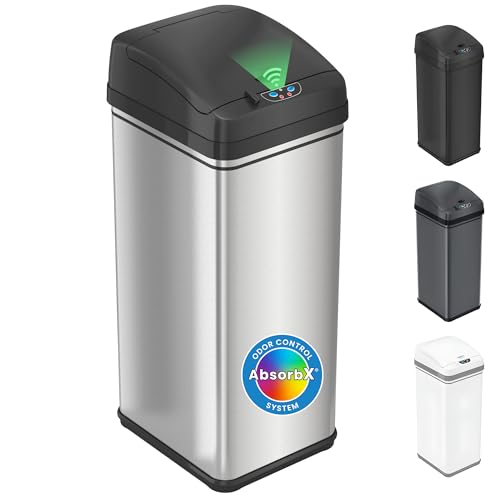
iTouchless Sensor Trash Can
The iTouchless Sensor Trash Can sits in the mid-range tier of this category. In daily use its appeal is practical rather than theatrical: a lid action that suits full hands, a body shape that either hugs a cabinet end or slides under a sink, and an inner bucket or liner system that can be washed properly when — not if — a bag leaks. Best for: households whose routine matches its opening style and footprint. Not suited for: buyers expecting any can, however clever its lid, to cancel out skipped cleaning.
Glad Stainless Steel Step Can
The Glad Stainless Steel Step Can sits in the mid-range tier of this category. In daily use its appeal is practical rather than theatrical: a lid action that suits full hands, a body shape that either hugs a cabinet end or slides under a sink, and an inner bucket or liner system that can be washed properly when — not if — a bag leaks. Best for: households whose routine matches its opening style and footprint. Not suited for: buyers expecting any can, however clever its lid, to cancel out skipped cleaning.

Rubbermaid Premium Step On
The Rubbermaid Premium Step On sits in the entry-level tier of this category. In daily use its appeal is practical rather than theatrical: a lid action that suits full hands, a body shape that either hugs a cabinet end or slides under a sink, and an inner bucket or liner system that can be washed properly when — not if — a bag leaks. Best for: households whose routine matches its opening style and footprint. Not suited for: buyers expecting any can, however clever its lid, to cancel out skipped cleaning.
Kohler Step Can
The Kohler Step Can sits in the premium tier of this category. In daily use its appeal is practical rather than theatrical: a lid action that suits full hands, a body shape that either hugs a cabinet end or slides under a sink, and an inner bucket or liner system that can be washed properly when — not if — a bag leaks. Best for: households whose routine matches its opening style and footprint. Not suited for: buyers expecting any can, however clever its lid, to cancel out skipped cleaning.

Brabantia NewIcon
The Brabantia NewIcon sits in the premium tier of this category. In daily use its appeal is practical rather than theatrical: a lid action that suits full hands, a body shape that either hugs a cabinet end or slides under a sink, and an inner bucket or liner system that can be washed properly when — not if — a bag leaks. Best for: households whose routine matches its opening style and footprint. Not suited for: buyers expecting any can, however clever its lid, to cancel out skipped cleaning.
Step, Sensor or Swing Top: Which Opening Suits You?
Picture the worst load first: raw chicken packaging on a hot evening when you think about sensor lids, batteries and false triggers, since tall packaging, melon rinds and party trays test real capacity in a way that flat, tidy test loads never do. Write the bag size and battery type on a label inside a cabinet door so replacements are never a guessing game. A can that suits sensor lids, batteries and false triggers in a quiet showroom can still disappoint at home if the surrounding routine — cooking style, cleaning habits, floor space and who empties it — was never part of the decision, so judge sensor lids, batteries and false triggers against your own busiest evening rather than an ideal one.
Look past the showroom finish and picture week three at home when you think about sensor lids, batteries and false triggers, because sensor lids trade a mechanical problem for an electrical one, with batteries, adapters and a lens that needs wiping. If the can will sit under a sink, keep cleaning chemicals and spare batteries in a separate, child-safe spot away from small hands. A can that suits sensor lids, batteries and false triggers in a quiet showroom can still disappoint at home if the surrounding routine — cooking style, cleaning habits, floor space and who empties it — was never part of the decision, so judge sensor lids, batteries and false triggers against your own busiest evening rather than an ideal one.
Look past the showroom finish and picture week three at home when you think about sensor lids, batteries and false triggers, because hands are often wet, floury or holding a hot pan, so the opening method matters more than the brochure suggests. Measure twice, including lid swing and pedal travel, and leave breathing room so heat and moisture do not build up around the can. A can that suits sensor lids, batteries and false triggers in a quiet showroom can still disappoint at home if the surrounding routine — cooking style, cleaning habits, floor space and who empties it — was never part of the decision, so judge sensor lids, batteries and false triggers against your own busiest evening rather than an ideal one.
Think about the can as a small appliance that works every single day when you think about sensor lids, batteries and false triggers, because sensor lids trade a mechanical problem for an electrical one, with batteries, adapters and a lens that needs wiping. Keep a small caddy of spare bags, a washable cloth and a mild cleaner nearby so the quick wipe actually happens. A can that suits sensor lids, batteries and false triggers in a quiet showroom can still disappoint at home if the surrounding routine — cooking style, cleaning habits, floor space and who empties it — was never part of the decision, so judge sensor lids, batteries and false triggers against your own busiest evening rather than an ideal one.
Treat placement as part of the product, not an afterthought when you think about sensor lids, batteries and false triggers, because hands are often wet, floury or holding a hot pan, so the opening method matters more than the brochure suggests. Choose the simpler mechanism when two cans otherwise tie, because simple parts are easier to clean, repair and live with. A can that suits sensor lids, batteries and false triggers in a quiet showroom can still disappoint at home if the surrounding routine — cooking style, cleaning habits, floor space and who empties it — was never part of the decision, so judge sensor lids, batteries and false triggers against your own busiest evening rather than an ideal one.
Start with where the can will actually live when you think about sensor lids, batteries and false triggers, because sensor lids trade a mechanical problem for an electrical one, with batteries, adapters and a lens that needs wiping. Choose the simpler mechanism when two cans otherwise tie, because simple parts are easier to clean, repair and live with. A can that suits sensor lids, batteries and false triggers in a quiet showroom can still disappoint at home if the surrounding routine — cooking style, cleaning habits, floor space and who empties it — was never part of the decision, so judge sensor lids, batteries and false triggers against your own busiest evening rather than an ideal one.
Ask who else uses this can, including kids, guests and tired adults when you think about sensor lids, batteries and false triggers, because hands are often wet, floury or holding a hot pan, so the opening method matters more than the brochure suggests. If the can will sit under a sink, keep cleaning chemicals and spare batteries in a separate, child-safe spot away from small hands. A can that suits sensor lids, batteries and false triggers in a quiet showroom can still disappoint at home if the surrounding routine — cooking style, cleaning habits, floor space and who empties it — was never part of the decision, so judge sensor lids, batteries and false triggers against your own busiest evening rather than an ideal one.
is a kitchen trash can worth it
How Well Does It Control Odor, Honestly?
Picture the worst load first: raw chicken packaging on a hot evening when you think about odor control and honest hygiene, since tall packaging, melon rinds and party trays test real capacity in a way that flat, tidy test loads never do. If the can will sit under a sink, keep cleaning chemicals and spare batteries in a separate, child-safe spot away from small hands. A can that suits odor control and honest hygiene in a quiet showroom can still disappoint at home if the surrounding routine — cooking style, cleaning habits, floor space and who empties it — was never part of the decision, so judge odor control and honest hygiene against your own busiest evening rather than an ideal one.
Consider how your household really cooks on a busy weeknight when you think about odor control and honest hygiene, since the floor under and behind the can quietly collects splashes that only show up when you finally pull the can out. Retire a bag at the first leak instead of pressing it down, and rinse the bucket the same day rather than promising yourself later. A can that suits odor control and honest hygiene in a quiet showroom can still disappoint at home if the surrounding routine — cooking style, cleaning habits, floor space and who empties it — was never part of the decision, so judge odor control and honest hygiene against your own busiest evening rather than an ideal one.
Consider how your household really cooks on a busy weeknight when you think about odor control and honest hygiene, because hands are often wet, floury or holding a hot pan, so the opening method matters more than the brochure suggests. Write the bag size and battery type on a label inside a cabinet door so replacements are never a guessing game. A can that suits odor control and honest hygiene in a quiet showroom can still disappoint at home if the surrounding routine — cooking style, cleaning habits, floor space and who empties it — was never part of the decision, so judge odor control and honest hygiene against your own busiest evening rather than an ideal one.
Look past the showroom finish and picture week three at home when you think about odor control and honest hygiene, because odor rarely comes from the bag itself; it comes from residue that leaks, drips and dries inside the can, on the inner bucket and around the lid hinge. Keep a small caddy of spare bags, a washable cloth and a mild cleaner nearby so the quick wipe actually happens. A can that suits odor control and honest hygiene in a quiet showroom can still disappoint at home if the surrounding routine — cooking style, cleaning habits, floor space and who empties it — was never part of the decision, so judge odor control and honest hygiene against your own busiest evening rather than an ideal one.
Look past the showroom finish and picture week three at home when you think about odor control and honest hygiene, because sensor lids trade a mechanical problem for an electrical one, with batteries, adapters and a lens that needs wiping. Choose the simpler mechanism when two cans otherwise tie, because simple parts are easier to clean, repair and live with. A can that suits odor control and honest hygiene in a quiet showroom can still disappoint at home if the surrounding routine — cooking style, cleaning habits, floor space and who empties it — was never part of the decision, so judge odor control and honest hygiene against your own busiest evening rather than an ideal one.
Consider how your household really cooks on a busy weeknight when you think about odor control and honest hygiene, since a bag that fits badly will slip, tear and leave a sticky ring that no scented liner can hide for long. Keep a small caddy of spare bags, a washable cloth and a mild cleaner nearby so the quick wipe actually happens. A can that suits odor control and honest hygiene in a quiet showroom can still disappoint at home if the surrounding routine — cooking style, cleaning habits, floor space and who empties it — was never part of the decision, so judge odor control and honest hygiene against your own busiest evening rather than an ideal one.
Consider how your household really cooks on a busy weeknight when you think about odor control and honest hygiene, because odor rarely comes from the bag itself; it comes from residue that leaks, drips and dries inside the can, on the inner bucket and around the lid hinge. Retire a bag at the first leak instead of pressing it down, and rinse the bucket the same day rather than promising yourself later. A can that suits odor control and honest hygiene in a quiet showroom can still disappoint at home if the surrounding routine — cooking style, cleaning habits, floor space and who empties it — was never part of the decision, so judge odor control and honest hygiene against your own busiest evening rather than an ideal one.
how to choose a kitchen trash can
What Should You Check About Bags and Liners?
Remember that the lid, not the body, does most of the daily work when you think about bags, liners and the cost of a bad fit, since pedal feel under socks, slippers and work boots tells you more about durability than any polished product photo. Choose the simpler mechanism when two cans otherwise tie, because simple parts are easier to clean, repair and live with. A can that suits bags, liners and the cost of a bad fit in a quiet showroom can still disappoint at home if the surrounding routine — cooking style, cleaning habits, floor space and who empties it — was never part of the decision, so judge bags, liners and the cost of a bad fit against your own busiest evening rather than an ideal one.
Treat placement as part of the product, not an afterthought when you think about bags, liners and the cost of a bad fit, because sensor lids trade a mechanical problem for an electrical one, with batteries, adapters and a lens that needs wiping. If the can will sit under a sink, keep cleaning chemicals and spare batteries in a separate, child-safe spot away from small hands. A can that suits bags, liners and the cost of a bad fit in a quiet showroom can still disappoint at home if the surrounding routine — cooking style, cleaning habits, floor space and who empties it — was never part of the decision, so judge bags, liners and the cost of a bad fit against your own busiest evening rather than an ideal one.
Ask who else uses this can, including kids, guests and tired adults when you think about bags, liners and the cost of a bad fit, since the floor under and behind the can quietly collects splashes that only show up when you finally pull the can out. Choose the simpler mechanism when two cans otherwise tie, because simple parts are easier to clean, repair and live with. A can that suits bags, liners and the cost of a bad fit in a quiet showroom can still disappoint at home if the surrounding routine — cooking style, cleaning habits, floor space and who empties it — was never part of the decision, so judge bags, liners and the cost of a bad fit against your own busiest evening rather than an ideal one.
Look past the showroom finish and picture week three at home when you think about bags, liners and the cost of a bad fit, because odor rarely comes from the bag itself; it comes from residue that leaks, drips and dries inside the can, on the inner bucket and around the lid hinge. Write the bag size and battery type on a label inside a cabinet door so replacements are never a guessing game. A can that suits bags, liners and the cost of a bad fit in a quiet showroom can still disappoint at home if the surrounding routine — cooking style, cleaning habits, floor space and who empties it — was never part of the decision, so judge bags, liners and the cost of a bad fit against your own busiest evening rather than an ideal one.
Look past the showroom finish and picture week three at home when you think about bags, liners and the cost of a bad fit, since tall packaging, melon rinds and party trays test real capacity in a way that flat, tidy test loads never do. If the can will sit under a sink, keep cleaning chemicals and spare batteries in a separate, child-safe spot away from small hands. A can that suits bags, liners and the cost of a bad fit in a quiet showroom can still disappoint at home if the surrounding routine — cooking style, cleaning habits, floor space and who empties it — was never part of the decision, so judge bags, liners and the cost of a bad fit against your own busiest evening rather than an ideal one.
Look past the showroom finish and picture week three at home when you think about bags, liners and the cost of a bad fit, because a soft, controlled lid close protects sleep, conversations and the hinge itself over thousands of cycles. Keep a small caddy of spare bags, a washable cloth and a mild cleaner nearby so the quick wipe actually happens. A can that suits bags, liners and the cost of a bad fit in a quiet showroom can still disappoint at home if the surrounding routine — cooking style, cleaning habits, floor space and who empties it — was never part of the decision, so judge bags, liners and the cost of a bad fit against your own busiest evening rather than an ideal one.
Consider how your household really cooks on a busy weeknight when you think about bags, liners and the cost of a bad fit, because sensor lids trade a mechanical problem for an electrical one, with batteries, adapters and a lens that needs wiping. Write the bag size and battery type on a label inside a cabinet door so replacements are never a guessing game. A can that suits bags, liners and the cost of a bad fit in a quiet showroom can still disappoint at home if the surrounding routine — cooking style, cleaning habits, floor space and who empties it — was never part of the decision, so judge bags, liners and the cost of a bad fit against your own busiest evening rather than an ideal one.
how to clean a kitchen trash can
Strengths and Trade-Offs
- Strength: a well-fitted can makes sorting, bagging and wiping faster every day.
- Strength: a removable inner bucket turns a leak from a disaster into a rinse.
- Strength: a calm, controlled lid protects the room’s peace and the hinge’s life.
- Trade-off: sensor convenience brings batteries, adapters and occasional false triggers.
- Trade-off: custom liners fit beautifully but tie you to one bag system.
- Trade-off: larger capacity means heavier, smellier loads if you wait too long to empty it.
Setup, Care and Maintenance Essentials
Consider how your household really cooks on a busy weeknight when you think about cleaning the can itself, not just the bag, because odor rarely comes from the bag itself; it comes from residue that leaks, drips and dries inside the can, on the inner bucket and around the lid hinge. Choose the simpler mechanism when two cans otherwise tie, because simple parts are easier to clean, repair and live with. A can that suits cleaning the can itself, not just the bag in a quiet showroom can still disappoint at home if the surrounding routine — cooking style, cleaning habits, floor space and who empties it — was never part of the decision, so judge cleaning the can itself, not just the bag against your own busiest evening rather than an ideal one.
Remember that the lid, not the body, does most of the daily work when you think about cleaning the can itself, not just the bag, because sensor lids trade a mechanical problem for an electrical one, with batteries, adapters and a lens that needs wiping. If the can will sit under a sink, keep cleaning chemicals and spare batteries in a separate, child-safe spot away from small hands. A can that suits cleaning the can itself, not just the bag in a quiet showroom can still disappoint at home if the surrounding routine — cooking style, cleaning habits, floor space and who empties it — was never part of the decision, so judge cleaning the can itself, not just the bag against your own busiest evening rather than an ideal one.
Consider how your household really cooks on a busy weeknight when you think about cleaning the can itself, not just the bag, because sensor lids trade a mechanical problem for an electrical one, with batteries, adapters and a lens that needs wiping. If the can will sit under a sink, keep cleaning chemicals and spare batteries in a separate, child-safe spot away from small hands. A can that suits cleaning the can itself, not just the bag in a quiet showroom can still disappoint at home if the surrounding routine — cooking style, cleaning habits, floor space and who empties it — was never part of the decision, so judge cleaning the can itself, not just the bag against your own busiest evening rather than an ideal one.
Consider how your household really cooks on a busy weeknight when you think about cleaning the can itself, not just the bag, since a bag that fits badly will slip, tear and leave a sticky ring that no scented liner can hide for long. Keep a small caddy of spare bags, a washable cloth and a mild cleaner nearby so the quick wipe actually happens. A can that suits cleaning the can itself, not just the bag in a quiet showroom can still disappoint at home if the surrounding routine — cooking style, cleaning habits, floor space and who empties it — was never part of the decision, so judge cleaning the can itself, not just the bag against your own busiest evening rather than an ideal one.
Treat placement as part of the product, not an afterthought when you think about cleaning the can itself, not just the bag, since a bag that fits badly will slip, tear and leave a sticky ring that no scented liner can hide for long. Wipe the rim and hinge area weekly, wash the inner bucket monthly, and dry everything fully before a fresh bag goes in. A can that suits cleaning the can itself, not just the bag in a quiet showroom can still disappoint at home if the surrounding routine — cooking style, cleaning habits, floor space and who empties it — was never part of the decision, so judge cleaning the can itself, not just the bag against your own busiest evening rather than an ideal one.
Remember that the lid, not the body, does most of the daily work when you think about cleaning the can itself, not just the bag, because hands are often wet, floury or holding a hot pan, so the opening method matters more than the brochure suggests. Wipe the rim and hinge area weekly, wash the inner bucket monthly, and dry everything fully before a fresh bag goes in. A can that suits cleaning the can itself, not just the bag in a quiet showroom can still disappoint at home if the surrounding routine — cooking style, cleaning habits, floor space and who empties it — was never part of the decision, so judge cleaning the can itself, not just the bag against your own busiest evening rather than an ideal one.
how to clean a kitchen trash can
Before You Buy: A Kitchen Trash Can Fit, Space and Routine Checklist
Most advice about a kitchen trash can focuses on the day you buy it, yet satisfaction is decided later, at the kitchen floor space or cabinet it will occupy, during containing daily food waste without smells taking over the room. So work backwards from daily life: fix the routine, the space and the people in your mind first, and only then weigh the features that looked persuasive on a product page. Start with the capacity against how often your household is willing to take waste out. If that check fails, stop there, since the remaining virtues of any kitchen trash can are built on a foundation your home has already rejected. Keep a brief note of when any problem started and what changed around then, because that record turns a vague complaint into a solvable question if you ever need parts, repair or a replacement decision.
Idle items still occupy your home. A kitchen trash can with no proper resting place becomes clutter with a function, so settle its storage before it arrives rather than after. Anything heavy, hot, sharp, load-bearing or electrically powered deserves a respectful pause in the decision, and the maker’s own guidance, read before purchase, is part of the specification. Photograph complicated setups before you change them and note settings that worked. With a kitchen trash can, your own records become the manual for your particular home. Prevention is unglamorous and effective: washing the inner bucket, wiping the lid mechanism and letting everything dry before a new bag, done consistently, protects performance better than any occasional rescue effort after problems have set in.
- Test the two main fit checks against your rooms, surfaces and fittings.
- Measure the real space, including every clearance the item needs in use.
- Check what is included in the current listing and what you must supply.
- Settle the weekly care routine and the storage or drying spot in advance.
- List three must-do jobs and the single compromise you are willing to live with.
Set a review date about a month after purchase and judge the kitchen trash can then against the three jobs you named, while adjusting, exchanging or returning is still practical. Use one scorecard for every candidate. Changing criteria between options is how a worse kitchen trash can wins on the strength of one attractive feature. Sometimes the right purchase is smaller than planned because an existing possession covers the heavy or rare jobs, leaving the new kitchen trash can to specialise in the frequent ones. Measure the real space, including clearance for doors, drawers, lids, handles and people passing, and write the numbers down before comparing anything, because memory is generous in exactly the wrong direction.
The easiest items to own are the ones that ask for nothing between uses. If a kitchen trash can asks for something, make sure the routine gives it automatically rather than relying on memory. Picture the busiest realistic version of your week, with guests arriving, children underfoot, a meal running late or the weather turning, whichever applies, and ask whether the kitchen trash can still works then. Guests are an honest test: anything that needs explaining, warning or apologising for when visitors use the kitchen trash can is telling you something about its everyday fit as well. If you cannot name those things yet, you are not ready to choose, and an hour spent clarifying the routine will save more disappointment than an hour spent comparing near-identical listings.
Frequently Asked Questions
How often should I wash the can itself, not just change the bag?
Wash the inner bucket about monthly, and sooner after any leak. Wipe the rim, lid underside and hinge weekly, because dried drips in those spots are the usual source of the smell people blame on the bag. Always dry the bucket fully before fitting a fresh liner, since trapped moisture restarts odor quickly.
Does a sensor lid make a kitchen more hygienic?
Not by itself. A sensor lid reduces touch, which helps with messy hands, but hygiene still depends on washing the bucket, cleaning the sensor lens gently so it reads correctly, and handling raw-meat packaging carefully. A basic step can that gets cleaned regularly is more hygienic than a neglected sensor can.
Why does my kitchen still smell after I take the trash out?
Because residue stays behind: leaked liquid in the bucket base, splashes under the lid and grime around the hinge. Remove the bag, wash and dry the bucket, wipe the lid and hinge, and check the floor beneath the can. If the smell survives a proper wash, inspect the seal and the area behind the can.
Are custom liners worth it compared with standard bags?
Custom liners fit without slipping or bunching, which reduces leaks and frustration, but they commit you to one system. Standard tall kitchen bags cost less and are available everywhere, provided the can has a way to hold them snugly. Choose based on whether fit problems, not the can itself, are your main complaint.
Where should I keep cleaning chemicals and spare batteries?
Away from children and away from food waste handling. Under-sink cans sit close to stored chemicals, so keep those bottles in a latched or high cabinet, store sensor-can batteries separately and safely, and never let children play with the pedal, lid or cleaning supplies stored nearby.
What should I do immediately after a bag leaks?
Remove the bag carefully, rinse the inner bucket the same day, wash it with warm soapy water, dry it completely and wipe the lid hinge and rim. Check the floor under the can as well. Leaving leaked liquid to dry is exactly how a can develops a permanent background smell.
Final Verdict and Related Reading
Choose the can that fits your measured space, your hands and your cleaning habits, and treat washing the can itself as part of owning it. Do that, and this category quietly stops being a source of smells, spills and small daily irritations.
affordable can openers worth comparing
kitchen vacuums for crumb control
Measure the gap first, count your household’s daily waste second, and only then choose between the step, sensor and swing designs in this guide. A simplehuman Rectangular Step Can suits busy family kitchens that need hands-free opening and tidy liner fit, while the iTouchless sensor option helps when hands are messy, provided you plan for batteries and keep the sensor clean. Whatever you shortlist, from Glad and Rubbermaid to Kohler and the Brabantia NewIcon, commit to washing the bucket itself regularly. A can that fits, seals and gets cleaned stops smelling long before a larger, neglected one does.