Disclosure: As an Amazon Associate, airfryerkitchensupply.com earns from qualifying purchases. Links on this page are affiliate links; they cost you nothing extra. Prices and availability change often, so check the current Amazon listing before you buy.
Worth is a slippery word to aim at a bench, because a bench returns no measurable yield — no harvest, no rent, no resale to speak of. What it returns is time: mornings that start outside instead of in, pauses that turn a chore route into a garden, a seat that is simply there on the hundred ordinary days a year when nobody would fetch a chair. This page prices that return as honestly as it can be priced, in uses and years rather than in money, and it names the households for whom the sum works and the households — there are plenty — for whom the honest answer is to keep the money and the ground.
Key Takeaways
Best for: a household with a genuine daily pause, a spot that can be made level and firm, and a realistic willingness to give a bench small seasonal attention — for them, the arithmetic of use makes a bench one of the cheapest pleasures per hour a garden offers. Not suited for: a garden bought for in a photograph, a plot with nowhere level to stand one, or a household whose outdoor life happens around a table. The break-even is not really about tier. It is about frequency: a modest bench used daily repays itself in any currency that matters, and a fine bench used monthly never quite does.
In this guide
What You Actually Get From a Garden Bench
What you actually get, first, is a change in the garden’s usage pattern that owners consistently describe as larger than the object. A seat creates a destination; a destination creates a route; a route creates attention, and attention is the currency gardens are really made of. Beds near benches get weeded, borders near benches get noticed in time, and the household’s mental map of its own plot grows a room it did not have. If you have ever watched a garden improve around a new path or a new gate, you have seen the mechanism — the bench is that mechanism, in furniture form. Keep the receipt of your reasoning, not just of the purchase: a note of the weekly moment the bench was bought to serve, checked after the first season, tells you whether the worth was real or merely hoped for, and it disciplines every later garden purchase the same way.
Second, you get a piece of household infrastructure with an unusually honest cost profile. It consumes nothing while it serves. It does not date the way technology dates, does not need its parts ecosystem to survive, and does not bill you monthly for the privilege of sitting. Spread over the years a sound bench serves, its cost per hour of use falls below almost anything else in the garden — below the mower’s, below the barbecue’s, below the string lights that lasted two seasons. Worth, in this category, is mostly a function of a denominator: hours sat. Everything on this page is about making that denominator large. Notice that worth compounds quietly in the second and third years, when the bench stops being a purchase and becomes a place — the spot with a name, where particular conversations happen and particular light is expected at particular hours, none of which was in the listing.
Third, you get an option on the future that is easy to underrate at purchase time. A bench bought for today’s coffee becomes tomorrow’s toddler grandstand, next decade’s rest on the way to the compost, and eventually the seat from which an older gardener supervises work they once did. Furniture that serves every age of its owners earns a kind of compound interest no specification captures. Not every household will stay long enough to collect it — which is itself one of the decision points below — but those who do consistently report the bench among the purchases they would repeat without changing a thing. A useful discipline is to revisit the decision each spring for one minute: still used weekly, still sound, still in the right spot. Three yeses and the bench has re-earned its ground; a no on any count is information, not failure, and it arrives while something can still be done.
The Real Costs Beyond Money
The real costs begin with the one nobody lists: the ground. A bench needs a level, firm, drained standing place, and if your garden does not already offer one, creating it — slabs, gravel, levelling, perhaps a small terrace — is part of the purchase whether or not it appears on the receipt. Buyers who skip it pay the same cost later, in wobble, rot and relocation, with interest. Price the whole installation in your head before judging any bench expensive or cheap, because the bench is often barely half the true project. Households that buy well in this category share one trait worth copying: they can state, in a single sentence, the job the bench was hired to do, and they judge it against that job alone rather than against every bench they have ever seen in a magazine.
Time is the second cost, charged annually. Timber wants its clean and its coat; coatings want their chips closed; every bench wants its fixings checked and its water traps cleared, and a household that pays none of this will watch its purchase age at the fast rate instead of the slow one. The amounts are small — an hour here, an afternoon there — but they are forever, and they fall due in the busy seasons. A bench is worth it only if those appointments are ones your household will keep, which is a question about your diary, not your intentions. The money question also has a floor as well as a ceiling, because a bench too flimsy to survive its second winter is not a saving but a subscription — small payments, repeated, for a seat that is never quite trusted, until the household buys properly or gives up on the idea entirely.
The third cost is opportunity, in space and in money. The ground a bench occupies cannot grow vegetables, hold the trampoline, or become the pond you have been sketching; the money it absorbs cannot buy the tree whose shade you will want in five years. In a large garden these trades are trivial. In a small one they are the whole decision, and they deserve to be made consciously: a bench earns its ground only by being used on it, weekly at least, and a household should be able to name — before buying — the recurring moment the bench will serve, in an ordinary week, in February as well as June. When two benches both pass the tests and differ in tier, let the deciding vote go to the one whose maintenance routine you described with more enthusiasm, because enthusiasm is the currency the bench will actually be paid in across the years of its service.
Who It Pays Off For, and Who Should Skip It
It pays off, clearly, for the household with a ritual looking for a home: the morning coffee walker, the after-work decompressor, the gardener who already pauses with a trug and nowhere to set it down. For them the bench converts existing behaviour into comfort from the first week, and the uses accumulate so fast that the purchase price becomes a rounding error in the household’s story of itself. It pays off, too, for multi-generational households, where one seat serves climbers, sitters and risers in the same afternoon, and for anyone furnishing a garden they expect to keep for a decade or more. It helps to remember that the household will not remember the discount; it will remember the mornings. Purchases of this kind are remembered as places, and a place that was nearly right is remembered, daily, at exactly the moments it was bought for.
It pays off much less clearly for the household whose garden is a view rather than a venue — looked at from a deck, maintained on a schedule, rarely sat in. For them a bench is a sculpture with a maintenance routine, and the money is usually better spent on planting that improves the view itself. It also pays poorly for short horizons: a tenancy of a year or two, a garden about to be redesigned, a plot about to be sold. A bench’s value is back-loaded into years three to twenty; households who will not be present for those years are buying the expensive part and donating the return. Finally, allow the answer to be provisional. A bench can be worth it for this decade of a household’s life and honestly finished in the next, passed on with the garden’s blessing — and a purchase that served fully for its season was worth it, completely, whatever happens after.
Skip it, finally, if the honest inventory of your outdoor life shows a table at its centre. Families who eat outside, work outside and gather outside around a surface will use dining furniture daily and a bench at Christmas. Skip it if the only candidate spot fails the physical tests — soft, sloping, waterlogged, or blasted by afternoon sun — and cannot be fixed within your means, because a bench in a bad spot does not deliver a fraction of the value; it delivers a fraction of the value and all of the maintenance. The worth-it question has a geography, and geography is not negotiable.
Alternatives to Consider and the Decision Checklist
The alternatives deserve a fair hearing before the bench wins by default. A pair of good garden chairs costs less ground, follows the shade, and suits conversation better; it loses on permanence, capacity and the destination effect. A lounger serves one person’s bliss better than any bench and serves a household barely at all. A simple wall, step or raised bed edge — the seat you already own — serves the daily pause at zero purchase cost, and many households discover, testing one for a fortnight, that it meets the need entirely. A bench must beat the free seat you already have, not merely the other products in its category.
Run the decision as a checklist with honest answers. One: can you name the recurring weekly moment this bench will serve? Two: is there a spot that passes the ground tests, or a plan to make one? Three: whose body must it fit, and have you matched the seat to them? Four: which material’s care routine will this household actually perform? Five: if the bench vanished in a year, would the garden feel the loss — and if not, what does that tell you? Five yeses make the purchase close to self-justifying. Two or more hesitations mean the worth-it answer, for now, is no — and no is a respectable, money-saving answer.
If the checklist passes, one refinement decides the tier. Buy for the use you have proven, not the use you imagine: a fortnight of sitting on a borrowed chair in the intended spot will tell you the true frequency, and frequency sets the sensible tier more reliably than taste does. Daily users can justify almost any well-built bench, because their denominator of hours is enormous. Weekly users should buy soundly and stop there. The households that regret their bench spending are rarely the ones who bought too little bench; they are the ones who bought a decade’s worth of bench for a summer’s worth of habit.
Is a garden bench worth it: The Picks in Prose
The six benches below are assessed here on worth — who gets their money’s worth from each family, over what horizon, and who should let the money stay in the bank. Tiers are described in words, not figures; check the current listing when you are ready to compare.

Achla Designs Garden Bench
The Achla Designs metalwork bench is worth it for the household furnishing a finished, traditional garden it expects to keep. Its value case rests on presence: it completes a formal edge or path end immediately and keeps doing so for years of small attentions. Best for: settled owners with a shaded, visible spot. Not suited for: short tenancies or anyone who would resent touching up a coating — for them the same money buys more happiness in a lower-maintenance family.
Its break-even arrives through the window as much as through the seat: a bench looked at daily earns part of its keep on days nobody sits, and this family’s looks are its dividend. Count that honestly, though — if the spot is hidden, the dividend vanishes and the value case must rest on sitting alone, where hotter, harder metal asks more of its owner than timber does. Worth it in view and in shade; questionable in a sunny corner bought for sitting marathons.

Plow & Hearth Cast Iron Garden Bench
The Plow & Hearth cast iron bench is the longest-horizon purchase on this page, and its worth question is really a question about your own horizon. Over decades in one garden, with slats renewed as they age, its cost per year becomes trivial and its presence becomes part of the property. Best for: owners who are staying. Not suited for: anyone with a move, a redesign or a deck-loading worry in the next few years — the horizon is the product here.
Be honest about the partnership it requires: the frame’s decades are delivered in exchange for the timber’s seasonal care and an eventual set of replacement slats, which are costs in time and money spread so thinly that owners barely feel them — provided they stay. The household that moves in year three has bought the expensive beginning of somebody else’s bargain. If your roots are down, few garden purchases repay patience as reliably; if they are not, rent the idea with a lighter bench first.

Best Choice Products Outdoor Garden Bench
The Best Choice Products steel bench is worth it in a specific and honourable way: as tuition. For a first garden, a new plot, or a household unsure where it sits, it buys real information — the true spot, the true frequency, the true sitter — at the category’s lowest commitment. Best for: learners and renters. Not suited for: a buyer seeking a decade of service in a harsh climate, who will pay twice by paying cheaply first.
Its worth collapses only when it is miscast. Bought as a forever bench, its finishes and fixings will present their bills early and its owner will feel cheated by a product that never promised otherwise. Bought as a season or three of discovery — after which it can serve a second life at an allotment, a rental, or a potting corner — it may be the smartest money on this page. Worth, once again, is the match between the promise in your head and the purpose in the garden.
POLYWOOD Park Bench
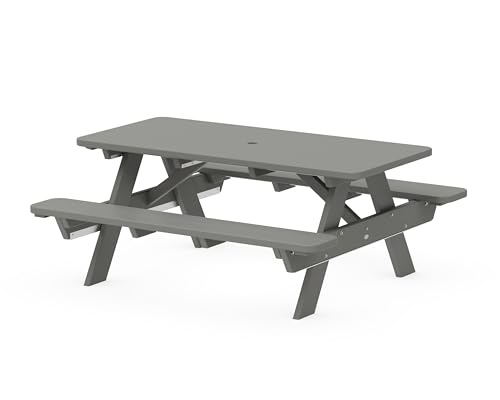
The POLYWOOD Park bench prices its worth in hours of your life it refuses to take. For a household whose scarcest resource is time — or a plot whose damp shade would tax timber relentlessly — avoiding years of oiling, sanding and rust care is a return as real as any sitting. Best for: busy owners, damp corners, communal gardens. Not suited for: buyers who want their furniture to gather character, because this family’s refusal to change is both its value and its limit.
Its horizon logic is distinctive: the value grows in exactly the gardens where other benches’ value leaks away — the wet corner, the salt air, the community plot visited monthly. In a cherished, sheltered garden where an owner enjoys maintenance as gardening, the same bench’s premium buys indifference nobody needed. Worth it where attention is expensive or weather is aggressive; harder to justify where care would have been a pleasure rather than a cost.

Yaheetech Wooden Garden Bench
The Yaheetech wooden bench is worth it for the owner who counts tending things among the pleasures a garden exists to provide. Its warmth is chosen daily by visitors, its care is a rhythm rather than a burden in the right household, and its repairability stretches its service across many seasons. Best for: a sheltered porch or terrace with a willing keeper. Not suited for: an exposed wet site or an absent owner, where its value would drain with its finish.
Do the sum with your own temperament in the ledger. If the seasonal oiling is an afternoon you would enjoy even without the bench — radio on, kettle after — then the bench’s true running cost approaches zero and its worth is obvious. If that afternoon would be stolen from things you love, the same bench is expensive at any tier, and its cheaper-looking shelf price is a disguise. Few products on this page make the point as cleanly: the price is printed once, but the worth is decided by who is paying the time.
Grandin Road Garden Bench
The Grandin Road design-led bench is worth it when the view is a real part of the household’s daily life — breakfast by the window, evenings on the terrace — because its return is paid in every glance, not only in sits. In the right setting it can be the single most cost-effective beautification a garden receives. Best for: a composed, much-looked-at site. Not suited for: a purely functional brief, where its premium buys a quality — presence — that the buyer does not consume.
Its worth has a condition the others lack: the setting must be ready. The same money spent on ground preparation and planting first, with a plainer bench after, often yields more total beauty than the statement piece planted in an unprepared scene. Sequence is the value skill here. Buy the setting, then the bench that crowns it, and this family repays its premium in the currency of a garden that finally looks finished. Buy it first, as a shortcut to finished, and it will politely expose everything around it.
Strengths and Trade-Offs
Strengths
- The return on a well-matched bench is measured in hundreds of small pleasures a year, at a running cost of a few hours’ attention — an exchange few purchases match.
- A sound bench’s value back-loads beautifully: it is worth more to its household in year ten, woven into routines and memories, than on delivery day.
- Because benches are repairable and material-honest, the money buys a service life that can stretch across decades and even across owners.
Trade-offs
- The return depends entirely on frequency of use, which no seller can guarantee and many buyers overestimate in the first flush of a garden project.
- The true cost includes ground preparation and years of small maintenance appointments, which headline prices politely omit.
- In a small garden the bench spends the scarcest asset — ground — and a wrong call there taxes every other plan the plot might have held.
Setup, Care and Maintenance Essentials
Protect the investment at setup, because the first month writes much of the bench’s financial future. Stand it on ground prepared to be level, firm and drained — money and effort spent here return themselves in joints that stay tight and finishes that stay dry. Assemble in sequence, tighten progressively, and let the bench settle under a sitter before the final pass, so the frame begins life true. Then keep the two appointments that guard the value: re-check every fixing after the first month of weather, and service the bench each autumn — traps cleared, chips closed, timber fed if timber it is — before winter converts small neglects into repairs. A bench bought well and set up well is an asset that appreciates in use; the same bench thrown onto soft ground and forgotten is a depreciating one, and the difference was never the bench.
More Detail: Living With a Garden Bench
Do the fortnight test before any money moves. Put an ordinary chair where the bench would go and live with it for two weeks: sit at your real times, notice who joins you, feel the ground after rain, watch the sun cross the spot at the hours you are free. Count the sits honestly. Fourteen days of data will tell you the frequency that decides everything on this page, and it will either make the purchase feel inevitable or save you the entire sum. No review, ranking or recommendation — including this one — knows what that fortnight knows about your household. The worth of a bench also hides in the purchases it prevents: the café trips not taken because the garden now offers the seat, the second set of chairs never bought because the bench seats the overflow, the gym of small daily walks to the plot’s far end that a destination quietly creates. None of these savings arrives with a receipt, which is why bench arithmetic done only from receipts always understates the return.
Think in cost per year of service, never in shelf price alone. A bench’s price is paid once; its service is delivered annually, and the ratio between the two is where worth lives. A soundly built bench standing for fifteen years in a family garden converts even a premium tier into a trivial annual figure, while a flimsy bench replaced three times in the same period quietly costs more in money, effort and landfill. The buyer who thinks in decades buys once; the buyer who thinks in discounts buys repeatedly and calls it saving. A bench’s worth can be tested prospectively with a number so simple it feels like a trick: the household’s current weekly count of outdoor sits longer than five minutes. If that count is already healthy on borrowed furniture — a step, a wall, an upturned crate — a bench is buying comfort for a proven habit and will almost certainly be worth it; if the count is zero, the bench is being asked to create a habit as well as furnish one, and that is a harder, rarer success.
Now run the same sum in the currency of hours sat, because it rearranges the tiers completely. A bench used for a daily half-hour accumulates over one hundred and eighty hours a year; across a decade, even a costly bench is paying pennies per hour of garden life. A bench used twice a month accumulates so slowly that the same purchase never reaches a sensible rate. This is why this page refuses to name a worth-it bench in the abstract: the identical object is a bargain in one household’s arithmetic and an indulgence in another’s, and the variable is a diary, not a product. There is a demographic honesty to add: the households that report the highest lifetime value from a bench are those whose lives are becoming more home-centred, not less — new parents, the newly retired, the recently rooted — because a bench’s return is paid in home hours, and it appreciates exactly as fast as the household’s supply of them grows.
Consider what the bench replaces. For some households it replaces a café habit — the Saturday drive to sit somewhere pleasant with coffee — and against that comparison it repays itself with startling speed. For others it replaces nothing, adding a pleasure where none was missed, which is a perfectly good reason to buy but a different kind of worth: luxury, not economy. Naming which purchase you are making keeps the judgement honest. Economies should be checked against the habit they displace; luxuries should be checked against the household’s other luxuries, and both checks are quick. Consider, too, what a bench does to the value of time spent not sitting: the gardener who can rest mid-task works longer, enjoys it more, and finishes the bed; the cook who can sit with the recipe book plans better; the grandparent who can be outside joins more of the day. A bench is worth a fraction of all the activities it makes possible around itself, and that fraction, across years, is not small.
Resale and hand-me-down value will not rescue a bad purchase, but they soften the risk of a good one. Traditional constructions — cast iron, sound timber — hold a second life in them: they sell, they move to allotments, they get inherited, they become the bench in a child’s first garden. Sealed, fashion-led or flimsy benches have one life and one owner. A buyer on the fence can fairly count that residual usefulness as part of the return, the way one counts a car’s trade-in: not the reason to buy, but a genuine term in the sum. If the money must be justified to a sceptical partner, justify it in the currency of the household’s own history: name the last purchase of similar size and ask whether it is used weekly, three years on. Benches pass that test at a rate most household spending cannot match, because their job — a place to sit, outside, together — is one of the few needs that never goes out of date.
The household that travels deserves its own paragraph, because absence is a cost multiplier. A bench in a garden that empties for months — work postings, long summers elsewhere, a second home visited quarterly — still weathers at the full rate while delivering a fraction of the sits. For such households the worth-it answer tilts toward the lowest-maintenance family and the most forgiving siting, or toward not buying until life settles. Weather does not pause for your itinerary; the bench’s costs run on garden time, and its returns run on yours. And should the bench, years from now, reach the end of its service, its worth story can end well too: slats to the fire or the compost of projects, a frame to the scrap merchant or the next garden, nothing sealed, nothing landfilled whole — a purchase that was borrowed from the material world and returned to it in pieces, which is more than most objects manage.
Worth changes across a lifetime, and a bench bought at one stage can come good at another. Young households report the bench earning its keep at gatherings and in children’s games; the same bench, decades later, is the rest on the path that makes the whole garden still reachable. A purchase that looks marginal in the busy middle years may be quietly compounding toward its most valuable decade. This is not an argument to buy everything early — it is an argument to judge a bench, uniquely among purchases, on the household you expect to become as well as the one you are.
There is a version of this purchase that is worth it almost regardless of arithmetic: the bench with a reason. A bench that marks a wedding, a recovery, a retirement, a person — such benches are not bought for sitting efficiency and should not be audited like appliances. Their return is meaning, delivered daily, in a garden, which is more than most commemorative spending manages. The practical advice still applies — site it well, choose a family the household can keep — because sentiment deserves a bench that lasts as long as the feeling does.
Beware the upgrade treadmill in this category, because it wastes the category’s main virtue. A bench is a buy-once object; its worth compounds precisely because it does not invite replacement. Households that trade up every few years — chasing a finish, a fashion, a marginally deeper seat — convert a decade-long asset into a recurring expense and never collect the years where the value lives. If your first bench was soundly chosen, the worth-it move is almost always to keep it, service it, and let time do the work that shopping cannot.
Finally, the simplest worth test of all, which experienced owners offer unprompted: imagine it gone. Picture the garden in five years with the bench removed — the pause unseated, the view unanchored, the path ending in nothing. If the picture saddens you out of proportion to a piece of furniture, the bench has been earning its place in the currency that matters. If the picture barely changes, you have your answer too, and it has saved you the purchase price. Run the test before buying, with the chair standing in the spot, and let your own reaction cast the deciding vote.
Price the bench against the garden’s other claims on the same money, because worth is always comparative. The same sum buys a young tree that will shade the plot in a decade, a season of plants, or the path that makes the garden usable in winter. A bench outranks those purchases only when sitting is the garden’s missing function. If the plot already seats its household comfortably and what it lacks is shade, the tree is the worth-it purchase and the bench is a distraction wearing a sensible face. Sequence the garden’s needs; buy the bench in its turn.
There is a quiet test owners use, usually without naming it: the replacement question. If this bench were stolen tonight, would you buy the same one again, at the same tier, this spring? Households that answer instantly in the affirmative own a purchase that was worth it by any definition. Households that hesitate — who start redesigning, re-siting, re-tiering in their answer — have located the gap between what they bought and what they needed. Run the question before buying, about the bench on your shortlist and the spot you have chosen, and let any hesitation do its useful work early.
Worth has a social ledger that private arithmetic misses. A bench in a shared or visible garden pays dividends to people who never bought it: the neighbour who rests there, the delivery driver, the grandparent on the school run, the stranger who sits for one minute and leaves the street friendlier than they found it. Households differ in how much they value that outward return, and there is no correct weight to give it — but it belongs in the sum, consciously. Some benches are worth it partly as gifts to a place, and their owners know it and say so.
Consider the bench as insurance against a smaller life. As gardeners age, the distance they can work without resting shrinks, and gardens without seats quietly get abandoned corner by corner — the far bed first, then the whole lower plot. A well-placed bench, or two, extends the years over which the whole garden remains usable, and that extension dwarfs the purchase in significance. Bought early, while it is merely a pleasure, the bench is already in place when it becomes a necessity. Few purchases in a garden appreciate in usefulness so reliably with the owner’s age.
The rental and first-home case deserves a fairer hearing than it usually gets, because a bench is one of the few garden investments that is fully portable. Money spent on a landlord’s soil is gone; money spent on a sound bench moves house with you, garden after garden, improving each one from the day it is placed. For households whose address is temporary but whose gardening is permanent, that portability converts the worth question entirely: you are not furnishing this plot, you are equipping a lifetime of plots, and a well-built bench amortises across all of them.
Set against experiences, the bench’s worth sharpens. The same money buys a short holiday, a season of restaurant meals, a festival or two — pleasures that are real, intense and finished. The bench buys a decade of mornings. Neither choice is foolish, and this page has no interest in scolding anyone toward furniture. But households deciding between the two should notice the shapes of the returns: experiences pay in memories, benches pay in habits, and habits — the daily coffee outside, the evening round of the beds — are what a garden-centred life is actually built from.
A bench can also be worth it as a discipline for the garden itself. Planting drifts, projects sprawl, and a garden can become a list of tasks with nowhere to sit inside it. The bench declares that the plot exists to be enjoyed as well as worked, and its presence has a way of finishing the area around it — the bed gets edged, the path gets swept, the view gets framed — because a seat creates an audience. Owners report gardens that improved outward from the bench like ripples, which is a return no other single purchase in the garden reliably generates.
Do not overlook the worth of a bench to the house itself. A garden that reads as furnished and used — a seat in place, a destination visible from the windows — presents the whole property as cared for, in the eyes of guests now and, one day, of buyers. Estate agents have a phrase for it and gardeners have another, but both mean the same: the bench signals that this outdoor space is a room, not a yard. That signal has a value, difficult to invoice and easy to feel, and it is part of what a well-sited bench returns.
The worth question has a timing trap worth naming: bought during the first enthusiasm for a new garden, a bench is judged against imagined habits and usually overbought; bought after a season of living with the plot, it is judged against real ones. The cheapest worth-it bench is often the one bought second — after the fortnight test, after the borrowed chair, after the garden has confessed its routines. Patience is not the enemy of value here; it is the mechanism of it, and it costs nothing but a season of sitting on something borrowed.
Households with teenagers offer an unexpected entry in the ledger. The bench becomes the garden’s semi-private territory — the place for phone calls, for friends, for being outdoors without being on display — and parents report it used at hours and in weathers no adult would choose. A purchase justified on morning coffee quietly doubles as the household’s pressure valve. Worth calculations made only from the buyer’s own habits systematically undercount a bench, because a bench is the most shareable object in the garden and its constituency is always larger than its purchaser.
There is a minimum viable version of this purchase that deserves respect: the plain, sturdy bench, bought without ceremony, placed on the daily route, used for years while the household decides what its garden really is. Not every worth-it bench is a considered heirloom; some are honest tools that earn their place by Tuesday. The mistake is not buying simply — it is buying grandly without evidence. Start where your certainty is, spend where your evidence is, and let the garden’s demonstrated life, rather than a catalogue’s staging, set the ceiling on the purchase.
Worth, in the end, is a story the household tells about its own time. A bench says that twenty unhurried minutes outside are a legitimate use of a morning; that a garden is for sitting in, not only for maintaining; that the people who live here intend to be here, in this plot, for these small daily ceremonies, for years. Households that believe those things will find a bench worth it at almost any sensible tier. Households that do not will find it worth it at none, and both verdicts are correct — which is why this page has argued from your diary outward, and never from a product inward.
One last piece of arithmetic, offered gently: count the seats your household already owns outdoors, and how many were sat on last week. Gardens accumulate aspirational furniture the way kitchens accumulate gadgets. If the count reveals chairs mouldering unused, the worth-it problem is not a missing bench but a missing habit — and habits are built free, with a borrowed chair and a fortnight, before they are furnished at cost. Build the habit first, prove it in the rain and the dark evenings, and then buy the bench it has earned. That order has never once produced a regret.
The Break-Even Test in Practice: When a Garden bench Earns Its Place and When It Quietly Does Not
The fine print holds one figure that predicts worth better than any other: the guarantee’s shape. A maker who warrants a frame for a long period while warranting its finish briefly is telling you the expected biography of the product — structure enduring, surface renewing — and a buyer can plan on exactly that. Read the split and you know where your own maintenance money and time will go over the years, which is the running-cost half of the worth equation that the shelf price never mentions.
Dimensions carry a quieter worth implication. A bench sized for your household’s actual sitters will be used at full frequency; a bench sized for imagined guests, or misjudged in depth for your main reader, will be used at half frequency — and since worth on this page is frequency multiplied by years, a sizing error is a value error of the largest kind. Extract seat height, seat depth and width between arms from the fine print and test them against a chair your household loves. Ten minutes with a tape measure protects the entire return on the purchase.
The care instructions are the last fine print to read, and read them as a price list in hours. Total the annual routine the maker describes — the cleaning, the coating, the checks — and multiply by the years you expect to keep the bench. That figure, set beside the purchase price, is the true cost of the bench, and it differs so much between families that it routinely reverses their ranking. The bench that looks expensive on the shelf and asks nothing for a decade is frequently the cheapest object on the page. Worth it, in the end, is a whole-life calculation, and the fine print is where the whole life is written.
Frequently Asked Questions
How long will a garden bench actually last outdoors?
In the experience this page draws on, a well-chosen bench on prepared ground serves for many years — the traditional families routinely reach well past a decade, with slats renewed and finishes refreshed along the way, and recycled-plastic frames promise similar spans with even less intervention. The worth angle is that longevity is the multiplier on everything else: each additional year of service lowers the cost per use and raises the total return. Buy the frame you can maintain and repair, prepare its ground once, and the years will do the compounding for you.
Should a garden bench be anchored?
Anchoring protects worth in a direct, financial sense: an unanchored light bench on soft ground does not merely wander, it loosens, and loosened joints are where repair bills and early retirements begin. On hard surfaces, mass usually does the job unaided. On soil, grass or gravel, the small one-time effort of anchoring defends the whole purchase, which makes it one of the highest-return tasks in this entire guide. Skipping it to save an hour risks the bench; doing it converts a light, movable bench into a secure one without surrendering its other advantages.
What is the lowest-maintenance bench material?
For pure worth-per-effort, recycled-plastic lumber leads: its near-zero routine means the return on the purchase is almost pure sitting, undisturbed by maintenance appointments. Coated metal follows, its small chip-repair duty buying a traditional look. Timber’s worth depends on the owner’s temperament — where the care is enjoyed, its effective cost is near zero too, and its warmth and repairability can make it the best value on the page; where the care is resented, the same bench is the worst. The family’s ranking is personal, and pretending otherwise is how benches get mis-bought.
Can a garden bench stay outside all winter?
A bench that winters outside successfully protects its worth by avoiding storage costs and spring recommissioning alike — but only if the autumn service was done. The households that report decades of outdoor winters share the same small ritual: traps cleared, chips closed, fixings checked, and either open air or a breathable cover rather than a sealed wrap over damp wood. Wintering outside is worth it when it is a decision with a checklist attached; it is a false economy when it is merely the absence of a decision, because winter always collects on neglect.
Where is the best place to put a garden bench?
The spot decides the return, so place the bench where the household’s week already contains a pause — the morning-sun corner, the end of the working path, beside the door the dog uses — on level, firm, drained ground with what shelter the plot can offer. Owners who place for use report the bench paying for itself in the first season of daily sits; owners who place for the view report a beautiful object awaiting a habit that never forms. In worth terms, placement is not one factor among many. It is the interest rate on the entire investment.
Do garden benches need cushions?
Cushions must justify themselves separately, and many do not. A well-shaped bench delivers its core return — the daily pause, the destination, the years of service — with no cushion at all, and the cushion’s added comfort arrives with storage and drying duties that tax the very simplicity that made the bench worthwhile. Buy one only for a proven long-sit habit, with dry storage steps away, and judge it as a small second purchase on its own merits. For most households the honest answer is that the bench was worth it without one, and stays that way.
Related Guides
garden bench review garden bench reviews garden bench buying guide garden bench pros and cons how to choose a garden bench
best patio table and chairs best patio rocking chairs best patio dining chairs best outdoor rugs for rain best outdoor deck chairs best indoor outdoor rugs