Disclosure: As an Amazon Associate, airfryerkitchensupply.com earns from qualifying purchases. Links on this page are affiliate links; they cost you nothing extra. Prices and availability change often, so check the current Amazon listing before you buy.
Choosing a garden bench is a method, not a moment of taste, and this page teaches the method in the order it must be performed. Step one is a walk, step two is a tape measure, step three is a shortlist, and only step four involves looking at benches at all. Readers who follow the sequence usually find that the catalogue shrinks to two or three honest candidates and the final choice becomes almost calm. Readers who start with the catalogue — most people — choose in a fog of photographs and then spend a season discovering their requirements one disappointment at a time. Start with the walk.
Key Takeaways
Best for: a buyer who wants a repeatable process — observe the spot, measure the bodies, set the care budget, filter by family, verify on the listing, rehearse before committing. Not suited for: anyone hoping a ranking will choose for them, because the method insists the answer is built from your garden’s facts. The whole method fits in one sentence: decide where the bench will stand and who will sit on it before you decide which bench it is, then let those two decisions eliminate almost everything, and spend your care on the small remainder.
In this guide
What You Need to Know Before Comparing Benches
Before comparing anything, learn the four facts that govern every choice. Fact one: ground decides stability — a bench on level, firm, drained footing feels solid in any material, and a bench on soft, sloping soil feels provisional in all of them. Fact two: bodies decide comfort — seat height, seat depth and arm height must fit your household’s actual legs and rising habits. Fact three: climate decides material — your rain, frost, salt and sun will grade every finish. Fact four: temperament decides upkeep — the care routine you will perform beats the care routine you admire. Write your four facts down; they are the specification every candidate must meet. Treat any requirement you cannot explain in one sentence as a suspicion rather than a fact, and test it before it eliminates a candidate — benches have been wrongly rejected for imagined needs as often as they have been wrongly bought for imagined gardens.
Next, understand what the families offer, in choosing terms rather than shopping terms. Timber offers repairability and warmth at the price of seasonal care. Cast iron with hardwood offers permanence and self-anchoring weight at the price of immobility. Steel offers lightness and low commitment at the price of vigilance at its joints and coating. Recycled-plastic lumber offers near-zero upkeep at the price of a fixed, unchanging character. There is no fifth option hiding in the catalogue that escapes these exchanges; every bench you will ever see is a mixture of these four bargains, styled differently. Where a measurement sits between two candidates, choose the one that errs toward the household’s most vulnerable sitter, because the comfortable adapt to almost anything while the stiff-kneed and the small cannot adapt at all.
Finally, grasp the difference between features and fit, because choosing fails when the two are confused. A storage box is a feature; whether you own cushions that need storing is fit. A grand width is a feature; whether your plot can spare the ground is fit. Decorative metalwork is a feature; whether your corner is shaded enough for bare metal is fit. Listings are organised by features because features photograph well. Your decision must be organised by fit, because fit is what the next ten years will feel like. The steps below are simply fit, checked in order. Let the shortlist sit overnight before ordering. A bench that still seems right in the morning, with the facts page beside the kettle, has survived the only review panel whose verdict cannot be appealed — your own household, rested and honest.
How to Choose a Garden Bench in Clear Steps
Step one: choose the spot before the bench, and choose it by observation. For one week, notice where the household pauses — trug in hand, coffee in hand, dog at heel — and mark the two or three natural stopping places. Visit each at your free hours, morning and evening, and after rain. Score them on ground, shelter, sun and view, in that order of importance. The winning spot is rarely the prettiest; it is the one on the route of ordinary life with ground that can be made level and firm. Everything else in this method serves the spot you choose here. Notice how rarely the final choice turns on the bench itself once the facts are fixed; if you reach the shortlist and feel calm rather than excited, the method has worked, because calm is what a correct furniture decision feels like.
Step two: measure, in a fixed order so nothing is skipped. Measure the spot’s usable length and depth, allowing walking room in front of seated knees. Measure the delivery route — gate, path turns, steps, any doorway — because the bench must arrive before it can be chosen. Then measure the household: take the seat height and depth of a chair your main sitters already love, note who needs arms to rise, and record the widest sitter the bench must serve daily. Write all of it on one page. That page, carried into the shortlist, is worth more than any amount of browsing. If a candidate requires you to change a fact — to promise new habits, new help, new ground you will not actually prepare — eliminate it without ceremony, because a bench bought against the facts is a loan taken against your future Saturdays.
Step three: set the care budget in hours per year and let it choose the family. Be brutally realistic: if the honest figure is near zero, your family is recycled-plastic lumber or well-coated metal, and timber — however loved in photographs — is eliminated. If the figure is a pleasant afternoon each season, timber enters and probably wins on warmth and repairability. If the garden is settled for a decade and the spot is permanent, cast iron’s weight stops being a drawback and becomes the anchor you do not have to install. The care budget is the step buyers skip because it feels unromantic; it is the step that decides year three. Step four: build the shortlist and verify each candidate against the listing’s hard facts. Extract seat height, seat depth, width between arms, overall footprint, weight, material and fixing details, and the care instructions — and eliminate any bench that fails your page of measurements, however beautiful. Download the assembly manual for the survivors and compare their joints and fixings. Then, if you possibly can, sit on the leading candidate or its near twin for the length of a real drink. The shortlist method feels slow for one afternoon and saves the entire purchase from the commonest errors. Keep the eliminated candidates’ names in the file as well; if the chosen bench ever disappoints, the runner-up, already verified against your facts, is the fastest honest route to a correction.
Common Mistakes and Pro Tips
The commonest mistake is choosing by photograph scale: benches are styled in large gardens, and a piece that reads as modest against a sweeping lawn can swallow a terrace whole. Antidote: chalk the candidate’s footprint on your actual ground and live with the chalk for a day, walking around it, sitting in a chair inside it. The second mistake is choosing for guests — buying width for a gathering that happens twice a year while the household threads past the bench daily. Antidote: size for the ordinary week and let guests perch, as guests contentedly do. One more verification repays its minute: check the candidate’s footprint against the spot with a person seated and a person passing, because gardens are choreography as much as floor plans, and a bench that blocks the dance will be resented at every performance.
The third mistake is ignoring the second year. Finishes, fixings and your own maintenance resolve all change after the first full cycle of weather, and a bench chosen for its first month is a bench misjudged. Antidote: read the care instructions as the product’s true description and ask whether next spring’s routine still suits you. The fourth mistake is forcing assembly — coaxing misaligned parts together and bolting the stress into the frame, where it will work at the joints for years. Antidote: dry-fit everything, tighten progressively, and treat parts that fight as a returns conversation, not a challenge. And when the bench finally stands in place, resist grading the choice for a full season; the method judged it on evidence, and evidence deserves time to accumulate before the verdict is allowed to change.
Pro tips from the far side of many purchases. Buy the touch-up finish with the bench, while the exact product is findable. Keep every spare fixing in a labelled jar in the shed, not in a kitchen drawer of mysteries. Photograph the bench on delivery day, before assembly, from all sides — the cheapest insurance in the whole transaction. Place the bench, live with it a fortnight before anchoring permanently, because small moves are free in week one and expensive in year two. And write the purchase date inside the manual; your future self, ordering a slat in year nine, will be grateful.
Worked Examples: Three Buyers, Three Right Answers
Worked example one: a couple in a small terraced garden, morning people, one bad knee between them. The method runs cleanly — the spot chooses itself, the sunny wall where coffee already happens; the measurements demand arms and a seat height matched to the chair the bad knee trusts; the care budget, honestly stated, is small. The shortlist resolves to a coated-metal or recycled-plastic bench of modest width with firm arms, on the existing paving, no groundwork needed. Note what the method discarded: the grand timber piece they first admired, eliminated not by taste but by the care budget and the knee.
Worked example two: a family with young children, a big sloping plot, a decade-long horizon. The spot needs groundwork — a levelled pad at the path’s turn, where the supervising of games already happens. The measurements prioritise stability and rounded edges over elegance; the care budget is real but contested, so the family chooses cast iron with replaceable hardwood slats: mass to anchor itself, slats as the sacrificial, renewable part, a frame the children will one day argue over inheriting. The method’s output is a system — pad, bench, spares in the shed — not merely a product.
Worked example three: a renter in a courtyard flat, eighteen months certain, a lifetime of gardens ahead. The spot is fixed by the lease — the existing slabs by the door. The measurements are dominated by the delivery route and the eventual exit: the bench must come through the house and leave the same way. The care budget is irrelevant at this horizon; the weight budget is everything. The shortlist resolves to a well-made, mid-weight steel or timber bench that can serve this courtyard and the next three homes. Same method, same steps, three gardens, three completely different right answers — which is the point of having a method.
How to choose a garden bench: The Picks in Prose
The six benches below are run through the method as demonstrations — for each, the spot it suits, the measurement to verify, and the household it fits. Use them as templates for interrogating any bench, then confirm the current listing’s details before ordering.

Achla Designs Garden Bench
Achla Designs metalwork, through the method: the spot test asks for shade or a cool aspect, because bare metal and hot sun fail the comfort fact together. The measurement to verify is seat height, and the temperament test asks whether small coating attentions will actually happen. Best for: a traditional, shaded, visible spot in a settled garden. Not suited for: a suntrap terrace or a zero-care household — the method eliminates it there, however handsome the photograph.
Choose it when the four facts align — firm existing ground, sitters who fit its seat, a climate or aspect that keeps metal touchable, an owner who will keep a touch-up pot. Its choosing lesson is that a bench can be right on three facts and wrong on one, and the one governs. If your spot is its spot, the verification step is short: confirm the finish’s touch-up route and the feet’s suitability for your surface, and the method is done.

Plow & Hearth Cast Iron Garden Bench
Plow & Hearth cast iron and hardwood, through the method: the spot test demands permanence and a route that admits its weight; the measurement test is the gate as much as the garden. The temperament test is the timber bargain — seasonal care accepted in advance. Best for: a levelled, permanent place in a garden with a long horizon. Not suited for: renters, redesigns in progress, or decks whose loading is a worry.
Choose it when the horizon fact dominates your page: you are staying, the spot is final, and you want the bench decision made once, properly, for decades. Verify slat replaceability and the frame guarantee’s terms, prepare the pad before delivery, and recruit the second pair of hands as part of the plan rather than as an improvisation. Run through the method honestly, this is the bench that rewards the full process — every step you take, it repays.

Best Choice Products Outdoor Garden Bench
Best Choice Products steel, through the method: the spot test is forgiving — existing paving, a rental corner, a first garden’s experiment — and the measurement test is about learning your own numbers for next time. Best for: a household still discovering its spot and frequency, where the bench is also a measuring instrument. Not suited for: a final-answer brief in a harsh climate, where the method’s horizon step should steer you up a tier.
Choose it when your facts are genuinely uncertain — new house, new garden, new habits — because its low commitment converts uncertainty into information at the smallest cost. Verify fixing standardisation and the returns terms, assemble carefully since its joints reward sequence, and set a calendar note to re-check its fixings after the first month. The method treats it as a first draft of a decision; households that know their facts already should not be drafting.
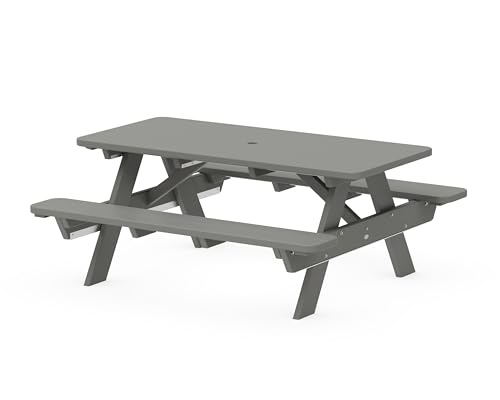
POLYWOOD Park Bench
POLYWOOD recycled-plastic, through the method: the care-budget step chooses this family almost by itself whenever the honest figure is near zero, and the climate step seconds it in damp, shade and salt air. Best for: the wet corner, the coastal plot, the community garden, the busy household. Not suited for: a buyer whose pleasure is in materials that age and change — the temperament test fails there, in the opposite direction from timber.
Choose it when the ground is hard to keep, the visits are rare, or the owners are many and none responsible. Verify that boards are solid, that hardware suits wet air, and — the step buyers forget with this family — the colour, in your own light, because the choice is permanent in a way timber’s never is. Its choosing lesson is flattering to the method: when the facts point here, they point unmistakably, and the decision is the easiest of the six.

Yaheetech Wooden Garden Bench
Yaheetech slatted timber, through the method: the climate step asks for shelter, the temperament step asks for a keeper, and the measurement step asks for assembly care, because this family’s results vary with the hands that build it. Best for: a porch, a covered terrace, a gardener who oils wood the way others deadhead roses. Not suited for: an exposed rainy corner, where the method’s climate fact vetoes it before taste is consulted.
Choose it when warmth is the quality your garden lacks — against hard paving, under a porch roof, where bare legs meet it in every season. Verify the timber and its finish type, plan the first year’s oil at purchase time, and dry-fit the assembly without forcing a single hole. Its choosing lesson is that some benches are partnerships: the method cannot only match a bench to a garden, it must match the bench to the owner’s hands, and here those hands are half the product.
Grandin Road Garden Bench
Grandin Road design-led, through the method: the spot test is the strictest of the six, because this family is chosen by the eye and must survive the eye in February as well as June. The measurement test includes the view’s proportions, not only the sitter’s. Best for: a prepared, composed, much-seen site. Not suited for: an unfinished garden, where the method’s sequencing step says — firmly — setting first, statement later.
Choose it when the other steps have been honestly completed and the garden is ready to be crowned: ground prepared, planting composed, care temperament willing. Verify the finish’s repair route and the delivery arrangements with the same rigour as a plainer bench, because beauty does not exempt a purchase from logistics. Its choosing lesson closes the set: the method does not punish beautiful benches — it protects them, by refusing to let them be bought into settings and households that would make them look like mistakes.
Strengths and Trade-Offs
Strengths
- The choosing problem is genuinely solvable: four facts — ground, bodies, climate, temperament — eliminate most of the catalogue and leave a calm shortlist.
- Every family in the category is the right answer for some real garden, so a buyer with clear facts will find a match rather than a compromise.
- A bench rewards methodical buying for decades, because the qualities the method checks are exactly the qualities long ownership tests.
Trade-offs
- The method takes an afternoon of measuring and observing that impulse buying skips — and the cost of skipping it is paid over years, not minutes.
- Listings are organised to sell features, so the facts the method needs must often be excavated from manuals and fine print.
- A bench fitted perfectly to today’s household may fit a changed household less well; the method can weigh today’s facts, not foresee all of life’s edits.
Setup, Care and Maintenance Essentials
Setup is the method’s final step, performed with the same deliberateness as the choosing. Prepare the ground to the standard the spot test promised — level, firm, drained, with pads or slabs beneath the feet on soft surfaces — before the bench is assembled, not after it rocks. Build on a flat surface in the manual’s sequence, tightening progressively, then sit the household’s heaviest sitter on it before the final pass so the frame settles as it will live. Live with the placement for a fortnight before anchoring permanently; the method expects one small correction and budgets for it. Then record the purchase — date, listing details, manual, spare fixings in a labelled jar — and set the one-month reminder for the fixings check. A bench chosen by method and set up by method has done everything a purchase can do to deserve the word right.
More Detail: Living With a Garden Bench
Drill one: the chalk test. Before ordering anything, chalk your leading candidate’s footprint on the actual ground, at full size, and live around it for two days. Walk the route past it with a watering can. Sit in a chair inside the outline at your coffee hour. Let the dog vote. Chalk exposes what catalogues conceal — the path it narrows, the door swing it crowds, the view it blocks — at a cost of one stick of chalk. Buyers who chalk rarely return benches; the outline either becomes a familiar part of the garden within days or reveals itself as an intruder while returning it is still free. Drill four: the two-weather visit. Before ordering, stand on the chosen spot in the rain — or immediately after it — and again at the hottest hour of a bright day, because a spot has at least two personalities and the bench must be chosen for both. The visit that soaks your shoes teaches the drainage fact no dry afternoon will confess; the visit that drives you to shade teaches the sun fact that decides whether July uses the bench at all.
Drill two: the borrowed-chair fortnight, the single most informative exercise in this guide. Place an ordinary chair on the chosen spot and use it as the bench’s understudy for two weeks. Count the sits, note the hours, feel the ground after rain and the sun at your leisure times. If the chair is used daily, your frequency fact is proven and the bench will be too. If the chair stands empty by day ten, the method has just saved you a purchase — or redirected it to the spot where the chair, moved experimentally, suddenly gets used. Drill five: the newspaper test, for depth and posture. Take a chair of roughly the candidate’s seat depth, sit in it on the spot with a newspaper or a book, and stay for a full article. If your back aches for support the chair lacks or your legs tire of the edge, record it — the bench will reproduce that geometry faithfully for a decade, and the time to dislike it is during the free rehearsal.
Drill three: the rising test, for any household with an older or less mobile sitter. Take the person to a bench — a park’s, a friend’s, a showroom’s — and watch the rising, not the sitting. Note whether the arms are where hands want them, whether the seat height lets feet plant firmly, whether the frame trembles under a real push. Then measure that bench’s seat and arm heights and write them on your facts page as non-negotiables. Comfort for the vulnerable sitter is not a preference to approximate; it is a specification to copy from a proven example. Choosing the finish is a drill of its own: obtain, where you can, a sample or an offcut, or at least view the colour in daylight against your own planting rather than a screen. Finishes shift between the retailer’s lighting and a garden’s, and timber in particular is a different colour wet from dry — which matters, because for half the year your bench will be presenting its wet face to the house.
On reading a listing as a chooser rather than a browser: open three tabs per candidate — the product page, the assembly manual, and the longest-term owner reports you can find — and read them in that order of honesty, manual first. The page tells you what is claimed, the manual tells you what is built, the reports tell you what happened. A candidate that survives all three readings with your facts page beside you is a candidate in the proper sense. A candidate that shines only in the first tab is a photograph with a price attached. Add one line to the facts page that buyers routinely omit: the bench’s second job. Most benches acquire one — potting surface, harvest table, bicycle rest, the dog’s lookout — and a construction that tolerates the second job you can foresee will outlast a finer one that cannot. Name the likeliest second job honestly and let it break ties between finalists, because the bench will be doing it by the second month whether it was chosen for it or not.
Weight deserves a chooser’s paragraph of its own, because it is the specification most often skimmed and most often regretted. Translate the figure into your life before buying: can this be carried through your gate by the people who will actually be there? Can it be moved for the annual pressure-wash, the party, the house move? Will its mass mark the deck or sink into the lawn? A bench’s weight is not good or bad — it is a promise about every future interaction, and the time to read the promise is while the bench is still a web page. The method also has a stopping rule, and it matters: when two candidates both pass every fact and the deliberation enters its second week, choose by delivery and returns terms and stop. Beyond that point, further research buys no additional garden happiness — the remaining difference between two well-fitted benches is smaller than the difference made by one month of good placement and one autumn service, which is where your remaining attention belongs.
Colour and finish, chosen well, are decisions about time rather than taste. Ask not how the bench looks this summer but how its finish ages: timber silvers toward grey, dark metals show dust and fade at their sunny edge, pale finishes show algae and rust weep, recycled boards hold their colour like a decision. Stand in your garden and ask which of those futures blends with your planting in five years. Choosers who ask the ageing question report a curious effect — the bench seems to settle into the garden faster, because it was chosen as a future resident, not a new arrival. If the choosing is being done for a bench that must serve a person with limited mobility, add a professional habit to the method: rehearse the transfer, not just the sit. Approach with the walker or stick actually used, turn, lower, rise, and depart, on ground like your own. A bench that passes the full choreography — not merely the seated minute — is the only kind that deserves the word accessible, and the rehearsal takes ten minutes that protect years.
The gate drill, which sounds comic until the van arrives: walk the delivery route with a tape measure and a friend, at bench height, including the turn nobody remembers. Note the narrowest width, the lowest lintel, the step, the soft lawn that a heavy carry will rut. If the route fails, the choices are honest ones — a flat-packed model, a different route, a gate panel temporarily removed — and all of them are cheaper decided at the choosing stage. More bench purchases have been embarrassed by geography than by any defect of manufacture. Keep a note, finally, of the benches you eliminated and why, in the same file as the facts page. Gardens change and households change, and a bench that failed this year’s facts on one line — too wide for the old terrace, too heavy for the old route — may be next decade’s perfect answer, findable in minutes because the choosing was written down.
Choosing for a garden you have just moved into is a special case the method handles by slowing down. A new garden lies: it shows you its best season first and hides its water table, its wind funnel, its neighbour’s tree shadow. The method’s answer is a provisional purchase or a postponed one — live a season with the borrowed chair, learn the plot’s facts at full strength, then choose with real data. Buyers who wait rarely regret the wait; buyers who furnish a strange garden in the first month spend the second year correcting the first month’s confidence. And trust the method’s quietest signal: when the facts are gathered and the shortlist is honest, one bench usually feels less like a purchase and more like a recognition — the seat the garden was already describing. That feeling is not the opposite of rigour; in a chooser who has done the work, it is rigour’s reward, and it can be followed with a clear conscience.
Choosing as a household, rather than as an individual, is another case worth naming. The person who researches is rarely the only person who will sit, rise, climb, or object. Bring the other sitters into the facts: their chair measurements, their sun tolerance, their opinion of the spot. A bench chosen by committee sounds like a compromise and is usually the opposite — the facts page grows more complete, the spot gets tested by more routines, and the bench arrives pre-approved by its constituency. Gardens are shared; let the choosing be shared too, at least in its evidence.
A note on choosing between two finalists, the pleasant problem the method is designed to produce. When both fit the facts, decide by the second decade: which one’s parts will you be able to replace, which one’s finish can you renew with products from an ordinary shop, which one’s maker will plausibly exist? Then decide by the worst day: which bench serves a rainy November, a houseful of guests, a convalescent’s slow mornings? Finalists are rarely separated by their best behaviour. They are separated, reliably, by their worst — so audition them there.
Keep the facts page after the purchase; the method does not end at the till. That page — spot, measurements, care budget, listing printout, delivery photographs — becomes the bench’s service record, the evidence for any claim, and the brief for any future matching purchase. Households that keep it describe a small satisfaction years later, when a slat is needed or a second bench is wanted and nothing must be guessed. Choosing well is an afternoon; being able to prove and repeat the choice is the dividend.
If the method produces no candidate — if every bench fails a fact you cannot change — believe it. A garden can be complete without a bench, and a forced purchase fails the household for years. Plant the spot, use the wall, borrow the chair, and revisit the question when a fact changes: a levelled terrace built, a tree’s shade grown, a household’s needs shifted. The method’s last lesson is that not choosing is also a result it is allowed to return, and often the wisest one on the page.
Choosing when access is difficult — a roof terrace, a courtyard reached by stairs, a garden behind a terraced house — inverts the usual order of operations. The route becomes the first fact, ahead of the spot itself, because a bench that cannot arrive cannot be chosen. Measure the route with the same care as the ground, favour flat-packed or two-part constructions whose largest piece passes the tightest turn, and confirm the delivery service’s terms for stairs before ordering. In access-limited gardens, the best bench is often the best bench that can physically get there, and there is no shame in that ordering.
Choosing for a windy site is a specialism of its own. Wind punishes light benches, rattling cushions and anything with a sail-like back, and it finds the one unanchored foot with a patience that outlasts yours. The facts page for an exposed plot should record the prevailing direction and the worst month, and the shortlist should favour mass, low profiles and fixings that can be locked down. Test the leading candidate’s stability in a garden centre on a breezy day if you can; a bench that feels serene in a gale has passed a test no specification sheet can administer.
Choosing a second bench is a different problem from choosing the first, and households often solve it wrongly by buying a twin. The second bench’s job is usually contrast: the other end of the day, the other end of the garden, the sunny seat when the first is shaded, the working seat when the first is ceremonial. Run the method again from the spot — the pause the first bench does not serve — and let the facts differ honestly. Two benches chosen by the method will rarely match, and the garden will be better for their disagreement.
Choosing with a future garden in mind — the redesign planned, the extension rumoured, the move possible — calls for the portable virtues: moderate weight, standard fixings, a finish that suits many settings, a size that fits many plots. Such a bench is a compromise in the honourable sense, fitted loosely to the present because its real home is a decade of gardens. The method handles it by adding one line to the facts page — how long will this bench live here? — and letting that horizon arbitrate every tie between the permanent and the portable.
There is a choosing error that survives every drill, because it feels like diligence: over-researching the product and under-researching the household. Ten comparison tables cannot tell you that your partner hates sitting in full sun, that the dog has claimed the intended corner, that the view from the spot includes the neighbour’s bins. The method’s observations are deliberately domestic — who pauses, where, when, with whom — because a bench is a household object before it is a product. Protect the observation steps from the browsing steps; they are where the choice is actually made.
Budget-setting, done as a chooser rather than a spender, works backwards from the facts. The ground may need money first; the bench’s tier should be set by the frequency the fortnight test proved; the accessories — anchors, a cushion, the finish’s first oil — belong inside the budget, not as surprises after it. A total figure assembled this way is usually lower than the figure browsing produces, and it is spent in the order that matters: ground, bench, keeping. Choosers who budget backwards rarely overspend, because each line had to justify itself against a fact.
When the household disagrees — one wants timber’s warmth, another wants zero care — the method arbitrates without a vote. Return to the facts page and ask which fact is actually in dispute: usually it is the care budget, stated optimistically by one party and pessimistically by the other. Settle that one number honestly, perhaps by asking who, by name, will perform the autumn service, and the material chooses itself. Disagreements about benches are almost never about benches; they are about whose Saturday is being spent, and naming that is the resolution.
Choosing a bench as a gift applies the method at one remove, and the remove is where it fails if it fails. You must borrow the recipients’ facts: their spot, their sitters, their care temperament, their route through the gate — gathered by observation or by a co-conspirator in the household, never by guessing from your own garden. A bench is too large and too permanent to be a surprise in its specifics; let the occasion be the surprise and the choosing be a collaboration. The benches that are loved for decades were, almost without exception, chosen with the recipients’ facts on the table.
Season of purchase is a chooser’s variable with real consequences. Buying in spring puts the bench straight into its hardest-working months, with the household’s habits fresh and the fortnight test easy to run in good weather. Buying in autumn, often at clearance, demands more imagination — the spot must be judged in its winter character and the bench may need storing or an immediate autumn service. Neither season is wrong; each changes which facts are easy to gather. The error is buying in one season while picturing only the other.
A final drill for the undecided: the one-year photograph. Imagine photographing the bench, in its spot, exactly one year from today — same month, same weather as the day you are choosing. Picture the finish’s state, the ground beneath it, the planting around it, and whether anyone is sitting there. If the imagined photograph pleases you in its details rather than its composition, the choice is sound. If it relies on the garden having changed, the household having changed, or the weather having changed, the method is telling you to wait — and waiting, in this category, is a decision with an excellent record.
Record-keeping closes the method. Keep the facts page, the chosen listing, the manual and one delivery photograph together, and add a line each spring: fixings checked, finish state, any move or repair. That small archive turns the next choosing — a second bench, a replacement slat, a bench for a new house — from a fresh research project into a five-minute consultation of your own evidence. The method’s deepest claim is that a household can become good at this: each bench chosen teaches the choosing of the next, provided the lessons are written down.
A Working Decision Checklist for Choosing a Garden bench: Measurements, Habits and Deal-Breakers
The fine print is where the method’s verification step lives, so read it with the facts page open. Seat height, seat depth and width between arms either match your measured household or they do not — no prose in the listing can soften a mismatch, and a listing that omits these figures has failed the verification on your behalf. Weight either suits your route and your relocation strength or it does not. Treat each number as a gate the candidate must pass, not as colour to admire on the way to the photographs.
Material fine print translates directly into the climate and temperament facts. The timber’s species and finish decide its care rhythm; the coating system and the existence of a matching touch-up decide whether chips are errands or injuries; the recycled boards’ solidity and fixing decide whether the seat feels planted or lively. Where the fine print is vague — durable, premium, weather-resistant — the manual and the long-term reports must supply the fact, and a candidate that stays vague after all three readings should be eliminated by a chooser, however warmly it photographs.
Commercial fine print completes the verification: the guarantee’s split between frame and finish, which predicts where failures will bill you; the delivery terms, which decide whether the route you measured is the route the bench will travel; and the returns window, which decides whether your fortnight rehearsal in the real spot is protected. A chooser reads these before ordering because they are the terms on which the whole method stands if the bench, against all the evidence, turns out wrong. Even the best method keeps an exit — and the exit, like everything else on this page, is chosen in advance.
Frequently Asked Questions
How long will a garden bench actually last outdoors?
Longevity, through the chooser’s lens, is a property of constructions: frames that can be tightened, slats that can be replaced, finishes that can be renewed. Cast iron with hardwood, sound timber and solid recycled-plastic lumber all qualify when they stand on firm, drained ground and receive their small routines. Choose for repairability first and lifespan follows, because a bench whose parts can be renewed does not have a fixed lifespan at all — it has a maintenance rhythm. The facts page should record, at purchase time, where its spares and finishes will come from in year nine.
Should a garden bench be anchored?
The method’s anchoring rule is simple to state and apply. If the bench stands on hard, level surfacing and its own mass resists a firm push, anchoring is optional. If it stands on soil, grass or gravel, or if one person can lift an end without effort, anchor it at installation — not after the first storm, which is when the lesson usually arrives with a loosened joint attached. Verify your ground fact honestly at the choosing stage and the anchoring decision makes itself; guess at the ground and the weather will correct you.
What is the lowest-maintenance bench material?
For the lowest upkeep, the method points where the care-budget step always points: recycled-plastic lumber first, with its wash-only routine; well-coated metal second, with chip duty; timber last in effort and first in warmth. But the chooser’s refinement matters — the lowest-maintenance bench for your household is the one whose routine matches the time you recorded on your facts page. A household that will happily oil timber owns, in effect, a low-maintenance timber bench. Measure the owner as carefully as the bench, and the ranking sorts itself.
Can a garden bench stay outside all winter?
Wintering outside is a choosing criterion, not an afterthought: if the bench must live out all year, verify at purchase that its construction tolerates your winter — drained design, no water traps you cannot clear, a finish whose chips you can close in autumn. Benches chosen with winter in the facts routinely stay out for decades of winters with the autumn service as their only concession. Benches chosen in May sunshine, for May sunshine, meet January as a surprise. Let the coldest month sit in on the choosing; it is a member of the household too.
Where is the best place to put a garden bench?
The method’s answer is the spot you chose in step one — the pause on the household’s existing route, observed for a week and scored on ground, shelter, sun and view in that order — rendered level, firm and drained before the bench arrives. If you are reading this answer before doing step one, do step one: no general advice can substitute for your garden’s observed facts, and the week of watching will tell you more than any guide. The best place is not found in a catalogue. It is found by a household watching itself live in its own garden.
Do garden benches need cushions?
The method treats the cushion as a post-purchase experiment, not a choosing criterion. Choose the bench for its bare seat — its height, depth and shape against your measured sitters — because that is the object you will use daily. Live with it for a month of real sits. If a long-sit habit emerges that the bare seat shortens, add a cushion whose storage already exists within steps of the spot. Choosing the bench around a cushion reverses the logic and saddles a simple purchase with storage, drying and fading before it has proved it needs them.
Related Guides
garden bench review garden bench reviews garden bench buying guide garden bench pros and cons is a garden bench worth it
best patio table and chairs best patio rocking chairs best patio dining chairs best outdoor rugs for rain best outdoor deck chairs best indoor outdoor rugs