
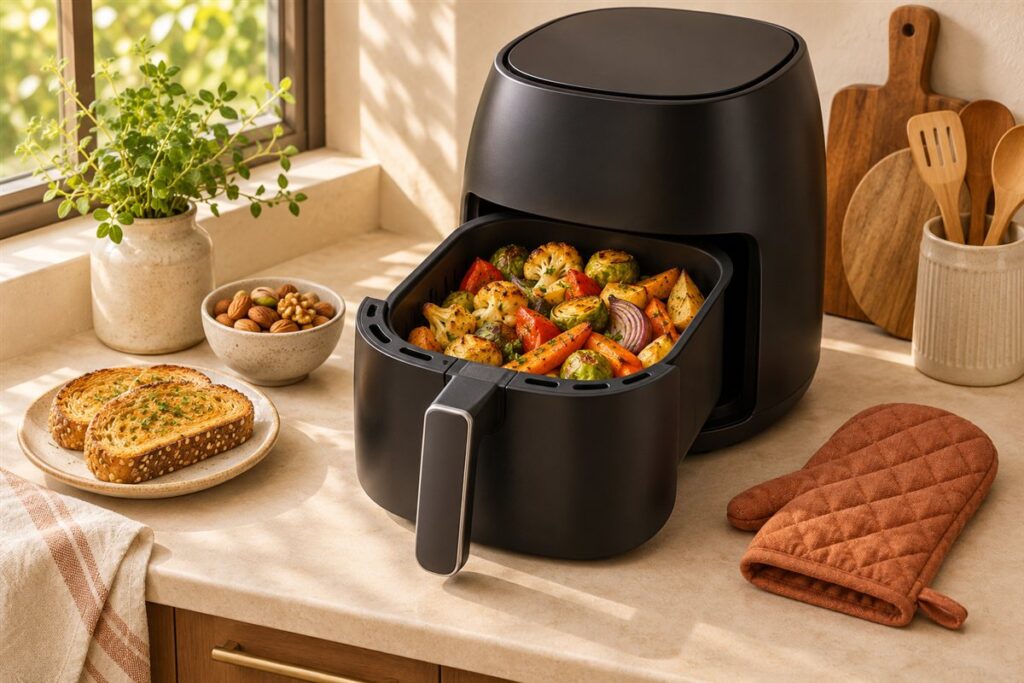
Lamb chops cook fast in an air fryer, usually in 8 to 15 minutes, with a browned crust and a juicy middle. Thickness is the big variable, so use a thermometer and rest the meat before serving.
Prepare the Chops
Take the chops out of the refrigerator about 20 minutes before cooking, so they are not stone cold in the centre. Pat them dry and trim any excess hard fat. A rub of oil, salt, pepper, garlic and chopped rosemary or thyme works nicely, and a squeeze of lemon afterwards brightens the flavour.
Cooking Steps
- Warm the air fryer to about 190 to 200 C (375 to 390 F).
- Place the chops in a single layer with space between them. For rib chops, stand them or lay them flat, whichever fits.
- Cook for 4 to 6 minutes, then turn them.
- Cook another 4 to 8 minutes depending on thickness and how you like them.
- Check the temperature in the thickest part, away from the bone, and match it to the food-safety guidance for lamb. Different guidance exists for different cuts, so use the official figure for your region.
- Rest on a warm plate for 5 minutes under loose foil.
Thickness Matters
| Chop style | Typical thickness | General time range |
|---|---|---|
| Thin loin or rib | About 2 cm | 8 to 11 minutes |
| Standard | About 3 cm | 10 to 14 minutes |
| Thick cut | 4 cm or more | 13 to 18 minutes |
These ranges are only a guide. Machines vary, and a thermometer tells you more than the clock.
Flavour Directions
- Mediterranean: garlic, oregano, lemon zest and olive oil.
- Spiced: cumin, coriander, paprika and a little yoghurt as a marinade.
- Mint and garlic: blend fresh mint with garlic and oil and spoon it over after cooking.
Marinating in yoghurt or oil for an hour or two adds flavour. Keep marinating meat in the refrigerator, and discard used marinade rather than serving it as a sauce unless it has been boiled thoroughly.
Chops pair well with simple sides that can share the machine. Roast potato wedges or carrot batons first, keep them warm under foil while the lamb cooks, and finish with a quick green salad or steamed greens. If you prefer a sauce, mix yoghurt with chopped herbs and lemon juice, or warm a spoonful of redcurrant jelly with a splash of water. Wash your hands, tongs and plates after handling raw meat, and use a clean plate for the cooked chops.
Understanding Lamb Chop Cuts
Lamb chops are not all the same, and the cut you buy shapes how you cook it. Rib chops, sometimes called cutlets, have a small round eye of meat on a long bone and cook quickly. Loin chops resemble tiny T-bone steaks, with a strip of loin on one side of the bone and sometimes a small tenderloin on the other. Shoulder chops are larger, more irregular and contain more connective tissue, so they can be chewier unless cooked with care.
Thickness matters more than the label. A thin chop can go from perfect to overdone in a minute or two, while a thick chop needs more time and can tolerate a hotter start. When shopping, try to pick chops of similar thickness so they finish together. Ask the butcher to cut them to a consistent size if you can. Look for meat with a fresh color, firm texture and a thin layer of white or creamy fat, and avoid packages with excessive liquid.
The bone also plays a role. Bone-in chops can take slightly longer next to the bone, and the exposed bone ends can burn if they stick up near the heating element. If a chop does not fit flat, stand rib chops side by side with the bones up or trim bones carefully. Check how much clearance your basket allows before you buy large, thick cuts.
Marinades, Rubs and Timing the Flavor
Lamb has a distinct flavor that pairs well with garlic, rosemary, thyme, oregano, mint, cumin, coriander and lemon. A dry rub of salt, pepper, crushed garlic and chopped herbs mixed with a little oil is simple and effective. Apply it up to a few hours ahead, keeping the chops in the refrigerator, or just before cooking if you are short on time.
Marinades add moisture and flavor. Yogurt-based marinades, with spices and lemon, soften the surface gently, and olive oil with herbs adds aroma. Acidic marinades such as lemon or vinegar are best used for shorter periods, since leaving meat in acid too long can make the texture mealy. Always marinate in the refrigerator in a covered container, and discard used marinade rather than using it as a sauce unless it is boiled thoroughly.
- Wipe off excess marinade so it does not scorch in the hot air.
- Pat the surface fairly dry for better browning.
- Add sugary glazes or honey only near the end of cooking.
- Season with salt on the day you cook, for best texture.
Fresh herbs can burn, so use sturdier ones like rosemary on the meat and save delicate herbs for after cooking.
Scoring thick fat lightly with a sharp knife also lets the seasoning in and helps the fat render, which cuts down on chewy edges.
Doneness, Resting and Food Safety
Doneness is personal, but it should always be checked with a thermometer. Insert an instant-read probe into the thickest part of the chop, away from the bone, and compare the reading with the food-safety guidance in your area for lamb. Recommended temperatures can differ between whole cuts and ground meat, so check the right category. Because chops are small and cook fast, check a little early and keep checking.
Resting helps the juices settle. Move the chops to a warm plate and cover loosely with foil for several minutes. The temperature may rise slightly during rest, so take the chops out just before they reach your target if you want to avoid overcooking. Cutting too soon lets juices run out and leaves the meat drier.
Handle raw lamb with the same care as other raw meat. Keep it refrigerated until needed, use a clean board and utensils, and wash hands, surfaces and tools afterward. Do not put cooked chops back on a plate that held raw meat. Leftovers should be cooled promptly and refrigerated in a covered container, and reheated until hot throughout. Check trusted guidance for how long cooked meat keeps.
Pat the thermometer clean between uses, and check the calibration occasionally in line with the instructions that came with it.
Sauces, Sides and Complete Meals
Lamb chops go well with bright, fresh accompaniments. Mint sauce, tzatziki, chimichurri, salsa verde or a simple squeeze of lemon cut through the richness. A spoonful of garlic yogurt works nicely with spiced chops. Make sauces ahead so you can serve straight after resting, and keep them in the refrigerator until needed.
For sides, consider vegetables that cook at a similar pace. Roasted potatoes, carrots or squash can go in the air fryer first and be kept warm while the chops cook. Green beans, asparagus, zucchini or peppers cook quickly and can be added toward the end. Couscous, rice, flatbread, a green salad or a chickpea salad make easy, light companions.
Think about the order of cooking so everything is hot together. Start the longest item first, then the chops, and finish quick items last. If your basket is small, cook in batches and keep finished food warm in a low oven. Leave space between items so air can circulate, and wipe out any grease from the basket between rounds to reduce smoke.
Warm plates keep the chops hot at the table, and a squeeze of lemon right before serving gives a fresh finish that many cooks like.
Mint jelly, roasted garlic or a spoon of hummus are other quick accompaniments that need no cooking at all.
Smoke, Grease and Cleanup
Lamb is a fatty meat, so smoke and splatter are common in a small cooking chamber. Trim thick fat before cooking, and make sure the basket and the bottom of the unit are clean before you start, as old grease can smoke at high heat. If your unit has a drip tray, check that it is in place. A small amount of water in the drawer, if the manual permits, can reduce smoking in some models, but follow your maker’s guidance.
If smoke becomes heavy, lower the temperature a little and check whether fat has pooled. Ventilate the kitchen, and avoid opening the drawer repeatedly in a cloud of smoke. Some cooks pause to blot away excess fat with paper towels while the unit is cool. Never leave the machine unattended with heavy smoke, and unplug it if something seems wrong.
After cooking, let the unit cool, then wash the basket and tray with warm soapy water and a soft sponge. Pour off any collected fat into a heatproof container, let it cool and dispose of it with household waste instead of down the drain. Wipe the interior following your manual, and air the unit out. A thorough clean prevents lingering lamb odors from affecting the next dish.
Keep a heatproof dish nearby for fat and juices, so you can pour them off safely without splashing.
FAQ
Why is my lamb tough?
Often overcooked or not rested. Reduce the time slightly and let it sit before cutting.
Is smoke normal?
Lamb fat can smoke at high heat. Trim excess fat, clean the drawer after earlier use, and follow your maker’s manual if smoke persists.
Do lamb chops need to be flipped?
Turning them once gives more even browning on both sides. Thick chops benefit most, while very thin ones can be turned quickly or cooked from one side if they brown evenly.
Can I cook frozen lamb chops?
It is best to thaw them in the refrigerator first for even cooking. Follow package guidance and use a thermometer if you are unsure.
What if the bones stick up near the heating element?
Rearrange the chops flat or at an angle so nothing touches the element. Trim carefully only if you are comfortable doing so.
Should I remove the fat cap?
You can trim a thick layer to reduce smoke, but leaving a thin layer adds flavor and moisture.
How do I cook chops of different sizes together?
Add the thicker ones first and the thinner ones later, or take smaller chops out early. Check each piece with a thermometer.
Is it normal for lamb to smell strong during cooking?
Lamb has a pronounced aroma, especially with fat. Ventilation, trimming the fat and a clean basket help reduce it.
The Short Version
Bring the chops near room temperature, season, cook hot in a single layer and turn once. Use a thermometer against food-safety guidance, rest for a few minutes and then serve.









