
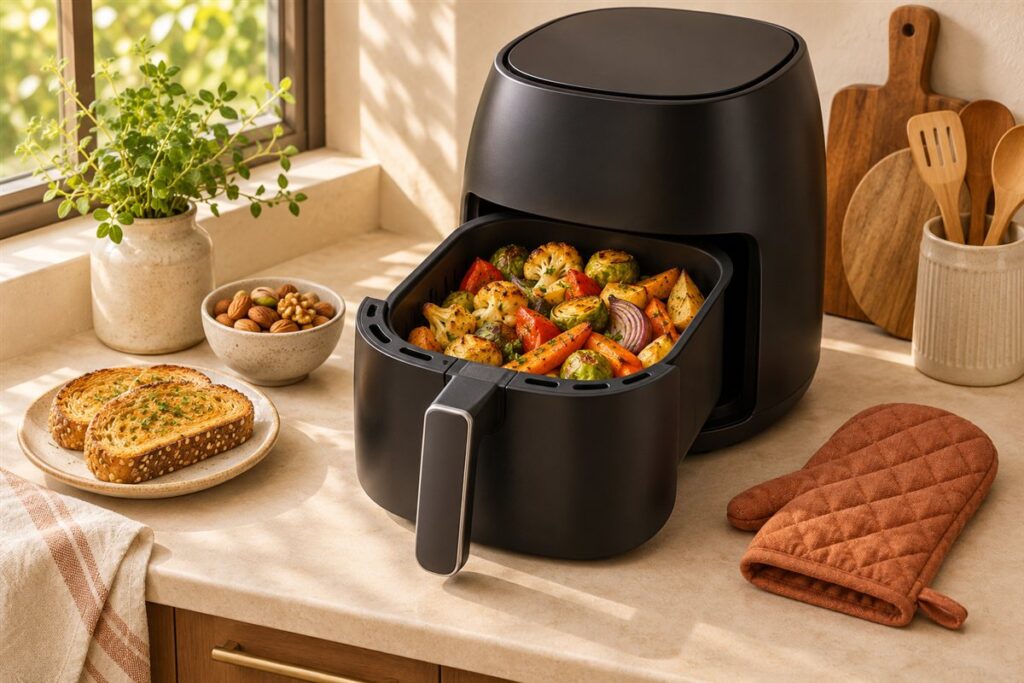
Pork chops can go from juicy to dry in a couple of minutes, which is why an air fryer, with its fast and even heat, rewards close attention. A general range is about 380-400 F for 8-18 minutes, depending on thickness, with one flip.
Think About Thickness First
Thickness decides the time more than anything else. A thin boneless chop may be done in under ten minutes, while a thick bone-in chop can take well over fifteen.
| Chop | General time | Watch for |
|---|---|---|
| Thin boneless (about 1/2 inch) | 7-10 minutes | Drying out |
| Medium (about 3/4 inch) | 9-14 minutes | Uneven browning |
| Thick bone-in (1 inch or more) | 14-20 minutes | Raw center near the bone |
A Simple Seasoning Plan
Pork takes well to a quick dry rub. Try salt, pepper, garlic powder and paprika. A thin coating of oil helps the rub stay on and helps browning.
- Pat the chops dry before seasoning.
- Season both sides and the edges.
- Let them rest for a few minutes while the air fryer preheats.
Step-by-Step
- Preheat the air fryer to around 380-400 F.
- Set chops in a single layer with space between them.
- Cook for roughly half of the expected time.
- Flip and cook until the outside is golden.
- Insert a food thermometer into the thickest part, away from bone, and compare it to the food-safety guidance for pork.
- Rest for about 5 minutes before serving.
Keeping Them Juicy
A brief brine or a short soak in salted water before cooking can help some cooks, though it is optional. Avoid cutting into the chop right away, and do not cook longer than needed. A thermometer is the best protection against overcooking, since eyeballing is unreliable.
Breaded Chops
For crumb-coated chops, dip in flour, egg and crumbs, then press the coating on firmly. Spray or brush a little oil over the crumbs so they brown. Cook at a slightly lower setting for a similar time, flipping gently so the coating stays on.
Sides to Cook Alongside
Chops pair well with quick-cooking vegetables such as green beans or asparagus, which can go in for the last few minutes. Apple slices or onions, warmed alongside, make an easy topping. Keep raw pork and finished food on separate plates, and wash hands and tools after handling raw meat.
Selecting Pork Chop Cuts
Pork chops come from different parts of the loin and shoulder, and the cut affects how they cook. Loin chops are lean and cook quickly but can dry out. Rib chops have a bit more fat and flavor. Center-cut chops are a common middle ground, while blade or shoulder chops contain more connective tissue and fat, so they can be more forgiving or chewier depending on how they are cooked. Bone-in chops usually stay juicier but take a little longer than boneless.
When shopping, look for chops that are evenly cut and similar in thickness, because uneven pieces finish at different times. Choose meat with a fresh pink color and a thin layer of fat, and avoid packages with a lot of liquid. Thicker cuts are generally easier to keep juicy, since you can brown the outside without overcooking the center. Very thin chops cook in minutes and are easy to overdo.
Check the package for added solutions, which some retail pork contains. These can change how salty the meat is and how much water it releases, so adjust seasoning accordingly. Keep raw pork in the refrigerator until you are ready to cook, use it by the date on the label and follow food-safety guidance for thawing in the refrigerator rather than on the counter.
Brines, Marinades and Rubs for Juicier Chops
Lean pork benefits from a little help in staying moist. A simple brine of salt dissolved in water, used for a short time in the refrigerator, can season the meat and help it hold moisture. Follow a trusted ratio and time so the chops do not become too salty, then rinse lightly and pat dry so the surface can brown. This step is optional and most useful for thin or lean chops.
Dry rubs deliver flavor and a good crust. Combine salt with paprika, garlic powder, onion powder, pepper, brown sugar or dried herbs. Sugar helps color but can burn, so use it sparingly and watch the chops. Apply the rub with a thin coat of oil. Marinades with acid, mustard or soy work for a few hours, but pat the surface before cooking to improve browning.
- Mustard and herbs for a tangy crust.
- Smoked paprika and garlic for a smoky, savory profile.
- Apple cider vinegar with a little honey for a sweet-tangy glaze, added near the end.
- Italian herbs and lemon zest for a light, fresh taste.
Always keep marinating pork refrigerated and discard used marinade rather than serving it as a sauce.
Apply the rub evenly on both sides and edges, and press it in lightly so it stays put when you move the chops.
Doneness, Resting and Safe Handling
A thermometer makes pork chops far easier. Insert the probe into the thickest part, away from the bone, and compare the reading with your local food-safety guidance for pork. Because guidance can vary by region and by cut, check an up-to-date source rather than relying on memory. Chops cook quickly, so start checking before the expected finish time.
Resting is important. Move the chops to a warm plate and cover loosely for several minutes so the juices spread through the meat. A slight rise in temperature during resting is normal, and taking the chops off the heat just before the target can prevent overcooking. Slicing straight away leaves a puddle of juice on the plate and drier meat.
Practice good handling. Keep raw pork away from ready-to-eat foods, use separate boards and utensils, and wash hands and surfaces afterward. Do not reuse a plate that held raw meat. If you cook sides in the same machine, clean excess fat from the basket between rounds. Refrigerate leftovers promptly in covered containers and reheat them until hot throughout.
A thermometer with a thin probe helps with thinner chops, where a thick probe can be hard to place accurately.
Wash the thermometer probe between checks, especially if you test several chops one after another.
Breaded, Glazed and Stuffed Variations
Pork chops adapt well to different treatments. For breaded chops, use thinner boneless cutlets, season the flour, dip in egg and press on crumbs. A light coating of oil helps browning. Place them in a single layer with space around each and flip once. Check the thickest part with a thermometer, because the coating can look done before the center is.
Glazes add shine and flavor. Mix a sauce of mustard, honey, soy, garlic or fruit preserves, and brush it on in the last few minutes so it does not burn. A sticky glaze can also make cleanup harder, so consider a liner if your manual permits. Apple slices, onions or pears cooked alongside add sweetness to the plate and pair well with pork.
Thick chops can be stuffed. Cut a pocket into the side, fill with a mixture such as spinach and cheese, mushrooms and herbs, or breadcrumbs and apple, and secure with toothpicks if needed. Stuffed chops need extra time, and the filling must reach a safe temperature too. Use a thermometer in the center of the stuffing and the meat, and let the chop rest before serving.
Whichever variation you try, keep the same thickness across chops so that the timing stays predictable.
Sides, Leftovers and Cleanup
Quick sides complete the meal. Roasted potatoes, sweet potato wedges or carrots can go in first, followed by the chops, and green beans or broccoli near the end. Mashed potatoes, rice, creamy slaw or a simple salad work off the machine. Applesauce, mustard sauce or a pan-style gravy made on the stove tie the plate together.
Leftover chops can be sliced for sandwiches, added to fried rice or chopped into soups and salads. Cool them promptly and refrigerate in a covered container. Check trusted food-safety guidance for how long cooked pork keeps. To reheat, use a short time in the air fryer at a moderate temperature, or warm slices gently with a splash of broth to prevent drying. Heat until hot throughout.
Clean the basket and drawer once the unit is cool. Pork fat and marinades can leave a sticky film, so soak the parts in warm soapy water and use a soft sponge. If the unit smokes during cooking, trim excess fat, check for old residue and consider lowering the temperature. Dry everything thoroughly before putting it away, and follow the manual for cleaning the interior.
Keep the cooled fat out of the sink, and wipe the basket while it is still just warm to make washing easier.
FAQ
Why are my chops dry?
Most often the time was too long or the chops were very thin. Check earlier, use a thermometer, and rest the meat.
Do I need to flip them?
Flipping once gives more even color. Some baskets cook well enough from one side, but turning is easy and helps.
Can I cook bone-in and boneless chops together?
They cook at different rates, so check them separately. Bone-in chops usually need a little more time.
Should I trim the fat?
A thin layer adds flavor, but thick edges can cause smoke. Trim excess and score the fat edge so it does not curl.
Why do my chops curl up?
The edge fat and silver skin contract in heat. Making small cuts along the edge helps them stay flat.
Can I cook chops from frozen?
Thawing first gives more even results. If you must cook from frozen, follow package guidance, expect longer times and use a thermometer.
Is pink in the middle okay?
Color alone is not a reliable guide. Use a thermometer and compare the reading with current food-safety guidance for pork.
How can I stop breaded chops from losing coating?
Pat the chops dry, press the crumbs on firmly and let the coating rest before cooking. Flip gently with a wide spatula.
The Short Version
Match the time to thickness, season simply, flip once, and rest. Confirm doneness with a thermometer and official food-safety guidance for pork, and follow your manual for limits.









