Bread loves steam and strong, even heat. A good crust forms when moisture stays on the dough surface early in the bake, then the oven dries out so the crust can brown and crisp. Some wall ovens add a steam function, and the rest can get close with the right baking gear.
This guide pairs two steam-capable wall ovens with four tools that help any oven bake better loaves. We have not used these products ourselves, so confirm the model number, cutout size and features on the current listing before buying.
As an Amazon Associate we earn from qualifying purchases. Links below are affiliate links, and they do not change the product information we give.
What to Look For
| Feature | Why it matters |
|---|---|
| Steam function | Adds moisture early for a springy loaf and crisp crust |
| High heat | Bread needs strong heat, so check the maximum setting |
| Stone or steel | A hot baking surface improves oven spring |
| Dutch oven | A lidded pot traps steam without a steam oven |
| Proofing | A warm spot or proofer steadies dough rise |
| Rack position | Low or middle racks suit most loaves |
In this guide
Specs at a Glance
| Product | Type | Role | Notes |
|---|---|---|---|
| Thermador Masterpiece MED301WS | Wall oven | Baking chamber | Premium brand |
| Bosch Benchmark steam convection | Wall oven | Baking with steam | Check exact model |
| Lodge 5 Quart Cast Iron Combo Cooker | Cast iron | Steam-trapping pot | Doubles as skillet |
| Baking Steel Original | Steel plate | Hot baking surface | Heavy |
| Emile Henry Bread Cloche | Ceramic | Dome-style baker | Retains moisture |
| Brod and Taylor Folding Proofer | Proofer | Dough rise | Folds flat |
The 6 Best Picks for Baking Bread in a Wall Oven
Top pickBest for committed bread bakers
1. Thermador Masterpiece 30-inch Single Wall Oven
A premium single wall oven from Thermador with convection and a cavity sized for sheet pans. It is a good base for bakers who want strong, even heat for loaves of every shape. Add a Dutch oven or steel to supply the steam and hot surface a steam oven would.
Suits: committed bread bakers. Strengths: a premium build and room for trays. Weaknesses: no built-in steam on this one, so pair it with a Dutch oven. Skip it if you want a dedicated steam oven.
View Thermador Masterpiece 30-inch Single Wall Oven on Amazon
Best for artisan loaf baking
2. Bosch Benchmark Steam Convection Wall Oven
A wall oven line that combines steam and convection in one cavity. That mix is just what crusty loaves and baguettes need, and it removes the need to improvise with pans of water. Read the listing closely, since steam features differ between models in the line.
Suits: artisan loaf baking. Strengths: built-in steam. Weaknesses: a more complex interface. Skip it if you only bake sandwich bread.
View Bosch Benchmark Steam Convection Wall Oven on Amazon
Best for no-knead and sourdough loaves
3. Lodge 5 Quart Cast Iron Combo Cooker
A deep cast-iron pot with a shallow skillet lid. It traps steam around a loaf and gives the dough a hot, even bake. Preheat it in the oven before you load the dough, and use thick mitts when you lift the lid.
Suits: no-knead and sourdough loaves. Strengths: a heavy pot and steady steam. Weaknesses: heavy to lift when hot. Skip it if you want to bake several loaves at once.
View Lodge 5 Quart Cast Iron Combo Cooker on Amazon
Best for hearth loaves and pizza
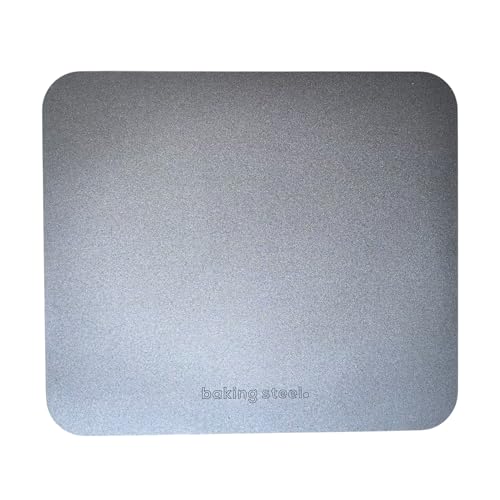
4. Baking Steel Original
A thick steel plate that stores heat and passes it to the dough quickly. It helps with oven spring on pizzas and flatbreads as well as loaves. Preheat it for a good while so it is fully hot.
Suits: hearth loaves and pizza. Strengths: fast heat transfer. Weaknesses: very heavy. Skip it if you want a lightweight tool.
Best for one round loaf at a time
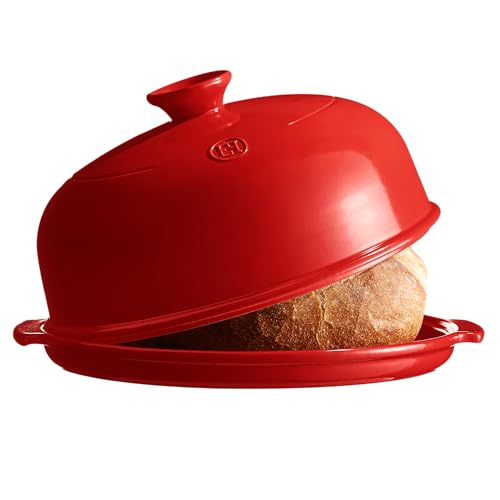
5. Emile Henry Bread Cloche
A ceramic base with a domed cover that holds moisture around the loaf. The design gives the crust a springy rise without a steam oven. It also makes a handsome piece for the table.
Suits: one round loaf at a time. Strengths: a moisture-retaining dome. Weaknesses: fits one loaf size. Skip it if you bake long baguettes.

Best for controlled dough rise
6. Brod and Taylor Folding Proofer
A compact proofer that holds dough at a steady warm temperature. Consistent proofing makes your bake times more predictable, whichever oven you own. It also helps with sourdough starters and enriched doughs.
Suits: controlled dough rise. Strengths: steady warmth. Weaknesses: extra gear to store. Skip it if you proof in a warm kitchen.

Care and Setup
- Preheat the Dutch oven or steel thoroughly.
- Let cast iron and ceramic cool before cleaning.
- Dry cast iron right away to prevent rust.
- Check the oven rack height before heating the steel.
- Store the proofer folded flat when you are done.
Mistakes to Avoid
- Opening the door early and losing steam.
- Underheating the baking surface.
- Handling hot cast iron without proper mitts.
- Skipping the cool-down before slicing.
Why Bread Needs Steam and Strong Heat
Bread behaves differently from most oven foods because the loaf keeps expanding during the first part of baking. Moisture at the surface helps the crust stay flexible so the loaf can rise, and later that moisture evaporates and the crust sets, turning crisp and golden. That is why steam in the early stage matters for many crusty breads.
Home ovens often vent steam away, which can lead to a thicker, paler crust. Methods that trap steam include a covered pot, a cloche or an oven with a built-in steam feature. Each has trade-offs: a covered pot is simple but limits loaf size, while a steam oven gives more flexibility but depends on the specific model. Check your oven’s manual to see whether it has a steam function and how to use it.
Strong, steady heat helps too. Many bread recipes call for a hot oven, and a preheated stone, steel or Dutch oven stores heat to give the dough a burst of energy when it goes in. Preheating thoroughly is important, so give the oven and any baking surface enough time, usually longer than the oven’s indicator light suggests.
Because ovens vary, treat recipe times as a guide. Use visual cues such as crust color, and check doneness with an instant-read thermometer if you like. Notes about temperatures and timing for your model are best learned by baking a few loaves.
Baking Surfaces Compared: Steel, Stone and Covered Pots
The surface under your dough influences how the bottom crust and oven spring turn out. A baking steel conducts heat quickly and is popular for flat breads and pizzas, as well as loaves on its own. A baking stone holds heat more gently and tends to give an evenly browned base. A covered cast iron pot traps steam around the loaf and heats it from all sides.
Which suits you depends on your bread. For boules and batards, a preheated covered pot is a convenient way to get steam without special equipment. For baguettes and long loaves, a stone or steel offers more room. A cloche, a domed ceramic cover, works like a covered pot but with a different shape.
Check dimensions against your oven. A surface must fit with some room around it for air to circulate, and it should rest securely on the rack. Heavy items add weight to the racks, so confirm that your oven’s racks can support them by reading the manual.
Handle with care. Preheated cookware is extremely hot, and cast iron lids and steel plates can burn. Use thick oven mitts and a safe landing spot. Avoid sudden temperature shocks, such as pouring cold water onto a hot stone, which can cause cracking. Follow the care instructions for each item.
Rack Position, Airflow and Using Convection
Where you place the loaf affects the results. Many bakers use a middle or lower-middle rack so the bread has room to rise without getting too close to the top element. If the top browns too fast, move the rack lower or tent the loaf loosely with foil for the later part of the bake.
Convection can help or hurt bread. The moving air promotes browning and a drier crust, which some bakers like. But a strong fan early on can dry the surface before the loaf finishes expanding. Some bakers start with convection off and switch it on later, or use it only for certain breads. Check your manual and experiment, noting what you change.
Keep the oven door closed during the early bake, as opening it releases steam and heat. If your oven has a light and a window, use them to check progress. If a model has a bread or proof mode, read what the manual says about it.
Rotate if you notice uneven browning, but wait until the loaf has set. If you bake multiple loaves at once, leave space between them so air can circulate. Hot spots exist in most ovens, so learn yours by watching where the crust browns faster.
Proofing and Dough Handling Equipment
Good bread starts well before the oven. Proofing is the rest period when the dough rises, and it works best at a steady, warm temperature. A cool kitchen slows the process and a warm one speeds it up. Some bakers use a proofing box, a turned-off oven with the light on, or a warm spot in the house. Check your oven’s manual before using the oven for proofing, since not all models support it.
Handling tools help. A bench scraper, a lame or sharp blade for scoring, a proofing basket, and parchment paper make shaping and transferring dough easier. Scoring lets steam escape in a controlled way and gives the loaf a place to expand. A clean, sharp blade makes a better cut.
Use a scale if you can. Measuring flour and water by weight tends to give more consistent results than cups, though you can bake without one. Keep notes on your dough, including timing, room temperature and results. This helps you adjust over time.
Think about how the dough transfers to the hot surface. Parchment paper makes it easier to lift the dough into a hot pot, but check the paper’s temperature rating. Use a peel or a rimless sheet to slide loaves onto a stone or steel. Take care not to touch hot surfaces.
Troubleshooting Common Bread Problems
Dense or flat loaves often point to under-proofed or over-proofed dough, or to an oven that was not hot enough when the dough went in. Watch the dough rather than the clock, and give your surface a full preheat. A poke test, where the dough springs back slowly, is a common guide.
A pale or thick crust can mean too little steam or too low a temperature. Try a covered pot, add steam according to your oven’s instructions, or bake a few minutes longer. A crust that browns too fast on top may call for a lower rack or a loose foil cover.
A burnt bottom can come from a surface that is too hot or too close to the lower element. Move the loaf up a rack, place a sheet pan beneath, or use parchment. A gummy interior often means the loaf was cut too soon or underbaked, so let it cool on a rack before slicing.
Keep records and change one variable at a time. If your oven has problems such as uneven heat or a door that does not seal, check the manual or ask a technician. Remember that these are general guidelines, and results depend on the recipe, flour and your own oven.
Oven or Accessory: Which Part of the List Matters to You
This list mixes two full wall ovens with four pieces of bread gear, so it helps to decide which category you are shopping in before you compare them.
| Item | Type | What it adds to a bread routine |
|---|---|---|
| Thermador Masterpiece 30-inch Single | Wall oven | A full-size oven for large bakes |
| Bosch Benchmark Steam Convection | Wall oven with steam | Steam features that bakers value for crust |
| Lodge 5 Quart Cast Iron Combo Cooker | Cookware | A heavy lidded pot that holds steam around a loaf |
| Baking Steel Original | Baking surface | A flat, heavy plate for bread and pizza |
| Emile Henry Bread Cloche | Ceramic dome | A baking dome that traps moisture |
| Brod and Taylor Folding Proofer | Proofing box | A warm space for dough to rise |
If you already own a good oven, accessories deliver much of the benefit at a smaller scale. A new wall oven is a larger project that involves cabinetry and electrical work.
Checklist for Fitting a Wall Oven
- Measure the cutout width, height and depth in your cabinetry and compare them with the maker’s installation guide.
- Confirm that the electrical supply and circuit match the oven’s requirements, and have a licensed electrician check this.
- Check the clearance for the door swing and for racks being pulled out.
- Plan ventilation as the maker specifies, particularly around steam models.
- If the oven has a water reservoir or plumbed connection, follow the maker’s instructions and use a licensed professional where required.
- Think about the height of the oven so loading a heavy Dutch oven is comfortable.
Installation of a wall oven should be done according to the maker’s instructions and local codes, so engage a qualified professional rather than improvising.
What Steam Does for a Loaf
Bakers talk about steam because moisture in the first part of a bake keeps the surface of the dough flexible, which helps the loaf expand before the crust sets. Afterward, drier heat helps the crust turn crisp and brown. Steam ovens, lidded pots and ceramic domes all aim to create that effect, using different methods.
A lidded cast iron cooker traps the moisture released by the dough itself, a dome does something similar, and a steam wall oven injects moisture into the chamber. Follow the maker’s instructions for how to use steam features, and clean them as directed.
Proofing, Shaping and Timing
Good bread depends on more than the oven. Dough needs time and a steady, warm spot to rise, which is why a proofer can be useful in a cool kitchen. Shape loaves gently, let them rest as the recipe instructs and score the top so it can expand. Preheat the oven and any baking surface thoroughly before loading, since a heavy steel or cast iron piece needs extra time to come up to temperature.
Handling and Care for Heavy Bakeware
Cast iron, steel and ceramic pieces can be heavy and retain heat for a long time. Use dry oven mitts, place hot items on trivets and keep children and pets away. Follow the maker’s care instructions to avoid rust or cracking, and let items cool completely before cleaning.
Common Bread Baking Mistakes at Home
Many disappointing loaves come from a few repeating errors that have nothing to do with the oven. The first is a dough that is under-proofed or over-proofed. Dough that has not risen enough bakes into a dense loaf, while dough that has risen too far can collapse. Learn to read the dough rather than the clock, using the poke test described in many baking guides: press gently and see how it springs back.
The second mistake is not preheating long enough. A heavy pot, steel or stone needs substantial time to absorb heat, and loading dough onto a surface that is not yet hot reduces the burst of rise early in the bake. Follow the recipe and the maker’s guidance for preheat times.
The third mistake is opening the oven door too soon. Peeking during the early part of the bake releases heat and steam, which can flatten a loaf. Let the crust set before you check.
Choosing a Wall oven With a Clearer Eye: The Criteria That Deserve a Second Look
The opening sections of this guide cover the headline points to check when you compare wall ovens. This section slows down and looks at the same decision from the owner’s side: not what a wall oven promises on the day it arrives, but how the choice plays out across months of weeknight dinners, weekend baking and holiday roasting. Reading it before you settle on a pick will help you use the product sections above more sharply, because you will know which details in each description actually matter for your household and which are simply nice to have.
Fit and space, measured honestly
Start with the cabinet cutout, the electrical supply the unit needs and the clearance around the cabinet, because a built-in oven has to match an opening that already exists or one a cabinet maker is about to cut. Measure twice, in the unhurried way that feels excessive, and write the numbers down rather than trusting memory. Allow for the unglamorous details too: how the wall oven is reached, what sits around it in the kitchen, and whether the space you have measured is the space that will still be there once everything else is back in place. Most disappointing purchases in this category are not bad products; they are good products matched to the wrong space, and nearly all of them could have been avoided with a tape measure and ten quiet minutes before ordering.
Performance where it counts
Next, think about even heating from front to back of the cavity, steady temperature holding during long bakes and recovery after the door has been opened to check on food. Headline claims are easy to compare and often the least useful guide, because daily satisfaction comes from consistency: the tenth use behaving like the first, and the result staying predictable when conditions are less than perfect. As you read the pick-by-pick sections above, keep returning to this question — does this option perform in the specific way my routine actually demands, or is it strong in ways I will rarely call on? A wall oven that is merely good at everything but exactly right for your main job usually beats a more impressive all-rounder.
Everyday ease, not first-day impressions
Consider controls you can read at a glance, racks that slide smoothly under a heavy dish and a door that opens without fighting you when your hands are full. Ease of use rarely appears in a feature list, yet it decides whether a wall oven becomes part of your routine or an obstacle you work around. Picture the busiest, messiest moment of normal use — not a calm demonstration — and ask whether the design still helps you then. Small frictions repeat: a control that needs two attempts, a part that is awkward to lift, a routine that takes a minute longer than it should. Multiplied across a year of regular use, those small frictions are the difference between a purchase you recommend to friends and one you quietly stop using.
Cleaning and upkeep you will actually do
Be honest about baked-on splashes inside the cavity, grease on the door glass and crumbs that collect along the bottom edge and around the gasket. Every wall oven in this guide asks for some upkeep, and the realistic question is not whether the cleaning is easy in theory but whether it fits the time and patience you genuinely have. Short, regular attention almost always beats occasional heroic deep cleans, both for results and for how long the product lasts. As you compare the picks, favour the design whose upkeep matches your habits — a slightly simpler model you keep clean will outperform a sophisticated one you neglect, every single time.
Safety and the people around you
Finally, think about hot exterior surfaces, heavy casserole dishes being lifted out at chest height and children reaching toward a warm door. Safety in this category is mostly a matter of habits and placement rather than dramatic risks: where the wall oven sits, who can reach it, and whether your routine includes the small checks that keep everything sound. Read the safety notes in each product section above with your own household in mind — the presence of children, pets, elderly relatives or simply a busy, distracted cook changes which precautions matter most. A few minutes spent setting things up safely at the start is repaid every time you use the wall oven without thinking about it.
Putting It to Work: How a Wall oven Fits Real Routines
Specifications describe a wall oven; routines reveal one. The scenarios below describe the situations readers most often have in mind when they shop for wall ovens, and what each situation rewards. Find the scenario closest to your life and weight it heavily: a pick that shines in your scenario is a better buy than a pick that wins on a comparison table but belongs to somebody else’s routine. Many households recognise themselves in two scenarios at once, in which case the overlap between them is usually where the right choice sits.
Weeknight family dinners
This is about sheet-pan meals, casseroles and frozen staples that need to go from decision to table without fuss. In this situation, the wall oven is not an occasional tool but part of a repeating pattern, so reliability and ease matter more than novelty. Look again at the picks above and ask which of them is described in terms that match this pattern: steady performance across a long session, straightforward handling when you are busy, and upkeep that can keep pace with frequent use. It is also worth thinking about what happens on the busiest version of this day, not the average one, because a wall oven chosen for the average day is the one that lets you down precisely when the stakes are highest — guests waiting, a deadline looming or a car packed and ready to leave.
Serious home baking
This is about layer cakes, crusty breads and pastry, where even heat and predictable preheating matter more than extra modes. In this situation, the wall oven is not an occasional tool but part of a repeating pattern, so reliability and ease matter more than novelty. Look again at the picks above and ask which of them is described in terms that match this pattern: steady performance across a long session, straightforward handling when you are busy, and upkeep that can keep pace with frequent use. It is also worth thinking about what happens on the busiest version of this day, not the average one, because a wall oven chosen for the average day is the one that lets you down precisely when the stakes are highest — guests waiting, a deadline looming or a car packed and ready to leave.
Holiday and entertaining loads
This is about a large roast or several trays at once, with timing that has to land several dishes on the table together. In this situation, the wall oven is not an occasional tool but part of a repeating pattern, so reliability and ease matter more than novelty. Look again at the picks above and ask which of them is described in terms that match this pattern: steady performance across a long session, straightforward handling when you are busy, and upkeep that can keep pace with frequent use. It is also worth thinking about what happens on the busiest version of this day, not the average one, because a wall oven chosen for the average day is the one that lets you down precisely when the stakes are highest — guests waiting, a deadline looming or a car packed and ready to leave.
Replacing a failed unit
This is about matching an existing cutout so the new oven slides into the old opening with as little cabinet work as possible. In this situation, the wall oven is not an occasional tool but part of a repeating pattern, so reliability and ease matter more than novelty. Look again at the picks above and ask which of them is described in terms that match this pattern: steady performance across a long session, straightforward handling when you are busy, and upkeep that can keep pace with frequent use. It is also worth thinking about what happens on the busiest version of this day, not the average one, because a wall oven chosen for the average day is the one that lets you down precisely when the stakes are highest — guests waiting, a deadline looming or a car packed and ready to leave.
Day-to-Day Use, Cleaning and Care in More Detail
The care sections earlier in this guide give the essentials. What follows is the longer view: how to build the small habits that keep a wall oven performing well, how to clean it without turning the job into a chore you avoid, and how to store and look after it between uses. None of this requires specialist products or skills — it requires doing simple things regularly, which is unglamorous and entirely effective.
The first uses set the pattern
When your wall oven is new, take the first use slowly. Read the maker’s instructions properly — not as a formality, but because the details that matter, from first setup to what not to do, are specific to your model and are not repeated anywhere else. Run through the basic routine once without time pressure, notice what feels awkward, and adjust your setup while the stakes are low. Owners who give a new wall oven one unhurried first session almost always have a smoother first month than owners who debut it in front of an audience or a deadline.
A cleaning rhythm that sticks
For cleaning, little and often is the whole secret. Deal with baked-on splashes inside the cavity, grease on the door glass and crumbs that collect along the bottom edge and around the gasket while traces are fresh and the job takes minutes; leave them and the same job becomes the kind of task that gets postponed indefinitely. Keep the basic supplies you need within reach of where the wall oven lives, use only cleaning methods and products the maker allows for the surfaces involved, and let everything dry fully before the next use or before storage. If several people share the wall oven, agree on the rhythm out loud — most neglected equipment belongs to everyone in theory and nobody in practice.
Storage and the time between uses
What happens between uses shapes a wall oven’s life as much as the uses themselves. Store it and its accessories together, dry and protected from knocks, dust and damp, in a place that does not require a struggle to reach — equipment stored awkwardly gets used reluctantly. Before a longer break, a proper clean and a quick check of the parts that wear, loosen or perish means the wall oven comes back to service ready rather than needing rescue. When you return to it, a brief inspection before the first use catches the small problems — a frayed edge, a loose fitting, a part left dirty — while they are still small.
Knowing what is normal and what is not
Every wall oven develops a familiar pattern of sounds, smells, timings and behaviour, and learning that pattern is a genuine skill. Once you know what normal looks like, changes announce themselves early: a new noise, a slower result, a part that no longer sits as it did. Most changes have simple causes covered in the troubleshooting spirit of this guide — something needs cleaning, adjusting or replacing as a consumable. The ones that do not respond to the simple checks are the ones to hand to a professional, and catching them early is usually what keeps a repair minor.
How the Picks in This Guide Compare With Each Other
Readers often ask for a simple ranking of the wall ovens above, but the honest comparison is about fit. Each pick in this guide earned its place for a slightly different reader, and the sections describing them already contain everything needed to separate them: who each one suits, the strengths highlighted, and the honest limitation mentioned alongside. The notes below show how to run that comparison for yourself, pick by pick, so the final choice rests on your priorities rather than on a generic verdict.
Consider the Thermador Masterpiece 30-inch Single Wall Oven. Return to its section above and note three things in order: the reader it is described as suiting, the strength the guide emphasises most, and the limitation it openly flags. Then hold those three points against the criteria and scenarios earlier on this page. If the reader it suits sounds like you, and its flagged limitation touches something you rarely do, it belongs on your shortlist even if another pick looks stronger on paper. If the limitation sits squarely in your main routine, that is the comparison doing its job — cross it off without regret and move to the next pick, because a wall oven whose weakness meets your most common use will disappoint you weekly, however good its strengths are.
Consider the Bosch Benchmark Steam Convection Wall Oven. Return to its section above and note three things in order: the reader it is described as suiting, the strength the guide emphasises most, and the limitation it openly flags. Then hold those three points against the criteria and scenarios earlier on this page. If the reader it suits sounds like you, and its flagged limitation touches something you rarely do, it belongs on your shortlist even if another pick looks stronger on paper. If the limitation sits squarely in your main routine, that is the comparison doing its job — cross it off without regret and move to the next pick, because a wall oven whose weakness meets your most common use will disappoint you weekly, however good its strengths are.
Consider the Lodge 5 Quart Cast Iron Combo Cooker. Return to its section above and note three things in order: the reader it is described as suiting, the strength the guide emphasises most, and the limitation it openly flags. Then hold those three points against the criteria and scenarios earlier on this page. If the reader it suits sounds like you, and its flagged limitation touches something you rarely do, it belongs on your shortlist even if another pick looks stronger on paper. If the limitation sits squarely in your main routine, that is the comparison doing its job — cross it off without regret and move to the next pick, because a wall oven whose weakness meets your most common use will disappoint you weekly, however good its strengths are.
Consider the Baking Steel Original. Return to its section above and note three things in order: the reader it is described as suiting, the strength the guide emphasises most, and the limitation it openly flags. Then hold those three points against the criteria and scenarios earlier on this page. If the reader it suits sounds like you, and its flagged limitation touches something you rarely do, it belongs on your shortlist even if another pick looks stronger on paper. If the limitation sits squarely in your main routine, that is the comparison doing its job — cross it off without regret and move to the next pick, because a wall oven whose weakness meets your most common use will disappoint you weekly, however good its strengths are.
Consider the Emile Henry Bread Cloche. Return to its section above and note three things in order: the reader it is described as suiting, the strength the guide emphasises most, and the limitation it openly flags. Then hold those three points against the criteria and scenarios earlier on this page. If the reader it suits sounds like you, and its flagged limitation touches something you rarely do, it belongs on your shortlist even if another pick looks stronger on paper. If the limitation sits squarely in your main routine, that is the comparison doing its job — cross it off without regret and move to the next pick, because a wall oven whose weakness meets your most common use will disappoint you weekly, however good its strengths are.
Consider the Brod and Taylor Folding Proofer. Return to its section above and note three things in order: the reader it is described as suiting, the strength the guide emphasises most, and the limitation it openly flags. Then hold those three points against the criteria and scenarios earlier on this page. If the reader it suits sounds like you, and its flagged limitation touches something you rarely do, it belongs on your shortlist even if another pick looks stronger on paper. If the limitation sits squarely in your main routine, that is the comparison doing its job — cross it off without regret and move to the next pick, because a wall oven whose weakness meets your most common use will disappoint you weekly, however good its strengths are.
Two further checks sharpen any shortlist. First, compare upkeep: the picks differ in how much routine attention they ask for, and the one whose care routine matches your habits will still be performing well long after a needier rival has been neglected. Second, compare the whole purchase, not just the unit — the accessories, consumables, replacement parts and storage the wall oven needs over its life. A pick that looks like the premium choice sometimes asks the least over time, and the reverse is just as common. Decide with both checks done and you will rarely need to second-guess the order.
The Longer View: Owning One Well
A wall oven is one of those purchases whose value compounds quietly. The first month is about learning it; the first year is about the routine settling around it; after that, it simply becomes how things are done in your home. Owners who get the most from wall ovens share a few traits that have nothing to do with which model they bought. They keep the basic accessories and consumables in stock so a missing item never cancels a plan. They do the small cleaning and checking jobs on rhythm rather than on memory. And they revisit their setup occasionally — as households, tastes and routines change, the way a wall oven is used can change with them, and a small rearrangement sometimes unlocks value that was there all along.
It is also worth keeping a light record, even if only mentally, of what works for you: the settings, timings, arrangements or combinations that produced your best results. The guides and product sections can start you off, but your own notes — adjusted for your space, your ingredients, your car, your collection, your people — are what turn a good wall oven into the right one. When the time eventually comes to replace it, that record tells you exactly which of the criteria in this guide mattered in practice, and the next purchase becomes the easiest one you have made in this category.
Bread Baking FAQ
Do I need a steam oven for bread?
No. A lidded Dutch oven or cloche gives most of the same result.
What oven setting is best?
Check your recipe. Many bakers use a high initial heat and lower it later.
Can a baking steel crack?
Steel is tough, but follow the maker’s care guide.
Can I bake two loaves at once?
Yes, in a roomy oven with two pots or a wide steel. Check that the rack space allows both loaves to rise.
How do I get a crisper crust?
Bake with steam for the first part, then let the loaf dry in the oven to finish.
Do I need to preheat the baking steel or stone?
Yes, bakers typically preheat it for a good while so it stores enough heat. Follow the manufacturer's instructions for the specific item. Use thick mitts when handling it.
Can I use my oven for proofing dough?
Some ovens have a proof setting, and some bakers use a turned-off oven with the light on. Check your manual first. Keep an eye on the temperature, since an oven that runs too warm can overproof dough.
What is the benefit of scoring bread?
Scoring gives the loaf a controlled place to expand and release steam. Use a sharp blade for clean cuts. The pattern is also decorative.
Should I use convection for bread?
It depends on the bread and your oven. Convection can brown more quickly and dry the surface. Some bakers use it only later in the bake, so try both and compare.
How can I tell when bread is done?
Look for a deep crust color and a firm feel, and many bakers tap the bottom for a hollow sound. An instant-read thermometer can confirm doneness if you like. Recipes vary, so follow yours.
Why is my bottom crust too dark?
The baking surface may be too hot or too close to the lower element. Try moving the rack up, adding a sheet pan beneath or using parchment. Check your oven for hot spots.
How should I clean a baking stone or cast iron pot?
Follow the maker's care instructions. Stones are generally not soaked or washed with soap, and cast iron needs careful drying. Let hot items cool before cleaning.
How long should I let a new wall oven run before cooking in it?
A first burn-off run, following the manual for your model, clears manufacturing residues and the new-appliance smell before food goes in. Open a window or run ventilation during that first cycle, let the oven cool fully, wipe the interior with a damp cloth, and only then start cooking as normal.
Why does baking take longer on one rack position than another?
Heat is not perfectly uniform inside any oven cavity. The middle rack is usually the most even spot, while positions close to an element run hotter. If a favourite recipe behaves differently in a new oven, changing rack position is the first, simplest adjustment to try before changing temperature or time.
Can I use the same pans I used in my old oven?
In most cases yes, provided the pans fit with room for air to circulate around them. Very large pans that nearly touch the walls can block airflow and lead to uneven results, so check the fit with the door closed before the first big cook rather than discovering a problem mid-recipe.
What is the best way to check whether my oven runs hot or cold?
An inexpensive oven thermometer placed in the centre of the cavity gives a useful comparison against the set temperature across a few preheats. Small differences are normal as the oven cycles; a large, consistent gap is worth noting and, if the manual allows adjustment, correcting through the calibration setting.
How often should the door gasket be checked?
Give the gasket a quick look whenever you deep-clean the oven. It should sit evenly and feel flexible; a torn, flattened or loose section can let heat escape and affect baking. Gaskets are replaceable parts on many models, and the manual or maker can confirm the right one.
Is it normal for the cooling fan to keep running after I switch off?
Yes. Many built-in ovens run a cooling fan for a while after cooking to protect the electronics and surrounding cabinetry. The sound stopping on its own after a period is expected behaviour; a fan that never stops, or new grinding noises, are the signs to raise with a service technician.
The Short Version
For a premium baking chamber, the Thermador. For built-in steam, the Bosch Benchmark. For a steam-trapping pot, the Lodge. For hot-surface baking, the Baking Steel. For a dome, the Emile Henry. For proofing, the Brod and Taylor.

