A good baking toaster oven needs more than a hot element. It needs steady temperature, even heat and enough room for a quarter or half sheet pan. Convection fans and precise thermostats help cookies brown evenly, while a good rack system lets you bake cakes, rolls and casseroles without hot spots.
The six ovens below were chosen for baking performance and cavity size. We have not used these products ourselves, so confirm pan sizes, rack positions and temperature range on the current listing before buying. Baking and evenness claims are the makers’ own.
As an Amazon Associate we earn from qualifying purchases. Links below are affiliate links, and they do not change the product information we give.
What to Look For
| Feature | Why it matters |
|---|---|
| Temperature control | A stable thermostat prevents burnt bottoms and raw centers |
| Convection | A fan evens browning across a tray of cookies |
| Pan size | Check for quarter, half sheet or 9 by 13 inch pan fit |
| Rack positions | More rack slots let you bake on different levels |
In this guide
Specs at a Glance
| Oven | Heating | Controls | Notes |
|---|---|---|---|
| Breville Smart Oven Pro BOV845 | Element IQ, convection | Digital | Well-known baking pick |
| KitchenAid Dual Convection Countertop Oven KCO255 | Convection | Dial | Two-fan setup |
| Wolf Gourmet Countertop Oven | Convection | Dial | Premium build |
| Calphalon Quartz Heat Countertop Oven | Quartz | Dial | Even heating claim |
| Cuisinart Digital Convection Toaster Oven TOA-65 | Convection | Digital | Mid-size cavity |
| Panasonic Countertop Convection Oven | Convection | Dial | Compact baking |
The 6 Best Toaster Ovens for Baking
Top pickBest for regular bakers
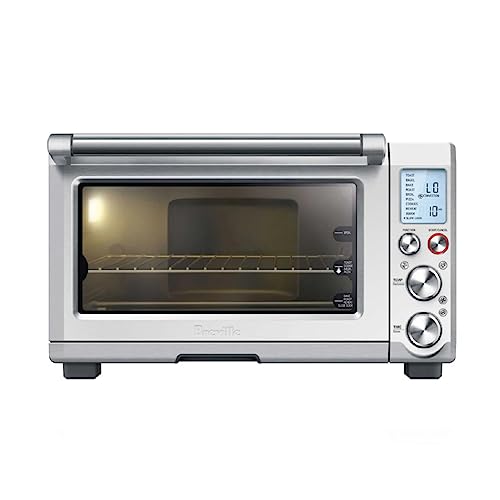
1. Breville Smart Oven Pro BOV845
A widely recommended countertop oven with adjustable heating elements and a convection fan. It fits a standard pizza or a small tray comfortably.
Suits: regular bakers. Strengths: very consistent controls. Weaknesses: a large footprint. Skip it if you only toast bread.
Best for cookie batches
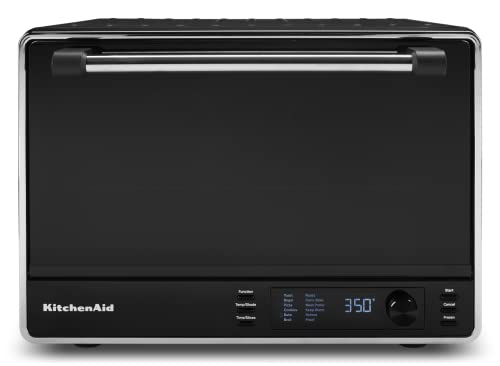
2. KitchenAid Dual Convection Countertop Oven KCO255
A stainless steel oven with two convection fans to move heat across a tray. It is made for baking, roasting and reheating.
Suits: cookie batches. Strengths: two-fan convection. Weaknesses: somewhat bulky. Skip it if you want a small oven.

Best for a serious countertop oven
3. Wolf Gourmet Countertop Oven
A premium countertop oven from a high-end appliance brand, with convection and a robust build. It suits cooks who want a long-lasting baker.
Suits: a serious countertop oven. Strengths: durable build and heat control. Weaknesses: a higher investment. Skip it if you bake only occasionally.

Best for families
4. Calphalon Quartz Heat Countertop Oven
A countertop oven that uses quartz elements for quick, even heating, with a roomy interior.
Suits: families. Strengths: quick heat-up and fine control. Weaknesses: takes counter space. Skip it if you bake small batches.
View Calphalon Quartz Heat on Amazon

Best for everyday baking
5. Cuisinart Digital Convection Toaster Oven TOA-65
A mid-size Cuisinart with a digital panel and convection fan. It balances capacity and size for a typical kitchen.
Suits: everyday baking. Strengths: a middle size and digital settings. Weaknesses: some functions go unused. Skip it if you want a bigger cavity.

Best for small households
6. Panasonic Countertop Convection Oven
A compact convection oven with a straightforward dial layout. It is suited to small batches of cookies and rolls.
Suits: small households. Strengths: compact baking. Weaknesses: little tray room. Skip it if you bake for crowds.
View Panasonic Convection Oven on Amazon
Care and Setup
- Check the thermostat with an oven thermometer.
- Rotate pans halfway through for even browning.
- Wipe splatters from the cavity once cool.
- Use light-colored pans for cookies and cakes.
- Let the oven preheat fully; most countertop models need extra minutes to stabilize.
- Keep the heating elements free from baked-on grease to avoid smoke and odd flavors.
- Line a tray with parchment only when the manual says it is safe and keep it clear of the elements.
Mistakes to Avoid
- Using pans that touch the heating elements.
- Not accounting for convection when following recipes.
- Overcrowding the tray so air cannot flow.
- Opening the door early and losing heat.
- Pushing bakeware to the back wall where air cannot circulate.
Temperature Stability in a Small Cavity
Baking rewards steady heat. A countertop oven has small thermal mass, so elements cycle on and off to hold the set temperature, and the air temperature swings up and down. These swings are normal, but a wider swing can lead to tops that brown too fast or centers that lag. Better controls and well-sealed doors help narrow the range, though how well depends on the model.
The thermostat’s accuracy also matters. A dial that says 350 may run hotter or cooler in practice. The best way to find out is to place an oven thermometer on the rack, preheat, and compare readings after the oven has cycled several times. Then adjust your dial settings or times to match.
Preheating needs patience. When the oven signals it has reached temperature, the walls may not have caught up, and the first minutes of baking can be uneven. Allow extra time, particularly for cookies, pastry and cakes that depend on a hot start. Avoid opening the door more than necessary, since each opening drops the temperature and takes time to recover. A glass door and an interior light help you check without losing heat. Remember that results vary by model, so use your own tests rather than assuming the dial is exact.
Pans and Materials for Better Baking
Bakeware affects how food browns. Light-colored metal pans reflect heat and give gentle, even browning, which suits cookies and cakes. Dark pans absorb heat and brown faster, which can help crust on bread but may burn cookie bottoms. Glass and ceramic heat slowly and hold heat, often calling for a lower temperature or longer time.
Fit matters. Measure the interior and choose a pan that leaves space for air around it. A pan that touches the walls or elements causes hot spots. Quarter sheet pans and small loaf pans fit many countertop ovens, but check the listing for half sheet fit before buying. If you cannot find a pan that fits well, consider the dimensions of the rack and look for bakeware labeled for toaster ovens.
Use flat, rimless or low-rim sheets for cookies so air moves across them. Choose straight-sided pans for cakes. Insulated pans can protect bottoms but may lengthen baking time. Line pans with parchment only if the manual allows it and ensure it does not touch elements. Grease pans lightly to avoid sticking, and cool them before washing to prevent warping. Replace warped pans that rock on the rack, because they heat unevenly and are unsafe to slide.
Rack Position, Rotation and Convection Settings
Position is one of the easiest ways to control browning. The middle rack gives balanced heat, while a higher rack browns the top faster and a lower rack browns the bottom. Choose the position the recipe or manual suggests, and move the rack if you see consistent problems.
Rotating a tray halfway through the bake helps even out hot spots. In a small oven the front and back can differ, and so can the left and right. Turn the pan 180 degrees, and swap trays if you have two. Wait to rotate until the structure of the item has set, so you do not deflate a cake.
If your oven has a convection fan, consult the manual for how to use it. Many recipes suggest lowering the temperature somewhat or shortening the time, because moving air speeds browning. Convection helps cookies and roasted vegetables but may dry delicate cakes or disturb light batters, so some oven makers recommend turning it off for those. Test with small batches before baking something important. Keep notes on rack position, temperature and time for your favorite recipes so you can repeat the results.
Scaling Recipes for a Countertop Oven
Standard recipes assume a full-size oven and large pans. In a countertop oven, you usually reduce the batch. For cookies, bake in rounds, using cool trays between batches. For cakes, convert to smaller pans, filling them about half to two thirds. Overfilled pans can rise against the top element.
Cooking times may vary. A smaller space can heat quickly, and small portions often bake faster. Check earlier than the recipe suggests, using a wooden pick for cakes, a gentle press for brownies and a color check for cookies. Use visual cues rather than relying solely on the clock.
When baking bread, small loaves or rolls work best. Steam helps crust formation, and some bakers place an oven-safe pan of hot water on a lower rack, but only if the manual allows it. Proofing dough nearby, in a warm spot, and shaping it to fit the pan prevents crowding. For casseroles, choose dishes that fit with clearance. Let baked goods rest on a rack, since trapped steam on a tray can soften the bottom. Keep expectations realistic: a countertop oven can do a lot, but large batches and tall cakes may need a full oven.
Cleaning to Protect Baking Flavor
Baked-on grease and sugar can scorch and produce smoke, which can flavor delicate baked goods. Wipe spills when the oven is cool and unplugged. Clean the crumb tray regularly and check the area around the elements for debris. Remove and wash racks as the manual advises.
Door glass can cloud with grease and sugar. Wipe it when warm, not hot, with a damp cloth, and use a baking soda paste for stubborn spots. Avoid spraying cleaner into vents or onto elements. After cleaning, run the oven briefly to burn off any residue, and ventilate the room.
Know when to replace the oven. If the temperature drifts widely even after cleaning, if the door will not seal, if elements fail to heat or if the interior coating flakes, it may be time. When shopping, consider tier differences: entry models offer basics, while premium models offer more precise control, convection and better build. A higher tier can help serious bakers, but occasional bakers may be happy with a simpler model plus an oven thermometer. Check the listing for interior size, rack positions and temperature range, and confirm with the manual before baking.
Sizing Questions Before You Choose a Baking Oven
The most common regret with a countertop baking oven is buying one that cannot hold the pans you already own. Spend a few minutes with a tape measure before you compare any features.
Interior width and depth
Measure your favorite sheet pan and cake pan, then compare them with the interior dimensions in the listing. A quarter sheet pan is the usual benchmark for small ovens, while a half sheet needs a noticeably larger cavity. Remember that you need a little clearance on each side for air to move around the pan.
Interior height
Tall loaves, a stand-up roasting dish or a layered dessert need vertical space. Check the distance from the lowest rack position to the top element or the ceiling of the cavity.
Outside footprint
The exterior is bigger than the cavity, and countertop ovens need breathing room. Read the maker’s instructions for clearance around the sides, top and back, and confirm the space under your cabinets can accommodate it.
Power and circuit
Larger ovens draw more power. Follow the manual for outlet guidance, and avoid sharing a circuit with other heavy appliances. If you are unsure about your wiring, ask a licensed electrician.
Baking Checklist for Your First Week
New ovens behave a little differently from the full-size one you know. These steps help you learn it quickly.
- Read the manual, including the break-in or first-use notes, and run the oven as the maker describes before cooking food.
- Use an oven thermometer to see how the set temperature compares with what the cavity shows. Small ovens can swing as elements cycle.
- Bake a simple batch of cookies on one rack first and watch for hot spots.
- Note which side browns faster and turn the pan partway through if needed.
- Keep a short log of temperature and time adjustments for the recipes you use most.
- Let the oven cool before wiping the interior, and follow the cleaning steps in the manual.
Which Baking Jobs Fit a Countertop Oven
Not every baking project translates well to a smaller cavity. This table sums up the general picture, though your model and recipe will matter.
| Project | Fit | Tip |
|---|---|---|
| Drop cookies | Excellent | Bake in small batches and rotate the pan |
| Quick breads and muffins | Very good | Use the middle rack and watch the top color |
| Small cakes | Good | Choose pans that leave space around the sides |
| Yeast loaves | Possible | Check that the loaf height clears the top element |
| Large roasts and big holiday bakes | Limited | Use the main oven for these jobs |
When to Follow the Manual and When to Call a Pro
A countertop oven is a heating appliance, and the maker knows its limits better than any general article does. Always follow the manual for oven-safe cookware, maximum temperatures, rack positions and cleaning.
Stop using the oven and contact the maker or a qualified repair person if you notice a damaged cord, a loose plug, an element that glows unevenly or a door that no longer closes properly. Do not try to repair electrical parts yourself.
It is also worth reading the instructions on cookware. Glass, ceramic and metal pans respond differently to the oven, and some bakeware is not suitable for convection fans or close contact with elements. If a pan or dish has no clear guidance, check with its maker before using it.
Finally, give the oven good ventilation and keep flammable items such as towels and paper away from it while it is on. A calm, consistent routine makes a small oven a reliable baking partner.
Reading a Baking Oven Listing Like a Careful Shopper
Listings for countertop ovens pack many claims into a few lines, so it pays to know which ones matter for baking. Look first for the number of heating elements and where they sit. Top and bottom elements that can be controlled separately give you more say over browning than a single mode that fires everything at once.
Next, check whether the oven offers a convection fan and how many speeds it has. A fan helps heat move around the cavity, which can make cookies brown more evenly, but delicate cakes and custards sometimes prefer the fan off. A model that lets you switch it off or lower it is more flexible than one that forces it on.
Then look at the temperature range and the way the control works. A dial and a digital display are both fine, but you want clear markings and a preheat signal you can trust. Read the list of included accessories too. A baking pan, a wire rack and a crumb tray are common, and you may still want to buy a pan that matches your recipes.
Finally, see how the maker describes cleaning. Removable crumb trays and smooth interior walls make routine care easier, and they help keep old residue from affecting flavor in your next bake.
If a detail is missing from the page, such as the cavity height or the included pan size, look at the maker site or the manual download before you decide. A short search at that stage is far easier than a return later.
How to Narrow Down the Picks for Toaster ovens for baking
With several strong options in this guide, the fastest way to a good decision is to stop comparing everything at once. Start by removing any pick whose basic format does not suit your space or routine, using the descriptions above. Then compare what remains on the two or three points that will affect you weekly, such as size in daily use, the controls you will touch every time and the cleaning the toaster oven will ask of you. Features you will use twice a year should never outvote the ones you will use twice a day.
Read the honest limitation in each review as carefully as the strengths. A limitation that touches something you rarely do is a fair trade; a strength that serves a habit you do not have is worth nothing to you. This is why the same guide can honestly serve different households with different answers. Your job is not to find the best toaster oven in the abstract, but the one whose strengths and weaknesses line up with your life with the fewest daily frictions.
Before you order, do a final reality check on the exact listing for the model you have chosen. Listings change, similar model names differ in small details, and the version in front of you is the one that will arrive. Confirm the dimensions, the requirements and what is included, and keep a note of what you checked. That five-minute habit prevents most disappointments, and it costs nothing but attention at the moment when attention matters most.
Baking Well in a Small Oven
Baking is where a toaster oven’s evenness is truly tested, because cakes and pastries cannot hide behind sauces or seasoning. Use the central rack position for most bakes, choose tins that leave air space around them, and remember that dark tins brown bases faster than pale ones. Preheat properly even though it is quick, because a batter that goes into a climbing temperature rises unevenly. Check bakes a little before you expect them done, since compact ovens brown tops briskly, and rotate a tray once if your model has a warm side. Small batches are the joy of this scale: six scones, a little loaf or a tray of biscuits, baked fresh without heating the whole house. Keep a short notebook of your regular bakes with the position, setting and timing that worked, and your small oven will become as predictable as any large one.
Choosing Toaster ovens for baking: The Details That Decide Daily Satisfaction
Start with the foods you will cook most, because a toaster oven that is perfect for one household can be wrong for another. List your real weekly jobs: toast, reheated pizza, frozen snacks, baked potatoes, a tray of vegetables, a small casserole or a batch of cookies. Then compare that list with the functions and interior described for each pick in this guide. A model whose strengths match your five most common jobs will satisfy you far more than one bought for a function you use twice a year.
Interior fit comes next, and it means your own pans and dishes, not just the ones supplied. Measure the tray, dish or small roasting pan you reach for most and check it against the interior described in the listing, allowing room for air to circulate around it. Air frying and convection cooking both depend on that airflow, so a pan that fills the cavity wall to wall will cook unevenly however good the oven is. Leave breathing room and results improve immediately.
Controls and presets deserve a realistic look. If you love dialling in exact settings, a detailed panel will please you; if you cook half-asleep at breakfast, simple controls you can operate without thinking are worth more than extra programmes. Consider everyone who will use the oven, where it will sit, and whether the display and labels can be read in your kitchen’s light. Daily ease beats theoretical versatility over years of breakfasts.
Finally, think about cleaning and counter life. Crumb trays, removable parts, interior finishes and the space the oven needs around it for ventilation decide how it ages in a real kitchen. An oven that is easy to wipe out gets wiped out; one that is awkward slowly fills with baked-on residue and starts to smoke. Choose the model whose upkeep, footprint and controls all fit the kitchen it will actually live in.
Real-Life Situations and How to Match Them
On a weekday morning, a good toaster oven handles toast, warmed pastries and a quick breakfast without heating the whole kitchen or the main oven. At lunch it revives leftovers properly: pizza regains a crisp base, roasted vegetables keep their edges, and a portion of last night’s bake reheats evenly instead of steaming in a microwave. These small daily rescues are where the appliance quietly earns its counter space.
For evening cooking, think in trays. A single layer of vegetables, a small fillet of fish, a few chicken thighs or a dish of baked pasta all suit the scale, and air fryer modes add browning and crispness to frozen foods and snacks. For households of one or two, the toaster oven often becomes the main oven, with the big oven reserved for celebrations. For families, it works as the flexible second oven that absorbs side dishes and children’s portions.
Baking in miniature is its own pleasure: a small batch of cookies, a tray of scones or a little cake cooks without a long preheat and without heating the whole house in summer. The lesson across all these uses is the same. A toaster oven rewards cooks who match the food to its scale, use a single layer where crispness matters and treat it as a real oven in small form, not as a toy and not as a microwave.
Setup, First Use and Building Good Habits
Place the oven on a stable, heat-safe surface with the clearances the manual specifies, because the exterior gets hot and the vents need room. Keep it away from curtains, paper and anything that should not sit beside a working oven, and make sure the cord reaches the socket without strain. Before the first real meal, run the oven as the maker directs for any initial heating, and learn where the rack positions sit and which pan belongs on each.
Preheating matters more than many new owners expect. A toaster oven heats quickly, but food put into a cold cavity cooks unevenly and air fried items crisp less well. Give it its short preheat, arrange food in a single layer with space around it, and choose the rack position for the job: closer to the heat for browning, central for even baking. Small adjustments like these explain most of the difference between disappointing and excellent results.
Build a small routine around each cook: check the food a little before the time you expect, because compact ovens run close to the food and browning can move quickly at the end; use proper oven gloves, since handles and racks sit close together; and let the oven cool before you wipe it out. The first week with a new toaster oven is calibration time, and notes on your favourite dishes will save guesswork for years.
Cleaning, Care and Keeping It Working Well
Crumbs and grease are the whole cleaning story, so stay ahead of them. Empty the crumb tray regularly, before it is full, and wipe the interior once it has cooled whenever something fatty or sugary has cooked. Residue left inside bakes harder with every use, smokes at lower temperatures and eventually flavours food. A soft cloth, mild cleaning and patience protect interior finishes far better than occasional aggressive scrubbing.
Wash removable racks, trays and baskets as the maker directs and dry them fully before returning them. If an air fryer basket is supplied, treat it kindly, because bent or damaged mesh cooks unevenly and is awkward to clean. Keep the door glass clean so you can judge browning without opening the door and losing heat, and check that the door seal and hinges stay free of crumbs.
Look after the outside as well. Wipe splashes off the top and sides, keep the vents free of dust, and never cover a hot oven or store items on top of it unless the maker explicitly allows it. If the oven starts smoking during ordinary cooking, the cause is usually residue or a crumb tray that needs emptying, not a fault. Clean first, and most problems leave with the crumbs.
Mistakes to Avoid and Problems Worth Knowing
The most common mistake is crowding. Piling food in layers blocks airflow, traps steam and turns air frying into steaming, so cook in a single layer and use batches for larger amounts. The second mistake is skipping the preheat or using the wrong rack position, then blaming the oven for pale or scorched results. Compact ovens are honest machines: they respond quickly, for better and worse, to how they are loaded.
Other frequent errors include using pans that block the cavity, putting sugary marinades under fierce heat without watching them, and forgetting the crumb tray until it smokes. Plastic or unsuitable containers have no place in a toaster oven, and foil should only be used as the maker allows. Read the manual’s few pages properly once, keep the tray empty and the interior wiped, and the oven will cook evenly and cleanly for a long time.
Comparing the Picks in This Guide, One by One
Breville Smart Oven Pro BOV845 is worth a closer look when the strengths described in its review above line up with the job you do most often. Read its entry again with your own routine in mind rather than its position in the list, and ask whether its particular balance of size, style and upkeep suits your household. If the honest limitation mentioned in its review touches something you do daily, take that seriously and look again at the neighbouring picks before deciding.
With KitchenAid Dual Convection Countertop Oven KCO255, the decision is about fit for your habits. Its review above sets out who it suits and where it falls short, so test those claims against your busiest week rather than your most ambitious one. A toaster oven that handles your ordinary days gracefully will satisfy you far more than one chosen for an occasional special case, and the limitation that matters least in your real life is the one you can happily accept.
Treat Wolf Gourmet Countertop Oven as the answer to a specific question: which household, cooking in which way, will be glad of this every week? Its entry above gives you the material to answer honestly. Compare its strengths with the pick before and after it in this guide, because the contrasts between neighbours are usually where the right choice reveals itself. Decide by the difference that will still matter to you in a year.
Calphalon Quartz Heat Countertop Oven rewards buyers who read its review for character rather than for a single standout point. Notice what it asks of you in return for its strengths, in space, attention or upkeep, and decide whether that exchange suits your home. Every pick in this guide makes such an exchange, and none of them is free. The buyers who end up happiest are the ones who chose their compromise deliberately instead of discovering it after delivery.
If Cuisinart Digital Convection Toaster Oven TOA-65 is on your shortlist, do one final practical check before deciding: re-read its listing details for the exact version on offer, confirm the dimensions and requirements against your space, and picture it in place on an ordinary evening. That small discipline catches the mismatches that reviews cannot, because listings change and model variations differ in details that matter. A pick that survives that check has earned its place in your home.
For Panasonic Countertop Convection Oven, weigh the everyday experience its review describes: how it will feel to load, clean, open, empty or operate when you are tired and the meal matters more than the appliance. First impressions fade quickly, but the daily experience repeats for years. Choose the pick whose daily experience you would recommend to a friend in your situation, and you will rarely go wrong with the final decision.
One habit improves results with almost any toaster oven: slow down at the decision points. Measure before you buy, prepare before you start, check before you assume something is finished, and clean before residue becomes a project. None of that requires talent or extra equipment. It is simply the difference between using an appliance and fighting it, and it shows in the results far more reliably than any single feature on a specification list.
Keep a small notebook, paper or digital, for the first month with a new toaster oven. Note what worked, what surprised you and what you would do differently, in a sentence or two each time. Memory is generous to itself and quietly rewrites early struggles, while honest notes stay accurate. By the end of the month you will own a personal guide to your own equipment and habits, which is the most useful manual you will ever read.
When something disappoints, change one variable at a time. A different position, a smaller batch, a longer rest, a cleaner surface: single changes teach you cause and effect, while changing everything at once teaches you nothing and usually wastes food or money. This patient, experimental approach is how experienced cooks and careful owners actually improve, and it works for every appliance and ingredient in this guide.
Teach the other people in your household the basics of any shared toaster oven. Most damage and most disappointing results come from someone who meant well but did not know the routine: the wrong setting, the wrong cleaner, the door left open, the part forced instead of fitted. A two-minute explanation and a note where it will be seen prevent more problems than any warranty, and they make the appliance a shared pleasure rather than one person’s responsibility.
Buy accessories and extras only after the basic routine is working. The right tray, tool or spare part, chosen to solve a problem you actually have, is money well spent. A drawer of hopeful gadgets bought on the first day is usually money parked. Live with the toaster oven for a few weeks, let its real needs reveal themselves in use, and then equip it deliberately. Restraint at the start almost always leads to a better-equipped kitchen in the end.
Seasonal changes affect kitchens more than most people expect. Summer heat, winter cold, holiday quantities and everyday term-time routines all ask different things of the same toaster oven. A quick review at the change of each season, checking cleanliness, storage, supplies and the habits that have drifted, keeps performance steady all year. It takes minutes, and it prevents the slow decline that owners often mistake for an appliance wearing out.
Finally, judge your choice by a fair standard after a month of real use. Not by the first attempt, which is always partly rehearsal, and not by the most ambitious occasion of the year, but by ordinary Tuesdays. If the toaster oven handles those with ease, fits your space and habits, and asks only for care you are happy to give, you chose well, whatever any list, including this one, ranked first.
Read the current listing for your chosen toaster oven one final time on the day you order, and save a copy of the details that decided you: the exact model name, the dimensions or size, what is included and the delivery and returns terms. Listings are edited, bundles change and similar versions sit side by side, so the version you checked is the version you should confirm. If anything has changed since your research, pause and re-check rather than assuming the difference is trivial.
Think about delivery and installation as part of the purchase, not as an afterthought. Who brings the toaster oven into the home, what access do they need, and what happens to the packaging and, where relevant, the old appliance? Preparing the space, the route and the paperwork before the day turns a stressful event into a routine one. Keep the delivery note and check the item carefully before signing anything, because damage and missing parts are easiest to resolve at the door.
If you are buying the toaster oven as a gift, choose for the recipient’s habits rather than your own taste, and include the receipt arrangements they would need for an exchange. A model that suits your kitchen, garden or routine may be entirely wrong for theirs. Practical gifts succeed when they fit the other person’s space and life, and a short conversation beforehand, however much it spoils the surprise, usually produces a gift that is used for years instead of stored for months.
Consider the end of the toaster oven’s life before the beginning. Appliances and tools eventually need parts, repair or responsible disposal, and brands differ in how easy those are to arrange. Keeping the manual and model details, registering a product if the maker offers it and knowing where your local recycling or disposal point is all belong to ownership. A purchase that can be maintained and eventually retired responsibly is a better purchase than one that cannot.
Baking Toaster Oven FAQ
Do I need to lower the temperature with convection?
Many recipes suggest a small reduction when using a fan, so watch the first batch closely.
Can I bake a cake?
Yes, in an oven-safe pan that fits with clearance on all sides.
How do I avoid burnt bottoms?
Use the middle rack, a light pan and a slightly lower temperature.
Which pan fits best?
Quarter sheet pans are common; check the listing for half sheet fit.
Is an oven thermometer worth it?
Yes, because many countertop ovens run hot or cool.
Can I use glass or ceramic dishes?
Many ovens allow oven-safe glass and ceramic, but sudden temperature changes can crack them, so avoid cold dishes in a hot oven and check the manual.
Will bread come out well?
Small loaves and rolls bake fine in a good countertop oven. Use steam from a pan of hot water on the lower rack for a crisper crust, if the maker allows it.
How do I get even cookies?
Use cool, flat sheets, leave space between dough balls, bake one tray at a time and rotate the tray halfway through the bake.
Why do my cookies burn on the bottom?
Dark pans, a low rack or elements close to the tray can cause this. Try a light-colored pan, the middle rack and a slightly lower temperature.
Can I bake bread in a toaster oven?
Small loaves and rolls usually work well. Choose a pan that fits with space around it and watch the crust color.
Should I use convection for cakes?
Some makers suggest turning it off for delicate batters or lowering the temperature. Check the manual and test a small batch.
How do I know my oven temperature is right?
Use an oven thermometer on the rack and compare it with the dial after preheating. Adjust your settings to match what you measure.
What size pan fits a countertop oven?
Quarter sheet pans and small loaf or cake pans fit many models. Measure the interior and leave clearance on all sides.
Can I bake two trays at once?
Sometimes, but heat and airflow may be uneven. Swap and rotate trays halfway through.
Why does my cake rise unevenly?
Hot spots or an oven that cycles heavily can cause this. Rotate the pan and use the middle rack.
Why does one side of my toast brown more than the other?
Compact ovens place food close to their elements, so small differences in position show up quickly. Try the central rack position, turn the food partway through if your model heats unevenly, and make sure the crumb tray and interior are clean, because residue changes how heat reflects. If unevenness is new, check that an element is working properly and that the pan you use is not blocking one side of the cavity.
Can I bake a cake in a toaster oven?
Yes, in a suitably sized tin, and small bakes often turn out beautifully because the oven preheats quickly and heats evenly at that scale. Choose a tin that leaves room for air around it, use the central rack position and check a little early, because compact ovens can brown tops faster than a large oven. The same care applies to scones, muffins and traybakes: right tin, right position, watch the finish.
How do I get frozen food properly crisp?
Preheat the oven, use the basket or rack supplied for air frying so air can move under the food, and cook in a single layer with space between pieces. Turn the food once if the result is uneven, and resist overfilling, which is the main cause of soggy results. A minute or two of patience at the end, letting the food stand on the hot rack, keeps the coating crisp as it comes to the table.
What pans can I use in a toaster oven?
Use oven-safe pans that fit with clearance on all sides, and check the maker’s guidance about materials and about foil. A pan that touches the walls or elements is too big, whatever its label says. Many people find one small tray, one little casserole and the supplied basket cover nearly everything. Measuring your favourite pan before you buy the oven saves the common disappointment of a perfect dish that does not fit.
How do I stop the oven smoking during cooking?
Empty the crumb tray, wipe out grease from the interior once it has cooled, and check that fatty food is not dripping directly onto an element. Sugary marinades and very fatty items need watching and sometimes a tray beneath them. If the oven smokes during ordinary, clean cooking, that is a sign to investigate rather than ignore, but in most homes the answer is residue, not a fault.
Can a toaster oven replace my main oven?
For one or two people, often yes for everyday cooking, because it handles the portions and dishes those households make most. For large joints, big batch baking or several dishes at once, the main oven keeps its place. Many households end up using the toaster oven daily and the big oven occasionally, which is a comfortable division. Judge it by your real menu rather than by the largest meal of the year.
Where should I position food for air frying compared with baking?
Air frying wants maximum airflow, so use the basket or rack position the maker recommends for that mode, with food in a single layer. Baking wants even, central heat, so the middle position with a proper tin suits it better. Using the baking setup for air frying traps steam, and using the air fry setup for a cake can over-brown the top. The rack position is a small choice with a large effect.
How do I keep the door glass clear?
Wipe it once the oven has cooled whenever splashes appear, because baked-on grease on glass becomes stubborn quickly. A clean window lets you judge browning without opening the door and losing heat, which improves results as well as appearance. If the glass has become cloudy with old residue, gentle, patient cleaning as the maker directs works better than abrasive tools that can damage the surface.
The Short Version
For a baking standout, the Breville Smart Oven Pro. For two-fan convection, the KitchenAid. For a premium option, the Wolf Gourmet. For quartz heat, the Calphalon. For balanced size, the Cuisinart TOA-65. For compact baking, the Panasonic.

