A vertical electric smoker is a tall cabinet with a heating element at the bottom and racks above. You plug it in, set a temperature and add wood chips, which makes it the easiest style to learn for ribs, jerky, sausage and poultry. Most electric models are insulated, so they hold their temperature in cooler weather.
The six models below are popular vertical electric smokers across different brands and sizes. We have not used these products ourselves, so confirm rack count, cooking area, controller type and power needs on the current listing before buying. Electric smokers produce a lighter smoke ring than charcoal, which suits many cooks. Plan for a level spot, a covered outlet and enough room to open the door fully.
As an Amazon Associate we earn from qualifying purchases. Links below are affiliate links, and they do not change the product information we give.
What to Look For
| Feature | Why it matters |
|---|---|
| Controller | Digital control holds the temperature without watching |
| Racks | More racks help when smoking several items |
| Wood tray | A side loader lets you add chips without opening the door |
| Insulation | A well-sealed cabinet keeps heat steady in cool weather |
| Window | A glass window lets you check food without losing heat |
| Power | Check the wattage and use a heavy-duty outdoor cord |
In this guide
Specs at a Glance
| Smoker | Control | Size class | Notes |
|---|---|---|---|
| Masterbuilt MB20071117 | Digital | 30 inch class | Side wood chip loader |
| Masterbuilt 40 inch Digital | Digital | 40 inch class | Taller cabinet |
| Bradley Original 4 Rack | Digital | Mid-size cabinet | Bisquette smoke system |
| Smoke Hollow 30162E | Digital | 30 inch class | Glass door |
| Cuisinart COS-330 | Digital | 30 inch class | Wood chip tray |
| Dyna-Glo DGU732SDE-D | Digital | 30 inch class | Vertical digital smoker |
The 6 Best Vertical Electric Smokers

Top pickBest for beginners
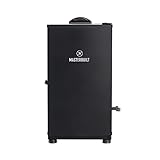
1. Masterbuilt MB20071117
A Masterbuilt digital electric smoker in the 30 inch class. It has a side chip loader, a digital panel and four racks. Many owners start here, thanks to a long run of the 30 inch size.
Suits: beginners. Strengths: simple operation and a known brand. Weaknesses: exact features vary by version. Skip it if you want a big commercial cabinet.
Best for big batches
2. Masterbuilt 40 inch Digital Electric Smoker
A taller Masterbuilt digital electric smoker. The extra height gives more rack room for large batches. The cabinet is tall, so measure the space on your patio. Check the listing for the rack count and the controller type before you order.
Suits: big batches. Strengths: more racks. Weaknesses: a taller cabinet. Skip it if you have limited height.
Best for long smokes
3. Bradley Original Smoker 4 Rack
A Bradley electric smoker that uses compressed wood bisquettes for a timed smoke. It is a long-running design. It uses its own bisquettes, so check availability before you commit.
Suits: long smokes. Strengths: steady, automatic smoke. Weaknesses: bisquettes are an ongoing purchase. Skip it if you prefer wood chips.
View Bradley Original 4 Rack on Amazon
Best for watchers
4. Smoke Hollow 30162E
A Smoke Hollow electric smoker with a window door and a temperature gauge. Check the listing for rack count. The window lets you check progress without opening the door.
Suits: watchers. Strengths: a visible cooking area. Weaknesses: model details vary. Skip it if you want precise digital control.
View Smoke Hollow 30162E on Amazon
Best for kitchen brand fans
5. Cuisinart COS-330
A Cuisinart vertical electric smoker with a digital control. It has several racks and a chip tray. It is a simple choice for people who already own other Cuisinart gear.
Suits: kitchen brand fans. Strengths: an easy-to-use panel. Weaknesses: check the listing for assembly details. Skip it if you want a very large smoker.
View Cuisinart COS-330 on Amazon

Best for backyard cooks
6. Dyna-Glo DGU732SDE-D
A Dyna-Glo vertical electric smoker with a digital control and a cabinet design. Compare it with the other 30 inch models before deciding.
Suits: backyard cooks. Strengths: a spacious cabinet. Weaknesses: check the listing for rack count. Skip it if you want a compact unit.

Care and Setup
- Season the smoker before the first cook.
- Empty the water pan and chip tray after use.
- Wipe the racks while still warm.
- Keep the cord out of the rain.
- Wipe grease from the drip tray after each cook.
- Let the unit cool fully before cleaning it.
Mistakes to Avoid
- Soaking chips that then produce steam.
- Opening the door too often.
- Overfilling the racks.
- Using an extension cord that is too light.
- Skipping a meat thermometer.
Sizing an Electric Cabinet to Your Cooking
The most common mistake with a vertical electric smoker is picking by cabinet height alone. What matters is usable rack area and how much clearance sits between racks. Two cabinets that look similar can hold very different amounts of food, because rack spacing, rack shape and the position of the water pan all change what actually fits.
Start by listing what you cook most. A rack of ribs, a pork shoulder, a whole chicken and a few sausage links each take space differently. Ribs can be cut in half or curled to fit, while a large roast needs open height above it. Check the listing for rack dimensions and for whether racks can be moved or removed to make space for tall items.
Think about the people you cook for. A small household that smokes on weekends does not need the tallest cabinet, and a larger one may find a compact model frustrating on holidays. A cabinet that is too large wastes energy and chips for small cooks, while one that is too small means cooking in batches.
- List your usual cuts and their rough size.
- Compare rack dimensions, not only the rack count.
- Check that the door opens wide enough for racks to slide out.
- Measure the storage spot, including the height of the cabinet with its feet and handle.
If you are torn between two sizes, consider how often you would actually fill the bigger one. Many cooks end up happier with a size they can keep reasonably full, because a smoker holds steadier conditions when it is not mostly empty air.
Controller Types and Temperature Accuracy
Electric smokers use a thermostat to cycle the heating element, and the controller style shapes how easy the smoker is to live with. Digital panels let you set a target temperature and a timer, and they usually show the cabinet reading. Simpler dial models have marked settings that give a rough range instead of an exact number. Some newer models add phone connectivity, so check the listing for what the app does and which devices it supports.
No controller is perfectly exact. The sensor sits in one spot in the cabinet, and the temperature at the food can differ, especially near the door, in the corners, or after the door is opened. This is why a separate probe thermometer is worth having. Place one probe in the meat and, if you can, another at rack level to see the real cabinet temperature.
Learn your smoker’s habits during the first few cooks. Notice how long it takes to recover after opening the door, whether the top racks run warmer than the bottom ones, and how it behaves in wind or cold weather. Write down what you learn so you can adjust the next time.
- Digital controllers suit cooks who want repeatable settings.
- Dial controllers suit cooks who prefer a simple, fewer-parts design.
- Remote monitoring is a convenience, not a substitute for checking the food.
If a long cook matters, check how the smoker handles a power interruption. Some models reset or stop, which could affect the food. The manual should explain this behavior.
Wood Chips, Bisquettes and Smoke Flavor
Electric smokers make smoke by heating wood, not by burning a large fire, so the smoke tends to be lighter and cleaner than charcoal or stick burners. How the wood is fed makes a difference. Chip trays hold a measured amount that smolders for a while, and you refill as needed. Side loaders let you add chips without opening the main door. Systems that use compressed wood pucks feed them on a timer, which can mean steadier smoke but ties you to that fuel.
Wood type changes flavor. Milder woods such as fruit woods suit poultry, pork and fish, while stronger woods such as hickory or mesquite suit beef and pork shoulder. Many cooks blend them. Use dry, clean wood made for smoking, and avoid treated wood, painted wood or anything of unknown origin.
The common goal is thin, almost clear smoke. Thick white smoke often points to smothered wood or poor airflow and can leave a bitter taste. If your smoke looks heavy, try fewer chips at a time, check that vents are open as the manual directs, and clean out ash and old residue.
- Start with small amounts of wood and add more only if you want a stronger flavor.
- Remember that the first couple of hours matter most for smoke absorption.
- Follow the maker’s guidance on chip size and whether to pre-soak.
If you plan to run several different woods, keep them stored dry and labeled so you can repeat results you liked.
Outdoor Placement, Power and Safety
An electric smoker is outdoor equipment, and where you put it matters. Choose a level surface away from walls, railings, overhanging branches and anything flammable. Keep it clear of doors and windows so smoke does not drift inside. Leave room for the door to open fully and for you to stand safely while loading racks.
Power is the practical limit. Check the wattage and the plug requirements in the manual, and match them to an outdoor-rated, grounded outlet. A ground-fault protected outlet is a common requirement for outdoor use. If an extension cord is needed, use one rated for outdoor use and for the load, kept as short as practical, and keep connections off wet ground. Do not leave the cord where it can be tripped on or run over.
Weather affects results and safety. Wind and cold slow heating, rain can reach the controller or cord if the cabinet is exposed, and direct sun can change the display’s readability. A sheltered but ventilated spot works best. Never use an electric smoker in a closed garage or enclosed porch.
- Keep children and pets away from the hot cabinet.
- Use heat-resistant gloves when handling racks and trays.
- Let the unit cool fully before moving or covering it.
- Unplug the smoker when you are done cooking.
Replace worn cords, cracked seals or a damaged element rather than working around them. Check the maker’s guidance for replacement parts.
How a Vertical Cabinet Differs From Other Smoker Shapes
Vertical smokers stack racks one above another in an upright cabinet. The heat source usually sits at the bottom, with the wood tray above it, so smoke and warm air rise through the racks. This shape saves floor space compared with a horizontal barrel and suits people who cook for a few people at a time.
Because heat rises from below, the lower racks can run slightly warmer than the upper ones. Many cooks rotate the racks partway through, or put the thickest cuts on the rack the manual recommends. Check the maker’s guide to see how heat is distributed in your cabinet.
Think about what that means for your habits:
- Tall items, like whole chickens or turkeys, can stand upright on a rack if the height allows.
- Ribs and sausages can be spread across several levels.
- Larger cuts like brisket may need to be cut down to fit the rack depth.
- Opening the door lets heat escape quickly, so plan your cook to limit checks.
Comparing Wood Chip Trays and Water Pans
Two features are common in vertical electric smokers: a chip tray for wood and a water pan. The table explains how each is generally used. Follow the manual for your model, because the exact placement differs.
| Part | Role | Care points |
|---|---|---|
| Wood chip tray | Holds wood that smolders to make smoke | Empty cooled ash and clean the tray between cooks |
| Water pan | Adds moisture and helps steady the temperature | Fill to the line the maker advises; empty and wash after use |
| Drip tray | Catches grease | Line or clean regularly to reduce odors |
| Removable racks | Hold food in the cabinet | Wash by hand or as the manual allows |
Some people swap water for juice or other liquids, but this changes cleaning and can create sticky residue. Stay with what the maker states.
Weather, Placement and Electrical Safety
An electric smoker is a heating appliance used outdoors, so placement is important. Pick a level spot away from walls, fences, overhangs and flammable materials, and follow the clearance given in the manual. Keep the smoker sheltered from direct rain and strong wind, but never use it in a garage, shed or other enclosed area.
- Use an outdoor-approved outlet with ground fault protection if required by local codes.
- Use only the extension cord arrangement allowed by the maker.
- Keep the cord and plug off wet ground.
- Unplug the unit when it is not in use.
- Cover it after it has cooled, using a cover designed for the model.
Cold weather can lengthen cook times because the cabinet loses heat faster. A wind block set at a safe distance can help, but never place anything against the smoker that blocks vents. For electrical questions, consult a licensed electrician.
Troubleshooting Weak Smoke and Temperature Swings
If you see little smoke, check that the wood is the right size and type, and that the tray is positioned as the manual shows. Dry, fine chips burn quickly, while larger chunks smolder longer. Do not soak wood unless the maker advises it, as damp wood can produce steam instead of clean smoke.
Temperature swings often come from opening the door, a dirty element or a wobbly probe. Clean the cabinet, check the seals and confirm the thermometer reading with a second probe. If problems continue, contact the maker’s support, and do not modify the electrical parts.
Food Safety Reminders for Smoked Meat
Smoke flavor is only half the story. Meat must reach safe internal temperatures, and long, low cooks mean food spends time in warmer ranges, so follow official guidance from your national food safety authority on timing and temperatures. Use an accurate probe, avoid leaving cooked food out for long periods and refrigerate leftovers promptly. Wash hands, boards and tools after handling raw meat.
Sizing a Vertical Smoker to Your Household
Capacity labels on smokers are easy to misread. A cabinet advertised with a large number of cubic inches or with several racks does not always give you the room you expect, because the rack spacing, the water pan and the chip tray all take up space. Think about what you cook most and picture it on the racks.
| What you cook | What to check on the listing |
|---|---|
| Ribs for a family | Rack width, and whether racks can hold rib racks flat or require them to be rolled |
| Whole chicken | Vertical space between racks |
| Pork shoulder or brisket | Rack depth and the weight each rack can hold |
| Sausage and jerky | Number of racks and ease of removing them |
| Fish | Surface that prevents sticking, and a lower temperature range |
Many owners fill only two or three racks at a time, because crowding slows the cook and reduces airflow.
Seasoning a New Smoker Before the First Cook
Most makers recommend a break-in run before cooking food. The steps differ between models, but the idea is the same: burn off oils left from manufacturing and let the interior coat itself. Follow your manual precisely, including how long to run the unit and which wood to use, if any. Keep the area ventilated and expect some odor and smoke on the first run. Let the cabinet cool fully before wiping it down or loading racks.
How to Choose in Practice: A Step-by-Step Decision Sequence
Most shoppers start with a shortlist of models and a handful of features, but a more reliable way to choose a vertical electric smoker is to work through a short sequence of practical decisions in order. The sequence below is built around the tall cabinet that stacks food above its heat source. Each step removes some options from contention, so by the end you are comparing a small number of genuinely suitable picks from the reviews above rather than trying to rank everything at once.
Step one: start with the space, not the product
Measure first and shop second. For this category, that means checking the rack dimensions and rack spacing inside the cabinet, the total cooking area, the cabinet footprint and full height on your patio, the door swing, and the distance to a covered, grounded outdoor outlet. Read the dimension line on the listing rather than trusting the size class, and picture your largest regular cut on the rack it must fit. Write the numbers down and keep them beside you while you read listings. If your space is between sizes, favour the model whose rack spacing suits your food over the taller one that does not.
Step two: list your three most common uses
Next, be honest about what the appliance will do most weeks. In this category the everyday work usually includes ribs for the family on weekends, pork shoulder for pulled pork, whole chickens, and jerky and sausage batches. Write down your own three most frequent uses, in order, and judge every pick against those three first. This single habit prevents the most common buying error in the category: buying a cabinet by its headline rack count and discovering that your ribs do not lie flat or your shoulder crowds the walls.
Step three: match handling to the people who will use it
Consider who else will use the appliance: a partner, older children, grandparents or housemates. The racks come out hot and loaded, so think about the lift and the swing of the door, and whether a side chip loader matters to whoever reloads the wood. The controls should be readable at a glance — a small, dim display in bright sun annoys daily — and a glass window, where fitted, suits cooks who like to watch without opening the door. If one person does most of the cooking, their routine should carry extra weight in the decision.
Step four: plan the upkeep and the installation before you buy
Every option in this guide asks for some routine care, and the differences matter. In general that means emptying the water pan and chip tray after use, wiping the racks while they are still warm, wiping grease from the drip tray after each cook, keeping the cord dry and out of the rain, and letting the unit cool fully before cleaning or covering it. Ask yourself who will do this after a long cook, when the racks are greasy and the evening is over. Before you commit, also confirm what is included: racks and trays, a cover or sold separately, bisquettes or chips for the first cooks, and how much assembly the cabinet needs out of the box.
Real Households, Real Use Cases
The same vertical electric smoker can be an excellent buy for one household and a poor one for another. The scenarios below describe how the choice plays out in common situations, so you can find the one closest to your own life and borrow its priorities.
The weekend beginner learning the craft
For a first smoker, the priorities are forgiveness and simplicity: a digital controller that holds temperature, a side loader so chips can be added without opening the door, and racks enough for a shoulder and a rack of ribs together. For the tall cabinet that stacks food above its heat source, that usually means a mainstream 30 inch class model here, chosen for simple operation and a known brand. It also means keeping the appliance working: the water pan and chip tray emptied after use, racks wiped warm, and a probe thermometer trusted over the clock. Judge the picks in this guide by your first three cooks, not your fiftieth.
The batch cook feeding a crowd
Where the smoker regularly feeds family gatherings, capacity and steadiness lead. Think about how the appliance handles that role: the taller 40 inch class cabinet with more racks, the controller’s behaviour over long cooks, and how it copes with a power interruption mid-cook, since some models reset. Planning helps here — decide where the cabinet will live with the door fully open, keep a stock of the fuel it uses, and choose a model whose rack spacing takes your largest regular cut without surgery.
The jerky, sausage and fish specialist
Where the interest is jerky, sausage and fish, different things matter: many racks with close spacing for jerky strips, a lower temperature range for delicate work, and smoke that stays thin and clean. A steady, automatic smoke feed suits long, low cooks, while a window suits cooks who check colour often. The fuel system matters here too — proprietary bisquettes are a running commitment, chips are flexible and cheap — so choose the system whose ongoing supply you are happy to maintain.
Getting the Best from It Day to Day
Good results with a vertical electric smoker depend as much on small habits as on the model you choose. The guidance here is general good practice for the category; always follow the manual for your specific product where the two differ.
Start with the basics of operation: seasoning the cabinet before the first cook, preheating before the food goes in, using dry, clean wood made for smoking, keeping the door closed except when you must open it, and checking doneness with a probe rather than by colour or time. The first few cooks are a learning period. Note how your smoker recovers after the door opens, which racks run warmest, and how wind and cold change its behaviour, and write it down. Most disappointment in this category comes not from faulty products but from a smoker asked to work in wind, rain or a crowd of racks it cannot breathe through.
Think about load and layout. Leave space between pieces so smoke and heat can move, rotate racks if your cooks show uneven results, and put the thickest cuts where the manual suggests. Keep the water pan filled to the advised line during long cooks, since it steadies temperature and adds moisture. If the smoke turns thick and white, reduce the wood and check the vents before blaming the element, since smothered wood is the usual cause.
Finally, keep safety habits automatic. Keep children and pets away from the hot cabinet, use heat-resistant gloves for racks and trays, unplug the smoker when the cook is done, and let it cool fully before moving or covering it. Never use it in a closed garage or enclosed porch, and replace a worn cord, cracked seal or damaged element rather than working around it — the maker’s parts support is the right route for all three.
Cleaning, Care and Storage: Keeping It Working Well
Regular care is light for any vertical electric smoker, and mostly about grease and residue. The core routine is: emptying the water pan and chip tray after use, wiping the racks while they are still warm, wiping grease from the drip tray after each cook, keeping the cord dry and out of the rain, and letting the unit cool fully before cleaning or covering it. Done little and often, these jobs take minutes. Left for months, grease quietly builds in the drip tray and around the element until odours and flare-prone residue become the problem.
Set a rhythm that matches your cooking: racks and trays washed after each cook while warm, the interior wiped down regularly, and the door seal and glass, where fitted, cleaned so they seal and show properly. Empty cooled ash from the chip tray between cooks, and keep your wood supply dry and labelled so results can be repeated. Before covering the smoker for storage, confirm it is fully cool and dry, and store it under a cover made for the model, out of standing water.
Be careful with materials and methods. Avoid harsh scouring inside the cabinet — a seasoned interior is part of how an electric smoker performs, and the maker’s guidance on cleaning the element area should be followed exactly. Keep the manual in a folder with your cook notes: the settings, woods and timings that worked are worth more than any single recipe, and if you ever need parts or support, the model details are in the same place.
Signs it is time for attention
Learn the early warning signs in this category: weak or bitter smoke, temperature swings that cleaning and sealing do not fix, a controller that resets or misreads, and a door seal that no longer closes tightly. Any of these is a prompt to check the simple causes first — ash, grease, vents, probe placement — and to contact the maker’s support if the problem persists. A damaged cord or element is a stop-and-replace item, not a work-around. Keep the model number from your folder at hand for any support conversation.
Comparing the Picks in This Guide, Side by Side in Words
The reviews above present each pick for a slightly different kitchen, and the fairest comparison is not to declare one winner for everyone. It is to match the description, the stated strengths and the stated limits of each option to your own priorities for the tall cabinet that stacks food above its heat source. Read the notes below together with the detailed reviews earlier in this guide, and use them to narrow the list to one or two finalists before you check a current listing.
Masterbuilt MB20071117: who it fits in this line-up
As the guide describes it, this is a Masterbuilt digital electric smoker in the 30 inch class with a side chip loader, a digital panel and four racks, a model many owners start with thanks to the long run of the 30 inch size, and it suits beginners. Its stated strength is simple operation and a known brand; its stated weakness is that exact features vary by version, so the guide suggests skipping it if you want a big commercial cabinet. In practice, it is the default first smoker of this list.
Masterbuilt 40 inch Digital: who it fits in this line-up
As the guide describes it, this is a taller Masterbuilt digital electric smoker whose extra height gives more rack room for large batches, where the cabinet is tall so you should measure the space on your patio and check the listing for the rack count and controller type, and it suits big batches. Its stated strength is more racks; its stated weakness is a taller cabinet, so the guide suggests skipping it if you have limited height. In practice, it is the capacity step-up, bought for gatherings rather than Tuesdays.
Bradley Original 4 Rack: who it fits in this line-up
As the guide describes it, this is a Bradley electric smoker that uses compressed wood bisquettes for a timed smoke, a long-running design whose fuel you should check for availability before committing, and it suits long smokes. Its stated strength is steady, automatic smoke; its stated weakness is that bisquettes are an ongoing purchase, so the guide suggests skipping it if you prefer wood chips. In practice, it is the set-and-forget smoke option, chosen by cooks who value steadiness over fuel flexibility.
Smoke Hollow 30162E: who it fits in this line-up
As the guide describes it, this is a Smoke Hollow electric smoker with a window door and a temperature gauge, whose window lets you check progress without opening the door, where you should check the listing for rack count, and it suits watchers. Its stated strength is a visible cooking area; its stated weakness is that model details vary, so the guide suggests skipping it if you want precise digital control. In practice, it is the visual cook’s pick — the window is the argument.
Cuisinart COS-330: who it fits in this line-up
As the guide describes it, this is a Cuisinart vertical electric smoker with a digital control, several racks and a chip tray, a simple choice for people who already own other Cuisinart gear, and it suits kitchen brand fans. Its stated strength is an easy-to-use panel; its stated weakness is that you should check the listing for assembly details, so the guide suggests skipping it if you want a very large smoker. In practice, it is the familiar-brand, straightforward-panel option of the list.
Dyna-Glo DGU732SDE-D: who it fits in this line-up
As the guide describes it, this is a Dyna-Glo vertical electric smoker with a digital control and a cabinet design, one the guide suggests comparing with the other 30 inch models before deciding, and it suits backyard cooks. Its stated strength is a spacious cabinet; its stated weakness is that you should check the listing for rack count, so the guide suggests skipping it if you want a compact unit. In practice, it is the roomy-cabinet alternative in the 30 inch class, decided by rack dimensions against your food.
Compare the finalists on total fit rather than on a single headline figure. The right vertical electric smoker is the one whose racks take your food, whose fuel system you are happy to feed, and whose controller suits your patience. A plain, well-matched model beats a feature-rich one that does not suit your cooking — the guide’s own closing rule, and the right one for this category.
Mistakes to Avoid, Expanded
Measuring once, casually
A single quick measurement is how smokers end up too small for the food or too tall for the spot. Measure the space twice, properly, and include the rack dimensions and rack spacing inside the cabinet, the total cooking area, the cabinet footprint and full height on your patio, the door swing, and the distance to a covered, grounded outdoor outlet. Read dimensions from the listing, not the size class. If your numbers are close to a product’s stated size, treat that as a warning, not a pass.
Choosing by headline figure alone
A single impressive rack count can hide racks too close together for your food. Judge the whole purchase — rack spacing, controller, fuel system, insulation and power needs — because you will live with all of it. A smoker you love should survive contact with that routine; if its racks cannot take your cuts, or its fuel system annoys you, its value falls quickly. The same applies to the manual: read its placement and power guidance before ordering, not on delivery day.
Neglecting the trays, the seal and the small parts
Most smokers in this category live or fail at their trays and seals. A full drip tray and a dirty chip tray quietly ruin flavour and airflow, and a tired door seal quietly leaks the heat the controller is trying to hold. Empty pans and trays after every cook, wipe racks warm, check the seal, and deal with the small parts — probes, cords, glass — before small neglect becomes a controller blamed for a seal’s failure. They do much of the real work, and they are usually the cheapest things to put right.
More Questions Buyers Ask
How do I know if a vertical electric smoker is the right size for my household?
Start with your food and your gatherings rather than with the largest option available. Think about the rack dimensions and rack spacing inside the cabinet, the total cooking area, the cabinet footprint and full height on your patio, the door swing, and the distance to a covered, grounded outdoor outlet. Then compare rack dimensions with your largest regular cuts. A model that fits the spot, the outlet and the menu is the right size.
What should I check in my home before I order?
Check the exact place it will live — a level, sheltered but ventilated outdoor spot with room for the door to open fully — and check the power: the wattage and plug requirements against an outdoor-rated, grounded, ground-fault protected outlet. Photograph the space with a tape measure visible and write the measurements down so you can compare them directly with the dimensions given by the seller. Doing this before ordering avoids most returns and first-cook surprises.
How much upkeep does a vertical electric smoker need in normal use?
Expect a light routine rather than occasional deep rescue jobs: emptying the water pan and chip tray after use, wiping the racks while they are still warm, wiping grease from the drip tray after each cook, keeping the cord dry and out of the rain, and letting the unit cool fully before cleaning or covering it. Small, regular care keeps smoke clean and temperatures steady. Follow the manual for your exact model, because tray and element care differ between brands.
Can I install or set this up myself?
Most owners assemble and place these cabinets themselves, following the maker’s instructions and observing the clearances. Electrical questions — a new outdoor outlet, a doubtful circuit — belong to a licensed electrician. Follow the maker’s placement guidance precisely and observe local rules about outdoor appliances. When in doubt, arrange help before the unit arrives, not on delivery day.
What should I do in the first week with a new smoker?
Run the seasoning cycle the manual describes before any food goes in, and let the cabinet cool fully afterward. Through the first week, cook your most common dishes — ribs for the family on weekends, pork shoulder for pulled pork, whole chickens, and jerky and sausage batches — and note recovery times, warm racks and smoke behaviour in a simple log. Keep the manual in a folder, as the guide advises, while everything is still at hand.
Planning Notes: Delivery Day and First Setup
Before the delivery, clear the chosen spot, confirm the outlet is ready and protected, and have heat-resistant gloves, a probe thermometer, your first wood supply and the manual’s seasoning instructions ready. Decide where the smoker will live permanently, with the door able to open fully and the cord kept short, dry and off wet ground. Keep the packaging until the cabinet is assembled, seasoned and has completed a first short cook without problems. If anything is damaged or a rack or tray is missing, contact the seller promptly rather than adapting around the problem.
Planning Notes: Keeping a Simple Smoking Log
Electric smokers reward cooks who write things down. Keep a short log for each cook: the cut and its weight, the wood type and amount, the set temperature, the weather, and the time the food reached its target on the probe. Note which rack each item sat on and whether you rotated anything. After a handful of cooks, patterns appear — a rack that runs warm, a wood amount that suits your taste, a setting that recovers slowly in wind — and your results stop depending on memory. The log also settles arguments with yourself about what worked last time, which is most of what improving at smoking actually is.
Vertical Electric Smoker FAQ
Do electric smokers make real barbecue?
They produce smoke flavor, though lighter than charcoal. Many people find the ease worth it.
Can I use an electric smoker in winter?
Yes, though a well-insulated cabinet holds heat better.
Do I need to soak wood chips?
Many makers say no. Follow the manual.
How many racks do I need?
Four is common. More racks help for large batches.
Do I need a water pan?
Many models include one. It adds moisture and helps hold the temperature steady.
How long does it take to smoke ribs?
Several hours is typical, but time depends on the cut and temperature. Use a probe thermometer instead of the clock.
What size electric smoker should a small household choose?
A compact or mid-size cabinet is usually enough for a small household that smokes ribs, chicken or a shoulder now and then. Check rack dimensions on the listing and compare them to the cuts you cook most.
Do I need a separate thermometer if the smoker has a digital display?
A separate probe thermometer is a good idea. The built-in sensor reads one spot in the cabinet, and a probe in the meat shows what the food is actually doing.
Why does my smoke look thick and white?
Thick white smoke often means wood is smothering or airflow is poor. Try smaller amounts of wood, make sure vents are set as the manual directs, and clean out old ash and residue.
Can I use any wood in an electric smoker?
Use clean, dry wood sold for smoking and follow the maker's guidance on chip size. Avoid treated, painted or unknown wood, since it can release harmful fumes and bad flavors.
Is it safe to use an electric smoker in the rain?
Most models are not designed to stand in rain, and water near electrical parts is a hazard. Use a sheltered, ventilated spot, keep the cord and controller dry, and check the manual for weather guidance.
How do I tell when meat is done?
Use a probe thermometer and the target temperatures from a trusted food safety source or your recipe. Color, time and smoke ring are not reliable on their own.
When should I replace parts or the whole smoker?
Replace a heating element, door seal or cord if it shows damage or stops working properly. Consider replacing the smoker if the cabinet is rusted through, the controller is unreliable or parts are no longer available.
The Short Version
For a beginner favorite, the Masterbuilt MB20071117. For more rack room, the Masterbuilt 40 inch. For automatic smoke, the Bradley Original. For a window door, the Smoke Hollow 30162E. For a kitchen brand, the Cuisinart COS-330. For a roomy cabinet, the Dyna-Glo DGU732SDE-D.
Related Guides
- 6 Best Electric BBQ Smokers: Digital and Vertical (2026)
- 6 Best BBQ Smokers for Beginners: Easy Electric, Gas, Charcoal
- 6 Best Electric Smokers: Vertical, Cabinet and Indoor (2026)
- 6 Best Vertical Smokers for Jerky, Electric and Compact (2026)
- 6 Best Vertical Smokers: Charcoal, Gas and Electric (2026)


