A vertical smoker stacks its cooking racks above the heat source, so smoke rises through the food and the cabinet uses very little ground space. The category spans charcoal bullets, propane cabinets, electric boxes and drum-style cookers, and each one rewards a slightly different style of cooking.
The six smokers below cover each fuel type so you can match the tool to how you cook, how much time you have and how much yard you own. We have not used these products ourselves, so confirm size, features and replacement parts on the current listing before buying.
As an Amazon Associate we earn from qualifying purchases. Links below are affiliate links, and they do not change the product information we give.
What to Look For
| Feature | Why it matters |
|---|---|
| Fuel | Charcoal gives the most smoke flavor; gas and electric add convenience |
| Water pan | A pan steadies heat and adds moisture in bullet styles |
| Capacity | Check rack size against the cuts you smoke |
| Access | A door or side hatch makes refueling easier |
| Build | Thicker steel holds heat better in wind and cold |
| Cleanup | Ash catchers and removable pans save time after a long cook |
In this guide
Specs at a Glance
| Product | Fuel | Style | Notes |
|---|---|---|---|
| Weber Smokey Mountain 18 | Charcoal | Water smoker | Two grates; water pan |
| Pit Barrel Cooker Classic | Charcoal | Drum | Hook-hung meat |
| Camp Chef Smoke Vault 24 | Propane | Cabinet | Adjustable racks |
| Masterbuilt 30 Digital Electric | Electric | Cabinet | Digital control |
| Dyna-Glo 36 Vertical LP | Propane | Cabinet | Several racks |
| Oklahoma Joe’s Bronco | Charcoal | Drum | Compact barrel |
The 6 Best Vertical Smokers
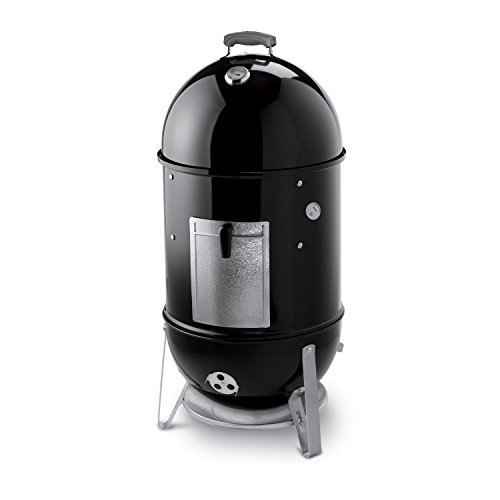
Top pickBest for anyone learning charcoal smoking
1. Weber Smokey Mountain Cooker 18-inch
The classic bullet smoker, with a water pan sitting between the coals and the food. It has a long record among backyard cooks and competition teams for steady low heat. Vents at the bottom and top let you steer the temperature with small adjustments.
Suits: anyone learning charcoal smoking. Strengths: a proven design with good heat control. Weaknesses: charcoal needs some attention on very long cooks. Skip it if you want a set-and-forget fuel source.
Best for simple hang-cooking
2. Pit Barrel Cooker Classic
A straightforward drum smoker that hangs meat from steel hooks over a basket of coals. It arrives with few parts and a short setup, so the learning curve is gentle. Many owners use it for ribs, whole chickens and pork butts.
Suits: simple hang-cooking. Strengths: few moving parts. Weaknesses: hook space limits how much you can fit. Skip it if you prefer rack-style cooking.
View Pit Barrel Cooker Classic on Amazon
Best for propane convenience
3. Camp Chef Smoke Vault 24
A propane-fired cabinet with adjustable racks and a tall interior. Gas makes the temperature easy to hold, and the cabinet shape suits sausage, ribs and poultry. Wood chunks or chips go in a tray to produce the smoke.
Suits: propane convenience. Strengths: adjustable rack spacing. Weaknesses: less smoke depth than a charcoal bullet. Skip it if you do not want to handle propane tanks.
View Camp Chef Smoke Vault 24 on Amazon

Best for patios where tidiness matters
4. Masterbuilt 30-inch Digital Electric Smoker
An electric cabinet with a digital panel for time and temperature. It plugs into an outdoor outlet and uses wood chips for flavor, which keeps the routine tidy. Masterbuilt is a familiar name in electric smokers, so parts and guides are easy to find.
Suits: patios where tidiness matters. Strengths: a simple control panel. Weaknesses: chip smoke is lighter than charcoal smoke. Skip it if you have no outdoor outlet nearby.
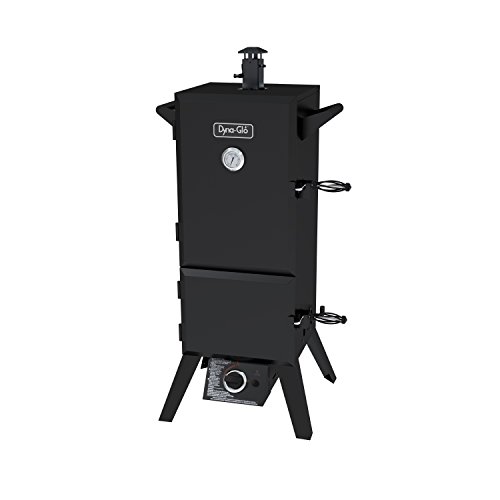
Best for high-capacity weekend cooks
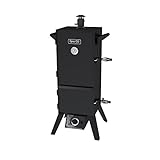
5. Dyna-Glo 36-inch Vertical LP Gas Smoker
A large propane cabinet with many racks, built for big batches of sausage, ribs, fish and jerky. The extra height means more cooking surface without more ground space, though the body is still large to store.
Suits: high-capacity weekend cooks. Strengths: lots of rack room. Weaknesses: a big body is awkward to store. Skip it if your yard is tiny.

Best for small yards and quick sessions
6. Oklahoma Joe’s Bronco Drum Smoker
A compact charcoal drum with a hinged lid and a charcoal basket. It heats quickly and holds a stable temperature once the vents are set. The barrel shape also doubles as a handy grill for quick cooks.
Suits: small yards and quick sessions. Strengths: fast heat-up. Weaknesses: less rack capacity than a cabinet. Skip it if you cook for large crowds.

Care and Setup
- Clean grease from the bottom pan before every cook.
- Let ash cool fully before you dispose of it.
- Season a new smoker with a light coat of oil as the maker advises.
- Cover the unit when it is not in use.
Mistakes to Avoid
- Using too much fuel at once and overshooting the target heat.
- Opening the door constantly.
- Skipping a separate thermometer and trusting the built-in dial.
- Leaving a water pan empty during a long cook.
Comparing Fuel Types Side by Side
The biggest decision with a vertical smoker is fuel, because it shapes flavor, effort and cost over time. Charcoal bullets and drums give the deepest smoke character and are loved by cooks who enjoy managing a fire. They need attention to vents and fuel, especially on long cooks, and a learning curve in the first few sessions. Propane cabinets are easier to start and hold steady, and they suit people who want smoke without tending coals, though they depend on wood chunks or chips for flavor. Electric cabinets are the most hands-off, with a thermostat and a chip tray, and they work well on balconies and patios where open flame is a concern.
Think about practical limits. Fuel storage matters: charcoal bags need a dry spot, and propane tanks need safe storage and refills. Electric smokers need a suitable outdoor outlet. If you live in a building or community with rules about charcoal or gas, check them before buying.
- Charcoal: strongest smoke character, most hands-on.
- Propane: easy temperature control, lighter smoke.
- Electric: simplest operation, lightest smoke and needs power.
- Drum style: compact and quick to heat, with limited capacity.
Also weigh your patience. A cook who likes the ritual of lighting coals may find a plug-in cabinet boring, and a busy parent may find a charcoal bullet stressful. Be honest about how often you will use it, since the best smoker is the one that matches your routine.
Capacity, Footprint and Storage
Vertical smokers save ground space by going up, but they can still be tall and awkward. Before buying, measure the spot where it will live, plus the clearance around it for safe use and for opening doors or lids. Check the height with the lid or door open as well, since overhangs and low branches can interfere.
Capacity is not just rack count. Look at rack diameter or size, the spacing between racks and whether racks can be removed. Bullet styles with round grates suit chicken, ribs cut in sections and smaller roasts. Drum styles that hang meat suit ribs and whole chickens, but offer less flexibility for flat items. Cabinet styles with adjustable racks handle sausage, fish, large pork cuts and sometimes brisket if trimmed to fit. Larger cuts may need to be cut or folded to fit between racks.
Weight and mobility matter for storage. A tall cabinet with no wheels is difficult to move, and a heavy steel body can be hard to lift into a shed. Consider whether you will leave it in place under a cover year-round or put it away between seasons.
- Match capacity to your usual meal size, not an occasional large party.
- Check that your tallest cut can stand upright inside.
- Look at handles, wheels and leg stability for moving it.
- Plan a covered, dry spot to extend the life of the finish.
A smoker that is much larger than you need burns more fuel to heat and may be harder to keep stable with a small load.
Build Quality and Heat Retention
Build quality shows up in how well a smoker holds its temperature. Thicker steel and tight seams keep heat in and keep wind and cold from pushing the temperature around. Thin metal and loose doors leak heat and smoke, so you burn more fuel and fight the vents. Listings do not always state gauge, so look at the description, weight and how doors, lids and seals are described, and read the manual for details.
Seals and gaskets matter more than people expect. A door that sits flat with a good seal gives more control than one that bows or leaves gaps. Check for replacement parts and gasket availability from the maker. Hinges, latches and handles should feel solid, and any plastic parts near heat should be rated for it.
Finish affects longevity. Painted or powder-coated steel needs care to avoid rust, and porcelain-coated surfaces resist rust better but can chip. Stainless steel resists corrosion but can show heat discoloration. Whatever the finish, a cover and a dry storage spot help.
- Check how doors and lids close and whether the seal is replaceable.
- Look for stable legs and a wide base for safety.
- Confirm the thermometer location and consider adding a second probe.
- Ask what the warranty covers and how parts are ordered.
Build is hard to judge from photos, so lean on written descriptions and the maker’s documentation. Reviews by owners can add context, but treat any single opinion with care.
Learning Curve, Temperature Control and Safety
Every type of vertical smoker has a learning period. With charcoal, you learn how much fuel and which vent settings hold your target, and how weather changes that. With propane, you learn the burner setting and how much wood to use. With electric, you learn the thermostat’s habits and how chips behave. Plan on a few practice cooks with forgiving foods such as chicken pieces or sausages before attempting a large, expensive cut.
A second thermometer is useful with any fuel. Built-in dials can be off or placed away from the food, so a probe at grate level shows the real temperature and a probe in the meat shows doneness. Keep notes about what you did and what happened, including weather, so you can repeat good results.
Safety comes first. Use the smoker outdoors only, away from structures and overhangs, on a stable, non-flammable surface. Handle charcoal and ash carefully, since embers can stay hot long after the cook. Check propane connections for leaks as the manual directs. Keep electric cords dry and rated for outdoor use. Keep children and pets away, and use heat-resistant gloves when handling hot parts.
- Let the unit cool completely before moving or covering it.
- Dispose of ash in a metal container, only when fully cold.
- Keep a clear path around the smoker for safe access.
- Follow the maker’s guidance on fuel types and amounts.
If something looks wrong, such as a damaged hose, a cracked seal or a flaring fire, stop and fix it before cooking again.
A Quick Checklist Before You Buy a Vertical Smoker
Vertical smokers save floor space, but they ask for some planning. Before you compare options, think through these points.
- How much food will you smoke at once: a few racks of ribs or several large cuts?
- Which fuel suits you best: charcoal, pellets, electricity or propane?
- Do you have a level, non-flammable place with the clearance the maker requires?
- Is there an outlet nearby if the model needs power?
- How will you check the temperature, and do you plan to add a separate probe?
- Where will you store it and how will you keep it dry?
- How tall are you, and can you reach the top rack comfortably?
Charcoal, Pellet, Electric and Propane Compared
Each fuel gives a different experience. The table shows general differences.
| Fuel | Effort | Flavor and control | Notes |
|---|---|---|---|
| Charcoal and wood | Higher | Traditional flavor, manual control | Needs fire skills |
| Pellet | Low | Wood flavor with automatic feed | Needs power |
| Electric | Low | Set and monitor | Milder smoke, needs power |
| Propane | Moderate | Easy temperature control | Follow gas safety steps |
Reading a Smoker Listing
Listings usually give total cooking area and rack count. Look at the distance between racks, because a tall item like a whole chicken or a large roast will not fit on a tightly spaced shelf. Check the height of the cabinet and the weight so you know how it will stand and move.
Note the door design and how many seals it has. A single large door can let heat escape when opened, while a smaller door for adding wood or water may help. Look at the thermometer location and the quality of the vents. Find the description of the water pan or heat deflector, and what accessories ship in the box.
Common Mistakes with Vertical Cabinets
People often open the door too often. Each opening loses heat and smoke, and recovering takes time. Another mistake is overcrowding the racks so air cannot move, leading to uneven cooking. Allow space between items.
Some forget about drips. Fat from top racks falls onto lower ones, so plan what goes where, and use a tray if the design allows. Placing the unit on grass, a wooden deck or close to walls is another error. Use a stable, non-flammable surface and follow the clearances.
Safety and Setup Notes
Follow the manual for assembly and for the first seasoning burn. Keep the smoker outdoors in an open area, away from structures and overhangs. Never use charcoal or wood cookers in garages or enclosed porches. If you use propane, follow the leak check procedure and fuel handling steps in the manual. For food safety temperatures, use official guidance from your national food safety authority and a reliable probe thermometer.
Care and Storage Between Cooks
After cooking, let the smoker cool and remove ash, grease and used wood. Wipe racks and scrape residue. Check seals and replace worn ones. Cover the unit when it is not in use, and keep fuel dry. If rust spots appear on the exterior, follow the maker’s advice for touch-up paint.
A Short Glossary
- Water pan: a tray that adds humidity and stabilizes heat.
- Smoke ring: the pink layer sometimes seen just beneath the surface of smoked meat.
- Chip tray: a small pan that holds wood for smoke.
- Cabinet smoker: a tall enclosed smoker with racks.
- Burn-in: the first run at high heat to condition a new smoker.
Measuring Space and Rack Spacing
Vertical smokers are popular because they use air space instead of ground space, yet they still need room around them. Measure the footprint of the base, then add the clearances the manual gives for the sides, back and top. Do not forget space to open the door fully and to stand while loading racks. If you plan to move the smoker, check the wheel arrangement or handles, since tall units can tip.
Capacity depends on rack spacing as much as rack count. Four racks that are close together may hold less than three that are widely spaced. If you cook large cuts such as a whole turkey or a big roast, measure the height between racks. Think about storage between uses too: a cover that fits the cabinet protects it, and a dry shed or corner keeps moisture away.
A Decision Guide by Cooking Style
- Weekend cooks with small groups: a compact electric or pellet cabinet.
- Traditional smoke fans: a charcoal and wood cabinet, with time set aside to learn it.
- Frequent hosts: a larger cabinet with several racks and a reliable door seal.
- Camping and tailgating: a smaller unit that is easy to move, used according to the maker’s rules.
Learning Curve and Temperature Control
Every smoker has a rhythm. Expect your first few cooks to be a learning exercise, and keep notes on weather, fuel amounts, vent settings and results. A separate probe thermometer placed at grate level shows the actual temperature your food sees, which may differ from the built-in gauge. Make small adjustments to vents or settings and wait for the effect before changing again.
Head-to-Head: The Six Picks by Cooking Style
Read as a group, the six smokers divide neatly by how much of the cooking you want to do yourself. The Weber Smokey Mountain 18 and the Oklahoma Joe’s Bronco are the charcoal pair, but they cook differently from each other. The Weber is the patient teacher: a water pan buffers the heat, vents reward small adjustments, and long cooks settle into a steady rhythm once you learn your fuel load. The Bronco is the sprinter, a compact drum that heats quickly, holds its setting once dialed in and doubles as a grill, which suits shorter sessions and smaller yards where one cooker has to do two jobs.
The Pit Barrel Cooker Classic stands slightly apart from both, because its method is hanging rather than racking. Meat suspended from hooks over the coals cooks in its own way, and owners tend to become loyal to the simplicity: few parts, little to adjust, and results that forgive a beginner. Its limit is geometry. Food that cannot hang, or a menu built around flat trays and pans, fits awkwardly, and that is where rack cabinets take over.
The Camp Chef Smoke Vault 24 and the Dyna-Glo 36 Vertical LP are the propane cabinets, and the difference between them is mostly scale. Both light quickly, hold a setting with a burner dial and take smoke from chunks or chips in a tray. The Camp Chef suits a household cooking ribs, sausage and poultry in ordinary weekend quantities. The Dyna-Glo stretches the same idea upward for big batches, sausage making and jerky runs, at the cost of a body that needs a real storage plan. Between them sits the Masterbuilt 30 Digital Electric, the tidiest routine of the six: plug in, set the panel, feed the chip tray. Its smoke is the lightest of the group, which some cooks call mild and others call perfect for fish, cheese and poultry.
| Cooking style | Best fit in this list | What you give up |
|---|---|---|
| Learning charcoal properly | Weber Smokey Mountain 18 | Set-and-forget convenience |
| Simple hang-cooking | Pit Barrel Cooker Classic | Flexibility for flat items and pans |
| Quick heat and grilling too | Oklahoma Joe’s Bronco | Rack capacity for crowds |
| Gas convenience, family size | Camp Chef Smoke Vault 24 | Charcoal’s smoke depth |
| Big batches and sausage | Dyna-Glo 36 Vertical LP | Easy storage |
| Tidiest, hands-off routine | Masterbuilt 30 Digital Electric | The strongest smoke flavor |
Running a Long Cook: Brisket, Shoulder and Other Marathons
Long cooks expose the differences between these smokers more than any other test. On the charcoal models, the central skill is fuel planning: enough charcoal loaded at the start, arranged the way experienced owners of that model describe, so the fire burns slowly across the load instead of consuming it at once. Adding fuel mid-cook is possible on most designs, but every addition disturbs the temperature you worked to settle, so the goal is a load that outlasts the meat. The water pan, where fitted, is part of the plan; check its level when you do check, and top it up with warm water so the cabinet temperature does not dip.
On the propane cabinets, the marathon is simpler but not free of thought. Confirm the tank has enough fuel for the whole session before the meat goes on, because swapping a tank is easy and discovering an empty one at hour nine is not. Wood for smoke runs out long before the gas does, so decide in advance whether you will refill the tray or chunk box, and when. Many cooks smoke hard in the first part of the cook, while the meat’s surface is receptive, and let the rest of the session run on clean heat.
On the electric Masterbuilt, the long cook is mostly a chip schedule. The thermostat holds the temperature; your work is feeding the tray in small amounts so smoke stays thin and steady rather than arriving in bitter bursts. On every model, the same closing routine applies: rest the meat properly before slicing, let the cooker cool on its own schedule, and deal with ash, grease and grates while the details of the cook are still in your head. Write down the fuel used and the timing. A long cook teaches something every time, and the lesson is only yours if you record it.
Wood Choices Across Fuel Types
Every smoker in this guide burns wood for flavor; they differ in the form it takes. Charcoal models accept chunks mixed into or laid on the coals, and chunks are the forgiving form: they ignite gradually, smoke for a long stretch and rarely turn bitter when used in modest amounts. Propane cabinets use chunks or chips in a tray over the burner, where the wood smolders rather than flames. Electric cabinets use chips in a small tray or loader, and small loads are the rule, because a little wood goes a long way in a sealed, insulated box.
Species choice follows the food more than the cooker. Strong woods stand up to beef and to heavily rubbed pork. Medium woods are the all-purpose middle ground that most backyard cooks live in. Mild, fruity woods flatter poultry, fish and pork loin, where the meat itself is delicate. What matters more than the species name on the bag is the wood’s condition: dry, clean, bark handled the way the maker suggests, and never treated, painted or taken from a source you cannot identify. Lumber offcuts and yard prunings of unknown treatment have no place in a smoker.
Amount is the beginner’s most common error, in every fuel type. More wood does not mean more good smoke; past a modest level it means stale, acrid smoke that clings to the meat’s surface. Start smaller than your instinct suggests, taste the result honestly, and add wood on the next cook if the flavor is genuinely too light. Your notes, again, are what turn that adjustment from a guess into a system.
- Chunks for charcoal, chips or chunks for gas trays, chips for electric trays.
- Match wood strength to the food, strong for beef, mild for fish and poultry.
- Use only clean, untreated wood from a known source.
- Start with less wood than you think you need.
Cooking Through Weather: Wind, Cold and Heat
Vertical smokers present a tall face to the weather, and each fuel type copes differently. Wind is the common enemy: it strips heat from thin walls, worries charcoal fires into uneven burning and can push a cabinet’s temperature around enough to show in the food. A sheltered position, out of the direct wind but still safely clear of structures and overhangs, is worth more than any accessory. Never solve weather by moving a smoker into a garage or enclosed porch; the fire and fume risks do not care how cold the cook is.
Cold weather lengthens everything. Charcoal models burn more fuel to hold the same setting, propane cabinets work their burners harder, and even the insulated electric cabinet takes longer to recover after each door opening. The cook’s response is planning, not heroics: allow more time, open the door less, and keep the meat’s temperature, not the clock, as the schedule. Hot weather flips the problem. A smoker sitting in full sun may struggle to stay at a low setting, especially the charcoal and drum models, where a fire cannot be turned below its natural burn. Shade and an early start are the practical answers.
Rain deserves a simple rule: protect connections and controls, keep electric cords and plugs dry and off wet ground as the manual directs, and postpone if conditions make safe operation doubtful. A postponed cook is a disappointment; an unsafe one is a different category of problem entirely.
Covers, Spares and the Second Season
A vertical smoker’s first season runs on novelty; its second runs on maintenance. The parts that wear are predictable: door and lid gaskets flatten and crack, grates and racks eventually corrode where coatings fail, water pans and drip trays thin out, and on gas models, hoses and regulators age whether you use them or not. Before your second season, walk around the cooker with the manual and a short list. Check the seal by looking for smoke leaks on a test run. Inspect the burner or element area for rust and blockage. Confirm the thermometer against a probe you trust.
Buying spares is easiest before you need them. A replacement gasket, a spare grate or a fresh hose bought calmly in spring costs a quiet afternoon; the same part hunted during a holiday cook costs the meal. Keep the maker’s parts information with the manual, and store small spares in a labeled box near the smoker rather than in the general garage population, where good intentions go to be lost. A fitted cover, used every time the cooker is cool and dry, slows nearly every form of wear on this list, which is why experienced owners treat it as part of the smoker rather than an accessory.
Different Foods in a Vertical Cabinet
A vertical smoker earns its space across more than the classic barbecue cuts, and the stacked format suits some foods surprisingly well. Sausages are natural tenants: they hang or lie in rows, take smoke evenly and forgive a beginner’s temperature wobbles. Fish is the delicate case, wanting gentle heat and a light hand with wood, and it is where the electric and propane cabinets’ steadiness shines and where a charcoal fire demands real skill to keep low. Cheese and nuts sit at the far end of gentleness, taking smoke at the lowest possible heat, sometimes with the heat source barely involved; check your model’s manual before attempting them, because not every vertical smoker can run cool enough.
Vegetables deserve a mention too. Peppers, onions and corn take smoke happily alongside a meat cook, using rack space that would otherwise sit empty, though they should sit where dripping fat is a welcome seasoning rather than a problem. The planning principle from earlier sections holds: group by tolerance, put the delicate items where conditions are gentlest, and remember that everything in a smoker comes out tasting of smoke, which is a reason to be selective about what shares the cabinet with a carefully seasoned main cut.
When a Cook Goes Wrong: A Calm Checklist
Most smoker problems announce themselves as temperature trouble, and a calm order of checks finds the cause faster than panic. If the temperature will not rise, look at fuel first: enough of it, dry, and arranged so air can reach it. On charcoal models, ash choking the vents is the classic culprit; on propane, an empty tank or a safety valve that needs resetting; on electric, a tripped outlet or a cabinet element crowded by a foil-covered rack. If the temperature will not fall, the fire has too much air or too much fuel lit at once, and the answer is patience and small vent changes, not opening the door repeatedly, which feeds charcoal more oxygen even as it vents heat.
If the food tastes bitter, the cause is almost always smoke quality rather than the recipe: too much wood, wood that smoldered instead of burning cleanly, or a cabinet opened so often that stale smoke lingered. If the food is dry, look at the cut’s thickness, the true temperature at grate level and whether the water pan, where fitted, ran dry. And if anything involves gas smells, damaged hoses, frayed cords or a fire outside the firebox, stop the cook and deal with the fault properly. Dinner is recoverable in an oven indoors; a damaged smoker is not a thing to negotiate with.
Buying Second-Hand: What to Inspect
Vertical smokers appear on the used market regularly, and a sound one can be a sensible buy, because the basic designs change slowly. Inspect for the failures that end a smoker’s life rather than for shine. Rust that flakes or perforates the body, especially around the base and fire area, is structural, not cosmetic. Doors and lids should sit flat and latch as designed; a warped door cannot be argued back into sealing. On charcoal models, check the fire grate and ash areas for burn-through. On propane models, treat the hose, regulator and burner as replacement items unless they are demonstrably sound, and follow the maker’s guidance on testing connections. On electric models, the cord, plug and control panel are the inspection, along with any sign of water having lived inside the cabinet.
Ask what is missing. Racks, water pans, chip trays and manuals all walk away from used smokers, and replacements vary in availability by maker, which is worth a quick check before money changes hands. A used smoker that passes these checks, cleaned thoroughly and given a hot empty run before its first cook, can serve for years. One that fails them is not a bargain at any price, because you will spend the difference on parts and frustration while a new unit’s warranty quietly covers its owner.
Your First Five Cooks: A Sensible Sequence
The order in which you attempt foods on a new vertical smoker teaches you faster than any manual. Start with chicken pieces or sausages: inexpensive, quick by smoker standards and honest about temperature, since they show you plainly whether the cabinet ran hot or cool. Move next to pork shoulder, the most forgiving of the long cooks, which tolerates a wide band of temperatures and still rewards you. Ribs come third, teaching timing and the feel of doneness. Only then attempt brisket, the expensive examination at the end of the course, when your fuel loads, vent habits and thermometer discipline are already formed.
On the electric and propane models the sequence compresses, because temperature control is largely handled for you, but the logic still holds: cheap and quick first, costly and slow last. Keep the notes from all five cooks together. Read as a set, they are a short, personal manual for your exact smoker, your weather and your fuel, which no website can write for you.
Storing Fuel and Wood Like You Mean It
Fuel storage is where good smokers quietly go bad. Charcoal that has absorbed a damp season’s air lights reluctantly and burns unevenly, and the cook blames the smoker. Wood chunks and chips stored in an open bag in a wet garage grow musty, and that mustiness has a flavor. Propane tanks stored carelessly, with valves unprotected, invite the connection problems the safety sections warn about. None of this needs equipment more elaborate than sealed bins, a dry shelf and the discipline to close what you opened.
Label what you store. Two bags of charcoal of different types, or chunks of two woods, look identical by spring, and your notes will refer to them by names your memory has discarded. A strip of tape and a marker, applied when the bag is opened, is the whole system. It takes ten seconds and it is the difference between a cook who repeats successes and one who re-rolls the dice every season.
When the Answer Is a Different Smoker
Loyalty to a purchase is understandable, but sometimes the honest conclusion of a season is that your cooking has outgrown your cabinet, or never matched it. The signs are practical rather than emotional. You regularly cook for more people than the racks hold, and every gathering becomes a logistics exercise. Or the opposite: a large cabinet sits mostly empty, burning fuel to heat space for two racks of food. Or your interest has moved, from the charcoal ritual you bought into toward the set-and-forget routine your life now allows, or the other way around.
Changing smokers in response is not failure; it is the normal result of learning what kind of cook you are, which nobody knows before their first season. The used market described earlier works in both directions, and a well-kept vertical smoker holds its appeal to the next owner. Buy for the cooking you actually do, and the smoker becomes invisible in the best way: present at every good meal and thought about at none of them.
Regional Habits, One Cabinet
American barbecue is a collection of regional habits, and a vertical smoker can nod toward most of them without pretending to be a pit from any single place. The differences live less in the cooker than in the choices around it: the wood, the rub’s balance of salt, sweet and heat, whether sauce appears during the cook, at the table or not at all, and which cuts get the starring role. A cabinet that holds temperature steadily lets you explore those choices one variable at a time, which is the real pleasure of owning a versatile smoker.
Work through the styles slowly. Cook the same cut several times, changing the wood or the seasoning approach rather than everything at once, and keep the notes that let you compare honestly. Within a season you will have a personal map of which traditions suit your household, and the smoker, whatever its fuel, becomes the instrument rather than the subject of the cooking. That is the point at which a vertical smoker stops being a purchase and starts being a practice.
Vertical Smoker FAQ
Which fuel is easiest?
Electric and propane need the least attention. Charcoal asks for more tending but adds the deepest smoke flavor.
Do vertical smokers need a water pan?
Bullet styles use one. Cabinet styles may not. Follow the maker’s guide for each model.
Can they handle brisket?
Many can, though large cuts may need trimming to fit between the racks.
Is wood needed?
Yes. Chunks or chips add the smoke flavor in most designs.
Which vertical smoker type is best for a beginner?
Electric and propane cabinets are generally the easiest to start with because they hold temperature with little effort. Charcoal bullets reward patience and give strong flavor, but take more practice.
How much wood should I use?
Start with small amounts and add more only if you want a stronger flavor. Too much wood can make food bitter. Follow the maker's suggestions for chunks or chips.
Can I use a vertical smoker in wind or cold?
Yes, but wind and cold make it harder to hold heat. A sheltered spot, a well-sealed cabinet and a bit of extra fuel or time can help.
How do I clean a vertical smoker?
After the smoker cools, remove ash or spent chips, wipe grease from pans and racks, and clean the interior as the manual describes. Cleaning regularly prevents buildup that affects flavor and safety.
Is a vertical smoker good for brisket?
Some can handle it, but you may need to trim or cut the brisket to fit. Check rack size and spacing on the listing before planning big cuts.
What accessories are worth having?
A dual-probe thermometer, heat-resistant gloves, a fitted cover and a fuel storage container are practical basics. Add others only if your cooking calls for them.
When should I replace a vertical smoker?
Consider it when the body rusts through, seals can no longer be replaced, the burner or element fails or the cost of repair approaches a new unit.
Can I smoke and grill on the same vertical cooker?
Some designs allow it more naturally than others. Drum styles such as the Bronco are often used for both, while tall cabinets are built for smoking and are awkward grills. Check what the maker describes for your model rather than improvising a configuration it was not designed for.
How do I stop temperature spikes on a charcoal vertical smoker?
Spikes usually follow big vent changes or a fresh load of fully lit fuel. Make small adjustments, wait for the effect before changing again, and add fuel in modest amounts. A water pan, where the design uses one, also buffers swings. Your notes from earlier cooks are the best guide to how your cooker responds.
Is it worth adding a second thermometer?
For most owners, yes. A probe at grate level shows the temperature the food experiences, which can differ from the built-in gauge, and a probe in the meat shows doneness directly. Together they remove most of the guessing from long cooks on any fuel type in this guide.
Can I leave a vertical smoker running overnight?
That depends on the model, the fuel and your ability to monitor it. Makers’ instructions govern, and unattended fire carries real risk. Many cooks instead start early, choose cuts that finish within the day, or hold finished food safely. Never let a schedule pressure you into running any cooker in a way its manual warns against.
Why does food on the bottom rack cook faster?
It sits closest to the heat source, and in many vertical designs the temperature difference between levels is noticeable. Use it deliberately: sturdy cuts low, delicate items high, and rotate racks partway through long cooks if your results show a consistent gap.
How do I keep a tall smoker stable?
Set it on a level, firm, non-flammable surface with all legs or the base fully supported, out of traffic paths where it could be knocked. Check stability before lighting, keep children and pets away during use, and let it cool completely before moving it.
How long should I rest smoked meat before slicing?
Long enough for the juices to settle and the meat to be handled safely and cleanly, which varies with the size of the cut. Small items need only a short rest, while a large shoulder or brisket benefits from a longer one, kept warm as your usual practice and food safety guidance suggest. Slicing too early spills the juices you spent hours keeping in the meat.
The Short Version
For charcoal control, the Weber Smokey Mountain. For simple drum cooking, the Pit Barrel. For propane, the Camp Chef. For electric, the Masterbuilt. For capacity, the Dyna-Glo. For a compact drum, the Oklahoma Joe’s Bronco.


