Smokers differ most in how they make heat. Gravity-fed charcoal, wood pellets, vertical charcoal chambers, propane, electricity and kamado shells each change how much attention you pay, how much flavor you get and how well the unit copes with wind and cold.
This list is organized by fuel and design rather than by one winner. We have not used these products ourselves, so confirm capacity, dimensions and accessories on the current listing before buying. Think about the fuel supply near you, and where you will place the smoker and what fuel is easy to buy near you.
As an Amazon Associate we earn from qualifying purchases. Links below are affiliate links, and they do not change the product information we give.
What to Look For
| Feature | Why it matters |
|---|---|
| Fuel source | Choose a fuel you can store and buy easily, such as propane tanks, bags of charcoal or pellets |
| Ignition and control | Automated controllers reduce guesswork for longer cooks |
| Vertical or horizontal | Vertical cabinets save floor space while holding many racks |
| Weather handling | Insulated bodies cope better with wind and cold |
| Power needs | Pellet and electric models need an outlet nearby |
| Cleanup | Ash, grease and drip trays vary by design, so check how easy each is to empty |
In this guide
Specs at a Glance
| Model | Type | Size class | Notes |
|---|---|---|---|
| Masterbuilt Gravity Series 800 | Gravity-fed charcoal | Large | Digital controller |
| Pit Boss Pro Series Vertical Pellet | Vertical pellet | Large | Multiple racks |
| Dyna-Glo Vertical Charcoal Smoker | Vertical charcoal | Mid to large | Offset firebox |
| Cuisinart COS-244 Vertical Propane | Propane | Mid-size | Gas burner |
| Bradley Digital 4-Rack Smoker | Electric with smoke generator | Mid-size | Bisquette smoke |
| Kamado Joe Classic Joe | Kamado | Mid-size | Ceramic body |
The 6 Best Smokers by Fuel Type
Top pickBest for charcoal fans who want automation
1. Masterbuilt Gravity Series 800 Digital Charcoal Grill and Smoker
A gravity-fed charcoal cooker where charcoal drops into the fire area from a hopper, controlled by a digital fan. It aims to combine charcoal flavor with set-and-forget convenience.
Suits: charcoal fans who want automation. Strengths: charcoal flavor and digital control. Weaknesses: a heavy, large body. Skip it if you want a compact smoker.
View Masterbuilt Gravity Series 800 Digital Charcoal Grill and Smoker on Amazon
Best for large batches in a small footprint
2. Pit Boss Pro Series Vertical Pellet Smoker
A cabinet-style pellet smoker with multiple racks and an automated pellet feed. The vertical shape holds a lot of food in a small floor space.
Suits: large batches in a small footprint. Strengths: many racks and pellet convenience. Weaknesses: it needs power. Skip it if you cook only small amounts.
View Pit Boss Pro Series Vertical Pellet Smoker on Amazon
Best for charcoal smoking on a budget-friendly setup
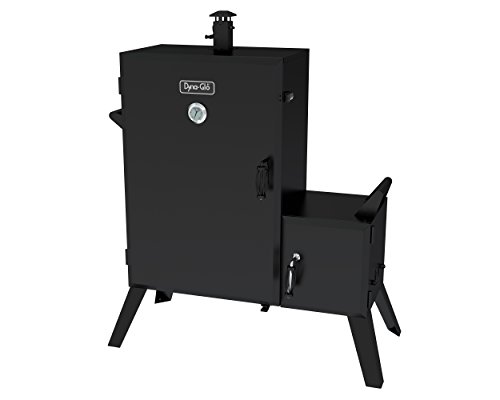
3. Dyna-Glo Vertical Offset Charcoal Smoker
A vertical charcoal smoker with a side firebox and racks stacked above. It gives charcoal and wood flavor with a modest footprint.
Suits: charcoal smoking on a budget-friendly setup. Strengths: vertical capacity and a firebox. Weaknesses: temperature needs watching. Skip it if you want automation.
Best for propane owners and beginners
4. Cuisinart Vertical Propane Gas Smoker (COS-244)
A vertical smoker powered by a propane burner, with a wood chip box and a water pan. Propane makes the heat simple to control and start.
Suits: propane owners and beginners. Strengths: easy ignition and simple temperature control. Weaknesses: milder smoke than charcoal. Skip it if you do not own a propane tank.
View Cuisinart Vertical Propane Gas Smoker (COS-244) on Amazon

Best for cold smoking and precise control
5. Bradley Digital 4-Rack Smoker
An electric smoker that uses a separate generator that feeds compressed wood bisquettes. The set-up is meant for precise, controlled smoking, including cold smoking.
Suits: cold smoking and precise control. Strengths: a dedicated smoke generator and digital controls. Weaknesses: proprietary bisquettes. Skip it if you want to burn loose wood.


Best for an all-purpose outdoor cooker
6. Kamado Joe Classic Joe Ceramic Grill
A ceramic kamado cooker that smokes, grills and bakes, with a thick body that holds heat and moisture. It suits cooks who want a versatile centerpiece.
Suits: an all-purpose outdoor cooker. Strengths: excellent heat retention and flexibility. Weaknesses: ceramic weight and fragility. Skip it if you need a light, portable unit.

Care and Setup
- Clean ash and grease according to the manual after each use.
- Check gas hoses and connections on propane smokers before the season.
- Store pellets and charcoal in a dry place.
- Use a cover to protect the smoker from rain and sun.
- Use a leave-in probe thermometer, because lid gauges can differ from the true temperature inside.
Mistakes to Avoid
- Placing a smoker on a wooden deck without a heat-safe base.
- Skipping a leak check on a new propane connection.
- Overloading the racks and blocking airflow.
- Mixing different fuels the maker did not approve.
- Mixing up smoke and heat, since thin blue smoke gives better flavor than thick white smoke.
How Fuel Shapes Flavor and Effort
The fuel decides how much work smoking takes and how much smoke character your food gets. Charcoal and wood-based fuels generally give the most traditional flavor, but they need attention to airflow and temperature. Pellet smokers feed small wood pellets to a fire using an electric auger and controller, so they lean toward set-and-monitor cooking. Propane and electric smokers sit at the convenient end: you set a temperature and add wood chips or chunks for smoke, with less fire tending.
Gravity-fed charcoal designs hold a hopper of charcoal that feeds down as it burns, often with a fan and digital controller. They aim to combine charcoal flavor with less babysitting. Ceramic kamado cookers insulate well and respond slowly to vent changes, which many cooks find helpful for steady temperatures once they learn the vents.
None of these fuels is simply better. Flavor is subjective, and technique, wood choice and meat quality matter as much as the cooker. If you enjoy the process of managing a fire, charcoal designs reward that. If you want predictable results on a busy weekend, a controller-driven pellet, electric or gravity model may fit better.
Also consider fuel availability. Pellets, charcoal, propane cylinders and wood chips are sold in different places, and some units only run well on specific products. Check the manual for approved fuels, and think about how you will store them, since pellets and charcoal both need to stay dry.
Capacity, Cooking Space and Layout
Smoker capacity is easy to misjudge because listings may quote total grate area, rack count or marketing labels rather than usable space. Think in terms of what you actually cook. Ribs, brisket, pork shoulder, whole poultry and sausages all use space differently, and a cooker that fits one comfortably may crowd another.
Vertical smokers stack racks inside a cabinet. They use less ground space and can hold several items at once, but meat on lower racks can cook differently from meat on upper racks, and racks may not fit a long cut like a full brisket. Horizontal and barrel layouts offer long, open grates better suited to large cuts, though they need more floor area.
Check the interior height between racks, the clear opening width and whether racks can be removed. A tall cut such as a whole bird needs headroom, and a full-size packer brisket needs length. Measure what you plan to cook, then compare against the interior dimensions in the listing or manual.
Smoke needs room to circulate. Filling every rack tightly can restrict airflow and produce uneven results. Many cooks plan for a cooker somewhat larger than their typical load for that reason. If you mostly cook for two or three people, a smaller unit is easier to heat, easier to store and usually quicker to bring to temperature.
Temperature Control and Insulation
Steady heat is the core of good smoking, so look at how each design holds temperature. Thin metal bodies lose heat quickly in wind or cold weather and may need more fuel and adjustment. Thicker steel, double walls and ceramic hold heat better and often use fuel more slowly, though they can weigh more and cost more.
Digital controllers on pellet, gravity and electric models adjust fuel or heating elements to hold a set point. They reduce guesswork but add electronics that need power, protection from rain and eventual care. Manual models rely on dampers and vents, which are simple and repairable but demand practice. Learn how to use the vents before relying on one for a long cook.
Door and lid seals deserve attention. Gaps leak smoke and heat, making temperature harder to hold. Look at gasket quality in the listing images and user comments, and check whether replacement seals are sold.
An accurate thermometer matters more than people expect. The built-in lid gauge on many smokers measures air near the lid rather than at the grate, so a separate probe at cooking level gives a better picture. A meat probe also helps you cook to internal temperature instead of the clock. Refer to a trusted food-safety source for safe internal temperatures for each type of meat.
Safety, Placement and Ventilation
Smokers produce heat, smoke and in some designs combustion gases, so placement is a safety matter. Use them outdoors only, on a level, non-combustible surface, and keep them clear of walls, fences, overhanging branches, decks and anything flammable. Follow the clearance distances in the manual. Never use a charcoal, gas or wood-burning smoker inside a garage, tent, porch with limited ventilation or any enclosed space, because carbon monoxide can build up.
For propane models, inspect the hose and connections before use and check for leaks as the manufacturer describes, often with a soapy water test. Store cylinders upright and outdoors, away from heat. For electric and pellet units, use an outdoor-rated outlet with ground-fault protection where required, and keep cords away from hot surfaces and wet ground.
Fat and ash are fire hazards. Grease that builds up in drip trays, grease catchers or the cooking chamber can ignite, so remove it regularly. Dispose of ash only after it is completely cold, using a metal container. Hot coals can stay live for a long time.
Keep a fire extinguisher or other means of putting out a fire nearby, keep children and pets away, and use heat-resistant gloves when handling racks or doors. Wind can change how a smoker burns, so choose a sheltered but ventilated spot and check on the cooker periodically.
Budget Tiers and Longevity
Smoker budgets can be sorted into rough tiers. Entry-level models, often simple vertical designs, give you a way to learn smoking at a modest outlay but may use thinner metal and need more adjustment. Mid-range units usually bring sturdier construction, better seals or digital control. Premium cookers such as ceramic or heavy-duty designs focus on insulation, durability and consistent heat.
The cheapest option is not always the lowest-cost over time. A thin cooker that burns more fuel or struggles in wind can frustrate you. Conversely, a premium cooker you rarely use is wasted money. Think about how often you will cook and for how many people.
Before buying, ask these questions:
- Is the warranty period listed, and what does it cover?
- Are replacement parts such as igniters, seals, racks and controllers sold?
- What assembly is required, and are tools included?
- Does the cooker need a cover or a power supply to operate?
Signs of wear to watch for include rust, warped panels, failing seals, a controller that behaves erratically and heating elements that no longer reach temperature. Surface rust can often be cleaned and re-seasoned, but structural corrosion or damage to gas parts means you should stop use and contact the manufacturer.
A Quick Decision Checklist for Picking a Smoker Type
Smokers differ enough that the type you pick shapes your whole routine. Answer these questions honestly before you compare models.
- How much time are you willing to spend tending the fire during a cook?
- How many people do you usually feed, and what cuts do you want to smoke?
- Do you have outdoor space with a safe, non-combustible spot and room around it?
- Do you have a power source nearby, or do you need a unit that works without electricity?
- How will you store fuel, and is that space dry?
- Do you want to grill and smoke on the same unit?
A person who enjoys fire management may love an offset or a charcoal unit, while someone who wants set-and-forget convenience may lean toward electric or pellet models.
Comparing Smoker Families by Effort and Control
This table compares the families in general terms.
| Type | Effort | Notes |
|---|---|---|
| Offset or stick burner | High | Traditional, involved and rewarding for those who like to tend a fire |
| Charcoal | Medium | Needs attention to vents and fuel through the cook |
| Pellet | Lower | Uses a controller and an auger, and needs power |
| Electric | Lower | Simple settings but rules for outdoor use vary |
| Gas | Medium | Uses a tank and a regulator, so follow the manual |
Think of effort as a trade. More tending can mean more involvement with the cook, while less tending means more convenience.
Where Safety and Manuals Take Priority
Smokers involve fire, heat and sometimes gas or electricity. Follow the maker’s instructions for placement, clearance and shutdown. Keep the unit well away from walls, fences, decks and overhangs, and never use one in an enclosed space. Gas models need correct hookups and leak checks, and electric ones need a suitable outdoor-approved power supply, so use a licensed professional if you are unsure.
For food, rely on a probe thermometer and official food-safety guidance for internal temperatures and holding times, since smoke color and cooking time do not show that meat is safe to eat.
How to Read a Smoker Listing
Capacity is often shown as cooking area or a number of racks, but usable space depends on rack spacing and the shape of the chamber. Look at the thickness of the steel or other material, the quality of the door seals and the way the smoke path is described. A sturdy build helps hold temperature in cold or windy weather.
Check what is included, such as thermometers, racks, water pans and covers, and read the notes on assembly. A good listing explains fuel type and consumption in clear terms. If a detail is missing, ask the seller or check the manual.
A Short Glossary for Smoker Shoppers
Barbecue talk is full of shorthand, and a few terms come up in almost every listing or guide.
- Firebox: the chamber where fuel burns, either in the main body or in a separate attached box.
- Baffle: a plate that guides heat and smoke across the cooking chamber so it moves more evenly.
- Damper: an adjustable opening that controls airflow and therefore the temperature of the fire.
- Stall: a period in long cooks when the internal temperature of large cuts seems to stop climbing.
- Water pan: a tray of liquid placed in the cooker to help moderate temperature and add moisture to the chamber.
- Auger: a screw that feeds pellets from the hopper to the fire in a pellet cooker.
- Probe: a thermometer with a wire that stays in the food or in the chamber during the cook.
Knowing these words helps you decode listings and manuals, and it makes advice from other cooks easier to follow.
If you read about a term that is unfamiliar, look for the maker’s own explanation. Each design uses its own mix of parts, and the same word can mean slightly different things in different cookers.
Keep in mind that smoking is a craft, and most experienced cooks keep notes. Write down the fuel, the vent settings, the weather and the timing of each cook. Over a few sessions, your notes will tell you more about your cooker than any specification page.
Finally, give yourself permission to begin with easy cuts. A simple chicken or a rack of ribs lets you learn how your smoker behaves before you invest hours in a large piece of meat. Always rely on official guidance for safe temperatures and food handling.
How to Choose in Practice: A Step-by-Step Decision Sequence
Most shoppers start with a shortlist of models and a handful of features, but a more reliable way to choose a smoker is to work through a short sequence of practical decisions in order. The sequence below is built around the choice between fuel types and smoker families. Each step removes some options from contention, so by the end you are comparing a small number of genuinely suitable picks from the reviews above rather than trying to rank everything at once.
Step one: start with the space, not the product
Measure first and shop second. For this category, that means checking the cooking area you actually need, the footprint and height of the unit, door or lid clearance, fuel storage, and how racks or hanging space match the cuts you smoke most often. Write the numbers down and keep them beside you while you read listings, because nominal sizes in product names are rounded and do not always match the space a unit actually needs once doors, lids and hot clearances are accounted for. Allow for the way the smoker opens and the way you stand in front of it with tongs and trays: a unit that technically fits but is awkward to load or check will frustrate you on every long cook. If your space is between sizes, favour the option that leaves the clearances the manual asks for rather than the one that fills every gap.
Step two: list your three most common uses
Next, be honest about what the smoker will do most often. In this category the everyday work usually includes weekend briskets and ribs, poultry, fish, vegetables where the model allows them, jerky, and batch cooking for gatherings. Write down your own three most frequent cooks, in order, and judge every pick against those three first. Features that help with a cook you do once a year are worth far less than capacity, control or handling that make a regular cook easier. This single habit prevents the most expensive buying error in the category: paying for capability you rarely use while compromising on something you rely on every session.
Step three: match the fuel to the cook you want to be
Consider how you want to spend a smoking day. Some cooks enjoy managing vents and fuel; others want to set a temperature and get on with the rest of the day, checking in now and then. Neither is better, but they point to different families in this guide. Also consider who else will use the smoker: controls should be understandable, doors and racks should be manageable with gloves on, and the routine should be safe for everyone involved. If one person does most of the cooking and cleaning, their routine should carry extra weight in the decision.
Step four: plan the upkeep and the fuel supply before you buy
Every option in this guide asks for some routine care, and the differences matter. In general that means emptying ash and grease after cooks once fully cold, cleaning racks and drip areas, checking seals and hinges, storing fuel dry, and using a cover outdoors if the maker recommends one. Ask yourself where you will keep the fuel, the cleaning items and the cover, and whether replacement parts such as seals, racks or igniters are straightforward to obtain for that brand. Before you commit, also confirm what the smoker needs from your yard: an outdoor spot the manual allows, a stable surface away from structures and foot traffic, and power nearby for the designs that need it.
Real Households, Real Use Cases
The same smoker can be an excellent buy for one household and a poor one for another. The scenarios below describe how the choice plays out in common situations, so you can find the one closest to your own life and borrow its priorities.
Weekend cooks and slow days
When smoking is the main event of the day, the priorities are steady temperature, enough rack space and a routine you enjoy. For the choice between fuel types and smoker families, that usually means favouring the design whose fire management suits your patience: hands-on charcoal for cooks who like to tend, controller-driven designs for cooks who prefer to monitor. It also means keeping the smoker ready to use: clean, fuelled and stored with its racks and tools together, rather than buried behind other garden equipment.
Gatherings and larger batches
Occasional larger cooks test capacity and organisation rather than basic performance. Think about how the smoker handles a full load: whether you can see every rack, rotate items between levels, add fuel or wood without losing too much heat, and keep different foods separated where that matters. Planning helps more than raw size here — preparing rubs and trays in advance, grouping foods by how long they take, and knowing where finished food will rest. If you entertain often, weigh these batch-handling qualities heavily; if you rarely do, do not let them override the cooks you do every month.
Small yards and shared outdoor spaces
On a small patio, balcony-adjacent yard or shared outdoor area, footprint and smoke behaviour matter as much as performance. A smoker lives in an outdoor spot the manual allows, on a stable surface away from structures and foot traffic, and in a small space that spot is shared with everything else. Look for a footprint you can live with permanently and a design whose smoke and heat you can manage considerately around neighbours. Vertical designs often help here, because they trade ground space for height.
Getting the Best from It Cook after Cook
Good results with a smoker depend as much on small habits as on the model you choose. The guidance here is general good practice for the category; always follow the manual for your specific product where the two differ, and use official food-safety guidance for internal temperatures and handling.
Start with the basics of operation: allowing time for the smoker to settle at temperature, loading food without crowding racks, keeping the door or lid closed as much as the design allows, monitoring fuel and water pans where fitted, and resting cooked food before slicing. The first few cooks are a learning period. Keep notes if it helps — the fuel you used, vent or controller settings, the weather, and what you would change next time. Most disappointment in this category comes not from faulty products but from rushed fires, crowded racks, or expectations set by a completely different style of cooker.
Think about load and layout. Smoke and heat need room to move, and food packed tightly on every rack rarely cooks as evenly as food given a little space. Arrange items so you can see and reach them, put foods that need attention where they are easiest to get to, and avoid blocking vents or the smoke path with trays and pans. If a cook has several stages, set out everything you need before you start, so the door stays open for the shortest possible time.
Finally, keep safety habits automatic. Keep the area around the smoker clear while it is in use, supervise it as the manual requires, keep children and pets away from hot surfaces, and never use a smoker indoors or in an enclosed space. If it behaves unusually — a grease flare, a damaged hose or cord, a controller that will not hold — stop, let it cool safely, and consult the manual or the maker rather than pushing on.
Cleaning, Care and Storage: Keeping It Working Well
Regular care is the cheapest performance upgrade available for any smoker. The core routine is: emptying ash and grease after cooks once fully cold, cleaning racks and drip areas, checking seals and hinges, storing fuel dry, and using a cover outdoors if the maker recommends one. Done little and often, these jobs take minutes. Left for months, the same jobs become slow and unpleasant, because grease hardens into a fire risk and ash holds moisture against metal.
Set a rhythm that matches how often you cook: a quick empty and wipe after each session once the unit is cold, a slightly deeper clean every few cooks, and a periodic check of seals, hinges, hoses or cords and exterior surfaces on the schedule the manual suggests. Tie the routine to the cook itself — clean-up as part of serving and storing the food — so it happens without willpower. Keep a metal container for cold ash and the few cleaning items you need near the smoker rather than in another building.
Be careful with materials and finishes. Use the cleaning products and tools the maker allows for that surface, and avoid harsh chemicals inside the cooking chamber unless the manual specifically permits them. Dry everything fully before covering or reassembling, and store fuel in a dry place off the ground. Keep accessories together where you use them, and keep the manual and purchase details in one place. If the smoker will sit unused through a wet season, clean it thoroughly, dry it, and follow the maker’s guidance for covering and storage, so it returns to service without rust, mould or surprises.
Signs it is time for attention
Learn the early warning signs in this category: temperature swings from wind or frequent opening, bitter smoke from poor airflow, dried surfaces on long cooks, and grease build-up that makes the next cook harder to manage. Any of these is a prompt to clean, check the manual’s troubleshooting section, and confirm you are using the smoker as directed. Persistent problems after basic checks are a reason to contact the maker or a qualified service provider, especially while the product is still within its warranty period. A short note of when a problem started and what you tried will make any support conversation far more productive.
Comparing the Picks in This Guide, Side by Side in Words
The reviews above present each pick for a slightly different household, and the fairest comparison is not to declare one winner for everyone. It is to match the description, the stated strengths and the stated limits of each option to your own priorities for the choice between fuel types and smoker families. Read the notes below together with the detailed reviews earlier in this guide, and use them to narrow the list to one or two finalists before you check a current listing.
Masterbuilt Gravity Series 800: who it fits in this line-up
As the guide describes it, charcoal drops into the fire area from a hopper, controlled by a digital fan, aiming to combine charcoal flavor with set-and-forget convenience, and it suits charcoal fans who want automation. Its stated strengths are charcoal flavor and digital control; its stated weakness is a heavy, large body, so the guide suggests skipping it if you want a compact smoker. In practice, it is the shortlist pick when you want charcoal character without tending a fire by hand all day.
Pit Boss Pro Series Vertical Pellet Smoker: who it fits in this line-up
As the guide describes it, this is a cabinet-style pellet smoker with multiple racks and an automated pellet feed, whose vertical shape holds a lot of food in a small floor space, and it suits large batches in a small footprint. Its stated strengths are many racks and pellet convenience; its stated weakness is that it needs power, so the guide suggests skipping it if you cook only small amounts. In practice, it fits cooks who regularly fill several racks and have a suitable outdoor outlet nearby.
Dyna-Glo Vertical Offset Charcoal Smoker: who it fits in this line-up
As the guide describes it, this is a vertical charcoal smoker with a side firebox and racks stacked above, giving charcoal and wood flavor with a modest footprint, and it suits charcoal smoking on a budget-friendly setup. Its stated strengths are vertical capacity and a firebox; its stated weakness is that temperature needs watching, so the guide suggests skipping it if you want automation. In practice, it is the pick for cooks who enjoy managing a real charcoal fire and accept the attention that involves.
Cuisinart Vertical Propane Gas Smoker (COS-244): who it fits in this line-up
As the guide describes it, this is a vertical smoker powered by a propane burner, with a wood chip box and a water pan, where propane makes the heat simple to control and start, and it suits propane owners and beginners. Its stated strengths are easy ignition and simple temperature control; its stated weakness is milder smoke than charcoal, so the guide suggests skipping it if you do not own a propane tank. In practice, it suits cooks who value a quick, predictable start and already keep a tank for a grill.
Bradley Digital 4-Rack Smoker: who it fits in this line-up
As the guide describes it, this is an electric smoker with a separate generator that feeds compressed wood bisquettes, meant for precise, controlled smoking including cold smoking, and it suits cold smoking and precise control. Its stated strengths are a dedicated smoke generator and digital controls; its stated weakness is proprietary bisquettes, so the guide suggests skipping it if you want to burn loose wood. In practice, it is the specialist pick: choose it for controlled, gentle smoke work rather than for high-heat flexibility.
Kamado Joe Classic Joe Ceramic Grill: who it fits in this line-up
As the guide describes it, this is a ceramic kamado cooker that smokes, grills and bakes, with a thick body that holds heat and moisture, and it suits an all-purpose outdoor cooker. Its stated strengths are excellent heat retention and flexibility; its stated weaknesses are ceramic weight and fragility, so the guide suggests skipping it if you need a light, portable unit. In practice, it is the pick for one permanent outdoor station that must handle smoking as part of a wider cooking life.
Compare the finalists on total fit rather than on a single headline feature. The right smoker is the one that fits your outdoor space, matches your most common cooks, uses a fuel you can store and buy easily, and asks for a level of tending and cleaning you will genuinely enjoy. A well-matched simpler option usually serves a household better than a more elaborate one bought for occasional use.
Mistakes to Avoid, Expanded
Measuring once, casually
A single quick measurement is how units end up returned or badly placed. Measure the space twice, and include the footprint and height of the unit, door or lid clearance, fuel storage, and how racks match the cuts you smoke most often. For a smoker, also think about hot clearances and where smoke will drift. If your numbers are close to a product’s stated size, treat that as a warning, not a pass.
Choosing by headline feature alone
A single impressive feature can hide ordinary handling. Judge the whole routine — lighting or starting, loading, checking, adding fuel, emptying ash, cleaning grease and storing — because you will perform that routine on every cook. A feature you love should survive contact with that routine; if it makes the regular cooks slower or cleaning harder, its value falls quickly. The same applies to the manual: read at least the safety, placement and care sections before first use, even if you have smoked before, because designs differ in small but important ways.
Overloading, rushing and neglecting the small parts
Most smokers perform best within the load and timing the maker describes. Filling every rack tightly, rushing the fire up to temperature or opening the door constantly usually produces uneven results and wasted fuel, and it can mask whether the smoker itself is working well. Leave space for smoke to move, and give a new cut a trial run before the day it really matters. At the same time, inspect the small parts — seals, hinges, racks, hoses, cords and drip trays — when you clean. They do much of the real work, they are usually the first things to wear, and a small defect is far cheaper to deal with early than late.
More Questions Buyers Ask
How do I know if a smoker is the right size for my home?
Start with how you will use it rather than with the largest option available. Think about the cooking area you actually need, the footprint and height of the unit, door or lid clearance, fuel storage, and how racks or hanging space match the cuts you smoke most often. Then compare that with what you cook in a typical month. A size that covers your normal routine comfortably, with a little room to spare for airflow, is usually a better fit than the biggest model you can squeeze in, especially when a larger unit is harder to heat, clean and store.
What should I check in my yard before I order?
Check the exact place it will live — an outdoor spot the manual allows, on a stable surface away from structures and foot traffic — and walk the delivery route to that spot, noting gates, steps and tight corners. Confirm power needs for pellet, electric or fan-controlled designs, and plan dry fuel storage. Write the measurements down so you can compare them directly with the product dimensions given by the seller. Doing this before ordering avoids most returns and placement surprises.
How much upkeep does a smoker need in normal use?
Expect a light routine rather than occasional deep rescue jobs: emptying ash and grease after cooks once fully cold, cleaning racks and drip areas, checking seals and hinges, storing fuel dry, and using a cover outdoors if the maker recommends one. Small, regular care keeps temperatures steadier, prevents grease fires and off flavors, and makes faults easier to spot early. Follow the manual for your exact model, because cleaning methods and care intervals differ between fuel types and designs.
Can I set up a new smoker myself?
Assembly, placement and first cleaning or seasoning are often manageable at home if the manual describes them for the owner. Anything involving gas connections you are unsure about, electrical work, or repairs to fuel systems should be handled by a qualified professional, both for safety and to protect your warranty. When in doubt, ask the retailer or a professional before the first cook, not on the day guests are coming.
What should I do in the first week with a new smoker?
Use the first cooks to learn its habits on forgiving foods. Try your most common uses first — for this category, that means weekend ribs, poultry and other regular cooks — and note the fuel, settings, weather and timing that work best. Check for leaks, loose seals, uneven heat or anything that differs from the manual, while returning or exchanging is still straightforward. Keep those notes with the manual, so every cook starts from what you learned on the last one.
Planning Notes: Keeping a Simple Smoking Log
Keep a brief log with the manual: the date of each cook, the fuel and wood you used, the vent or controller settings, the weather, roughly how long the cook took, and what you would change next time. This sounds minor, but it pays off every time you repeat a successful cook, troubleshoot a disappointing one, order fuel or parts, or wonder whether a change in results came from the smoker, the meat or the season. Smoking has more variables than most cooking — wind, fuel batches, cut sizes and starting temperatures all shift the outcome — and memory blends them together after a few weeks. A written log turns those variables into something you can actually compare, so each cook teaches you something specific instead of leaving a vague impression. It also helps anyone who shares the smoker with you, because they can follow the routine that worked rather than starting from guesswork.
Smokers by Fuel Type FAQ
What is the difference between a vertical and a horizontal smoker?
Vertical smokers stack racks to save space, while horizontal designs offer more surface area per rack.
Do gravity-fed smokers need power?
They need an outlet for the digital fan and controller, so plan for that.
Which fuel is the most economical?
It depends on where you live and how often you cook, so compare the fuel supply that is easy for you to buy.
Is propane safe for smoking?
Yes when used correctly outdoors with a proper hose and regulator. Follow the maker safety guidance.
Do I need to season a new smoker?
Many manuals recommend an initial burn-in to remove manufacturing oils and residue before cooking. Follow the steps in your manual, since procedures differ by design and fuel.
What kind of wood should I use?
Hardwoods sold for smoking are common, and fruit woods tend to be milder while others are stronger. Which suits you is personal taste. Use only wood made for cooking, and avoid treated or painted lumber.
Can I smoke in cold or windy weather?
Yes, though it is harder. Wind and cold pull heat from the cooker, so insulated designs and sheltered spots help. Expect to use more fuel and to watch temperatures more closely.
How often should I clean my smoker?
Remove ash, grease and food debris regularly, and do a deeper clean when residue builds up. Grease is a fire risk, so do not let it accumulate. Your manual may give more specific guidance.
Should I buy a cover?
A fitted cover helps protect from rain and sun, which is especially useful for models with electronics or exposed metal. Make sure the smoker is completely cool before covering it.
Is a thermometer included with a smoker?
Many smokers have a built-in gauge, but it may not reflect the temperature at the cooking grate. A separate probe thermometer is a common, useful addition. Check the listing for what is included.
Is a smoker good for beginners?
Controller-driven models such as pellet, electric or gravity designs are often easier to start with because they hold temperature for you. Manual charcoal designs can still be learned with practice and patience.
Can I use a smoker as a grill?
Some designs, such as gravity and kamado cookers, are made to do both. Others are smoking only. Look at the listing's description of intended use and any grilling grates or accessories.
The Short Version
For gravity-fed charcoal, the Masterbuilt Gravity Series 800. For a vertical pellet cabinet, the Pit Boss Pro Series. For vertical charcoal, the Dyna-Glo. For propane, the Cuisinart COS-244. For precise electric smoke, the Bradley. For a ceramic all-rounder, the Kamado Joe Classic Joe.
Related Guides
- 6 Best Outdoor Smokers: Charcoal, Pellet, Gravity, Electric
- 6 Best BBQ Smokers: Pellet, Propane, Electric and Charcoal
- 6 Best Insulated Smokers: Electric, Propane and Pellet (2026)
- 6 Best Smokers: Drum, Offset, Pellet, Propane and Electric
- 6 Best Large Grills: Gas, Pellet, Griddle and Dual Fuel (2026)


