The best tea kettle material for cooktops depends on how you heat water and what you want the kettle to do after it boils. Stainless steel heats quickly and shrugs off daily use, cast iron holds heat for a long, slow pour, glass lets you watch the water, and enamel adds color and a smooth, easy-clean surface. None of them is wrong, but each one behaves differently on a gas flame, an electric coil, and a glass cooktop.
This guide compares the best tea kettle material for cooktops by how each material heats, how it holds up to daily use, and which cooktop it suits. Every pick below is a real tea kettle sold on Amazon, checked against its full product title, with its material stated plainly. The picks cover stainless steel, cast iron, glass, and enamel kettles, so you can match the material to your stove and your routine rather than buying on looks alone.
How the picks were chosen
We chose kettles whose material is named in the product title, so there is no guessing about what you are buying. We included each of the main cooktop kettle materials, stainless steel, cast iron, glass, and enamel, and we checked that each kettle is made for stovetop use rather than an electric plug-in base. We looked for a usable capacity for a household, a handle that stays cool enough to pour safely, and a spout that pours without dripping. We left out kettles with vague titles, missing material information, or Renewed listings, and we excluded electric kettles, which heat on their own base and do not answer a cooktop question. Where a kettle is sold in several sizes, we noted the size that fits a typical cooktop and a family table.
In this guide
The best tea kettle material for cooktops

1. SUSTEAS Whistling Tea Kettle, 2.7 Qt Food-Grade Steel Teapot, Silver
The SUSTEAS Whistling Tea Kettle in silver is a 2.7-quart food-grade steel teapot for the stove, and it is the most versatile stainless steel kettle in this guide. The full title states it works for induction, gas, electric, and radiant cooktops, which covers every stove a reader is likely to own, and the whistle sounds when the water boils. The ergonomic handle is made for pouring, and the kettle comes with a silicone pinch mitt for handling a hot kettle safely. At 2.7 quarts it holds enough water for several mugs, which suits a household that drinks tea through the morning rather than one cup at a time. Stainless steel is the material this kettle shows off best: it heats fast, it does not rust, and it wipes clean with little effort. The silver finish looks at home on any stove, and the steel body tolerates being left on the cooktop between uses.
Key specs: 2.7-quart food-grade steel teapot. Whistling. Ergonomic handle. Includes 1 silicone pinch mitt. For induction, gas, electric, and radiant cooktops.
Strengths:
- The title states compatibility with induction, gas, electric, and radiant cooktops, which covers every common stove.
- At 2.7 quarts it holds enough for several mugs, which suits a household rather than a single drinker.
- The included silicone pinch mitt and the ergonomic handle make pouring safer.
Trade-offs:
- Steel cools faster than cast iron once off the burner, so the water does not stay hot as long.
- A 2.7-quart kettle is heavy when full, so lifting it to pour takes two hands for some people.
- The whistle needs cleaning now and then, since scale can muffle it.
This kettle suits a household that wants one steel kettle for any cooktop, including induction, and drinks several cups a day. It is the most flexible stainless steel pick in this guide.
A 2.7-quart kettle holds roughly ten cups, which covers a household that drinks tea through the morning without a second boil. Fill it to just below the spout so boiling water does not spit out, and never let it boil dry. The whistle needs cleaning now and then, since mineral scale can muffle it, and the silicone pinch mitt helps with a hot handle. Because the title states induction, gas, electric, and radiant compatibility, this kettle moves with you if the stove changes, which makes it the most flexible steel kettle here. Dry it after use or leave the lid off so it dries inside.
Best for: any cooktop including induction, and households that drink several cups a day.
Not suited for: a slow tea ritual where the kettle should stay hot for a long pour.
Check price on Amazon: SUSTEAS Whistling Tea Kettle (Silver, 2.7 Qt)
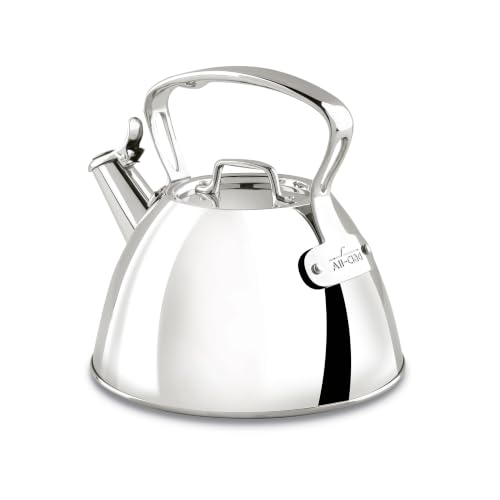
2. All-Clad Stainless Steel 2 Qt Stovetop Tea Kettle
The All-Clad Stainless Steel 2 Quart Stovetop Tea Kettle is a polished stainless steel kettle for the stove top, and it brings a premium brand to a simple job. All-Clad is known for cookware that lasts, and this kettle follows the same idea: polished stainless steel that heats evenly, resists rust, and cleans with a wipe. The title states it is induction compatible and dishwasher safe, which covers the two practical questions most buyers ask first. At 2 quarts it holds enough for a few mugs, which suits a small household or a couple that drinks tea together. The polished finish looks sharp on the stove, and the steel body is light enough to lift with one hand when full. This is the kettle for someone who wants a well-made steel kettle from a trusted cookware brand and is willing to pay a little more for it.
Key specs: 2-quart polished stainless steel stovetop tea kettle. Induction compatible. Dishwasher safe.
Strengths:
- All-Clad is a trusted cookware brand, and the kettle is built to the same standard as its pans.
- Induction compatibility is stated in the title, so it works on the cooktop that rules out most kettles.
- Dishwasher safe cleaning makes the kettle easy to keep clean after daily use.
Trade-offs:
- At 2 quarts it holds less than the 2.7-quart SUSTEAS, so a large household may need a second boil.
- The polished finish shows fingerprints and water spots more than a brushed finish.
- A premium brand costs more than a basic steel kettle that boils water just as fast.
This kettle suits a small household that wants a well-made steel kettle from a trusted brand, and anyone cooking on induction who needs compatibility stated plainly. It is the quality pick among the steel kettles here.
A 2-quart kettle holds roughly eight cups, which suits a small household or a couple that drinks tea together. The dishwasher-safe claim makes cleaning simple, though hand-washing keeps the polished finish looking its best, since the polish shows fingerprints and water spots more than a brushed finish. The handle stays cooler than the body, but a dry cloth is still wise for a full kettle. Induction compatibility is stated in the title, so the kettle works on the cooktop that rules out glass and most enamel kettles. Store it on the stove if it is used daily, or in a cupboard to keep the finish clean.
Best for: induction cooktops, and buyers who want a premium steel kettle.
Not suited for: a large household that needs more than 2 quarts per boil.
Check price on Amazon: All-Clad Stainless Steel 2 Qt Stovetop Tea Kettle

3. suyika Japanese Tetsubin Cast Iron Teapot Tea Kettle with Stainless Steel Infuser, 22 oz
The suyika Japanese Tetsubin Cast Iron Teapot is a 22-ounce cast iron kettle with a stainless steel infuser, made for the stovetop and coated with an enameled interior. The tetsubin is the traditional Japanese cast iron kettle, and this one follows the form: a heavy iron body that heats slowly and holds heat for a long time, with an enamel lining that keeps the water from touching bare iron. The infuser sits inside for loose tea, so the kettle brews as well as it boils. At 22 ounces it is a small kettle, sized for one or two cups, which suits the slow tea ritual that cast iron is made for. The enamel interior means the kettle does not need the seasoning that bare iron would, and it wipes clean after use. This is the kettle for someone who loves the ritual of tea and wants the kettle itself to be part of it.
Key specs: 22-ounce (650 ml) cast iron teapot. Stainless steel infuser. Stovetop safe. Enameled interior.
Strengths:
- Cast iron holds heat far longer than steel, so the water stays hot for a slow pour.
- The enameled interior protects the iron and makes cleaning easier than bare cast iron.
- The included infuser brews loose tea directly in the kettle.
Trade-offs:
- At 22 ounces it holds only one or two cups, so it does not suit a household that drinks several mugs.
- Cast iron is heavy for its size, and the kettle must be lifted, never slid, across a glass cooktop.
- The kettle needs thorough drying after use to keep the iron in good condition.
This kettle suits a tea lover who brews loose leaf and wants a kettle that stays hot through a slow pour. It is a ritual kettle, not a household workhorse, and it is best for one or two cups at a time.
A 22-ounce kettle holds roughly two to three cups, which suits a slow tea ritual for one or two people rather than a household boil. The infuser lifts out for cleaning, and loose tea should be emptied after brewing so it does not stain the enamel interior. Dry the kettle thoroughly after use, since cast iron needs drying to stay in good condition, and store it where it will not be knocked. The small size makes it light for a cast iron kettle, but it is still heavy for its size, so pour with two hands and lift it straight up off the cooktop.
Best for: slow loose-leaf tea rituals, and one or two cups at a time.
Not suited for: a household that needs several mugs of water in one boil.
Check price on Amazon: suyika Japanese Tetsubin Cast Iron Teapot
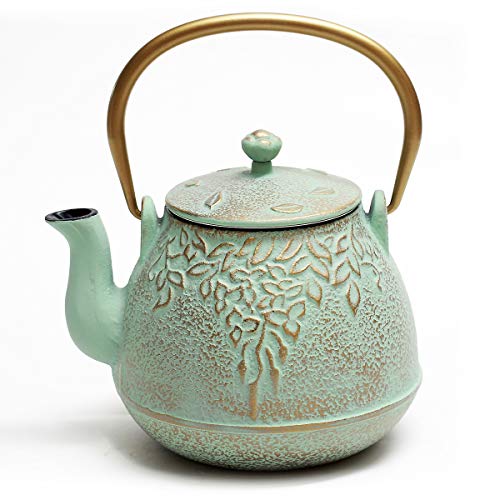
4. TOPTIER Japanese Teapot with Stainless Steel Infuser, Cast Iron Tea Kettle, 32 oz, Light Green
The TOPTIER Japanese Teapot is a cast iron tea kettle with a stainless steel infuser, stovetop safe, with a leaf design and an enameled interior, in light green. At 32 ounces it holds more than the small tetsubin kettles, which makes it the cast iron choice for a couple or a small household that wants the heat retention of iron without the tiny capacity. The leaf design and the light green enamel give the kettle a look that suits being left on the stove, and the enamel lining keeps the water from the bare iron so cleaning is simple. The infuser handles loose tea, and the kettle pours steadily thanks to the weight of the iron. Cast iron heats slowly, so this kettle takes longer to boil than a steel one, but it stays hot far longer once it is off the burner, which is the trade that cast iron always makes. Handle it with care on a glass cooktop: lift it, never slide it.
Key specs: 32-ounce (950 ml) cast iron tea kettle. Stainless steel infuser. Stovetop safe. Leaf design, enameled interior. Light green.
Strengths:
- At 32 ounces it holds enough for a couple, which is more useful than the smallest cast iron kettles.
- The enameled interior and the leaf design make it a kettle that looks good left on the stove.
- Cast iron holds heat longer than any other material here, so the water stays hot for a second cup.
Trade-offs:
- Cast iron is heavy, and a full 32-ounce kettle needs two hands to pour safely.
- It heats more slowly than steel, so the wait for a boil is longer.
- The enamel can chip if the kettle is knocked, and a chip needs attention to prevent rust.
This kettle suits a couple who love cast iron and want a kettle that stays hot, with enough capacity for two cups. It is the most practical cast iron pick in this guide, balancing size against weight.
A 32-ounce kettle holds roughly four cups, which suits a couple that drinks tea together and wants the heat retention of cast iron. The weight is real: a full kettle needs two hands to pour safely, and it must be lifted, never slid, across a glass cooktop. The leaf design and light green enamel make the kettle a pleasure to leave on the stove, but the enamel can chip if knocked, so handle it gently and dry it after use. The infuser brews loose tea directly in the kettle, and it should be emptied and rinsed after each use so the tea does not stain.
Best for: couples who love cast iron, and a kettle that stays hot.
Not suited for: a fast morning boil, where steel heats quicker.
Check price on Amazon: TOPTIER Cast Iron Tea Kettle (32 oz)

5. Café Brew Glass Tea Kettle, 12 Cup
The Café Brew Glass Tea Kettle is a 12-cup kettle made from German borosilicate glass, safe for gas and electric stovetops, heat resistant, and it whistles at the boil. Glass is the material for anyone who wants to see the water: the level is always visible, so the kettle never boils dry by accident, and watching the water come to a boil is part of the pleasure. Borosilicate glass handles heat well, and the kettle is made for the stove rather than a plug-in base. At 12 cups it is the largest kettle in this guide, which suits a household that makes tea for several people or fills a teapot in one go. The whistle sounds when the water boils, so there is no need to watch it constantly. Glass needs gentle handling, and it should never be set down hard on a glass cooktop, but for a careful household it is the most transparent choice in every sense.
Key specs: 12-cup German borosilicate glass tea kettle. Gas and electric stovetop safe. Heat resistant. Whistles at boil.
Strengths:
- The glass body shows the water level, so the kettle never boils dry by accident.
- At 12 cups it is the largest kettle here, which suits a household or a teapot fill.
- Borosilicate glass handles stovetop heat well and whistles when the water boils.
Trade-offs:
- Glass is fragile, so it needs gentle handling and should never be knocked or set down hard.
- It does not work on induction, since glass is not magnetic.
- A glass kettle cools faster than cast iron once off the burner.
This kettle suits a household that makes tea for several people and wants to see the water level, and anyone who values the largest capacity in this guide. It is the glass pick for gas and electric coil cooktops.
A 12-cup kettle holds enough for a household or a teapot fill in one boil, which is the largest capacity in this guide. The glass shows the water level, so fill it to just below the spout and never let it boil dry. The whistle sounds at the boil, so there is no need to watch it constantly. Glass needs gentle handling: set it down softly, never knock it, and keep it away from the edge of the counter. It works on gas and electric cooktops only, so check the stove type before buying, and let the kettle cool on a trivet rather than on a hot burner.
Best for: large households, and anyone who wants to see the water.
Not suited for: induction cooktops, and rough daily handling.
Check price on Amazon: Café Brew Glass Tea Kettle, 12 Cup

6. PARACITY Glass Teapot Stovetop, 18.6 oz, Borosilicate Clear Tea Kettle with Infuser
The PARACITY Glass Teapot is an 18.6-ounce borosilicate clear tea kettle for the stovetop, with a removable 18/8 stainless steel infuser, made for blooming and loose leaf tea. It is the smaller glass kettle in this guide, sized for one or two cups, and the clear glass shows the tea as it blooms, which is the whole point of a glass teapot. The infuser holds loose leaf or blooming tea, and it lifts out for serving, so the teapot works as both a kettle and a brewer. At 550 milliliters it is light and easy to pour with one hand, and it suits camping, travel, or a small kitchen where a large kettle would be too much. Borosilicate glass is made for heat, and the kettle is stovetop safe, but it still needs gentle handling and should be kept away from knocks. For a tea lover who brews by sight, this is the most enjoyable kettle to use.
Key specs: 18.6-ounce (550 ml) borosilicate clear glass tea kettle. Stovetop safe. Removable 18/8 stainless steel infuser. For blooming and loose leaf tea.
Strengths:
- The clear glass shows blooming tea as it opens, which is the pleasure of this kettle.
- The removable steel infuser brews loose leaf and lifts out for serving.
- At 18.6 ounces it is light and easy to pour with one hand.
Trade-offs:
- At 18.6 ounces it holds only one or two cups, so it does not suit a household.
- Glass is fragile and needs gentle handling, especially on a glass cooktop.
- It does not work on induction, since glass is not magnetic.
This teapot suits a tea lover who brews blooming or loose leaf tea by sight, and anyone who wants a small, light glass kettle for one or two cups. It is the glass pick for slow, visual brewing.
An 18.6-ounce teapot holds roughly two cups, which suits one or two people brewing blooming or loose leaf tea by sight. The infuser lifts out for serving, and the glass shows the tea as it blooms, which is the pleasure of this kettle. Fill it to just below the spout, and never heat it empty. The small size makes it light and easy to pour with one hand, and it suits camping or travel as well as a small kitchen. Handle it gently, store it where it will not be knocked, and dry it after use so the glass stays clear.
Best for: blooming and loose leaf tea, and one or two cups.
Not suited for: a household boil, and induction cooktops.
Check price on Amazon: PARACITY Glass Teapot (Stovetop, 18.6 oz)
Comparison table
| Product | Key detail | Suits |
|---|---|---|
| SUSTEAS Whistling Tea Kettle (Silver, 2.7 Qt) | Steel, 2.7 Qt, all cooktops | Everyday household use |
| All-Clad Stainless Steel 2 Qt Stovetop Tea Kettle | Steel, 2 Qt, induction compatible | Quality steel pick |
| suyika Japanese Tetsubin Cast Iron Teapot | Cast iron, 22 oz, enamel interior | Slow tea rituals |
| TOPTIER Cast Iron Tea Kettle (32 oz) | Cast iron, 32 oz, enamel interior | Couples, slow pours |
| Café Brew Glass Tea Kettle, 12 Cup | Glass, 12 cup, gas/electric safe | Large households |
| PARACITY Glass Teapot (Stovetop, 18.6 oz) | Glass, 18.6 oz, with infuser | Blooming tea, small brews |
Buying guide: which kettle material suits your cooktop
Start with your cooktop. On a gas cooktop, almost any stovetop kettle works, and the choice comes down to heat retention and care: stainless steel is the low-maintenance default, cast iron is the slow, steady option for people who like a kettle that stays hot, and enamel gives you color without much extra care. On an electric coil cooktop, a flat, stable base matters more than the material, and stainless steel and enamel kettles with flat bottoms sit most securely. On a glass cooktop, the base is the whole question: it must be flat and smooth so it does not scratch the glass, and heavy cast iron needs to be lifted, never slid, across the surface. Induction cooktops narrow the field sharply, since the kettle must be magnetic; stainless steel and cast iron usually qualify, while glass and most enamel kettles do not unless the maker states induction compatibility. Think about weight as well: a full cast iron kettle is heavy, and lifting it with one hand to pour is a real consideration. Glass is light and shows the water level, but it needs more care around chips and thermal shock. Enamel looks good on the stove and cleans easily, but a chip in the enamel can expose the metal beneath. Capacity matters too: a kettle that holds enough for two mugs is fine for one person, while a household that drinks tea all day wants a larger one. Finally, check the handle and the whistle. A handle that stays cool and a whistle you can hear from the next room are the two features people notice every day.
Stainless steel vs cast iron vs glass vs enamel
Stainless steel is the workhorse. It heats fast, resists rust, tolerates being left on the stove, and cleans with little effort. It does not hold heat as long as cast iron, so the water cools faster once you take it off the burner, and a thin-walled steel kettle can be noisy as it heats. Cast iron is the opposite: slow to heat, heavy to lift, and superb at holding heat, which is why it suits slow tea rituals and cold kitchens. It needs drying after use to prevent rust, and it must never be slid across a glass cooktop. Glass is the most transparent choice, literally: you can see the water level and watch it come to a boil, which helps you avoid boiling dry. It is light, easy to clean, and fragile, so it suits careful households and gas or electric coil cooktops rather than rough daily handling. Enamel is steel or iron with a smooth colored coating, so it combines a sturdy body with a surface that wipes clean and looks good left on the stove. It can chip if knocked, and a chipped spot needs attention to prevent rust. For most cooktops, stainless steel is the safest first kettle, cast iron is the best second kettle for people who love the ritual, glass is the best choice for anyone who wants to see the water, and enamel is the best choice for a kettle that doubles as kitchen decor.
Using a kettle safely on a cooktop
Always put the kettle on a cold burner and fill it before you turn the heat on, and never let a kettle boil dry: an empty kettle can warp, damage its base, and in the worst case damage the cooktop. Keep the flame or the coil no wider than the kettle base, so heat does not lick up the sides and scorch the handle. On a glass cooktop, set the kettle down gently and lift it straight up to move it; sliding a heavy kettle, especially cast iron, can scratch the glass. Use a dry cloth or an oven mitt for the handle, even on kettles that claim a cool-touch handle, because handles heat up over a long boil. Turn the burner off as soon as the kettle whistles, and pour slowly with the spout away from your hand. Let the kettle cool on a trivet rather than on the hot burner, and empty any leftover water before storing it, since standing water leaves mineral deposits inside. Descale regularly if your water is hard: a little vinegar and water, boiled and rinsed, keeps the inside clean without scrubbing.
Common mistakes to avoid
The most common mistake is buying a kettle without checking it suits your cooktop, especially on induction, where a non-magnetic kettle simply will not heat. Another mistake is choosing by color alone and ending up with enamel that chips or glass that cracks under daily use. People also fill kettles to the brim, which makes them spit boiling water from the spout, and they leave kettles on a hot burner after the whistle, which boils them dry. Sliding a kettle across a glass cooktop is a frequent cause of scratches, and so is setting a kettle down hard on the glass. Using a metal scourer inside a kettle scratches the lining and invites rust in steel and cast iron alike. Finally, many people ignore the handle: a handle that looks good but heats up or sits too close to the body is a burn waiting to happen, so check the handle position in the product photos before buying.
Care and storage
Rinse a steel or enamel kettle after use and dry it, or leave the lid off so it dries inside; standing water leaves spots and mineral scale. Cast iron needs thorough drying, and a light wipe of the outside keeps rust away. Glass kettles should be handled gently and stored where they will not be knocked, and any chip means it is time to replace the kettle rather than risk a crack over heat. Descale every few weeks if your water is hard, using vinegar and water rather than harsh chemicals. Store the kettle on the cooktop only if you use it daily; otherwise keep it in a cupboard to protect the cooktop surface and the kettle. Keep the whistle clean so it sounds properly, and check the lid fit now and then, since a loose lid lets steam escape and slows the boil. A well-kept kettle lasts years, and the material you choose decides most of the care it needs.
Matching kettle capacity to your household
Capacity is the most practical choice after material, and it is easy to get wrong. A kettle is measured in quarts or ounces, and a quart holds roughly four cups, so a 2-quart kettle holds about eight cups and a 2.7-quart kettle holds about ten or eleven. A single person who drinks one cup in the morning needs only a small kettle, and a large kettle is a waste of time and energy, since it takes longer to boil water that will not be used. A couple needs about 2 quarts, which covers two mugs with a little to spare. A household that drinks tea through the morning needs 2.7 quarts or more, or it will boil twice, which is slower than one larger boil. A 12-cup glass kettle suits a household that fills a teapot, while an 18-ounce teapot suits one or two people brewing by sight. The mistake is buying by looks and ending up with a kettle that is too small for the household or too large for one person. Check the capacity in the product title before buying, and think about how many cups the household drinks in a morning rather than how the kettle looks on the stove. A kettle that matches the household gets used every day, and a kettle that does not match ends up in a cupboard.
Frequently asked questions
What is the best tea kettle material for a glass cooktop?
Stainless steel with a flat, smooth base is the safest choice for a glass cooktop. It heats evenly, sits stably, and will not scratch the glass if you lift it rather than sliding it. Heavy cast iron also works but must be lifted carefully, and glass kettles need a flat base and gentle handling.
Does a tea kettle work on an induction cooktop?
Only if the kettle is magnetic. Most stainless steel and cast iron kettles work on induction, while glass and enamel kettles usually do not unless the maker states induction compatibility. Check the product title and description for induction before buying.
Is cast iron or stainless steel better for a tea kettle?
Stainless steel heats faster, weighs less, and needs almost no care, which suits daily use. Cast iron heats slowly and holds heat much longer, which suits slow tea rituals, but it is heavy and needs drying to prevent rust.
Can I use a glass tea kettle on a gas cooktop?
Yes, if the kettle is made for stovetop use and has a flat base that sits securely on the grate. Keep the flame no wider than the base, never let it boil dry, and handle it gently, since glass can crack from knocks or thermal shock.
Why does my kettle whistle stop working?
Mineral scale often blocks the whistle, or the lid no longer seals properly. Descale the kettle with vinegar and water, clean the whistle opening, and check that the lid fits tightly. If the whistle is damaged, replace the kettle.
How do I stop my kettle from getting scale inside?
Empty leftover water after each use, dry the kettle or leave the lid off, and descale regularly with a vinegar and water boil followed by a rinse. Hard water builds scale faster, so descaling every few weeks keeps the inside clean.
Is enamel a good kettle material?
Yes, enamel is steel or iron with a smooth coating that wipes clean and looks good on the stove. It heats well and resists stains, but it can chip if knocked, and a chip should be watched for rust. It suits gas and electric coil cooktops.
How much water should I put in a tea kettle?
Fill to just below the spout opening, not to the brim, so boiling water does not spit out. Never fill below the minimum if the kettle states one, and never heat an empty kettle.
How many cups does a quart hold?
A quart holds roughly four cups, so a 2-quart kettle holds about eight cups and a 2.7-quart kettle holds about ten or eleven. A cup here means a standard mug of about eight ounces, so a household that drinks large mugs should allow for fewer cups per kettle.
Final recommendation
For most cooktops, a stainless steel kettle is the best first choice: fast, light, easy to care for, and compatible with the widest range of stoves. Choose cast iron if you love a slow pour and a kettle that stays hot, glass if you want to see the water, and enamel if you want a kettle that looks as good as it works. Match the base to your cooktop, check induction compatibility if you need it, and the material will take care of the rest.


