Disclosure: airfryerkitchensupply.com is reader-supported. When you buy through links on our site, we may earn an affiliate commission at no extra cost to you.
Where to buy
If you are shopping for the best stand mixers for bread making, start with this verified shortlist. Every mixer in this bread guide was verified as a current Amazon listing before a link was attached, with bowl sizes, motor figures and included dough tools taken from the listings themselves. We do not print prices — use each link to check price on Amazon and confirm the exact bundle, since dough hooks and bowl materials vary between listings of the same machine.
- Ankarsrum Assistent Original Stand Mixer AKM6230, Jubilee Silver — Best Overall for Bread
- Bosch Universal Plus Stand Mixer, 6.5-Qt, with Dough Hook Extender Bundle — Best for Big Dough Batches
- KitchenAid 7-Qt Bowl-Lift Stand Mixer KSM70, Cast Iron Black — Best Bowl-Lift for Bread
- KitchenAid 5.5-Qt Bowl-Lift Stand Mixer KSM55, Porcelain White — Best Mid-Size Bread Mixer
- Kitchen in the Box Stand Mixer 8.5QT, 900W, Silver — Best Budget Big-Bowl for Bread
- Aucma Stand Mixer 6.5-QT 660W Tilt-Head, Black — Best Value 6.5-Qt for Bread
The best stand mixers for bread making are chosen by a harsher test than any other kind of baking applies. Cake batter is polite; bread dough is not. A lean dough at full knead pulls, slaps and climbs, transferring every newton of its resistance into the mixer’s frame, gears and motor, minute after minute. Machines that are charming with sponges reveal themselves here: heads nod, bodies walk across counters, motors heat, and dough climbs the hook to escape the work entirely. Bread bakers learn to shop differently — for drive design and composure first, and for colour charts never.
This guide is built around how dough actually gets developed. Two of the six verified machines abandon the planetary pattern entirely: the Ankarsrum’s rotating bowl and roller, and the Bosch’s bottom-drive hook, both knead the way bread has always wanted to be kneaded — thoroughly, gently and at serious volume. Two are bowl-lift KitchenAids, the planetary establishment’s answer, trading a little dough poetry for frame rigidity and ecosystem depth. Two are big-bowl value machines that put genuine batch capacity within reach of budget bakers, with honest notes about working within their limits.
If you bake one loaf a month, almost any stand mixer will serve and our general baking guide is the better read. This guide is for the baker whose week is built around dough — sourdough Sundays, pizza Fridays, sandwich loaves on rotation — and who needs the knead to be the easiest part of the process.
In this guide
Quick Picks
Best Overall for Bread — Ankarsrum Assistent Original Stand Mixer AKM6230, Jubilee Silver: The dough specialist’s choice: a rotating bowl and roller that knead like hands, at volumes planetary machines envy. Check the current price on Amazon.
Best for Big Dough Batches — Bosch Universal Plus Stand Mixer, 6.5-Qt, with Dough Hook Extender Bundle: The batch baker’s workhorse: bottom-drive power that treats several kilos of dough as a warm-up. Check the current price on Amazon.
Best Bowl-Lift for Bread — KitchenAid 7-Qt Bowl-Lift Stand Mixer KSM70, Cast Iron Black: The planetary establishment’s best bread answer: 7 quarts, bowl-lift rigidity and a folding half-speed for delicate work. Check the current price on Amazon.
Best Mid-Size Bread Mixer — KitchenAid 5.5-Qt Bowl-Lift Stand Mixer KSM55, Porcelain White: Bowl-lift composure at a mid size — the bread step-up for bakers outgrowing a tilt-head. Check the current price on Amazon.
Best Budget Big-Bowl for Bread — Kitchen in the Box Stand Mixer 8.5QT, 900W, Silver: An 8.5-quart bowl on a budget for bakers whose constraint is batch size, not budget size. Check the current price on Amazon.
Best Value 6.5-Qt for Bread — Aucma Stand Mixer 6.5-QT 660W Tilt-Head, Black: 6.5 quarts and a strong motor rating at a value tier — family bread batches without the flagship bill. Check the current price on Amazon.
How These Picks Were Chosen
Bread selection inverts the usual priorities. Drive design came first: how the machine moves dough, and whether that motion develops gluten without tearing or overheating it. Sustained-load composure came second — what the machine is doing at minute eight of a knead, not minute one. Honest flour capacity came third, and we mean honest: the weight of flour a machine kneads well, which is always below the bowl’s liquid volume and often below the marketing implication. Speeds, looks and attachments were considered last, in that order, because bread forgives none of the first three and cares little for the rest.
Every machine was verified as a current listing, with specifications drawn from the listings. We included two design philosophies — rotating-bowl/bottom-drive and planetary bowl-lift — because experienced bread bakers divide genuinely between them, and two value big-bowl machines because batch capacity is the most common reason home bakers outgrow a first mixer.
Bread selection also discounted any machine whose comfort zone we could not state plainly. Bread bakers deserve numbers they can plan around — a realistic flour range, a dough speed that exists, a frame behaviour they can predict — and every pick here lets us draw its map honestly: where it is superb, where it is adequate, and where it should not be pushed. A bread machine you can plan around beats a nominally stronger machine with fog around its limits, because bread is a scheduled craft and surprises are scheduled failures.
The 6 Best Stand Mixers for Bread Making — Reviewed
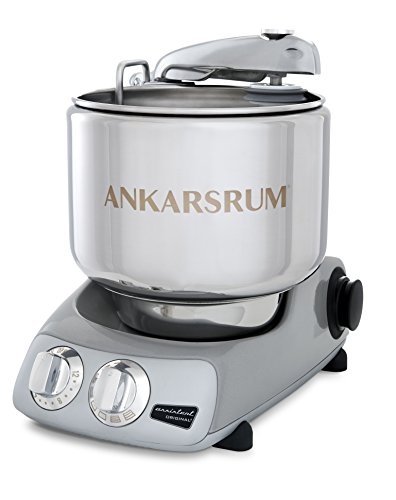
Ankarsrum Assistent Original Stand Mixer AKM6230, Jubilee Silver — Best Overall for Bread
The Ankarsrum fits the bread baker who thinks in kilos and in dough quality at once. Its roller-and-scraper kneading is the closest mechanical analogue to hand work, developing dough gently and completely, and its bowl takes quantities that make planetary owners split batches. It also fits the baker willing to learn a new technique — the first loaves are an apprenticeship.
Bread is where mixers separate. The Ankarsrum Assistent Original Stand Mixer AKM6230, Jubilee Silver handles dough development in the way this article cares about: sustained kneading without drama, a bowl that keeps the mass where the hook can work it, and enough composure that you can run a full knead while the oven preheats.
Strengths
- The rotating bowl and roller knead dough gently and thoroughly, mimicking hand kneading better than a hook alone
- Handles very large dough quantities calmly, with the bowl doing the moving instead of the machine straining
- A deep accessory catalogue turns it into a full kitchen assistant over time
Trade-offs
- A real learning curve: the roller-and-scraper method is unlike every other mixer here
- Premium pricing that only makes sense if you use the capacity and accessories
- The open bowl design needs supervision with splashy liquids until technique settles
| Specification | Detail |
|---|---|
| Bowl | Large rotating stainless bowl |
| Design | Belt-driven rotating-bowl (Assistent) design |
| Origin | Swedish Assistent Original platform |
| Included | Dough hook, dough roller and scraper system (platform standard) |
The Ankarsrum is not a stand mixer with a twist; it is a different philosophy. The bowl rotates, a roller presses and folds the dough against the side, and a scraper keeps the mass moving — a mechanical echo of hands working a bench. Bakers who switch to it for bread rarely switch back, because the dough development is superb and the machine stays unruffled at quantities that make planetary mixers complain. Expect a few batches of apprenticeship while the technique becomes second nature.
Best for: serious bread bakers kneading large, frequent batches / Not suited for: bakers who want zero learning curve
Check the current price on Amazon
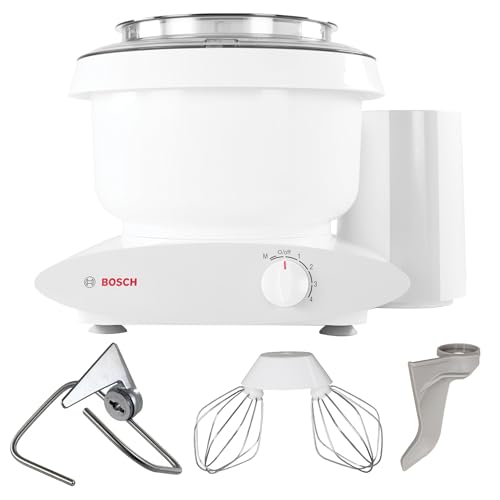
Bosch Universal Plus Stand Mixer, 6.5-Qt, with Dough Hook Extender Bundle — Best for Big Dough Batches
The Bosch Universal Plus fits the production home baker: multiple loaves, wholemeal-heavy recipes, pizza dough for a crowd. Its bottom drive does not know how to be intimidated by a full bowl, and this bundle’s dough hook extender fixes the small-batch gathering that used to be the design’s one weakness.
For bread specifically, judge the Bosch Universal Plus Stand Mixer, 6.5-Qt, with Dough Hook Extender Bundle on the second half of the knead, when the dough tightens and starts climbing and slapping — that is where it shows whether it belongs in a bread baker’s kitchen, and it holds its own.
Strengths
- Famous dough capacity: the bottom-drive design kneads large, heavy batches without the head bouncing
- The open-top bowl makes adding ingredients mid-knead the easiest of any design here
- A huge accessory ecosystem, from blenders to food processing attachments, driven off the same base
Trade-offs
- The whips-and-bowl arrangement is less intuitive for delicate batters until you learn it
- It looks and sounds different from a classic stand mixer, which puts some bakers off
- The plastic bowl on many bundles is practical but less premium-feeling than steel
| Specification | Detail |
|---|---|
| Bowl | 6.5 qt |
| Design | Belt-driven, bottom-drive bowl |
| Power | 500 watts (per listing) |
| Included | Wire whips, dough hook, NutriMill dough hook extender (bundle per listing) |
The Bosch Universal Plus is the bread baker’s open secret. Instead of a motor in a head above the bowl, the drive sits underneath, and the dough hook works the full mass of dough from the centre. The result is a machine that treats a big batch of wholemeal loaves as a warm-up rather than a stress test. This bundle’s dough hook extender helps smaller batches gather properly, answering the classic Bosch criticism. If flour goes into your bowl by the kilo, put this machine on your shortlist first.
Best for: high-volume dough, wholemeal and multi-loaf days / Not suited for: delicate whisked sponges as the main event
Check the current price on Amazon

KitchenAid 7-Qt Bowl-Lift Stand Mixer KSM70, Cast Iron Black — Best Bowl-Lift for Bread
The KSM70 fits the baker who wants one machine for the whole repertoire, bread included, on the KitchenAid platform. The 7-quart bowl and rigid bowl-lift frame knead double batches calmly, and when the bake turns to cakes, the folding half-speed and accessory hub are all there. It is the compromise that does not feel like one.
Bread is where mixers separate. The KitchenAid 7-Qt Bowl-Lift Stand Mixer KSM70, Cast Iron Black handles dough development in the way this article cares about: sustained kneading without drama, a bowl that keeps the mass where the hook can work it, and enough composure that you can run a full knead while the oven preheats.
Strengths
- The 7-quart bowl swallows double and triple batches that overwhelm 5-quart machines
- The half-speed fold setting handles delicate batters and additions without knocking the air out
- A generous accessory bundle in the box, including the Double Flex Edge Beater for bowl scraping
Trade-offs
- This is a large, heavy machine that effectively becomes a permanent counter fixture
- The capacity is wasted on small single batches, which can mix unevenly in a big bowl
- It sits in a premium tier, so the value case depends on genuinely baking at volume
| Specification | Detail |
|---|---|
| Bowl | 7 qt |
| Design | Bowl-lift |
| Speeds | 11 speeds, including a 1/2 speed for folding |
| Included | Double Flex Edge Beater and four further accessories (per listing) |
Think of the KSM70 as the batch baker’s KitchenAid. Wedding-cake tiers, bake-sale weekends and freezer-stocking bread sessions are its natural habitat, and the bowl-lift frame stays calm while it works through them. The folding half-speed is a thoughtful touch: big mixers often bully delicate mixtures, and this one can stir in flour or chocolate chips at a pace that respects the batter. If your recipes routinely start with a kilo or more of flour, this is the home machine that stops feeling like a compromise.
Best for: bread plus the full baking repertoire at double-batch scale / Not suited for: small kitchens or single small loaves
Check the current price on Amazon

KitchenAid 5.5-Qt Bowl-Lift Stand Mixer KSM55, Porcelain White — Best Mid-Size Bread Mixer
The KSM55 fits the sourdough-weekend baker whose tilt-head has started to feel theatrical under load. Same platform, same ecosystem, but the bowl-lift composure changes the kneading experience entirely — and the 5.5-quart bowl matches the one-to-two-loaf rhythm most home bread bakers actually keep.
For bread specifically, judge the KitchenAid 5.5-Qt Bowl-Lift Stand Mixer KSM55, Porcelain White on the second half of the knead, when the dough tightens and starts climbing and slapping — that is where it shows whether it belongs in a bread baker’s kitchen, and it holds its own.
Strengths
- Bowl-lift rigidity that turns long kneads from a performance into a process
- Eleven speeds with a fold setting — power at the top, tact at the bottom
- The KitchenAid hub and spares ecosystem, on the stronger frame
Trade-offs
- Height and weight commit you: measure first, love it second
- Bowl handling is a deliberate two-hand job compared with tilt-head casualness
- For pure cake work in small batches, a tilt-head is frankly friendlier
| Specification | Detail |
|---|---|
| Bowl | 5.5 qt, stainless steel |
| Design | Bowl-lift |
| Speeds | 11 mixing speeds |
| Included | Flat beater, dough hook, wire whip |
The KSM55 is the answer to a specific baker’s sentence: ‘I love my tilt-head, but…’ — but the dough walks it, but the head nods, but the batch must be split. The lift frame answers every clause of that sentence while keeping the platform, the speeds and the ecosystem that made the tilt-head lovable. It is less an upgrade than a correction, aimed at bakers whose repertoire outgrew a design rather than a brand, and it lands precisely on that target.
Best for: one-to-two-loaf sourdough and bread routines / Not suited for: the very largest multi-loaf batches
Check the current price on Amazon

Kitchen in the Box Stand Mixer 8.5QT, 900W, Silver — Best Budget Big-Bowl for Bread
The Kitchen in the Box 8.5QT fits the budget batch baker: big family, big appetite, loaves in multiples. Its bowl and motor rating are aimed at heavy dough work, and the sensible owner works within realistic hydration and batch stiffness rather than treating headline numbers as a dare.
Bread is where mixers separate. The Kitchen in the Box Stand Mixer 8.5QT, 900W, Silver handles dough development in the way this article cares about: sustained kneading without drama, a bowl that keeps the mass where the hook can work it, and enough composure that you can run a full knead while the oven preheats.
Strengths
- An 8.5-quart bowl at a value tier — batch capacity usually costs far more
- The 900-watt rating and heavy-dough positioning suit bread-leaning bakers on a budget
- Bowl handle and splash guard are practical touches for big, messy batches
Trade-offs
- Value-brand support and longevity are the open questions, as with all budget big-bowl machines
- Tilt-head plus a very tall bowl demands serious under-cabinet clearance
- Keep dough hydration sensible; headline wattage is not a licence for any batch at any stiffness
| Specification | Detail |
|---|---|
| Bowl | 8.5 qt, with handle |
| Design | Tilt-head |
| Power | 900 watts (per listing) |
| Speeds | 10 speeds adjustable |
| Included | Whisk, flat beater, splash guard |
This machine exists because big bowls usually come with big prices. Kitchen in the Box pairs an 8.5-quart handled bowl with a 900-watt motor and ten speeds, and calls it a heavy dough mixer — for home bread bakers who double every recipe, that combination is tempting. The sensible approach is to work within realistic dough loads and let the capacity serve volume rather than stiffness. As a value route into genuinely large batches, it has few rivals.
Best for: big family bread batches on a budget / Not suited for: bakers who need a decades-long service network
Check the current price on Amazon

Aucma Stand Mixer 6.5-QT 660W Tilt-Head, Black — Best Value 6.5-Qt for Bread
The Aucma fits the family bread baker who needs 6.5 quarts of working room without the premium tier. Sandwich loaves, bun batches and pizza dough for six are its home ground, with the value-brand caveat about long-term support accepted knowingly.
For bread specifically, judge the Aucma Stand Mixer 6.5-QT 660W Tilt-Head, Black on the second half of the knead, when the dough tightens and starts climbing and slapping — that is where it shows whether it belongs in a bread baker’s kitchen, and it holds its own.
Strengths
- A big 6.5-quart bowl at a tier where most rivals give you four quarts
- The 660-watt motor rating is strong for the price class and handles family-size batches
- Suction-cup feet help it stay planted, which lighter budget mixers often struggle with
Trade-offs
- Brand support and long-term parts availability are thinner than the legacy names
- Fit and finish are a step below premium machines, even if day-to-day mixing is fine
- Tilt-head geometry plus a tall bowl needs generous clearance under cabinets
| Specification | Detail |
|---|---|
| Bowl | 6.5 qt |
| Design | Tilt-head |
| Power | 660 watts (per listing) |
| Included | Dough hook, wire whip, beater |
Aucma’s pitch is simple arithmetic: more bowl and more motor for the money than the famous badges offer. For family baking — big cookie batches, sandwich loaves, celebration cakes — that arithmetic is persuasive, and owners generally find the machine willing as long as doughs stay within sensible hydration and batch limits. What you give up is the deep service network and decade-long parts shelf of the heritage brands. Treat it as strong value with a shorter guaranteed horizon, and the trade makes sense.
Best for: family-size dough batches at a value tier / Not suited for: the stiffest low-hydration doughs at maximum fill
Check the current price on Amazon
Comparison Table
| Pick | Badge | Key spec | Best for |
|---|---|---|---|
| Ankarsrum Assistent Original Stand Mixer AKM6230, Jubilee Silver | Best Overall for Bread | Large rotating stainless bowl | serious bread bakers kneading large, frequent batches |
| Bosch Universal Plus Stand Mixer, 6.5-Qt, with Dough Hook Extender Bundle | Best for Big Dough Batches | 6.5 qt | high-volume dough, wholemeal and multi-loaf days |
| KitchenAid 7-Qt Bowl-Lift Stand Mixer KSM70, Cast Iron Black | Best Bowl-Lift for Bread | 7 qt | bread plus the full baking repertoire at double-batch scale |
| KitchenAid 5.5-Qt Bowl-Lift Stand Mixer KSM55, Porcelain White | Best Mid-Size Bread Mixer | 5.5 qt, stainless steel | one-to-two-loaf sourdough and bread routines |
| Kitchen in the Box Stand Mixer 8.5QT, 900W, Silver | Best Budget Big-Bowl for Bread | 8.5 qt, with handle | big family bread batches on a budget |
| Aucma Stand Mixer 6.5-QT 660W Tilt-Head, Black | Best Value 6.5-Qt for Bread | 6.5 qt | family-size dough batches at a value tier |
How to Choose a Stand Mixer for Bread Making
Flour capacity is the only capacity that matters here, and it is not printed on the bowl. As a working rule, a planetary mixer kneads well with flour at roughly half its bowl’s liquid volume in kilograms — a 5-quart machine is happy around a kilo of flour, less for stiff doughs — while the rotating-bowl and bottom-drive designs in this guide exceed that rule substantially because the dough is worked differently. Decide by your biggest regular batch: a single 800-gram-flour sourdough, a double sandwich loaf, or a four-loaf production run are three different machines’ home ground.
Hydration changes everything. A wet ciabatta dough at high hydration is easy work for almost any machine — the hook mostly stirs and folds. A stiff bagel or pretzel dough at low hydration is the hardest work in home baking, multiplying the load at the same flour weight. If stiff doughs are your love, buy for them specifically: bowl-lift rigidity or the specialist designs, sensible batch sizes, and no heroics at maximum fill. If your doughs are soft and wet, your options widen and even the value picks will serve you well.
Heat is the silent variable. Long kneads warm dough through friction, and warm dough ferments faster and behaves differently. Machines that develop dough efficiently — the Ankarsrum’s roller is the exemplar — reach the windowpane with less total work and less heat than machines that bully the dough. Start with cool water for long kneads, and treat a dough thermometer as bread equipment, not an accessory.
Planetary, Bottom-Drive or Rotating Bowl: The Three Ways to Knead
Planetary kneading — a hook orbiting a fixed bowl — is the establishment method: versatile, familiar, and excellent at moderate batch sizes. Its limits are physics: the hook can push a stiff mass around the bowl instead of through itself, dough climbs the hook, and the frame absorbs the argument. Bowl-lift frames manage this best, which is why both KitchenAids here are bowl-lift models. Within sensible flour limits, planetary kneading is proven by millions of loaves.
Bottom-drive kneading, the Bosch way, puts the motor under the bowl and works the dough from the centre with a hook designed for the full mass. There is no head to nod and nowhere for dough to climb to; the design’s natural scale is large, and its natural enemy used to be the tiny batch, which the extender in this bundle addresses. Rotating-bowl kneading, the Ankarsrum way, moves the bowl instead of the tool: a roller presses and folds while a scraper keeps the dough in play, producing development that bread bakers describe — accurately — as the most hand-like. Both specialist designs ask for a short apprenticeship and repay it on every loaf thereafter.
Reading Bread Mixer Specifications Honestly
Wattage is the least honest number in this category: it is measured differently by different makers and says little about torque at low speed, which is where kneading lives. A modest-wattage machine with the right gearing and frame will out-knead a headline-wattage lightweight every time. Treat wattage as a rough class indicator only, and weight design — drive type, frame type, bowl size — far more heavily in your decision.
What to look for instead: the manufacturer’s stated flour or dough capacity where given, the dough speed setting (kneading should happen at a dedicated low speed, not at whisking pace), the included dough tool’s shape — a C-hook pushes dough around more than a spiral-style hook works it — and the frame’s behaviour in owner accounts of full-length kneads. This guide’s reviews stick to listing-verified facts and tell you plainly where a machine’s comfort zone ends; your job is to keep your batches inside it.
Flour, Hydration and Batch Planning: The Bread Baker’s Arithmetic
Plan a bread mixer’s work the way you plan a bake: by flour weight and hydration together. A kilo of flour at 60 percent hydration makes roughly 1.6 kilos of dough; the same flour at 80 percent makes 1.8 kilos of much softer dough that the machine will find far easier despite the greater weight. This is why a single ‘capacity’ figure misleads: the stiff 1.6-kilo batch can be harder work than the slack 1.8. When you read this guide’s comfort zones, read them against your stiffest regular dough, and let your wet doughs be the easy days.
Build a batch card for each of your regular loaves — flour weight, hydration, knead time to windowpane in your machine, dough temperature out of the bowl — and tape the set inside a cupboard door. Within a month you will have turned your mixer’s folklore into data: you will know that your sourdough takes nine minutes in winter and seven in summer, that the bagel dough wants a split batch, that the enriched dough needs its butter added in stages. That card set is worth more than the next machine upgrade, because it converts experience into repeatability.
Enriched and Flavoured Doughs: Where Machines Earn Their Keep
Lean doughs are the test everyone talks about; enriched doughs are the work everyone actually repeats. Brioche, panettone-style doughs and cinnamon-roll dough ask the machine to do something subtler than knead: incorporate large quantities of butter into a developed dough, gradually, without melting it or tearing the gluten web already built. This is low-speed, patient work where the specialist designs and the bowl-lift machines both shine, and where the technique matters more than the tool: dough developed first, butter cool and pliable, added in small pieces, each absorbed before the next.
Flavoured doughs — seeded, herbed, fruit-laden — ask for the fold-speed discipline: additions worked in at the lowest speed, briefly, at the end of the knead, so the dough’s structure survives its ingredients. Machines with a genuine fold setting make this a dial position; on others, a few turns at speed one or a hand fold on the bench does the same work. The principle outranks the equipment, as it usually does in bread: develop first, enrich slowly, add last, and let the machine’s patience substitute for your arm’s endurance.
How to Knead Bread Dough in a Stand Mixer, Step by Step
Mix to a shaggy mass first. Flour and water (and any preferment) go in together at the lowest speed for two to three minutes, until no dry flour remains. Then stop and rest the dough — the autolyse, twenty to forty minutes with the bowl covered. This rest hydrates the flour and starts gluten formation for free, cutting the machine’s hard work dramatically. Salt and yeast, if not already in, are added after the rest, sprinkled over and worked in at low speed for a minute.
Knead at the dough speed — the low, dedicated setting, never the high speeds — and watch the dough rather than the clock. The stages are visible: shaggy becomes cohesive; cohesive becomes smooth and slightly tacky; the dough begins to clear the bowl’s sides and slap rhythmically; finally it turns silky and elastic, and a stretched piece forms a thin windowpane without tearing. Depending on flour, hydration and machine, that journey takes roughly six to twelve minutes of kneading. Stop at the windowpane: beyond it lies over-oxidised, slackening dough, and no recipe wants that.
Manage temperature as you go. Friction warms dough measurably over a long knead, so start with cool water — cooler than the recipe’s room-temperature habit suggests — especially in summer and especially in powerful machines. If the dough climbs the hook on a planetary machine, stop, push it down, and continue; if it climbs constantly, the batch is too stiff or too large for comfortable work, which is information for next time’s batch size, not a flaw in today’s loaf.
Finish by hand for thirty seconds: turn the dough onto a bare counter, give it a few confident folds into a smooth ball, and place it seam-down in its proofing bowl. That brief hand contact is the baker’s final quality check — you will feel in one touch whether the machine’s work is done — and it connects you to the dough in a way that makes the next loaf better judged.
After the knead, give the dough its bulk ferment in the same bowl whenever the recipe allows — one less vessel, and the bowl’s residual warmth is a small kindness to the yeast. Cover it, mark the starting level with a band or a note of the time, and let the dough, not the clock, announce readiness: risen by the proportion the recipe intends, domed, and alive-looking, with a finger-poke that springs back slowly and incompletely.
Shaping is the hand skill the machine cannot learn for you, and it is where loaves are won after the kneading is done. Degassing gently, pre-shaping into a round, resting, then the final shape with real surface tension — a tight skin drawn over the loaf — matters as much to the finished crumb as the knead did. The mixer’s gift is that you arrive at this stage with fresh hands and attention, instead of exhausted from ten minutes of manual kneading; spend the gift on the shaping.
Troubleshooting Bread From the Mixer: Five Loaves, Five Lessons
The dense loaf: almost always under-development or under-proofing, and the mixer tempts you toward the first by making kneading feel finished when it is merely tidy. Trust the windowpane, not the surface. The torn, soupy dough: over-kneading, rarer in machines than folklore says, but real in powerful machines left running — set a timer and check at intervals rather than wandering off. The dough that climbed into the head: too stiff or too large a batch; note it on the batch card and split it next time.
The pale, slack loaf that spread instead of rising: usually temperature — a long, warm knead pushed the dough’s schedule ahead of yours, and it over-proofed while you followed the recipe’s clock. Cool water next time, and proof by eye. The loaf with a gummy line at the base: cut too soon, a patience failure no machine can prevent — bread finishes cooking as it cools, and the crumb sets in that hour. Five lessons, and notice that only one of them is the mixer’s fault: that is the honest ratio in bread, and why the craft survives every equipment debate.
Keep the lessons. Bread bakers improve at the speed of their notes, not their purchases, and the machine’s role is to make each bake consistent enough that the lesson is legible. That is the deepest reason to choose a bread mixer well: not power, but repeatability — the same knead, available on demand, so that the variable being tested is always your technique and never your equipment.
The Sourdough Schedule: Fitting the Mixer Into a Fermentation Day
Sourdough reorganises a kitchen around fermentation time, and the mixer must take its place in that schedule rather than dominate it. A typical home rhythm: the levain builds overnight; in the morning, flour and water autolyse in the mixer bowl while the kitchen wakes; the levain and salt join, and the machine kneads — six to ten minutes of work inside a day of waiting. The mixer’s contribution is small in minutes and large in consequence: a thorough, repeatable knead at the exact moment the dough is ready for it, not ten minutes later when your arm is free.
During bulk fermentation, the machine rests and the baker’s hands take over for the folds — a division of labour worth preserving, because the folds are where you read the dough’s strength and gas. The mixer returns only if a second dough enters the day: pizza for the evening, say, mixed and kneaded while the sourdough proofs, the bowl washed between tenants. Two doughs, one machine, no conflict — provided the schedule was written before the flour was weighed.
This is the context in which to judge the picks in this guide. The specialist machines make the morning knead shorter and gentler on the dough; the bowl-lifts make it calmer; the value machines make it possible at scale on a budget. All of them then get out of the way and let fermentation — the actual bread-maker in the building — do its slow work. Choose the machine whose knead you trust, and build the day around the dough, not around the equipment.
Common Buying Mistakes
Kneading at high speed. The most common and most damaging bread mistake. High speed heats and tears dough, strains gears and walks machines. The dough speed exists for a reason: low, sustained work develops gluten; speed merely abuses it.
Judging capacity by bowl volume. A bowl’s litre rating is for liquids. Flour capacity for dough — especially stiff dough — is far lower. Bakers who load by volume split batches forever or burn out machines; bakers who load by flour weight bake calmly for years.
Adding flour to cure stickiness mid-knead. Wet dough is sticky before it is developed. Knead through the sticky stage to the smooth stage before adjusting anything, then adjust by the spoonful. Early flour is how lean doughs become dense loaves.
Skipping the autolyse rest. Twenty minutes of rest does work no motor can match, shortening the knead, reducing heat and improving the crumb. It costs nothing but a timer, and skipping it to ‘save time’ spends more time at the machine instead.
Ignoring dough temperature. Friction heat is real: a long knead can push dough several degrees warmer, accelerating fermentation and changing the schedule. Cool starting water and a thermometer turn a mystery variable into a managed one.
Expecting a value big-bowl machine to knead any dough at full fill. Capacity headlines describe volume, not permission. Stiff doughs at maximum fill are where budget machines earn their caveats. Keep the stiffest batches moderate and the value machines in this guide will serve you well.
Final Recommendation
If bread is the centre of your baking, the Ankarsrum is the connoisseur’s answer and the Bosch the production answer — choose by whether you prize dough quality at craft scale or throughput at family scale. If bread shares the stage with everything else, the KSM70 (double batches) or KSM55 (weekend loaves) keeps you on the KitchenAid platform with bowl-lift composure. Budget batch bakers should look at the Kitchen in the Box 8.5QT and the Aucma with realistic batch discipline. Complete the picture with Best Stand Mixers For Baking, Best Stand Mixers For Home Use and the full field in Best Kitchen Stand Mixers.
Whichever machine you choose, make your first loaf a familiar recipe at a moderate batch size. The machine will tell you its comfort zone in one knead — and a bread baker who listens to that first loaf rarely needs to shop again.
The shortlist, if you are deciding today: Ankarsrum Assistent Original Stand Mixer AKM6230, Jubilee Silver for the headline recommendation, Bosch Universal Plus Stand Mixer, 6.5-Qt, with Dough Hook Extender Bundle as the value alternative, and KitchenAid 7-Qt Bowl-Lift Stand Mixer KSM70, Cast Iron Black where the specific need in this guide is strongest. Each name links to its verified listing, where you can check price on Amazon and confirm the exact configuration before you commit.
Frequently Asked Questions
How much flour can a stand mixer knead at once?
As a working guide, planetary mixers knead comfortably around 500 grams to 1 kilogram of flour depending on bowl size and dough stiffness — a 5-quart class machine around a kilo for soft doughs, less for stiff ones. The specialist designs in this guide — Ankarsrum and Bosch — handle substantially more by design. Always weight flour capacity over bowl volume when comparing machines for bread.
Why does dough climb the hook, and how do I stop it?
Climbing happens when dough becomes elastic enough to grip the hook and ride it upward, usually with stiff doughs or generous batches. Stopping to push the dough down, lightly oiling the hook, or slightly increasing hydration all help. Persistent climbing is the machine reporting that the batch is at its comfortable limit.
Is a spiral hook better than a C-hook for bread?
In planetary machines, spiral-style hooks generally work dough through itself more effectively, while C-hooks can push a stiff mass around the bowl. It is a refinement rather than a deal-breaker: frame, capacity discipline and kneading time matter more. The specialist designs sidestep the question entirely with their roller and bottom-drive geometries.
How long should I knead bread dough in a mixer?
Until it is developed — smooth, elastic, clearing the bowl, passing the windowpane test — which is typically six to twelve minutes at the dough speed after any autolyse rest. Time is a guide, not a target: under-kneaded dough is slack and tears, over-kneaded dough turns soupy and oxidised, and both errors are visible if you watch the dough instead of the clock.
Can a stand mixer overheat kneading dough?
A machine worked beyond its comfort — oversized or very stiff batches, high speeds, back-to-back kneads — can heat up and will usually protect itself or protest audibly first. Stay within sensible flour loads, use the dough speed, and let the machine rest between large batches; within those rules, the mixers in this guide knead all day happily.
Do I still need to knead by hand if I own a stand mixer?
No — a good machine knead, finished with thirty seconds of hand folding to shape the ball, produces fully developed dough. Hand kneading remains a pleasure and a diagnostic skill worth learning, but it is a choice, not a requirement, once the machine in your kitchen is honestly matched to your batch sizes.
Should I proof dough in the mixer bowl?
Yes, happily — it saves washing and keeps the dough at a steady temperature. Lightly oil the bowl if your dough is sticky, cover it well so the surface does not skin, and mark the starting volume so the rise is easy to judge. Just remember to remove the dough hook first; proofing around the hook makes the transfer to the bench messier than it needs to be.


