Disclosure: airfryerkitchensupply.com is reader-supported. When you buy through links on our site, we may earn an affiliate commission at no extra cost to you.
Where to Buy the Best Soft Thin Pillows for Back Sleepers
Every pillow below is a genuinely thin, low-profile pillow whose height is stated in its verified listing — between 2.25 and 2.75 inches. Thick ‘back sleeper’ pillows, wedge pillows and reading cushions were excluded, because for a back sleeper who wants soft and thin, loft is the whole question. Start with the shortlist, then read why each height and fill behaves differently.
- SofGlowly Thin Flat Pillow, 2.25-Inch (Best Overall) — check price on Amazon
- Iwacool Flat Pillows, 2.25-Inch, 2 Pack (Best Value Pair) — check price on Amazon
- MINUPWELL Flat Pillow, 2.5-Inch (Best Mid-Thin Step) — check price on Amazon
- Vipbear Ultra Thin Pillow, 2.75-Inch (Best Certified Foam) — check price on Amazon
- SUPA MODERN Ultra Thin Flat Pillow, 2.75-Inch (Best Slim All-Rounder) — check price on Amazon
- Bluewave Bedding Ultra Slim Gel Pillow, 2.75-Inch (Best Established Slim Design) — check price on Amazon
The best soft thin pillows for back sleepers solve a specific geometry problem. A back sleeper’s head needs to rest close to the mattress so the chin does not tip toward the chest, yet the curve of the neck still needs gentle filling so the head does not roll or hang unsupported. Too much pillow and you wake with a stiff neck; too little and your head feels flat against the bed. The sweet spot for most back sleepers who prefer thin is a soft, compressible pillow roughly two to three inches high — and every pick here states its height in its listing.
All six picks are memory foam designs, because at these low heights memory foam is what the verified market actually offers: a thin slab of foam holds a consistent 2.25 to 2.75 inches in a way that loose fill cannot without clumping. Several listings use cooling gel or cooling covers, which matters more in a thin pillow than a thick one — with less material between your head and the mattress, heat has nowhere to hide, and a warm pillow feels warmer.
One honesty note that runs through the reviews: some of these listings use medical-adjacent wording in their titles, including references to pain. This guide does not repeat those as claims. A thin pillow is a comfort choice about sleep posture, not a treatment, and the reviews below judge softness, height, cooling and construction only. If you have ongoing neck problems, a pillow swap is not a substitute for medical advice.
In this guide
Quick Picks
Six thin pillows, all with stated heights. The differences are in softness, cooling approach, pack size and certification — the badges point you to the one that matches your priority.
- SofGlowly Thin Flat Pillow, 2.25-Inch — Best Overall. The thinnest verified option at 2.25 inches, with a cooling design and a soft washable cover — the reference thin pillow for back sleepers. Check on Amazon
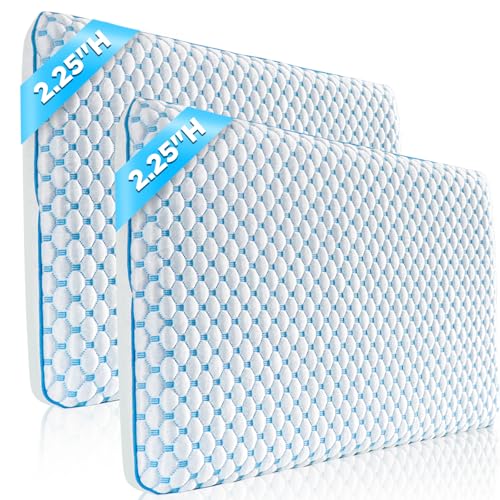
- Iwacool Flat Pillows, 2.25-Inch, 2 Pack — Best Value Pair. The same 2.25-inch low profile as the leader, sold as a two-pack with cooling gel — the practical buy for a shared bed. Check on Amazon
- MINUPWELL Flat Pillow, 2.5-Inch — Best Mid-Thin Step. A 2.5-inch step between ultra-thin and slim, with stated 24×16-inch dimensions and cooling gel memory foam. Check on Amazon
- Vipbear Ultra Thin Pillow, 2.75-Inch — Best Certified Foam. A 2.75-inch slim pillow with gel-infused foam, dual-sided cooling and a CertiPUR-US foam certification named in the listing. Check on Amazon
- SUPA MODERN Ultra Thin Flat Pillow, 2.75-Inch — Best Slim All-Rounder. Another 2.75-inch slim design with a cooling focus — the straightforward, no-drama slim pillow. Check on Amazon
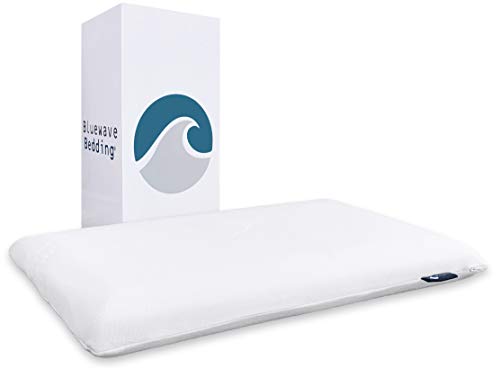
- Bluewave Bedding Ultra Slim Gel Pillow, 2.75-Inch — Best Established Slim Design. A long-running ultra-slim design at 2.75 inches in standard size, with gel memory foam — the known quantity of the group. Check on Amazon
Key Takeaways
- For back sleepers, stated height is the spec that matters: everything here is 2.25 to 2.75 inches.
- Soft and thin is a balance — the pillow must compress under the head yet still fill the neck curve.
- Cooling gel and washable covers appear often in this group because thin foam sleeps warm.
- Give any new pillow a full week: back sleepers often judge thin pillows too early, on night one.
How These Picks Were Chosen
Selection started from the height stated in each listing-verified title. Any pillow without a stated low height was set aside, however good its reputation, because ‘thin’ is the search’s promise and an unstated loft cannot be checked. That single rule removed the large majority of back-sleeper pillows, which are medium or high loft designs marketed to side sleepers as well.
Survivors were checked for completeness and honesty: each had to be a full bed pillow in a stated size, from a listing whose title described its fill and cover without truncation.
The six were then spread by genuine differences: the thinnest at 2.25 inches appears twice with different constructions, the 2.75-inch options suit back sleepers who found ultra-thin too flat, one is a two-pack for couples or guest beds, and one carries a named foam certification. That spread lets you choose by the variable that actually changes your sleep, instead of by brand familiarity.
The 6 Best Soft Thin Pillows for Back Sleepers

SofGlowly Thin Flat Pillow, 2.25-Inch — Best Overall
At 2.25 inches, the SofGlowly is the lowest pillow in this roundup, and for a committed thin-pillow back sleeper that is exactly the point. The head rests close to the mattress plane, the chin stays neutral rather than tipped, and the low-profile design still gives the neck curve a surface to settle into instead of a cliff edge at the pillow’s border. If you have been folding a flat pillow in half or sleeping half off the edge of a thick one, this height will feel like the correction you were improvising.
The soft washable cover is more important than it sounds. Thin pillows get replaced for hygiene as often as for wear, because there is no excess fill to redistribute — a cover you can remove and wash extends the pillow’s useful life and keeps the cooling surface working as intended. Expect the first two nights to feel noticeably flat if you are coming from a medium pillow; by the end of the first week most back sleepers stop noticing the height and start noticing the absence of morning neck stiffness caused by over-elevation — a comfort observation, not a medical promise.
The SofGlowly’s 2.25 inches pairs best with a firmer mattress, where the body sits higher on the surface and the head needs less pillow to meet it. On a very soft, deep-sinking mattress the arithmetic changes — your shoulders sink, your head effectively rises relative to the bed, and some back sleepers find they want the 2.5 or 2.75-inch step instead. Pillow height is always mattress-relative, which is why this guide keeps three heights in view rather than crowning one number.
Strengths
- Stated 2.25-inch height — the thinnest in this roundup
- Cooling memory foam design for warm sleepers
- Soft, washable cover extends the pillow’s hygienic life
Trade-offs
- Too flat for anyone who secretly prefers medium loft
- Memory foam feel is firmer than a down pillow at first touch
- Single pillow — couples need two orders
| Detail | What the verified listing states |
|---|---|
| Height | 2.25 inches (stated) |
| Fill | Cooling memory foam (per listing) |
| Cover | Soft washable cover |
| Position | Back and stomach sleepers (per listing) |
Best for: Back sleepers who know they want the thinnest option / Not suited for: Side sleepers, who need height this pillow deliberately lacks
Check on Amazon — check price on Amazon
Iwacool Flat Pillows, 2.25-Inch, 2 Pack — Best Value Pair
Two people rarely convert to thin pillows one at a time; one partner tries it, the other steals it. The Iwacool listing answers that pattern directly with a two-pack at the same 2.25-inch height as the thinnest single in this guide, with cooling gel in the foam aimed at hot sleepers. For a shared bed or a guest room that hosts back-sleeping visitors, a matched pair also keeps the bed looking intentional rather than improvised.
Gel-infused foam does not make a pillow cold — no passive foam can — but it slows the warm-up, and in a thin pillow that slower warm-up covers more of the night because there is less foam mass to saturate with heat. Judge this pair on that realistic basis. The other honest note is consistency: two pillows from one pack share a production batch, so the feel matches from side to side of the bed in a way two separate orders months apart may not.
As a guest-room purchase the Iwacool pair has a second virtue: guests who sleep on their backs at home will find a recognisably correct pillow, and stomach-sleeping guests — the listing’s other stated position — are the other group thin pillows serve perfectly. A guest bed with a thin pair and one conventional pillow in the wardrobe covers nearly every visitor’s habit without a conversation about it at midnight.
Strengths
- Two-pack at a stated 2.25-inch height
- Cooling gel foam aimed at hot sleepers
- Matched pair — consistent feel across a shared bed
Trade-offs
- Two identical heights — no option to mix a taller partner pillow
- Gel slows warming rather than actively cooling
- Foam softness is fixed; nothing to adjust or remove
| Detail | What the verified listing states |
|---|---|
| Height | 2.25 inches (stated) |
| Pack | 2 pack |
| Fill | Cooling gel memory foam (per listing) |
| Position | Back and stomach sleepers (per listing) |
Best for: Couples converting to thin pillows together, and guest beds / Not suited for: Solo buyers who only need one pillow
Check on Amazon — check price on Amazon

MINUPWELL Flat Pillow, 2.5-Inch — Best Mid-Thin Step
The MINUPWELL sits at 2.5 inches — the middle of this roundup’s narrow range — and that quarter-inch over the 2.25-inch pillows is a real difference at 3 a.m. Back sleepers who tried an ultra-slim pillow and found their head felt unsupported at the edges often land exactly here: still unmistakably thin, still chin-neutral, but with a little more material under the neck curve. The listing states the dimensions, 24 by 16 inches, which is a standard-size footprint that takes ordinary pillowcases.
Judged on those measurable terms it earns its place: a clearly specified, mid-thin pillow for the sleeper who found 2.25 inches a step too far.
The MINUPWELL’s stated 24×16-inch footprint makes it the easiest pick here to case from a standard linen cupboard — a small thing until you are changing bedding at midnight. Its 2.5-inch height also makes it the natural recommendation for couples who disagree: one partner at 2.25 inches, one at 2.5, with pillows similar enough in family that the bed still looks and feels like a set rather than a compromise negotiated in public.
Strengths
- Stated 2.5-inch height — the middle option in the range
- Stated 24×16-inch size fits standard pillowcases
- Cooling gel memory foam construction
Trade-offs
- Listing title uses medical wording this guide does not endorse as a claim
- Foam density wording (50D) is a listing figure, not independently tested
- Not the choice for sleepers who want the absolute thinnest profile
| Detail | What the verified listing states |
|---|---|
| Height | 2.5 inches (stated) |
| Size | 24 x 16 inches (stated) |
| Fill | Cooling gel memory foam (per listing) |
| Foam note | Listing states 50D; not independently verified |
Best for: Back sleepers who found 2.25 inches too flat / Not suited for: Anyone shopping on a medical promise rather than on measurements
Check on Amazon — check price on Amazon

Vipbear Ultra Thin Pillow, 2.75-Inch — Best Certified Foam
At 2.75 inches the Vipbear is the tallest pillow in this guide, and it is included because ‘thin’ is a direction, not a single number. Back sleepers with broader shoulders, or those transitioning down from a medium pillow, often need this intermediate step — jumping straight to 2.25 inches can feel like sleeping on the mattress itself. The dual-sided cooling design gives you a choice of sleep surface, which is a thoughtful touch in a category where most pillows offer one face and one feel.
The certification deserves a precise explanation. CertiPUR-US, named in this listing, certifies the foam’s content and emissions standards — it is a foam certification, not an organic claim and not a medical endorsement. For buyers who care what their pillow is made of, a named, checkable certification is worth more than vague ‘premium foam’ language, and it is one reason this pillow carries a badge in a crowded field of near-identical slim designs.
The Vipbear’s dual-sided design rewards a seasonal habit: use one face through the warmer months and the other when the bedroom cools, and note which you preferred before the season turns again. Its CertiPUR-US foam certification, stated in the listing, also makes it the pick to hand to the household member who asks what the pillow is made of — the answer exists, is specific, and can be checked, which is more than most foam products offer.
Strengths
- CertiPUR-US certified foam, as named in the listing
- Dual-sided cooling — two sleep surfaces in one pillow
- 2.75-inch height suits transitioning back sleepers
Trade-offs
- Tallest here — committed ultra-thin fans should look at 2.25 inches
- Standard size only in this verified listing
- Gel infusion moderates heat; it does not refrigerate
| Detail | What the verified listing states |
|---|---|
| Height | 2.75 inches (stated) |
| Fill | Gel infused memory foam |
| Certification | CertiPUR-US (foam content/emissions — not organic, not medical) |
| Size | Standard size (per listing) |
Best for: Back sleepers stepping down from medium loft / Not suited for: Sleepers who want the thinnest possible profile
Check on Amazon — check price on Amazon

SUPA MODERN Ultra Thin Flat Pillow, 2.75-Inch — Best Slim All-Rounder
The SUPA MODERN pillow shares the 2.75-inch height with the Vipbear, and the honest comparison is about emphasis: this listing leads with cooling and a simple flat profile, without the dual-sided design or the named certification. For many back sleepers that simplicity is the appeal. A flat, slim, cooling pillow that does its one job — holding your head low and neutral — without features to learn or surfaces to choose between.
Flat pillows like this one also travel between beds better than shaped designs: a guest room, a spare bed, a partner’s side when yours is in the wash. The cooling description should be read the same way as every cooling claim in this guide — as slower heat build-up, not active cold. If you sleep hot and want slim without paying attention to certifications or dual surfaces, this is the uncomplicated pick of the six.
The SUPA MODERN’s plainness is its portability: it is the pillow to move to the sofa bed, the spare room or the holiday rental without a thought, because nothing about it is precious, shaped or fussy. Households building a thin-pillow habit often end with a hierarchy — a chosen pillow on the main bed, and simple flat ones everywhere else sleep happens. This is the everywhere-else pillow, done properly.
Strengths
- Simple flat 2.75-inch profile with cooling focus
- Easy to move between beds and rooms
- Low-profile design suits back and stomach positions
Trade-offs
- No named foam certification in the verified title
- Height and fill are fixed — nothing adjustable
- Brand and model detail in the title is minimal
| Detail | What the verified listing states |
|---|---|
| Height | 2.75 inches (stated) |
| Fill | Cooling slim memory foam (per listing) |
| Profile | Flat, low profile |
| Certification | Not stated in verified title |
Best for: Buyers who want slim and simple, for any bed in the house / Not suited for: Buyers who want a named foam certification
Check on Amazon — check price on Amazon
Bluewave Bedding Ultra Slim Gel Pillow, 2.75-Inch — Best Established Slim Design
Bluewave’s ultra-slim pillow has been the reference point for thin-pillow shoppers for years, and its listing is admirably plain: gel memory foam, a thin flat design, 2.75 inches of height, standard size. There is a particular comfort in buying the design a category has standardised around — pillowcases fit as expected, the height is the height other thin pillows are compared against, and replacement in five years will likely mean buying the same pillow again.
Choose it over the newer 2.75-inch options if you value that predictability over the Vipbear’s certification or dual-sided cooling. Choose the 2.25-inch pillows instead if your problem is specifically over-elevation — a quarter to half an inch sounds trivial on paper and is not trivial under your head at night. As with every pick here, the first week is the trial that matters, and this guide’s how-to section explains how to judge it fairly.
The Bluewave’s long presence in the category carries one practical benefit worth naming: consistency across replacements. When this pillow eventually softens past its best — all foam does — buying the same design again returns you to a known height and feel rather than restarting the search. For a product you use eight hours a night, that boring predictability is a genuine feature, and it is why established designs keep a place in guides like this one.
Strengths
- Long-established ultra-slim design at a stated 2.75 inches
- Standard size — ordinary pillowcases fit
- Plain, specific listing with no inflated claims
Trade-offs
- No washable-cover or certification claim in the verified title
- Gel foam feel will be firmer than soft down alternatives
- Not the thinnest option for committed low-profile sleepers
| Detail | What the verified listing states |
|---|---|
| Height | 2.75 inches (stated) |
| Fill | Gel memory foam |
| Size | Standard size |
| Profile | Thin, flat design (per listing) |
Best for: Buyers who want the category’s established reference design / Not suited for: Sleepers who need 2.25 inches to solve over-elevation
Check on Amazon — check price on Amazon
Comparison Table
| Pick | Badge | Key spec from verified listing | Best for |
|---|---|---|---|
| SofGlowly Thin Flat Pillow, 2.25-Inch | Best Overall | 2.25-inch stated height, washable cover | Back sleepers who know they want the thinnest option |
| Iwacool Flat Pillows, 2.25-Inch, 2 Pack | Best Value Pair | 2-pack, 2.25-inch, cooling gel foam | Couples converting to thin pillows together, and guest beds |
| MINUPWELL Flat Pillow, 2.5-Inch | Best Mid-Thin Step | 2.5-inch height, 24×16-inch stated size | Back sleepers who found 2.25 inches too flat |
| Vipbear Ultra Thin Pillow, 2.75-Inch | Best Certified Foam | 2.75-inch, CertiPUR-US foam, dual-sided cooling | Back sleepers stepping down from medium loft |
| SUPA MODERN Ultra Thin Flat Pillow, 2.75-Inch | Best Slim All-Rounder | 2.75-inch flat cooling pillow | Buyers who want slim and simple, for any bed in the house |
| Bluewave Bedding Ultra Slim Gel Pillow, 2.75-Inch | Best Established Slim Design | 2.75-inch gel foam, standard size | Buyers who want the category’s established reference design |
The whole roundup spans half an inch — 2.25 to 2.75 inches — and that half inch is the decision. Start from your current pillow: if it is medium loft and your chin tips forward, drop to 2.25 inches; if it is already low and you want a gentler step, choose 2.75. Certifications and cooling are tie-breakers, not the main event.
How to Choose Thin Pillows for Back Sleeping, Without the Guesswork
The geometry of back sleeping, explained plainly
When you lie on your back, your head, neck and spine want to form a shallow, supported line. A pillow that is too high pushes the head forward and flexes the neck for eight hours; a pillow that is too low or too soft lets the head tip back and leaves the neck curve hanging in air. Thin pillows work for back sleepers because the mattress itself does most of the supporting — the pillow’s job shrinks to filling the small gap between the back of the head, the neck curve and the bed.
That is why small height differences matter so much in this category. Half an inch is a large fraction of a two-and-a-half-inch pillow. It is also why back sleepers should change height gradually if they are unsure: the 2.75-inch options in this guide exist as a halfway house between a conventional pillow and the full commitment of 2.25 inches.
Softness in a thin pillow is not what you expect
Press a thin memory foam pillow in a shop and it may feel firmer than the plump down pillow beside it. That hand test misleads. What matters is how the foam behaves under the sustained, distributed weight of a head over hours: memory foam softens with warmth and moulds, so a thin pillow that feels firm at minute one often feels correctly soft by minute twenty. Judge any pick in this guide across a full night, never by a squeeze.
True softness in this category comes from the foam’s density and formulation, which listings rarely state comparably — one listing here states a 50D foam figure, most state nothing. The practical approach is to choose your height first, then use the first-week test in the how-to section, and treat a pillow that still feels like a board on night seven as a return, not a personal failure.
Cooling claims, translated honestly
Every pillow in this roundup mentions cooling, gel or both, so the claims cancel out as a differentiator unless you read them precisely. Gel-infused foam absorbs heat early in the night and releases it slowly; a cooling-feel cover feels cool to the first touch. Neither actively refrigerates, and in a thin pillow the total heat capacity is small — the benefit is a slower warm-up, most noticeable in the first hours of sleep.
If you sleep genuinely hot, the pillow is only part of the answer: a breathable pillowcase, a lighter duvet and room temperature each move the needle more than any foam additive. Buy the cooling version when the price and height are otherwise equal — as several here are — and keep your expectations at ‘noticeably less warm’ rather than ‘cool’.
Sizes, cases and the shared bed
Most picks here are standard size, and one states its dimensions outright at 24 by 16 inches. Standard matters because your existing pillowcases fit, the pillow sits correctly on a twin or full bed, and a pair looks matched. Queen and king thin pillows exist in the wider market, but a standard pillow centred on a wide bed is no hardship for a back sleeper, who sleeps in one place rather than roaming the mattress.
For couples, match heights unless your needs genuinely differ. Two different pillow heights in one bed is perfectly workable, but matched pillows — the Iwacool two-pack is the direct answer — keep the bed simple to make and the feel consistent if you swap sides. Whatever you choose, put a washable protector under the case: thin foam cannot be laundered like fill, and the cover and protector are its hygiene system.
When thin is the wrong answer
Thin pillows are wrong for side sleepers, whose shoulders create a gap only height can fill — every pick here would leave a side sleeper’s neck bent downward all night. They are also wrong for anyone whose clinician has advised an elevated head position, and for combination sleepers who spend half the night on their side; those sleepers need a compromise loft, not this category at all.
They can also be wrong in degree. A back sleeper with a deep neck curve or broad shoulders may find 2.25 inches leaves the head under-supported at the edges, which is why this guide keeps the 2.5 and 2.75-inch steps in view. The category’s promise is a low, neutral head position — the right height is the lowest one that still fills your neck curve, and only your own week of sleep can confirm it.
How to Test a Thin Pillow in Your First Week
A thin pillow cannot be judged in one night — your neck has been trained by your old pillow’s height, and it protests any change before it approves it. Run this fair test instead.
- Photograph your sleep position from the side on your old pillow, or have a partner do it, noting whether your chin tips toward your chest.
- Use the new pillow for seven consecutive nights without swapping back, unless discomfort is severe — consistency is what makes the test mean anything.
- Each morning, note three things in your phone: how your neck feels on waking, how often you woke, and whether you reached for the old pillow in the night.
- Repeat the side photograph on night seven and compare chin angle honestly against night zero.
- Check the pillow itself at week’s end: the foam should recover its shape within minutes of getting up; a pillow that stays dented is failing, not ‘breaking in’.
- Wash the cover at the end of the trial week and note how it fits afterwards — a cover that shrinks or twists will annoy you monthly.
- Decide at day seven, inside the return window, not at day thirty when the window has closed.
If the pillow is nearly right but a fraction too low, a thin folded hand towel under it for two nights tells you whether the next height up — 2.5 or 2.75 inches — is your answer. That experiment, done deliberately, is worth more than another evening of reading listings.
Mattress, pillows and the system you actually sleep on
No pillow performs alone. A thin pillow on a thick, soft mattress topper behaves like a thicker pillow on a firm bed, because what your neck experiences is the total geometry of head, pillow and the surface your shoulders sink into. When you change pillows, change nothing else that week — not the topper, not the duvet weight — or you will not know what caused the improvement or the complaint, and the seven-night test becomes theatre.
The same logic explains why a thin pillow that was perfect in a hotel feels wrong at home: the hotel mattress was firmer, and your head sat higher. If you are chasing a remembered hotel sleep, the honest fix may be mattress firmness, with the thin pillow as its partner — this guide sells pillows, but it will not pretend they levitate.
Pillowcases, protectors and the hygiene of thin foam
Thin foam cannot hide dirt the way a deep down pillow seems to. Skin oil and moisture reach the foam faster through two inches than through six, so the protector is not optional equipment in this category — it is the pillow’s outer skin. Choose a smooth, quiet protector that does not crinkle, because at this height every layer is close to your ear, and a rustling protector will be heard all night.
Wash the case weekly and the protector monthly, and air the pillow itself, uncovered, on a bright morning every few weeks. Foam that is aired regularly lasts measurably longer before its recovery slows, and the ritual takes less time than making the bed it sits on.
Thin Pillows and the Rest of the Night
A pillow change is felt beyond the neck. Back sleepers who lower their loft often find their arms’ position changes — hands that rested on a raised chest settle lower — and that their breathing feels less laboured, simply because the head is no longer flexed toward the chest for eight hours. These are comfort observations from the geometry, not medical claims, and they are why this guide insists on the seven-night trial: the whole system of your sleep adjusts, not just the part under your head, and it adjusts on its own schedule.
Partner effects are real too. A thinner pillow lowers your head relative to a partner on a conventional pillow, which some couples notice and most stop noticing within the trial week. The two-pack and the mid-thin step in this guide exist partly for that diplomacy: matched pillows where possible, adjacent heights where necessary, and no household ruling that one sleeper’s geometry must defeat the other’s.
If, after a fair trial at two heights, thin pillows still leave you unrested, believe the result. This category is a solution to a specific geometry problem — over-elevation in back sleepers — and a sleeper without that problem gains nothing by persisting. The honest guide is the one that tells you when its own category is not your answer, and means it.
Value and the Cost of Guessing Wrong
Thin pillows are inexpensive as sleep equipment goes, and yet the category wastes more money than expensive ones — because buyers guess a height, dislike it, and guess again. The system in this guide is designed to end the guessing: three stated heights, a seven-night test, and a towel experiment that tells you your direction before you spend again. A sleeper who learns their number owns it for life, across every future pillow in every material.
That is also why the two-pack deserves its place in a value discussion. A matched pair at a known height, bought once, ends the shared bed’s pillow asymmetry and the guest bed’s improvisation in a single order. Compared with four sequential single purchases chasing a fit, the pair is not a bulk discount — it is the elimination of waste, which is the only discount that never expires.
Spend the savings on the unglamorous companions: a good protector, a second case set so laundry never forces a bare-pillow night, and the discipline to replace the pillow when its recovery slows rather than a year after. Sleep is a third of your life; the thin pillow that fits you is among the cheapest comforts in this entire programme, priced per night across its years.
Which Height for Which Back Sleeper?
You wake with a stiff, forward-ached neck and your current pillow is medium or thick: go straight to 2.25 inches — the SofGlowly, or the Iwacool pair if the bed is shared. Your problem is over-elevation, and half-measures will leave half of it in place.
You tried a very flat pillow once and felt unsupported at the edges: choose the 2.5-inch MINUPWELL or a 2.75-inch design. Your neck curve wants more filling than the ultra-thin class gives, and the correct thin pillow is the thinnest one that still fills that curve — not the thinnest one sold.
You sleep hot and on your back, in that order of complaint: the Vipbear, for its dual-sided cooling and certified foam, or the Iwacool pair for a shared bed. Cooling is the tie-breaker once height is right, and these are the two picks here built most deliberately around it.
Common Buying Mistakes
Judging a thin pillow on the first night
Your neck is calibrated to your old pillow. Almost every successful thin-pillow convert disliked night one. Commit to the seven-night test and judge on the trend, or you will return the right pillow for the wrong reason.
Buying thin for a side-sleeping partner
Thin is a back-sleeper geometry. Putting a side sleeper on a 2.25-inch pillow trades your comfort for their bent neck. Shared beds may need two different pillows — that is normal, not a failure.
Believing cooling means cold
Gel foam slows warming; it does not chill. Buyers who expect a cold pillow return good pillows. Set the expectation at ‘less warm, for longer’ and the better pillows here will meet it.
Repeating a listing’s medical language as fact
Some titles in this category use pain and therapy wording. A pillow is a comfort product. This guide judges height, fill and construction — and anyone with persistent neck pain should talk to a clinician, not a pillow listing.
Skipping the protector because the cover washes
The cover protects the surface; a protector guards the foam itself from the moisture that foam cannot be washed free of. On a thin pillow with little material to spare, that protection is the product’s lifespan.
Final Recommendation
For most back sleepers ready to commit to thin, the SofGlowly at 2.25 inches is the clearest expression of the idea, with the Iwacool two-pack as its natural partner for a shared bed. If you are stepping down rather than jumping, start at 2.75 inches with the Vipbear or the Bluewave, and let the seven-night test tell you whether to go lower.
Height first, cooling second, brand last — in that order, this category becomes simple. Keep reading within the pillows programme:
Final shortlist, ready to check: check price on Amazon (SofGlowly Thin Flat Pillow, 2.25-Inch) check price on Amazon (Iwacool Flat Pillows, 2.25-Inch, 2 Pack) check price on Amazon (MINUPWELL Flat Pillow, 2.5-Inch) check price on Amazon (Vipbear Ultra Thin Pillow, 2.75-Inch) check price on Amazon (SUPA MODERN Ultra Thin Flat Pillow, 2.75-Inch) check price on Amazon (Bluewave Bedding Ultra Slim Gel Pillow, 2.75-Inch).
Best Affordable Pillows For Stomach Sleepers Best Cool Pillows For Hot Sleepers Best Contour Neck Pillows For Sleeping Best Bamboo Memory Foam Pillows
Frequently Asked Questions
How thin should a pillow be for back sleeping?
For most back sleepers, somewhere between about 2.25 and 2.75 inches — the full range of this guide. The right point in that range depends on your shoulder width and neck curve: choose the lowest height that still fills the curve of your neck without tipping your chin forward.
Are thin pillows bad for side sleepers?
Yes, as a primary pillow. Side sleeping needs enough height to fill the shoulder gap and keep the neck straight, and a two-inch pillow cannot do that. Combination sleepers who mostly sleep on their backs may manage; committed side sleepers should shop a different category.
Does gel memory foam actually sleep cooler?
It sleeps less warm, for longer — the gel slows the foam’s heat build-up early in the night. It does not actively cool, and room temperature, bedding and pillowcase fabric each matter as much. Treat cooling as a tie-breaker between pillows of the right height.
What does CertiPUR-US mean on the Vipbear pillow?
It is a certification for the foam itself — its content and emissions standards. It is not an organic certification and not a medical endorsement. It simply means the foam has been checked against a named, published standard, which is more verifiable than generic ‘premium foam’ language.
How long does a thin memory foam pillow last?
Until its recovery slows: when the foam stops springing back to its full stated height within minutes of you getting up, it is done, whatever the calendar says. Washable covers and a protector extend that life by keeping the foam itself clean.
Can a thin pillow help my neck pain?
This guide makes no medical claims, and neither should a pillow listing. A correctly low pillow can remove the over-elevation that makes some back sleepers uncomfortable, but persistent or severe neck pain belongs in a conversation with a clinician, not in a product choice.
Can I use a thin pillow on an adjustable bed?
Yes, and the combination is natural: with the bed’s head raised, your pillow needs to be thinner still, because the bed is doing part of the elevation. Many back sleepers on adjustable bases find the 2.25-inch class correct precisely because the base supplies the rest. Test at the base angle you actually sleep at, not flat.
Why does my thin pillow feel harder than my old one?
Partly the foam’s nature — a thin slab has less material to feel plush with — and partly contrast with a soft, high pillow your hand remembers. Judge by the night’s sleep across the trial week, not by the squeeze in the doorway. If it still feels like a board on night seven, the height or the foam is wrong for you, and that is a return, not a failure of character.
Will a thin pillow work in a guest room for all visitors?
For back and stomach sleepers, yes — and those are the majority of guests. Keep one conventional medium pillow in the guest wardrobe for the committed side sleeper, and the thin pair on the bed covers everyone else properly. Guests rarely complain about a pillow that was chosen deliberately; they remember the ones that were clearly an afterthought.

