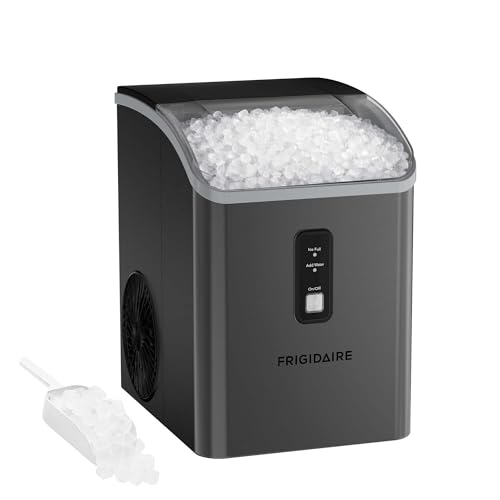
A small ice maker sits on a counter and turns out a basket of ice in minutes, which is handy when your freezer trays cannot keep up. They are popular for parties, offices, RVs and anyone who loves a cold drink. Most compact units make bullet-shaped ice, while a few make soft, chewable nugget ice. Cleaning matters more here than with most appliances, because standing water can pick up taste.
The six models below cover both ice types and a few extras such as self-cleaning cycles. We have not used these products ourselves, so confirm daily output, tank size and noise on the current listing before buying. Note that most countertop ice makers do not keep ice frozen for long, so use the ice or move it to a freezer.
As an Amazon Associate we earn from qualifying purchases. Links below are affiliate links, and they do not change the product information we give.
What to Look For
| Feature | Why it matters |
|---|---|
| Ice type | Bullet ice is quick; nugget ice is soft and chewable |
| Output | Daily output varies, so match it to your use |
| Reservoir | A bigger tank means fewer refills |
| Noise | Compressors and pumps can be loud in a quiet room |
| Cleaning | Self-clean modes save time and reduce buildup |
In this guide
Specs at a Glance
| Product | Type | Size class | Notes |
|---|---|---|---|
| GE Profile Opal 2.0 | Nugget | Medium | Side tank; app features |
| Frigidaire EFIC123 | Bullet | Small | Clear lid; basket and scoop |
| Igloo ICEB26 | Bullet | Small | Self-cleaning; drain plug |
| hOmeLabs Ice Maker | Bullet | Small | Multiple ice sizes; indicator lights |
| Magic Chef MCIM22 | Bullet | Small | Clear lid; basket and scoop |
| NewAir Ice Maker | Bullet | Small | Portable; check output on listing |
The 6 Best Small Ice Makers
Top pickBest for nugget ice lovers
1. GE Profile Opal 2.0 Nugget Ice Maker
A countertop nugget ice machine that makes soft, chewable ice, with a side tank and a Wi-Fi connected design on this version. It is among the best-known nugget makers.
Suits: nugget ice lovers. Strengths: the soft ice many people crave. Weaknesses: a larger size and more features than basic units. Skip it if you want a small footprint.
View GE Profile Opal 2.0 on Amazon

Best for everyday small kitchens
2. Frigidaire EFIC123 Compact Countertop Ice Maker
A very popular compact bullet ice maker that makes ice in minutes and has a see-through lid. It comes in several colors.
Suits: everyday small kitchens. Strengths: quick, simple ice. Weaknesses: ice melts if left in the basket. Skip it if you want ice stored cold.

Best for easy cleanup
3. Igloo ICEB26 Automatic Self-Cleaning Portable Ice Maker
A portable bullet ice maker with an automatic cleaning function and a one-touch control. Igloo has a long history with cold drinks.
Suits: easy cleanup. Strengths: a self-clean function. Weaknesses: meltwater drains into the tank. Skip it if you want nugget ice.

Best for quick batches of ice
4. hOmeLabs Countertop Ice Maker
A countertop bullet ice maker with a compact body and a simple control panel. It offers a few ice sizes in some versions.
Suits: quick batches of ice. Strengths: an easy interface. Weaknesses: typical melt-and-reuse design. Skip it if you want a large reservoir.

Best for offices and dorms
5. Magic Chef MCIM22 Portable Countertop Ice Maker
A small countertop ice maker with an easy front panel and a see-through lid. It makes standard bullet ice without fuss.
Suits: offices and dorms. Strengths: a simple setup. Weaknesses: limited extras. Skip it if you want self-cleaning.
View Magic Chef MCIM22 on Amazon

Best for rVs and boats
6. NewAir Portable Countertop Ice Maker
A countertop ice maker from a brand known for ice makers and beverage coolers. It produces ice in a short cycle and has a small-footprint design.
Suits: RVs and boats. Strengths: compact design and a trusted brand. Weaknesses: models differ, so check the details. Skip it if you need nugget ice.

Care and Setup
- Use filtered or fresh water and replace it often to avoid buildup.
- Clean the reservoir and basket on the schedule in the manual.
- Let the machine sit upright for a short time after moving it.
- Keep vents clear and the unit away from heat sources.
- Dry the interior after emptying the tank so mildew does not form.
Mistakes to Avoid
- Leaving water in the tank for days.
- Placing it right against a wall.
- Expecting the basket to keep ice frozen.
- Using the machine without a flat, stable surface.
- Skipping the first batch of ice, which is often discarded per the manual.
Bullet, Nugget and Other Ice Types Compared
Ice shape affects what you can use the machine for, so decide this before you compare anything else. Bullet ice, also called pebble-shaped or cylinder ice, is the most common type in compact machines. It is hard and cold, cools drinks quickly, and works well in cups, pitchers and coolers. It tends to be cloudy and melts at a moderate pace, and the cavity in the middle of each piece means it chills fast but can water down a drink sooner than a solid cube.
Nugget ice is softer, chewable and absorbs flavor from the drink, which is why many people love it in sodas and iced coffee. Machines that make it are usually more complex and larger than basic bullet makers, and they tend to cost more. Some designs make flatter or cube-shaped ice with a clearer look, but these are less common in the small category, so check listings carefully.
Think about how you will use the ice. For parties and coolers, volume and speed matter most. For drinks at your desk or in an RV, quiet operation and a small footprint may count more. If you love chewing ice, nugget is likely worth the extra size and cost. If you only need cold drinks, a simple bullet maker does the job. Confirm which ice type the listing actually produces, since similar-looking models can differ.
Output, Water Tank Size and How Much Ice You Really Get
Listings often give a daily output figure, which is a maximum under ideal conditions and not what you will get on a hot day. Room temperature, water temperature and how often you remove ice all change the result. Read the figure as a way to compare machines, and expect real use to vary. Also check the cycle time, which is how long one batch takes, since a machine with a fast cycle may suit entertaining better than one that makes more in total but slowly.
Look at two capacities: the water reservoir and the ice basket. A small reservoir needs frequent refills if you make lots of ice, and a small basket fills up and stops production until you empty it. Many machines have a sensor that stops when the basket is full. Remember that the basket usually does not keep ice frozen, so ice sitting in it will slowly melt into the tank, where it may be reused for the next batch depending on the design.
If you often need a large amount at once, plan to move ice into a freezer bag or a container in the freezer as it is made. For daily drinks, a smaller basket is fine. Think about whether the machine has a drain, since a drain plug or hose makes it easier to empty and dry the unit, and some models require manual tipping to empty the water.
Noise, Placement and Power Needs
Ice makers run compressors and pumps, and they make noises as ice drops into the basket. Quiet is relative. For a bedroom, home office or RV, check the listing and customer comments for mention of noise, and consider placing the machine at some distance from where you sleep or work. Nugget makers, in particular, can sound like ice being crushed, which some people find pleasant and others do not.
Put the machine on a flat, level, stable surface, such as a sturdy counter, away from direct sun and heat sources like ovens and dishwashers. Leave the clearance that the manual specifies around vents, since poor airflow makes it work harder and produce less ice. Avoid placing it near a sink where splashes may reach the electrical parts.
Check the plug and the cord length, and use a wall outlet rather than an extension cord when the manual advises it. In an RV or a boat, confirm that your power supply can handle the draw and that the machine will stay level while the vehicle moves. After moving the machine, some makers advise letting it sit upright for a short time before turning it on. Look in the manual for the ambient temperature range as well, since garages and outdoor spaces can be too hot or too cold for it to run properly.
Water Quality and a Cleaning Routine That Works
An ice maker is only as clean as the water inside. Because the reservoir holds standing water that circulates through the machine, bacteria, mineral scale and a stale taste can build up if it is neglected. Use fresh water, ideally filtered or drinking-quality water if your tap water is hard or has a strong taste, and avoid topping off old water. Replace the water often and empty the reservoir if you will not use the machine for a few days.
Cleaning intervals vary, so follow the manual. A common routine is to empty the water, wipe the interior, clean the basket and scoop with mild soap, rinse and dry. Many machines have a self-clean cycle or a descaling mode, which use a cleaning solution that the maker recommends. Use only the cleaner and the method named in the manual, as other chemicals could damage parts or leave residue.
Hard water leaves scale, which can slow the machine, reduce output and affect taste. Descale on the schedule recommended, more often if your water is hard. After cleaning, run a batch of ice and discard it, as the manual may suggest, and dry the interior with the lid open to prevent musty smells. Do not use sharp tools to remove ice or scale, since they can scratch surfaces and damage sensors.
Troubleshooting Common Problems and Knowing When to Replace
If the machine is making little or no ice, check the basics first: the water level, a full basket, the power and the surface. Check whether the machine has been placed in a hot room or blocked vents. A machine that is clogged with scale may produce small or hollow ice, or stop completely. Clean and descale as instructed and try again.
Other common problems include ice that tastes off, which usually points to stale water or a dirty reservoir, and water leaking from the base, which may mean an overfilled tank, a loose drain plug or a crack. Strange noises can come from a pump that is running dry or from a part that is out of place. If an error light comes on, consult the manual for what it means.
Know the limits of the warranty and what it covers, and keep the receipt. Compact ice makers often have shorter lives than major appliances, and heavy use can wear them out faster. Signs it is time to replace include repeated failures, persistent leaks, a compressor that runs but produces nothing, cracked housings and strong odors that do not clear after cleaning. Before replacing, ask whether the model is repairable and whether parts are sold. If you buy a new machine, compare noise, output and cleaning features with what failed in the old one.
Bullet Ice, Nugget Ice and Cube Ice: What Is the Difference
Small ice makers produce different shapes, and the shape affects how the ice behaves in a drink. Bullet ice, sometimes called bell or pellet ice, is the common shape made by many portable machines. It has a hollow center and a rounded form, and it tends to cool a drink quickly and then melt at a fairly steady rate. Nugget ice is softer, chewable and absorbs the flavor of the drink around it, which is why it has a loyal fan base. Cube ice from a countertop machine is clearer and slower to melt, though not every compact unit can produce it.
| Ice type | Texture | Good for |
|---|---|---|
| Bullet | Hard with a hollow center | Cold drinks, coolers, quick batches |
| Nugget | Soft and chewable | Sodas, iced coffee, snacking |
| Cube | Solid and dense | Cocktails, slow cooling |
Pick based on how you drink. If you just want cold water and lemonade, bullet ice is perfectly fine. If you rarely feel satisfied with the texture of regular ice, a nugget machine may be worth the extra size and noise.
Where to Put the Machine and What It Needs
Portable ice makers need a flat surface, a power outlet and a bit of ventilation. Most also need to be filled with water by hand, so keep the machine near a sink or a water source if you can. Check the clearance the maker lists around the back and sides, because the cooling system exhales warm air and crowding it can slow ice production. Avoid placing the unit in direct sun or next to a heat source such as an oven.
- Choose a level counter that can handle the weight of the machine with a full reservoir.
- Keep it away from the edge of the counter so the cord and hose are out of the way.
- Place a towel or tray beneath it in case of drips during emptying.
- Do not tilt the unit for transport unless the manual allows it, and let it stand upright before use if you have moved it.
Realistic Expectations for Output and Storage
Listings highlight how many pounds of ice a machine can make in a day, but that figure assumes constant running and a refill of water. In practice, the basket holds only a modest amount, and ice melts if it sits. Many portable machines do not keep ice frozen in the basket, so the melted water goes back to the reservoir and is reused. If you want to save a large amount for a party, move the ice to a freezer bag or a cooler as it forms. The first batch often takes several minutes to appear, so switch the machine on well before guests arrive.
Cleaning and Care for Safe, Fresh Ice
Because the machine holds water, regular cleaning matters. Empty and dry the reservoir when you are done, and clean the interior following the maker’s steps, which often include a mild descaling solution suitable for the unit. Use fresh water each time rather than topping off old water. Wipe the exterior, and leave the lid open between uses so the inside can dry. If the water in your area is hard, scale may build up faster, so clean more often and follow the manual.
Noise, Power and Everyday Habits
Small ice makers contain a compressor and a pump, and both make sound. In a quiet apartment or an open plan room, that hum can be noticeable, especially at night. Look for any sound level information the maker provides, and think about whether the machine will sit in a kitchen, an office or a bedroom corner. Placing a mat beneath it can reduce vibration noise.
Power use is modest compared to large appliances, but the machine runs for long stretches, so switch it off when you are not using it. Do not leave water sitting in the reservoir for days. Drain it, dry it and store the unit with the lid open. If you take the machine on trips or to a camper, secure it so it cannot slide, and follow the maker’s instructions about the power source. Avoid running it on a circuit that is already carrying heavy loads from other appliances, since overloading can trip a breaker.
A good habit is to check the water level indicator before each session and to remove ice promptly, so the machine can keep producing.
Small Ice Maker FAQ
Do countertop ice makers keep ice frozen?
No. Most only produce ice, and it melts slowly into the tank. Move it to a freezer if you want to keep it.
What is nugget ice?
It is soft, chewable pellet ice often found in fast food drinks. It needs a more complex machine.
How often should I clean one?
Follow the maker’s schedule, often every couple of weeks with regular use.
Can I use one in an RV?
Many people do, but check the power draw and level the unit on a stable surface.
Which ice type cools drinks fastest?
Bullet ice is cold and hard and chills drinks quickly. Nugget ice is softer and chewable, and many people prefer it for its texture.
Why does my ice maker make less ice on hot days?
Warm rooms and warm water slow the cooling process, so output falls. Place the machine in a cooler spot with good airflow, and use cool water.
Can I use distilled water?
Check the manual, since some machines work best with ordinary drinking water and may not sense distilled water properly. Filtered tap water is a common choice for taste.
Is it safe to leave water in the tank?
It is better to empty and dry the tank if you will not use the machine for a while. Standing water can develop odors and growth.
What should I do with extra ice?
Transfer it to a freezer bag or a container in the freezer. The basket on most machines does not keep ice frozen.
Why does the machine run but not make ice?
Common causes include scale buildup, low water, a hot room or blocked airflow. Clean and descale it, check the surface and ventilation, and consult the manual if it does not resume.
How long should I wait before using a new machine?
Many makers suggest letting it stand upright for a short time after shipping and running a first batch to discard. Follow your manual's instructions.
The Short Version
For nugget ice, the GE Profile Opal 2.0. For a popular bullet maker, the Frigidaire EFIC123. For self-cleaning, the Igloo ICEB26. For simple batches, the hOmeLabs. For offices, the Magic Chef MCIM22. For RVs, the NewAir.
Choosing for Households that use ice daily and are tired of trays and bags
This guide is written for households that use ice daily and are tired of trays and bags. A countertop ice maker is a quality-of-life appliance: nobody needs one, and the people who have one use it constantly. The decision is really about ice style, because bullet and nugget ice make drinks taste and feel different, and about rhythm, because these machines make ice in batches rather than storing it frozen. Match the machine to your drinks and your hosting habits, and the rest is placement and cleaning.
That focus shapes how to read everything that follows. When a section describes a trade-off, weigh it against your own week rather than against an ideal kitchen: your space, your schedule, your tolerance for cleaning and the people you actually cook for. A ice maker that fits that reality will be used constantly and without resentment, which is the only definition of a good buy that matters once the novelty wears off.
How the Picks in This Guide Compare, Side by Side
With the criteria above in mind, the picks in this guide separate more clearly than a feature list suggests. Each ice maker below was already reviewed on its own terms earlier in this guide; what follows compares them only on what the original reviews themselves state, so you can match a pick to your own priorities without re-reading the whole page.
GE Profile Opal 2.0 Nugget Ice Maker. The original review positions this pick for nugget ice lovers. Its stated strength is the soft ice many people crave, and its honest limitation is a larger size and more features than basic units. That combination makes it the natural choice when the strength answers your main problem, and a poor fit when the limitation touches something you do every day. The review’s own advice is to skip it if you want a small footprint.
Frigidaire EFIC123 Compact Countertop Ice Maker. Choose this one for everyday small kitchens, according to the review above. What it does best is quick, simple ice; what it does least well is ice melts if left in the basket. In practice that trade-off is worth accepting if your routine plays to the strength, and worth avoiding if your routine runs straight into the weakness. The review’s own advice is to skip it if you want ice stored cold.
Igloo ICEB26 Automatic Self-Cleaning Portable Ice Maker. This pick suits easy cleanup. The review credits it with a self-clean function, while noting meltwater drains into the tank as the drawback to weigh. Read against the other picks, it is the option for a buyer who values the strength highly enough to plan around the drawback. The review’s own advice is to skip it if you want nugget ice.
hOmeLabs Countertop Ice Maker. The original review positions this pick for quick batches of ice. Its stated strength is an easy interface, and its honest limitation is typical melt-and-reuse design. That combination makes it the natural choice when the strength answers your main problem, and a poor fit when the limitation touches something you do every day. The review’s own advice is to skip it if you want a large reservoir.
Magic Chef MCIM22 Portable Countertop Ice Maker. Choose this one for offices and dorms, according to the review above. What it does best is a simple setup; what it does least well is limited extras. In practice that trade-off is worth accepting if your routine plays to the strength, and worth avoiding if your routine runs straight into the weakness. The review’s own advice is to skip it if you want self-cleaning.
NewAir Portable Countertop Ice Maker. This pick suits RVs and boats. The review credits it with compact design and a trusted brand, while noting models differ, so check the details as the drawback to weigh. Read against the other picks, it is the option for a buyer who values the strength highly enough to plan around the drawback. The review’s own advice is to skip it if you need nugget ice.
Two patterns are worth noticing across the list. First, the picks rarely differ by being better or worse overall; they differ by which job they put first, which is why the right choice follows from your routine rather than from any ranking. Second, the limitations are mostly about fit: size against your space, capacity against your batch, or a missing method against a dish you cook often. If a limitation does not touch your life, it is not a reason to reject the pick, and if a strength does not serve your routine, it is not a reason to choose it. Buy for the life you have, and the ice maker will feel well chosen every time you use it.
Ice Shape Is a Preference You Will Taste Every Day
Countertop ice makers mainly differ in the ice they make, and that choice follows you into every glass. Bullet ice is hollow and quick to make, good for blended drinks and general use, and it melts relatively fast. Nugget ice is soft, chewable and porous, so it soaks up flavor and suits people who love ice in every drink. Clearer, denser cube styles melt more slowly and suit drinks you sip. None is best in the abstract; the right one is the style your household actually enjoys, in the drinks you actually make, so decide the ice first and the machine second.
Remember that countertop machines generally make ice and hold it in a chilled-but-not-freezing basket. Ice left in the basket slowly melts and, on many models, the meltwater is recycled into the next batch. For a party, that means bagging finished ice into the freezer as it is made rather than expecting the basket to behave like a freezer.
Output Claims and What a Day of Ice Really Looks Like
Listings describe output as a daily maximum, which assumes ideal conditions and continuous running. Real life is batches: a first batch after some minutes, then steady production while the reservoir has water and the basket has room. Hot rooms, warm fill water and a full basket all slow things down. Judge a machine by whether its pace matches your pattern: a household that wants ice for evening drinks needs a modest, steady maker, while a household hosting gatherings needs either a faster machine or the discipline to pre-make and freezer-bag ice the day before.
- Start the machine early on party days and move finished ice to the freezer in bags.
- Use cool, fresh water for faster, better-tasting batches.
- Keep the vents clear, because a hot machine is a slow machine.
- Empty and refresh the reservoir regularly rather than topping up old water forever.
Water, Taste and the Cleaning Routine That Matters
Ice is food, and it tastes of the water and the machine it came from. Mineral build-up and stale reservoir water are the two enemies of clean-tasting ice. Follow the maker’s descaling and cleaning schedule, use the self-cleaning cycle if your model has one as directed, and rinse away cleaner thoroughly before making ice you will consume. If your tap water is heavily mineralized, you will descale more often, and using filtered water can improve both taste and the machine’s working life.
Wash your hands or use a clean scoop for ice rather than hands or a glass, and wash the scoop and basket regularly. It is a small habit that keeps a shared machine pleasant for everyone who uses it.
Placement, Noise and Drainage in Real Kitchens
A countertop ice maker needs a level surface, ventilation space around its vents, and access to its reservoir and basket. Think about where meltwater and spills will go, and keep the machine away from direct heat sources that make it work harder. The sounds are part of ownership: water moving, ice dropping into the basket, a fan and a compressor. In an open-plan space or an office, place the machine where those sounds are background rather than center stage, and run it ahead of need so it can rest during a call or a film.
Troubleshooting the Usual Complaints
Most complaints trace to a short list: the machine is hot, the water is warm or old, the basket sensor thinks the basket is full, or scale has built up inside. Work through them in order before assuming a fault: move finished ice down or out, refill with cool fresh water, check the vents and room temperature, and run the cleaning cycle the manual describes. If ice size shrinks or production slows over weeks, scale is the first suspect in hard-water areas. A machine that leaks, sparks or shows a damaged cord is a different matter: unplug it and contact the maker.
More Ice maker Questions, Answered
Why does the ice melt in the basket?
Countertop ice makers chill the basket but do not hold it at freezer temperature, so ice slowly melts, especially in a warm room. On many models the meltwater returns to the reservoir and is remade into ice, so little is wasted, but for storage you should move finished ice into the freezer in bags if you need it to keep.
How often should I clean and descale the machine?
Follow the maker’s schedule for your model and your water. Hard water shortens the interval, and taste is your early warning: ice that tastes stale or looks cloudy from a clean water supply usually means the machine needs cleaning. A regular routine is easier than rescuing a heavily scaled machine.
Can I leave the ice maker running all the time?
You can run it as the manual allows, but many households run it in sessions: make what you need, move the ice to the freezer, and switch off. That saves energy, rests the machine and keeps the water fresher. If you do run it continuously, refresh the water regularly and keep up with cleaning.
What water should I use?
Clean drinking water is the baseline. Filtered water often gives better-tasting ice and slower scale build-up. Avoid softened water if the maker advises against it for your model, and never use anything other than water in the reservoir. Whatever the source, change the water regularly rather than letting it sit.
Why are the first batches small or soft?
The machine and the water start at room temperature, so early batches are often smaller and softer while everything chills down. Production usually improves as the session continues. Warm fill water and a hot room extend this settling period, which is why starting with cool water on a party day makes a visible difference.
When Something Goes Wrong: A Calm Troubleshooting Order
Every ice maker misbehaves eventually, and the order in which you check things decides whether you find a simple cause or chase a phantom fault. Start with the unglamorous basics, because they explain most problems: the plug, the socket, the power switch, and whether the appliance is assembled exactly as the manual shows, with every part seated and every lid, door or basket properly closed. Many modern appliances refuse to start when one part sits slightly wrong, and that refusal is a safety feature doing its job, not a breakdown.
Next, check cleanliness and placement. Blocked vents, crumb-filled trays, greasy seals, overfilled chambers and appliances pushed tight against a wall all produce symptoms that look like faults: weak performance, odd smells, unexpected shut-offs, uneven results. Clean and reposition the ice maker, let it cool or rest as the manual directs, and try the simplest job you know well. If it performs that job correctly, the appliance is probably fine and the earlier problem was in the setup, the load or the recipe.
Only then consult the manual’s troubleshooting section, which is written for your exact model and often lists the cause in one line. Keep a note of what you tried and what changed, because that note is gold if you later contact the maker or a repairer. And know the stopping rules: a damaged cord, a cracked safety part, sparks, a strong electrical smell, or a fault that repeats after cleaning and resetting are all reasons to stop using the ice maker and contact the maker, not reasons to try once more with your fingers crossed.
- Change one thing at a time, so you learn which change fixed the problem.
- Test with a familiar, simple job before judging the appliance on a new recipe.
- Check whether the problem follows the food, the setting or the appliance itself.
- Keep proof of purchase and the model details with the manual for any support conversation.
Settling In: The First Month of Ownership
The first month with a new ice maker sets the pattern for its whole life in your kitchen. In the first week, use it for familiar jobs and stay nearby, learning its sounds, its timing and the way its controls behave when your hands are full. In the second week, try the job you actually bought it for, with your notes from the first week open. By the third and fourth weeks, most owners have a short list of regular uses and a realistic sense of what the appliance will not be asked to do again, and both lists are valuable.
Resist two early mistakes. The first is judging the ice maker by an ambitious first attempt: an unfamiliar recipe in an unfamiliar appliance has two chances to go wrong, and neither proves much. The second is neglecting the small maintenance the manual describes because everything is new; habits formed in the first month, such as wiping, drying and storing parts properly, are the ones that keep the appliance pleasant in its second year. A modest routine, repeated, beats an occasional deep effort every time.
Buying Mistakes This Guide Can Help You Avoid
Some mistakes repeat across every category of kitchen appliance, and ice maker buyers make all of them. The first is buying for an imagined life: the daily bread baker, the weekly host, the batch cook, when the real life is quicker and simpler. The second is treating the largest or most featured option as the safest choice, when in a small kitchen the safest choice is the one that fits the space, the routine and the washing up. The third is ignoring the manual until something goes wrong, when ten minutes with it on the first day would have prevented the problem entirely.
The fourth mistake is subtler: keeping an appliance that does not suit you because returning or replacing it feels like admitting defeat. A ice maker that fights your routine will be used less each month until it is furniture. It is better to recognize a mismatch early, while your options are open, than to spend years working around the wrong tool. The reviews and comparisons in this guide are written to surface those mismatches before the purchase, in plain language about who each pick suits and who should skip it, so take those lines seriously: they are the most honest sentences on the page.
A Short Decision Worksheet Before You Order
Before you order any ice maker, spend five minutes on paper with the questions that actually decide satisfaction. First, write down the three jobs you will ask of it most often, in order. Second, write down the space it will live in, with the measurements or limits that space imposes, including access, clearance and any rules your building or household sets. Third, write down the cleaning you are honestly willing to do after a normal use, not after a special occasion. Those three short lists eliminate more wrong purchases than any amount of feature comparison.
Then read the reviews in this guide again with your lists open. For each pick, ask whether its stated strength serves your first job, whether its stated limitation collides with your space or your cleaning tolerance, and whether anything in its description assumes a habit you do not have. The right ice maker is usually obvious after that exercise, and if two picks remain tied, choose the one that is simpler to live with: simpler controls, fewer parts, easier cleaning. In small kitchens and busy households, the ice makers that get used for years are the ones that ask the least of you on an ordinary day.
- Keep the manual and your own notes together, in the kitchen, not in a drawer in another room.
- After the first week, write down the one thing that surprised you; it is usually the thing a listing never mentioned.
- If a pick needs an accessory to do your main job, count that accessory as part of the decision from the start.
- Check the maker’s returns and support information before you buy, while you still have the choice.
Companion Tools: What Helps, and What You Can Skip
A new ice maker often triggers a basket of accessories, most of which a small kitchen does not need. The genuinely useful companions are boring and cheap: a reliable food thermometer for any cooking appliance, heat-resistant gloves or pads sized for your hands, a trivet or board that protects your worktop, and containers that suit the leftovers your household actually produces. For cold appliances, a simple appliance thermometer is the companion that matters, because it turns temperature from a dial position into a fact you can check.
Everything else should earn its place by solving a problem you have already met. Buy the extra rack, basket, liner or lid only after the basic setup has frustrated you in a specific way, not in anticipation of a frustration a listing predicts for you. Accessories bought for a routine you do not have become cupboard clutter, and in a small kitchen clutter is a real cost: it buries the tools you use daily. One careful addition after a month of ownership is worth five speculative ones on the first day.
Living With It Long Term: Care, Spares and Knowing When to Replace
The difference between a ice maker that serves for years and one that fades in a season is usually a handful of small habits rather than luck. Keep it clean little and often, dry parts fully before storage, treat seals, coatings and moving parts gently, and fix small issues while they are small: a tired gasket, a wobbling foot, a lid that has started to sit oddly. Check occasionally whether the maker sells the spares your model will eventually need, because a ice maker with available spares is a repairable appliance, while one without them is a disposable one waiting for its first worn part.
Replacement has clear triggers, and they are mostly about safety and trust rather than age. Retire a ice maker whose cord or plug is damaged, whose safety parts no longer work as the manual describes, whose temperature or timing has become unreliable in ways cleaning does not fix, or whose damaged surfaces shed material or harbor grime you cannot remove. When that day comes, your notes from ownership are the best buying guide for its successor: you will know exactly which of the ice makers in a guide like this one suits the life you actually lived with the old one.
Three Habits That Pay Off Immediately
Whatever ice maker you choose from this guide, three habits improve results from the very first week. First, read the manual’s safety and cleaning pages before the first use, not after the first problem. Second, keep a small notebook or phone note for settings, times and results, because your own records for your own model beat any general chart. Third, clean and dry the parts you used on the same day, while the job takes a minute, rather than at the weekend, when it takes a soak and a scrub.
A Final Note on Expectations
No ice maker does everything, and the honest reviews above say so plainly, pick by pick. Set your expectations by the job you bought it for, judge it after a fair first month of ordinary use rather than after one ambitious attempt, and let your own notes, not novelty, decide whether it has earned its place. An appliance that does its main job well, cleans without a fight and fits the space you have is a successful purchase, even if another model somewhere does a different job better.