Disclosure: airfryerkitchensupply.com is reader-supported. When you buy through links on our site, we may earn an affiliate commission at no extra cost to you.
Where to Buy the Best Slippers for Summer
Summer slippers fail in a specific way: the cosy winter pair turns into a sweat trap by June. Every pick below is a breathable house slipper — linen, cotton-linen, bamboo or terry, mostly open-toe — chosen for indoor wear in warm weather. Outdoor sandals, slides and flip-flops were excluded, because this guide is about house slippers, and the distinction matters for soles, hygiene and support.
- Japanese Style Linen House Slippers, Open Toe (Best Overall) — check price on Amazon
- Japanese Bamboo House Slippers for Summer (Best for Hot Feet) — check price on Amazon
- COCOMUSE Ultralight Open Toe Cotton-Linen Slippers (Best Ultralight) — check price on Amazon
- EitCaton Unisex Linen House Slippers (Best Cushioned Summer Sole) — check price on Amazon
- Fadezar Japanese Slippers, Machine Washable (Best Quiet Washable) — check price on Amazon
- Dearfoams Women’s Leslie Terry Clog (Best Closed Toe) — check price on Amazon
The best slippers summer shoppers actually need are house slippers that let heat escape. By midsummer the memory-foam winter clog that felt like a hug in January feels like an oven, and the choice becomes bare feet on hard floors — with the tired arches and cold-tile shocks that brings — or finding a slipper built for the season. The six below are that second answer: breathable natural-fibre uppers, open or airy constructions, and indoor soles, all from listing-verified listings.
A note on scope, because summer slipper searches are full of impostors. Pool slides, beach sandals and flip-flops are outdoor footwear with outdoor soles and no house manners; ballet flats and massage shoes are not house slippers either. This guide keeps the category clean: every pick is a house slipper you would wear from bedroom to kitchen, with a soft or quiet sole that belongs indoors.
Breathability in these listings comes from honest materials — linen, cotton-linen blends, bamboo fibre and terry cloth — rather than from mesh marketing. Natural fibres absorb a little moisture, release heat and wash well, which in summer is the whole game: a summer slipper is washed more in three months than a winter slipper is in a year.
In this guide
Quick Picks
Six breathable house slippers: linen open-toes, a bamboo pair made for summer, a cotton-linen option, a washable Japanese style, a unisex linen pair and a terry clog for those who still want a closed toe.
- Japanese Style Linen House Slippers, Open Toe — Best Overall. The classic summer answer: breathable linen, an open toe, a lightweight build and an anti-skid indoor sole, for women and men. Check on Amazon
- Japanese Bamboo House Slippers for Summer — Best for Hot Feet. The one listing in the group designed explicitly for summer — bamboo fibre, dry-and-cool positioning, easy to clean. Check on Amazon
- COCOMUSE Ultralight Open Toe Cotton-Linen Slippers — Best Ultralight. An ultralight cotton-linen open-toe with a cloth bottom — the quietest, lightest step in the house. Check on Amazon
- EitCaton Unisex Linen House Slippers — Best Cushioned Summer Sole. Linen breathability with a memory foam layer for those who stand a lot — and machine washable, in navy, for both women and men. Check on Amazon
- Fadezar Japanese Slippers, Machine Washable — Best Quiet Washable. A breathable-lined, machine-washable Japanese style that advertises quiet steps — the travel and guest-room natural. Check on Amazon
- Dearfoams Women’s Leslie Terry Clog — Best Closed Toe. For closed-toe loyalists: a washable terry cloth clog with memory foam and wide widths — breathable through fabric, not exposure. Check on Amazon
Key Takeaways
- Summer house slippers are a materials story: linen, cotton-linen, bamboo and terry beat any synthetic cosy lining.
- Open-toe designs ventilate best; closed-toe summer options must earn their place with breathable fabric, like the terry clog here.
- Washability is a summer specification, not a bonus — heat means sweat, and sweat means washing.
- Keep them indoors: soft house soles are not pavement soles, however tempting the garden looks.
How These Picks Were Chosen
Selection applied this programme’s slippers rule strictly: house slippers only. Sandals, slides, flip-flops, ballet and dance shoes, massage footwear and baby booties were excluded at the first pass, however summery they looked. What remained had to be a genuine house slipper in a breathable construction — and the verified cache offered a coherent group built on linen, cotton-linen, bamboo and terry.
Within that group, picks were spread across real summer preferences: the classic Japanese-style linen open-toe, a bamboo pair whose listing is explicitly about keeping feet dry and cool in summer, an ultralight cotton-linen women’s design, a unisex linen pair with a cushioned sole for households that share, a quiet machine-washable Japanese style, and — for the many people who dislike open toes — a washable terry memory-foam clog from Dearfoams that stays breathable through fabric rather than exposure.
Listings whose main pitch was medical — arch-support therapy language, diabetic positioning and similar — were set aside for this article, in line with the programme’s comfort-only rule for health-adjacent products. The six here are sold on materials and construction, which is all a summer slipper needs to be sold on.
The 6 Best Slippers for Summer

Japanese Style Linen House Slippers, Open Toe — Best Overall
The Japanese-style linen slipper is the design this category keeps returning to, because it is engineered around airflow rather than around cosiness. Linen is the warm-weather fibre par excellence — it feels cool to the touch, absorbs moisture without feeling clammy and dries fast after a wash — and the open toe lets the part of the foot that overheats first simply breathe. For bedroom-to-kitchen summer wear, this is the reference design against which the others here are variations.
The anti-skid sole matters more in summer than winter: kitchen floors meet water, condensation and bare wet feet from the shower, and a house slipper’s grip is its safety feature. The unisex positioning suits how these slippers actually live — one pair by the door for whoever’s feet are cold on the tile, another in the guest room. Buy your true size; linen relaxes slightly with wear, and a sloppy summer slipper is a trip risk on stairs.
The linen pair’s guest-room value deserves emphasis: a clean, unisex, open-toe slipper in a spare room signals a host who thought about bare feet on cold floors. Keep the guest pair for guests — the moment they become someone’s daily pair, the system collapses — and wash them between visitors as a matter of routine. In your own room, the same design in a second colour keeps the pairs from migrating into each other’s lives.
Strengths
- Linen upper — the most breathable natural option here
- Open toe ventilates where feet overheat first
- Anti-skid sole for summer’s wet kitchen floors
Trade-offs
- Soft house sole is indoor-only, whatever the listing implies
- Linen creases and relaxes — fit matters at purchase
- Minimal cushioning compared with foam winter slippers
| Detail | What the verified listing states |
|---|---|
| Upper | Linen (per listing) |
| Toe | Open toe |
| Sole | Anti-skid indoor sole |
| Fit | Women and men (per listing) |
Best for: Most households wanting the classic breathable summer slipper / Not suited for: Anyone wanting plush foam cushioning in summer
Check on Amazon — check price on Amazon

Japanese Bamboo House Slippers for Summer — Best for Hot Feet
Most summer slippers are winter designs with the lining removed. This bamboo pair is the exception in the roundup: its listing is built around summer itself — keeping feet dry and cool, resisting odour, and cleaning easily. Bamboo fibre’s appeal here is practical rather than mystical: it handles moisture well and, crucially for a slipper worn on bare feet daily in hot weather, it is made to be cleaned often without falling apart.
The odour-resistant positioning deserves a plain reading. Any slipper worn barefoot in summer will eventually smell; a design that anticipates it — washable, quick to clean, quick to dry — extends the interval between deep cleans and survives them better. Pair that with the soft non-slip sole for tatami and indoor floors, and this is the pick for the person whose feet run hot and whose standards for freshness are non-negotiable.
Bamboo’s easy-clean nature makes this pair the right choice for the household member who walks the kitchen during cooking — splashes that would retire a cloth-bottomed slipper rinse off a design built to be cleaned. Its tatami positioning also suits homes with those floors or with smooth wood where a soft, quiet, non-marking sole is a courtesy to the floor itself. Freshness-first is a legitimate design brief, and this is its pick.
Strengths
- Listing is designed for summer wear specifically
- Odour-resistant, easy-clean positioning suits bare feet
- Non-slip soft sole for indoor and tatami floors
Trade-offs
- Bamboo blends vary — the listing does not state a fibre percentage
- Soft sole offers little structure for long standing
- Style is functional rather than decorative
| Detail | What the verified listing states |
|---|---|
| Upper | Bamboo fibre (per listing; blend not stated) |
| Design aim | Keep feet dry and cool for summer (per listing) |
| Sole | Non-slip soft sole |
| Care | Easy to clean (per listing) |
Best for: Hot feet and freshness-first buyers / Not suited for: Anyone wanting a structured, cushioned sole
Check on Amazon — check price on Amazon

COCOMUSE Ultralight Open Toe Cotton-Linen Slippers — Best Ultralight
The COCOMUSE pair is built around two summer virtues: lightness and silence. A cloth-bottomed slipper makes almost no sound on hard floors, which anyone who crosses a sleeping household at dawn will recognise as a genuine feature, and the cotton-linen upper absorbs sweat — the listing’s own phrase — rather than sealing it in. ‘Ultralight’ is the third virtue: in summer, footwear should disappear, and these are the closest to barefoot comfort while keeping a layer between foot and floor.
The cloth bottom is also the honest limit. It is an indoor sole in the purest sense — no grip pattern for wet tile, no structure for a dash to the garden, and it will wear faster than a rubber sole on rough floors. Treat these as bedroom-and-living-room slippers for smooth floors, wash them gently and often, and they repay the care by being the pair you reach for without thinking.
The COCOMUSE cloth bottom has an unlisted virtue: stairs in the night are quieter, and in a house with a baby or a shift worker, a silent slipper is a household peace treaty. Its ultralight build also makes it the pair to pack when luggage is weighed — it travels like clothing, not footwear. Accept its smooth-floor-only nature as the price of that silence, and keep it out of the wet bathroom’s splash zone.
Strengths
- Ultralight cotton-linen upper absorbs sweat
- Cloth bottom — near-silent on hard floors
- Open toe for ventilation
Trade-offs
- Cloth sole: smooth indoor floors only, limited grip on wet tile
- Wears faster than rubber-soled options
- Women’s sizing in this verified listing
| Detail | What the verified listing states |
|---|---|
| Upper | Cotton linen (per listing) |
| Sole | Cloth bottom |
| Toe | Open toe |
| Weight positioning | Ultralight (per listing) |
Best for: Quiet, light summer wear on smooth indoor floors / Not suited for: Wet kitchens, gardens or anyone needing sole grip
Check on Amazon — check price on Amazon

EitCaton Unisex Linen House Slippers — Best Cushioned Summer Sole
The EitCaton is the compromise candidate for people who tried summer slippers and missed their winter cushioning. It keeps the season’s essentials — cotton-linen breathable fabric, open toe, non-slip sole — and adds a memory foam layer underfoot, then makes the whole thing machine washable. For someone who cooks standing for an hour in August, that foam is the difference between a slipper and a station they can bear to stand in.
Foam in summer is a calculated trade: it insulates a little and dries slower after washing than the unlined pairs here. The machine-washable construction is what makes the trade fair — you can wash the sweat out of the foam properly and often. The dual sizing in the listing (women’s and men’s equivalents printed together) makes it the natural shared-household and guest pair of the six.
The EitCaton’s dual sizing printed in its listing — women’s and men’s equivalents together — quietly solves the shared-household argument about whose pair is whose: buy two colours of the same design and the foam, fit and washing instructions are identical for both. Its machine washability matters most for this pick, because a foam layer worn through a summer of standing will hold more sweat than any unlined pair here, and it is built to have that washed out of it properly.
Strengths
- Breathable cotton-linen with a memory foam layer
- Machine washable — foam and summer can coexist
- Unisex dual sizing suits shared and guest use
Trade-offs
- Foam dries slower after washing than unlined pairs
- Slightly warmer than the pure linen options
- Soft bottom remains an indoor sole
| Detail | What the verified listing states |
|---|---|
| Upper | Cotton fabric / linen style (per listing) |
| Cushioning | Memory foam layer |
| Sole | Non-slip, soft bottom |
| Care | Machine washable |
Best for: Standing cooks and shared households / Not suited for: Purists who want the coolest possible unlined slipper
Check on Amazon — check price on Amazon
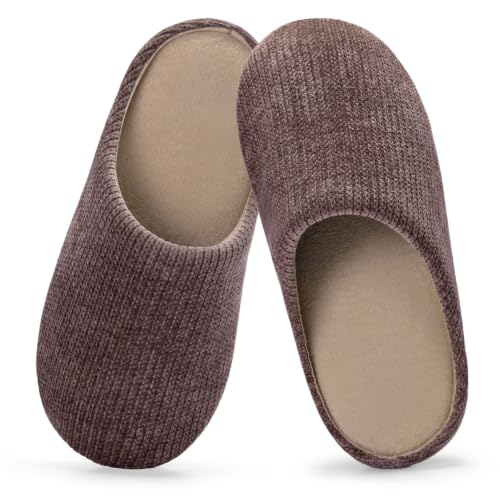
Fadezar Japanese Slippers, Machine Washable — Best Quiet Washable
Fadezar’s listing leads with three words that summarise summer slipper ownership: machine washable, quiet, breathable. The breathable lining distinguishes it from the open-toe pairs — this is the choice for people who want a covered foot without a winter lining’s heat, in a lightweight Japanese pattern that packs flat. Its listing mentions hotel and travel use, and that is a genuinely good idea: a washable, flat-packing house slipper is the difference between hotel carpet and your own standards.
At home it plays the same role in the guest room and the spare bathroom. The non-slip sole covers kitchen trips, the quiet step covers early mornings, and when a guest leaves, the pair goes in the wash and back in the drawer — a hygiene loop the fancier slippers in any house rarely get. If your summer slipper problem is less about heat and more about freshness and guests, start here.
Fadezar’s travel positioning works at home in one more way: a slipper designed to pack flat also stores flat, in the drawer or the suitcase by the door, which suits small flats where a shoe rack is a luxury. Its breathable lining makes it the covered-toe choice for spring and autumn shoulders of the season too — the pair that stays in service longest across the year, even if the open-toes win the hottest month.
Strengths
- Machine washable with a breathable lining
- Quiet, lightweight step for early mornings
- Packs flat — travel and guest-room friendly
Trade-offs
- Covered design ventilates less than the open-toe picks
- Lining’s exact fibre is not stated in the verified title
- Lightweight build prioritises packability over cushioning
| Detail | What the verified listing states |
|---|---|
| Upper | Breathable lining (fibre not stated) |
| Care | Machine washable |
| Sole | Non-slip |
| Use | Bedroom, hotel, travel (per listing) |
Best for: Guest rooms, travel and freshness-first households / Not suited for: Open-toe devotees who want maximum airflow
Check on Amazon — check price on Amazon

Dearfoams Women’s Leslie Terry Clog — Best Closed Toe
Not everyone wants an open toe — some people dislike the look, some have Raynaud’s-adjacent cold toes even in July, and some simply feel undressed in them. The Dearfoams Leslie is this guide’s answer: a closed clog whose summer credentials come from terry cloth, the towel fibre, which absorbs moisture and breathes in a way fleece and faux fur never will. It is washable, it has memory foam for the standing hours, and it comes in wide widths — a detail wide-footed buyers will know is rarer than it should be.
Set it honestly against the linen pairs: it will run warmer than any open-toe here, because physics does not negotiate. What it offers instead is the most cushioned, most conventional slipper experience that still belongs in a summer guide — the pair for air-conditioned houses, cooler climates and evening wear, rather than for a heatwave kitchen at noon.
The Dearfoams terry clog’s wide widths deserve a second mention because summer is when wide feet suffer most: heat swelling in a standard slipper becomes an evening ache, and a washable terry clog that comes in wide fittings is a genuinely kinder object. Its memory foam also makes it the evening pair of this guide — the one for the hours after dinner, when feet are tired and the house has cooled, rather than for the noon kitchen in a heatwave.
Strengths
- Terry cloth upper — absorbent and breathable for a closed toe
- Washable, with memory foam cushioning
- Wide widths available in the listing
Trade-offs
- Warmest option here — not a heatwave-first choice
- Women’s clog styling only
- Memory foam dries slowly after washing
| Detail | What the verified listing states |
|---|---|
| Upper | Terry cloth (per listing) |
| Style | Clog, closed toe |
| Cushioning | Memory foam |
| Fit | Wide widths (per listing); verified size 7-8, medium grey |
Best for: Closed-toe loyalists in air-conditioned or cooler homes / Not suited for: The hottest feet in the hottest kitchens
Check on Amazon — check price on Amazon
Comparison Table
| Pick | Badge | Key spec from verified listing | Best for |
|---|---|---|---|
| Japanese Style Linen House Slippers, Open Toe | Best Overall | Linen open-toe with anti-skid sole | Most households wanting the classic breathable summer slipper |
| Japanese Bamboo House Slippers for Summer | Best for Hot Feet | Bamboo summer slipper, easy-clean | Hot feet and freshness-first buyers |
| COCOMUSE Ultralight Open Toe Cotton-Linen Slippers | Best Ultralight | Cotton-linen open-toe, cloth bottom | Quiet, light summer wear on smooth indoor floors |
| EitCaton Unisex Linen House Slippers | Best Cushioned Summer Sole | Linen open-toe with memory foam, machine washable | Standing cooks and shared households |
| Fadezar Japanese Slippers, Machine Washable | Best Quiet Washable | Machine-washable quiet Japanese slipper | Guest rooms, travel and freshness-first households |
| Dearfoams Women’s Leslie Terry Clog | Best Closed Toe | Washable terry clog, wide widths | Closed-toe loyalists in air-conditioned or cooler homes |
The table’s real divide is open versus closed. Open-toe linen, cotton-linen and bamboo designs ventilate; the terry clog covers. Choose by your house’s temperature and your own preference — every pick here is breathable for its style, washable or easy-clean, and strictly an indoor house slipper.
How to Choose Summer House Slippers: Breathability Without Going Barefoot
Why summer slippers are a materials decision
Winter slippers insulate; summer slippers must do the opposite — move heat and moisture away from the foot. The fibres that do this honestly are the ones in this guide: linen, which feels cool and dries fast; cotton-linen blends, which absorb sweat and wash easily; bamboo fibre, positioned for moisture handling and freshness; and terry cloth, which is literally towel material. Synthetic plush, fleece and faux fur trap heat by design and no ‘cooling’ label redeems them in August.
Construction matters alongside fibre. An open toe is the single most effective ventilation feature a slipper can have, because toes radiate a disproportionate share of foot heat. A cloth or thin soft sole sheds heat downward and weighs almost nothing. The summer slipper ideal is therefore mostly air held together by natural fibre — judge every candidate against that, and winter cosiness cues (deep pile, high backs, fur collars) become instant disqualifiers.
Open toe, closed toe and the honest middle
Open-toe slippers ventilate best and dry fastest after washing, and four of the six picks here use the design. Their costs are exposure — dropped objects, cold floors in air-conditioning, stubbed toes — and a look some people simply do not enjoy. Neither cost is trivial across a whole summer of daily wear.
Closed-toe summer slippers answer with fabric instead of exposure: the terry clog in this guide breathes through its material. The middle path is a covered slipper with a breathable lining, like the Fadezar, which suits guest and travel duty. Choose by your actual house: a hot, hard-floored home points open; a cool, air-conditioned one permits closed. Anyone who tells you one design wins everywhere is selling, not advising.
Soles: the indoor rule and its reasons
House slipper soles are soft, quiet and grippy on smooth floors — and wrong for pavement, gravel and wet grass, which chew them up and track the outdoors back in. Every pick in this guide is an indoor slipper, and keeping them indoors is what makes them last the season and stay hygienic. The anti-skid and non-slip claims here are about tile, wood and laminate, especially the summer hazard of wet kitchen and bathroom floors.
Within the indoor rule there is still a choice: cloth bottoms are silent and feather-light but grip least on wet tile and wear fastest; soft rubber-style soles grip best and survive the kitchen. Match the sole to your floors — smooth dry wood rewards the cloth pair; a busy wet kitchen demands the grippy ones — and never judge a house slipper by whether it could handle the garden path. That is a sandal’s job, and sandals are a different article.
Washing: the summer specification nobody lists first
A summer slipper worn on bare feet absorbs sweat daily. Within weeks, an unwashable summer slipper is a hygiene problem with a sole attached. That is why washability runs through this guide’s picks like a spine: machine-washable designs, easy-clean bamboo, washable terry. The routine is simple — wash weekly in high summer, dry fully before wearing, and rotate two pairs if you can, because a slipper that rests a day dries and airs in a way a daily-worn one never does.
Drying deserves its own sentence: memory foam layers, like those in the EitCaton and Dearfoams pairs, hold water longest. Squeeze, do not wring, and give foam pairs a full day of air. A damp foam slipper put back on warm feet is the fastest route to the odour every listing promises to resist.
Fit in the heat: feet swell, linen relaxes
Feet are measurably larger in the evening and in hot weather. Buy summer slippers true to size or a touch generous, try them at day’s end, and remember that linen and cotton uppers relax slightly across the first weeks while foam compresses. A summer slipper should stay on through a natural stride without toe-gripping — if you are curling your toes to keep it on, it is too big or too worn, and on stairs that becomes a safety issue rather than a comfort note.
Wide feet should note the Dearfoams’ wide widths explicitly; most Japanese-style linen slippers run unisex and moderately wide by design, which suits summer swelling. And replace summer slippers on condition, not sentiment: a flattened sole and a loose upper at season’s end means next summer starts with a fresh pair.
How to Keep Summer House Slippers Fresh
Summer slippers stay fresh with a rhythm, not a rescue. Set this routine in the first week and the odour, damp and wear problems mostly never happen.
- Rotate two pairs if you can, resting each pair a full day between wears to dry and air.
- Wash washable pairs weekly in high summer — follow the listing’s care, use a gentle cycle, and reshape while damp.
- Dry fully before wearing: unlined linen in hours, foam-containing pairs across a full day of air, away from direct heat.
- Squeeze foam pairs dry after washing rather than wringing, which tears foam and distorts the sole.
- Keep summer slippers indoors — one garden trip in soft soles tracks grit into every floor they touch afterwards.
- Check sole grip monthly on your kitchen floor; a polished-smooth soft sole is a retirement notice, not a challenge.
- Store the season’s pairs clean and dry in autumn, and inspect before next summer rather than assuming they survived the drawer.
If a pair develops odour despite washing, the usual cause is incomplete drying between wears, not the fibre. A full two-day air rest, in moving air, resets most pairs. What does not reset is a worn sole or a stretched upper — those are the honest signals to replace, and in a category this affordable, replacing on time is part of the system.
Two-pair rotation: the system behind every recommendation
Every judgement in this guide improves with two pairs. Rotation is not consumerist excess in summer footwear; it is the drying mechanism. A slipper worn daily never fully dries, and a slipper that never dries smells, degrades and feels clammy regardless of its fibre. Alternating days gives each pair its full dry, doubles the interval between washes per pair, and means a wash day never leaves you barefoot.
Rotate within the guide’s logic: an open-toe linen pair and the terry clog cover a summer between them — airflow for the hot days, coverage for the cool evenings — or two linen pairs in different colours for the committed minimalist. What does not work is a winter pair pressed into rotation; the fibres are wrong and no schedule fixes them.
Summer feet, hard floors and standing honestly
Bare feet on hard floors all summer has a cost that shows up as tired arches and sore heels by September, particularly for anyone who cooks, cleans or works from home standing. A house slipper’s thin layer is genuinely protective against that fatigue — not through structured support, which this guide does not claim for any pick, but through simple cushioning and a barrier against cold, hard surfaces.
That is the honest frame for the foam-containing picks here: the EitCaton and the Dearfoams cushion standing better than the unlined linen pairs, and for a home worker on hard floors that difference across eight hours is the purchase. Choose cushioning for standing, airflow for heat, and do not ask one pair to win both arguments in a heatwave.
The End of the Season: Judging, Storing and Replacing
Summer slippers should be audited in autumn, not discovered dead next June. Wash the pairs a final time, dry them completely, and then judge them coldly: sole grip worn smooth, upper stretched loose, foam flattened, or odour that survived a proper wash and a full dry — any one of these is a retirement, because next summer’s first heatwave is the worst moment to learn your slippers are finished. Storing a retired pair ‘just in case’ is how households end up wearing the worst footwear they own.
Pairs that pass the audit store clean, dry and uncompressed — not under a pile of winter boots, which crushes foam and creases linen into permanent folds. A drawer or a breathable bag, with the shape resting as it would on a foot, keeps a good pair good across the dark months. Note, literally if necessary, which pair served which person; summer households run on unlabelled pairs migrating between feet, and the audit is where the system resets.
Replacement buying is easiest in the same audit week, while the season’s lessons are fresh: which fibre your feet preferred, which sole your floors punished, which pair you reached for without thinking. That last pair is the answer to next summer, and buying its twin in autumn — or noting its name for spring — is the whole system working as designed.
Value: Two Pairs, One System, No Waste
The summer slipper system in this guide — two washable pairs in rotation — costs less across a season than the pattern it replaces: one unwashable pair worn daily, smelling by July, replaced in August by whatever the shop has left. Rotation is the entire trick. Each pair dries fully, washes half as often per pair, and reaches autumn with life left in it, so next summer starts with an audit instead of an emergency purchase.
Natural fibres repay their modest premium in the same arithmetic. Linen and cotton-linen survive weekly washing that would felt and crack synthetic cosiness within a season; bamboo and terry were chosen here for exactly that wash tolerance. A summer slipper’s life is measured in washes, not in months, and the fibres that wash are the fibres that last.
Buy the pair your floors and feet actually need, buy its twin when the first proves itself, and let the system run. The most expensive summer slipper is the third one — the replacement for the pair that was never allowed to dry.
A Note on Guests, Gifts and Spares
Summer slippers make an unusually practical gift precisely because they are sized forgivingly, used daily and rarely bought well for oneself. A linen open-toe pair in a neutral colour, given with the washing rhythm from this guide written on the card, will be used the same evening in most houses — a hit rate few gifts of any kind can claim. For a host gift in the hot months it beats flowers on usefulness and wine on originality, and it travels in a suitcase corner without a thought.
Keep one such pair in your own house for the guest who arrives in boots on a hot day. The moment a visitor’s feet meet a cool floor and a clean, breathable slipper, the house has made its argument about how it treats people. That pair should live washed and ready in the guest room, not in the household’s rotation — a spare that is always borrowed is not a spare, and the system this guide has built, of rotation, washing and honest retirement, applies to hospitality exactly as it applies to your own two pairs.
Which Pair for Which Summer?
Hot flat, hard floors, one pair only: the Japanese linen open-toe. It is the coolest construction here, dries fastest after its weekly wash, and its anti-skid sole covers the kitchen. If the budget stretches to a second pair later, add its twin for rotation rather than a different design.
Home worker standing on hard floors all day: the EitCaton, with the Dearfoams terry clog as the evening change. Foam earns its warmth penalty when the alternative is eight hours of bare feet on tile, and both pairs wash — the non-negotiable feature for foam in summer.
Guest room, travel bag and the spare bathroom: the Fadezar, bought in pairs. Washable, flat-packing, quiet and covered enough for any visitor’s preference, it is the hospitality pick — and the one most likely to come home from a trip and go straight back into service.
Common Buying Mistakes
Wearing winter slippers ‘one more summer’
Fleece and faux-fur linings in July mean sweaty feet, odour and a slipper that never dries. The season change is the product change: breathable natural fibres are not an upgrade, they are the correct tool.
Buying sandals or slides as house slippers
Outdoor soles track grit, mark floors and offer none of a house slipper’s quiet softness. This guide excluded them deliberately. Keep the categories separate and both last longer.
Ignoring washability at purchase
In summer, an unwashable slipper is a disposable one on a short clock. If the listing does not support washing or easy cleaning, assume a midsummer replacement and price accordingly — or choose a washable pair here.
Taking soft soles outdoors ‘just to the bin’
Grit embeds in soft and cloth soles in one trip and then sandpapers your floors for weeks. Keep a pair of outdoor shoes at the door and let the slippers stay what they are.
Buying tight, expecting no stretch
Heat swells feet and natural fibres relax. A summer slipper that is snug in the shop is a toe-gripping trip risk by August. Fit at day’s end, with room to spare.
Final Recommendation
Start with the linen open-toe pair — it is the design the whole category is a variation on, and for most houses it ends the search. If your feet run genuinely hot, the bamboo pair was designed for exactly you; if you stand for hours, the EitCaton’s washable foam earns its warmth; and if you simply refuse open toes, the terry clog keeps you covered without the fleece penalty.
Breathable fibre, indoor sole, weekly wash — hold those three and summer feet take care of themselves. Related reading from the slippers programme:
Final shortlist, ready to check: check price on Amazon (Japanese Style Linen House Slippers, Open Toe) check price on Amazon (Japanese Bamboo House Slippers for Summer) check price on Amazon (COCOMUSE Ultralight Open Toe Cotton-Linen Slippers) check price on Amazon (EitCaton Unisex Linen House Slippers) check price on Amazon (Fadezar Japanese Slippers, Machine Washable) check price on Amazon (Dearfoams Women’s Leslie Terry Clog).
Best Breathable Slippers Women Best Cool Indoor Slippers For Men Best Asian House Slippers Best Affordable House Slippers For Women
Frequently Asked Questions
What is the most breathable material for summer house slippers?
Linen is the standout — cool to the touch, moisture-absorbent and fast-drying — with cotton-linen blends close behind. Bamboo fibre designs are positioned for moisture and freshness, and terry cloth is the best closed-toe option. All four appear in this guide; synthetic plush and fleece are the materials to avoid.
Are open-toe slippers better for summer?
For ventilation, yes — toes radiate much of the foot’s heat, and an open toe simply lets it go. Closed-toe summer slippers can still work well when the fabric breathes, like the terry clog here, and they suit cooler or air-conditioned houses better.
Can I wear these slippers outside?
They are house slippers with indoor soles — soft, quiet and made for smooth floors. Brief doorstep steps will not destroy them, but regular outdoor use ruins the soles and tracks grit indoors. Keep a separate pair of outdoor shoes by the door.
How often should I wash summer slippers?
Weekly in high summer for washable pairs, with a full dry before wearing again — foam-containing pairs need the longest. Rotating two pairs makes the rhythm easy, because each pair gets its drying day without leaving you barefoot.
Why do my summer slippers smell even though I wash them?
Usually incomplete drying: a damp slipper put back on warm feet re-seeds odour faster than washing removes it. Give pairs a full rest day in moving air. If odour survives proper drying, the pair is at the end of its life.
Do summer slippers offer enough support for standing?
House slippers are light-support footwear. Of this guide’s picks, the memory-foam EitCaton and Dearfoams pairs cushion standing best. Anyone advised to wear structured support should follow that advice — this guide makes no medical claims for any slipper.
Are linen slippers durable enough for a whole summer?
For indoor use, yes — linen is a strong fibre that softens rather than weakens with washing, and a summer of indoor wear is well within its design life. What ends linen slippers is usually the sole or a stretched fit, not the upper. Judge them by the autumn audit in this guide rather than by the calendar.
Can summer slippers be worn with socks?
They can, and on cooler evenings many people prefer it — a thin cotton sock inside an open-toe linen slipper is a reasonable shoulder-season arrangement. If you find yourself in socks daily by midsummer, the honest reading is that your house is cool enough for the covered options in this guide, and you should let the terry clog carry more of the season.
How many pairs of summer slippers should one person own?
Two in rotation is the system this guide recommends: one on the feet, one drying or resting. A third pair earns its place only as a dedicated guest or travel pair, like the Fadezar here. More than that is a drawer problem, not a footwear strategy — slippers age by washing and wearing, and unworn pairs help neither.
What should I do if my summer slippers start to feel loose?
A summer slipper that has relaxed until your toes must grip to keep it on has reached the end of its safe life on stairs, however good its upper still looks. Natural fibres relax gradually across a season of heat and washing, and a small amount of that relaxation is normal and even comfortable; the line is crossed when your stride changes to manage the footwear instead of the footwear serving your stride. At that point the honest options are to retire the pair to flat-floor, single-room duty away from stairs, or to replace it — and in a category this affordable, replacement is the safer and usually the cheaper decision once your time and your ankles are priced in. Do not attempt to shrink a loose slipper back with hot water: the sole, the stitching and any foam layer will each respond differently, and the result is a distorted slipper that fits worse than the one you started with.

