Disclosure: airfryerkitchensupply.com is reader-supported. When you buy through links on our site, we may earn an affiliate commission at no extra cost to you.
Where to buy
All six slippers in this guide are available through Amazon: the JAEWOMO Japanese-style linen house slippers as the everyday all-rounder, the SKYTRAX Japanese bamboo house slippers for summer and tatami floors, the MAIXIEDE Japanese-style quiet house slippers for silent floors and sleeping households, the Epsion linen slippers with fleece lining for the cold months, the Fadezar Japanese slippers as the machine-washable pair, and the biroris plaid guest slippers, three pairs for the guest basket. Check the current price on Amazon for each, and check the size chart on the listing with unusual care — sizing is the one place this category reliably disappoints, and the buying guide below explains how to get it right the first time.
The best Asian house slippers come from a different philosophy of indoor footwear than the plush Western slipper. In Japanese and broader East Asian home culture, shoes come off at the door — always — and what replaces them is light, quiet, breathable, and easy to slip in and out of a dozen times a day. The design consequences are consistent: natural-fiber uppers like linen and cotton that breathe instead of insulating, low and flexible soles that are silent on wood and safe on tatami, open toes for summer airflow, and a minimalist profile that stores in a entryway row rather than a closet. A Western memory-foam slipper is a small armchair for the foot; an Asian house slipper is closer to a well-made sock with a sole — and for warm climates, hard floors, guest-heavy households, and anyone who finds plush slippers sweaty and clompy, it is simply the better tool. This guide covers the style’s main variations: linen everyday pairs, bamboo summer pairs, quiet-soled pairs, fleece-lined winter versions, washable pairs, and the guest slippers that the culture of the genkan — the entryway — makes essential.
One honest note on what this style is not. These are indoor slippers in the true sense: their soles are made for floors, not pavements, and their support is minimal by design. Feet that need arch support or orthotic structure for medical reasons should treat these as the light house layer they are, not as therapy footwear — the guide makes no medical claims for any pick, and the comfort case for Asian slippers rests on breathability, quiet, and ease, which are virtues enough.
In this guide
Quick Picks
- Best Overall — JAEWOMO Japanese Style Linen House Slippers: breathable linen, open toe, anti-skid sole, unisex minimalist design for daily wear. Check on Amazon
- Best for Summer and Tatami — SKYTRAX Japanese Bamboo House Slippers: bamboo construction that keeps feet dry and cool, odor-resistant, with a soft non-slip sole made for tatami and indoor floors. Check on Amazon
- Best Quiet — MAIXIEDE Japanese Style Quiet House Slippers: closed toe, open back, and a sole designed to move silently across hard floors. Check on Amazon
- Best for Winter — Epsion Linen Slippers, Fleece Lining: the Japanese linen profile with a fleece lining and anti-skid soft sole for cold floors. Check on Amazon
- Best Washable — Fadezar Japanese Slippers: machine washable, breathable lining, non-slip and lightweight, in unisex sizing. Check on Amazon
- Best for Guests — biroris Plaid House Slippers, 3 Pairs: foldable, washable guest slippers that stock the entryway basket the way the culture intends. Check on Amazon
How These Picks Were Chosen
Authenticity of style came first: candidates had to be genuine house slippers in the Asian tradition — natural-fiber, low-profile, indoor-soled — rather than Western plush slippers with an Asian adjective attached, and the exclusions mattered as much as the inclusions. Ballet and dance slippers, sandals, slides, and flip-flops are not house slippers in this sense and were kept out, as were massage and post-surgery footwear claims. Within the style, picks were spread across its real jobs: the daily linen pair, the bamboo summer pair, the quiet pair, the winter lined pair, the washable pair, and the guest set. Sole behavior was weighed heavily, because a house slipper’s sole decides its safety on hard floors and its kindness to them — anti-skid grip for kitchens and bathrooms, soft quiet compounds for wood and tatami. Sizing honesty was checked in each listing’s presentation, and the reviews flag where a maker sizes in ranges that demand attention. Finally, every pick was verified against Amazon’s catalog before receiving a link.
One framing note before the reviews: this category’s listings are dominated by small specialist makers rather than global brands, and that is normal for the style — the picks were therefore judged on their stated materials, sole design, and construction as verified in the catalog, not on brand recognition. Where a listing’s sizing presentation is unusually detailed or unusually easy to misread, the review says so, because in this category the size chart is part of the product.
The 6 Best Asian House Slippers

JAEWOMO Japanese Style Linen House Slippers — Best Overall
The JAEWOMO is the style in its purest everyday form: a linen upper in an open-toe design, a lightweight build, an anti-skid sole, and a minimalist profile that suits women and men alike across the bedroom, living room, and guest room. Linen is the correct default fiber for this category and this slipper shows why — it breathes in warm rooms, absorbs a little moisture instead of sealing it in, dries quickly, and wears a creased, natural look that suits the aesthetic rather than fighting it. The open toe keeps air moving across the foot in the months when closed slippers become small saunas, and the sole’s grip answers the one legitimate safety question of hard-floor living, which is the kitchen and bathroom tile. As the single pair to buy first in this style, it makes no mistakes: it is the slipper that lives by the door and gets worn ten times a day without being thought about, which is exactly the job description.
Strengths
- Breathable linen upper in the classic open-toe Japanese profile — cool, light, quick to dry.
- Anti-skid sole for the hard floors this style is worn on.
- Unisex minimalist design that works as a personal pair or a household standard.
Trade-offs
- Open toe and linen are warm-season virtues; cold floors in winter want the fleece-lined pick.
- Minimal cushioning by design — this is a light house layer, not a padded slipper.
- Sizing in this category runs by ranges; measure and read the chart rather than assuming your usual size.
Choose the JAEWOMO for daily wear in warm and temperate homes, for hard-floor houses, and as the first pair for anyone converting from Western slippers or from socks. It is also the natural household standard — the pair to buy in multiples so that the entryway, the bedroom, and the bathroom each have their own, in the way these slippers are actually lived in.
Best for: everyday wear on hard floors in warm and temperate homes / Not suited for: cold winter floors or cushion-seekers
Check on Amazon — check price on Amazon and the size chart before ordering.

SKYTRAX Japanese Bamboo House Slippers — Best for Summer and Tatami
Bamboo is the summer specialist among slipper materials, and this SKYTRAX pair is built on its two real properties: bamboo fiber wicks and releases moisture so feet stay dry rather than clammy, and it resists the odor buildup that summer house footwear is prone to — the listing’s odor-resistant framing reflects the material’s genuine behavior. The sole is soft and non-slip, specified for tatami and indoor floors, which tells you the design’s intent precisely: this is the slipper for the traditional room and the hot month, gentle on woven flooring that a hard or gritty sole would damage, and quiet in the bargain. The blue colorway linked here is sized for women in the larger sizes; the range covers the household with attention to the chart. On a July evening, in a house where the floors are wood and tatami and the air is warm, this is the pair that feels like wearing almost nothing — which is the summer ideal the whole style aspires to.
Strengths
- Bamboo construction that keeps feet dry and cool, with natural odor resistance for summer wear.
- Soft non-slip sole designed for tatami — floor-kind as well as foot-kind.
- Easy to clean, suiting a slipper that will be worn bare-footed daily in hot weather.
Trade-offs
- A warm-season specialist; it offers little insulation when floors turn cold.
- Bamboo uppers are less forgiving of rough treatment than linen canvas — a gentle-care pair.
- Size presentation in the listing is detailed and must actually be read; ranges span systems.
Buy the bamboo pair for summer, for tatami rooms, for humid climates, and for anyone whose feet run hot in every other slipper they have tried. It also serves the guest room in summer houses particularly well, since its cleanability and odor resistance suit footwear that multiple feet will wear across a season.
Best for: summer, tatami floors, and hot feet / Not suited for: winter wear or heavy-duty use
Check on Amazon — check price on Amazon and match the size range carefully.

MAIXIEDE Japanese Style Quiet House Slippers — Best Quiet
Noise is the underrated slipper specification, and this MAIXIEDE pair is designed around it explicitly: a quiet sole, a closed toe with an open back, and an easy slip-on profile in beige. The use case is recognizable to anyone who has lived in an apartment with hard floors, a house with a sleeping baby, a partner on night shifts, or a floor that carries sound to the neighbors below — the early riser padding to the kitchen in slippers that announce every step is a small domestic villain, and a soft, silent sole is the reform. The closed toe distinguishes it from the open-toe picks: toes stay covered and warmer, the look is tidier for households that receive guests in their slippers, and the open back preserves the instant on-and-off that the style requires. Beige is the right color for the concept — the quiet slipper is a background object, and it dresses like one.
Strengths
- Quiet sole design for apartments, sleeping households, and sound-carrying floors.
- Closed toe with open back — coverage and warmth with instant slip-on ease.
- Neutral beige minimalist styling that suits a tidy, guest-ready home.
Trade-offs
- Closed toe breathes less than the open-toe linen and bamboo picks in high summer.
- The quiet sole prioritizes silence and floor-kindness over outdoor durability — indoor only, truly.
- Light colors show entryway dirt sooner; this pair rewards a clean door zone.
Choose the MAIXIEDE for apartments, for homes with infants and shift workers, for anyone whose mornings start before the household’s, and for covered-toe preference in the middle seasons. It is the considerate slipper — the one whose main feature is that nobody else in the house ever notices it — and in shared living that is a feature of the first rank.
Best for: quiet floors, apartments, and sleeping households / Not suited for: high-summer heat or outdoor steps
Check on Amazon — check price on Amazon before ordering.

Epsion Linen Slippers, Fleece Lining — Best for Winter
Every strength of the linen slipper becomes a liability in January, and the Epsion is the style’s answer: the same Japanese linen profile and soft anti-skid sole, with a fleece lining added where the cold actually arrives, which is through the floor. Cold floors are a specific misery — a house can be warm in the air and still leech heat through tile and wood at ankle level — and a lined house slipper addresses it without escalating to the full plush boot of Western winter wear, which many converts to this style were trying to escape. The fleece makes this the pair for the cold months and the cold rooms: the bathroom at dawn, the kitchen on stone, the entryway where the door’s weather lives. It keeps the family’s virtues — lightness, quiet, easy on-and-off — and trades the summer pairs’ airflow for warmth with open eyes.
Strengths
- Fleece lining that answers cold floors while keeping the light Japanese profile.
- Soft anti-skid sole, safe on the tile and wood where winter slippers work hardest.
- Linen outer keeps the natural-fiber character of the style through the cold season.
Trade-offs
- A seasonal pair — it will be too warm for the months the open-toe picks serve.
- Fleece linings hold moisture longer after washing; allow full drying time.
- Women’s sizing focus in this listing; household buyers should check the range per person.
Buy the Epsion as the winter half of a two-season slipper wardrobe, alongside any open-toe pick for summer — the pairing this guide quietly recommends for cold-climate households. It is also the right single pair for homes that are simply cold-floored year-round, where the fleece earns its keep in every month rather than two.
Best for: winter and cold-floored homes / Not suited for: warm seasons or hot feet
Check on Amazon — check price on Amazon and the women’s size range.
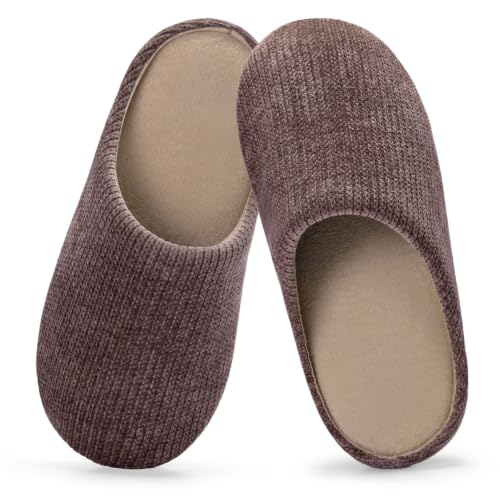
Fadezar Japanese Slippers — Best Washable
Hygiene is the house slipper’s quiet problem: worn bare-footed, daily, for months, a slipper accumulates what feet produce, and most slippers respond badly to the obvious remedy. The Fadezar is machine washable by design — the whole pair goes in the wash and comes out a slipper again — with a breathable lining, a non-slip lightweight build, and unisex sizing that runs across women’s and men’s ranges in the one listing. That washability reorganizes ownership: the slipper stops being a consumable you tolerate until it smells and becomes a garment you maintain like the socks it replaced. For guest pairs, for households with children, for anyone fastidious about what lives by the door, and for warm climates where bare feet and daily wear make washing a weekly rather than seasonal question, this is the pair the guide points to. The brown colorway linked here hides the entryway’s evidence between washes with equal practicality.
Strengths
- Fully machine washable — the hygiene answer for bare-footed daily wear.
- Breathable lining and lightweight non-slip build in the classic Japanese profile.
- Unisex size ranges in one listing, simplifying household and guest buying.
Trade-offs
- Washable construction is a light build; it will not out-plush or out-cushion heavier slippers, by design.
- Frequent washing fades any color over time — brown is the forgiving choice, and it is the linked one.
- Air-dry the pair after washing to protect the sole bond, which costs a day’s rotation planning.
Choose the Fadezar for guest service, for warm climates, for fastidious households, and as the pair for anyone who has ever thrown away a still-sound slipper for reasons of smell. Bought in a small rotation — two pairs per person — the washable slipper becomes the easiest footwear system in the house to keep genuinely clean.
Best for: hygiene-first households, guests, and warm climates / Not suited for: cushion-seekers
Check on Amazon — check price on Amazon and your size range in the chart.

biroris Plaid House Slippers, 3 Pairs — Best for Guests
The guest slipper is not an accessory in Asian home culture; it is the entryway’s whole point, and this biroris set is built for the role: three pairs of plaid open-toe house slippers, comfortable, washable, portable, and foldable, intended for the basket by the door. The details show the design’s thinking. Foldable and portable means the set stores compactly and travels — to the vacation house, the spa weekend, the hospital bag, the airplane, all the places the listing names. Washable means guest footwear can be genuinely cleaned between guests rather than merely offered. Plaid reads as intentional and hospitable rather than institutional, which matters more than it should: a guest offered a clean, decent-looking slipper feels welcomed, and a guest offered a worn disposable feels processed. Three pairs covers the ordinary traffic of a household that receives people — a couple visiting, a parent staying, a friend at the door in wet shoes.
Strengths
- Three pairs in one purchase — the guest basket stocked in a single order.
- Washable and foldable: hygienic between guests, compact in storage and travel.
- Plaid styling that looks hospitable rather than disposable.
Trade-offs
- Guest-weight construction — these are hospitality slippers, not a personal pair for a year of daily wear.
- Open-toe plaid design is unisex-casual; formal households may prefer the MAIXIEDE’s tidiness for their own feet.
- One size logic across the set means very small or very large guests are served approximately, as with all guest slippers.
Buy the biroris set if your home takes shoes off at the door and receives people — which is to say, if the guest slipper is a real institution in your house rather than a theory. It is also the traveler’s multipurpose buy: a pair for the suitcase, a pair for the guest room, a pair in reserve. Households that rarely host should put their money in a personal pair instead and borrow the concept later.
Best for: shoe-free households that host / Not suited for: daily personal wear
Check on Amazon — check price on Amazon before ordering.
Comparison Table
| Pick | Badge | Key spec | Best for |
|---|---|---|---|
| JAEWOMO Linen House Slippers | Best Overall | Linen open toe, anti-skid sole, unisex | Everyday wear |
| SKYTRAX Bamboo House Slippers | Best for Summer and Tatami | Bamboo, odor-resistant, soft tatami-safe sole | Summer, tatami rooms |
| MAIXIEDE Quiet House Slippers | Best Quiet | Quiet sole, closed toe open back, beige | Apartments, sleepers |
| Epsion Linen Slippers Fleece | Best for Winter | Linen with fleece lining, anti-skid soft sole | Cold floors |
| Fadezar Japanese Slippers | Best Washable | Machine washable, breathable, unisex ranges | Hygiene, guests |
| biroris Plaid Guest Slippers x3 | Best for Guests | 3 pairs, foldable, washable, portable | Hosting households |
How to Choose Asian House Slippers
Start with the season and the floor, because together they decide most of the purchase. Warm season and hard floors point to the open-toe natural fibers — linen for the everyday, bamboo for the hottest months and the most delicate floors. Cold floors demand the fleece lining. Between seasons and in covered-toe households, the quiet closed-toe design is the middle answer. A household in a genuinely four-season climate should expect to own two pairs per person across the year; the style’s low cost and small storage make that a modest commitment, and the two-season wardrobe is how these slippers are actually worn in the cultures they come from, where a summer and winter pair is as normal as a summer and winter shoe.
Sizing is the second decision and the category’s one real hazard. Asian house slippers are frequently sized in ranges and in systems that do not map cleanly onto a US size taken for granted, and the listings in this guide present their sizes in different conventions — numeric ranges, dual women’s/men’s markings, and letter-free spans. The reliable method is unglamorous: measure your foot in centimeters, find the maker’s own chart on the listing, and order by the chart rather than by your usual size, allowing a small margin because a house slipper worn slightly roomy is comfortable while one worn tight defeats the style’s ease. Households buying for guests should stock the middle ranges, which serve the broadest span of visitors, and accept the approximation that guest footwear has always involved.
Sole choice is the third decision, and it is a safety and stewardship question at once. For kitchens, bathrooms, and any floor that sees water, anti-skid grip is the requirement — the JAEWOMO and Epsion carry it explicitly. For tatami and fine wood, softness is the requirement: a soft sole that will not grind grit into a woven mat or scratch a finish, as the bamboo pair is designed for. For apartments and sleeping houses, silence is the requirement. Most households have two of these floors, which is another quiet argument for the two-pair wardrobe — the kitchen pair and the bedroom pair are different tools, and this style is inexpensive enough to let them be.
Guest sizing deserves its own sentence, because it is where thoughtful households get caught. Guest slippers serve feet you cannot measure, in sizes you must guess, and the workable convention is the middle: stock the central ranges, which fit the broad middle of visitors acceptably, and keep one larger pair in reserve for the tall brother-in-law whose feet end every sizing system. A guest slipper worn a size loose is a hospitality success; the same slipper a size tight is a small embarrassment at the door, so when the basket is stocked, err large.
Finally, decide the hygiene system before the slippers arrive. Bare-footed daily wear means the pair will need washing or airing on a rhythm; washable designs like the Fadezar and the guest set make that a machine’s job, while linen and bamboo pairs air well and spot-clean gracefully. A small rotation — even two pairs alternating days — extends each pair’s life and freshness more than any material upgrade. The entryway completes the system: a row or basket at the door, outdoor shoes off, house slippers on, is not a ritual affectation but the mechanism by which these slippers keep a home’s floors — and themselves — clean.
How to Care for Asian House Slippers
Natural fibers ask for air more than for water. The daily habit that keeps linen and bamboo slippers fresh is simply to stand them where air moves — not sealed in a shoe cabinet while damp from the day’s wear — and to let a worn pair rest a day when a rotation allows it. Sweat is moisture plus salt, and both leave the fiber happily given ventilation and time; most of what owners perceive as a slipper “wearing out” in its first season is actually a slipper that was never allowed to dry fully between wearings in a humid house.
Washing follows the material. The machine-washable picks go in a gentle cycle, ideally in a laundry bag that keeps their shape and protects the sole bond, and come out to air-dry completely before returning to the door — a day on a rack, not an hour. Linen pairs that are not machine-rated do well with a hand wash in lukewarm water and a thorough air-dry; bamboo pairs prefer the gentlest treatment of all, a wipe and air rather than a soaking, since their woven structure is the delicate one in this guide. Fleece linings take the longest to dry and reward patience — a lining put away damp will announce itself, and the announcement is hard to reverse. Across all materials, keep slippers out of sustained direct sun while drying, which fades natural dyes and stiffens natural fibers, and never put a pair on a radiator, where soles warp and bonds weaken.
Travel deserves a line in the care section, because these slippers travel better than any other footwear in the house. A linen or washable pair weighs almost nothing, flattens against a suitcase wall, and converts a hotel room’s questionable carpet from a socks-or-shoes dilemma into the comfort of home — a use the guest set’s foldable design anticipates explicitly. Travelers who adopt the habit rarely give it up, and it is one more reason the washable picks punch above their weight in this guide: the travel pair and the guest pair want the same virtues, and several households will find one purchase serving both baskets.
Retirement is by condition: a sole worn smooth where it once gripped, an upper torn at the toe fold, a smell that survives a proper wash and a full dry. In the cultures these slippers come from, they are understood as renewable household goods — replaced without ceremony when their service is done, which is part of why the style favors honest materials at honest prices over indestructible construction. A pair that has carried a household through its seasons has done its work completely.
House Slippers for Hardwood, Tile, and Carpeted Homes
Floor type quietly reorders this guide’s priorities, and a paragraph per surface saves returns. On hardwood, the enemies are noise, grit, and slipping in that order for most households: the quiet MAIXIEDE and any soft-soled pick protect the finish and the household’s peace, while the anti-skid linen pair is the safer choice in the kitchen’s splash zone where wood meets water. Hardwood also rewards the indoor-only rule most visibly, since a single gritty outdoor trip can scratch what a year of soft soles would not. On tile and stone — the bathroom and kitchen floors — grip and warmth divide the year: anti-skid soles are non-negotiable where floors get wet, and the fleece pair transforms winter tile from a shock into a surface. Tile is also where a washable pair earns double, since bathroom slippers live closest to the household’s hygiene frontier and benefit most from the machine.
Carpeted homes invert the logic. Carpet forgives noise and cold, supplies its own cushion, and asks only that the slipper not drag — a smooth, light sole that glides rather than grips, and a low profile that does not catch on pile. In carpeted houses the open-toe linen pair is the year-round default for many owners, since the floor itself provides the warmth the fleece exists for elsewhere. Mixed-floor homes, which is most homes, return to the guide’s recurring answer: let the rooms vote separately. A kitchen pair and a bedroom pair, each right for its floor, cost little in this category and end the compromises that a single pair imposed on every surface eventually produces — the too-grippy slipper on carpet, the too-smooth one on wet tile, the too-warm one in July.
Common Buying Mistakes
The first mistake is sizing by habit — ordering a usual US size against a listing whose chart runs in ranges or centimeters, and receiving a slipper that is wrong in the one dimension that cannot be adapted to. Measure, and use the maker’s chart. The second is wearing indoor slippers outdoors: a trip to the mailbox on pavement and grit destroys a soft sole’s kindness and imports the outdoors onto the floors the whole system exists to protect. Keep a separate pair of outdoor shoes at the door for the yard and the bin run. The third is expecting Western support from an Eastern design — these are light house layers, and a buyer who needs structured arch support should solve that need with the right footwear rather than asking a linen slipper to be an orthotic. Fourth is buying one pair for a bare-footed daily wearer with no rotation and no washing plan, then blaming the style for the predictable freshness problem. And the last is forgetting the guests: a shoe-free house without guest slippers makes visitors choose between their socks and their dignity, and the small basket by the door — the cheapest hospitality in this entire guide — is the difference between a rule that feels welcoming and one that feels like an inspection.
Final Recommendation
For the everyday pair, buy the JAEWOMO linen slippers. For summer and tatami, the SKYTRAX bamboo; for quiet floors, the MAIXIEDE; for winter, the fleece-lined Epsion; for washable hygiene, the Fadezar; and for the door basket, the biroris three-pair guest set. Cold-climate households should pair a summer and winter pick per person, as the style intends. Set up the door when the slippers arrive — a basket or a low shelf, the outdoor shoes on their side of the line, the house pairs on theirs — because the system, not any single pair, is what these slippers are for, and a system installed on day one becomes a habit by the end of the first week. Related guides: Best Affordable House Slippers For Women, Best Allday Comfort Slippers, Best American Made Slippers, and Best Arch Support Indoor Slippers.
Linen, Bamboo, and Cotton: The Natural Fibers Compared
The style’s three working fibers look similar in a listing photograph and behave differently on a foot, so the comparison is worth making plainly. Linen, from flax, is the durability champion: it is the strongest of the three when wet, it absorbs moisture and releases it quickly, and it has a dry, crisp hand that softens over months into something like a favorite shirt’s collar. Its creasing is character rather than damage. A linen slipper is the pair that looks much the same after a year of door duty, which is why it anchors this guide as the everyday pick and the winter pair’s outer. Bamboo fiber is the comfort specialist: softer against bare skin than linen from the first wear, excellent at moving moisture away from the foot, and naturally resistant to the odor that bare-footed summer wear produces. Its trade is delicacy — bamboo rewards the gentle owner and the air-dry, and it is the fiber of a seasonal pair rather than a workhorse.
Cotton, the third fiber, appears across this category in cloth-bottom and canvas forms — the sweat-absorbing cloth sole of traditional indoor slippers is cotton’s home ground. Cotton is the softest and most familiar hand-feel, absorbs the most moisture of the three, and also holds it the longest, which makes cotton pairs the coziest in a dry, cool house and the slowest to freshen in a humid one. The practical synthesis most households arrive at mirrors the guide’s selection: linen for the year-round standard, bamboo for the hot months, fleece-lined linen when the floors turn cold, and washable construction wherever hygiene outranks fiber romance. None of the three asks for synthetic help to do its job, and that — a slipper made of plant fiber, a simple sole, and nothing else — is the tradition’s quiet argument with the modern plush slipper, made without a word of marketing.
The Entryway System: How These Slippers Are Actually Lived In
To understand why the picks in this guide are shaped as they are, picture the system they belong to. At the door of a shoe-free home there is a boundary — in Japanese homes, the genkan, a step down where outdoor shoes stay — and a small ordered world on the home side of it: a row of house slippers for the family, a basket or shelf of guest slippers, and often dedicated pairs that never leave their rooms, bathroom slippers being the classic case, kept separate for hygiene in a way Western homes rarely bother with. The slippers in this guide map onto that system one to one. The personal pairs are the linen, bamboo, quiet, and fleece picks, chosen by season and floor. The guest pairs are the washable and multipack picks, chosen for other people’s feet and other people’s comfort. The system’s logic is hygiene and hospitality at once: floors stay clean because outdoor grit stops at the boundary, feet stay comfortable because the right light shoe waits on the right side of it, and guests are folded into the household’s way of living instead of being exempted from it awkwardly.
Adopting the system in a Western home requires no renovation — a mat, a small bench or basket, and the decision that the boundary exists. What it returns is disproportionate: floors that need cleaning half as often, carpets that age at half the rate, a house that is quieter at the level of footsteps, and the small daily pleasure of a ritual that marks the transition from the public world to the private one. The slippers are the cheapest component of that system and the one this guide can hand you directly; the rest is arrangement. Households that adopt even the simple version — door basket, personal pairs, outdoor shoes that stay at the door — consistently report that the slippers stopped being a purchase and became a practice, which is the highest compliment this category of object can earn.
Related guides
- Best Children's House Slippers
- Best Room Lounging Slippers
- Best Slippers For Baxters Neuropathy
- Best Slippers For Cancer Patients
Frequently Asked Questions
Can children wear these house slippers?
The style suits children well — light, easy to kick on and off, kind to floors — provided the size is genuinely a child’s or the smallest range truly fits, since a child in an oversized slipper is a tripping hazard on stairs. Households with young children should size carefully, prefer anti-skid soles, and treat stairs as the place where any loose house footwear deserves supervision, whatever its tradition.
What makes Asian house slippers different from regular slippers?
Philosophy and construction. They are lighter, lower, quieter, and more breathable — natural-fiber uppers like linen and bamboo, flexible indoor soles, and an easy slip-on profile — designed for homes where shoes come off at the door and slippers are worn for hours across hard floors. Western slippers prioritize plush cushioning and warmth; Asian house slippers prioritize airflow, silence, and floor-kindness.
How do I get the size right when ordering?
Measure your foot’s length and use the maker’s own size chart on the listing rather than your usual US size. This category sizes in ranges and mixed conventions, and the chart is the only reliable map. A house slipper should fit with a little ease — slightly roomy is comfortable, tight defeats the style — so when a measurement falls between ranges, the larger is usually the better wear.
Can I wear Asian house slippers outside?
They are indoor footwear. Their soft soles are made to be kind to floors and quiet on them, and pavement, grit, and wet ground will wear them quickly and carry dirt back inside — defeating the system they belong to. Keep outdoor shoes at the door for the yard, the mailbox, and the bins, and let the house slippers stay what they are.
Are these slippers good for tatami floors?
The style originates alongside tatami, and the soft-soled picks — the bamboo SKYTRAX above all — are designed for it: no hard edges, no grit-catching tread, no weight concentration that dents the weave. The entryway discipline matters as much as the slipper: a sole that has been outside brings the grit that damages tatami, which is why the indoor-only rule is absolute in a tatami home.
How often should house slippers be washed or replaced?
Wash washable pairs whenever they stop smelling fresh — weekly in warm climates and heavy use, less often in cool ones — and air natural-fiber pairs daily by simply not sealing them away damp. Replace a pair when its sole has worn smooth, its upper tears, or a full wash and dry no longer restores it. In the tradition these come from, slippers are renewed seasonally without fuss, and their modest cost is designed for exactly that rhythm.
How many pairs of house slippers should a household own?
Per person, one pair in a mild climate and two across a four-season year — a breathable pair and a lined pair — with a second washable pair in rotation for anyone fastidious. Per household, add the guest supply: a multipack by the door sized to your ordinary visitor traffic. The style’s small cost and smaller storage make this arithmetic painless, and the entryway system described in this guide runs on exactly these quantities.
Are open-toe or closed-toe house slippers better?
Open toe breathes and suits warm rooms, bare summer feet, and households that run warm; closed toe covers, tidies, and warms, suiting cooler rooms, guest-facing neatness, and anyone who dislikes exposed toes on cold floors. Neither is better in general — the season and the household decide, which is why this guide carries both and why four-season homes so often end up owning one of each.
Do Asian house slippers have arch support?
Generally no — the style is deliberately minimal, a light layer between foot and floor, and this guide makes no support or medical claims for any pick. Most wearers find the natural, flexible feel comfortable for ordinary house hours. Feet that need structured support should use footwear designed for it indoors and treat these slippers as what they are: the breathable, quiet, everyday house shoe of a different tradition.

