Disclosure: airfryerkitchensupply.com is reader-supported. When you buy through links on our site, we may earn an affiliate commission at no extra cost to you.
Where to buy
Every purifier below was verified against Amazon’s own catalog data before earning a link, and every pick publishes a genuinely low noise figure in its listing — or, in the one case where it does not, we say so plainly. Start with the BLUEAIR Blue Pure 511i Max for the quietest verified night mode in this group, the Rabbit Air MinusA2 if third-party asthma-and-allergy certification matters most to you, or the LEVOIT Core 300S-P for the strongest value in a smart, quiet bedroom unit.
- BLUEAIR Blue Pure 511i Max — Check on Amazon
- Rabbit Air MinusA2 SPA-780N — Check on Amazon
- BLUEAIR Blue 211i Max — Check on Amazon
- LEVOIT Core 300S-P — Check on Amazon
- LEVOIT Vital 200S-P — Check on Amazon
- WINIX 5510 — Check on Amazon
Shopping for the best quiet air purifiers for asthma means holding two requirements at once, and the tension between them is the whole story of this category. The machine has to move enough air through a high-grade filter to keep bedroom levels of dust, pollen, and dander down — the airborne particles that make nights harder for sensitive sleepers. And it has to do that work quietly enough to run all night, every night, a few feet from the bed, because a purifier that gets switched off for being loud cleans nothing. Let us be equally clear about what these machines are not: an air purifier is a comfort and air-quality appliance, not a medical device. It does not treat asthma, it does not replace any part of a care plan, and nothing in this guide should be read as a health claim. What a good purifier does is filter airborne particles out of the room’s air, hour after hour — and for many households, that steadier, cleaner-feeling bedroom air is exactly the goal.
With that framing set, the selection logic is simple. Every pick here uses true HEPA-grade or HEPA-class filtration (including BLUEAIR’s HEPASilent technology, which pairs electrostatic and mechanical filtration), every pick publishes either a low decibel figure or a certified asthma-and-allergy-friendly designation, and every pick is sized for real bedrooms and living rooms rather than desktop novelty use. Noise figures below come straight from the verified listing titles: 19 dB night mode on the Blue Pure 511i Max, 23 dB on the Blue 211i Max, 24 dB on the LEVOIT Core 300S-P’s sleep mode, and 27 dB on the Vital 200S-P. The WINIX 5510 does not publish a decibel figure in its title, and we flag that rather than borrowing a number from elsewhere. Decibels are also not the whole acoustic story — fan tone, rattles, and how a unit behaves at medium speed matter, and the reviews discuss that honestly for each machine.
In this guide
Quick Picks
| Pick | Badge | Why it stands out | Link |
|---|---|---|---|
| BLUEAIR Blue Pure 511i Max | Best Overall | 19 dB night mode — the quietest verified figure here — with coverage up to 1,138 ft² | Check on Amazon |
| Rabbit Air MinusA2 SPA-780N | Best Certified for Sensitive Homes | Certified asthma & allergy friendly (AAFA), ultra quiet, wall-mountable | Check on Amazon |
| BLUEAIR Blue 211i Max | Best for Large Rooms | 23 dB with coverage up to 3,235 ft² and AHAM verification | Check on Amazon |
| LEVOIT Core 300S-P | Best Value Smart Pick | 24 dB HEPA sleep mode, AHAM verified, WiFi and Alexa control | Check on Amazon |
| LEVOIT Vital 200S-P | Best for Pet Homes | 27 dB quiet bedroom operation, air quality monitor, up to 1,875 ft² | Check on Amazon |
| WINIX 5510 | Best for Odors and Smoke | True HEPA plus high-deodorization carbon filter, up to 1,881 ft² | Check on Amazon |
How These Picks Were Chosen
The candidate pool started with every major HEPA purifier line sold for bedroom and whole-room use, and three filters were applied in order. First, filtration grade: only machines with true HEPA, HEPA-class, or HEPASilent filtration stayed in, because the particles that matter for sensitive sleepers — fine dust, pollen, pet dander — are exactly what lesser “HEPA-type” filters let through at higher rates. Ozone-generating ionizer-only gadgets were excluded entirely; this category has no place for appliances that add a respiratory irritant to the air in the name of cleaning it. Second, verified quiet: a pick had to publish a low-speed or sleep-mode noise figure in its listing (19–27 dB across five of the six picks), hold an asthma-and-allergy-friendly certification (the Rabbit Air), or — in the WINIX’s case — earn its slot on filtration and carbon capacity with the missing decibel figure disclosed openly. Third, honest sizing: coverage figures quoted are the manufacturers’ own “in 1 hour” room ratings from the verified titles, and the buying-guide section below explains how to translate those headline numbers into realistic bedroom sizing using AHAM’s guidance rather than taking the biggest number at face value.
Two standing rules of this site also shape the list. There are no fixed prices, because purifier pricing swings with promotions and filter bundles; check the current price on Amazon for the exact unit. And there are no star ratings or review counts, because they change constantly. What does not change is the engineering: filter type, published noise, stated coverage, and physical size — and those are the facts the reviews below are built on. Where a specification is not stated in the verified listing data, the spec box says “not stated” instead of guessing.
The 6 Best Quiet Air Purifiers for Asthma
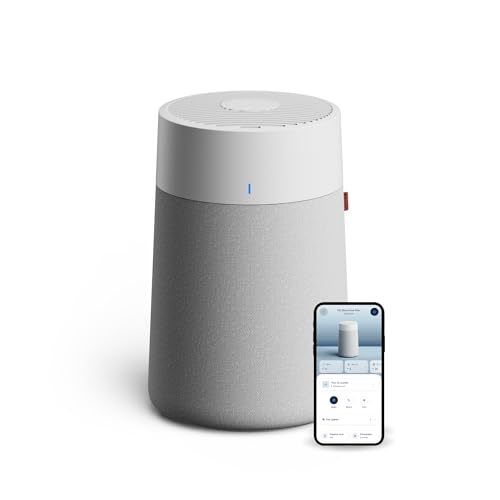
1. BLUEAIR Blue Pure 511i Max — Best Overall
The Blue Pure 511i Max earns the top slot on the strength of one verified number: a 19 dB night mode, the quietest published figure in this roundup. At that level, the machine’s sound sits below the ambient noise of most bedrooms — below a quiet refrigerator hum, below most HVAC registers — which means it can run at your bedside through the night without becoming the thing you listen to. BLUEAIR’s HEPASilent filtration combines electrostatic charging with mechanical filtration, an approach that lets the unit move air with less fan pressure than a purely mechanical HEPA design, and that is the engineering reason it can be this quiet while still covering rooms up to 1,138 ft² on its higher settings. The 360-degree air intake means placement is forgiving: it does not need to face into the room, and it pulls air evenly in a corner or beside a dresser. Auto mode and WiFi app control round out a machine designed to be set once and forgotten.
Strengths
- 19 dB night mode — the lowest verified noise figure of any pick here
- HEPASilent filtration for dust, pollen, and pet dander with 360° intake
- Auto mode and WiFi app control for genuinely hands-off nightly running
Trade-offs
- HEPASilent is HEPA-class filtration, not a sealed true-HEPA box; purists who want a traditional true HEPA element should look at the LEVOIT or WINIX picks
- The 1,138 ft² figure is a 1-hour rating; realistic continuous bedroom sizing is smaller (see the buying guide)
- Replacement filters are proprietary to BLUEAIR
Spec box
- Filtration: HEPASilent (electrostatic + mechanical)
- Noise: 19 dB night mode (as stated in listing title)
- Stated coverage: up to 1,138 ft²
- Intake: 360°
Who is it for? The light sleeper in a sensitive household — the person who has tried a purifier before and banished it to the hallway because the low setting still whirred. This is the machine most likely to survive at the bedside. It sits in the mid-to-premium tier, and what the money buys is precisely that combination of certified-room coverage and near-silent nights.
Best for: bedrooms where the purifier must run all night at close range. / Not suited for: buyers who insist on a traditional sealed true-HEPA element, or very large open-plan spaces.

2. Rabbit Air MinusA2 SPA-780N — Best Certified for Sensitive Homes
The MinusA2 is the certification pick. Its verified listing states that it is certified asthma & allergy friendly — the AAFA certification program, which tests purifiers against defined standards for reducing airborne allergens — and its catalog data confirms coverage up to 815 sq ft with a multi-stage HEPA filtration system. For a household that wants an outside body’s stamp rather than a brand’s own adjectives, this is the only machine in the roundup carrying that designation, and it is why the Rabbit Air earns its slot despite a premium-tier price position. The design is the other differentiator: the MinusA2 is a slim panel (7 x 21.4 x 20.25 inches, 19.4 pounds per the verified catalog data) that can stand on the floor or mount flat on a wall — a genuine option in small bedrooms where floor space near the bed is already spoken for. The listing describes it as ultra quiet and Wi-Fi enabled; notably, it does not publish a decibel figure in the title, and we flag that honestly rather than inventing one.
Strengths
- Certified asthma & allergy friendly (AAFA), as stated in the verified listing
- Wall-mountable slim panel design saves bedroom floor space
- Multi-stage HEPA filtration with coverage up to 815 sq ft
Trade-offs
- No decibel figure published in the listing title — “ultra quiet” is the brand’s description, flagged here as unverified numerically
- Premium tier positioning; the most expensive-feeling spec in this group
- Wall mounting needs a suitable wall position near an outlet
Spec box
- Filtration: HEPA, multi-stage (per catalog data)
- Certification: AAFA certified asthma & allergy friendly
- Stated coverage: up to 815 sq ft (per catalog data)
- Dimensions / weight: 7 x 21.4 x 20.25 inches / 19.4 pounds
- Noise figure: not stated in listing title
The honest summary: you are paying for certification and design. If a third-party asthma-and-allergy-friendly designation is the deciding factor — for peace of mind, or because a clinician suggested choosing certified appliances — the MinusA2 is the pick, and its quiet reputation is long-standing even if the number is not printed in the title. If decibels-per-dollar is your metric, the BLUEAIR and LEVOIT picks below publish harder numbers for less money.
Best for: households that want AAFA-certified equipment and a wall-mount option in a small bedroom. / Not suited for: buyers who want a published decibel figure before purchasing, or large open-plan rooms.

3. BLUEAIR Blue 211i Max — Best for Large Rooms
Most quiet purifiers top out at bedroom scale. The Blue 211i Max is the exception: its verified title states coverage up to 3,235 ft² with a quiet 23 dB operating figure, AHAM verification, WiFi, and auto mode. That combination — open-plan coverage at bedroom noise levels — is rare, because moving enough air for a great room usually means a fan you can hear from the sofa. BLUEAIR’s HEPASilent approach is again the enabler: electrostatic assistance lets the fan work less hard for the same particle capture. In practice, this is the pick for the main living space of a sensitive household, for a large primary bedroom with a sitting area, or for an open-plan apartment where one machine has to serve the whole footprint overnight. The washable pre-filter is a small but real ownership plus, catching the coarse dust and hair load before it reaches the main filter.
Strengths
- 23 dB published noise with up to 3,235 ft² stated coverage — the best quiet-to-coverage ratio here
- AHAM verified performance figures
- Washable pre-filter reduces the load on the main filter
Trade-offs
- Oversized for a small bedroom; you pay for capacity you will not use
- HEPASilent is HEPA-class, not a traditional sealed true-HEPA element
- Larger footprint than the 511i Max; check the space beside furniture
Spec box
- Filtration: HEPASilent
- Noise: 23 dB (as stated in listing title)
- Stated coverage: up to 3,235 ft²
- Verification: AHAM Verified (as stated in listing title)
Position it as the one-machine solution: premium-mid tier, bought once for the biggest room in the home. Households that run it in the living area by day and roll it to the bedroom at night get the most from the capacity — though at that point, honestly assess whether two smaller machines would serve you better than one hero unit.
Best for: large bedrooms, open-plan apartments, and main living spaces in sensitive households. / Not suited for: small bedrooms, or true-HEPA purists.
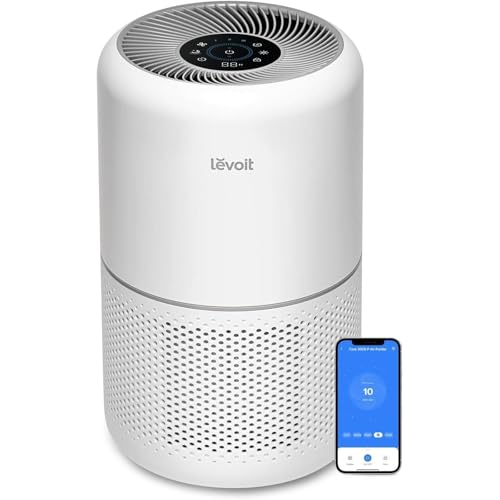
4. LEVOIT Core 300S-P — Best Value Smart Pick
The Core 300S-P is the machine that made quiet HEPA purification a mainstream purchase, and the verified listing shows why: a HEPA sleep mode rated at a quiet 24 dB, AHAM verification, coverage for rooms up to 1,073 ft² on the title’s 1-hour rating, plus smart WiFi with Alexa control in a compact tower. The sleep mode is the feature that matters for this search — at 24 dB the Core 300S-P sits in the same acoustic class as the BLUEAIR picks, and the smart controls let you schedule it to ramp up an hour before bed and settle into sleep mode as you turn in, which is exactly the usage pattern that keeps bedroom air steady without anyone touching the machine. LEVOIT’s 3-in-1 filter format keeps replacement simple, and the Core line’s enormous installed base means filters are easy to find.
Strengths
- 24 dB HEPA sleep mode, AHAM verified, stated in the verified title
- Smart scheduling via WiFi and Alexa suits a set-and-forget nightly routine
- Compact tower footprint fits beside a nightstand
Trade-offs
- Realistic continuous-duty sizing is a bedroom, not the full headline 1,073 ft²
- At medium and turbo speeds it is an ordinary audible purifier — the quiet claim is a sleep-mode claim
- Filter replacements are a recurring cost to budget for
Spec box
- Filtration: HEPA, 3-in-1 filter
- Noise: quiet 24 dB in sleep mode (as stated in listing title)
- Stated coverage: up to 1,073 ft²
- Verification: AHAM VERIFIDE (brand’s spelling in title)
This is the value anchor of the roundup: budget-to-mid tier positioning with a verified quiet mode and verified performance. For a first purifier in a sensitive sleeper’s bedroom, it is the lowest-risk purchase on this page.
Best for: first-time buyers, smart-home households, and bedrooms up to a generous size. / Not suited for: large open-plan spaces, or anyone expecting turbo speed to be quiet too.

5. LEVOIT Vital 200S-P — Best for Pet Homes
Pets change the purifier brief: the particle load is heavier (dander plus hair), it is continuous, and odor joins the list of complaints. The Vital 200S-P answers with a washable pre-filter to catch the coarse load, a HEPA sleep mode for allergies as stated in its title, an air quality monitor that lets auto mode respond when the dog shakes off by the door, and a published quiet-bedroom figure of 27 dB. That 27 dB is a touch higher than the Core 300S-P’s sleep mode — an honest trade for the larger capacity, with stated coverage up to 1,875 ft² on the 1-hour rating, which translates to confident duty in large bedrooms and living rooms where the pets actually live. The washable pre-filter deserves emphasis: in a pet home it is the difference between the main HEPA filter lasting its intended life and choking early on hair.
Strengths
- 27 dB quiet bedroom operation with HEPA sleep mode, stated in the verified title
- Washable pre-filter protects the main filter in high-hair households
- Air quality monitor with auto mode and AHAM verification
Trade-offs
- 27 dB is slightly louder than the quietest picks here — noticeable to the lightest sleepers at close range
- Pre-filter needs regular washing in pet homes; skipping it shortens main filter life
- Bigger box than the Core 300S-P; measure the intended spot
Spec box
- Filtration: HEPA with washable pre-filter
- Noise: 27 dB quiet bedroom operation (as stated in listing title)
- Stated coverage: up to 1,875 ft²
- Verification: AHAM VERIFIDE (brand’s spelling in title)
Mid-tier positioning, pet-household engineering. If the animals sleep in the bedroom — as they do in most homes that own this category of product — the Vital 200S-P is built for your actual particle load rather than a showroom’s.
Best for: homes with dogs or cats, especially where pets share the bedroom. / Not suited for: ultra-light sleepers who need the absolute lowest decibel figure.

6. WINIX 5510 — Best for Odors and Smoke
The WINIX 5510, the current generation of the long-running 5500-2 line, earns its place on filtration depth rather than on a noise headline. Its verified title states True HEPA filtration plus a high-deodorization carbon filter — a substantially larger activated-carbon stage than the thin carbon sheets in most competitors — with app support, auto mode, and coverage up to 1,881 ft² on the 1-hour rating. Carbon is what handles the gas-phase side of indoor air: cooking odors, wildfire smoke smell, and household VOCs that a particle filter cannot touch. For a sensitive household whose bad-air days are driven by smoke events or a busy kitchen, that carbon bed is the deciding feature. Now the honesty flag: the 5510’s listing title does not publish a decibel figure, so we do not print one. WINIX’s PlasmaWave-equipped predecessors built a reputation for quiet low speeds, but reputation is not verification — treat this pick as “filtration-first, noise not stated” and choose one of the five picks above if a published dB number is a hard requirement.
Strengths
- True HEPA plus a high-deodorization carbon filter — the strongest odor and smoke package here
- Large stated coverage up to 1,881 ft² with auto mode and app support
- Successor to a long-running, well-understood filter platform; replacements are widely stocked
Trade-offs
- Noise figure not stated in the listing title — flagged, not guessed
- The carbon filter is a consumable; heavy smoke seasons shorten its life
- Larger, more utilitarian design than the BLUEAIR or Rabbit Air picks
Spec box
- Filtration: True HEPA + high-deodorization carbon filter
- Stated coverage: up to 1,881 ft²
- Noise figure: not stated in listing title
- Controls: app support, auto mode
Mid-tier positioning with a premium filtration stack. Buy it for the carbon, keep it for the coverage, and place it where its (unpublished) low-speed sound is least likely to matter — a living room or a bedroom’s far corner rather than the nightstand.
Best for: smoke-prone regions, odor-sensitive homes, and large rooms needing carbon filtration. / Not suited for: buyers who require a verified decibel figure, or bedside placement for very light sleepers.
Comparison Table
| Pick | Badge | Key spec | Best for | Link |
|---|---|---|---|---|
| BLUEAIR Blue Pure 511i Max | Best Overall | 19 dB night mode, up to 1,138 ft², HEPASilent | Bedside all-night running | Check on Amazon |
| Rabbit Air MinusA2 SPA-780N | Best Certified for Sensitive Homes | AAFA certified asthma & allergy friendly, wall-mountable, up to 815 sq ft | Certification-first buyers | Check on Amazon |
| BLUEAIR Blue 211i Max | Best for Large Rooms | 23 dB, up to 3,235 ft², AHAM verified | Open-plan spaces | Check on Amazon |
| LEVOIT Core 300S-P | Best Value Smart Pick | 24 dB sleep mode, AHAM verified, WiFi/Alexa | First purifier purchase | Check on Amazon |
| LEVOIT Vital 200S-P | Best for Pet Homes | 27 dB, washable pre-filter, up to 1,875 ft² | Dander and hair loads | Check on Amazon |
| WINIX 5510 | Best for Odors and Smoke | True HEPA + high-deodorization carbon, up to 1,881 ft²; noise not stated | Smoke and odor control | Check on Amazon |
How to Choose a Quiet Air Purifier for a Sensitive Bedroom
Size by AHAM guidance, not by the headline number. The coverage figures in listings — “up to 1,875 ft²” — are typically the room size the machine can cycle once per hour at top speed. AHAM’s long-standing rule of thumb for smoke CADR is the two-thirds rule: choose a CADR at least two-thirds of the room’s square footage for effective particle reduction with several air changes per hour. A 200-square-foot bedroom therefore wants roughly 135+ CADR on the speed you will actually run — and the speed you will actually run at night is the quiet one, whose CADR is lower than turbo. Practical translation: buy one size up from your room’s minimum, then run it on the quiet setting with capacity to spare. Every pick in this guide comfortably covers a standard bedroom on that basis; the Blue 211i Max and WINIX 5510 extend the same logic to living spaces.
Read decibel claims like an engineer. A dB figure without a stated speed is marketing. The figures in this guide are sleep-mode or night-mode figures — the speeds you will use overnight — which is the honest comparison for this search. Also remember the decibel scale is logarithmic: 27 dB is not “a bit” louder than 19 dB in perception terms, but both sit below typical bedroom ambient noise (roughly 30 dB in a quiet home), which is why all five published figures here count as genuinely quiet. Placement matters as much as the number: a purifier on a hard floor in a corner sounds louder than the same unit on carpet mid-wall, because corners reinforce low-frequency fan tone.
Choose the filter for your particle problem. Dust, pollen, and dander are particle problems — HEPA-grade filtration is the answer, and pre-filters extend the main filter’s life by catching hair and coarse dust first. Odors, smoke smell, and VOCs are gas problems — they need activated carbon, and the amount of carbon matters: the WINIX 5510’s high-deodorization carbon bed is a different class of solution from a carbon-impregnated sheet. If your bad days are pollen days, prioritize HEPA and quiet; if they are smoke days, prioritize carbon; many sensitive households need both and should read the WINIX and BLUEAIR reviews above side by side.
Prefer certification where it exists. AHAM verification means the CADR figures were independently tested. The AAFA’s asthma & allergy friendly certification (the Rabbit Air MinusA2 in this guide) tests the appliance against defined allergen-reduction standards. Neither certification turns a purifier into a medical device — but both are stronger evidence than a brand’s own adjectives, and this guide weights them accordingly.
Budget for the filter, not just the machine. A purifier’s real cost is the machine plus replacement filters over its life. Check the replacement interval and the filter’s price class before buying; a bargain machine with expensive, short-lived filters is not a bargain by year two. Washable pre-filters (Vital 200S-P, Blue 211i Max) trim that ongoing cost meaningfully in dusty or pet-heavy homes.
How to Set Up and Run Your Purifier for Quieter, Cleaner Nights
Placement and routine decide whether a good purifier actually delivers. Step 1: Position the unit in the bedroom, not the hallway — purifiers clean the air around them, and a closed bedroom door turns the room into the treated zone. Keep it at least a few inches from walls and curtains so intake and exhaust are unobstructed; the 511i Max’s 360° intake is the most forgiving here. Step 2: Run it before you need it. Start the purifier on a higher speed one to two hours before bed to pull the day’s particle load down, then drop it to sleep or night mode as you turn in; smart models like the Core 300S-P can automate exactly this schedule. Step 3: Keep it running. Air purification is a continuous process — particles re-enter on clothing, bedding, and every opened door — so the quiet mode exists to make 24/7 running livable. A purifier used only during symptoms is a purifier used too late. Step 4: Maintain the pre-filter. Vacuum or wash it monthly (more often with pets); a clogged pre-filter forces the fan to work harder, which makes the machine both louder and less effective — the two failures this search cares most about. Step 5: Replace the main filter on the maker’s schedule, and write the date on the filter frame with a marker so the schedule survives memory. Step 6: Support the machine with basics: keep bedroom windows closed on high-pollen nights, wash bedding regularly, and vacuum with the purifier running so disturbed dust gets captured instead of resettling.
Common Buying Mistakes
Believing a purifier treats asthma. It does not. A purifier filters airborne particles; it is a comfort appliance that supports a cleaner-feeling room, not a medical device and not a substitute for any care plan. Buy it for what it verifiably does.
Sizing by the headline coverage number. “Up to 3,000 ft²” describes one air change per hour at full speed. Size with the AHAM two-thirds rule against the speed you will actually run, and buy a size up.
Judging quiet by the turbo figure — or by no figure. Compare sleep-mode decibels. If a listing publishes no noise figure at all, treat quiet as unproven, exactly as this guide flags the WINIX 5510.
Buying an ionizer gadget for a sensitive bedroom. Cheap ionic and ozone devices can add respiratory irritants to the air. Stick to mechanical HEPA-grade filtration from established makers.
Hiding the purifier. A unit boxed in behind furniture or run only when guests visit cleans very little. Placement in the room, running continuously, is the entire mechanism.
Ignoring filter replacement costs. The machine is the down payment; filters are the mortgage. Price the replacement filter before you buy the purifier.
Final Recommendation
For most sensitive sleepers, the BLUEAIR Blue Pure 511i Max is the buy: the quietest verified night mode in this roundup at 19 dB, coverage to spare for any bedroom, and set-and-forget auto operation — check the current price on Amazon. If third-party certification is your deciding factor, the Rabbit Air MinusA2 carries the AAFA asthma & allergy friendly designation and a wall-mount design no other pick matches — check the current price on Amazon. For the smartest value, the LEVOIT Core 300S-P pairs a 24 dB sleep mode with AHAM verification and scheduling, and for pet households the Vital 200S-P’s washable pre-filter is worth its slightly higher 27 dB — check the current price on Amazon. Continue your research with our sibling guides: Best Air Purifiers For Asthma, Best Air Purifiers For Asthmatics, Best Asthma Air Purifiers Room, and Best Pillows For Asthmatics.
CADR, Air Changes, and What the Numbers on the Box Actually Mean
Three numbers compete for your attention on every purifier listing, and they are not interchangeable. CADR — Clean Air Delivery Rate — is the volume of filtered air the machine delivers, measured separately for tobacco smoke, dust, and pollen, and it is the only figure AHAM independently verifies. Higher CADR means faster particle removal, full stop. Coverage area is a derived claim: manufacturers take a CADR and convert it into a room size, but they choose the air-change assumption themselves, which is why one brand’s “1,875 ft²” and another’s “450 ft²” can describe similar machines. The common convention in the titles quoted in this guide is one air change per hour at top speed — a gentle standard. Health-oriented guidance generally aims for four to five air changes per hour in the room where a sensitive person sleeps, which is the arithmetic behind the two-thirds rule in the buying guide above. Decibels are measured at a stated fan speed, and because fan noise rises steeply with speed, the sleep-mode figure is the only one relevant to overnight use. A machine that is 19 dB on night mode and 55 dB on turbo is, for this search, a 19 dB machine — provided its night-mode CADR still suits the room, which is why this guide pairs every noise figure with the sizing discussion rather than ranking by decibels alone.
One more term deserves a plain explanation: air changes per hour (ACH). If a purifier’s CADR, converted to cubic feet per hour, equals the room’s volume, that is 1 ACH — the room’s air has passed through the filter once. Particles are removed probabilistically, not in a single sweep, so more changes per hour means lower steady-state particle levels. This is also why running a purifier continuously on a quiet low speed beats running it occasionally on turbo: steady filtration holds the level down around the clock, while intermittent blasts let particles rebuild between sessions.
The Purifier Is One Part of a Quieter, Cleaner Bedroom
Households shopping this search get the best results when the purifier is treated as the centerpiece of a small system rather than a standalone fix. Bedding is the closest particle source to a sleeper: wash sheets weekly in hot water, and consider allergen-barrier encasements for the mattress and pillows, which physically separate the sleeper from the dust load that accumulates inside bedding over years. Flooring is next: a vacuum with a sealed HEPA system, run while the purifier is on, captures what cleaning stirs up; hard floors with a washable rug beat wall-to-wall carpet in a sensitive sleeper’s room, because carpet is a particle reservoir no vacuum fully empties. Humidity is the third lever: indoor humidity held in a moderate band discourages both dust-mite activity and mold, and a simple hygrometer tells you which side of the band your bedroom sits on. Pets are a household decision, not a product decision — but if animals share the bedroom, the washable-pre-filter picks in this guide (the Vital 200S-P above all) cope measurably better with the hair load. None of this replaces medical care, and this guide deliberately makes no health claims. It is simply the practical context in which a quiet, correctly sized purifier does the job it is actually built to do: keep the air in one room steadily filtered, all night, without being heard.
Filter Economics: What Each Pick Costs You After the Purchase
A purifier’s purchase price is the down payment; its filters are the subscription, and the six picks differ more here than their stickers suggest. Pre-filters are the cheap defense: washable pre-filters (fitted to the Vital 200S-P and Blue 211i Max in this guide) cost nothing but minutes — vacuum or rinse them monthly, more often with pets — and every gram of hair and coarse dust they catch is a gram the main filter does not have to hold. Neglect them and the main filter’s life shortens while the fan works harder and louder: the two failures this search cares about, arriving together. Main HEPA and HEPASilent filters run on six-to-twelve-month rhythms depending on model and air load; the honest way to compare ownership cost is to price the replacement filter for each model you are considering and divide by its rated life, before the machine is bought. Carbon stages exhaust by saturation, not by calendar: in wildfire season or a heavy cooking household, the WINIX 5510’s generous carbon bed is both its advantage (more capacity) and its recurring cost (a bigger consumable). Certification interacts with economics too: AHAM-verified CADR figures let you size correctly the first time, and correct sizing is money — an undersized machine run on turbo wears its filter faster and cleans less than a larger machine loafing on its quiet setting. The pattern across this guide is consistent: the cheapest purifier to buy is rarely the cheapest to own, and the models with washable pre-filters and verified figures give you the most control over the years after checkout.
A First-Week Routine for a New Bedroom Purifier
The first week decides whether a purifier becomes invisible infrastructure or a returned experiment, so run it deliberately. Days one and two: place the unit in the bedroom per the setup section, run it on a higher speed while you are out or in another room, and let it pull the room’s standing particle load down without asking you to listen to it work. Days three and four: introduce the sleep or night mode at bedtime and notice it honestly — most sleepers adapt within two nights, and the ones who do not should experiment with placement (farther corner, on carpet, intake unobstructed) before concluding the machine is too loud; placement changes perceived noise more than one speed step does. Day five: set the schedule or auto mode so the pre-bed ramp and the overnight quiet mode happen without you, because a routine that requires nightly decisions is a routine that lapses. Days six and seven: check the pre-filter — in a dusty or pet-heavy room you will already see the load it is carrying, which calibrates your monthly cleaning rhythm — and write the main filter’s install date on its frame. By the end of the week the machine should have disappeared into the room’s background, which is the entire point: the best quiet purifier is the one you stop noticing while it keeps the air steadily filtered.
Where Not to Put a Purifier: Placement Mistakes That Waste a Good Machine
Placement errors quietly undo good purchases, and four recur constantly. Do not box the unit in: a purifier wedged between a wall and a bookcase, or run inside a closet with the door ajar, recirculates its own cleaned air in a tiny pocket while the room’s air goes untreated — give intake and exhaust the clearance the maker specifies, and remember the 511i Max’s 360-degree intake still needs open air around it. Do not exile it to the hallway for a bedroom problem: purification is local, doors are barriers, and the machine cleans the space it sits in — the bedroom unit belongs in the bedroom. Do not place it beside the pollution source you are trying to escape in a way that short-circuits the room — next to a litter box or a smoking spot, the sensor-driven auto modes will surge constantly while the sleeper’s zone benefits least; source control first, purifier for the room second. Do not set it on thick carpet with its intake underneath or its body unstable: several tower designs draw air low, and a plush rug can strangle the intake while making the unit rock. A hard, level surface with air on all sides, in the room where the sensitive sleeper actually sleeps, running on the schedule from the setup section — that unglamorous formula is worth more than the difference between any two picks in this guide.
Frequently Asked Questions
Can an air purifier help with asthma?
An air purifier is not a medical device and does not treat asthma. What it verifiably does is filter airborne particles — dust, pollen, pet dander, smoke particles — out of indoor air, which many households find makes bedrooms feel more comfortable. Anyone managing asthma should follow their clinician’s guidance and treat a purifier as an air-quality appliance alongside that plan, never as a replacement for it.
How quiet is quiet enough for a bedroom purifier?
Look for a published sleep-mode or night-mode figure at or below roughly 30 dB. The verified figures in this guide run from 19 dB (BLUEAIR Blue Pure 511i Max night mode) to 27 dB (LEVOIT Vital 200S-P). Below about 30 dB, most people perceive the machine as quieter than the room itself. Always compare the low-speed figure, since that is the speed the machine will run at overnight.
What size purifier does a bedroom need?
Use AHAM’s two-thirds rule: the unit’s smoke CADR should be at least two-thirds of the room’s square footage. For a 200 sq ft bedroom that means roughly 135 CADR or more on a usable speed. Because quiet speeds move less air than turbo, buying one size up and running it low is the standard strategy — it is quieter and cleans more than a small unit straining at full speed.
HEPA, true HEPA, HEPASilent — what is the difference?
True HEPA is a mechanical filter standard capturing 99.97% of particles at 0.3 microns. “HEPA-type” filters are lesser products that borrow the name. HEPASilent is BLUEAIR’s hybrid approach, combining electrostatic charging with mechanical filtration to reach HEPA-class particle capture with lower fan pressure — which is how the BLUEAIR picks achieve their low decibel figures. All six picks in this guide use HEPA-grade or HEPA-class filtration; none is a mere HEPA-type filter.
How often do purifier filters need replacing?
It varies by model and by your air: main HEPA filters commonly run six to twelve months, carbon filters can exhaust sooner in smoky conditions, and pre-filters should be vacuumed or washed monthly. Follow the specific maker’s schedule, mark the install date on the filter, and treat a clogged pre-filter as urgent — it makes the machine louder and weaker at the same time.
Should the purifier run all night, or all day?
Continuously is best. Particles constantly re-enter a room on clothes, bedding, and airflow from the rest of the home, so purification is a holding action, not a one-time cleaning. The practical pattern is a higher speed for an hour or two before bed, then the quiet sleep mode overnight — a schedule the smart picks in this guide can run automatically.


