Disclosure: airfryerkitchensupply.com is reader-supported. When you buy through links on our site, we may earn an affiliate commission at no extra cost to you.
Where to Buy
This guide looks at pump driven espresso machines through the pump itself — how it builds pressure, how that pressure is controlled, and what it does to the coffee. Every linked model below was verified against Amazon’s catalogue data for this site before inclusion, with brand and model matched exactly.
- Rancilio Silvia — check price on Amazon
- CASABREWS CM5418 — check price on Amazon
- Breville Bambino (BES450) — check price on Amazon
- De’Longhi La Specialista Arte (EC9155M) — check price on Amazon
- Nuova Simonelli Oscar II — check price on Amazon
- De’Longhi Dinamica (ECAM35020B) — check price on Amazon
Pump specifications in listings describe maximum pump ratings, not the pressure in your cup, and prices shift with promotions. Use the links to check the current price on Amazon and to confirm the exact version of a model, because several of these machines are sold in more than one configuration.
The best pump driven espresso machines share a defining trait that separates them from every steam toy and pod gadget: an electric pump does the work of extraction. Inside almost every home machine that pump is one of two designs. A vibratory pump — small, affordable, found in most home machines — pulses water forward with an oscillating piston. A rotary vane pump — larger, quieter, plumbed into café machines and a few prosumer home models — pushes water with a spinning vane and delivers smoother, easily regulated pressure. Understanding which pump a machine uses, and what surrounds it, tells you more about how it will brew than any marketing number on the box.
This guide is organised around that engineering. Each pick below was chosen to illustrate a different point in pump-driven design: a traditional Italian boiler machine built around a vibratory pump, a gauge-equipped compact that shows its pump’s work in real time, a fast-heating thermoblock design, a grinder-integrated model, a heat-exchanger machine that brews and steams at once, and a fully automatic that hides the same pump technology behind one-touch controls. If the general pump roundup is about which machine to buy, this one is about why the pump-driven design behaves the way it does — and which expression of it fits your kitchen.
A note on scope before the picks: this guide deliberately stays with machines a home buyer can actually purchase and verify today. The rotary-pump prosumer class — plumbed, quiet, café-bred — is discussed in the guide sections as context, because the leading examples could not be verified through this site’s catalogue channel and we do not link what we cannot verify. What remains is not a consolation list: vibratory-pump machines, intelligently surrounded by boilers, exchangers and control electronics, are what nearly every great home espresso setup in the world actually runs on.
In this guide
Quick Picks
Six pump driven machines, six different engineering answers to the same question. The shortlist first; the pump-focused reviews follow.
Rancilio Silvia — Best Traditional Pump-Driven Design. The archetypal home pump machine: a vibratory pump feeding a brass boiler and group, built like café equipment in miniature and famously durable. Check the current price on Amazon.
CASABREWS CM5418 — Best Gauge-Equipped Compact. A compact 20-bar pump machine with a built-in pressure gauge, so you can watch the pump’s extraction zone on every shot — rare feedback at this level. Check the current price on Amazon.
Breville Bambino (BES450) — Best Fast-Heat Pump Design. Breville’s ThermoJet design wrapped around a 15-bar pump: ready in seconds, with low-pressure pre-infusion that treats the puck gently before the pump ramps. Check the current price on Amazon.
De’Longhi La Specialista Arte (EC9155M) — Best Assisted Manual. A pump machine with a built-in grinder, guided tamping and active temperature control — pump-driven espresso with the two hardest steps engineered to be repeatable. Check the current price on Amazon.
Nuova Simonelli Oscar II — Best Heat-Exchanger Machine. A pour-over prosumer machine whose heat exchanger lets the pump brew and steam at the same time — the closest thing to a café workflow in a home body. Check the current price on Amazon.
De’Longhi Dinamica (ECAM35020B) — Best Automatic Pump-Driven. The same pump technology hidden inside a bean-to-cup automatic: grind, tamp and extraction happen behind a panel, with a panarello wand for milk drinks. Check the current price on Amazon.
How These Picks Were Chosen
Selection for this guide started with the pump and worked outward. We verified each model against Amazon’s catalogue data — brand, model and machine type matched exactly — and then asked what the machine teaches about pump-driven design: pump type, pressure control, heating architecture and how those choices reach the cup. A machine earned its place by being a clear, purchasable example of one engineering approach, not by repeating the same vibratory-pump formula six times.
Two honesty rules shaped the list. First, rotary vane pumps — the café standard — appear in very few home machines, and the best-known examples could not be verified through the API for this site, so they are discussed in the guide section rather than sold to you as picks; every linked pick here is a verified vibratory-pump machine, which is the technology that actually dominates homes. Second, headline bar ratings were ignored as a selection criterion, for reasons the pressure section below explains in full.
We also deliberately mixed price tiers and ages of design. Pump-driven technology is mature, so a twenty-year-old architecture built well — the Silvia is the proof — competes honestly with this year’s electronics, and a guide that only listed new releases would misrepresent how this category actually works.
- Every linked ASIN verified against Amazon catalogue data for this site
- Picks chosen to represent distinct pump-system architectures, not to repeat one formula
- Rotary-pump home machines discussed honestly as prose, because they could not be listing-verified for linking
- No fixed prices or star ratings printed — both change too often to state honestly
The 6 Best Pump Driven Espresso Machines
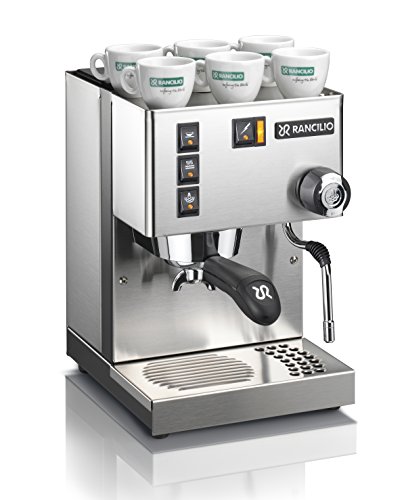
Rancilio Silvia — Best Traditional Pump-Driven Design
The Silvia is the machine pump purists measure others against. Its vibratory pump feeds a generously sized brass boiler for its class, the group head is commercial-derived, and the whole machine is steel, brass and intent — no screen, no automation, nothing between you and the extraction. It suits owners who want the classic pump-driven ritual and a machine that can be repaired indefinitely. It does not suit the impatient: heat-up takes a while, there is no gauge or temperature display, and steam comes only after the boiler switches modes.
Strengths
- Brass boiler and group give the thermal stability vibratory-pump machines are judged by
- Commercial-grade steam wand produces genuinely dry, powerful steam
- Legendary repairability — parts and knowledge are everywhere
Trade-offs
- No pressure gauge or PID — temperature management is manual technique
- Single boiler means a wait between brewing and steaming
- Demands a good grinder and consistent routine to show its best
| Machine type | Manual pump-driven espresso machine |
| Pump | Vibratory pump |
| Boiler | Single brass boiler |
| Group | Commercial-style brass group head |
| Milk system | Articulating commercial steam wand |
The Silvia demonstrates what a vibratory pump can do when the rest of the machine respects it. Vibratory pumps deliver pressure in pulses and their flow falls as pressure rises, which is why small machines can feel harsh; the Silvia’s boiler mass and brass group smooth the result thermally, and the over-pressure valve keeps extraction in the zone where sweetness lives. Shots from a dialled-in Silvia have the density and clarity that made this machine a benchmark for over two decades.
Living with it means accepting its era. You will temperature-surf, you will wait for steam, and you will learn more about extraction in a month than an automatic machine teaches in a year. Owners who add a PID controller transform its consistency, which is part of the culture around this machine: it is a platform as much as a product. As a statement of what pump-driven espresso originally meant — pump, boiler, brass, skill — nothing in this guide is more honest.
Best for: traditionalists who want the classic pump-and-boiler machine and will master its routine / Not suited for: anyone wanting fast heat-up, gauges, or simultaneous brew and steam
Check on Amazon — check the current price on Amazon before you decide, because listings and bundles change.

CASABREWS CM5418 — Best Gauge-Equipped Compact
Most budget pump machines hide what the pump is doing; the CM5418 puts a pressure gauge on the front panel and lets you see whether your grind and dose have landed the extraction in the working zone. That feedback loop is exactly what a learner needs, and it comes in a stainless, compact body with a proper steam wand. It suits first-time owners who want to learn with training wheels visible. It is not a precision instrument — the gauge is a guide, not a laboratory readout, and temperature control is basic.
Strengths
- Built-in pressure gauge makes pump behaviour visible while you learn
- Compact stainless body with a real steam wand for milk drinks
- Simple controls keep the focus on grind, dose and timing
Trade-offs
- Gauge indicates a zone rather than exact brewing pressure
- Temperature stability is entry-level; shots vary more than boiler machines
- Brand support and accessory ecosystem are thinner than the Italian makers
| Machine type | Compact pump-driven espresso machine |
| Pump | 20-bar pump (rated) |
| Feedback | Built-in pressure gauge |
| Water tank | 34 oz removable |
| Milk system | Manual steam wand |
The gauge changes how you learn. On a blind machine, a fast sour shot could be grind, dose, distribution or temperature; on the CM5418 you watch the needle: low means the puck offered no resistance, high means it choked. Within a week that feedback teaches the relationship between grind fineness and pump pressure more effectively than any video. The pump itself is a typical compact vibratory unit — adequate pressure, modest flow — and the machine’s honest job is to be a teaching tool that also makes decent cappuccinos.
Expect the usual compact-machine compromises once the lesson is learned. The thermoblock-style heating is quick but less stable than a boiler across back-to-back shots, the drip tray and tank are small, and the wand needs purging discipline to texture milk well. As a first pump-driven machine whose feedback shortens the learning curve — and which costs far less than the Italian benchmarks — it is a rational, well-aimed design.
Best for: learners who want visible pressure feedback while mastering a pump machine / Not suited for: owners wanting boiler stability or a long-term accessory ecosystem
Check on Amazon — check the current price on Amazon before you decide, because listings and bundles change.
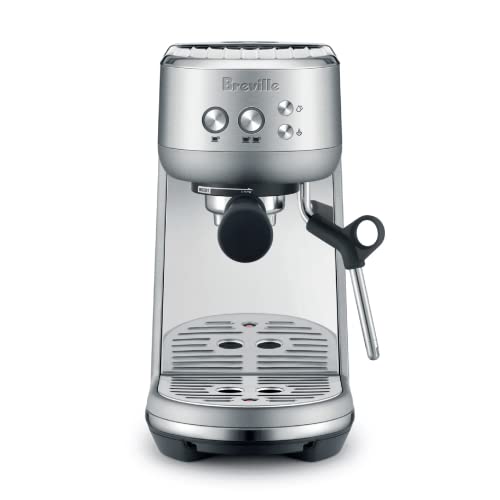
Breville Bambino (BES450) — Best Fast-Heat Pump Design
The Bambino is the pump-driven machine redesigned around a modern heating element. ThermoJet reaches brewing temperature in about three seconds, and the pump’s programme begins with a low-pressure pre-infusion that swells the puck before full pressure — a pump-control feature that used to live only on expensive machines. It suits espresso and americano drinkers who make one or two drinks at a time and value speed. Milk drinkers should note the steam wand is manual and modest, and there is no built-in grinder.
Strengths
- Near-instant heat-up changes espresso from a project into a habit
- Low-pressure pre-infusion is genuine pump control, rare at this size
- Simple two-button interface with volumetric shot programming
Trade-offs
- Manual steam wand is slower and weaker than the Plus model’s automatic system
- No grinder included — budget for an espresso-capable burr grinder
- Lightweight build needs a steadying hand when locking the portafilter
| Machine type | Compact pump-driven espresso machine |
| Pump | 15-bar Italian pump with low-pressure pre-infusion |
| Heating system | ThermoJet, roughly 3-second heat-up |
| Portafilter | 54mm |
| Milk system | Manual steam wand |
The Bambino’s lesson is that pump-driven design is as much about control electronics as about the pump. The vibratory pump inside is ordinary; what Breville does with it is not. The staged pressure profile — gentle wetting, then ramp — mimics the lever and high-end pump profiles that produce sweet, even extractions, and it forgives the distribution flaws every beginner makes. Combined with instant heat, the result is a machine whose shots punch well above its price class when fed by a competent grinder.
The compromises are physical. A small thermoblock cannot match a boiler’s steam stamina, so milk drinks arrive one at a time, and the compact chassis flexes more than a Silvia’s steel frame. But as an expression of where pump-driven design has gone — smaller, faster, smarter about pressure — the Bambino is the clearest example in this guide, and the easiest recommendation for espresso-first households.
Best for: espresso-first drinkers who want instant heat and smart pressure profiling / Not suited for: households making several milk drinks in a row
Check on Amazon — check the current price on Amazon before you decide, because listings and bundles change.

De’Longhi La Specialista Arte (EC9155M) — Best Assisted Manual
La Specialista Arte attacks the two variables that ruin home shots: dosing and temperature. Its sensor-grinding doses by basket, the Smart Tamping Station applies a level, repeatable tamp with a lever, and active temperature control holds the water where you set it. The pump then does its work on a puck that is finally consistent. It suits buyers who want manual-machine flavour with appliance-like repeatability. Purists will note the 51mm portafilter and guided systems limit how far technique can evolve.
Strengths
- Guided dosing and tamping remove the biggest beginner inconsistencies
- Active temperature control with settings for different roast levels
- Built-in grinder and a proper manual wand for latte art practice
Trade-offs
- 51mm accessory ecosystem is smaller than 54mm and 58mm
- Guided systems help beginners but cap advanced experimentation
- Larger footprint than its drink output suggests
| Machine type | Assisted manual pump-driven machine |
| Pump | 15-bar pump |
| Grinder | Built-in with sensor dosing |
| Temperature | Active temperature control, multiple settings |
| Milk system | MyLatteArt manual steam wand |
Think of the Arte as a pump machine with a coach built in. The pump and thermoblock are competent De’Longhi hardware; the difference is everything that happens before water touches coffee. Consistent dose plus a level tamp means the pump sees the same resistance every time, so extraction pressure and flow stabilise — and stable extraction is the entire game. Owners upgrading from unguided machines often report their shots improving overnight, not because the pump changed but because the puck finally did.
The trade is freedom. You cannot easily experiment with exotic baskets or distribution tools in a 51mm guided system, and the grinder, while good, is matched to the machine rather than best-in-class. For the large group of buyers who want café-style drinks at home without a hobbyist’s learning curve, that trade is the product’s whole point — and it is executed more thoughtfully here than anywhere else in this guide.
Best for: buyers wanting manual flavour with guided, repeatable preparation / Not suited for: experimenters who want standard baskets and full manual control
Check on Amazon — check the current price on Amazon before you decide, because listings and bundles change.
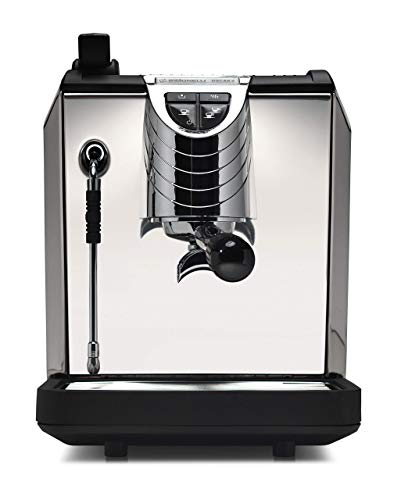
Nuova Simonelli Oscar II — Best Heat-Exchanger Machine
The Oscar II answers the single-boiler compromise directly: its heat-exchanger boiler keeps steam on tap while brew water passes through the boiler on its way to the group, so the pump can extract while you texture milk. That simultaneity transforms serving several guests. It suits households that entertain and home baristas stepping up from single boilers. It is a pour-over machine with a tank rather than a plumb-in café unit, it needs a cooling flush routine, and it still requires a serious separate grinder.
Strengths
- Heat exchanger allows brewing and steaming simultaneously
- Café-grade steam power makes milk texturing fast and easy
- Simple, robust construction from a commercial machine maker
Trade-offs
- Heat-exchanger temperature management needs a cooling-flush habit
- Tank-fed rather than plumbable in standard form
- Bulky and utilitarian styling will not suit every kitchen
| Machine type | Prosumer pump-driven machine, heat exchanger |
| Pump | Vibratory pump |
| Boiler | Heat-exchanger boiler, brew and steam together |
| Milk system | Commercial-style steam wand, high steam volume |
| Feed | Internal water tank (pour-over) |
The Oscar II shows what happens when pump-driven design grows up. The vibratory pump is unremarkable on paper; the system around it is not. A large boiler stores steam energy, the exchanger meters brew water through it, and the group delivers shots with a fullness that small thermoblocks cannot imitate, while the wand steams a jug of milk in seconds rather than half a minute. Workflow becomes rhythm: pull, steam, pour, repeat — exactly the café pattern home machines usually break.
Heat exchangers ask for one skill in return: managing idle temperature with a short cooling flush before the shot. Learn it and shots are stable; ignore it and the first shot runs hot. The machine is also honest about being equipment rather than décor. For households where espresso is a social ritual and drinks come in rounds, the Oscar II is the pump-driven machine that stops feeling like a compromise.
Best for: entertainers and step-up home baristas wanting simultaneous brew and steam / Not suited for: single-drink households or anyone wanting push-button simplicity
Check on Amazon — check the current price on Amazon before you decide, because listings and bundles change.

De’Longhi Dinamica (ECAM35020B) — Best Automatic Pump-Driven
The Dinamica proves that ‘pump driven’ describes an extraction method, not a user interface. Behind its front panel sits a pump and a compact brew unit doing the same work as the manual machines here — the machine simply performs the grinding, dosing and tamping itself. One-touch espresso, long coffee and hot water cover daily drinking, and the manual panarello wand handles cappuccinos. It suits households that want pump-extracted coffee with zero ritual. It does not suit anyone who enjoys process, and its espresso is softer than a good manual shot.
Strengths
- True pump extraction with none of the manual workflow
- Compact brew unit removes for rinsing under a tap
- Simple one-touch drinks suit whole households, not just enthusiasts
Trade-offs
- Shot control is limited to strength and length settings
- Espresso body is lighter than manual 58mm machines produce
- Regular brew-unit rinsing and descaling are mandatory upkeep
| Machine type | Fully automatic pump-driven machine |
| Pump | 15-bar pump |
| Grinder | Built-in steel conical burr grinder |
| Brew unit | Removable, rinse-clean |
| Milk system | Panarello steam wand |
Automatic machines are sometimes dismissed as not ‘real’ espresso, which is an engineering error: the Dinamica’s pump drives water through a compressed puck exactly as a manual machine does, and the resulting drinks are genuine espresso and espresso-based coffees. What changes is who performs the preparation. The machine’s grinder and brew unit standardise dose and tamp to a decent, repeatable level — better than a careless beginner, short of a skilled enthusiast — and they do it identically at 6 a.m. every day.
The ownership pattern differs too. Instead of baskets and backflushing, you rinse the brew unit weekly, empty the puck bin, and descale when prompted. Milk from the panarello wand is foamy rather than silky, which suits cappuccino drinkers more than flat-white perfectionists. As the low-effort expression of pump-driven espresso — and a useful reality check on how much of flavour is preparation rather than machinery — the Dinamica earns its place here.
Best for: households wanting pump-extracted coffee with one-touch operation / Not suited for: enthusiasts who enjoy manual preparation and maximum shot quality
Check on Amazon — check the current price on Amazon before you decide, because listings and bundles change.
Comparison Table
| Pick | Badge | Key Spec | Best For |
|---|---|---|---|
| Rancilio Silvia | Best Traditional Pump-Driven Design | Vibratory pump, brass boiler and group | traditionalists who want the classic pump-and-boiler machine and will master its routine |
| CASABREWS CM5418 | Best Gauge-Equipped Compact | 20-bar rated pump with built-in pressure gauge | learners who want visible pressure feedback while mastering a pump machine |
| Breville Bambino (BES450) | Best Fast-Heat Pump Design | ThermoJet heating, staged pre-infusion pump profile | espresso-first drinkers who want instant heat and smart pressure profiling |
| De’Longhi La Specialista Arte (EC9155M) | Best Assisted Manual | Guided tamp and dose, active temperature control | buyers wanting manual flavour with guided, repeatable preparation |
| Nuova Simonelli Oscar II | Best Heat-Exchanger Machine | Heat-exchanger boiler, simultaneous brew and steam | entertainers and step-up home baristas wanting simultaneous brew and steam |
| De’Longhi Dinamica (ECAM35020B) | Best Automatic Pump-Driven | Bean-to-cup automatic, removable brew unit | households wanting pump-extracted coffee with one-touch operation |
The table maps architecture, not worth. A vibratory pump appears in five of six picks because that is the reality of home machines; the differences that matter are what the pump feeds — a brass boiler, a thermoblock, a heat exchanger or an automatic brew unit — and how much control the machine gives you over the pressure it produces.
Vibratory vs Rotary Pumps: What Actually Differs
A vibratory (or ‘vibe’) pump uses an electromagnetic piston that oscillates dozens of times per second, pushing small pulses of water. It is compact, inexpensive and self-priming, which is why nearly every home machine uses one. Its quirks are a buzzing note under load and a pressure curve that falls as flow rises — puck resistance effectively sets your pressure, which is why grind consistency matters so much on vibe-pump machines.
A rotary vane pump spins a slotted rotor inside a chamber, moving water in a smooth, continuous flow. It is quieter, delivers steadier pressure, can be adjusted precisely with a bypass valve, and is built to run all day in cafés. It is also large, expensive and usually needs a plumbed water line and a motor — which is why rotary pumps live in commercial machines and a small number of high-end prosumer home models. In the cup, a rotary pump’s advantage is consistency and quiet, not a different kind of espresso: both pump types extract at the same target pressure.
For home buyers the practical conclusion is simple. Do not pay a premium hunting for a rotary pump unless you are already shopping in prosumer territory and value quiet and plumbed convenience. Spend first on the grinder, then on temperature stability, then on the pump’s control features — pre-infusion and pressure regulation — which shape flavour far more than the pump’s mechanical family.
There is also a service argument that rarely appears in marketing. Vibratory pumps are standardised, inexpensive components stocked by every espresso parts supplier; when one eventually tires after years of daily use, replacing it is a routine bench job. Rotary pumps are durable but costlier to service, and their motors and seals belong to a more specialised repair world. For a home machine expected to live a decade, the humble vibe pump’s cheap replaceability is a genuine ownership advantage, not merely a cost saving at the factory.
How Pump Pressure Is Controlled
Left alone, a vibratory pump would keep building pressure until flow stops. Machines tame this with an over-pressure valve (OPV) that bleeds water back to the tank once a set pressure — ideally around 9 bars — is reached, so the puck sees a stable ceiling. Some machines add flow profiling or staged pre-infusion, wetting the puck at low pressure before the OPV zone engages. When you read that a machine ‘brews at 9 bars’, it is the OPV, not the pump’s badge number, doing that work.
- Pre-infusion: low-pressure wetting that reduces channeling and forgives distribution errors
- OPV setting: the ceiling that decides extraction pressure; some hobbyist machines allow adjusting it
- Pump duty cycle: vibe pumps are rated for intermittent use — another reason home machines pace back-to-back drinks
- Gauges: where fitted, they show pump-line pressure, a useful proxy for what the puck is experiencing
A Short History of Pump-Driven Espresso
Espresso began with steam: early café machines used boiler pressure to force water through coffee, which capped pressure near the limits of safe steam and scorched as often as it extracted. The lever machine of the late 1940s changed the flavour by letting a spring-loaded piston generate true extraction pressure mechanically. The revolution for pump-driven design arrived in 1961 with the Faema E61, whose electric pump and thermosyphon group made pressure continuous, repeatable and independent of the barista’s arm — the architecture that café machines, and eventually home machines, still descend from.
Home pump machines followed as vibratory pumps shrank in cost and size through the 1980s and 1990s, putting café-style extraction on a counter. The interesting point for today’s buyer is how little the core has changed: a pump, a pressure ceiling, heated water and a puck. Everything modern — pre-infusion profiling, PID temperature control, heat exchangers in compact bodies — is refinement of the control around that core, which is why understanding the pump system still predicts how a machine behaves better than its feature list does.
Tank-Fed vs Plumbed: The Pump’s Water Supply
Nearly every home pump-driven machine drinks from an internal tank, and vibratory pumps are designed for exactly that: they self-prime, tolerate being lifted and refilled, and sip rather than gulp. A small number of prosumer machines offer a plumbed option, where mains water feeds the pump continuously. Plumbing removes refilling and lets rotary pumps — which dislike running dry and prefer positive inlet pressure — work as they were designed to.
For most households the tank is not a limitation but a feature: it lets you control water quality precisely, which matters because the water is both an ingredient and the machine’s main scaling risk. Plumbed installations trade that control for convenience and add a filtration and pressure-regulation responsibility at the mains connection. If you are choosing between two otherwise equal machines, treat plumbability as a tiebreaker for a dedicated coffee station, not a reason to climb a price tier.
What the Pump Cannot Fix
A pump delivers pressure; it cannot deliver judgement. Three recurring disappointments blamed on pumps are actually preparation problems. Channeling — water punching a weak path through the puck — produces sour, thin shots on the finest pump ever built, and is cured by distribution and a level tamp. Stale beans refuse to build resistance, so the pump’s flow races and crema vanishes; the cure is a fresher bag, not a stronger pump. And a dirty group — rancid coffee oils coating the shower screen — flavours every shot bitter regardless of pressure, cured by the unglamorous routine of flushing, brushing and detergent cycles.
This is why this guide keeps returning to system thinking. The pump is the heart of the machine, but espresso quality is the product of grind, dose, distribution, temperature and cleanliness multiplied together. Buy the pump-driven machine whose surrounding system you will actually maintain, and its pump will repay you for years.
Pump Noise and Vibration, Managed
Vibratory pumps announce themselves. The buzzing that rises as pressure builds is the sound of the piston working against the puck’s resistance, and a change in that sound is diagnostic: a sudden strain suggests a choked puck or scale, a rattle suggests a loose mounting or a pump running against an empty tank. Rotary pumps replace the buzz with a low hum, one of their genuine quality-of-life advantages in open-plan homes and cafés.
Manufacturers manage vibe-pump noise with rubber mounts and by isolating the pump from the chassis; owners can help by keeping the machine on a solid, level surface, ensuring the tank is seated (a half-seated tank is a common rattle source), and not wedging the machine tightly between resonant cabinetry. If a previously civilised machine grows loud over months, suspect scale first — the pump is working harder against a narrowing path — and descale before assuming mechanical failure.
Reading Extraction: What the Flow Tells You
Because a vibratory pump’s pressure depends on the puck’s resistance, the flow from the spouts is a live readout of puck quality. A well-prepared shot beads, then falls in a thin, steady stream that stays centred; a channelling shot spurts, pales early and sprays the cup’s walls; a choked shot drips reluctantly while the pump note climbs. Learning to read those three pictures is worth more than any single upgrade, because it converts every shot into feedback.
Keep a small log for the first month with each machine: bean, dose, grind setting, time and a one-word taste note. Patterns emerge quickly — most owners discover their machine and grinder have a narrow happy zone per bean, and that the pump behaves identically whenever they reproduce it. That reproducibility, finally, is the promise of pump-driven design that steam machines could never keep: the same pressure, the same flow, the same cup, on demand.
Maintaining a Pump-Driven Machine
Pump-driven machines reward a small, regular maintenance rhythm and punish its absence more than any other coffee equipment. Daily care is thirty seconds: flush a little water through the group before and after the day’s shots, wipe the shower screen, and purge the steam wand. Weekly, on machines that support it, a backflush with water alone clears the three-way valve path; monthly, a detergent backflush strips the coffee oils that otherwise turn every shot faintly rancid — a flavour fault owners often misdiagnose as bad beans or a failing pump.
The medium-term items are water-driven. Filters expire whether or not they look tired, and descaling intervals are set by your water hardness, not by the calendar alone. Keep a note of both on the machine itself if your household shares duties. Gaskets harden over a year or two of heat cycles; a portafilter that starts locking past its usual angle, or drips at the group during extraction, is asking for a gasket change — a cheap part on traditional machines and the difference between a pump working against a sealed system and one spraying its pressure sideways.
Finally, store the machine kindly if it will sit unused: empty and dry the tank, run a final rinse, and leave the portafilter loosely seated rather than cranked tight, which compresses the gasket for no benefit. Machines maintained on this rhythm routinely outlive their warranties by a decade; machines left wet, scaled and milk-crusted rarely reach their third year without a repair bill. The pump itself is seldom the first thing to fail — it is the maintenance around the pump that decides the machine’s lifespan.
How to Read Your Pump: Dialling In by Pressure and Time
On any manual pump-driven machine, the pump talks to you through flow. Learning to read it turns dialling in from guesswork into a short, logical routine.
- Start with a fixed recipe: a weighed dose, a level tamp and a timer started the moment the pump starts
- Watch the first drops: they should appear after several seconds of pre-infusion or pump ramp, not instantly and not after a long delay
- If the shot gushes and finishes in under 20 seconds, the puck offered too little resistance — grind finer first, then check dose
- If the pump labours, drips crawl and the shot passes 40 seconds, the puck is choking the pump — grind coarser
- On a gauge-equipped machine, aim for the needle to settle in the maker’s marked espresso zone during the middle of the shot
- Taste and classify: sour means the pump pushed water through too easily or too briefly; bitter means contact ran long; adjust one step and repeat
- Record the setting once a bean is dialled in — pump behaviour repeats when dose, grind and tamp repeat
Within a few sessions you will start predicting the shot from the first five seconds of pump sound and flow. That predictive sense — not any single gadget — is what pump-driven machines teach better than any other brewing method.
Common Buying Mistakes
Chasing rotary pumps at home prices. Rotary pumps belong to café and prosumer machines. At ordinary home budgets the money buys far more flavour when spent on a grinder and temperature stability.
Believing the bar badge. A 20-bar sticker describes the pump’s maximum, not your extraction. Pressure is set by the OPV and the puck; judge machines on control, not on the biggest number.
Running the pump dry. Vibratory pumps are cooled and lubricated by the water they move. Letting a tank run empty mid-shot stresses the pump — keep tanks topped up, especially on tank-fed prosumer machines.
Ignoring pump noise changes. A vibe pump that suddenly sounds strained or rattly is telling you about scale, a choked puck or a failing valve. Treat new noises as maintenance prompts, not character.
Skipping descaling. Scale narrows the water path the pump pushes against, raising strain and wrecking temperature stability. Descale on schedule; pumps die of neglect more often than of use.
Final Recommendation
For the classic pump-driven experience, the Rancilio Silvia remains the benchmark: vibratory pump, brass boiler, commercial bones. For visible feedback while you learn, the CASABREWS CM5418’s gauge is genuinely instructive, and for modern pump control in a small body the Bambino’s pre-infusion profile is the smartest engineering here. La Specialista Arte wraps the pump in guidance systems that make its output repeatable, the Oscar II adds heat-exchanger simultaneity for households serving rounds of drinks, and the Dinamica hides the same pump technology behind one-touch automation.
The through-line is that pump-driven espresso is a system discipline: pump, pressure control, temperature and puck preparation multiply together. Choose the architecture that matches your patience and your household, and any of these six will show you why the pump — not steam, not pods — defines real espresso.
If you take one idea from this guide, take this: shop for the system around the pump — the boiler or thermoblock it feeds, the valve that caps its pressure, the electronics that stage its ramp — because that system, far more than the pump’s own badge, is what you will taste every morning.
The shortlist in one line: Rancilio Silvia, CASABREWS CM5418, Breville Bambino (BES450), De’Longhi La Specialista Arte (EC9155M), Nuova Simonelli Oscar II, De’Longhi Dinamica (ECAM35020B). Check the current price on Amazon for the one that matches your kitchen, then commit to learning it properly for a month before judging it.
Keep researching inside this cluster: Best Pump Espresso Machines Best Espresso Machines Best E61 Grouphead Espresso Machines Best Dual Boilers Espresso Machines Best 1 Group Lever Espresso Machines Best Commercial Espresso Machines For Home Use
Related guides
Frequently Asked Questions
What does pump driven mean in an espresso machine?
It means an electric pump — not steam pressure — forces hot water through the coffee puck. Pump driven is the defining technology of true espresso machines, because only a pump can reach and sustain the pressure extraction requires while water flows.
Which is better, a vibratory or rotary pump?
For cafés, rotary: quieter, steadier and built for continuous duty. For homes, vibratory pumps are smaller, cheaper and entirely capable of excellent espresso. The difference shows in noise and long-term consistency more than in a single shot’s flavour.
Why do pump driven machines list 15 or 20 bars if espresso needs 9?
The listed figure is the pump’s maximum pressure rating. An over-pressure valve limits what the puck experiences to around 9 bars. The badge number is a component specification that marketing turned into a headline; it does not rank machines.
Can a pump driven machine also steam milk at the same time?
Only machines with a heat exchanger or dual boilers can brew and steam simultaneously. Single-boiler and thermoblock pump machines switch between the two jobs, which is fine for one or two drinks and slow for a crowd.
How long do vibratory pumps last?
In home service, typically many years; they are inexpensive, standardised parts when they do wear out. Scale and running dry shorten their life far more than shot count, so water care is the real longevity lever.
Are automatic machines really pump driven?
Yes. A fully automatic machine contains a pump and brew unit that perform the same pressurised extraction as a manual machine; the automation replaces your hands in grinding, dosing and tamping, not the pump in extracting.


