Disclosure: airfryerkitchensupply.com is reader-supported. When you buy through links on our site, we may earn an affiliate commission at no extra cost to you.
Where to buy
This guide to the best orthopedic task chairs rests on verified listings: every chair linked below was confirmed on this site, and the name, adjustments and capacity in each review come from that verified listing title — nothing here is copied from a retailer blurb. Because the word in this search is “orthopedic”, one promise up front: this guide uses an ergonomics and comfort frame only. A task chair can support a more comfortable working posture; it does not treat, cure or correct any medical condition, and no chair in this roundup is presented as doing so.
- SIHOO M18 Ergonomic Office Chair — Best Overall: check price on Amazon
- Herman Miller Classic Aeron Task Chair — Best Premium Adjustment: check price on Amazon
- Steelcase Leap Office Chair — Best for Long Sitting Days: check price on Amazon
- HON Ignition 2.0 Ergonomic Office Chair — Best for Shared Workstations: check price on Amazon
- Furmax Office Chair — Best Budget Mesh: check price on Amazon
- BestOffice Ergonomic Office Chair — Best Value Sponge Seat: check price on Amazon
Prices move constantly on office furniture, so no static prices are printed anywhere in this guide. Use the Amazon links to check the current price, and on the listing itself confirm the colour, the caster type for your floor, and whether assembly is included or a separate service.
The best orthopedic task chairs are, in plain language, the best ergonomic task chairs: chairs whose backrest, lumbar support, seat and armrests adjust enough that the chair fits your body instead of forcing your body to fit the chair. That distinction matters more than any label. The word “orthopedic” is not a regulated certification for office chairs — there is no official orthopedic stamp a chair earns — so a shopping guide that treats it as a guarantee would be misleading you. What can be verified, and what this roundup is built on, are concrete, checkable features: adjustable lumbar support, a headrest, armrests that move, a seat cushion with real depth, a stated weight capacity, and a tilt mechanism you can lock at the angle you actually work at.
That is why the six picks below span the full market honestly. At the top sit two long-established ergonomic designs — the Herman Miller Classic Aeron and the Steelcase Leap — whose verified listings describe exactly the adjustment hardware this category is judged by. In the middle, the SIHOO M18 and the HON Ignition 2.0 deliver adjustable lumbar support and headrest or arm adjustment at a mid-range tier. At the accessible end, the Furmax and BestOffice mesh chairs cover the basics — lumbar support, adjustable height, a breathable backrest — for spare rooms, student desks and first home offices. All six are complete chairs, not cushions, mats or replacement parts, and each one earned its slot from a verified listing rather than a marketing claim about your spine.
In this guide
Quick Picks
SIHOO M18 Ergonomic Office Chair — Best Overall. A mesh-back chair with headrest whose listing states adjustable lumbar support, 2D armrests, a wide cushion and a 330 lb capacity — the fullest adjustment set at a mid-range tier in this roundup. Check the current price on Amazon.
Herman Miller Classic Aeron Task Chair — Best Premium Adjustment. The classic Aeron in a listing that spells out its hardware: lumbar pad, tilt limiter, seat angle adjustment, fully adjustable vinyl arms and carpet casters. The title is abbreviated, and this review claims nothing beyond it. Check the current price on Amazon.
Steelcase Leap Office Chair — Best for Long Sitting Days. Steelcase’s Leap in Onyx, whose listing names its Natural Glide System and Liveback Technology and specifies wheels for carpet — a backrest designed to move as you move. Check the current price on Amazon.
HON Ignition 2.0 Ergonomic Office Chair — Best for Shared Workstations. A black ergonomic desk chair whose listing confirms lumbar support and adjustable arms — a straightforward, office-grade specification without novelty features. Check the current price on Amazon.
Furmax Office Chair — Best Budget Mesh. A mid-back mesh desk chair with lumbar support, adjustable height, a breathable backrest and 360-degree swivel — the budget tier covering the ergonomic basics, with easy assembly in the listing. Check the current price on Amazon.
BestOffice Ergonomic Office Chair — Best Value Sponge Seat. A mid-back swivel chair pairing a breathable backrest with a sponge seat — the listing names lumbar support, adjustable height and rolling wheels, in a single-chair pack. Check the current price on Amazon.
Key Takeaways
- “Orthopedic” is a marketing word on chairs, not a certification — judge chairs by named adjustments you can verify.
- Adjustable lumbar support is the single feature that separates this category from ordinary desk chairs.
- Mesh backs breathe through long sessions; sponge and cushioned seats feel softer in the first hour.
- Match the stated capacity to the user with margin — the SIHOO M18 listing states 330 lbs.
- A chair supports comfortable posture; it does not treat any condition. Persistent discomfort is a question for a clinician, not a chair listing.
How These Picks Were Chosen
Each pick started as a Amazon listing data search on this site for ergonomic and task chairs, and only listings whose returned title confirmed a complete chair — with the ergonomic features the review describes — were kept. Seat cushions, chair mats and kids’ study chairs that surfaced in the same searches were excluded, because a cushion is an accessory, not a task chair. Listings that leaned on medical language were read carefully: where a title itself made treatment-style claims, that language is recorded in the sourcing notes and deliberately not repeated in the article, which stays inside a comfort and ergonomics frame throughout.
The six survivors were then split by tier and by adjustment depth. The Aeron and Leap represent the high-adjustment end, where nearly every contact point moves. The SIHOO M18 and HON Ignition 2.0 represent the adjustable middle. The Furmax and BestOffice chairs represent the honest basics. Within each review, every specification — capacity, armrest type, cushion description — is one the verified title states; where a title is abbreviated or truncated, the review says less rather than guessing more. No prices and no fixed ratings are printed, because both change and neither tells you whether a chair fits your desk, your floor or your frame.
The 6 Best Orthopedic Task Chairs (Ergonomic Picks, Honestly Labelled)

SIHOO M18 Ergonomic Office Chair — Best Overall
The M18 suits the home-office worker who spends most of the day at one desk and wants the adjustments that matter — lumbar support that moves, armrests that adjust in two directions, a headrest for lean-back moments — without stepping up to the premium tier. The mesh back keeps air moving in warm rooms, and the wide cushion suits broader frames than a narrow mid-back chair.
Strengths
- Adjustable lumbar support and a headrest, both named in the verified listing
- 2D armrests and a wide cushion, with a stated 330 lb capacity
- Tilt lock lets you fix the backrest at your working angle
Trade-offs
- Mesh back feels firmer than a padded backrest in the first sittings
- Black is the verified colour here; other colours are separate listings to check
- Assembly is a real job — budget unhurried time for it
| Back | Mesh, with headrest |
| Lumbar | Adjustable support |
| Armrests | 2D adjustable |
| Capacity | 330 lbs (per listing) |
| Tilt | Tilt lock |
What earns the M18 the top slot is the combination, not any single feature. Many mid-tier chairs offer a fixed lumbar bump and call it ergonomic; this listing names adjustable lumbar support, and adjustability is the whole point — the support can be moved to where your lower back actually curves, then left there. The 2D armrests handle height and angle, which is enough to get forearms level with most desks, and the tilt lock means the backrest is not constantly pushing you upright when you lean into a long document. The stated 330 lb capacity is also doing quiet work: chairs built to a higher stated capacity typically use a sturdier base and cylinder, which benefits lighter users in longevity even if they never approach the limit. Treat it as a comfort tool — set it up slowly, adjust one control at a time over the first week, and judge it by how the last hour of the day feels, not the first.
Best for: Full-time home-office workers wanting real lumbar adjustment at a mid-range tier / Not suited for: Anyone wanting a soft, padded executive feel
Check on Amazon — check the current price on Amazon before ordering, and confirm the size and colour on the listing itself.

Herman Miller Classic Aeron Task Chair — Best Premium Adjustment
The Aeron suits a buyer who wants a long-service task chair with fine-grained adjustment and who works on carpet — the verified listing specifies carpet casters. It is the pick for someone furnishing a permanent office rather than a temporary corner, and who is comfortable paying a premium tier price for a design that has been in offices for decades.
Strengths
- Lumbar pad plus tilt limiter and seat angle adjustment, all named in the listing
- Fully adjustable arms rather than fixed or height-only arms
- Carpet casters specified, so it rolls as intended on carpeted floors
Trade-offs
- Premium tier — the most expensive direction in this roundup
- The listing title is abbreviated, so confirm size and configuration on the listing page
- Carpet casters are wrong for hard floors; check before ordering
| Lumbar | Lumbar pad |
| Tilt | Tilt limiter, seat angle adjustment |
| Armrests | Fully adjustable, vinyl |
| Casters | Carpet casters |
The honest way to present this chair is through its listed hardware, because the listing itself is written in abbreviations. “Highly Adj” is the seller’s shorthand; the concrete items are the lumbar pad, the tilt limiter with seat angle adjustment, and the fully adjustable arms. A tilt limiter matters in practice: it lets you cap how far the chair reclines, so the chair supports a working lean rather than a lounge lean. Seat angle adjustment is rarer still and helps taller and shorter users set the front edge of the seat so it does not press behind the knees. What this review will not do is import specifications from other Aeron configurations — sizes, materials and options vary by listing, and the verified title here does not state them. Open the listing, confirm the size chart against your height, and treat this as the premium, buy-it-once option of the six.
Best for: Permanent home offices on carpet, buyers wanting maximum adjustment / Not suited for: Hard-floor rooms, or buyers who want sizing guesswork removed
Check on Amazon — check the current price on Amazon before ordering, and confirm the size and colour on the listing itself.

Steelcase Leap Office Chair — Best for Long Sitting Days
The Leap suits the restless sitter: someone who shifts between upright typing, leaned-back reading and perched-forward concentration through the day. Its listed back technology is aimed at a backrest that follows those changes instead of holding one fixed curve. The listing specifies wheels for carpet, so it belongs in a carpeted office.
Strengths
- Liveback Technology and Natural Glide System named in the verified listing
- Ergonomic back support is the headline feature, not an afterthought
- Onyx colourway suits formal office settings
Trade-offs
- Premium tier pricing direction
- Wheels specified for carpet, not hard floors
- The listing does not state a capacity figure, so check the listing page if that matters to you
| Back | Liveback Technology (per listing) |
| Seat | Natural Glide System (per listing) |
| Colour | Onyx |
| Wheels | For carpet |
Most task chairs hold one back shape and ask you to stay in it. The Leap’s listed technologies describe the opposite approach: a back that flexes with your posture changes and a seat that glides as you recline, so the relationship between seat and back stays consistent. In a long day that translates to fewer of the small negotiations — the shuffle, the perch on the edge, the cushion grabbed from the sofa — that signal a chair fighting its user. Two honesty notes belong here. First, the verified title does not state a weight capacity or armrest specification, so this review does not invent either; check the listing for those details. Second, like every chair in this guide, the Leap is a comfort and posture-support tool. It is a genuinely well-regarded ergonomic design, and it still does not treat anything. Buy it for how it sits, at a premium tier, for a carpeted room.
Best for: Long, posture-shifting workdays in carpeted offices / Not suited for: Hard floors, or buyers who need a stated capacity before buying
Check on Amazon — check the current price on Amazon before ordering, and confirm the size and colour on the listing itself.
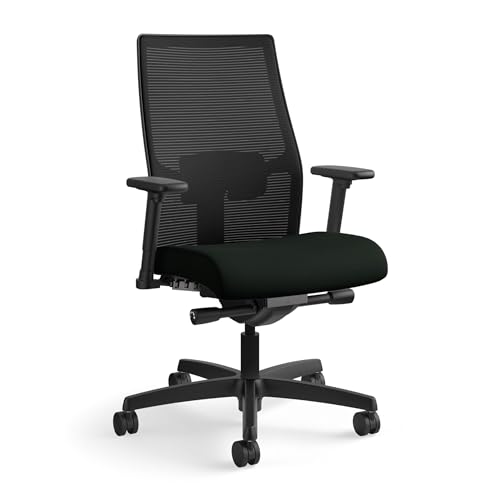
HON Ignition 2.0 Ergonomic Office Chair — Best for Shared Workstations
The Ignition 2.0 suits a workstation that more than one person uses — a household’s shared desk, a small team’s hot-desk — because lumbar support plus adjustable arms cover the two adjustments that differ most between bodies. It also suits buyers who prefer an established office-furniture brand’s plain specification over a feature list written for a marketplace page.
Strengths
- Lumbar support and adjustable arms confirmed in the verified listing
- Conservative black office styling that fits shared and formal spaces
- Specification is honest and uncluttered — what is listed is what you evaluate
Trade-offs
- Listing does not name a headrest, so lean-back head support is not part of this pick
- Listing does not state capacity or back material — verify on the page
- Less distinctive than the premium designs for a statement office
| Lumbar | Support (per listing) |
| Armrests | Adjustable |
| Colour | Black |
There is a category of office chair that sells by understatement, and the Ignition 2.0 is this roundup’s example. The verified listing gives you lumbar support and adjustable arms in black, and frames the chair around workstation comfort for focused work. That restraint cuts both ways: you get fewer headline features to compare, and in exchange you get a chair from a contract-furniture line, the kind bought for offices where chairs are expected to survive daily use by different people. For a shared desk that is exactly the right trade — the adjustments that exist are the ones a new sitter actually reaches for in the first minute. If you are the only user and you know you want a headrest or a mesh back, the SIHOO above is the better fit. If the desk is communal, or the room is a formal office where a gaming silhouette would look lost, this is the sensible mid-tier seat.
Best for: Shared desks and small offices needing quick, simple adjustment / Not suited for: Solo users who specifically want a headrest or mesh back
Check on Amazon — check the current price on Amazon before ordering, and confirm the size and colour on the listing itself.
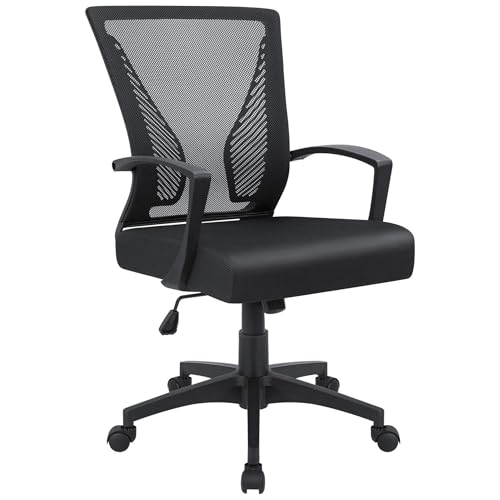
Furmax Office Chair — Best Budget Mesh
The Furmax suits a first home office, a student desk or a spare-room setup where the chair will see a few hours a day rather than a full shift. The breathable mesh backrest is its practical strength in warm rooms, the mid-back format fits under most desks, and the listing’s “easy assembly” note matches its role as a low-friction purchase.
Strengths
- Mesh backrest breathes through warm afternoons
- Lumbar support and adjustable height cover the ergonomic basics
- Mid-back swivel format with armrests, sized for ordinary desks
Trade-offs
- Budget tier build — not the pick for a decade of full-time sitting
- Mid-back design gives no headrest support
- Listing states no capacity figure; check the page if you need one
| Back | Mesh, mid-back, breathable |
| Lumbar | Support (per listing) |
| Base | 360 swivel, armrests |
| Assembly | Easy assembly (per listing) |
Budget chairs earn honest reviews by being clear about the job they are for. The Furmax’s verified listing promises lumbar support, adjustable height and a breathable mesh back — and for a few hours of daily desk work, that trio genuinely covers most of what makes a chair comfortable rather than punishing. The mesh matters more than the price suggests: in a room without air conditioning, a sponge-backed chair can feel warm within the hour, while mesh keeps moving air against your back. Where the budget shows is in refinement — the adjustments are the essential ones, the format is mid-back, and nothing in the listing speaks to capacities or advanced tilt control, so this review does not either. Buy it as the right chair for a light-duty desk, set the height so your feet rest flat, and it will do that job without drama. Full-time, all-day sitters should step up to the SIHOO or beyond.
Best for: Students, spare rooms and part-time desks in warm rooms / Not suited for: Full-time, all-day sitting or users needing a stated high capacity
Check on Amazon — check the current price on Amazon before ordering, and confirm the size and colour on the listing itself.
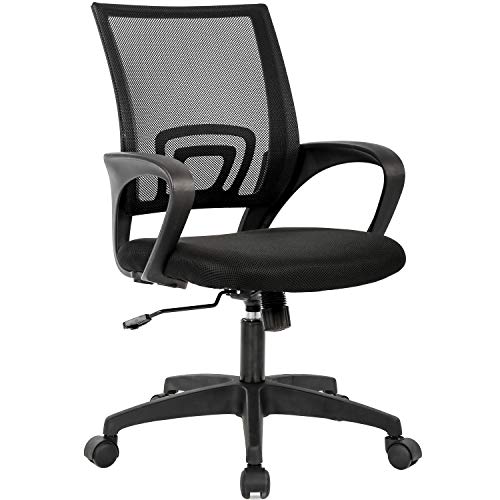
BestOffice Ergonomic Office Chair — Best Value Sponge Seat
The BestOffice chair suits a buyer who prefers a padded seat to a mesh one at the budget tier. Some sitters find mesh seats and backs feel spare; the sponge seat here gives a softer first impression while the backrest stays breathable. It is a sensible single-chair purchase for a home office corner — the listing is explicit that this is a pack of one.
Strengths
- Sponge seat for buyers who dislike sitting on mesh
- Breathable backrest plus lumbar support and adjustable height
- Rolling wheels and swivel for ordinary desk movement
Trade-offs
- Sponge seats compress over time faster than premium foams
- Mid-back format, no headrest
- Sold as a single chair — multi-desk homes need multiple orders
| Seat | Sponge seat |
| Back | Breathable backrest, mid-back |
| Lumbar | Support (per listing) |
| Pack | 1 chair |
This chair and the Furmax above are the budget tier’s two answers to the same question, split by one preference: seat feel. The BestOffice listing puts a sponge seat under a breathable backrest, which is the combination for someone who wants cushioning where their weight sits and airflow where their back rests. Everything else is the honest basics — lumbar support named in the listing, height adjustment, swivel and rolling wheels — and the review will not dress those basics up as advanced ergonomics. In daily use, expect to spend a week dialling in the height and getting used to a mid-back chair’s support ending at the shoulder blades. That is normal for the format and the tier. What you are buying is a serviceable, comfortable-enough chair for a home or small office desk at the accessible end of the market, from a listing that tells you plainly it contains one chair.
Best for: Budget buyers who prefer a padded seat with a breathable back / Not suited for: Buyers furnishing several desks from one pack, or wanting a headrest
Check on Amazon — check the current price on Amazon before ordering, and confirm the size and colour on the listing itself.
Comparison Table
| Pick | Badge | Key spec | Best for |
|---|---|---|---|
| SIHOO M18 Ergonomic Office Chair | Best Overall | Adjustable lumbar, 2D arms, 330 lb stated capacity | Full-time home-office workers wanting real lumbar adjustment at a mid-range tier |
| Herman Miller Classic Aeron Task Chair | Best Premium Adjustment | Lumbar pad, tilt limiter, fully adjustable arms | Permanent home offices on carpet, buyers wanting maximum adjustment |
| Steelcase Leap Office Chair | Best for Long Sitting Days | Liveback backrest, Natural Glide seat, Onyx | Long, posture-shifting workdays in carpeted offices |
| HON Ignition 2.0 Ergonomic Office Chair | Best for Shared Workstations | Lumbar support, adjustable arms, black | Shared desks and small offices needing quick, simple adjustment |
| Furmax Office Chair | Best Budget Mesh | Mesh mid-back, lumbar support, adjustable height | Students, spare rooms and part-time desks in warm rooms |
| BestOffice Ergonomic Office Chair | Best Value Sponge Seat | Sponge seat, breathable back, lumbar support | Budget buyers who prefer a padded seat with a breathable back |
How to Choose an Ergonomic Task Chair: The Adjustments That Actually Matter
Start with lumbar support, because it is the feature this whole category is named around. Fixed support is a shaped bump placed where the designer guessed your back curves; adjustable support can be moved, and backs differ enough that the adjustable version is the safer buy whenever the tier allows it. In this roundup the SIHOO M18 states adjustable lumbar support outright, the Aeron lists a lumbar pad, and the remaining picks name lumbar support without the adjustable qualifier — a real distinction worth weighing, not a detail.
Next, the seat. Seat height adjustment is universal here; what varies is the cushion and, on the Aeron, seat angle adjustment. Your test at any desk is simple: feet flat on the floor, knees at roughly a right angle, and no pressure ridge behind the knees. Armrests come third — 2D on the SIHOO, fully adjustable on the Aeron, adjustable on the HON — and their job is to hold your forearms level with the desk without lifting your shoulders. Finally, match casters to floor: two listings here specify carpet casters or wheels for carpet, which will mark and drag on hard floors.
Mesh, Sponge and Padded Seats: Choosing by Climate and Habit
Mesh backs — the SIHOO, the Furmax — breathe. In warm rooms or long sessions, that airflow is a comfort feature you feel every hour, at the cost of a firmer, more suspended sitting sensation. Sponge and cushioned seats — the BestOffice, the SIHOO’s wide cushion — feel welcoming immediately and suit shorter sessions and cooler rooms, with the trade that foam softens and compresses over years of use. Neither is better in the abstract; the right answer is the one that matches your room temperature and your sitting hours.
- Choose mesh if your office runs warm or you sit in long unbroken stretches
- Choose a cushioned seat if you work in shorter sessions and dislike a suspended feel
- Choose a high-adjustment premium chair if the chair is a permanent, full-time workstation
- Choose a budget basic if the desk is occasional — and spend the savings on a footrest or monitor riser instead
Setting Realistic Expectations: Comfort Support Is Not Treatment
This guide repeats the point because the keyword invites the misunderstanding: a task chair, however adjustable, is furniture. It can reduce the small discomforts of a badly fitting chair — the slump, the perch, the shoulder hunch — by fitting your body and your desk properly. It cannot diagnose, treat or correct a back condition, and any listing that promises otherwise is making a claim no chair can keep. If sitting hurts in a way that persists, worsens, or radiates, the correct purchase is a medical appointment; use this guide afterwards to choose a comfortable chair with better information.
Task Chair Anatomy: What Each Part Is Doing All Day
A task chair looks simple because its work is invisible. The base and cylinder carry your full weight through a single column, which is why stated capacity — the SIHOO’s 330 lbs is the one explicit figure in this roundup — correlates with the robustness of that column and the base around it. When a chair develops a slow sink over months, it is almost always the cylinder surrendering, and chairs built to a higher stated capacity tend to resist it longer. The casters decide how the chair talks to your floor: carpet casters, specified on the Aeron and the Leap listings, have a harder, narrower profile that rolls through pile; on hard floors that same profile can scratch and skitter, which is why matching caster to floor is a buying decision and not an accessory afterthought.
The backrest is where the category earns its name. A mesh back — SIHOO, Furmax — is a tensioned membrane: it distributes pressure across its whole surface and lets air pass, which is why mesh chairs feel cooler and also why they feel less “cushioned” in the first minute. A padded back concentrates softness where the foam is thickest and insulates as it softens you. Neither construction is a quality signal by itself; the signal is whether the lumbar zone of that backrest can be adjusted, because the lumbar curve is the one measurement that differs most between two people of the same height. Armrests, finally, are desk-height tools, not chair decoration. Their correct position is set by the desk, not by the chair: elbows at desk height, shoulders dropped. A chair whose arms cannot reach that position — too high, too low, too wide — will quietly undo the good work of its backrest by lunchtime.
A Week With Each Tier: What the Differences Feel Like in Practice
Specifications flatten differences that a week of sitting reveals. On the budget pair, the first days feel perfectly pleasant — the Furmax’s mesh is breezy, the BestOffice sponge seat is welcoming — and the tier shows itself in smaller ways by day four: fewer positions to change into, a backrest that ends at the shoulder blades, a general sense that the chair offers one good posture rather than a range of them. For a few hours a day that is genuinely enough, and it is dishonest to pretend otherwise. The chairs are not failed versions of the premium picks; they are correctly sized answers to lighter use.
The middle tier is where adjustment starts to compound. The SIHOO’s movable lumbar support means the chair you set up on Monday can be re-tuned on Thursday when you notice a new pressure point; the HON’s appeal in a shared home is that the next sitter can re-tune it in seconds. The premium pair play a longer game still. The Aeron’s tilt limiter and seat angle adjustment, and the Leap’s moving back, are features whose value is measured in months: they reduce the slow drift into bad positions that happens when a chair offers only one. Buyers choosing between tiers should therefore price their own sitting hours honestly. Four hours a day favours the middle and budget tiers. Eight-plus hours, five days a week, for years, is the use case the premium chairs were engineered for, and the arithmetic of cost per sitting hour often surprises people who run it.
Chairs and the Rest of the Workstation: The Fit Is a System
No chair, at any tier, can compensate for a workstation arranged against it. The most common failure is a desk that is too high: the chair rises to meet it, feet leave the floor, and the finest lumbar support in this roundup is then supporting a body whose base is dangling. The fix order is chair first (feet flat), desk relationship second (forearms level), screen third (top of the display near eye level, at arm’s length). If the desk cannot move and your feet cannot rest flat at the right desk height, a footrest is the correct purchase — it is listed among the related guides below — not a taller chair.
Lighting and session rhythm belong in the same conversation, because posture decays with fatigue rather than with furniture. Even a perfectly fitted chair should be left regularly: stand, walk, refill water, look at something far away. Ergonomics writers call these microbreaks, and they are the cheapest comfort intervention available — free, instant, and more effective than any single product in this guide. The chair’s job is to make the sitting between breaks as well-supported as possible. Judge every pick here by that standard and the marketing word in the search loses its power over the purchase, which is exactly where a buyer wants to be.
Assembly, Delivery and the First Hour: Practical Notes Before You Order
Office chairs arrive as a box of parts, and the honest reviews are the ones that say so. The Furmax listing names easy assembly; the others make no such promise in their verified titles, so plan accordingly: a clear floor space, the instructions read before the first bolt, and a second person for the moment the backrest meets the seat mechanism on the heavier models. Keep every bolt hand-tight until the chair stands complete, then tighten in sequence — chairs assembled bolt-by-bolt to full tightness have a way of ending up subtly twisted, and a twisted chair will feel “wrong” in ways no adjustment can fix. Photograph the unboxing if the box arrives damaged; it costs nothing and settles later conversations.
The first hour with the assembled chair should be spent on the floor question. Roll the chair across your actual floor: carpet casters on the Aeron and Leap listings exist because pile resists small wheels, and hard floors punish the wrong caster with noise and marks. If your room is hard-floored and your chosen chair’s listing does not specify its caster type, check the listing page before ordering rather than discovering it on delivery day. Then set the chair aside, literally: sit in it for work the next morning, not for an evening of novelty, because first impressions of foam and mesh are unreliable narrators.
Finally, keep the packaging until the first week is over. A chair is one of the few purchases where fit is personal enough that a return is a legitimate outcome rather than a failure — bodies differ, and a chair that suits a colleague may not suit you. The premium designs hold their appeal partly because they are built to be serviced and resold rather than discarded; the budget chairs earn their place by being inexpensive enough that a mismatch is a small lesson rather than a large regret. Either way, the week-long trial described earlier is the mechanism that turns a gamble into a decision, and it only works if the box is still in the garage.
Who Should Skip This Category Altogether
Honest guides name their non-customers. If your desk work totals an hour a day, a good dining chair and a lumbar cushion will serve you as well as any pick here, and the money is better spent elsewhere in the room. If you game in long sessions and want a reclined, head-supported posture, gaming chairs are a separate category with their own verified listings elsewhere on this site, and forcing a task chair into that role satisfies nobody. And if your discomfort has a pattern — numbness, radiating pain, weakness, pain that wakes you — stop shopping and book the clinician first; a chair decision made after that conversation will be a better one, informed by what your body actually needs rather than by a keyword.
For everyone else — the full-time remote worker on a kitchen chair, the student outgrowing a hand-me-down, the shared household desk — the six picks above cover the honest range of the market as the API verifies it today: two budget basics, two adjustable mid-tiers, and two premium designs, each described by what its listing actually states and nothing more.
A Note on Prices and Tiers in This Category
This guide prints no prices, by standing rule, but tiers are worth naming so the Amazon click is not a surprise. The Furmax and BestOffice chairs sit at the market’s accessible end, where a chair costs a fraction of the premium designs. The SIHOO M18 and HON Ignition 2.0 occupy the middle, where adjustable lumbar support and better armrests appear. The Aeron and the Leap are premium-tier objects, priced like the long-service office equipment they are. Movement between tiers buys adjustment range, materials longevity and serviceability — it does not buy a medical outcome at any level, and the most expensive chair in this roundup makes exactly the same comfort-only promise as the cheapest. Choose the tier by your sitting hours and your floor, check the current price on the listing, and let the chair’s verified adjustments — not its price tag — carry the decision.
One Last Check Before Checkout
Before ordering any chair here, measure your desk height and the space the chair must roll in, then re-read the chosen listing’s title on the product page itself: caster type, colour and pack count are the three details buyers most often discover after delivery. A minute with a tape measure is the cheapest ergonomic upgrade in this entire guide, and it protects every other decision you have made.
How to Set Up a Task Chair at Your Desk, Step by Step
Adjustment order matters: each step assumes the previous one is right, and ten unhurried minutes here decide whether the chair helps or merely sits there.
- Sit fully back and set seat height so both feet rest flat on the floor with knees near a right angle
- Set the lumbar support — adjustable models first — so it meets the small of your back without pushing you forward
- Raise or lower the armrests until forearms rest level, shoulders down and relaxed; angle them (2D or fully adjustable models) to match your keyboard
- Set tilt tension so you can lean back with gentle pressure, then use the tilt lock or limiter at your working angle
- On the Aeron, set seat angle so the front edge does not press behind your knees
- Check the desk relationship last: screen top near eye level, keyboard where your adjusted armrests already put your hands
Live with the setup for a full week before judging it. Change one control at a time, in small steps, and note which change altered the end-of-day feeling. Most “uncomfortable ergonomic chairs” are simply chairs adjusted once, at random, on the day they arrived.
Common Buying Mistakes
- Believing “orthopedic” on a listing is a certification — it is a marketing word; verify named adjustments instead
- Buying carpet casters for a hard floor, or the reverse — two picks here specify carpet wheels
- Judging a chair in the first ten minutes; foam feel and fit separate over a week
- Maxing the budget on the chair while the desk height and screen position stay wrong
- Treating a chair as a remedy for persistent pain instead of seeing a clinician
Final Recommendation
For most buyers, the SIHOO M18 is the recommendation: adjustable lumbar support, 2D armrests, a headrest and a stated 330 lb capacity at a mid-range tier is the fullest honest specification in this roundup. Buyers furnishing a permanent carpeted office who want maximum adjustment should look at the Aeron; restless long-day sitters, at the Leap; shared desks, at the HON Ignition 2.0. On a budget, choose the Furmax for mesh or the BestOffice for a sponge seat — both cover the basics truthfully.
- SIHOO M18 Ergonomic Office Chair — Best Overall: check price on Amazon
- Herman Miller Classic Aeron Task Chair — Best Premium Adjustment: check price on Amazon
- Steelcase Leap Office Chair — Best for Long Sitting Days: check price on Amazon
- HON Ignition 2.0 Ergonomic Office Chair — Best for Shared Workstations: check price on Amazon
- Furmax Office Chair — Best Budget Mesh: check price on Amazon
- BestOffice Ergonomic Office Chair — Best Value Sponge Seat: check price on Amazon
Related guides on this site: Best Ergonomic Chairs For Posture Best Ergonomic Chairs For Studying Best Ergonomic Office Chairs Home Best Customizable Office Chairs Best Footrest For Office Chairs
Frequently Asked Questions
Is “orthopedic” a real certification for task chairs?
No. There is no official orthopedic certification for office chairs; it is a marketing term. Judge chairs by verifiable adjustments — lumbar support, armrests, tilt control, seat fit — which is how every pick in this guide was chosen.
Which adjustment matters most for desk comfort?
Adjustable lumbar support, because backs differ and a movable support can be placed where your lower back actually curves. Seat height comes second: feet flat, knees near a right angle.
Mesh back or cushioned seat — which should I choose?
Mesh breathes and suits warm rooms and long sessions. A sponge or cushioned seat feels softer for shorter sessions. Several picks here combine a breathable back with a cushioned seat, which is a good middle path.
Can a better chair fix my back pain?
A well-fitted chair can remove the discomfort caused by a badly fitting chair, but it does not treat any condition. Persistent or worsening pain needs a clinician’s assessment, not a furniture purchase.
Do these chairs work on hard floors?
Two picks — the Aeron and the Leap — specify carpet casters or wheels for carpet in their listings. On hard floors, confirm caster type on the listing before ordering, or plan a chair mat.
How long should I give a new chair before deciding?
About a week of real work. Adjust one control at a time, in small steps, and judge by how the end of the workday feels rather than the first sitting.


