A backyard barbecue calls for a smoker that can feed a group, fit a normal patio and handle both ribs and burgers. Offset smokers do that well, with a side fire box that gives real wood flavor and a main chamber big enough for several racks of meat.
The six below mix horizontal barrels, a combo grill and a tall vertical, so you can match one to your space and guest list. We have not used these products ourselves, so confirm the details on the current listing before you buy. Look closely at cooking area, wheels and shelves, since those affect party cooking.
As an Amazon Associate we earn from qualifying purchases. Links below are affiliate links, and they do not change the product information we give.
What to Look For
| Feature | Why it matters |
|---|---|
| Cooking area | More grate space means fewer batches for a crowd |
| Prep space | Side tables and shelves keep food and tools within reach |
| Mobility | Wheels help when you roll it out of a garage |
| Fire control | Dampers and a stack let you hold steady heat |
| Build quality | Check weld seams, hinges and latches before relying on it for a party |
In this guide
Specs at a Glance
| Smoker | Material | Size | Notes |
|---|---|---|---|
| Oklahoma Joe’s Highland | Heavy-gauge steel | Large offset | Firebox grill; thermometer |
| Char-Griller Grand Champ XD | Steel body | Larger barrel | Side fire box; wheels |
| Char-Griller Outlaw | Steel body | Mid-size barrel | Side fire box; shelf |
| Dyna-Glo DGO1890BDC-D | Steel body | Tall vertical | Offset firebox; racks |
| Oklahoma Joe’s Bandera | Steel body | Mid-size horizontal | Reverse flow; firebox |
| Royal Gourmet CC1830S | Steel body | Compact barrel | Offset box; side table |
The 6 Best Offset Smokers for Backyard Barbecue

Top pickBest for full weekend cookouts
1. Oklahoma Joe’s Highland Reverse Flow Offset Smoker
A large offset smoker with a roomy chamber, an extra grill surface above the fire box and a thermometer. It suits hosts who regularly cook big cuts. Its extra surface lets you sear burgers while ribs rest in the main chamber, which suits a mixed menu.
Suits: full weekend cookouts. Strengths: plenty of room plus a searing surface. Weaknesses: it is large to store. Skip it if you have a tiny patio.

Best for larger gatherings
2. Char-Griller E16620 Grand Champ XD Charcoal Grill
A big barrel grill with a side fire box that handles burgers, sausages and smoked ribs in one session. Its space makes it party friendly. Wheels and a shelf make it easy to set up before guests arrive, though it is still a bulky unit.
Suits: larger gatherings. Strengths: wide cooking room for mixed menus. Weaknesses: the steel is not heavy duty. Skip it if you want competition-grade build.
View Char-Griller Grand Champ XD on Amazon
Best for casual weekend hosts
3. Char-Griller Outlaw Charcoal Grill and Smoker
A barrel-style charcoal grill with an offset box, built to move between grilling and low-and-slow smoking at family cookouts. Owners often add gasket tape to the fire box joint to hold heat on long afternoons.
Suits: casual weekend hosts. Strengths: simple operation. Weaknesses: may need small sealing fixes. Skip it if you need tight temperature control.
View Char-Griller Outlaw on Amazon
Best for small yards with big menus
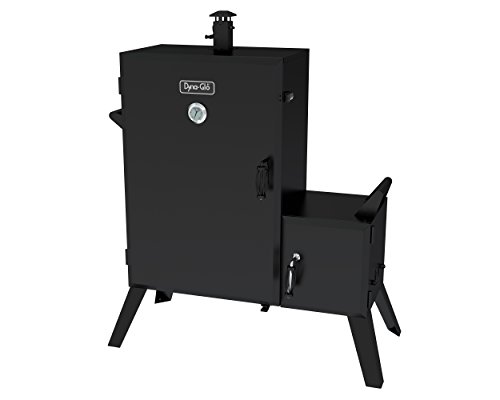
4. Dyna-Glo DGO1890BDC-D Wide Body Vertical Offset Charcoal Smoker
A tall offset cooker with several racks, so you can hang or stack ribs, chicken and sausages without needing floor room. Plan your racks ahead of time, because airflow shifts as the chamber fills up.
Suits: small yards with big menus. Strengths: vertical capacity. Weaknesses: loading racks takes some bending. Skip it if you prefer an open-lid feel.
Best for families of moderate size
5. Oklahoma Joe’s Bandera Offset Smoker
A smaller reverse flow cooker that suits a regular patio and a family-size menu, with the same stick-burner heritage as larger models. It sits between the compact grills and the largest rigs, which makes it a sensible all-rounder.
Suits: families of moderate size. Strengths: reverse flow in a smaller body. Weaknesses: limited capacity for parties. Skip it if you plan big events.
View Oklahoma Joe’s Bandera on Amazon

Best for small gatherings
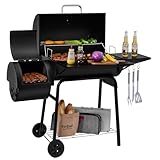
6. Royal Gourmet CC1830S Charcoal Grill with Offset Smoker
A compact barrel with an offset box and handy side table, popular for casual weekends. It works well for smaller get-togethers, but you may need to cook in batches for a bigger group.
Suits: small gatherings. Strengths: light footprint. Weaknesses: small cooking area. Skip it if you feed many guests.
Care and Setup
- Wire-brush the grates before each cook.
- Keep a cover on during rain and snow.
- Store wood in a dry spot near the cooker.
- Check wheels and handles before a party.
Mistakes to Avoid
- Starting the fire too late on party day.
- Overloading grates so heat cannot move.
- Running out of fuel mid-cook.
- Forgetting a probe thermometer for the meat.
How an Offset Smoker Moves Heat and Smoke
An offset smoker has two main parts: a firebox on the side where fuel burns, and a larger cooking chamber where the food sits. Hot air and smoke travel from the firebox through an opening into the chamber and out through a chimney. Because the fire is separate from the food, you can cook with indirect heat for hours. The chimney draws air through the system, and how you adjust the intake and exhaust vents controls how quickly the fire burns and how hot the chamber gets.
Heat is not perfectly even. The end of the cooking chamber nearest the firebox runs hotter than the far end, so food placement matters. Cooks often rotate meat during a long cook or put sturdier cuts nearer the heat. Some designs include baffles or tuning plates that spread heat more evenly. Check the listing to see whether the chamber has them, and note whether they are removable.
Thickness of the steel makes a big difference in temperature stability. Heavier metal holds heat and smooths out swings when you add fuel or when wind blows. Thinner metal reacts quickly to changes, which makes it more demanding to manage. Neither is wrong, but a thinner cooker asks for more attention and a thicker one rewards patience. Understanding this helps you set expectations for backyard cooks.
Firebox Design and Fuel Handling
The firebox is where you spend most of your time, so look at its size, door and grate. A larger firebox holds more fuel, which means fewer reloads on a long cook. A small one is easier to light but needs frequent feeding. The door should open easily, close firmly and not leak large amounts of air, since uncontrolled air makes the fire burn too hot. Check how the fuel grate lifts off the bottom to allow air underneath.
Many cooks run charcoal for steady heat and add small splits of wood for flavor. Others burn mostly wood, which gives stronger flavor but demands more skill. Wood should be dry and well seasoned, because wet or green wood creates harsh, sooty smoke. Use a chimney starter or another safe method to get coals going, and avoid lighter fluid, which can leave a chemical taste.
Think about ash handling. A firebox with an ash pan or a drawer makes cleanup easier and helps airflow. Keep a pair of heat-resistant gloves, a poker and a metal bucket for ash. Plan the fuel supply for the whole cook, including extra for a windy or cold day, and keep it dry. Stack fuel close but safely away from the fire. Running low in the middle of a cook is one of the most common reasons backyard barbecues go off schedule.
Wheels, Stability and Backyard Placement
An offset smoker is heavy and top-heavy when loaded, so placement and stability matter. Place it on a level, non-combustible surface such as concrete or pavers, well away from fences, decks, overhanging branches and house walls. Smoke and sparks can travel, so keep a safe distance and think about prevailing winds so that smoke does not blow into windows or toward neighbors. Keep a fire extinguisher or a water source within reach.
Wheels and handles make moving the cooker practical, but they are not made for lifting a hot unit. Let it cool completely before moving, and check that wheels roll freely and that the frame is stable when parked. Locking wheels or a flat base help on slopes. A firm, level stance reduces the risk of tipping when you open the heavy lid or door.
Consider workspace too. Side shelves, hooks and a nearby table give you somewhere to put tools, pans and thermometers. Leave room to stand comfortably at the firebox door without crowding the path. If you will use the smoker at night, plan lighting. A covered area can protect you from rain, but make sure there is ample open space overhead, as smoke needs to escape. Check local rules about open fires or solid-fuel cookers in your neighborhood.
Learning Fire Management Before Party Day
Offset smokers reward practice, so do not make a big event your first cook. Start with a plain, forgiving cut and a clear schedule. Light the fire well ahead of time and let the cooker reach a steady temperature before adding food. A stable, clean fire burns with a thin, pale smoke, while a smothered fire creates thick white smoke and bitter flavor.
Use a thermometer on the grate where the meat sits, not just the lid gauge. Many built-in gauges read high or low or measure the air far from the food. Two probes help: one for the chamber and one for the meat. Adjust the intake vent to raise or lower heat, and keep the chimney vent fully open to allow smoke to flow. Make small changes and wait several minutes to see the effect.
Add fuel regularly in small amounts instead of letting the fire die down and then adding large amounts. Keep the cooking chamber door closed as much as possible, since every opening drops temperature. Allow extra time on the schedule, since cooks run unpredictably, and rest the meat after cooking. Learning your cooker through repeated, low-stakes cooks makes party day much smoother and builds confidence in the process.
Upkeep, Rust Prevention and Seasoning
An outdoor smoker sees weather, grease and high heat, so regular upkeep is important. Before first use, follow the maker’s seasoning instructions, which usually involve coating the interior with cooking oil and burning a hot fire to cure the surface. This protects bare steel from rust and burns off manufacturing residue. Repeat light oiling on bare spots if you notice them.
After each cook, let the unit cool, brush the grates, remove ash and empty grease trays. Do not scrub away the dark layer inside the chamber, which is a seasoning built up through use. Wipe out loose grease, since it can catch fire or turn rancid. Check the chimney and vents for blockages, and inspect hinges, handles and latches for wear.
Rust is the main long-term enemy. Keep the smoker under a fitted cover and out of standing water, and consider a dry spot for storage in the off season. Touch up chipped paint with high-heat paint suited to cookers. Check the thickness of the metal around the firebox, where heat is strongest, and note any warping or holes. Replace parts that fail, such as seals, thermometers and grates. With good care, a sturdy offset can serve a backyard for many seasons.
A Backyard Readiness Checklist for an Offset Smoker
An offset smoker is a large, heavy piece of equipment, and the yard has to be ready for it. Walk through this list before the box arrives.
- Choose a level spot on firm ground, well away from walls, fences, branches and overhangs.
- Check any local or housing association rules about open fires and smoke.
- Plan where you will keep fuel dry, such as a lidded bin or a covered shelf.
- Clear a path wide enough to roll the smoker out from storage.
- Keep a fire extinguisher or a hose within reach, following local guidance.
- Set up a small side table for tools, gloves and a thermometer.
Doing these small chores in advance means your first cook is about food, not about scrambling for supplies.
Offset Versus Vertical: A Comparison Table
The picks in this guide include horizontal barrels and a tall vertical. Here is how the two layouts differ in everyday use.
| Point | Horizontal offset | Vertical offset |
|---|---|---|
| Footprint | Long and wide | Narrow but tall |
| Rack layout | One or two wide racks | Several stacked racks |
| Heat pattern | Hotter near the firebox | Rises through the racks |
| Fuel feeding | Side door | Side or bottom door |
| Good for | Large cuts, long cooks | Smaller yards, many items |
If your patio is narrow, a vertical unit may fit more easily. If you want room for whole briskets, horizontal barrels give you a longer chamber.
Mistakes That Ruin a First Big Cook
Everyone makes a few errors when learning an offset. Knowing them in advance helps.
The most common is chasing a number on the lid thermometer while ignoring where the meat sits. Heat varies inside the chamber, so a probe placed near the food tells you more than a gauge on the door. Another is opening the lid again and again, which lets heat and smoke escape and stretches the cook.
New cooks also pile on fuel when a fire dies, creating thick white smoke that can taste bitter. Small, regular additions of well-burning fuel are gentler. Finally, many beginners plan a party-day cook without a practice run, so the first attempt happens under pressure. Cook a modest cut on a quiet weekend to learn how your smoker behaves.
Reading a Listing: What the Numbers Mean
Offset smoker listings quote cooking area in square inches, often adding the main chamber, the firebox surface and any upper rack together. Look at the breakdown and focus on the main chamber, since that is where most food goes. Check steel thickness if the page mentions it, because thicker metal generally holds heat better and resists warping.
Features such as a built-in thermometer, a cleanout door, a bottom shelf and wheels can make daily use easier, so see which are included. Compare the stated weight and dimensions with your storage space and your delivery route. If a number looks too good, check the specification table or the maker’s own page for clarity.
Fire, Fuel and Safety: Maker Guidance First
Smoking with a live fire is rewarding, but it needs sensible handling. Follow the maker’s manual for lighting, fuel types and clearances, and use only the fuels it allows. Wear heat-resistant gloves, keep children and pets away, and never leave a burning fire unattended.
Cold ash should go into a metal container before you dispose of it, as your local guidance directs. If you are unsure about placing a smoker near a deck, a wall or a shed, check local fire rules or ask a professional. When in doubt, move the smoker farther from anything that can burn.
Planning a Party Day Timeline
Feeding a crowd with an offset means thinking in hours, not minutes. Work backward from the time you want to serve, and leave a generous cushion, since large cuts can slow down without warning. Many cooks aim to finish early and let the meat rest wrapped in towels inside a cooler, which keeps it warm and relaxed.
Build a simple schedule with the fuel, the meat and the sides. Prepare rubs and trim the meat the night before. Light the fire well ahead so the chamber settles into a steady temperature before food goes on. Assign one person to watch the fire, so you can talk with guests without losing track of it. Keep side dishes simple and make them in the kitchen while the smoker does the heavy work outdoors.
Matching the Picks Above to the Way You Will Actually Cook
The smokers in this guide differ in ways that map onto cooking habits more than onto bragging rights. Oklahoma Joe’s Highland Reverse Flow Offset Smoker deserves its place at the top of many shortlists because of how it balances the fundamentals the reviews describe, but the better question is which chamber size, firebox arrangement and grate layout fit your typical cook. A household smoking one pork shoulder at a time has different needs from a cook who fills every grate for neighbourhood gatherings, and unused capacity is not free: larger chambers take more fuel and more time to settle.
Char-Griller E16620 Grand Champ XD Charcoal Grill and Char-Griller Outlaw Charcoal Grill and Smoker illustrate the other directions a buyer can go — toward a different balance of grilling versus smoking, a different footprint on the patio, or features that make long sessions more comfortable. Read the individual reviews with your last few outdoor cooks in mind: how much food was on the grate, how long did you tend the fire, and where did the old setup frustrate you? The smoker that answers those frustrations is the right one, even if it is not the largest or the most elaborate in the line-up.
If you also plan to grill directly, be honest about the split. Some cooks keep a separate kettle or gas grill for weeknight speed and reserve the offset purely for low-and-slow weekends, which lets each tool do what it does best.
A Calm Routine for Long Cooks, From Lighting to Resting
Long cooks reward a routine. The day before, confirm fuel, check the chamber and firebox are clean, and prepare rubs and trims so the cooking day starts with the fire rather than with errands. Light earlier than feels necessary; an offset that has cruised at a steady temperature for a while before the food goes on behaves far better than one still settling. Put the food on cold from the fridge if your method calls for maximum smoke uptake, and then settle into a rhythm of periodic fire checks rather than constant adjustment.
During the cook, work in trends. A single thermometer reading means little; a gentle fall across half an hour means it is time for a split. Keep the exhaust damper working as your fine control and the firebox intake as your coarse control, changing one thing at a time so you learn what each adjustment does. If a stall arrives — the long plateau familiar to anyone who has cooked brisket or pork shoulder — recognise it as normal evaporation physics, not a failure, and decide in advance whether your method pushes through it or wraps the meat.
Resting is part of the cook, not an afterthought. Budget time for meat to rest, held safely, before slicing, and use that window to clean grates while they are still warm. Cooks who build the rest into the schedule serve better food with less stress than cooks who try to carve the moment the thermometer gives them permission.
Learning Fire Management on an Offset, Step by Step
Every offset smoker in this guide is ultimately a fire-management tool, and the cooks who enjoy them most treat the first season as an apprenticeship. Start with forgiving cooks: sausages, chicken pieces and pork shoulder all tolerate the temperature swings of a learning cook far better than a brisket asked to run perfectly overnight. Keep a simple notebook for each session — what fuel you used, how the dampers were set, what the weather was doing, and how the food turned out. Patterns appear quickly, and that notebook becomes more valuable than any single tip.
Build your fire on a proper coal bed rather than chasing temperature with fresh splits alone. A steady bed of glowing coals, refreshed with a split when the temperature trend — not a single reading — begins to fall, gives the smooth, clean heat that offset cooking is famous for. Thin, pale smoke is the goal; thick white smoke usually means the fire is smouldering, and food cooked in it picks up a harsh flavour that no sauce can rescue.
Resist opening the cooking chamber to admire progress. Every lift of the lid dumps heat and extends the cook, and offsets recover more slowly than most grills. Trust your thermometer, watch the smoke, manage the firebox, and let the chamber do its work undisturbed for long stretches.
Fuel Choices: Charcoal, Splits and Everything Between
Fuel is an ingredient in offset cooking, not just a heat source. Lump charcoal burns clean and hot and makes an excellent base, while briquettes offer a steadier, more predictable burn that many beginners find easier for long sessions. Wood splits layered over that coal bed provide the smoke flavour; the species matters, with oak as a reliable all-rounder, hickory bringing a stronger bacon-like note suited to pork, and fruit woods such as apple or cherry giving a gentler sweetness that flatters poultry and fish.
Whatever you burn, it must be properly dry. Green or damp wood smoulders, produces dirty smoke and fights your temperature control for hours. Store splits off the ground, under cover, with air able to move through the stack, and bring the next few splits to warm beside — never inside — the firebox so they catch quickly and burn clean when added. Warm wood igniting fast is one of the quiet secrets behind the steady temperatures experienced cooks seem to achieve effortlessly.
Plan fuel quantities generously for long cooks. Running short mid-brisket and substituting whatever is at hand is a classic route to off flavours and temperature chaos, so the checklist habit described later in this guide includes fuel alongside food and tools.
Weather, Placement and the Backyard Setup Around the Smoker
An offset smoker lives outdoors, and the outdoors has opinions. Wind is the biggest variable: a gusty day can pull heat through the firebox, spike temperatures and burn fuel at twice the expected rate, while a still, cold day asks for more patience at every stage. Positioning the smoker so the firebox is sheltered — without ever compromising safe clearances from fences, walls and overhangs — makes a measurable difference, as does keeping the cooking chamber out of driving rain that cools the steel.
Think about the ground, too. A level, non-combustible surface keeps the smoker stable, protects decking and grass from heat and grease, and gives you a safe place to set hot grates and coal tools. Keep a metal bucket for ash, a spray bottle for flare management in the firebox area, and a clear path between smoker and kitchen so you are not carrying a finished brisket across a dark, cluttered garden at midnight.
Finally, plan for the smoker’s off-duty life. A cover that fits, a dry spot for fuel, and a routine of emptying ash once it is completely cold will keep steel in good condition far longer. Ash left in a firebox absorbs moisture and encourages corrosion, which is why the small clean-out habits in the care section above matter as much as any cooking technique.
Storing, Covering and Putting the Smoker Away Properly
An offset’s worst enemy is not use but neglect between uses. Once the smoker is completely cold, remove ash from the firebox — ash holds moisture against steel and is the fastest route to corrosion — and scrape the cooking grates clean or leave them lightly oiled from the last cook, according to their material. Check that grease from the cook has drained or been cleaned rather than left to turn rancid in the chamber, where it will flavour the next session unpleasantly.
A cover that fits well is worth having, but only over a clean, dry smoker; sealing damp steel under a cover manufactures rust. If the smoker lives in the open, position it so rain does not pool on flat surfaces, and consider the prevailing wind when choosing which way the firebox faces, both for cooking and for keeping driven rain out of openings.
Once a season, walk around the smoker like an inspector: hinges, latches, thermometer accuracy against a known reference, the condition of any gaskets, and the state of wheels and legs. Fifteen minutes of attention then prevents the mid-cook discoveries that ruin a Saturday.
Side Dishes That Cook Themselves While the Smoker Runs
A running offset smoker is an invitation to cook more than the main event, and the side dishes that suit it share one trait: they forgive irregular attention. Beans in a cast-iron pot, set where the heat is gentle, absorb a whisper of smoke and improve for hours of neglect. Cabbage wedges, whole onions and heads of garlic roasted in their skins ask for nothing but time. Potatoes tucked where the chamber runs cooler emerge with crisp skins and soft centres, ready for butter and salt.
Timing is the only skill involved. Dense, sturdy sides go on early alongside the meat; quicker items — corn, peppers, a pan of cornbread where your method and equipment allow — join later so everything lands together. Keep a rough written timeline for a big cook, because a smoker full of food is no place to rely on memory, and the cook who writes times down is the cook who serves everything hot at once.
Serve some sides straight from the smoker while the meat rests. That sequencing, built into the routine described earlier in this guide, turns the resting period from dead time into the moment the table fills up.
Choosing Wood Like an Ingredient, Not a Fuel
Once fire management feels comfortable, wood selection becomes the cook’s signature. Oak is the reliable backbone: clean, medium-strength, and hard to overdo. Hickory is bolder and traditional with pork, but a heavy hand turns it bitter, so many cooks blend it with oak rather than burning it alone. Pecan sits between the two, rounded and slightly sweet. Fruit woods — apple, cherry, peach where available — are the gentle end of the spectrum, ideal for poultry, fish and anything where smoke should be a seasoning rather than the headline.
The form matters as much as the species. Splits are the offset’s natural fuel, sized to the firebox so they catch quickly and burn clean; oversized logs smoulder, and tiny scraps vanish before they contribute. Whatever you choose, the wood must be dry and seasoned, bark is a matter of taste rather than dogma, and resinous softwoods have no place in a cooker at all.
Keep a small stock of two woods rather than a museum of six. Learning how oak behaves across a whole season teaches more than a single experimental cook with something exotic, and consistency is what lets you season food confidently, knowing what the smoke will bring.
From Smoker to Table: Slicing, Saucing and Serving Well
The final ten percent of a barbecue is presentation and judgement, and it deserves the same care as the fire. Slice brisket and other large cuts against the grain, which you can identify by the direction of the fibres before cooking if you mark the raw meat with a small notch. Keep slices at a thickness that holds together but yields easily — pencil-width is the traditional guide for brisket flat — and serve promptly, because sliced meat dries and cools faster than any other form.
Sauce is a condiment, not a cover-up. Well-cooked barbecue needs little, and the cook’s job is to offer sauce warm, on the side, in a style that suits the meat: thinner and tangier for rich pork, something with a little sweetness for chicken, and a restrained hand for beef, where many eaters prefer the meat and its rub unadorned. Offering two sauces costs nothing and respects the table’s different tastes.
Rest the meat, keep it warm safely, and carve only what the table will eat in the next few minutes, keeping the rest whole. Leftovers kept in large pieces reheat far better than slices, which is tomorrow’s lunch quietly taken care of.
A Short Pre-Purchase Conversation to Have With Your Household
The most underrated step in buying anything shared is a five-minute conversation with the people who will share it. Who will use it most? Who will clean it, honestly? Where will it live, and what gets moved to make room? Are there features one person loves that another will find fiddly every single day? Surfacing those answers before purchase prevents the quiet resentment of a product that suits one household member and burdens the rest.
Agree the care routine in the same conversation, while it is still theoretical and therefore easy to discuss. The routine in this guide is deliberately modest, but it only works if it belongs to everyone rather than to the person who happened to read the manual. Households that share the small tasks — the wipe-down, the check, the cover — keep equipment in better condition with less friction than households where care is one person’s invisible job.
And agree what success looks like: the meals, drinks or gatherings this purchase is really for. When the first of those happens and goes well, the purchase is justified; everything after that is dividend.
Long-Term Ownership: What Changes After the First Year With Your Choice
The first month with an offset smoker is about novelty; the first year is about fit. By the end of it you will know which of the promises in the reviews above actually shaped your routine and which turned out to be decoration. Features that sounded minor at purchase — a handle that stays comfortable, a lid that is easy to store, a control that can be read at a glance — tend to become the reasons a product is still loved, while headline capabilities that did not match your habits quietly stop being mentioned. That is normal, and it is why this guide weighs everyday behaviour so heavily.
Year one is also when maintenance habits either settle or slip. The owners who are happiest at the two-year mark are rarely the most meticulous; they are the ones with a small routine attached to each use, so care never becomes a backlog. If your routine has slipped, the answer is a reset — one thorough clean and check, following the care guidance earlier in this guide — rather than guilt. Products recover remarkably well from a single honest reset, and the reset is a good moment to re-read the manual’s key pages with experienced eyes.
Finally, keep your proof of purchase and any registration details somewhere findable. Support, spare parts and warranty conversations all go faster with paperwork in hand, and the middle of a problem is the worst time to discover where yours went.
The Mistakes Experienced Owners Warn Beginners About
Ask experienced owners what they would tell their earlier selves and the same themes recur for an offset smoker. The first is impatience at the start: rushing the first uses, skipping the setup and care steps in the manual, and judging the product on a debut performance that says more about the learning curve than about the equipment. The second is its opposite — neglect once the novelty fades, when small cleaning and checking tasks are postponed until they become big ones.
The third theme is buying twice: choosing on a single headline feature, discovering that everyday fit matters more, and replacing the product within a couple of years. The reviews in this guide are structured to prevent exactly that, by spending as much time on handling, care and honest limitations as on strengths. If you are wavering between two picks, re-read their limitation notes rather than their praise; the limitation you can live with happily is the better buy.
The fourth is ignoring the environment the product lives in — the space, the weather, the storage, the people who will also use it. Equipment does not fail in the abstract; it fails in a particular kitchen, garden or household, and most of those failures are visible in advance to a buyer who pictures real life honestly.
How Oklahoma Joe’s Highland Reverse Flow Offset Smoker Fits Into a Thoughtful Final Decision
If Oklahoma Joe’s Highland Reverse Flow Offset Smoker is on your shortlist, give it a fair final test on paper. Write down the three jobs you will ask of it most often, the space it will live in, and the care routine you are genuinely willing to keep. Then read its review above one more time, checking each of those points against what the review actually reports — its strengths, its handling, and its stated limitation. A pick that survives that exercise is rarely a disappointment, because the decision was made against your life rather than against an advertisement.
Do the same for one alternative — the pick whose limitation bothered you least or whose strengths matched your second priority — and compare the two written summaries rather than the two products in the abstract. If they still tie, decide on the practicalities: availability of parts and support, how the product fits your storage, and which one you would rather clean on a tired evening. Those tiebreakers sound mundane and decide real satisfaction.
Then commit. Endless comparison after a sound decision only manufactures doubt, and the cooks who enjoy their equipment most are the ones who buy carefully once and then get on with cooking.
Backyard Offset Smoker FAQ
How much meat can I cook for a party?
It depends on the grate area. Check each listing for the stated cooking space and plan batches accordingly.
Can I grill burgers on an offset smoker?
Yes, on models that offer a direct grilling area over coals or above the fire box.
How early should I start?
Allow time to light the fire and stabilize heat before the food goes on, plus the cook itself.
Do I need a cover?
A fitted cover protects the finish and slows rust, which matters when a smoker lives outdoors all season.
Where should I put the thermometer on an offset smoker?
Place it at grate level near the food, since the lid gauge may read differently. Using two probes, one for the chamber and one for the meat, gives the clearest picture.
Why is one end of my smoker hotter?
The side near the firebox is hotter because heat enters there. Rotate food during the cook or use tuning plates or baffles if your model has them.
What wood is best for an offset smoker?
Dry, seasoned hardwood works well, and fruit woods are milder while hickory and oak are stronger. Avoid green or damp wood, which creates harsh smoke.
Can I use only charcoal?
Yes. Many cooks use charcoal for heat and add small pieces of wood for flavor. Follow the maker's guidance and keep the fire clean.
How do I light the fire safely?
Use a chimney starter or another approved lighting method and avoid pouring lighter fluid on hot coals. Keep the lid or door open until the fire is established, and keep a safe distance from structures.
Is it safe to use on a wooden deck?
Generally it is not recommended. Sparks, ash and heat can damage or ignite the surface. Use a non-combustible base and keep clear of structures.
How do I stop my smoker from rusting?
Season the interior, keep it covered and dry, wipe grease and touch up chipped paint. Store it under shelter during long periods of bad weather.
What should I do with the ash?
Let it cool completely, then dispose of it in a metal container away from anything combustible. Never put warm ash in a plastic bin or paper bag.
How do I stop food tasting bitter or overly smoky?
Bitter flavours usually come from dirty smoke — a smouldering fire, damp wood, or a chamber opened and fiddled with too often. Burn dry wood on a healthy coal bed, wait for thin pale smoke before the food goes on, and keep the exhaust open enough for smoke to flow through rather than linger. Clean smoke in, clean flavour out.
Where should ash go when the cook is finished?
Only ever into a metal container, and only once it is completely cold, which can take far longer than it looks. Ash can hide live embers for many hours. Once cold, it can go out with household waste according to local rules; never tip ash onto soil, decking or into a plastic bin while there is any doubt about heat.
How long does it take to learn temperature control on an offset?
Most cooks feel noticeably more confident after a handful of sessions, especially if they keep notes and start with forgiving meats. The learning curve is real but enjoyable: each cook teaches you how your particular smoker responds to fuel, dampers and weather, and that local knowledge transfers to every recipe you try afterwards.
Can I use an offset smoker in winter?
Yes, with adjusted expectations. Cold air and wind draw heat from the steel, so cooks take longer and burn more fuel. Sheltering the smoker from wind, keeping the lid closed, and allowing extra time all help. Many cooks enjoy winter smoking precisely because tending the fire is a pleasant reason to be outside.
What is the difference between burning splits and using only charcoal?
Charcoal alone gives heat with a mild flavour, while wood splits add the distinctive smoke character that defines offset cooking. Many cooks combine them: a charcoal base for stability, with splits added for flavour and to maintain the coal bed. The balance can shift with the food — stronger for beef and pork, gentler for poultry and fish.
How do I keep a long cook relaxed rather than stressful?
Prepare like a host, not like a hero. Trim and season the meat the day before, lay out tools, fuel, thermometers and serving platters before the fire is lit, and write a rough timeline with the expected milestones and the resting period included. During the cook, check the fire on a schedule rather than constantly, keep drinks and a chair near the smoker, and remember that small temperature drifts are normal and self-correcting. The cooks who look calm at serving time are not more talented; they simply moved every decision they could to the day before the fire.
The Short Version
For big cookouts, the Oklahoma Joe’s Highland. For mixed menus, the Char-Griller Grand Champ XD. For simplicity, the Outlaw. For vertical space, the Dyna-Glo. For a medium patio, the Bandera. For tight spaces, the Royal Gourmet.
Related Guides
- 6 Best Barrel Smokers for Backyard Cooking: Drum and Offset
- 6 Best Barbecue Smokers: Charcoal, Electric and Pellet (2026)
- 6 Best Competition Smokers for Serious Barbecue (2026)
- 6 Best BBQ Smokers for Competition: Pellet, Ceramic, Offset
- 6 Best Charcoal Grills and Smokers: Offset, Bullet, Drum (2026)


