Disclosure: airfryerkitchensupply.com is reader-supported. When you buy through links on our site, we may earn an affiliate commission at no extra cost to you.
Where to buy
All six picks in this guide are sold through Amazon, where you can compare room-size ratings and check current availability on one page. Most readers should start with the Ionic Pro Platinum Filterless Air Purifier, our Best Overall for whole-room ionic cleaning without replacement filters. For a dorm room or small bedroom, the Ionic Pro Compact covers a smaller footprint. If you want the lowest-effort option of all, the plug-in ENVION Therapure TPP50 Mini takes no floor space at all. Every linked model was confirmed against Amazon’s catalog data before publication; check price on Amazon on the listing page, and read the honest technology discussion below before you buy — ionic purification is a specific tool with real limits, not magic.
Introduction: what “ionic” actually means — and what it does not
Shopping for the best ionic air purifiers starts with a vocabulary problem, because “ionic” covers two different machine families. True ionic purifiers — the subject of this guide — use high-voltage pins or plates to charge airborne particles so they stick to collector plates or settle out of the air, usually with no fan or only a whisper of one, and no disposable filter to replace. A second, larger family is hybrid: fan-driven HEPA purifiers that add an optional ionizer stage. Those are fine machines, but they are HEPA purifiers with a feature, and they are covered in our general air purifier guides. This guide is about the filterless ionic machines themselves: silent or near-silent, low running cost, and aimed at everyday air-quality comfort — fresher-smelling rooms, less visible dust drifting in sunlight, lighter odor load.
Now the honesty this category requires. Ionization is not the strongest air-cleaning technology you can buy, and we will not pretend otherwise. Independent testing traditions favor fan-and-filter machines for raw particle removal speed, because moving air through a HEPA filter captures particles outright, while an ionizer mostly relocates them — charged particles settle onto plates, floors, and walls, which means the dust leaves the air but not the room, and regular surface cleaning becomes part of the deal. Ionizers can also generate ozone as a byproduct; reputable modern models are designed to keep that to very low levels, and at least one pick below is specifically marketed as ozone-free, but if anyone in your home is sensitive to ozone, a filterless ionic machine is the wrong category and a sealed HEPA purifier is the right one. We frame every benefit in this guide as comfort and air-quality improvement — never as a medical claim, because these are not medical devices and they do not treat allergies, asthma, or any other condition.
With that on the table, ionic purifiers still earn their place in plenty of real homes, for real and defensible reasons. They are silent enough for light sleepers, cheap to run, free of the ongoing filter costs that make people abandon HEPA units, and genuinely good at knocking down cooking smells, pet odors, and stale-room stuffiness in small and medium rooms. If that matches your problem, read on for the six picks worth your money.
In this guide
Quick Picks
- Best Overall: Ionic Pro Platinum Filterless Air Purifier — the full-size ionic tower in this category, rated by the maker for rooms up to 800 sq. ft., with washable collector plates instead of replaceable filters.
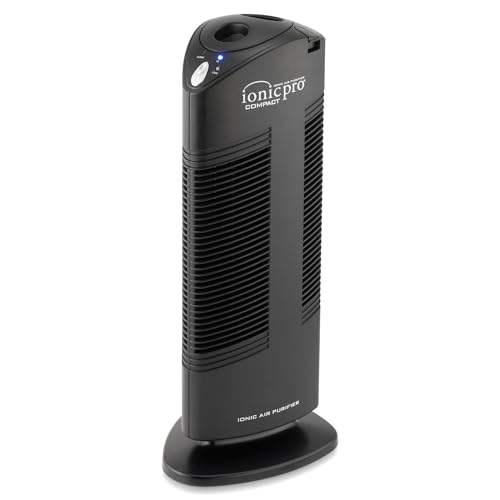
- Best for Small Rooms: Ionic Pro Compact Filterless Air Purifier — the smaller Ionic Pro, rated for up to 300 sq. ft., sized for bedrooms, nurseries, and dorm rooms.
- Best with UV-C: OION Technologies B-1000 Permanent Filter Ionic Air Purifier Pro Ionizer with UV-C — ionic cleaning plus a UV-C lamp stage, with a permanent washable filter design.
- Best Plug-In: ENVION Therapure TPP50 Ionic Pro Mini Plug-In — plugs directly into a wall outlet; zero floor or shelf footprint for bathrooms and hallways.
- Best Budget Plug-In: Plug-In Negative Ion Air Ionizer (1 Pack) — a simple filterless plug-in ionizer positioned at the budget tier for odor-prone small spaces.
- Best Portable: Small Ionic Air Purifier for Home & Car, Cordless — a compact cordless ionizer marketed as ozone-free, for cars, desks, and travel.
How These Picks Were Chosen
We limited the field to true ionic machines: filterless or permanent-filter ionizers, not HEPA purifiers with an ionizer button. Within that field we prioritized recognizable category brands with a track record (Ionic Pro and Envion have sold ionic purifiers for many years), coverage ratings appropriate to real room sizes, and maintenance designs a normal owner will actually keep up — washable plates and wipe-clean collectors over proprietary consumables. Every product name and ASIN was cross-checked against Amazon’s catalog data before this guide was published, and only confirmed matches carry purchase links.
Two editorial rules shaped this guide. First, no medical claims: we describe comfort outcomes — odor reduction, fresher-feeling air, less airborne dust — and we state the technology’s limits, including ozone byproduct concerns and the settle-out effect, in plain language. Second, no fixed prices or ratings: models are positioned by tier and linked so you can check price on Amazon, because a printed number would be stale quickly and helps nobody. If your primary goal is maximum particle removal for a health-related reason, we say plainly in several places below: buy a sealed HEPA purifier instead, and treat this category as the comfort-and-quiet alternative.
The 6 Best Ionic Air Purifiers

Ionic Pro Platinum Filterless Air Purifier — Best Overall
The Ionic Pro Platinum is the flagship of the filterless ionic category: a tower that charges particles and collects them on internal plates you wash rather than filters you replace, rated by its maker for rooms up to 800 square feet. That coverage figure should be read the way all such figures should — as a maximum for gentle, continuous air freshening in an open space, not as rapid cleaning of a large room — but even discounted, it is the most capable true ionic machine in this guide and the natural default pick.
Strengths
- No replacement filters, ever — washable collector plates turn the running cost into little more than electricity.
- Near-silent operation with no fan roar, so it can run in a bedroom all night without becoming the loudest thing in the room.
- The largest stated coverage in this guide, suited to living rooms and open-plan spaces where smaller ionizers are outmatched.
Trade-offs
- Ionic cleaning is gradual; it will not scrub a room quickly after a smoky cooking accident the way a fan-driven HEPA unit can.
- Collector plates must be washed on schedule or performance fades and the unit can start to click or buzz.
- Like all ionizers, it can produce trace ozone as a byproduct of ionization; ozone-sensitive households should choose HEPA instead.
In daily use, the Platinum’s appeal is that it disappears. There is no filter subscription, no fan noise to negotiate with a light-sleeping partner, and no ongoing cost quietly training you to leave it switched off. Set it in the room where odors and dust bother you most, wash the plates as directed, and judge it over two weeks rather than two hours — ionic freshening is a background process. It sits in the mid-to-premium tier for this category, which is still modest money compared with years of replacement filters for a fan unit.
Best for: living rooms and open spaces wanting silent, filter-free odor and dust control. / Not suited for: ozone-sensitive homes or anyone needing fast, maximum particle removal.
Check the current price on Amazon
Ionic Pro Compact Filterless Air Purifier — Best for Small Rooms
The Ionic Pro Compact applies the same filterless ionic formula at bedroom scale, rated by the maker for rooms up to 300 square feet. That is the honest size for this technology: a bedroom, nursery, home office, or dorm room where the door closes and the machine can keep up with the room’s air over hours of quiet running.
Strengths
- Same washable-plate, zero-filter-cost design as the Platinum in a smaller, cheaper-to-place unit.
- Quiet enough for bedrooms and nurseries, where fan noise is the usual deal-breaker.
- Smaller footprint fits a nightstand corner or dresser without dominating a small room.
Trade-offs
- Undersized for open-plan living areas; asking it to cover a big space produces disappointment, not clean air.
- Same gradual ionic pace and plate-washing routine as its bigger sibling.
- Trace ozone consideration applies here too, as with every ionizer in this guide.
For dorm rooms specifically, the Compact may be the most sensible pick in this entire guide: silent for roommates, no filters to buy on a student budget, and sized to the room it will actually serve. In a bedroom, place it where air can circulate around it rather than tight against a wall, and let it run continuously — ionic units do their best work as always-on background appliances, not as occasional spot treatments.
Best for: bedrooms, nurseries, dorm rooms, and small offices. / Not suited for: large or open-plan rooms.
Check the current price on Amazon
OION Technologies B-1000 Ionic Air Purifier Pro with UV-C — Best with UV-C
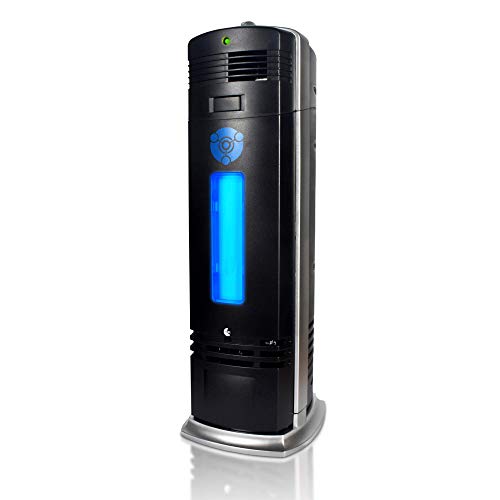
The OION B-1000 adds a second stage to the ionic formula: a UV-C lamp inside the unit, paired with a permanent filter design you clean rather than replace. Buyers who like the ionic concept but want more than ionization alone tend to land here — the UV-C stage is aimed at the air passing the lamp inside the machine, and the combination makes the B-1000 the most feature-complete pick in this guide.
Strengths
- Two-stage approach — ionization plus an internal UV-C lamp — for buyers who want more than a bare ionizer.
- Permanent filter design keeps the no-replacement-consumables advantage of the category.
- Established model that has been sold in this category for years rather than a short-lived listing.
Trade-offs
- The UV-C lamp is a consumable over a long enough horizon and will eventually need replacement per the maker’s guidance.
- More stages mean more maintenance steps than a simple plate-washing tower.
- UV-C and ionization claims are comfort-level air treatment, not sterilization of a room — keep expectations at air quality, not disinfection.
The B-1000 suits the buyer who has read the honest limits of ionization and still wants the category’s quiet, filter-free running — just with every stage the category offers. Position it in the mid tier of this guide. As with all picks here, we make no medical claims for it: it is an air-quality comfort appliance, and the UV-C stage treats air inside the unit rather than surfaces or people in the room.
Best for: buyers who want ionic cleaning plus a UV-C stage without filter subscriptions. / Not suited for: anyone expecting room sterilization or medical-grade air treatment.
Check the current price on Amazon

ENVION Therapure TPP50 Ionic Pro Mini Plug-In — Best Plug-In
The ENVION Therapure TPP50 removes the last excuse for not treating a small problem space: it plugs directly into a wall outlet, so it needs no shelf, no floor space, and no cord management. Bathrooms, hallways, laundry corners, and the wall beside a litter box are its natural habitat — small, enclosed, odor-prone spots where a tower would be absurd.
Strengths
- True zero-footprint design: the outlet is the installation.
- Well-matched to small enclosed spaces, which is where plug-in ionizers perform most convincingly.
- From the Ionic Pro family (Envion), a long-running name in this category rather than an anonymous plug.
Trade-offs
- Coverage is a small room or a corner, not a living space — set expectations by the size of the device.
- Occupies an outlet full-time, which matters in bathrooms where outlets are scarce.
- As a plug-in ionizer it shares the category’s gradual pace and trace-ozone consideration.
The right mental model for the TPP50 is a night-light-sized background helper: plug it in near the source of a recurring small-space odor, leave it running, and let it take the edge off continuously. Owners who expect it to freshen a whole apartment misunderstand the product; owners who deploy it in a bathroom or entryway usually understand exactly what they bought. It is also a sensible first step into the category — a low-commitment way to learn whether ionic freshening satisfies you before buying a tower.
Best for: bathrooms, hallways, laundry corners, and litter-box areas. / Not suited for: whole-room or whole-apartment coverage.
Check the current price on Amazon

Plug-In Negative Ion Air Ionizer, 1 Pack — Best Budget Plug-In
This plug-in negative ion generator is the budget expression of the same idea as the TPP50: a filterless ionizer that lives on an outlet and quietly charges particles in a small space, marketed for odor, smoke, and dust-prone spots. At the budget tier, the proposition is simple — try ionic freshening in the one small room that needs it, for the least possible commitment.
Strengths
- Lowest-commitment entry into the category; budget tier by design.
- Filterless and silent, with nothing to replace and nothing to hear.
- Small enough to move between problem spots — bathroom this month, garage entry next.
Trade-offs
- Budget plug-ins vary more in build and longevity than the established-brand picks above.
- Effect is confined to genuinely small spaces; it will not change the feel of a large room.
- No collector plates means charged particles settle on nearby surfaces, which need regular wiping.
Buy this pick with clear eyes: it is a spot treatment, best deployed within a few feet of an odor source in a small enclosed space. Used that way, budget plug-ins can take the stale edge off a bathroom or closet noticeably. Used as a whole-home solution, they will convince you the whole category does not work, which would be an unfair verdict produced by a mismatched deployment. If the experiment pleases you, the Ionic Pro towers above are the upgrade path.
Best for: a first, cheap test of ionic freshening in one small space. / Not suited for: large rooms or as a home’s only air treatment.
Check the current price on Amazon
Small Ionic Air Purifier for Home & Car, Cordless — Best Portable
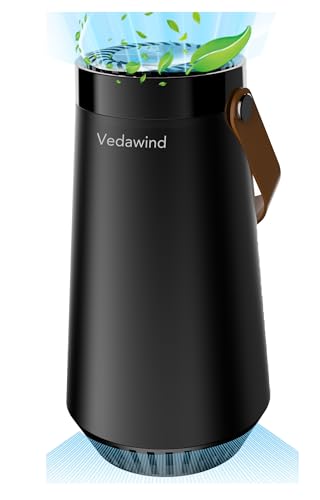
The small cordless ionic purifier takes the category portable: a compact, filterless ionizer for cars, desks, and small personal spaces, marketed by its maker as ozone-free — a claim that matters in this category and one reason it earns a slot here. A car interior is actually an ideal ionic use case: a tiny enclosed volume, persistent odors from food, gym bags, and pets, and no room for a fan unit.
Strengths
- Cordless portability suits cars, desks, hotel rooms, and other personal-scale spaces.
- Marketed as ozone-free, addressing the category’s most common concern head-on.
- Filterless and silent like the rest of this guide — nothing to buy, nothing to hear.
Trade-offs
- Personal-scale coverage only; it treats the air around a seat or desk, not a room.
- Battery-powered convenience means charging becomes part of the routine.
- Small ionizers of this type vary in output; judge it by the small space it is designed for.
Think of this pick as the commuter’s version of the category. In a car, run it regularly rather than expecting it to erase a strong odor in one trip — ionic freshening compounds over repeated use in a small volume. At a desk, it is a set-and-forget background device. What it is not is a substitute for cleaning the source: no ionizer at any price fixes a spilled milkshake under a car seat, and source removal always comes first.
Best for: cars, desks, and travel-size personal spaces. / Not suited for: bedrooms or living rooms as the main purifier.
Check the current price on Amazon
Comparison Table
| Pick | Badge | Key spec | Best for |
|---|---|---|---|
| Ionic Pro Platinum | Best Overall | Filterless tower, washable plates, maker-rated up to 800 sq. ft. | Living rooms, open spaces |
| Ionic Pro Compact | Best for Small Rooms | Filterless, washable plates, maker-rated up to 300 sq. ft. | Bedrooms, dorms, nurseries |
| OION B-1000 | Best with UV-C | Ionic + UV-C stage, permanent filter | Buyers wanting a second stage |
| ENVION Therapure TPP50 | Best Plug-In | Direct outlet plug-in, zero footprint | Bathrooms, hallways |
| Plug-In Negative Ion Ionizer | Best Budget Plug-In | Filterless plug-in, budget tier | One small odor-prone space |
| Small Cordless Ionic Purifier | Best Portable | Cordless, marketed ozone-free | Cars, desks, travel |
Notice what the table does not contain: a pick that beats a HEPA purifier at raw particle capture. That machine is not in this guide because it is not an ionic purifier. If you read the table and realize your real priority is maximum cleaning power per hour, the correct move is to leave this category — our general purifier guides cover the fan-and-filter machines — rather than to buy the biggest ionizer and hope it behaves like something it is not.
How Ionic Purification Works, in Plain Language
Inside an ionic purifier, a high-voltage charge is applied to pins or wires. Air passing those points picks up a charge — the machine emits ions, which attach to airborne particles like dust, pollen, and smoke residue. Charged particles then do one of two things: they are attracted to oppositely charged collector plates inside the machine (the washable plates in the Ionic Pro models), or they settle onto surfaces in the room — floors, walls, furniture. Either way they leave the air you breathe, which is the comfort benefit owners notice: less dust visibly drifting, lighter odors, a fresher-feeling room.
Two consequences follow from that mechanism, and honest ownership means accepting both. First, settled particles are still in the room until you wipe, vacuum, or mop them away, so an ionic purifier pairs with ordinary surface cleaning rather than replacing it. Second, the charging process can split a small number of oxygen molecules and produce ozone as a byproduct. Well-designed modern units keep this minimal, some models are specifically marketed as ozone-free, and plug-in ionizers produce very little of anything — but the chemistry is inherent to ionization, which is why this guide repeats the same advice in several places: if ozone sensitivity is a concern in your household, choose a mechanical HEPA purifier, which cleans without ionization entirely.
Ionic vs. HEPA, without the sales pitch
A sealed HEPA purifier with a fan physically traps particles in a filter, cleans a room faster, and is the category most often recommended where particle removal really matters. Its costs are fan noise, electricity, and a lifetime of replacement filters. An ionic purifier is silent, nearly free to run, and maintenance-light, but slower and gentler, with the settle-out and ozone caveats above. Neither is “better” in the abstract. HEPA wins on power; ionic wins on silence and running cost. Most households that are happy with ionic machines chose them for exactly those two virtues, with eyes open about the rest.
How to Set Up and Maintain an Ionic Purifier
- Place for airflow. Even fanless units rely on room air drifting past them. Give a tower clearance on all sides, keep it out of a sealed corner, and place plug-ins in the room where the odor actually lives rather than a distant hallway.
- Run it continuously. Ionic cleaning is gradual and cumulative. Switching the unit on for an hour before guests arrive misunderstands it; always-on at low intensity is how these machines earn their keep.
- Wash collector plates on schedule. For plate models, remove and wash the plates as the maker directs — typically when they are visibly coated or the unit begins to click. Clean plates are the difference between a working ionizer and a decorative one; let them dry fully before reinstalling.
- Wipe the room, too. Because charged particles settle, dust surfaces near the unit weekly. This is not a flaw to hide; it is the mechanism, and a quick wipe completes the cleaning the ionizer started.
- Remove sources first. Empty the litter box, take out the trash, clean the spill. Ionizers manage background air quality; they are not a license to skip source control, and no setting on any unit changes that.
- Mind the outlet for plug-ins. Plug-in models occupy a socket permanently. In a bathroom, confirm you still have the outlet access you need for daily appliances before committing the socket.
Troubleshooting Ionic Purifiers: The Four Usual Complaints
Problem: the unit clicks, pops, or buzzes → wash the collector plates
Audible clicking from an ionic tower almost always means the collector plates are coated. Accumulated particles create tiny discharge points, and the sound is the machine telling you maintenance is due. Remove the plates, wash and dry them completely as the maker directs, and reinstall. If clicking persists on spotless plates, move the unit away from high humidity and re-check; persistent noise after cleaning is a warranty conversation, not something to live with.
Problem: dark dust film appears on the wall behind the unit → reposition and wipe
Charged particles settle on the nearest surfaces, and a light wall shows the evidence first. This is the settle-out mechanism working visibly, not a malfunction. Move the tower a little farther from the wall, wipe the film with a damp cloth, and add that wall to your weekly wipe routine. Owners who know to expect this treat it as proof of work; owners who were never told feel deceived — which is why this guide tells you.
Problem: no noticeable difference after a week → check size, placement, and sources
Work through three questions. Is the room larger or more open than the machine’s realistic zone? Is the unit boxed into a corner where room air barely reaches it? And is a strong source — an unscopped litter box, a smoker’s chair, a mildewed closet — overwhelming a background appliance? Fix sizing, placement, or the source, in that order of likelihood, and give a corrected setup another two weeks of continuous running before judging.
Problem: a faint sharp smell near the unit → ventilate and reassess
A slight electrical sharpness at very close range is the ionization process itself; a noticeable smell across the room is not normal for a well-kept unit. Clean the plates, improve room ventilation, and if the smell remains strong, stop using the unit and contact the maker. Households with ozone-sensitive members should treat any persistent odor as the signal to switch to mechanical filtration, as advised throughout this guide.
Common Buying Mistakes
- Expecting HEPA performance from an ionizer. The most common disappointment in this category is a mismatched expectation, not a broken product.
- Undersizing the room. A plug-in asked to freshen an open-plan apartment will seem to do nothing. Match the machine to an enclosed space it can keep up with.
- Ignoring ozone sensitivity. If anyone at home is ozone-sensitive, this is the wrong category — buy mechanical filtration instead.
- Never washing the plates. A coated collector plate quietly turns a working purifier into furniture. The wash schedule is the ownership contract.
- Buying an ionizer to avoid cleaning. Settled particles still need wiping and vacuuming. The machine moves dust out of the air; you finish the job.
- Treating comfort appliances as medical devices. These products improve everyday air feel and odors. They do not treat any health condition, and marketing that suggests otherwise should lower your trust in that listing, not raise it.
Seasonal Notes: When Ionic Purifiers Earn Their Keep
Demand for air freshening is not flat across the year, and ionic machines have seasons where they shine. Winter is the big one: windows stay closed for months, heating systems recirculate the same indoor air, and cooking, pets, and people share a sealed box. That is exactly the environment where a silent always-on ionizer quietly improves daily life, and where its zero fan noise matters most in bedrooms during long nights. Spring and fall bring open windows, which do more air exchange in an hour than any appliance — run the ionizer anyway for the rooms that stay closed, but enjoy the free ventilation where you can get it.
Wildfire-smoke season deserves a specific warning, because it is the moment many shoppers meet this category. Smoke is a heavy particle load that calls for maximum filtration: a sealed HEPA machine, run hard, in a closed room. An ionic purifier is not the tool for smoke events, and buying one for that purpose repeats the category’s central mistake. Keep the ionizer for what it does well the other fifty weeks of the year, and let a filter machine handle the smoke weeks if your region has them.
Final Recommendation
For a living room or open space, the Ionic Pro Platinum is the category’s default answer: silent, filter-free, and sized for real rooms. For a bedroom, dorm, or nursery, step down to the Ionic Pro Compact and enjoy the same zero-filter economics at the right scale. If you want the extra UV-C stage, choose the OION B-1000. For bathrooms and hallways, the ENVION TPP50 plug-in — or its budget plug-in counterpart for a first experiment — solves the small-space problem with no footprint at all, and the cordless mini extends the same idea to your car. And if, after reading the technology section honestly, your real need is maximum particle removal, take the advice this guide gives without hesitation: buy a sealed HEPA purifier instead. The best purchase is the one matched to the actual problem.
One last piece of practical advice: whichever pick you choose, write the plate-washing date on a note stuck to the unit the day it arrives, and update it at every wash. It sounds trivial, but maintenance you can see is maintenance that happens — and in this category, maintenance is performance.
Related reading in this series: Best Air Purifiers, Best Air Purifiers For Smokers, Best Hepa Air Purifiers, Best Air Purifiers For Bedrooms, Best Air Purifiers For Pets.
Room by Room: Deploying Ionic Purifiers Where They Actually Work
The bedroom
The bedroom is this category’s home turf. The door closes, the volume is modest, and the owner is present for eight hours — long enough for gradual ionic freshening to be felt as a genuinely fresher room by morning. Silence matters here more than anywhere, and it is the ionic machine’s defining advantage: there is no fan to keep a light sleeper negotiating with. The Ionic Pro Compact is sized for exactly this job; in a large master bedroom with an open bathroom, the Platinum is the safer coverage choice. Keep the unit a reasonable distance from the bed itself and let it run all night — overnight is when it does its best work.
The bathroom
Bathrooms are small, enclosed, and odor-prone, which is the plug-in ionizer’s exact design brief. A TPP50 or a budget plug-in on the bathroom outlet works continuously against the background odor load that sprays only mask. Two cautions: humidity is hard on electronics over years, so keep plug-ins away from direct shower spray and splashing range; and the outlet you surrender may be the one the hair dryer needs, so plan the socket before you commit it.
The kitchen and dining area
Cooking odors linger because they are carried on fine grease-laden particles that drift for hours. An ionic tower in or near the dining area gradually knocks that haze down and shortens the life of last night’s dinner smell. What it will not do is replace the range hood during cooking — capture at the source, while the plume is concentrated, beats room treatment afterward by a wide margin. Use the hood while you cook and the ionizer for the aftermath, and wipe nearby surfaces a little more often, since charged grease particles settle where they land.
The pet corner
Litter boxes, dog beds, and feeding stations create a fixed odor source in a small radius — the ideal target for a plug-in ionizer placed nearby. Owners consistently report the best ionic results in exactly this deployment: small zone, constant low-level treatment, source within a few feet. Pair it with the obvious source hygiene — litter scooped daily, bedding washed — and the combination outperforms either half alone. Do not place any purifier where a pet can knock it into a water bowl, and keep cords and plug-ins out of chewing range.
The home office and the dorm room
Small work rooms share the bedroom’s virtues: enclosed volume, long occupancy, and an owner who notices stale air by mid-afternoon. A compact tower or even a desk-scale cordless unit freshens the breathing zone without fan noise bleeding into calls. In dorms, the no-filter economics matter as much as the silence — a student who would never buy a replacement filter can still keep an ionic unit running for four years at the cost of washing plates in a shared sink.
The Real Running Costs: Ionic vs. Filter Machines
The purchase price of any purifier is the down payment; the running costs decide whether it stays switched on. Filter-based machines ask for replacement filters on a schedule forever, and a meaningful share of owners quietly stop buying them — at which point the machine is furniture. Ionic ownership replaces that bill with three smaller ones: a trickle of electricity (fanless units draw very little), your time washing plates every few weeks, and, on UV-C models, an eventual lamp replacement. For most households the ionic ledger is dramatically cheaper over three years, and — just as important — it never presents a single painful purchase that tempts you to switch the machine off.
The honest counterweight is effectiveness per hour, covered earlier: you are trading cleaning speed for silence and economy. If your home’s problem is severe — heavy smoke, major dust load, a workshop next to the living room — the trade stops making sense and the filter machine’s running costs are simply the price of a working solution. If your problem is ordinary staleness, background odor, and visible dust in sunbeams, the ionic ledger wins easily. Most homes honestly assessing their situation land in the second group, which is why this category persists despite its limits.
How to Choose: Sizing Ionic Coverage Honestly
Coverage numbers in this category are maker estimates, and they deserve a discount. A tower rated for up to 800 square feet will freshen a room that size gradually when doors and windows behave, but its convincing zone — where owners actually notice fresher air — is smaller and depends on how enclosed the space is. Shop by room type rather than by the biggest number on the box: plug-ins for bathrooms and pet corners, compacts for closed bedrooms up to a few hundred square feet, and the full-size tower for living rooms and open areas. If your space sits between two sizes, choose the larger machine; an oversized ionizer simply reaches its steady state sooner, while an undersized one never reaches it at all.
Features that matter
- Collector design you will actually clean. Plates that slide out and rinse under a tap get cleaned; fiddly assemblies do not. This single feature predicts long-term performance better than any output figure.
- A clean-plate indicator or a stated wash rhythm. Anything that reminds you to maintain the machine protects the performance you paid for.
- Brand history in the category. Ionic Pro and Envion have sold ionizers for many years. In a category full of short-lived listings, a maker that still sells the same models years later is evidence of a design that works well enough to keep.
- An explicit ozone position. Makers who state their ozone approach — including ozone-free positioning like the cordless pick here — are answering the category’s central question directly. Silence on the subject is also an answer.
Features that should not sway you
- Enormous coverage claims on tiny plug-ins. Physics does not scale down that way. A device the size of a night-light treats a small enclosed space; claims beyond that are marketing, and they are the main source of disappointed reviews in this category.
- Long lists of things the air will be “free of.” Comfort appliances freshen air; they do not sanitize a home. Judge by mechanism and maintenance, not by adjectives.
- App connectivity on a fanless ionizer. A machine with one job and no fan gains little from an app. Save the smart features for categories where they change outcomes.
Finally, consider buying the experiment before the flagship. A budget plug-in in your worst small room teaches you in two weeks whether ionic freshening satisfies you — for a fraction of a tower’s cost. If it does, scale up with confidence. If it does not, you have learned the category is not for you at the lowest possible tuition, and the HEPA guides are waiting.
Who Should Skip Ionic Entirely
Three households should close this guide and buy mechanical filtration instead. First, anyone with ozone sensitivity in the home — the byproduct is small in good units, but “small” is the wrong gamble when a zero-ionization alternative exists. Second, anyone whose air problem is primarily a health-management problem being handled with a clinician — that conversation belongs with HEPA filtration and professional advice, not comfort appliances. Third, anyone who knows they will never wash a collector plate or wipe settled dust: an unmaintained ionizer underperforms even its modest design, and a sealed filter machine with a filter-change indicator is the more forgiving appliance for a set-and-forget owner. Naming these cases plainly is part of recommending the category honestly — the readers who remain are the ones ionic machines genuinely serve.
Frequently Asked Questions
Do ionic air purifiers produce ozone?
Ionization can generate trace ozone as a byproduct; that is inherent to the technology. Reputable modern models are designed to keep levels very low, and some — including the cordless pick in this guide — are marketed as ozone-free. If anyone in your home is sensitive to ozone, the safe choice is a mechanical HEPA purifier, which involves no ionization at all.
Are ionic purifiers as effective as HEPA purifiers?
For raw particle-removal speed and total capture, no — a fan driving air through a sealed HEPA filter is the stronger cleaning method. Ionic purifiers win on silence, running cost, and freedom from replacement filters. They are best understood as gentle, always-on air freshening for comfort, not as maximum-power cleaning.
Where does the dust go in a filterless purifier?
Charged particles are collected on washable plates inside plate-style models, and the rest settle onto room surfaces. That is why this guide pairs every ionic recommendation with regular surface wiping and vacuuming — the ionizer takes particles out of the air, and ordinary cleaning takes them out of the room.
How often do the collector plates need washing?
Follow your model’s guidance, and treat visible coating or new clicking/buzzing sounds as the signal you waited too long. In typical homes, a wash every few weeks keeps performance steady. Plates must dry completely before going back in.
Can an ionic purifier help with allergies or asthma?
This guide makes no medical claims, and neither should any listing for these products. Ionic purifiers are comfort appliances that can reduce airborne dust and odors in a room. For health conditions, follow your clinician’s advice — and know that clinicians who recommend air cleaning typically point to sealed HEPA filtration.
Do ionic purifiers use much electricity?
Fanless ionic models draw very little power compared with fan-driven purifiers, because there is no motor moving air — the energy goes to the charging circuit and, on the OION pick, a small UV-C lamp. That low draw is part of the category’s always-on economics: leaving an ionizer running around the clock costs far less than the replacement filters a fan machine consumes over the same period, which is precisely why owners actually keep them switched on.
Which room should get an ionic purifier first?
The room where odor or stale air bothers you most and where the door closes — usually a bedroom or a bathroom. Enclosed spaces let a gradual technology keep up. Open-plan areas need the largest tower in this guide, or a fan-driven machine.


