An indoor pizza oven is a countertop appliance that bakes pizza without a wood fire or a gas hookup. Some are dedicated electric ovens built to run very hot, while others are versatile toaster ovens with a pizza setting and enough room for a stone or pan.
The six picks below cover a high-heat electric oven, a rotating pizza cooker, a pizza-focused smart oven and a few multi-function ovens that handle pizza well alongside everyday baking. We have not used these products ourselves, so please confirm details on the current listing before buying.
As an Amazon Associate we earn from qualifying purchases. Links below are affiliate links, and they do not change the product information we give.
What to Look For
| Feature | Why it matters |
|---|---|
| Heat output | Hotter ovens give a crisper crust and a faster bake |
| Pizza size | Check the maximum pie diameter against the pizza you make |
| Stone or steel | A baking stone holds heat and browns the base evenly |
| Footprint | Countertop ovens take real space and need clearance around them |
| Extra functions | Toast, roast and air fry modes make an oven earn its spot |
In this guide
Specs at a Glance
| Oven | Type | Pizza focus | Notes |
|---|---|---|---|
| Breville Pizzaiolo | Countertop electric | Dedicated pizza oven | Wood-fired style heat |
| Ooni Volt 12 | Electric | Dedicated pizza oven | Twelve inch class |
| Presto Pizzazz Plus | Rotating electric | Pizza and snacks | Easy to store |
| Breville Smart Oven Pro | Convection toaster oven | Pizza mode | Everyday cooking |
| Ninja Foodi Air Fry Oven | Air fry oven | Basic pizza | Flips for storage |
| Cuisinart Chef’s Oven | Convection toaster oven | Twelve inch class | Stainless steel |
The 6 Best Indoor Pizza Ovens
Top pickBest for serious home pizza makers
1. Breville Smart Oven Pizzaiolo
A countertop electric oven made around pizza, with a stone-style deck and a very high top temperature. It is meant to bake Neapolitan-style pies in minutes rather than the half hour of a normal oven.
Suits: serious home pizza makers. Strengths: a purpose-built pizza design and fast bakes. Weaknesses: a large footprint and a premium class of purchase. Skip it if you only bake pizza now and then.
View Breville Smart Oven Pizzaiolo on Amazon

Best for small kitchens that want a dedicated oven
2. Ooni Volt 12 Electric Pizza Oven
An electric oven from a well-known pizza oven maker, designed for indoor or covered outdoor use and built to reach pizzeria-style temperatures. It takes pizzas of about twelve inches.
Suits: small kitchens that want a dedicated oven. Strengths: real pizza heat from a plug-in design. Weaknesses: needs a heat-safe surface and ventilation. Skip it if you want to bake large pies.


Best for frozen and quick pizzas
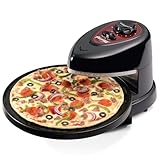
3. Presto Pizzazz Plus Rotating Oven
A rotating countertop oven with top and bottom heating elements that turns the pizza as it cooks. It also handles frozen snacks, wings and flatbreads.
Suits: frozen and quick pizzas. Strengths: simple controls and even turning. Weaknesses: not built for artisan crusts. Skip it if you want a stone-baked finish.
Best for households that want one oven for everything
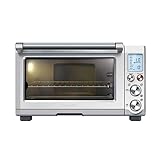
4. Breville Smart Oven Pro
A full-size countertop convection oven with a dedicated pizza setting and enough interior room for a standard pizza stone or pan. It doubles as a daily toaster oven.
Suits: households that want one oven for everything. Strengths: a pizza mode plus many other functions. Weaknesses: does not reach true pizzeria heat. Skip it if you want a dedicated pizza oven.
Best for tight counters
5. Ninja Foodi Digital Air Fry Oven
A countertop oven that flips up on its side to save space and combines air frying, roasting and baking. A pizza pan fits for quick weeknight pies.
Suits: tight counters. Strengths: a flip-up design and air fry mode. Weaknesses: not a high-heat pizza specialist. Skip it if you want a stone-baked crust.
View Ninja Foodi Digital Air Fry Oven on Amazon
Best for everyday baking and pizza
6. Cuisinart Chef’s Convection Toaster Oven
A stainless steel convection toaster oven from a long-running kitchen brand, roomy enough for a twelve inch pizza and a range of other jobs.
Suits: everyday baking and pizza. Strengths: a roomy cavity and familiar controls. Weaknesses: heat limits compared with dedicated pizza ovens. Skip it if you only care about crust char.
View Cuisinart Chef’s Convection Toaster Oven on Amazon
Care and Setup
- Let the oven cool fully before cleaning any stone or tray.
- Use parchment sparingly and keep it clear of heating elements.
- Wipe crumbs from the base so they do not smoke on the next bake.
- Leave space on all sides for heat to escape.
Mistakes to Avoid
- Putting a cold stone into a hot oven without reading the guide.
- Choosing a model too small for your pizza size.
- Ignoring the need for counter clearance.
- Expecting a toaster oven to match a dedicated high-heat oven.
Maximum Heat and What It Means for the Crust
Pizza is a high-heat food. Traditional pizzerias bake at temperatures far above what a standard home oven reaches, and that is why a restaurant crust puffs quickly and chars in spots. Indoor countertop ovens try to close that gap, and the maximum temperature on the listing is the first number to check. Higher heat shortens the bake, which keeps the crust tender inside while the outside crisps. A lower ceiling means a longer bake, and the result is usually a firmer, drier crust.
Do not read the temperature in isolation. What counts is how quickly the oven reaches heat, how well it holds heat after you open the door and whether the heat is concentrated at the right place. Top and bottom elements that can be controlled separately give more control over the base and the cheese. A model that only has one setting for both may brown the top before the base is done.
Also consider the style of pizza you like. Thin Neapolitan-style pies want very high heat and a quick bake. Thicker pan pizzas and frozen pies are more forgiving and work fine in ovens with a lower ceiling. Frozen pizza is a good test of any oven, because it needs steady, even heat more than extreme temperatures.
- Check the maximum temperature and the heat-up time on the listing.
- Look for separate control of top and bottom heat if you want char.
- Match the ceiling to the pizza style you make most.
If the listing gives no maximum temperature, treat that as missing information and look for it in the manual or maker’s page before buying.
Stone, Steel or Plain Tray: The Cooking Surface
The surface under the pizza has a large effect on the result. A pizza stone, usually ceramic or a similar material, absorbs heat and releases it into the dough, which helps the base crisp. Stones need time to preheat fully, and they can crack if exposed to sudden temperature changes or moisture, so follow the maker’s care steps. A steel plate conducts heat faster than stone and can give quicker browning, though it is heavier and may not come with the oven.
Some indoor ovens use a metal pan or a built-in heated base instead. These are easier to clean and less fragile, but they may not give the same bottom crust as a stone. A rotating plate evens out heat, but it also limits pizza size to the plate.
When you compare models, ask what the surface is made of, whether it is removable, whether it can go in the dishwasher or must be wiped by hand and whether replacements are sold. A removable stone is easier to clean and swap. A fixed one may be harder to maintain.
- Stone: good crispness, slower to preheat, careful handling needed.
- Steel: fast browning, heavy, often a separate purchase.
- Tray or heated base: easiest cleaning, usually a softer base.
Whatever surface you choose, a dusting of semolina or flour on the peel or parchment helps the pizza slide on. Check the manual before using parchment at high temperatures, because paper can darken or burn above its rated limit.
Pizza Size, Interior Space and Counter Footprint
Indoor ovens vary a lot in how large a pizza they accept. A typical small unit takes a pie around the size of a personal pizza, while larger toaster-style ovens take a standard round or a rectangular tray. Check the interior width and depth on the listing and compare it with the pizza size you plan to bake. A pizza that touches the heating elements will burn, so leave some clearance.
Look at the height of the opening as well. Pan pizzas, deep dish and loaded toppings need more vertical room. If the oven has a low ceiling, tall pies may brown too much on top.
The outside size matters just as much. Measure your counter and look at the clearance the manual asks for at the back, sides and top. Heat leaves through vents, so tucking the oven under a cabinet can damage the cabinet over time. If you have little counter space, think about whether you can store the oven and bring it out for pizza nights.
- Match interior width to your usual pizza size.
- Check the opening height for thicker pies.
- Measure the counter and the space above for venting.
- Check the weight if you plan to move it.
A common mistake is buying for the biggest pizza you might ever bake. If most of your pizzas are small, a compact oven that heats quickly may suit you better than a larger one that takes longer.
Power Draw, Outlets and Kitchen Safety
High-heat electric ovens draw a lot of power. Many are close to the limit that a standard household outlet can supply, so it is worth checking the wattage on the listing. Plug the oven straight into a wall outlet, avoiding extension cords and power strips, which can overheat. If other large appliances such as a kettle or microwave share the same circuit, running them together may trip the breaker.
Think about where the oven sits. Keep it on a stable, heat-resistant counter, away from the edge. Leave space around it, and keep curtains, paper towels and other flammable items well away. Outer surfaces can become hot, so keep children and pets clear and use oven mitts when you handle trays and stones.
Smoke is another factor. Cheese and oil dripping onto hot elements will smoke, and a dirty base will smoke more. Use the kitchen fan, open a window if needed and keep a clean tray under the pizza. If your smoke alarm is near the kitchen, you may need to move the oven or ventilate more.
- Check the wattage and your circuit before you order.
- Use a wall outlet without an extension cord.
- Leave the clearance the manual asks for.
- Never leave a hot oven unattended with the door open.
Read the safety section of the manual before the first use, and run any recommended burn-in cycle so that factory residue burns off in a ventilated room.
Dough and Technique That Suit a Countertop Oven
Even the best oven will not rescue poor dough handling. Let dough come to room temperature before shaping, and avoid stretching it so thin that it tears. Sauce and toppings should go on lightly. Too much sauce or wet toppings make the center soggy, especially in an oven that cannot reach very high heat.
Preheat the oven and surface for as long as the maker advises. A stone that is not hot enough gives a pale, soft base. Slide the pizza on quickly and avoid opening the door more than needed, since each opening lets heat out.
Watch the first few bakes closely and take notes. Time, position and topping load all change the result. If the top browns before the base, move the pizza lower or reduce the top element if the oven allows it. If the base is pale, preheat longer or move the pizza closer to the heat.
- Use a thin layer of sauce and drain wet toppings.
- Preheat fully, including the stone or plate.
- Rotate the pizza halfway if one side cooks faster.
- Rest the pizza briefly before slicing so the cheese sets.
Frozen and ready-made crusts can work well in these ovens, and they are a good way to learn how yours behaves before you try homemade dough. Follow the pizza maker’s temperature and time guidance, and adjust based on what you see.
A Quick Checklist Before Choosing a Countertop Pizza Oven
Indoor pizza ovens differ more than their similar shapes suggest. Before you commit, work through a few questions so the machine you pick matches your kitchen and your habits.
- Measure the counter space, including height under any cabinets above it.
- Decide the biggest pizza diameter you want to make regularly.
- Check which outlet you will use and whether other appliances share that circuit.
- Think about whether you want a dedicated pizza maker or a multi-purpose oven that also toasts and bakes.
- Look at how the cooking surface is described and whether it can be removed for cleaning.
- Confirm the manual’s notes on clearance around the sides and back.
Write the answers down and keep them next to the spec table, so each model is judged against your needs rather than against a marketing line.
Dedicated Pizza Oven or Multi-Purpose Oven
This is the biggest fork in the road for most buyers. The table lays out how the two approaches usually compare.
| Point | Dedicated pizza oven | Multi-purpose oven |
|---|---|---|
| Main strength | Built for high heat and pizza shape | Handles many tasks |
| Interior shape | Wide and low | Taller, with racks |
| Counter use | One job, one spot | Replaces other gadgets |
| Learning curve | Short pizza sessions, some practice | Familiar controls |
| Cleaning | Focused on stone and chamber | Trays, racks and crumb tray |
If pizza is the main goal, a dedicated unit makes sense. If you want one appliance for toast, small bakes and the occasional pizza, a multi-purpose model keeps the kitchen less crowded.
How to Read a Pizza Oven Listing
Begin with the interior dimensions rather than the outer size. A listing may boast about the number of inches in a pizza, yet the usable space depends on the shape of the heating elements and the door. Look for the stated temperature range and think about what it means for the bake: a higher setting generally gives a quicker cook, while a lower one suits thicker crusts.
Check the accessories list as well. A peel, a stone, a pan or a rack may or may not be included. If a part is not listed, assume it is sold separately. Finally, read the cleaning notes from the maker, because some surfaces should never touch soap or water.
Glossary of Terms
- Peel: a flat paddle used to slide dough in and out of the oven.
- Baking stone: a thick slab that stores heat and supports the dough.
- Elements: the electric heating rods above and below the food.
- Convection: a fan that moves hot air around the chamber.
- Proof: the rest period when dough rises before baking.
Deciding by Situation
Small apartment: look for a compact body and a model you can store in a cupboard when not in use.
Family pizza night: prioritize speed between bakes and a surface large enough for a shared pizza.
Mostly frozen pizza: a multi-purpose oven with a flat tray and easy temperature control is usually enough.
Keen home baker: a dedicated oven with a stone gives room to experiment with dough styles.
For electrical questions such as outlet suitability, follow the maker’s manual and consult a licensed electrician when in doubt.
Care Notes for the Cooking Surface
Whatever material sits at the bottom of your oven, the maker’s care notes come first. Many stones and steel plates are meant to be brushed or scraped rather than soaked, because trapped moisture can be a problem when the surface heats up again. Let the oven cool fully before you handle any part, wipe the chamber with the cleaning method named in the manual, and keep the crumb tray empty. Dark marks on a stone are usually normal and do not mean it is damaged. If a part cracks or the heating elements look wrong, stop using the oven and contact the maker or a qualified repair service.
Countertop Pizza Night: What an Indoor Oven Changes
A dedicated indoor pizza oven changes pizza night from an approximation into an event, because the one thing a domestic oven cannot give you, sustained fierce heat at the base, is exactly what these machines are built around. The difference shows in the underside of the first pizza: set, crisp and spotted rather than pale and soft, with a rim that has puffed instead of merely baked. If your household makes pizza more than occasionally, that difference is not subtle, and it is the reason this category exists alongside perfectly serviceable conventional ovens.
The choice inside the category is about style and scale. Some households chase the fast, high-heat style, thin bases cooked in a couple of minutes, one at a time, eaten in waves as they come off the stone. Others want a family rhythm: slightly larger pizzas, a touch less ferocity, room for different shapes and the occasional traybake or flatbread in the same box. Both are legitimate pizza nights; they simply ask different things of an oven, and this guide’s picks lean one way or the other in ways the reviews describe. Decide which night you are buying before you compare temperatures.
Counter reality deserves a vote. These ovens run hot, need clearance, and are used actively, with doors opening and peels moving, so the right home for one is a stretch of counter where you can stand squarely in front of it, with heat-proof room beside it for the finished pizza and the next one waiting. Kitchens where that stretch does not exist may be better served by a multi-purpose oven that earns its space on other days too, and there is no shame in that verdict: the best pizza oven is the one that will actually be switched on in your kitchen, in February, on a Wednesday.
Budget your attention for the learning curve as well. The first few pizzas on any new high-heat oven are tuition: dough hydration, topping dryness, launch confidence and timing all calibrate over a handful of bakes. Households that expect this enjoy it; households that expect restaurant results from pizza one sometimes conclude the oven is at fault. Give it five pizzas before you judge, keep notes on what changed each time, and the curve flattens quickly into a routine the whole household will request by name.
Choosing an Indoor Pizza Oven Around Heat, Surface and Size
Pizza is a race between the base crisping, the sauce drying to the right point and the cheese melting before the edges scorch, and an indoor oven wins that race with heat delivered in the right places. Maximum temperature matters because a hotter oven cooks a pizza in minutes, giving a base that is crisp underneath and still supple, with spots of char that signal real pizza heat. But the headline number is only part of it: how evenly the heat spreads, how much of it comes from below into the base versus from above onto the toppings, and how fast the oven recovers between pizzas decide whether the third pizza eats as well as the first.
The cooking surface is the second decision. A stone draws moisture from the base and is the classic route to a crisp underside, but it needs a thorough preheat and gentle handling, since a cold liquid spill on a very hot stone can crack it. Steel conducts heat faster and is tougher, suiting cooks who want speed and durability and do not mind the weight. Plain trays and the floors of multi-purpose ovens are the most forgiving and the easiest to clean, but give a paler base unless the dough and technique compensate. Choose the surface that matches your patience as much as your taste.
Size should be measured in pizzas your household actually makes. A compact oven that takes one modest pizza at a time suits couples and small kitchens and heats quickly; a larger cavity suits families and anyone who entertains, but takes counter space every day for the sake of occasional evenings. Check the internal height as well as the width, because topped pizzas, thicker styles and any pan you plan to use all need clearance from the top element. Measure your counter with the door open and the oven pulled forward for loading, since a pizza oven is used actively, with peels going in and out, not simply switched on and left.
Power and placement finish the picture. A high-heat countertop oven draws serious current, so it needs a suitable socket, a circuit that is not already carrying the kettle and the microwave, and a surface and surroundings that tolerate real heat. Steam and flour dust escape at the door, and the exterior gets hot enough to demand respect and clearance. Site the oven where you can stand in front of it comfortably with a peel, where children cannot reach the door, and where the heat it sheds has somewhere to go. The best oven in the wrong corner will be used twice and resented.
Dough, Preheat and Launch: A Routine for Better Pizza
Everything improves when the oven and its stone or steel are fully preheated, which takes longer than the air temperature reaching its mark; the surface is the reservoir your base cooks from, and a rushed preheat gives a pale, soft underside no topping can rescue. While the oven heats, bring the dough to a workable temperature, prepare toppings and squeeze out anything wet, because excess moisture is the other great enemy of a crisp base. Mozzarella benefits from being torn and dried on kitchen paper, vegetables that weep should be cooked or salted and drained first, and sauces should be spread thinner than instinct suggests.
Shape the dough on a lightly floured or semolina-dusted surface, keeping a rim of untouched dough at the edge if you like a puffed crust, and build the pizza on the peel or tray it will travel on. Work with confidence and moderate speed: a pizza that sits too long on the peel sticks to it, especially in a warm kitchen. Dust the peel, give the pizza a small shake to confirm it moves before you commit to the launch, and add a little more flour underneath any spot that grips. A stuck launch is the most common indoor pizza disaster, and it is entirely preventable in the minute before.
Launch with a decisive movement, placing the far edge down and drawing the peel back so the pizza settles flat and centred. Then leave it alone. Opening the door to rotate or check every few seconds dumps the heat you preheated for; most indoor ovens cook evenly enough to need at most one turn, judged by eye through the window or at a single planned opening. Watch the rim and the cheese rather than the clock: you are looking for a set, spotted base, a rim that has puffed and coloured, and cheese that has melted into pools without browning hard, unless the style you are making wants more colour.
Between pizzas, let the surface recover its heat, and scrape or brush away burnt flour and cheese from the previous round, because yesterday’s residue becomes today’s smoke and bitter spots. Keep finished pizzas on a rack rather than a solid board for the first minute so steam escapes instead of softening the base you worked for, then move them to a warm board for cutting. If the household eats in waves, hold the oven at temperature and cook to order; a fresh two-minute pizza beats a reheated one every time, and the oven is already hot.
Caring for the Stone, the Cavity and the Oven
A pizza stone or steel should never be washed like a dish. Let it cool completely in the oven, because thermal shock from cold water or a cold sink can crack a stone outright. Scrape off burnt flour and cheese with a stiff brush or a scraper, wipe with a barely damp cloth if you must, and accept the darkening that comes with use; a seasoned, stained surface is normal and does not affect the pizza. Detergent soaks into a porous stone and can flavour later pizzas and smoke at high heat, so keep soap away from it entirely. Steel can be washed and dried more conventionally, following the maker’s guidance, and benefits from being bone dry before it goes back in.
The cavity collects flour, semolina and cheese that escapes the pizza, and at pizza temperatures it all carbonises quickly. Once the oven is cold, brush out the debris, wipe the interior surfaces the manual allows, and clean the door glass so you can judge colour without opening up. Check that vents are clear and that the oven still sits level and stable. Crumbs left inside do no harm once, but a build-up smokes at every preheat and eventually flavours the kitchen more than the pizza.
Store peels, brushes and any tools with the oven if you can, so pizza night has no scavenger hunt attached. Keep the manual’s clearances in mind when the kitchen gets rearranged, and inspect the cord and plug periodically, since high-draw appliances deserve that attention. If the oven begins to heat unevenly, cycles oddly or the door seal looks damaged, contact the maker rather than compensating with guesswork. High heat is the whole point of the appliance, and it deserves equipment that is behaving exactly as designed.
Mistakes That Make Indoor Pizza Soggy or Burnt
The first mistake is impatience at the preheat, launching onto a surface that has not stored enough heat and then blaming the dough. The second is generosity: too much sauce, wet cheese and a pile of raw vegetables guarantee a swampy middle whatever the oven does. The third is building the pizza and leaving it standing on the peel while chatting, so it bonds to the wood or metal and arrives in the oven folded. The fourth is opening the door repeatedly, bleeding heat and then extending the cook until the rim dries and hardens.
Owners also use cold dough straight from the fridge, which resists stretching, snaps back and bakes up dense; overload a small oven with a pizza that touches the top element; and cut the finished pizza on the hot stone or steel, damaging both the surface and the knife. Each is a habit, not an equipment failure. Preheat fully, dry the toppings, launch a moving pizza, open the door once at most, and the indoor oven will turn out pizza that justifies the counter space it occupies.
Putting the Picks Side by Side
With six options in this guide, the fastest way to narrow the field is to match each pick to the job described in its review above, rather than chasing the longest feature list. Every pick here earned its place for a different kind of buyer, and the review sections spell out who each one suits, what it does well and where its limits sit. The notes below simply restate that positioning in one place, so you can compare the indoor pizza oven options without scrolling back and forth. Nothing here adds new claims about any model; it is a map of what the guide already says, organised around the decision you are actually making.
The Breville Smart Oven Pizzaiolo is positioned in this guide for serious home pizza makers. If that description sounds like your household, it deserves a close look; if it does not, its strengths are unlikely to matter much in daily use, however appealing they look on a listing. Re-check its review above for the stated strengths and the honest limitation, and confirm the current details on the listing itself, because included accessories and exact configurations can change over time.
The Ooni Volt 12 Electric Pizza Oven is positioned in this guide for small kitchens that want a dedicated oven. If that description sounds like your household, it deserves a close look; if it does not, its strengths are unlikely to matter much in daily use, however appealing they look on a listing. Re-check its review above for the stated strengths and the honest limitation, and confirm the current details on the listing itself, because included accessories and exact configurations can change over time.
The Presto Pizzazz Plus Rotating Oven is positioned in this guide for frozen and quick pizzas. If that description sounds like your household, it deserves a close look; if it does not, its strengths are unlikely to matter much in daily use, however appealing they look on a listing. Re-check its review above for the stated strengths and the honest limitation, and confirm the current details on the listing itself, because included accessories and exact configurations can change over time.
The Breville Smart Oven Pro is positioned in this guide for households that want one oven for everything. If that description sounds like your household, it deserves a close look; if it does not, its strengths are unlikely to matter much in daily use, however appealing they look on a listing. Re-check its review above for the stated strengths and the honest limitation, and confirm the current details on the listing itself, because included accessories and exact configurations can change over time.
The Ninja Foodi Digital Air Fry Oven is positioned in this guide for tight counters. If that description sounds like your household, it deserves a close look; if it does not, its strengths are unlikely to matter much in daily use, however appealing they look on a listing. Re-check its review above for the stated strengths and the honest limitation, and confirm the current details on the listing itself, because included accessories and exact configurations can change over time.
The Cuisinart Chef’s Convection Toaster Oven is positioned in this guide for everyday baking and pizza. If that description sounds like your household, it deserves a close look; if it does not, its strengths are unlikely to matter much in daily use, however appealing they look on a listing. Re-check its review above for the stated strengths and the honest limitation, and confirm the current details on the listing itself, because included accessories and exact configurations can change over time.
Two habits help when you compare the indoor pizza oven picks. First, decide your non-negotiables before you compare anything else: the space you have, the people you cook for and the one job this appliance must do well. Second, treat every other feature as a bonus rather than a reason to buy. A pick that fits your space, your habits and your cleaning tolerance will serve you better than a more elaborate model that fights your routine. When two picks both fit, choose the one whose stated limitation bothers you least, because limitations are what you live with every day, while strengths are what you notice in the first week.
More Practical Notes Before You Decide
Think about flour as part of the oven’s ecosystem. Pizza making dusts a kitchen: the peel, the counter and the oven’s mouth all collect it, and at high heat loose flour carbonises quickly. A small brush by the oven, a habit of wiping the launch area between pizzas, and a dough routine that uses no more flour than the launch needs will keep both the oven and the room cleaner. Semolina under the base gives release with a pleasant texture and less raw-flour taste, and many households switch to it permanently once tried.
Let the household’s pizza preferences set the oven’s working life. A family that makes pizza weekly for years should weight durability, surface size and the maker’s support heavily, because the oven is becoming infrastructure. A household experimenting to see whether pizza night sticks should weight simplicity and counter footprint, since the oven must earn its place before it can be infrastructure. Both are rational; confusing one for the other is how good ovens end up resented and cheap ones end up replaced.
Keep the first month’s bakes deliberately varied: a plain cheese pizza to learn the oven’s map, a vegetable pizza to learn moisture, a thicker style to learn the limits. Each teaches something the others cannot, and together they calibrate your dough, your launch and your timing faster than a month of identical pizzas. Take one photograph of each underside; the base tells the truth about the bake, and a short visual record shows progress that memory smooths away.
Whatever you choose from this guide, give the unboxing and first setup the same care as the purchase. Check the appliance over before anything is plugged in, read the manual’s safety and setup pages properly rather than skimming for the quick-start, and keep the packaging until the first successful uses are behind you, in case a return is needed. Register the product if the maker offers it, and keep the receipt and the model details together in one place. These small acts take minutes and are the difference between a smooth first week and an avoidable argument with a retailer.
Measure your space one final time before ordering, and measure the route as well as the destination: doorways, cupboard openings, the turn into the kitchen and the shelf or counter where the appliance will live. More good purchases are defeated by a centimetre at a doorway than by any flaw in the product. If the appliance will share a circuit with other heavy loads, note that too, and plan which appliances will take turns. A purchase that arrives to a prepared home starts its life being used; one that arrives to surprises starts its life in a corner.
Indoor Pizza Oven FAQ
Do indoor pizza ovens need ventilation?
Yes. High-heat models can throw off heat and some smoke, so run the kitchen fan and keep space around the unit.
Can a toaster oven make good pizza?
It can make a decent pie, especially with a stone, but it will not match the char of a dedicated high-heat oven.
What size pizza do these ovens take?
It varies by model. Check the listing for the interior width before you buy.
Do I need to preheat an indoor pizza oven?
Yes. Preheating the oven and the stone or plate gives a crisper base and a faster bake. Follow the maker's guidance for the time, since models differ.
Can I use parchment paper?
Sometimes, but check the paper's temperature rating and the oven manual first. Keep paper clear of the heating elements, because it can darken or catch fire at high heat.
Why is the bottom of my pizza pale?
The surface may not have preheated long enough, the sauce may be too wet or the pizza may sit too far from the bottom heat. Try a longer preheat and a lighter sauce layer.
How do I clean a pizza stone?
Let it cool fully, scrape off residue with a brush or scraper and wipe it with a dry or barely damp cloth. Avoid soap and soaking, since a porous stone can absorb them. Check the manual for the maker's advice.
Is a rotating oven better than a fixed one?
Rotation helps even out hot spots, but it limits pizza size to the plate. A fixed stone often suits larger or thicker pies. Choose by the style and size you bake.
Can I bake other foods in an indoor pizza oven?
Many models can handle flatbreads, frozen snacks and small items, depending on the design. Check the listing and manual to see what the maker approves.
Why is the base of my pizza pale while the top is done?
The cooking surface was not hot enough when the pizza went in, whatever the air temperature claimed. Preheat until the stone or steel itself is fully up to temperature, which takes longer than the oven reaching its setting, and confirm with a surface reading if you can. Wet toppings make the problem worse by steaming the base from above. Give the surface its full preheat, dry the toppings, and the base and the top will start finishing together.
How do I stop the pizza sticking to the peel?
Dust the peel with flour or semolina, build the pizza on it rather than transferring a built pizza onto it, and give it a small shake before you head for the oven to confirm it still moves. Work reasonably quickly, because a pizza left standing on the peel bonds to it as the dough absorbs the dusting. If a spot sticks, lift the edge gently and add a pinch more flour underneath rather than dragging the whole pizza.
Can I use shop-bought dough in a high-heat indoor oven?
Yes, and it is a sensible way to learn the oven before learning dough. Let it come to a workable temperature so it stretches without snapping back, keep toppings dry and moderate, and expect the first bakes to teach you the timing, since bought doughs vary in hydration and sugar, which changes how fast they colour at high heat. Once the oven’s behaviour is familiar, homemade dough becomes an easier project with a known instrument waiting for it.
Why does the oven smoke during preheat?
Residue is the usual cause: flour, semolina and cheese from previous bakes carbonise on the hot surfaces and smoke as the oven climbs. Brush out the cold oven before a session, scrape the stone or steel once cool after the last one, and avoid letting cheese escape onto the surface during the bake. A clean oven should preheat with little more than hot air to notice; persistent smoke from a clean oven deserves a check of the manual and, if it continues, the maker.
Should I turn the pizza during the bake?
Only if your oven needs it. Most indoor ovens cook evenly enough that a pizza can be left alone, and every opening costs heat. Learn your oven’s map over a few bakes: if one side consistently colours faster, a single turn at a planned moment fixes it. Judge by the rim and the base’s set, not by anxiety, and keep the opening brief. The best turn is the one you planned before the pizza went in.
The Short Version
For high-heat pizza, the Breville Pizzaiolo. For a compact high-heat oven, the Ooni Volt 12. For a simple budget-friendly option, the Presto Pizzazz Plus. For a pizza-ready all-rounder, the Breville Smart Oven Pro. For a flip-up space saver, the Ninja Foodi Air Fry Oven. For a trusted brand with pizza capacity, the Cuisinart Chef’s Oven.
Related Guides
- 6 Best Countertop Pizza Ovens: Electric Indoor Picks (2026)
- 6 Best Indoor Pizza Ovens: Countertop Picks for Home Pizza
- 6 Best Pizza Ovens for Kitchens: Countertop and Electric
- 6 Best Indoor Smokeless Grills: Electric and Countertop (2026)
- 6 Best Countertop Outdoor Ovens: Pizza and Camp Styles (2026)