A hot tub cover does two jobs at once: it keeps heat in so you spend less to run the tub, and it keeps leaves, bugs and curious kids out. Hard insulated covers are the standard for rigid spas, while soft covers, floating thermal blankets and lifters round out the options for owners who need something extra.
The six products below mix covers, a floating blanket and lifters, since many owners buy them together. We have not used any of them ourselves, and cover sizes must match your tub exactly, so confirm the dimensions and fit on the current listing before you order.
As an Amazon Associate we earn from qualifying purchases. Links below are affiliate links, and they do not change the product information we give.
What to Look For
| Feature | Why it matters |
|---|---|
| Fit | A cover must match your tub’s shape and size or heat and debris get in |
| Insulation | Thicker foam cores save more heat but are heavier to lift |
| Weather rating | Winter covers need to shed snow and resist water soaking in |
| Lifter compatibility | Check the lifter’s range of tub sizes before you buy |
| Locks and straps | Tie-downs keep the cover on in wind |
In this guide
Specs at a Glance
| Product | Type | Best for | Notes |
|---|---|---|---|
| Classic Accessories Ravenna | Soft protective cover | Outdoor spas | Weather-resistant fabric |
| Cover Valet | Cover lifter | Rigid covers | Mounts on the side of the tub |
| CoverMate Cover Lifter | Cover lifter | Rigid covers | Lifts and stores the cover |
| Leslie’s Spa Solar Cover | Floating thermal blanket | Heat retention | Floats on the water |
| Intex Spa Cover | Replacement cover | Intex inflatables | Check the model match |
| Gekufa Hot Tub Bubble Blanket 8 x 8 FT | Floating blanket | Heat retention | 16-mil square solar cover; check size |
The 6 Best Hot Tub Covers
Top pickBest for keeping dirt out
1. Classic Accessories Ravenna Spa Cover
A fabric cover that protects a spa from sun, rain and debris. It is a lighter option, better suited to protection than to deep insulation.
Suits: keeping dirt out. Strengths: weather-resistant material. Weaknesses: not a heat-retaining lid. Skip it if you need winter insulation.
View Classic Accessories Ravenna on Amazon

Best for heavy rigid covers
2. Cover Valet Hot Tub Cover Lifter
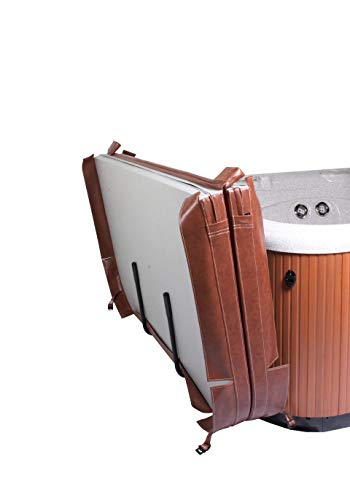
A lifter that helps you raise a heavy cover and swing it out of the way. It is a common accessory with hard covers, which are heavy for one person.
Suits: heavy rigid covers. Strengths: easier on the back. Weaknesses: needs the right clearance. Skip it if your cover is a light fabric one.

Best for frequent users
3. CoverMate Hot Tub Cover Lifter
Another cover lifter option, made to help you lift, store and replace a cover. Check the listing for the range of tub sizes it supports.
Suits: frequent users. Strengths: a recognized lifter brand. Weaknesses: installation takes a little time. Skip it if your tub sits against a wall.
View CoverMate Cover Lifter on Amazon
Best for energy saving
4. Leslie’s Spa Solar Cover
A floating thermal blanket that sits on the water under the main cover. It reduces heat loss and keeps the water surface cleaner.
Suits: energy saving. Strengths: a low-cost insulation layer. Weaknesses: adds a step to every soak. Skip it if you want one-piece convenience.
View Leslie’s Spa Solar Cover on Amazon
Best for intex owners
5. Intex Spa Cover
A replacement cover for Intex inflatable spas. Match the cover to the exact tub model, as sizes differ across the line.
Suits: Intex owners. Strengths: a matched fit. Weaknesses: limited to those tubs. Skip it if you own another brand.
View Intex Spa Cover on Amazon
Best for adding insulation over the water
6. Gekufa Hot Tub Bubble Blanket 8 x 8 FT
A floating bubble blanket from Gekufa, listed as an 8 x 8 ft, 16-mil square solar cover for pools and spas. It is described as a heat retaining thermal blanket that sits on the water.
Suits: adding insulation over the water. Strengths: a floating design that helps keep heat in. Weaknesses: you may need to trim it to your tub shape. Skip it if you prefer a ready-made fit.
View Gekufa Hot Tub Bubble Blanket on Amazon
Care and Setup
- Measure the tub outside edge to outside edge before ordering any cover.
- Brush snow off the cover rather than letting it build up.
- Lock or strap the cover in windy areas.
- Clean and condition vinyl a few times a year.
Mistakes to Avoid
- Ordering by seat count rather than measurements.
- Dragging a heavy cover across rough ground.
- Leaving the cover off overnight.
- Letting water pool on top.
Foam Core, Taper and How a Hard Cover Is Built
A hard cover is a sandwich: a foam core wrapped in a vapor barrier and covered with vinyl. The core does the insulating, so the thickness and density of the foam affect how much heat stays in. A thicker core generally insulates better, but it is heavier and harder to lift. Many covers are tapered, with the center thicker than the edges, so snow and rain run off instead of pooling. Check whether a cover is flat or tapered and what the taper is, because a flat cover can collect water and sag.
The vapor barrier is the layer that stops moisture from soaking the foam. When it fails, the core absorbs water and becomes heavy and less effective. Ask how the barrier is sealed and how the seams are finished. Hinge location also matters: a fold in the middle is common, and the hinge area is where wear and water entry often start.
Other construction details to compare:
- Skirt length, which should cover the tub’s lip and reduce heat loss at the edges.
- Stitching quality and reinforcement at corners and handles.
- Vinyl type and color, which affect sun fading and appearance.
- Included straps, clips or locks.
Specifications vary by maker, so rely on the listing for the stated thickness and weight, and treat marketing words such as heavy duty as claims.
Measuring Shape, Corner Radius and Skirt
Getting the measurements right is the difference between a cover that works and one that leaks heat. Measure the tub’s outside length and width at the widest points, and then measure at more than one spot because some tubs are not perfectly square. Note whether the corners are sharp or rounded, and measure the corner radius, which is the curve at each corner. Round tubs need a diameter measured across the center in two directions.
Measure the height of the tub’s rim and any raised edges or trim, because skirt length depends on them. Check for obstacles: a cover must clear control panels, ladder rails, lights and any raised caps. Also note the position of the tub relative to walls or railings, since hinges and lifters need room.
- Record the measurements in a table and double-check each one.
- Take photos of the tub and trim for reference.
- Check the manufacturer’s size chart and ordering instructions before purchase.
If the tub is old or irregular, consider a custom order. Ask about the return policy before ordering, since a mismatch is costly to ship back.
Lifters, Clearance and Handling a Heavy Cover
A hard cover may be heavy and awkward for one person, especially when wet. A lifter holds the cover while you soak and keeps it off the ground. There are several styles: side-mounted lifters, units that rest on the tub, and models that lift the cover up and away. Each needs a certain amount of clearance, so measure the space on the sides and behind the tub.
Confirm that the lifter is compatible with your tub’s size and cover weight. Look at the maximum cover size, the installation method and whether it needs to attach to the tub or the ground. Some tubs have thin or curved cabinet walls that make mounting harder. Check that the lifter does not block access to panels and filters.
If you skip the lifter, use proper technique: fold the cover on its hinge, lift with two people when it is wet or snowy, and keep it off rough ground to avoid tearing the vinyl. Do not drag it across concrete or gravel. Store the cover on a flat clean surface with the vinyl side up. Avoid leaning the cover against a wall for long, which can warp the foam. Never stand or sit on the cover, because the core is not designed for body weight.
Locks, Straps and Safety Around the Tub
A cover is also a safety item. Water access is a drowning risk for children and pets, so a secure, lockable cover matters. Check whether the cover has locking straps or clips, how they attach to the tub, and whether the keys or latches are easy for adults to use but hard for children. A cover is not a substitute for supervision or a fence, and local codes may have rules about barriers, so check them.
Straps also keep the cover on in wind. A loose cover can lift and flip, damaging itself and the tub. Make sure straps are fastened after each use and adjust them as the cover wears. Check the hardware regularly for corrosion or cracks.
Ensure that a cover is not walked on, and that it can support the snow load in your region, which is another reason to brush snow off. Keep chemicals away from the vinyl, and avoid placing sharp objects on top.
- Close and lock the cover whenever the tub is unattended.
- Do not leave children alone near the tub.
- Check the clearance between the cover and the tub edge so that small hands or limbs cannot get caught.
Upkeep for Vinyl, Foam and Water Chemistry
Clean the vinyl a few times a year with mild soap and water, and use a cover protectant made for vinyl if the maker recommends one. Avoid harsh cleaners, bleach and petroleum products, which can dry out and crack the surface. Rinse well and let it dry. Wipe the underside as well, because moisture and sanitizer fumes collect there and can encourage mildew.
Air the cover out occasionally. Open the tub and let the cover rest on the lifter or a clean surface with the underside exposed, as the manual allows, so trapped humidity can escape. Heavy chemical levels in the water can attack the underside, so keep water balanced and avoid adding strong chemicals while the cover is closed.
Watch for signs that the foam is failing: a cover that feels heavy, a strong musty smell, bulges or dips, or visible water inside the seams. A small tear can often be patched with vinyl repair tape or a repair kit, but a soaked core cannot be dried reliably and usually means replacement. Floating thermal blankets help protect the cover from steam and add insulation, but trim them to fit and remove them before soaking.
What a Cover Does for a Hot Tub
A hot tub cover is more than a lid. It keeps heat in, keeps debris out, helps reduce water evaporation and acts as a barrier for safety. A good cover fits the tub closely, closes tightly and can be lifted and replaced with reasonable effort. Poor fit lets heat escape, lets in leaves and rain, and makes the tub more costly to run.
- Insulation: foam inside the cover reduces heat loss.
- Vapor barrier: keeps moisture out of the foam.
- Skirt: the flap around the edge that seals against the tub side.
- Straps and locks: hold the cover in place and keep children out.
- Hinge and fold line: allows the cover to fold for removal.
Look at the thickness and density of the foam, the weight of the cover and the quality of the vinyl, as described by the maker.
Measuring for a Replacement
A cover must fit the shape and dimensions of your tub. Measure the length and width of the tub’s top edge, the corner radius, and the width of the rim. Note whether the tub has rounded or square corners, and the position of any controls or hardware. Many makers ask for a diagram or a template. Follow their measuring guide, and do not rely on the original cover size alone, since tubs vary.
- Measure the tub from outside edge to outside edge, in both directions.
- Measure the corner radius with a template.
- Note the skirt length needed for the cabinet height.
- Note the fold position that suits your cabinet and lift system.
- Photograph the tub to help the maker confirm the shape.
Cover Lifters, Blankets and Solar Covers Compared
| Item | What it does | Notes |
|---|---|---|
| Cover lifter | Holds the cover and lifts it away | Helps with heavy covers; needs installation |
| Thermal blanket | Floats on the water under the cover | Adds insulation; trims easily |
| Solar cover | Warms water using sun | Best for outdoor tubs in sunny places |
| Cover cap | Protective weather layer | Helps extend the life of a cover |
Choose accessories that suit your tub and climate. Check compatibility with your cover, and follow the maker’s instructions for installation.
Safety and Child Protection
A hot tub cover should lock to keep children and pets out. Use the locks every time the tub is not in use. A cover is not a substitute for supervision, and floating on top of water is dangerous. Follow local rules on fencing and barriers for hot tubs, and the maker’s safety instructions. Check straps and locks regularly, and replace any that are worn.
Handling Heavy Covers Safely
Covers can be heavy, especially when wet or covered in snow. Use a lifter if possible, and ask for help. Lift with your legs, not your back. Do not drag the cover across rough surfaces, since this wears the vinyl. Clear snow gently with a soft broom, and do not use sharp tools. Heavy snow or standing water on the cover can damage it. Store the cover in a place where it will not be crushed when it is off the tub.
Cleaning and Extending Life
Clean the cover with a mild soap and water and a soft brush, then rinse. Use a vinyl protectant recommended by the maker, and avoid harsh chemicals, which can damage the surface. Keep the underside dry when you can, and let the cover air out regularly. Check for cracks, waterlogged foam and loose seams. Replace the cover when it becomes heavy, no longer seals or has damaged foam.
Water Care and the Cover Working Together
A cover helps your water stay clean, but the water also affects the cover. Chemicals in the water, high sanitizer levels and steam can attack vinyl and foam over time. Keep the water balanced as the tub maker advises, and avoid harsh chemicals splashing the cover. Lift the cover for a few minutes after adding sanitizers so fumes can escape. Wipe condensation from the underside, and let the cover air out occasionally. Moisture trapped under the cover can speed up wear and cause odors.
- Follow the tub maker’s instructions for chemical use.
- Air out the tub after treating the water.
- Rinse the cover edges if chemicals splash on them.
- Keep the cover clean and dry on the underside when possible.
Weather: Sun, Snow and Wind
Outdoor covers face sun, snow, rain and wind. Strong sun can fade and dry vinyl, so use a protectant approved by the maker. Snow is heavy, so clear it gently with a soft broom, as a thick layer can bend or damage the cover. Wind can lift a cover that is not strapped down, so use the straps and locks every time. If you live in a very windy area, add extra tie-downs that the maker permits. A cover cap or storage area for the cover when it is lifted off keeps it from blowing away.
Choosing With More Care: The Details That Decide Satisfaction
Choosing hot tub covers is a question of fit in the most literal sense: fit with your specific spa, fit with the space around it and fit with the people who will use it. Start by confirming compatibility with your own tub using the maker information for both, rather than assuming that spa accessories are universal. Shapes, heights and surrounds vary more than listings suggest, and an accessory that nearly fits is usually worse than useless, because it will be wrestled with at exactly the moments you want relaxing to be easy.
Then judge the practical build. This accessory will live outdoors or in a steamy room, be handled with wet hands and be used in the dark by people with bare feet. Stability, grip, weather resistance and how it can be cleaned all matter more than appearance, though there is no harm in choosing something that also looks at home beside your tub. Read how it is installed, moved and stored, and picture your household actually doing those things on a wet evening.
Matching Your Choice to Real Life
Think through who uses the spa and when. A household of confident adults soaking in daylight has different needs from grandparents visiting, children being lifted in, or anyone stepping out into a cold, dark garden. The accessory that serves the least confident user safely is usually the right one for everyone, because confidence around water is what lets people relax. If your spa hosts guests, remember they will not know your setup, so obvious, stable and forgiving beats clever every time.
Season and setting shape the choice too. An accessory that lives outside all year faces sun, rain and frost, while one stored indoors between uses can be lighter and simpler. Consider where it will sit when the spa is covered and not in use, whether it blocks access for maintenance, and whether it will still make sense if you rearrange the garden. Buying for your real setting, rather than a catalogue photograph, prevents the slow drift of a useful item becoming clutter.
Using It Well From the First Day
Set the accessory up exactly as its maker directs, on the ground or surface it was designed for, and test it dry and unhurried before anyone relies on it with wet feet or in the dark. Small adjustments at this stage, levelling, repositioning, tightening or adding a mat beneath, are easy; the same adjustments are awkward once the spa is full of guests. Walk the whole route from door to tub yourself, barefoot if that is how it will be used, and fix anything that feels uncertain.
Build the accessory into your normal spa routine so it is checked without thinking. A glance and a wobble test before use, a rinse or wipe as part of tidying up, and a proper look during your seasonal clean will catch wear early. Teach everyone in the household how it should be positioned and used, especially if it can be moved: an accessory left in the wrong place after cleaning is a common and avoidable hazard around any spa.
Care, Cleaning and Keeping It at Its Best
Outdoor spa accessories age through weather and water, so care is mostly about inspection and cleanliness. Rinse off chemical splashes and debris, clean surfaces with products suitable for the material as the maker directs, and let everything dry properly rather than trapping moisture against the spa or the ground. Check fixings, joints and feet for looseness or wear, and look for cracking, fading or brittleness that suggests sun and weather are winning. Catching these changes early is what keeps a sound accessory in service.
Storage and off-season care extend life further. If the accessory is designed to be removed, store it clean and dry, out of standing water and direct weather. If it stays in place year-round, clear leaves and snow from around it, keep drainage paths open so it does not sit in puddles, and re-check its stability after storms or ground movement. A few minutes at each change of season is a fair trade for an accessory that stays safe and presentable for years.
How the Picks in This Guide Compare
The picks in this guide, Classic Accessories Ravenna Spa Cover, Cover Valet Hot Tub Cover Lifter, CoverMate Hot Tub Cover Lifter, Leslie’s Spa Solar Cover, Intex Spa Cover and Gekufa Hot Tub Bubble Blanket 8 x 8 FT, were chosen to cover the situations most buyers actually face rather than to repeat the same idea several times over. Read their individual reviews above side by side and you will notice that each one leans towards a different strength: a different balance of comfort, practicality, ease of care and suitability for a particular setting. That spread is deliberate, and it means the best choice for you depends less on which pick is strongest in the abstract and more on which strength matches the job waiting for it in your home.
A useful way to compare them is to hold your main scenario steady and test each pick against it. Picture the same ordinary day, the same room, the same people and the same weather, and ask of each option in turn how it would cope. The pick that handles your ordinary day gracefully will almost always serve you better than the one that shines only in an ideal scenario. Where two picks seem close, let the care routine decide: the one whose cleaning, storage and upkeep fit your real habits is the one that will still please you in a year.
It also helps to decide in advance what would make you return or replace a purchase, because that reveals your real priorities. If the answer is about fit, measure twice and order once. If it is about upkeep, re-read the care sections of the reviews above before choosing. If it is about how the pick suits a particular person, involve that person in the decision now rather than after delivery. Clear priorities turn a long shortlist into a short decision, and they protect you from being swayed by whichever listing you happened to read last.
Reading Listings and Product Pages Critically
Listings for hot tub covers reward readers who look past the lifestyle photographs. Find the stated compatibility, the dimensions, the materials and the installation method, and check each against your own spa and space. If the listing does not say which tubs or situations it suits, be cautious: reputable makers are usually specific, because returns help nobody. Photographs of the item in a real garden, at a believable scale, tell you more than dramatic angles against a white background.
Also read for what is not included. Fixings, mats, covers or a second component shown in pictures may be extras, and assembly that looks instant in a video may take tools and time. Check the return terms before ordering anything whose fit you cannot verify, and measure your space rather than estimating. With accessories, the difference between delighted and disappointed is usually a measurement somebody skipped.
Mistakes That Only Appear After a Few Weeks
The commonest mistake is assuming fit instead of confirming it. Heights that are slightly wrong, shapes that clash with a curved cabinet, or a footprint that crowds the only access panel all turn a sensible accessory into an irritant. Measure, compare with the maker figures and, where possible, hold the space in mind with the cover both on and off. The second mistake is placing convenience above stability: an accessory that can slide, rock or tip has no place beside water, whatever else it offers.
Neglect is the other mistake. Spa accessories sit quietly doing their job, so they are easy to forget until something fails. A fixing loosened by weather, a surface grown slippery with algae, or plastic embrittled by sun will not announce itself. The fix is a habit, not a product: look the accessory over whenever you do your regular water care, clean what needs cleaning, and retire anything that has become unstable rather than hoping it lasts one more season.
Building a Routine That Lasts
In the first weeks, pay attention to how the accessory behaves in real use. Does it stay put when used by different people, does water pool anywhere it should not, and does it make getting in and out feel easier in the dark as well as in daylight? Adjust position, add matting or improve lighting while your impressions are fresh. Small refinements early on are what make an accessory disappear into the routine, which is the highest compliment spa equipment can earn.
Across the year, let the seasons prompt your checks. After winter, look for frost or storm damage and confirm nothing has shifted. In high summer, check for sun damage and surfaces that become too hot or too slick. In autumn, clear the leaves that trap damp around bases and feet. This light seasonal rhythm, added to your normal spa care, keeps the accessory safe without ever becoming a project in its own right.
When to Repair, Replace or Rethink
Replace an accessory when its safety or basic function is compromised: instability that cannot be corrected, cracked or brittle material, fixings that no longer hold, or a fit that no longer matches your spa after changes. Cosmetic fading alone is not a reason, but anything that makes a user hesitate or grab for support is. Around water, confidence is a safety feature, and equipment that undermines it has finished its service.
When replacing, revisit your measurements and your spa model rather than reordering from memory, since both can change. Take the chance to correct whatever mildly annoyed you about the old one: a better position, an easier cleaning routine, a shape that suits how your household actually moves around the tub. The second version of any accessory, chosen with a season or two of experience behind you, is almost always the one that stays.
A Practical Decision Worksheet
Start by writing your requirements down before you look at another listing. Divide a page into three short lists: what the purchase must do, what would be nice, and what you know you do not need. Be specific in the first list, because vague wishes produce vague purchases. Include the room or situation, the people involved, the surfaces and conditions it will face, and the care effort you can honestly sustain. Then read the reviews in this guide once more, scoring each pick only against your first list. Picks that fail a must-have leave the shortlist immediately, however appealing their extras, and what remains is usually a choice between two or three genuinely suitable options.
Now test that shortlist against the least convenient day, not the best one. Imagine the purchase in use when you are tired, rushed, short of space or dealing with guests, bad weather or a spill, because that is when design weaknesses stop being theoretical. Ask where it will be stored on that day, who else will handle it, and what could go wrong that a little planning would prevent. This unglamorous exercise is where experienced buyers earn their reputation: they do not buy for the photograph, they buy for the Tuesday evening when everything else is going wrong as well.
Planning Around Seasons and Household Changes
Seasons change what a home asks of its contents, and a wise purchase anticipates the change rather than discovering it. Think about the wettest, hottest, busiest and quietest times of your year and how this choice behaves in each. Some purchases work hardest in one season and rest in another, which is fine as long as storage and care for the resting months are planned. Others are asked to perform identically all year, which raises the bar for durability and for a care routine you can keep up when motivation dips in the middle of winter.
Households change too, sometimes gradually and sometimes overnight. Children grow, relatives visit or move in, pets arrive, jobs change the shape of the day, and a purchase that fits this year may be tested by next year circumstances. You cannot plan for everything, and you should not try, but favouring adaptable, forgiving choices over narrow, precious ones gives your home room to evolve. When you read the picks above, give a quiet bonus to the option that would still make sense if your household looked a little different in two years time.
Troubleshooting and the Long View
When something disappoints after purchase, troubleshoot before you replace. Most disappointments have a simple layer underneath: the wrong position, the wrong routine, the wrong pairing with another item, or expectations set by a photograph rather than by the job at hand. Change one variable at a time and live with the change for a few days before judging it, because several changes at once teach you nothing. Keep notes if the problem is subtle. A surprising share of purchases are rescued by a mat, a hook, a different wash, a moved shelf or a clearer house rule.
Finally, keep the long view. The purchases that serve a home best are rarely the most exciting ones; they are the ones still quietly working years later, maintained by habits so small they feel like nothing. Judge your shortlist by asking which option you would be happiest to clean, repair, store and rely on in three years, with its novelty long gone and its usefulness proven daily. That question cuts through presentation faster than any other, and it is the question this guide was written to help you answer well.
Hot Tub Cover FAQ
Do floating covers replace a hard cover?
No. They add insulation under a main cover, but a hard cover is still needed.
What is the best cover for winter?
A thick insulated lid with straps, used with a floating blanket, does well in cold weather.
Are lifters worth it?
For heavy covers, yes. They save effort and protect the cover.
How often should a cover be replaced?
There is no single number. Sun, moisture and snow load all age a cover, and a waterlogged foam core is a clear sign that it is finished. A cover that feels heavy, sags in the middle or smells musty is usually ready for replacement.
Can I order a cover without measuring?
It is risky. Shapes such as round, square and rounded-square can look alike online, and a few inches of error lets heat escape. Measure both sides and the corner radius, then compare to the size chart on the listing.
What does tapered mean on a hot tub cover?
It means the foam is thicker in the middle than at the edges so water and snow run off. Check the listing for the taper and thickness before you buy.
Why does my cover smell musty?
Trapped humidity and chemical vapor can cause mildew, and a failing vapor barrier lets the foam absorb water. Clean and air the cover, and consider replacement if the smell persists.
Can I repair a small tear in the vinyl?
Often, yes. Vinyl repair tape or a kit can seal small tears, but a torn vapor barrier or soaked foam usually needs a new cover.
Do I need locking straps?
They are strongly advised for safety and wind resistance. Check local rules, keep keys out of children's reach and never rely on a cover alone to keep a child safe.
How much clearance does a lifter need?
It depends on the model. Check the listing and manual for the required space beside and behind the tub, and measure before you buy.
Can I walk on a hot tub cover?
No. The foam core is not designed to hold body weight, and walking on it can crack it or damage the vapor barrier.
Should I clean the underside?
Yes. Wipe it occasionally and let it air out, since moisture and sanitizer vapors collect there and can encourage mildew.
One More Consideration Before You Decide
The value question deserves a calm answer, because the most expensive option is rarely the one with the highest ticket and the cheapest is rarely the one bought twice. Think in terms of cost per year of good service: how long this purchase will realistically last in your home, how much effort it asks of you each week, and how likely you are to still be pleased with it once the novelty has gone. A choice that fits your routine so well that you stop thinking about it has usually earned whatever it cost, while a bargain that fights your habits charges you a small toll of annoyance every single day.
Accessibility is easy to overlook until it matters. Consider everyone who will use this purchase, including visitors, older relatives and anyone recovering from an injury or managing tired joints, and ask whether the choice works for them as well as for you. Height, weight, grip, balance and the amount of bending or reaching involved all change the experience for different bodies. A purchase that the whole household can use confidently is worth more than a slightly finer one that quietly excludes somebody.
Keep the paperwork and the proof. Save the maker instructions, the care guidance and your order details somewhere you can find them in a year, because the moment you need them is never the moment you expect. A note of when you bought the item, what you chose it for and any lesson from the first weeks turns future decisions, replacements, spare parts, cleaning questions and warranty conversations into simple lookups instead of guesswork. Households that keep this small record rarely repeat a buying mistake, because the evidence of the last one is sitting in the drawer.
Share what you learn with the people who share your home. A purchase used by several people succeeds when everyone knows the simple rules around it: where it lives, how it is cleaned, what it should never be asked to do and who to tell when something seems wrong. Two minutes of explanation at the start prevents the slow damage done by well-meaning misuse, and it turns care from one person burden into a household habit. Write the essentials on a card kept nearby if the routine has more than a couple of steps.
Give the decision a night to settle if you can. A shortlist that still looks right the next morning, checked once more against your must-have list and your least convenient day, is very unlikely to disappoint you. Urgency is usually a property of the listing, not of your life, and the few purchases that genuinely cannot wait are obvious. Calm, measured choosing is the whole method behind this guide, and it works just as well for the next purchase as it does for this one.
Finally, think about the footprint of the choice in your home and beyond it. Prefer the option you will keep for years over the one you will replace quickly, keep packaging only until you are sure the purchase is right, and pass on or recycle what you retire where you can. Durable, well-matched purchases are the simplest form of sustainability available to a household: fewer deliveries, fewer returns, less clutter, and a home filled with things that were chosen once and chosen well.
That single habit, checking the choice against your real routine one last time before you order, prevents more disappointing purchases than any other step in this guide.
More Questions Buyers Ask
How do I check an accessory really fits my spa?
Compare the maker compatibility information and dimensions with your own spa model and the space around it, and measure rather than estimating. Allow for the cover, the lifter if you have one, and access panels you still need to reach. If the listing is vague about fit, contact the maker or choose a product that states its compatibility plainly before you order.
Can I leave it outside all year?
That depends on the materials and the maker guidance for your specific product. Many spa accessories are built for outdoor life but still last longer with basic care: kept clean, drained of trapped water and checked after hard weather. If your winters are severe, bringing removable items under cover during the worst months is a sensible precaution rather than an admission of defeat.
How do I stop surfaces becoming slippery?
Keep them clean, since algae, soap film and debris are what make outdoor surfaces slick, and rinse away chemical splashes that can leave residue. Position the accessory so water drains away instead of pooling on it, and consider suitable matting on the approach. If a surface stays slippery despite cleaning, treat that as a safety problem to solve before the next soak, not a quirk to live with.
What maintenance does it actually need?
Less than most people fear, but more than none: a regular rinse and wipe, periodic checks of fixings and stability, cleaning products matched to the material, and a closer inspection at each change of season. Follow the maker care instructions for your model, and keep a note of when you last checked it alongside your water-care log if you keep one.
Is it worth buying accessories matched to my spa brand?
Matched accessories have the advantage of confirmed fit, which is the single most important factor for anything used around a spa. A well-made universal option can serve perfectly well if its dimensions and compatibility genuinely suit your setup. Decide on verified fit and stability first, brand second, and appearance last, and you will rarely go wrong.
When should I stop using an accessory and replace it?
Stop using it if it becomes unstable, cracked, brittle or slippery in a way cleaning does not fix, or if its fixings no longer hold it securely. Do not improvise repairs on anything people step on or lean on beside water. Replacement chosen calmly, with fresh measurements, is far cheaper than an accident in a wet, dark garden.
The Short Version
For basic protection, the Classic Accessories Ravenna. For lifting, the Cover Valet or CoverMate. For floating insulation, Leslie’s or In The Swim. For an Intex inflatable, the matching Intex cover.