Getting in and out of a hot tub is the riskiest part of a soak, because wet feet, a high rim and slick surfaces make a fall easy. A proper step gives you a stable platform and often a handrail. Spa steps are usually plastic or resin with a textured tread, built to carry weight and shed water.
The six products below include dedicated spa steps and pool-style ladders that some owners adapt for tubs with a high wall. We have not used them ourselves, so check that each one fits your tub’s height and rim before you buy, and read the weight rating on the current listing.
As an Amazon Associate we earn from qualifying purchases. Links below are affiliate links, and they do not change the product information we give.
What to Look For
| Feature | Why it matters |
|---|---|
| Tread | A textured, non-slip surface helps when feet are wet |
| Height | The top step should sit just below the tub rim for an easy transfer |
| Handrail | A rail makes the biggest difference for balance |
| Weight rating | Check it against everyone who will use the step |
| Base | A wide, flat base resists tipping on a patio |
In this guide
Specs at a Glance
| Product | Type | Handrail | Notes |
|---|---|---|---|
| Confer Plastics Spa Step | Resin spa step | No | Made for spas |
| Confer Plastics Spa Handrail | Add-on rail | Yes | Pairs with spa steps |
| Intex Deluxe Pool Ladder | Step ladder | Yes | Pool-style; check height |
| Bestway Flowclear Pool Ladder | Step ladder | Yes | For above-ground pools |
| Blue Wave Pool Ladder | Step ladder | Yes | Resin steps |
| Main Access Deluxe Pool Ladder | Step ladder | No | Above-ground pool style |
The 6 Best Hot Tub Steps

Top pickBest for low to medium tub walls
1. Confer Plastics Spa Step
A resin step made for hot tubs, with a textured top and a wide stance. Confer Plastics makes poolside products, and this is the most direct fit here.
Suits: low to medium tub walls. Strengths: made for spas. Weaknesses: no handrail built in. Skip it if you need extra balance support.

Best for added safety
2. Confer Plastics Spa Handrail
A grab bar designed for spa use. It is an add-on for owners who already have a step but want something to hold while stepping in and out.
Suits: added safety. Strengths: a sturdy grip. Weaknesses: a mounting step to plan. Skip it if your tub has no good anchor point.
View Confer Plastics Spa Handrail on Amazon
Best for tall soft sided tubs
3. Intex Deluxe Pool Ladder
A ladder with a handrail made for Intex above-ground pools. Some owners use it with tall inflatable tubs, but confirm the height and stability.
Suits: tall soft sided tubs. Strengths: rails on both sides. Weaknesses: sized for pools. Skip it if your tub wall is short.
View Intex Deluxe Pool Ladder on Amazon
Best for taller walls
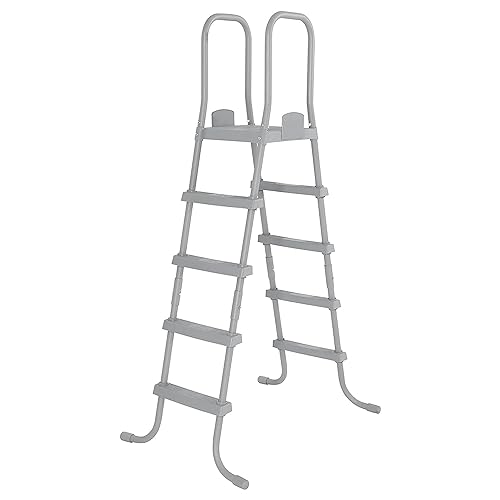
4. Bestway Flowclear Pool Ladder
A step ladder for above-ground pools with a handrail. It can serve tall tubs where a plain step is too low.
Suits: taller walls. Strengths: a rail for balance. Weaknesses: not designed for tubs. Skip it if you want a purpose-built spa step.


Best for tall tubs
5. Blue Wave Pool Ladder
A resin ladder from a pool-supply brand, offered in several styles. Choose a model that matches your wall height and check the base is stable.
Suits: tall tubs. Strengths: resin steps resist rust. Weaknesses: several variants to compare. Skip it if your tub is low.

Best for tall tubs
6. Main Access Deluxe Pool Ladder
An above-ground pool ladder with a handrail from a pool-supply brand. Like the other ladders here, it is built for pools, so check its height and stability against your tub before relying on it.
Suits: tall tubs. Strengths: a handrail and wide treads. Weaknesses: made for pools, not tubs. Skip it if you want a spa-specific step.
View Main Access Deluxe Pool Ladder on Amazon
Care and Setup
- Place the step on level, solid ground and press down to check for wobble.
- Rinse off chemicals and dirt so the tread stays grippy.
- Remove ice and snow before every soak.
- Wipe the surface dry when you can.
Mistakes to Avoid
- Picking a step that is taller than the tub rim.
- Using it on soft ground.
- Ignoring the weight limit.
- Letting algae form on the tread.
Measuring Your Tub for the Right Step Height
Step height is the measurement that decides comfort and safety. Measure from the ground, where the step will sit, to the top of the tub rim. A good step lets you place a foot on a tread a moderate distance below the rim, then step over and down onto the seat or floor inside. If the first rise from the ground is too high, getting on is awkward. If the top tread is too far below the rim, the last move over the wall is a big step.
Many spa steps are made for the standard cabinet and rim heights of common tubs, but tubs vary, so measure instead of assuming. Also measure how far the rim and cabinet stick out. Some tubs have a lip, a bench or a tapered cabinet that changes where a step can sit. A step that cannot sit flush against the cabinet creates a gap or leaves the step tilted.
Check the dimensions of the step itself: the tread depth, the width and the number of treads. A deeper tread gives more foot room, which matters for anyone who is unsteady, while a narrow tread can feel tippy when you are wet. A single wide step may suffice for a low tub, while a tall tub may need two or three treads for a comfortable rise.
Think about who will use it. Children, older adults and people with balance or mobility issues need a lower rise, a deep tread and a rail. Tall users may find a short step awkward. If everyone in the household differs, choose for the least stable user. If you are uncertain, ask a professional who can assess the fit or fix a stable setup for someone with specific needs.
Treads, Materials and Wet Traction
Wet feet on a smooth surface are a common cause of falls at a hot tub. Look for treads with molded texture, ridges or a non-slip finish, and compare how deep and aggressive the pattern is. Check the listing for the surface description. Smooth plastic or painted surfaces are risky when wet. Add-on grip strips or mats can help, but they must be designed for outdoor wet use and firmly attached.
Most spa steps are resin or plastic, because these materials do not rust, shed water and tolerate sun and chemicals. Quality varies in thickness and UV resistance. Cheap or thin plastic can crack in cold weather, sag under load or fade and become brittle in the sun. Look for descriptions that mention UV protection, reinforced construction and a stated weight rating.
Wooden steps can look good with a deck, but they need sealing and can become slippery when algae or moss grows. Metal steps conduct heat and cold and can become slick, and their coatings can wear. If you build or buy a custom step, ensure it has a non-slip surface and a stable structure.
Whatever the material, keep treads clean. Chemicals, body oils and dirt from feet build up on the surface, which reduces traction. Rinse the step often and scrub it with a soft brush and mild cleaner. Remove algae promptly, and check that drainage holes are clear so water does not pool. In cold weather, ice can form in minutes, so clear snow and ice before every soak and avoid de-icers that may damage the material, unless the maker approves them.
Handrails and Stability Features
A handrail turns a step into a safer entry and exit. Wet hands and feet make a stumble more likely, and a firm grip gives you a way to steady yourself. Handrails are especially valuable for older users and anyone with balance or joint concerns. Check how the rail is attached. Some steps have an integrated rail, some accept an add-on and some require you to fix the rail to the tub or deck. A rail that wobbles gives a false sense of security, so test it by leaning on it before first use.
The position and shape of the rail also matter. It should be within easy reach as you step up, rounded for a comfortable grip and high enough to be useful. A rail at the wrong height may not help much. Some tubs have a molded grab area in the shell or a cabinet design that makes rail attachment difficult, so check compatibility.
The base of the step affects stability. A wide, flat base resists tipping, while a narrow base can rock. Rubber feet help the step grip the ground, and a step that fits snugly against the cabinet is less likely to shift. Make sure the step is placed on firm, level ground, such as a patio slab or deck. On soft or uneven ground, the step may settle, tilt or sink over time. A paver or a leveling base can help if the maker permits it.
Check the weight rating on the listing, which is the maker’s figure, and consider the heaviest user plus any assistance. If several people use the tub at once, expect shifting loads. Never use a step as a seat or a place for heavy items, and do not exceed its rating.
Spa Steps, Pool Ladders and Other Options
Purpose-built spa steps are shaped for hot tub cabinets and rim heights, and they are usually the best fit. However, some tubs, particularly tall or irregular ones, leave owners looking at other solutions, including pool-style ladders. Pool ladders are designed for different structures, often with a different wall thickness, attachment method and weight distribution. A ladder that leans on a thin tub rim or cabinet can put stress where it was not designed to go, so confirm how the ladder is intended to be supported and whether the maker allows it for a tub.
Check how a ladder or step platform is held in place. Some are freestanding, some hook over a wall, and some bolt to a deck. A freestanding ladder must be stable on its own, and a hooked ladder needs a rim that can carry the load. Inflatable and soft-sided tubs are not designed to take a load on their walls, so use a ladder that stands independently with a rail at the right height, and do not lean on the tub wall.
For some homes, a built-in solution is better. A deck with a built-in step, a platform around the tub or a custom set of stairs can give a more stable entry than a loose step. These involve construction and may need permits or professional advice, especially if they need to carry weight or meet local rules. A non-slip surface and a rail remain important.
When comparing options, weigh safety, fit and convenience. Think about whether you need to move the step for service access to the tub, and whether it can be stored in winter. If a listing gives no clear information about suitability for tubs, treat that as a reason to look for a better-documented product.
Winter Care, Storage and Signs of Wear
Cold weather changes how steps behave. Plastics become more brittle in low temperatures, so avoid dropping or striking them when frozen. Water that collects on treads freezes into a slippery film, so keep drainage clear and remove ice before use, using methods the maker allows. Avoid pouring hot water onto frozen plastic, which can cause cracking, and be careful with salt and de-icers, which may stain or degrade some materials.
If you do not use the tub in winter, store the step indoors or covered, in a dry place away from heavy items that could warp it. Clean and dry it before storing. For freestanding steps that stay out, clear snow regularly and check that the base remains level, since freeze and thaw cycles can shift pavers and soft ground.
Inspect the step regularly. Look for cracks, especially at corners and around holes, stress marks, fading and chalky surfaces that indicate sun damage. Check rubber feet and non-slip strips for wear. Test the rail for looseness, and tighten bolts according to the manual. Press down on the treads and rock the step by hand to detect wobble.
Replace a step that is cracked, warped, unstable or heavily worn, and do not try to repair a structural crack with glue or tape. Replace non-slip strips when they peel or lose grip. If a rail is bent or loose, replace or re-secure it right away. A step is a safety device, not just an accessory, and a small investment in replacement is better than risking a fall. When you replace it, review how the tub is used and whether a taller, wider or railed design would suit everyone better.
A Quick Pre-Purchase Checklist for Hot Tub Steps
Before you add anything to your cart, spend ten minutes with a tape measure and a notepad. Most disappointments with spa steps come from small details that were easy to check at home. Work through the list below and write the answers down so you can compare them against each listing.
- Measure from the ground to the top of the tub shell, then to the top edge of the seat inside, since you will step over the rim and down into the water.
- Check the surface where the step will sit. A flat, firm pad is far better than gravel, lawn or a sloping deck board.
- Note how much clear floor space you have beside the tub, because a deep step can block a walkway or bump into a chair.
- Decide who will use it most. Children, older family members and guests carrying drinks all need different tread depth and grip.
- Look at the listed weight capacity and compare it with the heaviest person likely to stand on the step, with a comfortable margin.
- Confirm whether the step needs assembly, and whether the pieces snap together or need tools.
If a listing leaves out a dimension, treat that as a warning sign. A product that cannot tell you its height or tread depth is hard to match to your tub, and the maker’s own product page or manual is the place to look for the missing numbers.
Step, Rail or Ladder: Which Fits Which Situation
The products in this guide solve slightly different problems, so it helps to match the tool to the job. The table gives a rough decision guide based on common household situations.
| Situation | Better fit | Why |
|---|---|---|
| Tub sits on a patio and you want a simple way in | Spa step | A wide platform with a textured tread is steady and easy to move. |
| Someone needs extra support when stepping over the rim | Step plus handrail | A rail gives a second point of contact during the transition. |
| Round above-ground style tub with a tall wall | Ladder style | The extra height of a ladder can suit a taller shell, if the maker allows it. |
| Tight corner or narrow side yard | Compact step | A smaller footprint leaves room to walk past. |
| Tub moves between seasons | Lightweight step | Easy to lift and store when the tub is covered. |
Pool ladders were designed for pools, so check that the maker allows the product to be used against a spa wall before you rely on one. Whatever you pick, set it on level ground, keep the tread dry and clear of debris, and follow the instructions that came in the box for placement and weight limits.
Choosing With More Care: The Details That Decide Satisfaction
Choosing hot tub steps is a question of fit in the most literal sense: fit with your specific spa, fit with the space around it and fit with the people who will use it. Start by confirming compatibility with your own tub using the maker information for both, rather than assuming that spa accessories are universal. Shapes, heights and surrounds vary more than listings suggest, and an accessory that nearly fits is usually worse than useless, because it will be wrestled with at exactly the moments you want relaxing to be easy.
Then judge the practical build. This accessory will live outdoors or in a steamy room, be handled with wet hands and be used in the dark by people with bare feet. Stability, grip, weather resistance and how it can be cleaned all matter more than appearance, though there is no harm in choosing something that also looks at home beside your tub. Read how it is installed, moved and stored, and picture your household actually doing those things on a wet evening.
Matching Your Choice to Real Life
Think through who uses the spa and when. A household of confident adults soaking in daylight has different needs from grandparents visiting, children being lifted in, or anyone stepping out into a cold, dark garden. The accessory that serves the least confident user safely is usually the right one for everyone, because confidence around water is what lets people relax. If your spa hosts guests, remember they will not know your setup, so obvious, stable and forgiving beats clever every time.
Season and setting shape the choice too. An accessory that lives outside all year faces sun, rain and frost, while one stored indoors between uses can be lighter and simpler. Consider where it will sit when the spa is covered and not in use, whether it blocks access for maintenance, and whether it will still make sense if you rearrange the garden. Buying for your real setting, rather than a catalogue photograph, prevents the slow drift of a useful item becoming clutter.
Using It Well From the First Day
Set the accessory up exactly as its maker directs, on the ground or surface it was designed for, and test it dry and unhurried before anyone relies on it with wet feet or in the dark. Small adjustments at this stage, levelling, repositioning, tightening or adding a mat beneath, are easy; the same adjustments are awkward once the spa is full of guests. Walk the whole route from door to tub yourself, barefoot if that is how it will be used, and fix anything that feels uncertain.
Build the accessory into your normal spa routine so it is checked without thinking. A glance and a wobble test before use, a rinse or wipe as part of tidying up, and a proper look during your seasonal clean will catch wear early. Teach everyone in the household how it should be positioned and used, especially if it can be moved: an accessory left in the wrong place after cleaning is a common and avoidable hazard around any spa.
Care, Cleaning and Keeping It at Its Best
Outdoor spa accessories age through weather and water, so care is mostly about inspection and cleanliness. Rinse off chemical splashes and debris, clean surfaces with products suitable for the material as the maker directs, and let everything dry properly rather than trapping moisture against the spa or the ground. Check fixings, joints and feet for looseness or wear, and look for cracking, fading or brittleness that suggests sun and weather are winning. Catching these changes early is what keeps a sound accessory in service.
Storage and off-season care extend life further. If the accessory is designed to be removed, store it clean and dry, out of standing water and direct weather. If it stays in place year-round, clear leaves and snow from around it, keep drainage paths open so it does not sit in puddles, and re-check its stability after storms or ground movement. A few minutes at each change of season is a fair trade for an accessory that stays safe and presentable for years.
How the Picks in This Guide Compare
The picks in this guide, Confer Plastics Spa Step, Confer Plastics Spa Handrail, Intex Deluxe Pool Ladder, Bestway Flowclear Pool Ladder, Blue Wave Pool Ladder and Main Access Deluxe Pool Ladder, were chosen to cover the situations most buyers actually face rather than to repeat the same idea several times over. Read their individual reviews above side by side and you will notice that each one leans towards a different strength: a different balance of comfort, practicality, ease of care and suitability for a particular setting. That spread is deliberate, and it means the best choice for you depends less on which pick is strongest in the abstract and more on which strength matches the job waiting for it in your home.
A useful way to compare them is to hold your main scenario steady and test each pick against it. Picture the same ordinary day, the same room, the same people and the same weather, and ask of each option in turn how it would cope. The pick that handles your ordinary day gracefully will almost always serve you better than the one that shines only in an ideal scenario. Where two picks seem close, let the care routine decide: the one whose cleaning, storage and upkeep fit your real habits is the one that will still please you in a year.
It also helps to decide in advance what would make you return or replace a purchase, because that reveals your real priorities. If the answer is about fit, measure twice and order once. If it is about upkeep, re-read the care sections of the reviews above before choosing. If it is about how the pick suits a particular person, involve that person in the decision now rather than after delivery. Clear priorities turn a long shortlist into a short decision, and they protect you from being swayed by whichever listing you happened to read last.
Reading Listings and Product Pages Critically
Listings for hot tub steps reward readers who look past the lifestyle photographs. Find the stated compatibility, the dimensions, the materials and the installation method, and check each against your own spa and space. If the listing does not say which tubs or situations it suits, be cautious: reputable makers are usually specific, because returns help nobody. Photographs of the item in a real garden, at a believable scale, tell you more than dramatic angles against a white background.
Also read for what is not included. Fixings, mats, covers or a second component shown in pictures may be extras, and assembly that looks instant in a video may take tools and time. Check the return terms before ordering anything whose fit you cannot verify, and measure your space rather than estimating. With accessories, the difference between delighted and disappointed is usually a measurement somebody skipped.
Mistakes That Only Appear After a Few Weeks
The commonest mistake is assuming fit instead of confirming it. Heights that are slightly wrong, shapes that clash with a curved cabinet, or a footprint that crowds the only access panel all turn a sensible accessory into an irritant. Measure, compare with the maker figures and, where possible, hold the space in mind with the cover both on and off. The second mistake is placing convenience above stability: an accessory that can slide, rock or tip has no place beside water, whatever else it offers.
Neglect is the other mistake. Spa accessories sit quietly doing their job, so they are easy to forget until something fails. A fixing loosened by weather, a surface grown slippery with algae, or plastic embrittled by sun will not announce itself. The fix is a habit, not a product: look the accessory over whenever you do your regular water care, clean what needs cleaning, and retire anything that has become unstable rather than hoping it lasts one more season.
Building a Routine That Lasts
In the first weeks, pay attention to how the accessory behaves in real use. Does it stay put when used by different people, does water pool anywhere it should not, and does it make getting in and out feel easier in the dark as well as in daylight? Adjust position, add matting or improve lighting while your impressions are fresh. Small refinements early on are what make an accessory disappear into the routine, which is the highest compliment spa equipment can earn.
Across the year, let the seasons prompt your checks. After winter, look for frost or storm damage and confirm nothing has shifted. In high summer, check for sun damage and surfaces that become too hot or too slick. In autumn, clear the leaves that trap damp around bases and feet. This light seasonal rhythm, added to your normal spa care, keeps the accessory safe without ever becoming a project in its own right.
When to Repair, Replace or Rethink
Replace an accessory when its safety or basic function is compromised: instability that cannot be corrected, cracked or brittle material, fixings that no longer hold, or a fit that no longer matches your spa after changes. Cosmetic fading alone is not a reason, but anything that makes a user hesitate or grab for support is. Around water, confidence is a safety feature, and equipment that undermines it has finished its service.
When replacing, revisit your measurements and your spa model rather than reordering from memory, since both can change. Take the chance to correct whatever mildly annoyed you about the old one: a better position, an easier cleaning routine, a shape that suits how your household actually moves around the tub. The second version of any accessory, chosen with a season or two of experience behind you, is almost always the one that stays.
A Practical Decision Worksheet
Start by writing your requirements down before you look at another listing. Divide a page into three short lists: what the purchase must do, what would be nice, and what you know you do not need. Be specific in the first list, because vague wishes produce vague purchases. Include the room or situation, the people involved, the surfaces and conditions it will face, and the care effort you can honestly sustain. Then read the reviews in this guide once more, scoring each pick only against your first list. Picks that fail a must-have leave the shortlist immediately, however appealing their extras, and what remains is usually a choice between two or three genuinely suitable options.
Now test that shortlist against the least convenient day, not the best one. Imagine the purchase in use when you are tired, rushed, short of space or dealing with guests, bad weather or a spill, because that is when design weaknesses stop being theoretical. Ask where it will be stored on that day, who else will handle it, and what could go wrong that a little planning would prevent. This unglamorous exercise is where experienced buyers earn their reputation: they do not buy for the photograph, they buy for the Tuesday evening when everything else is going wrong as well.
Planning Around Seasons and Household Changes
Seasons change what a home asks of its contents, and a wise purchase anticipates the change rather than discovering it. Think about the wettest, hottest, busiest and quietest times of your year and how this choice behaves in each. Some purchases work hardest in one season and rest in another, which is fine as long as storage and care for the resting months are planned. Others are asked to perform identically all year, which raises the bar for durability and for a care routine you can keep up when motivation dips in the middle of winter.
Households change too, sometimes gradually and sometimes overnight. Children grow, relatives visit or move in, pets arrive, jobs change the shape of the day, and a purchase that fits this year may be tested by next year circumstances. You cannot plan for everything, and you should not try, but favouring adaptable, forgiving choices over narrow, precious ones gives your home room to evolve. When you read the picks above, give a quiet bonus to the option that would still make sense if your household looked a little different in two years time.
Troubleshooting and the Long View
When something disappoints after purchase, troubleshoot before you replace. Most disappointments have a simple layer underneath: the wrong position, the wrong routine, the wrong pairing with another item, or expectations set by a photograph rather than by the job at hand. Change one variable at a time and live with the change for a few days before judging it, because several changes at once teach you nothing. Keep notes if the problem is subtle. A surprising share of purchases are rescued by a mat, a hook, a different wash, a moved shelf or a clearer house rule.
Finally, keep the long view. The purchases that serve a home best are rarely the most exciting ones; they are the ones still quietly working years later, maintained by habits so small they feel like nothing. Judge your shortlist by asking which option you would be happiest to clean, repair, store and rely on in three years, with its novelty long gone and its usefulness proven daily. That question cuts through presentation faster than any other, and it is the question this guide was written to help you answer well.
Hot Tub Step FAQ
How tall should a hot tub step be?
The top should sit a little below the rim so you can step over comfortably. Measure your tub first.
Do I need a handrail?
It is strongly worth having, especially for older users or slick patios.
Can I use a pool ladder?
Sometimes, on tall tubs, but check stability and the maker’s guidance first.
Do steps help with older users or people with limited mobility?
Yes, a stable step with a handrail makes a real difference. Look for a wide tread, a low first rise and a rail within easy reach. For anyone with balance concerns, ask a professional about a fixed, secure setup rather than a loose step.
How should I store steps in winter?
Resin steps tolerate cold, but ice builds up on the tread. Keep the step clear of snow, rinse off salt or de-icer, and bring it indoors if you will not be using the tub for the season.
How do I measure for a hot tub step?
Measure from the ground where the step will sit to the top of the tub rim, and note how far the cabinet sticks out. Compare these with the step's listed height and depth.
Do I need a handrail if I already have a step?
A handrail is strongly worth having, especially for older users, children and slick patios. Make sure it is firmly attached and within easy reach.
Can I use a step on grass or soft ground?
A step needs firm, level ground. Soft ground can let it tilt or sink, so use a slab, deck or a stable base the maker allows.
What material is best for a spa step?
Resin and plastic are common because they resist rust and shed water, but quality varies. Look for UV protection, texture on the treads and a stated weight rating.
Can I put a pool ladder against my hot tub?
Only if the maker says the ladder suits that type of structure and the tub can bear the load. Soft-sided tubs generally cannot carry a ladder's weight.
How do I keep the step from getting slippery?
Rinse off chemicals and body oils, scrub off algae and clear snow and ice before every soak. Add suitable grip strips if the tread is smooth.
Where should I store steps in winter?
Indoors or covered in a dry place if you do not use the tub, since cold makes plastics brittle. If it stays out, keep it clear of snow and ice.
When should I replace a step?
Replace it if it is cracked, warped, wobbly or has lost its grip. A loose or damaged handrail should also be fixed or replaced right away.
One More Consideration Before You Decide
The value question deserves a calm answer, because the most expensive option is rarely the one with the highest ticket and the cheapest is rarely the one bought twice. Think in terms of cost per year of good service: how long this purchase will realistically last in your home, how much effort it asks of you each week, and how likely you are to still be pleased with it once the novelty has gone. A choice that fits your routine so well that you stop thinking about it has usually earned whatever it cost, while a bargain that fights your habits charges you a small toll of annoyance every single day.
Accessibility is easy to overlook until it matters. Consider everyone who will use this purchase, including visitors, older relatives and anyone recovering from an injury or managing tired joints, and ask whether the choice works for them as well as for you. Height, weight, grip, balance and the amount of bending or reaching involved all change the experience for different bodies. A purchase that the whole household can use confidently is worth more than a slightly finer one that quietly excludes somebody.
Keep the paperwork and the proof. Save the maker instructions, the care guidance and your order details somewhere you can find them in a year, because the moment you need them is never the moment you expect. A note of when you bought the item, what you chose it for and any lesson from the first weeks turns future decisions, replacements, spare parts, cleaning questions and warranty conversations into simple lookups instead of guesswork. Households that keep this small record rarely repeat a buying mistake, because the evidence of the last one is sitting in the drawer.
Share what you learn with the people who share your home. A purchase used by several people succeeds when everyone knows the simple rules around it: where it lives, how it is cleaned, what it should never be asked to do and who to tell when something seems wrong. Two minutes of explanation at the start prevents the slow damage done by well-meaning misuse, and it turns care from one person burden into a household habit. Write the essentials on a card kept nearby if the routine has more than a couple of steps.
Give the decision a night to settle if you can. A shortlist that still looks right the next morning, checked once more against your must-have list and your least convenient day, is very unlikely to disappoint you. Urgency is usually a property of the listing, not of your life, and the few purchases that genuinely cannot wait are obvious. Calm, measured choosing is the whole method behind this guide, and it works just as well for the next purchase as it does for this one.
Finally, think about the footprint of the choice in your home and beyond it. Prefer the option you will keep for years over the one you will replace quickly, keep packaging only until you are sure the purchase is right, and pass on or recycle what you retire where you can. Durable, well-matched purchases are the simplest form of sustainability available to a household: fewer deliveries, fewer returns, less clutter, and a home filled with things that were chosen once and chosen well.
More Questions Buyers Ask
How do I check an accessory really fits my spa?
Compare the maker compatibility information and dimensions with your own spa model and the space around it, and measure rather than estimating. Allow for the cover, the lifter if you have one, and access panels you still need to reach. If the listing is vague about fit, contact the maker or choose a product that states its compatibility plainly before you order.
Can I leave it outside all year?
That depends on the materials and the maker guidance for your specific product. Many spa accessories are built for outdoor life but still last longer with basic care: kept clean, drained of trapped water and checked after hard weather. If your winters are severe, bringing removable items under cover during the worst months is a sensible precaution rather than an admission of defeat.
How do I stop surfaces becoming slippery?
Keep them clean, since algae, soap film and debris are what make outdoor surfaces slick, and rinse away chemical splashes that can leave residue. Position the accessory so water drains away instead of pooling on it, and consider suitable matting on the approach. If a surface stays slippery despite cleaning, treat that as a safety problem to solve before the next soak, not a quirk to live with.
What maintenance does it actually need?
Less than most people fear, but more than none: a regular rinse and wipe, periodic checks of fixings and stability, cleaning products matched to the material, and a closer inspection at each change of season. Follow the maker care instructions for your model, and keep a note of when you last checked it alongside your water-care log if you keep one.
Is it worth buying accessories matched to my spa brand?
Matched accessories have the advantage of confirmed fit, which is the single most important factor for anything used around a spa. A well-made universal option can serve perfectly well if its dimensions and compatibility genuinely suit your setup. Decide on verified fit and stability first, brand second, and appearance last, and you will rarely go wrong.
When should I stop using an accessory and replace it?
Stop using it if it becomes unstable, cracked, brittle or slippery in a way cleaning does not fix, or if its fixings no longer hold it securely. Do not improvise repairs on anything people step on or lean on beside water. Replacement chosen calmly, with fresh measurements, is far cheaper than an accident in a wet, dark garden.
The Short Version
For a purpose-built spa step, the Confer Plastics. For added grip, the Confer handrail. For a ladder with rails, the Intex, Bestway or Blue Wave. For another rail option, the Main Access.