Disclosure: airfryerkitchensupply.com is reader-supported. When you buy through links on our site, we may earn an affiliate commission at no extra cost to you.
Where to Buy
Bagged canister vacuums are sold through Amazon by model and floorhead bundle, and the bundle is what decides hard-floor and ceiling performance — check the listing for exactly which floorheads and tools are in the box. Every pick here has a verified listing, so you can check price on Amazon for the configuration you want. All six are bagged machines with high-grade filtration and a hose-and-wand system that reaches ceilings, which is the specific combination this guide exists to find.
The verified picks in this guide are available through Amazon: Miele Guard L1 Allergy Bagged Canister Vacuum; Miele Complete C3 Marin Canister Vacuum; Miele Complete C3 Calima Canister Vacuum; Miele Classic C1 Cat & Dog Bagged Canister; Miele Guard L1 Cat & Dog Bagged Canister; Kenmore 600 Series Bagged Canister Vacuum (81615). Use those links to check price on Amazon for the exact size, colour, or configuration you need, and read the live listing for current delivery and returns details before ordering.
The best hepa bagged hard floor vacuums with hose for ceilings all share an architecture, and it is worth understanding why: a canister body that stays on the floor, a long hose and telescopic wand that reach ceiling corners and cobwebs without lifting the machine, a bag that seals the dust in when you change it, and filtration at HEPA level so the fine dust from hard floors goes into the bag rather than back into the room. Uprights cannot do the ceiling job gracefully; bagless machines make you empty dust over a bin. For hard floors plus high reach, the bagged canister is simply the right shape of vacuum.
This guide compares six verified machines: two Miele Guard L1 variants, two Miele Complete C3 models, a Miele Classic C1, and a Kenmore 600 Series canister. They differ in floorheads, filtration grade, weight, and tier — and those differences decide which one belongs in a hardwood apartment, a tiled family house, or a pet home. We also cover wand reach honestly, bag costs, and the technique for ceiling work that does not rain dust on the furniture.
In this guide
Quick Picks
Miele Guard L1 Allergy Bagged Canister Vacuum — Best Overall — Check price on Amazon
Miele’s current allergy-focused canister with HEPA filtration, a sealed bag system, and the hose reach this guide is about.
Miele Complete C3 Marin Canister Vacuum — Best Premium — Check price on Amazon
The flagship C3 with an electrobrush floorhead alongside hard-floor capability — for mixed homes that still lead with hard floors and high reach.
Miele Complete C3 Calima Canister Vacuum — Best for Hard Floors with Rugs — Check price on Amazon
The C3 with a turbobrush — air-driven rug cleaning alongside proper hard-floor tools, in the sealed C3 body.
Miele Classic C1 Cat & Dog Bagged Canister — Best Compact Miele — Check price on Amazon
The lighter, simpler C1 in its Cat & Dog trim — the entry point to Miele’s bagged canisters for smaller hard-floor homes.
Miele Guard L1 Cat & Dog Bagged Canister — Best for Pet Homes — Check price on Amazon
The Guard L1 in pet trim: current-platform bagged canister with HEPA-grade filtration, tuned for hair on hard floors and upholstery.
Kenmore 600 Series Bagged Canister Vacuum (81615) — Best Value — Check price on Amazon
The value counterpoint: a bagged canister with HEPA filtration, a powered Pet PowerMate head, and full hose reach at a mid tier.
How These Picks Were Chosen
The brief set three non-negotiables and every pick meets them: bagged (for sealed, low-mess disposal), high-grade filtration at HEPA level or the maker’s equivalent sealed system, and a hose with a wand long enough to work a ceiling from the floor. Within that frame we chose for hard-floor competence first — a proper hard-floor tool or a floorhead that will not scratch or scatter debris matters more than carpet aggression in this guide — and for ceiling practicality second: total reach, tool weight at the end of the wand, and whether a dusting brush or crevice tool is included for corners and covings.
We also weighted ownership reality: bag availability and cost, cord length and rewind, canister weight for stairs, and the difference between a machine built for a decade and one built for a warranty period. Miele dominates this category in the verified listings, with Kenmore’s 600 Series as the value counterpoint; we present both honestly rather than inventing variety the market does not offer. No prices or ratings are printed.
The 6 Best HEPA Bagged Hard Floor Vacuums with a Hose for Ceilings

Miele Guard L1 Allergy Bagged Canister Vacuum — Best Overall
The Guard L1 Allergy is the most on-brief machine here: bagged, HEPA-filtered, and built around the idea that the dust stays in the machine and the bag, not in your air or your bin area. The canister is manageable on stairs, the wand telescopes for ceiling work, and Miele’s hard-floor tools glide without scattering the grit that hard floors collect at the edges.
As with every Miele, the ownership proposition is longevity at a premium tier, with bags and filters as the running cost. If you want one machine for hard floors and high dusting for years, this is the centre of the guide.
Guard L1 ownership follows the Miele pattern: the machine’s cost spreads across years of bags and filters, and the sealed system means the exhaust stays clean enough that the machine itself never becomes a dust source in a cupboard. Allergy-conscious households describe the bag change as the moment the system proves itself — a sealed bag lifted out, no bin to scrape, no cloud. Keep a spare bag in the house always; running a choked bag to finish a clean is how motors get blamed for bag problems.
A final judgement on the Miele Guard L1 Allergy Bagged Canister Vacuum: it earns its badge in this guide — Best Overall — not by winning every comparison but by being the most honest version of its format at its tier. Buyers whose situation matches its ‘best for’ line will find it disappears into daily use, which is what this category of product is for; buyers outside that line should take the guide’s steer to the pick whose strengths match their actual rooms, habits, and constraints, rather than forcing a mismatch and blaming the product for it.
Strengths
- HEPA filtration with sealed bag disposal
- Telescopic wand gives genuine ceiling reach
- Miele build quality and long service life
Trade-offs
- Premium tier, plus ongoing bag costs
- Floorhead bundle varies — check the box contents
- Canister format takes a week to get used to after an upright
Best for: allergy-conscious hard-floor homes wanting one long-term machine / Not suited for: carpet-heavy homes needing maximum carpet agitation
Check on Amazon — check the current price on Amazon for the exact variant you want.
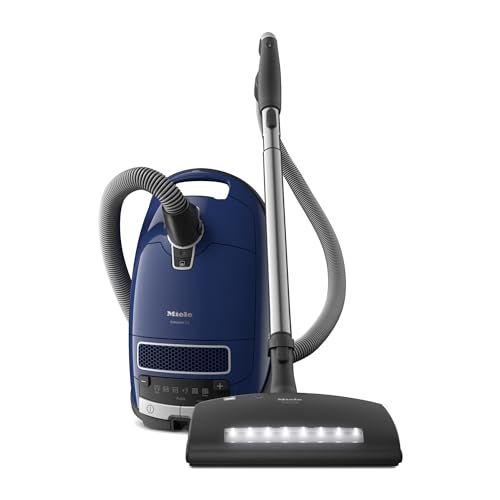
Miele Complete C3 Marin Canister Vacuum — Best Premium
The C3 Marin is the premium expression of the format: a powerful sealed-system canister, a parquet-friendly hard-floor tool in the range, and an electrobrush for the rugs and carpeted rooms most hard-floor homes still have. The wand and hose system is the same ceiling-friendly architecture, with the controls and finish of Miele’s top line.
Buy it if your home is genuinely mixed and you want the best single machine; if your floors are entirely hard, the Marin’s carpet talents are money spent on a job you do not have, and the Guard L1 or Calima serve you better.
The Marin’s decade-scale ownership is its argument: this is the machine households buy when they are done buying vacuums. Its electrobrush heads are serviceable, its bags are a known subscription-like rhythm, and its hard-floor performance in a mixed home justifies the flagship tier every week rather than once. In an all-hard-floor home, read that as praise for a machine you should not buy — the guide’s honesty about the Calima existing is the Marin’s own compliment.
A final judgement on the Miele Complete C3 Marin Canister Vacuum: it earns its badge in this guide — Best Premium — not by winning every comparison but by being the most honest version of its format at its tier. Buyers whose situation matches its ‘best for’ line will find it disappears into daily use, which is what this category of product is for; buyers outside that line should take the guide’s steer to the pick whose strengths match their actual rooms, habits, and constraints, rather than forcing a mismatch and blaming the product for it.
Strengths
- Flagship power and sealed filtration
- Electrobrush plus hard-floor capability covers mixed homes
- Excellent wand reach and tool quality
Trade-offs
- Highest tier in this guide
- Electrobrush is wasted in an all-hard-floor home
- Heavier kit to carry than the C1
Best for: mixed-floor homes wanting the flagship single machine / Not suited for: all-hard-floor homes on a mid-tier budget
Check on Amazon — check the current price on Amazon for the exact variant you want.

Miele Complete C3 Calima Canister Vacuum — Best for Hard Floors with Rugs
The Calima splits the difference in the C3 range: the same sealed, bagged, HEPA-grade platform as the Marin, but with a turbobrush floorhead that handles low-to-medium pile rugs and carpet using suction airflow rather than a motorised brush. For hard-floor homes with real rugs — which is most of them — that is often the smarter bundle.
Deep-pile carpet is where the turbobrush runs out of authority and the Marin’s electrobrush earns its tier. Know your rugs, and the choice between the two C3s makes itself. Ceiling work is identical: long wand, light tools, canister parked below.
Calima owners are often the most satisfied in the C3 range precisely because the bundle matched the house: rugs turbobrushed weekly, hard floors parquet-tooled daily, ceilings wand-cleaned seasonally, nothing bought that the home could not use. The turbobrush’s air-driven simplicity means one less motorised head to service, and its performance on the low-pile rugs most homes own is closer to the electrobrush than the price gap suggests.
A final judgement on the Miele Complete C3 Calima Canister Vacuum: it earns its badge in this guide — Best for Hard Floors with Rugs — not by winning every comparison but by being the most honest version of its format at its tier. Buyers whose situation matches its ‘best for’ line will find it disappears into daily use, which is what this category of product is for; buyers outside that line should take the guide’s steer to the pick whose strengths match their actual rooms, habits, and constraints, rather than forcing a mismatch and blaming the product for it.
Strengths
- Sealed C3 platform with hard-floor tools
- Turbobrush suits the rugs hard-floor homes actually own
- Same ceiling reach as the flagship
Trade-offs
- Turbobrush is not for deep-pile carpet
- Premium tier
- Bundle contents vary by listing — verify the floorheads
Best for: hard-floor homes with low-to-medium pile rugs / Not suited for: deep-pile carpet households
Check on Amazon — check the current price on Amazon for the exact variant you want.

Miele Classic C1 Cat & Dog Bagged Canister — Best Compact Miele
The Classic C1 is where the Miele format gets lighter and simpler: a compact canister that is easy on stairs and in cupboards, in a Cat & Dog configuration aimed at hair on hard floors and furniture. The hose-and-wand ceiling ability is fully present — that is the architecture, not a trim level — and the bagged system keeps hair disposal sealed and civilised.
Filtration and floorhead sophistication step down from the C3 line, and the C1’s shorter cord and smaller bag mean more changes in a big house. In a flat or small house with hard floors and a pet, those compromises are well judged.
The C1’s compactness rewrites storage: it lives in the cupboard under the stairs that a C3 would evict other things from, and it comes out more often because it is light — the best vacuum being, as ever, the one that gets used. Pet households in flats describe the pattern: hard floors twice a week, sofa with the upholstery tool weekly, ceilings monthly, bags changed with the seasons. That rhythm is the C1’s design brief fulfilled.
A final judgement on the Miele Classic C1 Cat & Dog Bagged Canister: it earns its badge in this guide — Best Compact Miele — not by winning every comparison but by being the most honest version of its format at its tier. Buyers whose situation matches its ‘best for’ line will find it disappears into daily use, which is what this category of product is for; buyers outside that line should take the guide’s steer to the pick whose strengths match their actual rooms, habits, and constraints, rather than forcing a mismatch and blaming the product for it.
Strengths
- Lightest Miele here — stairs and storage friendly
- Cat & Dog trim suits pet hair on hard floors
- Full wand reach for ceilings despite the compact body
Trade-offs
- Smaller bags and shorter cord than C3 models
- Filtration a step below the sealed C3 system
- Less suited to large houses
Best for: flats and small hard-floor homes with pets / Not suited for: large houses needing maximum capacity
Check on Amazon — check the current price on Amazon for the exact variant you want.

Miele Guard L1 Cat & Dog Bagged Canister — Best for Pet Homes
Pet hair on hard floors behaves differently from dust: it clumps at edges, hides under furniture, and reappears an hour after cleaning. The Guard L1 Cat & Dog pairs the current Guard platform and its filtration with the tools pet homes use — including the upholstery work that a hose-based machine does better than any upright — and the wand reach covers the ceiling corners where hair and cobweb combine.
It sits at a premium tier like the Allergy version; choose between them by whether your household’s bigger driver is pet hair volume or allergy-conscious filtration, and confirm the exact tool bundle on the listing.
The Guard L1 Cat & Dog earns its tier in the week the household stops apologising for hair: hard floors cleared properly, upholstery reachable, and the bag swallowing the evidence in a sealed unit rather than a bin that puffs it back. Its tools deserve cupboard organisation — a pet home uses the full kit weekly, and a machine whose tools are findable is a machine whose ceiling corners actually get done.
A final judgement on the Miele Guard L1 Cat & Dog Bagged Canister: it earns its badge in this guide — Best for Pet Homes — not by winning every comparison but by being the most honest version of its format at its tier. Buyers whose situation matches its ‘best for’ line will find it disappears into daily use, which is what this category of product is for; buyers outside that line should take the guide’s steer to the pick whose strengths match their actual rooms, habits, and constraints, rather than forcing a mismatch and blaming the product for it.
Strengths
- Current Guard platform with strong filtration
- Pet-focused tools for floors and upholstery
- Sealed bag disposal keeps hair handling clean
Trade-offs
- Premium tier
- Tool bundles vary — verify before ordering
- Canister format is a change for upright households
Best for: pet homes with mostly hard floors / Not suited for: pet-free homes that can choose the Allergy trim instead
Check on Amazon — check the current price on Amazon for the exact variant you want.
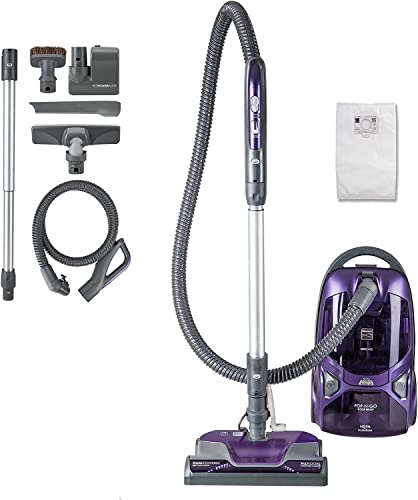
Kenmore 600 Series Bagged Canister Vacuum (81615) — Best Value
The Kenmore 600 Series is the proof that this architecture is not only a premium product: a bagged canister with HEPA filtration, two-motor suction, a retractable cord, and a powered Pet PowerMate for the carpeted bits, at a distinctly lower tier than the Miele line. The hose and wand do the same ceiling job, and for many households the value equation wins outright.
The honest differences are refinement and longevity: plastics, finish, and long-term parts support are a class below Miele, and the machine is built to a price. If the budget is the budget, this is the correct way to spend it — the right architecture at a lower tier beats the wrong architecture at any price.
Kenmore ownership is a value calculation renewed yearly: bags and filters at friendly tiers, performance that covers the brief, and a machine whose eventual replacement, years out, still leaves the household ahead of the premium route on cash — behind it on refinement and probably on lifespan. For a first bagged canister, it is also the lowest-regret way to learn whether the architecture suits your cleaning style before any flagship decision.
A final judgement on the Kenmore 600 Series Bagged Canister Vacuum (81615): it earns its badge in this guide — Best Value — not by winning every comparison but by being the most honest version of its format at its tier. Buyers whose situation matches its ‘best for’ line will find it disappears into daily use, which is what this category of product is for; buyers outside that line should take the guide’s steer to the pick whose strengths match their actual rooms, habits, and constraints, rather than forcing a mismatch and blaming the product for it.
Strengths
- Right architecture — bagged, HEPA, hose reach — at a mid tier
- Powered Pet PowerMate for carpeted areas
- Retractable cord and two-motor suction
Trade-offs
- Fit and finish a class below Miele
- Long-term durability is the open question
- Heavier feel in the hand than its size suggests
Best for: budget-conscious households wanting a true bagged canister / Not suited for: buyers prioritising decade-long ownership
Check on Amazon — check the current price on Amazon for the exact variant you want.
Comparison Table
| Pick | Badge | Key spec | Best for |
|---|---|---|---|
| Miele Guard L1 Allergy Bagged Canister Vacuum | Best Overall | Bagged canister, HEPA filter, telescopic wand | allergy-conscious hard-floor homes wanting one long-term machine |
| Miele Complete C3 Marin Canister Vacuum | Best Premium | Bagged canister, sealed system, electrobrush bundle | mixed-floor homes wanting the flagship single machine |
| Miele Complete C3 Calima Canister Vacuum | Best for Hard Floors with Rugs | Bagged canister, turbobrush, hard-floor tools | hard-floor homes with low-to-medium pile rugs |
| Miele Classic C1 Cat & Dog Bagged Canister | Best Compact Miele | Compact bagged canister, pet trim | flats and small hard-floor homes with pets |
| Miele Guard L1 Cat & Dog Bagged Canister | Best for Pet Homes | Bagged canister, HEPA-grade filtration, pet tools | pet homes with mostly hard floors |
| Kenmore 600 Series Bagged Canister Vacuum (81615) | Best Value | Bagged canister, HEPA filter, Pet PowerMate | budget-conscious households wanting a true bagged canister |
How to Choose: Filtration, Floorheads, and Reach
Filtration first, because it is in the title: you want a sealed system in which the bag is the primary filter and a HEPA-grade exhaust filter is the backstop, so the air leaving the machine is not returning the fine fraction of what you just picked up. Bag quality matters here — the multi-layer synthetic bags in these systems hold far more fine dust than old paper bags and are the reason bag changes are a monthly, sealed, no-drama event rather than a dust cloud.
Floorheads second. Hard floors want a parquet-style tool: soft bristles or felt pads that glide, gather grit instead of pushing it, and cannot scratch. A rotating brush head on hard floor scatters debris and can mark delicate finishes, so in mixed bundles the hard-floor tool is the one this guide cares about. Reach third: add hose length, wand extension, and your own height together and compare honestly with your ceiling height, remembering you work from the floor — and check that a light dusting brush is in the box, because the wand is only as useful as the tool on its end.
Bagged Ownership: Bags, Costs, and Ceiling Technique
Budget bags as a running cost from day one: a hard-floor home changes bags every month or two depending on pets and size, and buying the maker’s bags in multipacks is the economical pattern. A full bag is the commonest cause of a ‘weak’ vacuum — suction falls long before the bag looks stuffed, because fine dust coats the bag’s pores. Change on fullness and on performance, not on the calendar alone.
Ceiling technique: work top-down, always. Start at the ceiling corners and covings with the dusting brush, then picture rails and the tops of doors, then the floor last — dust falls, and the floor pass collects what the high work shook down. Extend the wand fully, keep the canister parked centrally so the hose is not at full stretch, and use slow strokes: a fast brush flicks cobwebs onto the furniture you are trying to protect. In kitchens, degrease the brush occasionally; a greasy brush smears ceiling corners instead of cleaning them.
Hard Floors by Type: Hardwood, Tile, Laminate, and Stone
Hardwood wants gentleness and grit control: the danger is not the vacuum but the grit dragged under a hard wheel or a stiff brush, so the parquet tool’s soft bristles and felt are functional, not luxurious. Work with the grain in the sense that long straight passes collect best, empty or change bags on schedule because fine wood dust is exactly what chokes a bag, and keep the floorhead’s bristles clean — a brush loaded with grit is a scratch pad. Tile wants the opposite emphasis: grout lines trap debris that a flat glide skims over, so a tool with channelled bristles and a willingness to slow down at the grout is the specification, and the crevice tool earns its keep along the skirting where crumbs migrate.
Laminate sits between: treat it like hardwood for scratch care, and never let a vacuum with a spinning brush sit stationary on it. Stone and slate forgive more and hide more — their texture conceals dust that a smooth floor would show, so the test is the hand-wipe, not the eye. Across all four, the bagged canister’s contribution is the same: strong, sealed suction that does not fade mid-room, and a hose system that takes the skirting boards, the under-furniture strip, and the ceiling corners in one continuous pass without changing machines. That continuity is the real reason this architecture owns the hard-floor category.
Canister vs Upright vs Robot for Hard-Floor Homes
The upright’s case is carpet: weight over the brush, agitation, one-pass deep cleaning. On hard floors its brush scatters as much as it gathers unless the brush can be switched off, and its fixed head cannot go where the dust in a hard-floor home actually lives — under low furniture, along skirting, up the wall to the coving. The robot’s case is maintenance: it keeps a hard floor presentable between real cleans and is genuinely good at daily hair and dust, but it has no hose, no ceiling, no stairs, and its small bin and filter are the opposite of the sealed bagged proposition.
The canister’s case is the whole job in one machine: floors with the right tool, furniture with the upholstery nozzle, stairs with the body parked at the bottom, ceilings with the wand. Its costs are storage shape and the two-part dance of body and wand that takes a week to stop noticing. For a hard-floor home that also has ceilings — which is to say, every home — the honest ranking is canister first, robot as an optional maintenance layer, and upright only where carpet genuinely dominates. Households that keep a robot and a canister describe the division exactly that way: the robot maintains, the canister cleans.
The Sealed System Explained: Why ‘HEPA’ on the Box Is Only Half the Story
Filtration claims in vacuums fail at the seals, not at the filter. A HEPA-grade exhaust filter behind a leaky bag collar, a poorly seated lid, or a hose cuff that puffs dust at every bend is a specification attached to a system that bypasses it — which is why this guide favours machines described as sealed systems, where the maker engineers the whole air path, bag included, as one filtered route. The bag is the system’s first and largest filter: modern multi-layer bags hold fine dust within their walls while maintaining airflow far longer than paper ever did, and they are the reason a bag change on these machines is a clean, collar-sealed lift rather than an archaeological event.
The practical tests are yours to apply to any listing. Does the maker describe the system as sealed, or only the filter as HEPA? Is the bag self-sealing on removal? Are the bags multi-layer synthetics from the maker, with a stated capacity, or anonymous paper? And does the exhaust air pass the filter last, after the motor, so motor carbon dust is also caught? The machines in this guide answer those questions well, which is precisely why the category’s verified centre of gravity sits where it does. A vacuum is an air-moving machine that happens to pick things up; buy the air path and the pickup follows.
Stairs, Storage, and Living with a Canister
The canister’s two honest frictions are stairs and storage, and both are manageable with technique rather than denial. On stairs, the pattern is body-first: carry the canister to a mid-landing or park it at the base and work up with the hose’s reach, then move the body and work down — never balance a canister on a step edge while pulling a hose to its limit, which is how machines fall and ankles suffer. The lighter C1 exists partly because this dance is real; large houses with many stairs should weight that choice honestly. The wand, meanwhile, turns stairs from the canister’s weakness into one of its strengths, because a stair tread cleaned by a hose tool is cleaned at its edges, where uprights never reach.
Storage rewards a system: hose looped in its natural curve rather than kinked, wand collapsed, tools in a caddy or the machine’s own clips, bags stored with the machine so a full bag never meets an empty cupboard. A canister stored as a system comes out in one trip and goes to work; a canister stored as a pile becomes the reason the quick clean does not happen. Households that make this small investment describe the format as effortless within a month — the learning curve is real, short, and entirely about habits rather than the machine.
Accessories That Matter: The Tools Beyond the Box
Three accessories extend this architecture meaningfully, and the rest of the catalogue can be safely ignored. A quality parquet floorhead — if your bundle’s hard-floor tool is a compromise combi head — is the upgrade that changes daily cleaning, because the combi tool’s retractable bristles are a truce between floor types rather than a specialist for yours. A long, flexible crevice tool reaches the skirting-to-radiator gaps and the tops of kitchen cabinets that the standard tool cannot, and it is the difference between a ceiling-and-edges clean that is thorough and one that is theatrical. A mini turbo brush for stairs and upholstery earns its place in pet homes specifically, where the main floorheads are oversized for the jobs hair actually sets.
What not to buy: duplicate floorheads that differ only in colour, gadget brushes for jobs a cloth does better, and third-party bags whose collars do not seal to your machine’s fitting — the bag is the system’s foundation, and a leaking collar quietly converts a sealed system into a ordinary one. Spend on the maker’s bags, the one specialist floorhead your floors deserve, and the crevice tool; the architecture does the rest.
Maintenance Schedule: Keeping a Bagged Canister at Full Strength
A bagged canister asks for a short, regular liturgy and repays it with years of full-strength service. Monthly: check the bag by fullness and by suction, brush the floorhead’s bristles clear of wound hair and grit, and wipe the hose cuff seals where dust cakes. Seasonally: inspect the exhaust filter and replace it on the maker’s schedule rather than on appearance, check the hose along its length for the small splits that announce themselves as a whistle before they announce themselves as a tear, and run the crevice tool along the machine’s own vents, which gather the household’s dust like everything else in it.
Yearly: review the floorheads honestly — a parquet tool with worn felt pads is a scratch risk wearing a uniform — and replace wear items before they damage floors rather than after. Keep the bag stock at two spares minimum, because the week the bag fills with no spare in the house is the week the machine gets run choked and blamed. None of this exceeds ten minutes in any month; it is the entire maintenance theology of the format, and it is why these machines, alone among vacuum types, are routinely inherited rather than replaced.
How to Vacuum Ceilings and High Corners Without Raining Dust
Step 1 — Fit the dusting brush. Extend the telescopic wand to near-full length and fit the soft dusting brush. Never use a bare crevice tool on painted coving — it scratches.
Step 2 — Park the canister centrally. Position the body so the hose reaches the whole ceiling zone without dragging the machine by the wand, which strains the hose cuff.
Step 3 — Work the corners slowly. Draw the brush along ceiling corners and covings in slow, overlapping strokes. Cobwebs stretch and cling; a slow pass collects them, a fast one redistributes them.
Step 4 — Come down the walls. Picture rails, door tops, light fittings (switched off and cool), and the tops of wardrobes, in that order.
Step 5 — Finish on the floor. Switch to the hard-floor tool and vacuum the floor last, collecting everything the high work dislodged.
Step 6 — Empty nothing; check the bag. High dusting loads the bag with fine dust. Check the bag indicator after a full high-clean — fine dust fills bags invisibly.
Common Buying Mistakes
Using a brush head on delicate hard floors. A spinning brush scatters grit and can mark soft finishes. The parquet tool exists for this floor type; use it.
Judging the bag by eye. Fine dust chokes a bag long before it looks full. Falling suction is a bag symptom first, a motor symptom last.
Dragging the canister by the wand. Hose cuffs tear from exactly this. Move the body with your other hand or reposition between zones.
Vacuuming the floor before the ceiling. Top-down is not a preference; dust obeys gravity. Ceiling work after floor work means doing the floor twice.
Buying the carpet bundle for a hard-floor home. Electrobrushes are excellent — on carpet. In an all-hard-floor home that money belongs in filtration and the parquet tool.
Final Recommendation
Choose the Guard L1 Allergy for the most on-brief single machine, the Guard L1 Cat & Dog or Classic C1 Cat & Dog for pet homes by house size, the C3 Calima for hard floors with rugs, the C3 Marin for genuinely mixed premium homes, and the Kenmore 600 when the tier decides. Every pick here gives you the same essential architecture — sealed bagged filtration and a wand that reaches the ceiling — so the real decision is floorheads, size, and how long you intend to keep the machine.
Shortlist again with live listings open: Check on Amazon — Miele Guard L1 Allergy Bagged Canister Vacuum; Check on Amazon — Miele Complete C3 Marin Canister Vacuum; Check on Amazon — Miele Complete C3 Calima Canister Vacuum; Check on Amazon — Miele Classic C1 Cat & Dog Bagged Canister; Check on Amazon — Miele Guard L1 Cat & Dog Bagged Canister; Check on Amazon — Kenmore 600 Series Bagged Canister Vacuum (81615). Confirm the details that matter for your home on the product page itself, then order once, correctly.
Related guides on this site: Best Canister Vacuums Best Vacuums For Hard Floors Best Bagged Vacuums Best Miele Vacuums Best Vacuums For Ceilings
Frequently Asked Questions
Why bagged rather than bagless for hard floors?
Hard floors produce fine dust, and a bagged system seals that dust away at disposal instead of puffing it back when you empty a bin. The bag is also the main filter, which is why these systems hold their suction and filtration performance well.
Can these vacuums really reach a ceiling?
Yes — that is the canister architecture’s party trick. Hose plus telescopic wand plus your own reach covers standard ceiling heights from the floor; very tall or vaulted ceilings may still need a step for the highest corners.
How often will I change the bag?
Typically every one to two months in a hard-floor home, sooner with pets. Change on the indicator or on falling suction — fine dust fills a bag’s pores before the bag looks full.
Is a turbobrush or an electrobrush better?
For rugs and low-pile carpet, an air-driven turbobrush is plenty and simpler. Deep-pile carpet wants a motorised electrobrush. All-hard-floor homes need neither as their main tool — the parquet floorhead is the priority.
Will a canister scratch my hardwood?
The canister body rides on castors and stays behind you; the scratch risk lives in the floorhead. Use the soft hard-floor tool, keep its bristles clean of grit, and hard floors are safe.
Are Miele bags interchangeable between models?
No — bag types are model-family specific (the C1, C3, and Guard lines use different fittings). Check your model’s bag type before ordering multipacks; the wrong bag compromises the sealed system that makes these machines work.
Can I use the ceiling wand on curtains and blinds?
Yes, with the dusting brush and suction reduced if your model allows — curtains and blinds are classic hose jobs. Support lightweight blinds with a hand behind them so the suction does not pull them out of shape.
How long do these canisters typically last?
The premium end of this category is built for a decade or more of service with bags and filters as the consumables; the value end trades some of that longevity for its tier. Either way, a bagged canister should outlast several bagless budget machines.
Is this guide’s top pick right for every home?
It is right for the most common version of the need described in this guide. The reviews flag the specific households each pick does not suit — read the ‘not suited for’ line of the pick you are considering before ordering, because that line exists to save you a return.
How should I use the comparison table?
Use it to eliminate, not to choose: strike the picks whose key specification misses your situation, then read the full reviews of the survivors. The table compresses; the reviews carry the judgement.
Can I use third-party bags to save money?
You can, and this guide advises against it in sealed systems: the bag’s collar is the seal the whole filtration claim rests on, and an ill-fitting collar leaks invisibly. If you experiment, check the collar fit obsessively and watch for dust inside the bag compartment — any dust there is the experiment failing.
How do I vacuum a ceiling fan safely?
Switch the fan off and let it stop fully. Use the dusting brush on a shortened wand from a stable step if the fan is high, supporting each blade with your free hand as you brush its top surface — blades flex, and a pressed brush can bend a mount over time. Finish by vacuuming the floor beneath, because that is where the fan’s dust now lives.
Why does my canister leave a fine dust smell when I vacuum?
That smell is the exhaust telling a story: usually a bag overdue for change, whose loaded pores are passing odour, or an exhaust filter past its schedule. Change the bag first — it is the cheapest diagnostic in the category — then the filter if the smell persists. A sealed system in good order exhausts air that smells of nothing in particular.


