Disclosure: airfryerkitchensupply.com is reader-supported. When you buy through links on our site, we may earn an affiliate commission at no extra cost to you.
Where to buy
This guide to the best gas grills with stainless steel grates covers six verified models, each cross-checked before it earned a link. All six grills below are sold on Amazon in the configurations reviewed. Grate specifications can vary between model years of the same grill line, so confirm the grate material on the product page before ordering, and check price on Amazon since pricing in this category moves often.
- Napoleon Rogue PRO 625 Propane Grill with Infrared Side Burner — Best Overall: check price on Amazon
- Napoleon Rogue PRO-S 625 Propane Grill — Most Powerful: check price on Amazon
- Kenmore 5-Burner Propane Gas Grill (Silver) — Best Large Stainless Grill for Families: check price on Amazon
- Electactic Stainless Steel 4-Burner Gas Grill with Side Burner — Best Value Stainless: check price on Amazon
- Blaze Premium LTE+ 32-Inch Built-In Propane Gas Grill — Best Built-In: check price on Amazon
- Weber Summit FS38 Premium Gas Grill — Best Premium Freestanding: check price on Amazon
Shoppers hunting for the best gas grills with stainless steel grates are usually chasing longevity. Porcelain-coated grates chip, cast iron rusts when its seasoning lapses, and thin plated grates simply wear out — while solid stainless steel rod grates shrug off weather, scrubbing, and years of high heat without a coating to fail. A stainless grate is the closest thing grilling has to a buy-it-for-life component, and it is the surface your food actually touches.
One honest caution belongs at the top of this guide. Manufacturers advertise ‘stainless steel’ prominently for bodies, burners, and hoods, but the grates themselves are a separate specification, and listings do not always state grate material clearly. Every pick below comes from a grill line whose verified listing centers on stainless steel construction, and the buying guide explains how to confirm the grates specifically — rod diameter and grade included — before you buy any grill, on this list or off it.
The six picks span built-in and freestanding models, family carts and premium stations, all cross-checked against Amazon’s catalog data. Whether you prioritize the grates themselves, the sear station beside them, or the total package, there is a stainless-centered grill here that fits — and the guide below will teach you to judge the next one yourself.
In this guide
Quick Picks
Napoleon Rogue PRO 625 Propane Grill with Infrared Side Burner — Best Overall. Napoleon’s Rogue PRO 625 builds its stainless body around five burners and an infrared side burner, with 988 square inches of total cooking area. Check the current price on Amazon.
Napoleon Rogue PRO-S 625 Propane Grill — Most Powerful. The PRO-S 625 pushes total output to 88,500 BTU with rear and side burners added, the most complete station in Napoleon’s Rogue line here. Check the current price on Amazon.
Kenmore 5-Burner Propane Gas Grill (Silver) — Best Large Stainless Grill for Families. Kenmore’s silver five-burner wraps 644 square inches, a searing zone, and a side burner in stainless steel, sized for family-scale cooking. Check the current price on Amazon.
Electactic Stainless Steel 4-Burner Gas Grill with Side Burner — Best Value Stainless. Electactic’s four-burner puts stainless steel construction, a side burner, and a built-in thermometer into an entry-tier package at 42,000 BTU. Check the current price on Amazon.
Blaze Premium LTE+ 32-Inch Built-In Propane Gas Grill — Best Built-In. Blaze’s Premium LTE+ is a 32-inch built-in grill head in stainless steel with a rear infrared burner, designed to anchor a permanent outdoor kitchen. Check the current price on Amazon.
Weber Summit FS38 Premium Gas Grill — Best Premium Freestanding. Weber’s Summit FS38 flagship combines stainless construction with a side burner, top infrared broiler, and integrated rotisserie — built-in ambition on a cart. Check the current price on Amazon.
How These Picks Were Chosen
Stainless construction had to be central to the grill’s verified listing, not a trim piece, and we favored models from lines known for stainless cooking surfaces and heavy rod grates. Because grate material is inconsistently disclosed in catalog data, the reviews are careful to distinguish what the listing confirms — stainless construction, burner layout, output, area — from the grate-specific checks the buying guide tells you to confirm on the product page.
Cooking fundamentals still governed the ranking: burner count and layout for two-zone control, total output relative to grate area, and features that pair with stainless grates, like infrared sear stations that exploit the metal’s heat tolerance. Sizes range from a 32-inch built-in to full freestanding carts, so both outdoor-kitchen builders and patio buyers are covered.
Every ASIN was verified connection, matching listed titles to the models reviewed, including the Electactic model verified in a fresh search run for this batch.
The 6 Best Gas Grills With Stainless Steel Grates and Construction
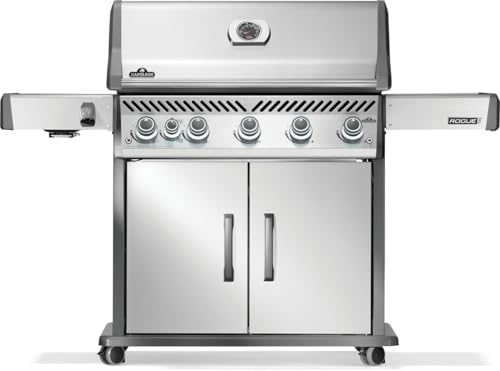
Napoleon Rogue PRO 625 Propane Grill with Infrared Side Burner — Best Overall
The Rogue PRO 625 leads this list because it treats stainless as a system — body, burners, and cooking surfaces specified for outdoor life — and adds the infrared side burner that stainless grates exploit best, since the metal tolerates the station’s extreme heat without coating damage. It suits serious home grillers who cook several times a week. Casual cooks will pay for capacity and heat they rarely use.
Strengths
- Infrared side burner delivers the hardest sear in this roundup
- Five burners and 988 sq. in. handle large, multi-zone cooks
- Backlit knobs and folding shelf suit evening cooking in real spaces
Trade-offs
- Premium tier across the purchase and accessories
- Large footprint even with the shelf folded
- Sear station is sized for one or two steaks at a time
| Fuel | Propane |
| Burners | 5 main burners plus infrared side burner |
| Total output | 74,000 BTU (per Amazon title) |
| Total area | 988 sq. in. (per Amazon title) |
Stainless cooking surfaces earn their keep in two ways on the Rogue PRO. The first is corrosion: a grill that lives outside through wet seasons asks its grates to survive what would destroy a chipped porcelain coating in two winters. The second is heat tolerance at the sear station, where infrared output punishes lesser materials. Stainless rods take both in stride, and they clean with a stiff brush and no anxiety about what the brush is removing.
As a grill, the 625’s layout is the enthusiast’s favorite shape: enough burners to run a genuine gradient from searing hot to barely warm, and enough area to use it. The folding shelf acknowledges that patios are finite. Buyers choosing between this and its PRO-S sibling below are really choosing burner extras and output headroom, and either way the stainless-centered build is the constant.
Best for: enthusiasts who want stainless durability plus a true sear station / Not suited for: small patios or strict budgets
Check on Amazon to see the current configuration and check price on Amazon before you order.

Napoleon Rogue PRO-S 625 Propane Grill — Most Powerful
The PRO-S is the Rogue for cooks who use every station: five main burners for the grate, a side burner for pans, and a rear burner that exists for rotisserie work. Its 88,500 BTU headline figure reflects all that hardware. It suits hosts and rotisserie fans with the patio to park it. If your cooking is weeknight burgers and the occasional steak, the standard PRO 625 covers you for less commitment.
Strengths
- Highest total output in this roundup at 88,500 BTU (per Amazon title)
- Rear burner enables true rotisserie cooking
- SafetyGlow knobs add visibility for night grilling
Trade-offs
- Most complex and heaviest Rogue variant
- Premium pricing across unit and rotisserie accessories
- More burners to clean, inspect, and maintain
| Fuel | Propane |
| Burners | 5 main, plus rear and side burners |
| Total output | 88,500 BTU (per Amazon title) |
| Total area | 988 sq. in. (per Amazon title) |
The rear burner is the PRO-S’s defining extra, and it changes what the grill is for. Rotisserie cooking — whole chickens, roasts, a leg of lamb turning slowly under infrared heat from behind — produces results no grate technique duplicates, and stainless construction throughout means the spit, forks, and cooking surfaces all share the same weather tolerance.
Judge the output figure correctly: 88,500 BTU is the sum of every burner at full throttle, a configuration no sane cook uses at once. Its real meaning is headroom — fast preheats, instant recovery when a cold tray of chicken lands, and a sear station that never feels breathless. For the cook who grills in volume and in all seasons, that headroom is the difference between a grill that keeps up and one that negotiates.
Best for: power users who grill big and want rotisserie capability / Not suited for: anyone who finds 88,500 BTU of headroom unnecessary
Check on Amazon to see the current configuration and check price on Amazon before you order.

Kenmore 5-Burner Propane Gas Grill (Silver) — Best Large Stainless Grill for Families
The Kenmore is the household-scale stainless pick: a wide five-burner firebox for batch cooking, a searing zone for steaks, and a side burner for the rest of the meal, in a stainless finish that brightens a patio and wipes down easily. It suits families and hosts. Its size is its own warning — this is a grill that wants a real deck and a cover, and it will dominate a small one.
Strengths
- 644 sq. in. handles party batches without a second round
- Searing zone plus side burner covers the full menu
- Stainless body is easy to wipe and keeps its looks
Trade-offs
- Large footprint and cleaning load
- Stainless at this tier is thinner than premium brands
- Heats a big firebox even for small weeknight meals
| Fuel | Propane |
| Burners | 5 main burners, searing zone, side burner |
| Total output | 66,000 BTU (per Amazon title) |
| Cooking area | 644 sq. in. (per Amazon title) |
Families do not grill like enthusiasts; they grill in volume, on weeknights, with distractions. The Kenmore’s design respects that: wide grate, obvious zones, a side burner for the pot that would otherwise split the cook’s attention between patio and kitchen. Stainless surfaces help here too, because a family grill gets cleaned in a hurry, and stainless forgives the stiff brush and the occasional scouring pad that would ruin a coated grate.
The ownership note is the same one that applies across this tier: the stainless is a finish and a surface, not armor plate. Covered storage and a wipedown habit keep it looking like the grill in the listing photos. Owners who treat it that way get a big, capable, good-looking family grill; the Kenmore’s job is to be exactly that, and it does the job.
Best for: large families wanting stainless presence and batch capacity / Not suited for: small decks or two-person households
Check on Amazon to see the current configuration and check price on Amazon before you order.

Electactic Stainless Steel 4-Burner Gas Grill with Side Burner — Best Value Stainless
The Electactic is the budget doorway into stainless grilling: four burners for honest two-zone cooking, a side burner for sauces, and stainless panels throughout at a position well below the legacy brands. It suits first-time buyers and smaller households. Its 42,000 BTU total is the most modest here, which shows up as slower recovery when the grate is fully loaded — cook in slightly smaller batches and it will not matter.
Strengths
- Stainless construction at an entry-tier position
- Side burner included, which entry grills often omit
- Built-in thermometer for firebox awareness
Trade-offs
- Lowest total output in this roundup
- Newer brand; long-term parts support is unproven
- Thinner steel — a cover is essential, not optional
| Fuel | Propane |
| Burners | 4 main burners plus side burner |
| Total output | 42,000 BTU (per Amazon title) |
| Body | Stainless steel with thermometer |
Value stainless grills succeed or fail on expectations. The Electactic’s cooking layout is correct — four burners, sensible zones, a real side burner — and for the household grilling for two to five people, its output is adequate provided the preheat is patient and batches stay reasonable. Where it cannot follow the premium picks is brute recovery: a full grate of cold chicken will pull its temperature down further and longer.
Treat the purchase as a multi-season tool with care requirements, not a lifetime heirloom, and the value is real. Keep it covered, wipe the stainless with the grain, and check burner tubes each spring. This model was verified in a fresh Amazon listing data search for this batch, and it earns its place as the accessible end of the stainless spectrum.
Best for: shoppers who want an all-stainless look at an entry tier / Not suited for: buyers who need maximum output for large batches
Check on Amazon to see the current configuration and check price on Amazon before you order.
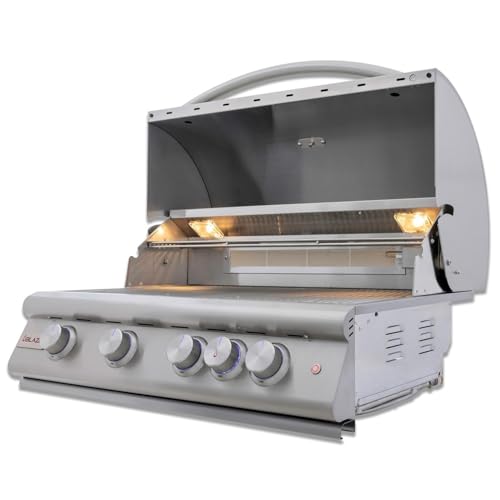
Blaze Premium LTE+ 32-Inch Built-In Propane Gas Grill — Best Built-In
A built-in is a different purchase from a cart grill: it drops into an island, connects to a fixed fuel supply, and becomes part of the house. Blaze builds for exactly that permanence, with heavy stainless construction and a rear infrared burner for rotisserie work. It suits homeowners building an outdoor kitchen meant to last as long as the patio does. It obviously does not suit anyone who needs to move the grill, ever, without renovation.
Strengths
- Built-in format with heavy stainless construction
- Rear infrared burner enables rotisserie cooking
- LED control knobs and lift-assist hood suit evening use
Trade-offs
- Requires an island or enclosure built to its specifications
- Installation is a project, not an unboxing
- Premium tier, and the island build adds to total cost
| Fuel | Propane (built-in) |
| Burners | 4 main burners plus rear infrared burner |
| Size | 32-inch built-in grill head |
| Body | Stainless steel outdoor kitchen unit |
The case for a built-in is the case for stainless itself, extended: permanence. A cart grill is an appliance you park; a built-in is infrastructure, and its materials must survive not seasons but decades of weather. Blaze’s segment of the market exists because buyers learned that a cheap grill head in an expensive island is the worst of both worlds — the island outlives three grills and the cutout fits none of their successors.
Plan the purchase as construction. The island’s cutout dimensions, ventilation, and fuel routing all follow the grill’s specification, and the time to confirm grate material and rod specification is before the masonry, not after. For the homeowner committed to the project, the LTE+ is the kind of grill head the whole kitchen gets designed around — which is precisely its purpose.
Best for: outdoor kitchen builders who want stainless permanence / Not suited for: renters or anyone who needs a grill on wheels
Check on Amazon to see the current configuration and check price on Amazon before you order.

Weber Summit FS38 Premium Gas Grill — Best Premium Freestanding
The Summit FS38 is for the buyer who wants the built-in’s material ambition without the masonry: flagship stainless construction, a side burner, an infrared broiler for finishing, and a rotisserie, all on a cart that can be repositioned. It suits committed grillers purchasing for the long term. Its price tier and feature depth are wasted on occasional cooking, and the review of its sibling category above says the same — flagships reward use.
Strengths
- Flagship stainless build with Weber’s deepest parts support
- Infrared broiler and rotisserie expand technique range
- Side burner completes the full-meal outdoor station
Trade-offs
- Top-tier pricing across unit and accessories
- Heavy unit that prefers a permanent patio spot
- Feature set exceeds casual needs by a wide margin
| Fuel | Propane |
| Stations | Main burners, side burner, infrared broiler, rotisserie (per Amazon title) |
| Body | Stainless steel |
| Line | Summit FS38 premium series |
Stainless at the flagship level is about gauge as much as grade: panels that do not flex, a hood that holds its shape and its heat, and cooking surfaces built to be scrubbed daily for a decade. The Summit’s construction is specified with that horizon in mind, and Weber’s support operation — parts, documentation, service knowledge — is the deepest in this roundup, which matters most on the grill you intend to keep longest.
The broiler deserves its sentence: a top-mounted infrared element finishes gratins, crisps rotisserie skin, and melts cheese with a control no bottom burner matches. Combined with the rotisserie and side burner, the FS38 stops being a grill with accessories and becomes an outdoor range. Buyers who will use those stations weekly are buying well; buyers who will not should take the Rogue PRO and spend the difference on ingredients.
Best for: buyers who want flagship stainless in a movable cart / Not suited for: budget shoppers or minimalists
Check on Amazon to see the current configuration and check price on Amazon before you order.
Comparison Table
| Pick | Badge | Key spec | Best for |
|---|---|---|---|
| Napoleon Rogue PRO 625 Propane Grill with Infrared Side Burner | Best Overall | 5 burners, infrared side burner, 74,000 BTU, 988 sq. in. total (per Amazon title) | enthusiasts who want stainless durability plus a true sear station |
| Napoleon Rogue PRO-S 625 Propane Grill | Most Powerful | 5 burners, rear and side burners, 88,500 BTU, 988 sq. in. (per Amazon title) | power users who grill big and want rotisserie capability |
| Kenmore 5-Burner Propane Gas Grill (Silver) | Best Large Stainless Grill for Families | 5 burners, side burner and searing zone, 644 sq. in., 66,000 BTU (per Amazon title) | large families wanting stainless presence and batch capacity |
| Electactic Stainless Steel 4-Burner Gas Grill with Side Burner | Best Value Stainless | Stainless steel body, 4 burners plus side burner, 42,000 BTU (per Amazon title) | shoppers who want an all-stainless look at an entry tier |
| Blaze Premium LTE+ 32-Inch Built-In Propane Gas Grill | Best Built-In | 32-inch built-in, 4 burners, rear infrared burner, LED knobs (per Amazon title) | outdoor kitchen builders who want stainless permanence |
| Weber Summit FS38 Premium Gas Grill | Best Premium Freestanding | Premium stainless grill, side burner, infrared broiler, integrated rotisserie (per Amazon title) | buyers who want flagship stainless in a movable cart |
Two honest patterns stand out: output rises with station count rather than grate size alone, and stainless appears at every tier — what changes with price is gauge, support, and how much else the grill does. Confirm the grate specification itself on the product page of whichever model you choose.
How to Choose the Best Gas Grills With Stainless Steel Grates
Start with the grates themselves, because ‘stainless steel grill’ on a headline can describe the hood while the grates are coated cast iron. Look for the grate specification in the product details: the words to find are stainless steel rod grates, and the numbers that matter are rod diameter and steel grade. Thicker rods — the heavy bars on premium grills — store more heat, mark food better, and resist warping. Grade 304 stainless is the food-service standard for corrosion resistance; lesser grades can develop surface rust in coastal air, which is cosmetic at first but worth knowing before you buy.
Then judge the grill around the grates. Stainless burners and flavorizer systems extend the same corrosion logic below the grate, and a grill whose grates outlive its burners by a decade has only solved half the problem. Burner count should match your cooking: three for two-zone basics, four or five for real gradient control. And weigh the manufacturer’s parts support, because the promise of stainless is a long life, and a long life eventually needs an igniter, a valve, or a burner tube — parts that should be orderable, not archaeology.
- Confirm ‘stainless steel rod grates’ in the specifications, not just a stainless hood
- Thicker grate rods hold heat better and mark food more deeply
- Grade 304 stainless resists coastal and humid climates best
- Check that burners and heat tents share the stainless treatment
- Favor brands with orderable replacement parts for a genuinely long life
Stainless vs Cast Iron vs Porcelain-Coated Grates, Honestly
Stainless rod grates win on durability and maintenance: no coating to chip, no seasoning to maintain, no rust panic after a wet week, and they tolerate aggressive brushing. Their honest weakness is heat retention — stainless stores less heat per bar than cast iron, so a fully loaded grate dips further in temperature, and sear marks, while perfectly good, lack cast iron’s deepest char. Cooks who sear above all else sometimes prefer iron for exactly that reason.
Cast iron, bare or porcelain-enameled, is the heat battery: it sears superbly and releases food well when maintained. Its costs are vigilance — seasoning for bare iron, chip-avoidance for enameled — and weight. Porcelain-coated steel sits below both, adequate on a budget grill and the first component to fail on an old one. The mature view is that stainless is the best default for a grill that lives outdoors and gets used for a decade, while cast iron is the specialist’s choice for a grill whose owner enjoys maintaining it. Neither answer is wrong; they are answers for different owners.
Reading a Grill Listing Like an Inspector
Since grate material hides in listings, learn to interrogate one. Start at the specifications table rather than the headline: reputable listings state grate material, and often rod construction, in the details even when the marketing copy leads with the hood. Search the page for the words grate and rod; if the only stainless mentions attach to the hood, burners, or body, assume the grates are something else until proven otherwise. Product Q&A sections and manufacturer documents linked from the listing often settle what the copy leaves vague.
Photographs help more than shoppers expect. Stainless rod grates have a distinctive look — round bars with visible spacing and welded cross supports — while porcelain-coated grates read as flat, dark, and uniform, and cast iron reads thicker with a matte texture. Zoom into the grate photos on any listing in this roundup and compare; the visual difference becomes obvious after seeing both once, and it is a useful check against a listing whose text is ambiguous.
Finally, weigh the warranty’s fine print. A manufacturer confident in its stainless publishes long coverage on grates and burners specifically, not just a short umbrella term for the whole grill. Warranty length on the cooking system is one of the most honest signals in the category, because it is the one claim that costs the manufacturer money when it is wrong.
Stainless Grates and Delicate Foods: Technique Adjustments
Stainless rods ask for small technique changes with delicate foods, and learning them closes most of the gap owners perceive between stainless and cast iron. Fish is the classic case: stainless releases fish cleanly when the grate is fully preheated, lightly oiled, and — most importantly — left alone until the skin or surface sets and releases on its own schedule. The failures blamed on the grate are usually impatience: the fillet was moved at minute one, when any grate material would have held onto it.
Small and sliced foods are the second case. Stainless rod spacing, especially on value models, lets asparagus and onion slices slip through. The fixes are cheap and permanent: a stainless grill basket or pan for the small stuff, skewers threaded through two points so pieces cannot spin, and cutting vegetables in planks rather than rounds. None of this is stainless-specific so much as rod-grate-specific, and cast-iron owners with wide grates do the same.
Eggs, pancakes, and smash burgers belong on a griddle plate over the rods rather than on the rods themselves — again, true for every grate material. Keep a cast-iron or steel griddle plate in the grill’s cabinet and the stainless grate’s one genuine limitation disappears, leaving its durability and easy cleaning as the whole story.
When Stainless Is the Wrong Choice
A buying guide that only praises its category is a brochure, so here is the honest counter-case. If your grilling is almost entirely high-heat searing of thick steaks, and you enjoy the ritual of maintaining equipment, cast iron grates will make you happier: they store more heat, mark more deeply, and their upkeep is a pleasure to the kind of cook who seasons a skillet for fun. Stainless wins on indifference; cast iron wins on devotion, and devotion is a real preference, not a mistake.
Stainless is also wasted on a grill that will be cooked on six times a year and stored in a garage. The durability premium buys nothing when weather and repetition never test the cheaper materials, and a modest coated-grate grill will serve that household for years. The category’s value scales with exposure and frequency: daily weather, weekly cooking, decade-long horizons. Below that intensity, spend the difference on a better cut of meat.
And within stainless, more money stops helping sooner than marketing suggests. Once rods are thick, the grade is 304, and the burners share the material, additional spending buys features — stations, size, smart controls — not grate quality. Buy the grate specification first and the feature list second, and stop when the specification is met. That discipline is the whole lesson of this category in one sentence.
How Rod Diameter and Spacing Change Your Cooking
Two stainless grates can share a material and cook noticeably differently, because geometry matters as much as metallurgy. Rod diameter decides heat storage: a thick rod is a small heat battery that keeps its temperature when a cold steak lands, laying down a defined mark, while a thin rod gives up its heat instantly and must be reheated by the burner between contacts. Spacing decides what falls through. Wide gaps suit thick cuts and sturdy vegetables; narrow spacing keeps asparagus, shrimp, and sliced onions on the cooking side of the grate where they belong.
Premium grills tend toward thick, closely spaced rods, which is part of what their price buys — more metal, worked more precisely. Budget stainless grates often use thinner rods at wider spacing, which still delivers stainless durability but asks the cook to adapt: preheat longer, use a grill basket for small items, and expect gentler marks. Neither is a defect; they are different tools wearing the same material label, which is why the specification sheet matters more than the headline.
When you compare the picks in this roundup, read their listings with geometry in mind and match it to your menu. A household grilling thick steaks and corn can thrive on wide spacing; a household that lives on skewers, sliced peppers, and seafood should prioritize tight rods or budget for a stainless grill pan to bridge the gaps.
The Total Cost of a Decade on Stainless
Stainless grills ask more at purchase and less across ownership, and the honest comparison is the decade, not the day. A coated grate on a budget grill typically needs replacement within a few seasons once the coating chips; burners and heat tents on lightly built grills follow. A stainless-centered grill replaces wear parts on a longer cycle — igniters, the occasional burner tube — while its grates and body continue. Spread across ten years of weekly cooking, the cost per cook often favors the grill that looked expensive in the store.
There are softer savings too. A grill that lights reliably and cooks evenly gets used more, and a grill that gets used more displaces restaurant meals and takeout at a rate no spreadsheet captures but every owner recognizes. Durability also keeps the patio stable: no annual shopping cycle, no assembly weekend every other spring, no learning a new grill’s hot spots just as the old one’s were memorized.
None of this argues for buying the flagship by default. It argues for pricing the category correctly — as infrastructure for a habit — and then choosing the tier whose construction matches how many years and how many cooks you honestly expect. The Electactic and the Summit are both rational purchases; they are rational for different decades.
Built-In vs Freestanding: The Stainless Decision at Installation Scale
The Blaze built-in and the freestanding carts in this roundup share a material and nothing else about their ownership. A freestanding stainless grill can be repositioned for wind, rolled into a garage for winter, resold, and replaced without touching the patio. A built-in trades all of that flexibility for integration: it becomes part of an outdoor room, gains counter space and storage around it, and anchors gatherings the way a kitchen island anchors a kitchen. The decision is really about the house, not the grill — how long you will live there, whether the patio is a finished space or an evolving one, and whether the outdoor kitchen is a project you will complete or a phase you will admire in photographs.
If you do build in, the stainless discipline doubles. Specify the grill head first and design the island around its cutout, ventilation, and fuel requirements, because islands built speculatively fit no grill well. Choose the head whose manufacturer publishes exact enclosure specifications and whose parts support you trust for the longest horizon, since replacing a built-in is construction, not shopping. And confirm the grate specification with the same rigor as a cart purchase — a built-in with the wrong grates is a mistake set in masonry.
For everyone not building in, the freestanding stainless picks here deliver the material’s full benefit with none of the permanence, and the wisest of them — the Napoleon and the Summit — are built heavily enough that owners treat them as fixtures anyway, just fixtures that can move house when the family does.
One Last Check Before You Order
Before any stainless grill in this roundup goes into the cart, run a five-minute verification routine. Open the product page and find the grate specification in writing; check the rod construction and, where stated, the steel grade. Confirm the fuel version matches your supply — propane or natural gas — because several of these lines sell both and the product titles differ by a single word. Measure your patio space against the assembled dimensions with shelves up and lid open, not the folded shipping numbers. And look at the replacement parts listing for your exact model: if grates, burners, and igniters are orderable today, the decade this category promises is a plan rather than a hope. Five minutes of checking is what separates the buyers who get stainless right from the buyers who get a stainless hood and a surprise they only discover when the first grate chips, rusts, or warps a few seasons into a grill they otherwise love.
How to Season, Clean, and Care for Stainless Steel Grill Grates
Stainless grates do not need cast iron’s seasoning ritual, but a light initial oiling and a consistent cleaning rhythm keep them nonstick-friendly and bright for years. Work through these steps at setup and as a standing routine.
- Before the first cook, wash new grates in warm soapy water to remove manufacturing oils, dry them fully, and heat the grill to burn off any residue.
- Lightly oil the hot grates with a high-smoke-point oil on a folded paper towel held in tongs before food goes on — this is for release, not seasoning.
- After cooking, brush the grates while they are still hot; stainless tolerates a stiff stainless or brass brush without coating damage.
- For heavy buildup, remove the cool grates and soak them in hot soapy water, then scrub with a non-scratch pad for routine soil or a stainless-safe cleaner for carbon.
- Dry grates fully before reinstalling if you washed them, and run the burners for five minutes to evaporate any water hiding between rods.
- Once a season, inspect rods for warping and check that no grate weld has cracked; catching a failing grate early is a warranty conversation, not a mid-cook surprise.
One caution specific to stainless: avoid chlorine-based cleaners and steel wool pads of a lesser grade, which can embed particles that later rust and stain the surface. What looks like a stainless grate ‘rusting’ is very often contamination from the wrong cleaning tool. Use stainless tools on stainless grates and the metal keeps the finish it shipped with.
Common Buying Mistakes
The stainless category has its own predictable buying errors, and the first one happens before the grill is even unboxed.
- Assuming a stainless hood means stainless grates without checking the specification
- Ignoring rod diameter, then wondering why sear marks are faint
- Cleaning stainless with steel wool or chlorine cleaners that contaminate the surface
- Paying for flagship stainless, then skipping the cover that protects the investment
- Expecting stainless to sear exactly like cast iron and judging it a failure for being different
- Forgetting that burners and igniters, not grates, usually end a grill’s life first
Final Recommendation
Most buyers should land on the Napoleon Rogue PRO 625: stainless-centered construction, five burners of genuine layout flexibility, and an infrared sear station that exploits the metal’s heat tolerance. The PRO-S 625 adds rotisserie hardware and the roundup’s highest output for power users. Families get the best scale-for-money from the Kenmore five-burner, value shoppers from the Electactic, outdoor-kitchen builders from the Blaze built-in, and buy-once buyers from the Weber Summit FS38.
Whichever you choose, do the one thing this guide repeats: confirm the grate specification on the product page before ordering. Stainless grates are a decade-long decision, and the decade is only as good as the rods the food actually touches.
Start your comparison with the three picks most buyers end up choosing between: Napoleon Rogue PRO 625 Propane Grill with Infrared Side Burner, Napoleon Rogue PRO-S 625 Propane Grill, Kenmore 5-Burner Propane Gas Grill (Silver) — check price on Amazon for each, confirm the fuel version and configuration, and match the layout to the way your household actually cooks.
Best Gas Grills With Searing Burner Best Gas Powered Grills Best Gas Grills With Side Burner
Frequently Asked Questions
Are stainless steel grates better than cast iron?
Better at durability and easier to maintain — no coating to chip, no seasoning to keep, and far more forgiving of weather and aggressive cleaning. Cast iron stores more heat and can produce a deeper sear. For a grill that lives outdoors for years, stainless is the safer default; for a sear specialist who maintains their gear, cast iron remains a legitimate preference.
What grade of stainless steel is best for grill grates?
Grade 304 is the common premium choice and the food-service standard, with strong corrosion resistance in most climates. Grade 430 appears on budget grills and can show surface rust in coastal or humid air. If you live near salt water, 304 grates and a cover are worth prioritizing.
Do stainless steel grates rust?
Quality stainless grates resist rust extremely well, but the surface can stain or show rust spots from contamination — usually lesser-grade steel wool or chlorine cleaners embedding particles. Clean with stainless-safe tools and products, and what looks like rust almost always wipes away because it was never the grate itself.
Why are my sear marks faint on stainless grates?
Usually rod diameter and preheat, not the metal itself. Thin rods store little heat, and a short preheat leaves any grate underpowered. Give the grill a full fifteen minutes, choose thicker rods when buying, and let the meat sit undisturbed for the first ninety seconds so the marks can form.
How long do stainless steel grates last?
On a covered grill with basic care, stainless rod grates commonly outlast the burners and igniters around them — a decade of service is a reasonable expectation for quality rods. That longevity is the core of the category’s value: the grate is rarely the part that ends a stainless grill’s life.
Can I replace my grill’s grates with stainless ones later?
Often yes — major brands and third parties sell stainless rod grate sets sized for popular grill lines. Measure your existing grates precisely and match the model’s specified dimensions. It is a popular mid-life upgrade for a sound grill whose original coated grates have begun to chip.
Best Gas Grills With Smoker Box Best Gas Outdoor Flat Top Grills Best Gas Range Grills


