Disclosure: airfryerkitchensupply.com is reader-supported. When you buy through links on our site, we may earn an affiliate commission at no extra cost to you.
Where to buy
People searching for the best ever smokers usually want one thing: the short list that survives every argument. The six cookers below are the models that experienced pitmasters keep recommending across fuel types — pellet, charcoal, kamado, and electric — and every linked pick was verified against its own listing for this guide. Use the links to check price on Amazon, and read the trade-offs before you buy, because at this level the differences are about how you like to cook, not about which cooker is capable.
- Traeger Woodridge Pro Pellet Grill & Smoker — Best Overall: Check the current price on Amazon
- recteq Flagship 1600 Pellet Smoker Grill — Best for Serious Volume: Check the current price on Amazon
- Masterbuilt Gravity Series 600 Charcoal Grill Smoker — Best Charcoal Flavor, Set-and-Forget: Check the current price on Amazon
- Weber Smokey Mountain Cooker 22-inch — Best Traditional Charcoal: Check the current price on Amazon
- Kamado Joe Classic Joe Series II 18-inch — Best Kamado: Check the current price on Amazon
- Masterbuilt 40-inch Digital Electric Smoker with Leg Kit MB20070122 — Best Electric / Easiest to Run: Check the current price on Amazon
The best ever smokers are not the newest smokers, and they are not the most expensive ones either. They are the cookers that have earned their reputations the slow way: years of briskets, pork butts, ribs, and Thanksgiving turkeys, in backyards where the cook actually pays attention to what the fire is doing. Ask a room of experienced barbecue cooks to name the smokers they would keep if everything else had to go, and the same archetypes surface every time — a well-built pellet grill with real controller intelligence, a charcoal cooker with genuine set-and-forget manners, a bullet smoker that has taught more people barbecue than every other design combined, a ceramic kamado, and an electric cabinet for the cooks who value sleep over ceremony.
This guide deliberately spans fuel types instead of crowning one technology. That is not fence-sitting; it reflects how the ‘best ever’ question actually resolves. Pellet smokers win on convenience and consistency. Charcoal wins on depth of flavor and on the satisfaction of running a fire. Kamados win on efficiency and versatility, doubling as superb grills. Electrics win on effortlessness. A guide that picked six pellet grills would be answering an easier question than the one you asked, so each pick below holds its place against every other fuel, not just against its siblings.
One standard was applied ruthlessly: a pick had to be a cooker that owners keep. Disposable-grade smokers — thin steel, leaky doors, controllers that wander — can produce a good meal, but they do not produce a decade of them, and ‘best ever’ is a claim about years. Every linked model below was verified before inclusion, the specifications in the mini boxes come from those verified listings, and where a famous name is missing, it is because the honest version of this list is six deep, not because the seventh cooker is bad.
In this guide
Quick Picks
Six cookers, five fuels and formats, one per philosophy of barbecue. If you already know how you like to cook, the badge next to each name tells you where to jump.
- Traeger Woodridge Pro Pellet Grill & Smoker — Best Overall: The modern benchmark pellet cooker: 970 square inches per its listing, WiFIRE app control, a Super Smoke mode for low-and-slow work, and the largest owner community in pellet barbecue. Check price on Amazon
- recteq Flagship 1600 Pellet Smoker Grill — Best for Serious Volume: The heavy-built volume pick: 1,667 square inches and a 40 lb hopper per its listing, from the brand whose owners are famously evangelical about build quality and controller stability. Check price on Amazon
- Masterbuilt Gravity Series 600 Charcoal Grill Smoker — Best Charcoal Flavor, Set-and-Forget: The category-bender: a gravity-fed charcoal hopper and digital fan control, delivering real charcoal flavor with pellet-style temperature management across 600 square inches. Check price on Amazon
- Weber Smokey Mountain Cooker 22-inch — Best Traditional Charcoal: The bullet smoker that taught America barbecue: dual grates, a water pan, porcelain-enameled steel, and no electronics whatsoever — the most proven design in this entire guide. Check price on Amazon
- Kamado Joe Classic Joe Series II 18-inch — Best Kamado: The ceramic benchmark: an 18-inch kamado with cart and side shelves per its listing, smoking low for hours on a single load of lump charcoal and searing like a steakhouse when asked. Check price on Amazon
- Masterbuilt 40-inch Digital Electric Smoker with Leg Kit MB20070122 — Best Electric / Easiest to Run: The effortless giant: 970 square inches and four racks per its listing, digital control, and a side wood chip loader that refills smoke without opening the door. Check price on Amazon
How These Picks Were Chosen
The selection began with reputation earned over time. Each candidate had to be a model that competition cooks, barbecue instructors, and long-term owners independently name when the question is ‘what would you buy again’ — not a launch-year novelty. Cookers were then sorted by fuel and format so the final six would represent the genuine choices a buyer faces: pellet in two sizes and philosophies, gravity-fed charcoal, the classic bullet, a ceramic kamado, and a large electric cabinet.
Verification came next. Every linked pick was confirmed against its own Amazon listing, and the headline specifications quoted in this guide — cooking area, hopper capacity, temperature ceiling, control type — are taken from those listings and attributed to them. No pick earned its place on a specification sheet alone, though: temperature stability, build weight, and how a cooker behaves at hour nine of a brisket cook weighed more than any single number, because long cooks are where smokers separate into the memorable and the merely adequate.
Finally, each pick had to justify a distinct badge. If two cookers served the same cook in the same way, the weaker one was cut. That discipline is why there is exactly one bullet smoker, one kamado, and one electric here despite deep benches in each category — and why the two pellet picks differ in size, hopper, and intent rather than in trim color.
The 6 Best ever smokers
Read the reviews as six arguments, not six advertisements. Each one tells you who the cooker is for, where it genuinely excels, and — just as important for a ‘best ever’ claim — where it will annoy you, because the cooker you keep for a decade is the one whose annoyances you can live with.

Traeger Woodridge Pro Pellet Grill & Smoker — Best Overall
If one cooker has to stand as the answer to ‘what should I buy’ for the widest range of people, it is a Traeger in this class, and the Woodridge Pro is the current expression of why. Per its verified listing it offers 970 square inches of cooking space, WiFIRE app control, a Super Smoke mode that leans into smoke production at low temperatures, and a 500°F ceiling that lets it grill credibly as well as smoke. Traeger effectively created the pellet category, and the depth of that head start shows in the details that matter at year three: parts availability, accessory ecosystem, and a controller refined over more units than any rival.
Strengths
- 970 sq in of cooking space per the verified listing — genuine two-brisket, party-scale capacity
- Super Smoke mode addresses the classic pellet complaint of light smoke at low temperatures
- WiFIRE app control and the largest owner community in the category for recipes, mods, and troubleshooting
Trade-offs
- Pellet smoke flavor, even boosted, stays milder than a charcoal or offset fire — the standing trade of the whole pellet category
- It is a powered cooker: no electricity, no cook, which matters for off-grid and storm-season cooking
- Large footprint and pellet consumption on long cooks are real ownership costs, not footnotes
| Specification | Detail |
|---|---|
| Fuel | Wood pellets |
| Cooking area | 970 sq in (per verified listing) |
| Max temperature | 500°F (per verified listing) |
| Control | WiFIRE app control, digital sensor |
| Extra | Super Smoke mode, side shelf |
The Woodridge Pro’s case as best overall rests on how it behaves across the whole calendar of backyard cooking, not on a single heroic brisket. Weeknight burgers and chicken ride the same controller that holds a pork butt overnight; the app control that sounds like a gimmick in the showroom becomes, in practice, the reason owners actually cook on weeknights — start the cooker from the kitchen, watch the cook from the couch, adjust without standing in February rain. Consistency is the pellet promise, and this is the cooker that delivers it with the fewest asterisks in its class.
The honest counterargument is flavor ceiling. Even with Super Smoke, a pellet fire burns clean and efficient, and cooks chasing the deep, assertive smoke of a charcoal fire will taste the difference blind. That is why this guide keeps charcoal and kamado picks below rather than declaring the argument over. But for the largest number of households — people who want excellent barbecue most weekends with minimal fire management — the Woodridge Pro is the cooker that gets used, and the best smoker is always, in the end, the one that gets used.
Best for: Most households wanting one cooker that smokes, grills, and runs itself / Not suited for: Flavor maximalists who want charcoal smoke intensity
Check the current price on Amazon
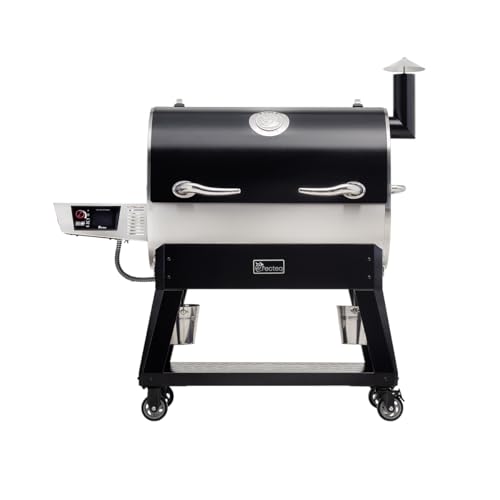
recteq Flagship 1600 Pellet Smoker Grill — Best for Serious Volume
Recteq built its following on a simple proposition: pellet grills should be built like equipment, not appliances. The Flagship 1600 is that proposition at full size — its verified listing specifies 1,667 square inches of cook space and a 40 lb pellet hopper, figures that move it out of ‘backyard cooker’ and toward ‘small catering rig.’ This is the pick for the cook whose gatherings keep growing: the one doing four pork butts for the church picnic, briskets for the office, or a whole menu of ribs, chicken, and sides at once without playing grate Tetris.
Strengths
- 1,667 sq in cook space per the verified listing — the largest capacity in this guide
- 40 lb hopper supports genuinely long unattended cooks without refills
- Recteq’s reputation for heavy construction and tight temperature control is the core of its owner loyalty
Trade-offs
- Size cuts both ways: it is a lot of cooker to heat for two chicken breasts on a Tuesday
- Pellet consumption scales with that big, insulated cooking chamber on long cooks
- The same mild pellet smoke profile as the Traeger pick; volume does not change the fuel’s flavor ceiling
| Specification | Detail |
|---|---|
| Fuel | Wood pellets |
| Cooking area | 1,667 sq in (per verified listing) |
| Hopper | 40 lb (per verified listing) |
| Control | Wi-Fi smart control |
What justifies the Flagship over simply buying the Traeger twice is thermal mass and stability at scale. A cooker this size, built heavy, shrugs off the disturbances that wreck lesser cooks — a lid opened to spritz, a cold brisket loaded at midnight, a windy January night. Owners consistently describe recteq controllers in the language usually reserved for ovens, and for the volume cook that is the entire game: when you are responsible for feeding forty people at noon, you are not buying features, you are buying the absence of surprises.
Choose it with open eyes about the everyday reality. It will dominate a patio corner, it wants a cover and a dry pellet store, and its talents are wasted on a household that cooks for three. But the premise of a ‘best ever’ list is that some cooks really do feed crowds and really do run eighteen-hour cooks, and for them this is the pellet cooker that ends the search — the one bought after the mid-size pellet grill, by someone who knows exactly why.
Best for: Big gatherings, batch cooking, and cooks upgrading from a mid-size pellet grill / Not suited for: Small households or small patios
Check the current price on Amazon

Masterbuilt Gravity Series 600 Charcoal Grill Smoker — Best Charcoal Flavor, Set-and-Forget
The Gravity Series exists to settle barbecue’s oldest argument — charcoal flavor versus pellet convenience — by refusing to choose. A vertical hopper holds charcoal above the fire; gravity feeds it as it burns; a digital controller and fan hold your set temperature the way a pellet grill does, with WiFi oversight per the verified listing. The 600 offers 600 square inches of cooking space, enough for serious family barbecue, in the format that has converted more pellet owners back to charcoal than any cooker in years.
Strengths
- Real charcoal smoke flavor with digital, fan-driven temperature control — the combination no other format matches
- GravityFed hopper refuels the fire continuously, so long cooks need no manual fire tending
- 600 sq in per the verified listing covers family-scale smoking and grilling in one footprint
Trade-offs
- More moving parts than a simple charcoal cooker: fan, controller, and hopper all ask for basic care and dry storage
- Charcoal ash and grease management are more hands-on than a pellet cooker’s clean burn
- Like all powered cookers here, it needs electricity for the controller and fan
| Specification | Detail |
|---|---|
| Fuel | Charcoal, gravity-fed |
| Cooking area | 600 sq in (per verified listing) |
| Control | Digital with WiFi technology |
| Model | MB20041023 (per verified listing) |
The flavor difference is not subtle, and it is why this cooker earns a ‘best ever’ seat despite being a younger design than the bullet or kamado below. Charcoal — especially with wood chunks mixed into the hopper — produces the heavier smoke compounds that pellet fires burn too cleanly to make. Cooks who grew up on offset or kettle barbecue and drifted to pellets for the convenience consistently describe the Gravity as the first powered cooker that tastes like their old fire. The digital control, meanwhile, removes the one real cost of charcoal: the 2 a.m. vent adjustment.
Its trade-offs are the honest price of hybrid design. You are maintaining a small system, not a steel box — keep the fan intake clear, the hopper dry, and the grease path clean, and it rewards you; neglect it like a kettle and it will remind you it has electronics. For the cook whose priority list reads ‘flavor first, but I also have a job,’ no other pick in this guide threads the needle as precisely.
Best for: Charcoal lovers who want overnight cooks without fire-sitting / Not suited for: Purists who want a cooker with zero electronics
Check the current price on Amazon

Weber Smokey Mountain Cooker 22-inch — Best Traditional Charcoal
Every ‘best ever’ list has to answer for the Weber Smokey Mountain, because no cooker has started more barbecue obsessions. The design is a vertical bullet: charcoal and wood at the base, a water pan above the fire, and two cooking grates stacked in a porcelain-enameled dome, per the verified listing. The 22-inch is the size to buy — big enough for full packer briskets and multiple pork butts, efficient enough for a single rack of ribs. It has no fan, no app, and no controller, and it holds temperature for hours anyway, which is precisely its legend.
Strengths
- Proven over decades; the deepest recipe, modification, and troubleshooting knowledge base of any smoker here
- Water-pan design stabilizes temperature and suits long, low cooks beautifully
- No electronics to fail, update, or keep dry — it will outlive every powered cooker in this guide
Trade-offs
- You are the controller: vents, fuel, and weather management are skills the cook must supply
- Accessing the lower grate mid-cook means lifting the upper grate and food — a known ergonomic quirk
- Adding fuel on very long cooks requires care through the side door
| Specification | Detail |
|---|---|
| Fuel | Charcoal with wood chunks |
| Size | 22 in (per verified listing) |
| Grates | Dual cooking grates |
| Body | Porcelain-enameled kettle |
| Control | Temperature control dampers (manual) |
The Smokey Mountain’s greatness is a lesson in thermal simplicity. The water pan is simultaneously a heat sink that irons out temperature swings, a humidity source that keeps bark and meat surfaces in the zone where smoke adheres, and a shield that turns direct fire into gentle convection. Learn its three vents — which takes exactly two cooks — and it settles into a low, slow cruise that owners measure in hours per fuel load. Competition teams won championships on this cooker when it was the affordable option; it is now simply the classic one.
Its place on a ‘best ever’ list is also about what it teaches. Every other pick in this guide automates something the Smokey Mountain makes you understand: draft, fuel state, the effect of wind, the look of a clean fire. Cooks who start here can run anything. Cooks who start with automation sometimes never learn why a cook went wrong. If your ambition includes mastery and not just meals, this is where the road begins — and for many, judging by how long these stay in service, it is also where it happily ends.
Best for: New smokers who want to learn real fire craft, and traditionalists generally / Not suited for: Anyone who wants to set a temperature and walk away for twelve hours
Check the current price on Amazon

Kamado Joe Classic Joe Series II 18-inch — Best Kamado
Kamado cooking is the oldest technology in this guide — ceramic, charcoal, and draft control refined over centuries — and the Classic Joe Series II is its modern benchmark. The verified listing specifies the 18-inch format with cart, side shelves, and stainless steel grates over 250 square inches of cooking space. Thick ceramic walls store heat the way a masonry oven does, so a single modest load of lump charcoal can hold smoking temperatures for a very long cook, and the same cooker can be run up to genuine steakhouse searing heat when the meal changes direction.
Strengths
- Ceramic thermal mass delivers the best fuel efficiency and temperature stability of any unpowered format
- True two-zone versatility: low-and-slow smoking and high-heat grilling and pizza in one cooker
- Lump charcoal flavor with minimal ash and long burn times between refuels
Trade-offs
- 250 sq in per the listing is family-sized, not crowd-sized — big brisket parties outgrow it
- Ceramic is heavy and does not love being moved; choose its home carefully
- Temperature overshoot is slow to correct — ceramic stores the mistake as faithfully as the heat
| Specification | Detail |
|---|---|
| Fuel | Lump charcoal |
| Size | 18 in kamado |
| Cooking area | 250 sq in (per verified listing) |
| Included | Cart and side shelves |
| Grates | Stainless steel (per verified listing) |
| Model | KJ-23RHC |
The kamado’s claim on ‘best ever’ is versatility married to efficiency. Pellet and electric picks smoke well and grill adequately; the Classic Joe smokes well and grills superbly, roasts, bakes, and does things — bread, pizza at proper temperatures — that no other pick here attempts. For households that can only justify one serious outdoor cooker, that breadth is decisive, and it is why kamado owners so rarely replace their cookers with anything except a larger kamado.
Its discipline is thermal patience. You bring a ceramic cooker up slowly, because the walls that will hold your temperature all night will also hold an overshoot all night. Cooks who learn that single lesson find the Classic Joe almost meditative: set the vents, watch it settle, and cook for hours on a quantity of charcoal that would embarrass a kettle. In a guide full of powered convenience, this is the pick for the cook who wants mastery and range in a single, beautiful object.
Best for: One-cooker households wanting smoking, grilling, roasting, and pizza range / Not suited for: Regular cooks for large crowds
Check the current price on Amazon

Masterbuilt 40-inch Digital Electric Smoker with Leg Kit MB20070122 — Best Electric / Easiest to Run
The case for an electric smoker on a ‘best ever’ list is simple: it is the cooker most likely to be used on a tired Friday by a normal person, and it produces reliably good smoked food with the least skill and attention of anything here. Masterbuilt’s 40-inch digital cabinet is the format’s standard-bearer — the verified listing specifies 970 square inches across its racks, a leg kit that brings it to working height, and the side wood chip loader that defines the design: add chips through the external loader, and the door stays shut, the heat stays in, and the smoke keeps coming.
Strengths
- 970 sq in per the verified listing — party capacity in the easiest format to run
- Side wood chip loader adds smoke without opening the door and dumping heat
- Digital control makes it the most approachable pick here for absolute beginners
Trade-offs
- Electric heat produces a lighter smoke profile than charcoal formats; chip management matters
- Cabinet temperatures top out below grilling range — this is a smoker, not a grill
- Needs a suitable outdoor outlet and shelter from heavy weather like all electric cabinets
| Specification | Detail |
|---|---|
| Fuel | Electric with wood chips |
| Cooking area | 970 sq in (per verified listing) |
| Chip system | Side wood chip loader |
| Control | Digital |
| Model | MB20070122 |
Do not mistake ‘easiest’ for ‘least capable.’ The big Masterbuilt cabinet has smoked a generation of briskets, sausages, cheeses, nuts, and holiday hams for people who had no interest in fire management, and its results at true low-and-slow temperatures are legitimately good — gentle, even, and forgiving. The side loader deserves its fame: on chip-based smokers, opening the door to add wood is the classic beginner error, costing heat and time; Masterbuilt engineered the error away, and the whole category followed.
Its ceiling is equally clear. There is no sear here, no charcoal depth, and smoke intensity depends on your chip discipline — small, regular additions beat one heroic handful. But a ‘best ever’ list that ignored the cooker owned and loved by more casual smokers than any other would be a list written for hobbyists only. For apartments with suitable outdoor space, for beginners, and for anyone whose barbecue ambitions are real but whose weekends are short, this is the pick that turns intention into dinner.
Best for: Beginners, busy households, and anyone prioritizing effortless low-and-slow / Not suited for: Anyone wanting one cooker that also grills and sears
Check the current price on Amazon
Comparison Table
Six philosophies of barbecue in one view. Cooking areas and headline features are taken from each pick’s verified listing; the ‘best for’ column is the honest summary of each full review above.
| Pick | Badge | Key spec | Best for |
|---|---|---|---|
| Traeger Woodridge Pro Pellet Grill & Smoker | Best Overall | 970 sq in, WiFIRE, Super Smoke, 500°F max | Most households wanting one cooker that smokes, grills, and runs itself |
| recteq Flagship 1600 Pellet Smoker Grill | Best for Serious Volume | 1,667 sq in, 40 lb hopper, Wi-Fi | Big gatherings, batch cooking, and cooks upgrading from a mid-size pellet grill |
| Masterbuilt Gravity Series 600 Charcoal Grill Smoker | Best Charcoal Flavor, Set-and-Forget | GravityFed charcoal, 600 sq in, WiFi | Charcoal lovers who want overnight cooks without fire-sitting |
| Weber Smokey Mountain Cooker 22-inch | Best Traditional Charcoal | 22-inch bullet, dual grates, water pan | New smokers who want to learn real fire craft, and traditionalists generally |
| Kamado Joe Classic Joe Series II 18-inch | Best Kamado | 18-inch ceramic, 250 sq in, cart included | One-cooker households wanting smoking, grilling, roasting, and pizza range |
| Masterbuilt 40-inch Digital Electric Smoker with Leg Kit MB20070122 | Best Electric / Easiest to Run | Electric cabinet, 970 sq in, side chip loader | Beginners, busy households, and anyone prioritizing effortless low-and-slow |
How to Choose Among the Best Ever Smokers
Choose your fuel first, because fuel decides your Saturdays. Pellet cookers — the Traeger and recteq picks — ask you to keep a hopper full and an outlet nearby, and repay you with oven-like consistency. Charcoal in its three forms here (gravity-fed, bullet, kamado) asks for a modest amount of fire literacy and repays you with deeper smoke flavor. Electric asks for almost nothing and gives back the gentlest smoke of the group. There is no wrong answer, but there is a wrong answer for you: the cook who hates gadgets should not buy the connected cooker, and the cook who hates tending fires should not buy the manual one, no matter where either sits on anyone’s list.
Size honestly next. Cooking area numbers in this guide come from the verified listings — 250 square inches on the kamado, 600 on the Gravity, 970 on the Traeger and the Masterbuilt, 1,667 on the recteq — and they should be matched to your real life, not your biggest imaginable party. Most households smoke for four to eight people most of the time; a cooker sized for that reality heats faster, uses less fuel, and produces better results than a cavern run mostly empty. Buy for the party only if the party is monthly, not annual.
Then weigh build and support over features. At ‘best ever’ level, every pick controls temperature well enough to make great food. What separates a decade-long keeper is construction — steel gauge, ceramic quality, door seals, controller reliability — and the maker’s parts pipeline five years from now. This is the quiet reason famous names dominate this list: not snobbery, but the lived experience that a cooker you can still buy a gasket, grate, or controller for in year seven is worth more than a feature you used twice.
Finally, budget for the ecosystem, not just the cooker. Covers, quality fuel, probes, gloves, and a decent knife set are part of the real purchase, and pellet and charcoal habits have running costs that differ meaningfully over a season. The budget framing that matters is tier, not ticket: every pick here sits in the serious-home tier of its category rather than the disposable tier, and that is deliberate — ‘best ever’ and ‘cheapest that works’ are different lists, and confusing them is how patios fill up with cookers nobody loves.
Smoke Flavor, Honestly Ranked
New smokers often ask which fuel tastes best, and the truthful answer has a shape. A charcoal fire — bullet, kamado, or gravity-fed — produces the fullest smoke profile, because charcoal and wood chunks smolder and burn in a way that generates the heavy flavor compounds barbecue is famous for. Pellet fires burn so cleanly and efficiently that their smoke is inherently lighter; modes like the Traeger pick’s Super Smoke narrow the gap at low temperatures without closing it. Electric cabinets flavor with smoldering chips, giving a gentle, controllable smoke that suits fish, cheese, and poultry beautifully and brisket more delicately.
None of this makes one fuel ‘best.’ It makes them different instruments. Plenty of experienced cooks own two picks from this list — a charcoal cooker for the cooks that matter most and a pellet or electric for the cooks that happen most often. If you can only own one, let your palate vote: eat barbecue from each format if you can, and notice which plate you finish first.
Fuel Management: The Skill Behind Every Great Cook
Every cooker in this guide is, in the end, a fuel-management device, and the cooks who master fuel outcook the cooks who master gadgets. For charcoal formats, the foundational technique is the unlit-fuel method: a bed of unlit charcoal with a small amount of lit fuel placed on top, so the fire spreads slowly through the load over hours instead of peaking early and dying. Wood chunks belong distributed through that bed, not piled on top of it — buried chunks ignite in sequence, seasoning the whole cook with smoke instead of front-loading the first hour and vanishing.
Pellet cooks manage a different variable: pellet quality and storage. Pellets are compressed sawdust and behave like it — they absorb ambient moisture, swell, crumble, and feed erratically. Kept sealed and dry, they burn with the consistency the controller assumes; kept in an open bag in a humid garage, they produce the temperature wander owners then blame on the cooker. The electric cabinet’s version of the same lesson is chip discipline: small additions of dry chips, regularly, produce clean continuous smoke, while a single overloaded tray produces a bitter burst and then nothing.
Across all fuels, the pattern is identical: the cook that goes wrong at hour seven was usually decided at minute ten, in how the fuel was loaded. The ‘best ever’ cookers in this guide forgive many things, but none of them forgives an undersized or badly built fuel load — which is why this guide’s overnight method begins with the load, not with the meat.
How to Run Your First Overnight Brisket Cook
Every cooker in this guide can run an overnight brisket; the method differs in fire management, not in principles. The steps below are written generically so they apply whether your weapon is pellet, charcoal, kamado, or electric — with the fire-specific notes folded in.
- Trim and season the day before. Trim the fat cap to an even layer, remove hard deckle fat, season generously with coarse salt and pepper (add your preferred rub elements if you like), and refrigerate uncovered overnight so the surface dries — a dry surface builds bark.
- Stabilize the cooker before the meat goes on. Bring your smoker to its low-and-slow setting and let it sit there for a full thirty minutes. Pellet and electric cooks: this is automatic. Charcoal cooks: this is where you learn your vents. Never load a brisket into a cooker that is still climbing or falling.
- Cook fat-side toward the heat. On most of these cookers that means fat-side down on pellet and electric cabinets, fat-side up on the bullet and kamado — the rule is to put the fat between the meat and the fire’s direct path.
- Do not chase the stall. Somewhere in the middle hours the internal temperature will plateau for what feels like forever as moisture evaporates. This is normal physics, not a malfunction. Wrapping in butcher paper at this point is a legitimate, widely used choice that preserves bark while shortening the stall; foil works faster and softens bark more.
- Judge doneness by tenderness, not temperature. A probe should slide into the flat with the resistance of warm butter. Temperature is a guide that gets you to the neighborhood; tenderness is the address. Start checking earlier than you expect to finish.
- Rest like you mean it. Rest the wrapped brisket in a dry cooler for at least an hour, ideally two. Slicing early pours the cook’s whole reward onto the cutting board as juice. Slice the flat against the grain, the point in thicker slices or cubes, and serve promptly.
Write down what you did — fuel load, weather, timing, result. Every pick in this guide rewards a cook who keeps notes, because the second brisket is where ‘best ever’ equipment starts paying its real dividend: repeatability.
Common Buying Mistakes
Buying for the biggest party you can imagine. An oversized cooker run mostly empty wastes fuel and heats unevenly. Size for your monthly reality; borrow or batch-cook for the annual event.
Confusing features with build. Screens and apps are visible in the showroom; steel gauge, seals, and parts support decide year five. This list weights the invisible things on purpose.
Opening the cooker constantly. Every format here loses heat and smoke when you peek, and charcoal formats lose their settled draft. Trust the process; if you are looking, you are not cooking.
Judging a first cook as the cooker’s verdict. Every format has a learning curve of two or three cooks. The ‘best ever’ names in this guide earned their status from owners who got past cook one.
Skipping the cover and dry storage. Controllers, fans, pellets, and charcoal all hate moisture. The cheapest accessory in barbecue is the one that protects every other dollar you spent.
Final Recommendation
If you want one recommendation to act on: the Traeger Woodridge Pro is the best overall smoker for the most people — big, consistent, connected, and backed by the deepest ecosystem in barbecue. The recteq Flagship 1600 is its answer for cooks whose gatherings outgrew normal sizing. The Masterbuilt Gravity 600 is the pick when flavor leads and convenience must follow. The Weber Smokey Mountain remains the finest teacher in barbecue and a lifetime cooker in its own right; the Kamado Joe Classic II is the most versatile single cooker here; and the Masterbuilt 40-inch electric is the easiest path to genuinely good smoked food ever put in a cabinet.
Any of the six will make you the person whose house people hope invites them to dinner. Pick by fuel and by honesty about your own habits, and you will not need another list.
- Traeger Woodridge Pro Pellet Grill & Smoker (Best Overall): Check price on Amazon
- recteq Flagship 1600 Pellet Smoker Grill (Best for Serious Volume): Check price on Amazon
- Masterbuilt Gravity Series 600 Charcoal Grill Smoker (Best Charcoal Flavor, Set-and-Forget): Check price on Amazon
- Weber Smokey Mountain Cooker 22-inch (Best Traditional Charcoal): Check price on Amazon
- Kamado Joe Classic Joe Series II 18-inch (Best Kamado): Check price on Amazon
- Masterbuilt 40-inch Digital Electric Smoker with Leg Kit MB20070122 (Best Electric / Easiest to Run): Check price on Amazon
More from this cluster: Best Smokers · Best Pellet Smokers · Best Electric Smokers · Best Offset Smokers · Best Kamado Smokers
Frequently Asked Questions
What is the single best smoker for a beginner?
For a beginner who wants results with the least fire management, the Masterbuilt 40-inch electric and the Traeger Woodridge Pro are the gentlest on-ramps in this guide. For a beginner who wants to learn barbecue as a craft, the Weber Smokey Mountain is the classic choice — it teaches draft and fuel judgment that transfers to every other cooker, and it is inexpensive to feed while you learn.
Do pellet smokers really taste as good as charcoal smokers?
They taste different. Pellet smoke is cleaner and lighter; charcoal smoke is deeper and more assertive. Good cooks win competitions on both. If deep smoke is your priority, the gravity-fed charcoal pick exists precisely for you; if consistency and convenience lead, pellet flavor will not disappoint you — especially using a super-smoke style mode at low temperatures for the first hours of a cook.
How long will a smoker in this guide actually last?
These picks were chosen partly for longevity. The unpowered charcoal cookers — the bullet and the kamado — can serve for decades with gasket and grate replacements. Powered cookers depend on controllers, fans, and augers, which is why maker support and parts availability weighed so heavily in the selection; buy the brands that will still sell you a controller in seven years.
Is a bigger smoker always better?
No. A cooker matched to your usual party size heats more evenly, uses less fuel, and produces better bark and moisture than a cavern run nearly empty. The 1,667-square-inch recteq in this guide is a specialist tool for genuine volume cooks; most households are better served by the 600–970 square inch class.
Can one of these replace my grill as well?
The kamado pick grills superbly, the pellet picks grill credibly at their upper temperatures, and the gravity-fed charcoal cooker grills well. The electric cabinet and the bullet smoker are dedicated smokers — excellent at their job, but they will not sear a steak. Households wanting one appliance for everything should weight the kamado and pellet reviews most heavily.
What fuel costs should I expect?
Think in tiers rather than tickets. Lump charcoal for a kamado is the most frugal long-cook fuel here because the format is so efficient. Pellet consumption rises with cooker size and cook length; charcoal for the bullet sits in between. None of these formats is ruinous, but the big pellet cooker feeding a crowd all weekend will consume visibly more fuel than the kamado feeding a family — another reason to size the cooker to your real life.


