Disclosure: airfryerkitchensupply.com is reader-supported. When you buy through links on our site, we may earn an affiliate commission at no extra cost to you.
Where to Buy
The fastest way to buy any pick in this guide to the best european composting toilets is through Amazon, where each verified model below is listed with its current specification details. Use the links in this box to check the current configuration before you order — toilet listings sometimes bundle different seats or rough-ins under one page, and the variant you select is the toilet you get.
- Separett Villa Urine-Separating Toilet — Best Overall. Check the current price on Amazon.
- Separett Tiny Self-Contained Urine-Separating Toilet — Best for Vans and RVs. Check the current price on Amazon.
- TROBOLO WandaGO Composting Toilet — Best Portable. Check the current price on Amazon.
- Separett Weekend Prime Urine-Separating Toilet — Best Non-Electric. Check the current price on Amazon.
- Nature’s Head Self-Contained Composting Toilet (Foot-Spider Handle) — Best US Alternative — Active Composting. Check the current price on Amazon.
- Compo Closet Cuddy Composting Toilet — Best US Alternative — Powered Vent. Check the current price on Amazon.
If a pick shows as unavailable in your region, choose the next pick in the same badge family rather than substituting an unverified model — every recommendation in this guide was checked against its listing before inclusion.
The best european composting toilets come overwhelmingly from one tradition: Scandinavian and German urine-separating design. Sweden’s Separett has defined the category for decades — toilets that use no water, divert urine away from solids so odor stays low, and ask for no chemicals, no mixing medium, and no plumbing. Germany’s TROBOLO brings the same separation principle to portable formats. If you want a European composting toilet in the United States, those two makers are, honestly, most of the real market — and this guide says so plainly rather than padding the list with rebadged imports.
That honesty matters for buying: the US market for European composting toilets is narrow. Distribution is thinner than for domestic brands, model ranges sold here are a subset of the European catalog, and some well-known European names have no reliable US retail listing at all. So our rule for this guide was strict — only models with a verified US listing get a purchase link, and we include two American benchmarks (Nature’s Head and the Compo Closet Cuddy) clearly labeled as alternatives, because US buyers cross-shop them and the comparison clarifies what the European separation approach does differently. Everything else is discussed in prose, without invented listings.
Who are these toilets for? Cottage and cabin owners without septic, homesteaders, skoolie and van builders, boat owners, and anyone adding a bathroom where a drain cannot go. Who are they not for? Buyers who want a flush toilet’s invisibility in a plumbed primary bathroom — a waterless toilet has a routine, and this guide describes it honestly for every pick.
In this guide
Quick Picks: The Best european composting toilets
If you only read one section, make it this one. Each pick below carries a badge naming the job it does best, and the same badge appears at its full review further down so you can jump straight to the detail.
Best Overall — Separett Villa Urine-Separating Toilet: Uses no water at all — the ultimate flush saving. Urine separation keeps solids dry and dramatically reduces odor. Check the current price on Amazon.
Best for Vans and RVs — Separett Tiny Self-Contained Urine-Separating Toilet: Built-in urine container removes the need for an external drain line. Emptying sensor tells you when the container needs attention. Check the current price on Amazon.
Best Portable — TROBOLO WandaGO Composting Toilet: German-engineered urine-diverting design in a portable format. Height adjustment suits different users and ground setups. Check the current price on Amazon.
Best Non-Electric — Separett Weekend Prime Urine-Separating Toilet: Non-electric — works in a blackout, a bunker, or a remote cabin. Self-contained with no water or power hookups. Check the current price on Amazon.
Best US Alternative — Active Composting — Nature’s Head Self-Contained Composting Toilet (Foot-Spider Handle): Foot-operated handle variant for hands-free-ish cranking setups. Same proven composting platform as the spider-handle model. Check the current price on Amazon.
Best US Alternative — Powered Vent — Compo Closet Cuddy Composting Toilet: 12V fan and carbon filter actively manage odor. 3.9-gallon capacity is generous for the vehicle class. Check the current price on Amazon.
How These Picks Were Chosen
We built the shortlist for the best european composting toilets from models whose listings we could verify, then ranked them on the criteria this category actually turns on: verified flush volume or waterless design, evidence of clearing performance (a MaP score, a certification, a named flushing platform, or a flush-valve specification printed in the listing), fit (rough-in, bowl shape, seat height), and the completeness of what ships in the box.
Two rules governed inclusion. First, no specification appears in this guide unless the product’s own verified listing states it — where a listing is silent on a figure, the review says so instead of estimating. Second, no static prices and no fixed ratings appear anywhere in the article: prices move, ratings move, and a buying guide should send you to the live listing for both. Picks are ordered by overall fit for the keyword, with badges flagging the specialist choices.
The 6 Best european composting toilets — Full Reviews

Separett Villa Urine-Separating Toilet — Best Overall
Separett, from Sweden, is the defining name in urine-separating toilets, and the Villa is its flagship for fixed installations — cottages, homesteads, and converted buses (‘skoolies,’ per the listing). The principle is simple: a separator under the seat diverts urine away from solids, so the solid waste stays dry, odor stays low, and no water, chemicals, or mixing are involved. For an off-grid building, eliminating flush water also eliminates the well pumping, septic load, and freeze risk that come with it.
Strengths
- Uses no water at all — the ultimate flush saving
- Urine separation keeps solids dry and dramatically reduces odor
- High-capacity design suits full-time cottage and homestead use
Trade-offs
- Requires a vent pipe and a plan for urine drainage or collection
- Solids must be emptied and composted or disposed of responsibly
- US dealer and parts network is smaller than domestic brands
| Specification | Verified detail |
|---|---|
| Type | Urine-separating dry toilet |
| Water use | None — waterless |
| Additives | None required (from listing title) |
| Capacity | High-capacity design (from listing title) |
| Use cases | Homestead, skoolie, cottage (from listing title) |
The Villa is not a drop-in replacement for a flush toilet in a plumbed suburban home; it needs a vent, a urine outlet plan, and an owner willing to manage the solids container. Within its intended world, though, it is the benchmark — which is why it anchors both our environmental and European composting lists. Buy it through the verified listing so you get the correct US-market configuration.
In the European tradition, the Villa is the reference design: separation without consumables, capacity for real households, and decades of Scandinavian cottage use behind it. It is the pick against which every other model in this guide is implicitly compared.
Best for: buyers who want a pick where uses no water at all — the ultimate flush saving. / Not suited for: anyone who would be put off because requires a vent pipe and a plan for urine drainage or collection.
Check on Amazon — check the current price on Amazon and confirm the exact variant, seat inclusion, and rough-in on the listing before ordering.

Separett Tiny Self-Contained Urine-Separating Toilet — Best for Vans and RVs
The Separett Tiny takes the Swedish urine-separating formula mobile. Where the Villa needs a urine drain line, the Tiny carries a built-in urine container with an emptying sensor, making it genuinely self-contained for vans, RVs, cabins, and boats. No additives, no mixing, no water — the separator keeps solids dry and odor low, and the sensor removes the guesswork (and the overflow risk) that plague basic cassette toilets.
Strengths
- Built-in urine container removes the need for an external drain line
- Emptying sensor tells you when the container needs attention
- Self-contained format suits vehicles and cabins without plumbing
Trade-offs
- Container capacity limits multi-person, full-time use
- Sensor and fan components add electronics to a simple concept
- Premium pricing for the compact class
| Specification | Verified detail |
|---|---|
| Type | Self-contained urine-separating toilet |
| Water use | None — waterless |
| Urine handling | Built-in container with emptying sensor (from listing title) |
| Use cases | Vans, RVs, cabins, boats (from listing title) |
It is a premium-priced compact, and physics still applies: a built-in container fills, and a two-person full-time van life routine will empty it often. But as a European-engineered answer to the vehicle toilet problem — no black tank, no dump station, no flush water — the Tiny is the most complete package we verified on the US market.
The Tiny’s contribution is integration — the urine container and its sensor inside the unit remove the two frictions (external plumbing, guesswork) that kept separating toilets out of vehicles. For van and RV builders, it is the most European answer to a mobile problem.
Best for: buyers who want a pick where built-in urine container removes the need for an external drain line. / Not suited for: anyone who would be put off because container capacity limits multi-person, full-time use.
Check on Amazon — check the current price on Amazon and confirm the exact variant, seat inclusion, and rough-in on the listing before ordering.

TROBOLO WandaGO Composting Toilet — Best Portable
TROBOLO is Germany’s contribution to the urine-diverting dry toilet scene, and the WandaGO is its portable model — built for camping and outdoor use with a height-adjustment feature that helps it sit comfortably for different users and on uneven ground. Like the Separett units, it diverts urine to keep solids dry and odor down, with no water, chemicals, or power involved.
Strengths
- German-engineered urine-diverting design in a portable format
- Height adjustment suits different users and ground setups
- No water, chemicals, or power required
Trade-offs
- Portable camping format is less settled than fixed installations
- Smaller US retail presence than Separett
- Capacity suits trips and occasional use more than full-time living
| Specification | Verified detail |
|---|---|
| Type | Urine-diverting dry toilet, portable |
| Water use | None — waterless |
| Feature | Height adjustment (from listing title) |
| Use cases | Camping and outdoor use (from listing title) |
The WandaGO’s role in this guide is the trip toilet: festivals, campsites, garden allotments, and overland travel where a fixed installation makes no sense. Its US retail footprint is smaller than Separett’s, so check what consumables and spares ship with the verified listing. For buyers who want European dry-toilet engineering without committing to a fixed cottage installation, it is the accessible entry point.
TROBOLO represents the German branch of the family, and the WandaGO its portable expression. Height adjustment sounds minor until you have used a fixed-height camping toilet on sloped ground — it is the detail that makes this the trip pick.
Best for: buyers who want a pick where german-engineered urine-diverting design in a portable format. / Not suited for: anyone who would be put off because portable camping format is less settled than fixed installations.
Check on Amazon — check the current price on Amazon and confirm the exact variant, seat inclusion, and rough-in on the listing before ordering.
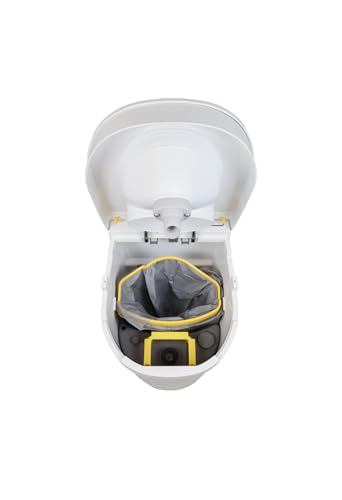
Separett Weekend Prime Urine-Separating Toilet — Best Non-Electric
The Weekend Prime is Separett stripped to essentials: urine separation, self-contained, and — the listing emphasizes — non-electric. That makes it the pick for off-grid cabins without reliable power, emergency preparedness setups, and the bunkers the listing frankly names. With no fan to run, odor control leans on the separation principle itself and on sensible venting, which the design supports.
Strengths
- Non-electric — works in a blackout, a bunker, or a remote cabin
- Self-contained with no water or power hookups
- Separett’s proven separation design at a simpler spec
Trade-offs
- No fan means venting and odor management depend more on installation
- Basic feature set compared with the Villa and Tiny
- Emergency-use framing suits occasional rather than luxury daily use
| Specification | Verified detail |
|---|---|
| Type | Urine-separating toilet, non-electric |
| Water use | None — waterless |
| Power | Non-electric (from listing title) |
| Use cases | Off-grid living, emergency use, bunkers (from listing title) |
Think of it as the resilience option in the Separett family. Full-time households will prefer the Villa’s capacity; vehicle dwellers will prefer the Tiny’s container and sensor. But a toilet that needs nothing — no water, no power, no chemicals — and still manages waste hygienically is a genuinely unique product, and the Weekend Prime is its cleanest expression we could verify.
Non-electric is a philosophy here: the Weekend Prime assumes no infrastructure at all — no water, no power — and still manages waste hygienically. In a guide about European design, it is the purest expression of the separation idea.
Best for: buyers who want a pick where non-electric — works in a blackout, a bunker, or a remote cabin. / Not suited for: anyone who would be put off because no fan means venting and odor management depend more on installation.
Check on Amazon — check the current price on Amazon and confirm the exact variant, seat inclusion, and rough-in on the listing before ordering.

Nature’s Head Self-Contained Composting Toilet (Foot-Spider Handle) — Best US Alternative — Active Composting
This Nature’s Head variant swaps the hand crank for the Foot-Spider Handle configuration, a layout some boat and tiny-home owners prefer where hand clearance is awkward. Underneath, it is the same self-contained composting platform: urine diversion, an agitator working through coco coir or peat, and no water, no chemicals, no holding tank.
Strengths
- Foot-operated handle variant for hands-free-ish cranking setups
- Same proven composting platform as the spider-handle model
- Self-contained with urine diversion
Trade-offs
- Requires composting medium and routine cranking
- US-made alternative, not a European design
- Foot handle layout needs floor clearance to operate
| Specification | Verified detail |
|---|---|
| Type | Self-contained composting toilet |
| Water use | None — waterless |
| Handle | Foot-Spider Handle (from listing title) |
As with the Cuddy, we label it plainly: Nature’s Head is an American maker, present in this European-focused guide because US buyers cross-shop it against Separett constantly, and the comparison clarifies what the European separation-only approach does differently — no medium, no crank, less active composting. Choose the Nature’s Head if you want active composting; choose Separett if you want separation simplicity.
We include the Nature’s Head with its nationality on its sleeve: it is the American alternative most European-model shoppers cross-shop, and its active-composting routine is the clearest contrast to Separett’s separation simplicity. Choose it if you want decomposition in the unit.
Best for: buyers who want a pick where foot-operated handle variant for hands-free-ish cranking setups. / Not suited for: anyone who would be put off because requires composting medium and routine cranking.
Check on Amazon — check the current price on Amazon and confirm the exact variant, seat inclusion, and rough-in on the listing before ordering.

Compo Closet Cuddy Composting Toilet — Best US Alternative — Powered Vent
The Cuddy from Compo Closet is what many buyers cross-shop against the European units: a self-contained, waterless composting toilet with a 3.9-gallon capacity, a 12V fan, and a carbon filter, aimed at RVs, vans, boats, and tiny homes. The powered fan is its signature — active ventilation pulls air through the unit and across the filter, which is the most forgiving odor strategy for small enclosed spaces.
Strengths
- 12V fan and carbon filter actively manage odor
- 3.9-gallon capacity is generous for the vehicle class
- No chemicals, fully self-contained
Trade-offs
- 12V fan needs a power source, unlike non-electric rivals
- Not a European brand — included as a cross-shopped alternative
- Fan is a wear part to plan around
| Specification | Verified detail |
|---|---|
| Type | Self-contained composting toilet |
| Water use | None — waterless |
| Capacity | 3.9 gal (from listing title) |
| Vent | 12V fan with carbon filter (from listing title) |
| Use cases | RVs, vans, boats, tiny homes, off-grid |
We include it with a clear label: Compo Closet is not a European maker, and this guide’s European picks are the Separett and TROBOLO units above. The Cuddy earns its slot as the alternative benchmark — if its fan-and-filter approach or capacity suits your vehicle better, it is a verified, well-regarded option. Just plan the 12V feed during installation.
The Cuddy’s fan-and-carbon-filter approach is the most forgiving odor strategy for enclosed vehicle spaces, at the cost of needing 12V power. It earns its place as the second benchmark — the model to choose if powered venting suits your build better than passive European minimalism.
Best for: buyers who want a pick where 12v fan and carbon filter actively manage odor. / Not suited for: anyone who would be put off because 12v fan needs a power source, unlike non-electric rivals.
Check on Amazon — check the current price on Amazon and confirm the exact variant, seat inclusion, and rough-in on the listing before ordering.
Comparison Table
| Pick | Badge | Key spec (verified) | Best for |
|---|---|---|---|
| Separett Villa Urine-Separating Toilet | Best Overall | None — waterless | Overall |
| Separett Tiny Self-Contained Urine-Separating Toilet | Best for Vans and RVs | None — waterless | for Vans and RVs |
| TROBOLO WandaGO Composting Toilet | Best Portable | None — waterless | Portable |
| Separett Weekend Prime Urine-Separating Toilet | Best Non-Electric | None — waterless | Non-Electric |
| Nature’s Head Self-Contained Composting Toilet (Foot-Spider Handle) | Best US Alternative — Active Composting | None — waterless | US Alternative — Active Composting |
| Compo Closet Cuddy Composting Toilet | Best US Alternative — Powered Vent | None — waterless | US Alternative — Powered Vent |
Key specs are quoted from each product’s verified listing. Where two picks share a headline figure, the deciding factors are usually the ones in the full reviews: bowl shape, seat height, what is included in the box, and how the flush achieves its result.
How to Choose a European Composting Toilet
Understand the European design philosophy first, because it differs from the American one. Separett-style toilets separate: urine goes one way (to a container, drain, or approved outlet), solids go into a lined container, dry and low-odor because the liquids are gone. There is no composting inside the unit and no medium to buy. American composting toilets (Nature’s Head, Cuddy) actively compost in the chamber with an agitator and a medium like coco coir. Neither philosophy is ‘better’ — separation is simpler and needs no consumables; active composting produces a more finished output and handles higher throughput. Choose by the routine you will actually keep.
Then match capacity and installation to your use. Fixed cottage with several users: the Separett Villa’s high-capacity design. Vehicle or boat: the self-contained Separett Tiny or a compact alternative, sized by footprint. No power available: the non-electric Separett Weekend Prime. Portable and occasional: the TROBOLO WandaGO. In every case, plan the vent route and the urine path before purchase — those two installation details decide whether any waterless toilet delights or disappoints.
The US Market Reality for European Models
Buyers should know what they are stepping into. European composting toilets sold in the US typically arrive through a small number of importers and specialist retailers, plus marketplace listings like the verified ones in this guide. Prices sit in the premium tier, parts and consumables (container liners, vent components) may ship from fewer stockists, and some European-catalog models — wall-hung variants, incinerating models, additional TROBOLO and Separett lines — have no dependable US listing we could verify at the time of writing, so we discuss the category in prose rather than linking you to a listing that may not be what it claims.
Practical implications: buy through a verified listing (as linked here) so the model, voltage of any fan, and included kit match the US configuration; register the product and record the importer’s contact; and stock a season’s worth of consumables if your property is remote. None of this is a reason to avoid the category — Separett ownership in North America is well established — but it rewards a buyer who plans like an early adopter rather than a big-box shopper.
Separation vs Active Composting: Which Routine Suits You?
Separation (Separett, TROBOLO): after use, there is nothing to crank and nothing to add. Urine leaves through its path; solids wait, dry, in a lined container that you empty on a schedule — bag out, new bag in. The output is not finished compost and must be composted further in a proper outdoor system or disposed of per local rules. The system’s elegance is its lack of moving parts and consumables; its demand is a good vent and a legal emptying plan.
Active composting (Nature’s Head, Cuddy): you add medium, turn an agitator, and the chamber begins real decomposition, so emptied output is further along and volumes shrink somewhat in the unit. The demand is the routine — cranking, medium management, moisture judgment — plus, on fan-equipped models, a small power draw. Full-time users often prefer active composting’s throughput; occasional users (weekend cabins) often prefer separation’s indifference to neglect. Be honest about which owner you are.
Living With One: A Week, A Month, A Season
Daily life with a European separating toilet is quieter than newcomers expect. Use is seated, the fan (where fitted) hums at the edge of hearing, and there is no flush event at all — which visitors notice more than anything. The urine container or drain does its work invisibly; the solids container sits lined and dry. Guests need one sentence of instruction — ‘sit down, nothing to flush, the fan handles the rest’ — and a small sign in a rental or guest cottage removes even that conversation.
The weekly rhythm is measured in minutes: check the urine container level (or trust the Tiny’s sensor), glance at the vent fan, top up nothing, add nothing. Separating toilets ask for no consumables in daily operation, which owners consistently cite as the design’s quiet triumph over both cassette toilets (chemicals, dump stations) and active composters (medium, cranking). Monthly, rinse the urine line, wipe the separator, and confirm the vent exit is clear of nests, webs, and snow. Seasonally — or by headcount — the solids container gets emptied: liner out, contents to the composter or the approved disposal route, fresh liner in.
The honest friction points are social and logistical, not mechanical. A household member who refuses the routine will make any waterless toilet fail; a property with no legal solids route has a problem no model can solve; and a cabin that hosts twelve guests on a two-person capacity plan will overflow its schedule. Size the system for your real headcount, agree the routine before installation, and the European design repays you with the simplest waste system most owners have ever lived with.
Accessories and Consumables: What Ownership Actually Needs
Separating toilets keep the consumables list admirably short, but not empty. Compostable container liners matched to your model’s chamber are the recurring purchase — buy them in quantity, because running out is the one shortage that cannot be improvised gracefully. Vent components (insect screens, rain caps, spare fan units on powered models) are the second category: the fan is the only moving part in most Separett installations, and having a spare on a remote property converts a breakdown from an emergency into a ten-minute swap.
For the urine path, keep a bottle brush sized to the line and a supply of plain vinegar for the periodic anti-crystal rinse — urine scale is the system’s one predictable maintenance item, and it yields to mild acid and attention. TROBOLO and Separett both sell model-specific spares through their channels; record your exact model and the importer’s details at purchase, and order the first spare kit while the original parts are still healthy, not after they fail.
What you will not buy is equally worth listing: no blue chemicals, no dump-station fees, no flush valves, no wax rings, no plumber callouts for running toilets. Over a decade, the consumables ledger of a separating toilet is one of the smallest in the bathroom — another reason the category’s owners tend to stay owners when they move or build again.
European Brands Beyond the Shortlist: An Honest Landscape
Readers researching this category will meet other European names, and an honest guide should place them — in prose, because at the time of writing we could not verify dependable US purchase listings for them, and this guide links only what it verifies. Finland’s Biolan and Ekolet represent the other great Nordic tradition: larger-scale composting systems, often with outdoor or under-floor chambers, beloved in Finnish summer cottages and better suited to properties that can give the system architectural space. Germany’s Kildwick makes well-regarded urine-diverting kits and complete toilets, popular with European van builders, with US availability that comes and goes through importers.
Sweden’s Separett itself sells a wider range at home — including incinerating models that burn waste to ash on propane or electric heat, a different technology with different infrastructure demands (fuel, venting rated for heat, ash handling) that solves the solids question completely for some off-grid homes. Incineration is worth knowing about if your property cannot compost and cannot legally store solids — but verify US listings, certifications, and fuel logistics carefully before treating it as a plan, because support networks here are thinner still.
The landscape lesson generalizes: in this category, the best toilet is partly the one with a living supply chain behind it on your continent. That is why the linked picks in this guide are the models with verified US listings today, and why the unlinked names above come with research homework rather than a buy button. If a listing for any of them appears through a reputable importer, apply this guide’s checks — configuration, fan voltage, consumables, importer support — and the European market opens up considerably.
Costs of Ownership, Honestly Framed
European composting toilets sit in the premium tier at purchase — that is the plain starting point, driven by low production volumes, import logistics, and the niche US distribution described earlier in this guide. Buyers should weigh that against what the category deletes: no septic installation or expansion, no water supply or drain rough-in for a new bathroom, no ongoing water and sewer charges for the fixture, and consumables limited largely to container liners. In a new outbuilding bathroom, the toilet can be the expensive line item while the project as a whole comes in far below the plumbed alternative — the comparison that actually matters.
Running costs stay low but are not zero. Liners recur; a fan, where fitted, is a small continuous draw or an eventual replacement; the urine path wants its vinegar rinses; and your time — minutes a week — is a real input that flush-toilet owners do not spend. Against that, set the avoided costs honestly too: no plumber callouts for running or leaking flush mechanisms, no dump-station fees of the cassette-toilet world, no chemicals. Most long-term owners describe the ledger as clearly favorable in off-grid settings and roughly neutral-to-favorable in plumbed ones, with the decision ultimately made on fit rather than arithmetic.
Resale and longevity deserve a final word. Separett-class units are durable, repairable appliances with shells and separators that shrug off decades; a cottage sale with a well-kept separating toilet installed is, in the markets where these are understood, a feature rather than a question mark. Buy the verified listing, keep the documentation, stock the spares — the ownership pattern this guide keeps recommending — and the premium purchase price amortizes across a service life that flush toilets in harsh, intermittently heated buildings rarely match.
Quick Checklist Before You Order
Confirm the use case matches the model class: Villa-scale capacity for fixed, multi-person installations; Tiny-scale self-containment for vehicles; Weekend Prime where no power exists; WandaGO for portable duty. Walk the building for the two routes every waterless toilet needs — the vent’s path to outside air and the urine line’s continuous downhill run — and confirm both are buildable before money moves. Check the local code position if the toilet will be a primary fixture. Confirm the listing is the verified US configuration for the exact model, and record the importer’s contact and the model’s consumables (liner size, fan type) in the property file. Order the first spare liner pack and, for fan models, a spare fan with the toilet itself if the property is remote. Finally, brief the household: everyone sits, the routine is minutes a week, and the vent is sacred. That conversation, held before installation day, is the cheapest performance upgrade in the entire category.
One Last Distinction: European Design, Wherever It Is Bought
A closing clarification for shoppers comparing listings: ‘European’ in this category describes a design tradition — urine separation, waterless operation, minimal consumables — that originated in Scandinavia and Germany and is now manufactured and imitated worldwide. The picks linked in this guide are the tradition’s originators with verified US listings: Separett of Sweden and TROBOLO of Germany. The two American benchmarks included for contrast follow the other tradition — active composting — and are labeled as such wherever they appear, so no reader mistakes this for a claim about their origin.
Why does the distinction matter beyond geography? Because the two traditions ask different things of their owners, and buying the tradition that matches your temperament matters more than the flag on the box. Separation asks for a vent, a urine path, and an emptying schedule; composting asks for medium, cranking, and moisture judgment. Owners happy with their waterless toilets almost always chose the routine they were willing to keep. Read the two traditions’ sections in this guide once more, choose yours honestly, and the European shortlist above will do the rest.
A Note on Reading This Guide’s Listings
Every model linked in this guide was verified against a live US listing before inclusion, with its configuration — self-contained or drain-ready, electric or non-electric, container or line — taken from that listing rather than from the maker’s European catalog, which sometimes differs. If a detail matters to your build, confirm it on the listing before ordering, and screenshot the specification for your property file: in a niche import market, the listing you bought from is the most reliable record of exactly what is arriving. That small habit closes the loop on the verification standard this guide has applied throughout.
How to Install and Use a European Urine-Separating Toilet
Place the unit and plan two routes before fixing anything: the vent and the urine path. The vent should run from the toilet to outside air as straight and vertical as the building allows, with sealed joints; even ‘non-electric’ models rely on the vent path for odor control, and fan-assisted models need the duct run kept short. The urine line must slope continuously downhill to its container, drain, or approved outlet — no sags, no traps — because pooled urine is the main source of both odor and crystal blockages in separating systems.
Fix the toilet to the floor per the maker’s template, connect the vent and urine line, and line the solids container. If your model has a fan, connect its power supply and confirm airflow at the vent exit before first use. Walk every user through the one behavioral rule of separating toilets: everyone sits, every time. The separator’s geometry depends on it, and standing use defeats the separation that keeps the system odor-free.
Build the maintenance rhythm from day one: empty the urine container or check the drain line weekly in regular use, rinse the urine path periodically with water (a little vinegar helps against crystal buildup), swap the solids liner on the maker’s schedule, and inspect the vent and fan monthly. Keep spare liners at the property. Owners who keep this light rhythm describe these toilets as nearly odorless and close to effortless; the routine is minutes per week, but it is not zero — plan for the owner you are.
Common Buying Mistakes
Expecting a waterless toilet to behave like a flush toilet. There is no flush and no invisibility: there is a vent, a container, and a light routine. Buyers who accept the routine love these toilets; buyers who deny it do not.
Letting the urine line sag or trap. Pooled urine crystallizes, blocks the line, and creates the odor separating toilets are famous for not having. Continuous downhill slope, always.
Standing use with a separating toilet. The separator assumes seated use by everyone. One household rule, clearly communicated, protects the whole system.
Buying a European model from an unverifiable listing. The US market is narrow and listings can be mislabeled or grey-market. Use verified listings, confirm the configuration, and record the importer.
No plan for the solids output. Separating toilets do not finish compost in the unit. You need a legal route — a proper outdoor composter or local-rule disposal — decided before purchase.
Skipping the vent to ‘keep it simple’. The vent is the odor system. Even non-electric models need a correct vent path; fan models need it short and sealed.
Final Recommendation
For a fixed off-grid or cottage installation, the Separett Villa is the European benchmark — buy it through the verified listing and plan the vent and urine path first. Vehicle builders should take the Separett Tiny’s self-contained design with its emptying sensor; campers and garden users, the TROBOLO WandaGO; anyone without power, the non-electric Separett Weekend Prime. If the comparison has you leaning toward active composting instead, the Nature’s Head (Foot-Spider) and the Cuddy are the verified US benchmarks — different philosophy, same zero-water result.
For the wider waterless and low-water picture, see Best Environmental Friendly Toilets, Best Environmental Toilets, Best Energy Efficient Toilets, and Best Energy Saving Toilets.
The shortlist, for a final check of current price and configuration on Amazon: Separett Villa Urine-Separating Toilet (Best Overall); Separett Tiny Self-Contained Urine-Separating Toilet (Best for Vans and RVs); TROBOLO WandaGO Composting Toilet (Best Portable); Separett Weekend Prime Urine-Separating Toilet (Best Non-Electric); Nature’s Head Self-Contained Composting Toilet (Foot-Spider Handle) (Best US Alternative — Active Composting); Compo Closet Cuddy Composting Toilet (Best US Alternative — Powered Vent).
Frequently Asked Questions
What is the difference between a urine-separating toilet and a composting toilet?
A urine-separating toilet (the European Separett/TROBOLO approach) diverts urine away from solids and stores solids dry in a lined container — no composting happens inside the unit. A composting toilet (Nature’s Head, Cuddy) mixes waste with a medium using an agitator and begins decomposition in the chamber. Both are waterless; they differ in routine and in how finished the output is.
Do European composting toilets need electricity?
Some do not at all — the Separett Weekend Prime in this guide is explicitly non-electric. Others use a small fan to assist venting (and the Separett Tiny adds an emptying sensor). None needs power to ‘flush’, because there is no flush; power, where present, serves ventilation and sensors.
Are Separett toilets available in the USA?
Yes, through a narrower channel than domestic brands — specialist importers and marketplace listings. The Separett models in this guide (Villa, Tiny, Weekend Prime) all carry verified US listings at the time of writing. Expect premium-tier pricing and plan consumables ahead if your property is remote.
What do you do with the waste?
Urine goes to the model’s container, a drain, or an approved outlet, and is emptied or disposed of per local rules. Solids from separating toilets are composted in a dedicated outdoor composting setup or disposed of as local rules direct — they are not finished compost when they leave the unit. Composting models produce a more decomposed output, finished in a composter. Always follow local regulations.
Do these toilets smell?
Correctly installed — vented outside, urine line sloping without sags, containers emptied on schedule — owners consistently report very low odor, because separating urine from solids prevents most odor formation. Nearly every odor complaint traces to the vent, the urine line, or an overdue container.
Can a European composting toilet be a home’s only toilet?
Sometimes. Many serve as the sole toilet in cottages, tiny homes, and off-grid houses, but local codes vary on waterless fixtures as primary toilets, and full-time multi-person use demands the capacity and routine to match. Check your jurisdiction, and size up (the Villa class) for full-time duty.


