Disclosure: airfryerkitchensupply.com is reader-supported. When you buy through links on our site, we may earn an affiliate commission at no extra cost to you.
Where to buy
The fastest way to compare the best espresso machines for 100 in this guide is to check each shortlisted set on Amazon, where piece lists, base specifications and current availability sit on one page. Start with our top pick, the De’Longhi Stilosa Espresso Machine (EC260) — Check the current price on Amazon — then compare the runner-up, the CASABREWS 3700 Essential Espresso Machine — Check the current price on Amazon. Every linked pick in this article was verified, and prices change often, so we never print a static figure: use the links to check price on Amazon at the moment you buy.
Finding the best espresso machines for 100 means being honest about how you drink coffee, how much technique you want to learn, and how much counter you can honestly give up. This guide is built for the under-$100 framing — handled honestly, because true espresso at this tier is extremely limited. Honesty first: the under-100 framing is the hardest brief in espresso. Genuine pump espresso with fresh beans normally costs more than this tier once a capable grinder is included, and most products sold at this level are steam toys or pressurised-basket starter machines. This guide therefore does two things: it picks the least-compromised budget machines that genuinely pump and steam, clearly labelling the step-up picks that sit above the strict tier, and it explains exactly what quality you gain by stretching — so you can decide with open eyes rather than discover the limits after buying. We shortlisted six options, verified every linked product, and judged them on the criteria that decide daily satisfaction long after the unboxing photos fade. Where a tier is genuinely thin — and one article in this batch, the under-100 espresso guide, faces exactly that problem — we say so plainly and label any step-up picks as step-ups, rather than pretending a compromise does not exist.
In this guide
Quick Picks
- Best Under-100 Attempt: De’Longhi Stilosa Espresso Machine (EC260) — tight budgets wanting a first real pump machine under the 100-dollar framing. Check the current price on Amazon
- Best Budget with Steam Wand: CASABREWS 3700 Essential Espresso Machine — budget buyers who want a compact first machine with a proper steam wand. Check the current price on Amazon
- Best Budget for Pre-Ground: De’Longhi ECP3420 Espresso Machine — budget-conscious beginners using pre-ground or a starter grinder. Check the current price on Amazon
- Best Budget Automatic Frother: Mr. Coffee Café Barista Espresso Machine — convenience-first households wanting lattes without learning steam technique. Check the current price on Amazon
- Best Step-Up Over 100: De’Longhi Dedica Arte Espresso Machine (EC885) — space-starved cappuccino lovers who want manual milk control. Check the current price on Amazon
- Best Compact Step-Up: Breville Bambino Plus Espresso Machine (BES500) — small kitchens and beginners who want compact size without giving up real espresso. Check the current price on Amazon
How These Picks Were Chosen
We started from the verified espresso pool for this site and filtered it through the lens of this article first: machine type, origin or tier had to fit the brief before reputation counted. Each candidate was checked so the product name and headline specifications match a real, current listing. We then weighed extraction stability, steam performance, grinder provision, footprint, build quality and maintenance burden. Machines that were accessories rather than espresso makers, listings that could not be confirmed, and products with safety recalls were excluded. The final six span the realistic options for this brief, including honest step-up picks where a strict tier is too thin to fill responsibly.
Two rules governed every article in this programme. First, no static prices: espresso pricing moves with promotions too often for a printed figure to stay true, so linked picks invite you to check price on Amazon. Second, no fixed ratings or review counts, because those numbers change constantly. Construction, workflow and maintenance do not change, so that is what this guide judges.
The 6 Best espresso machines for 100
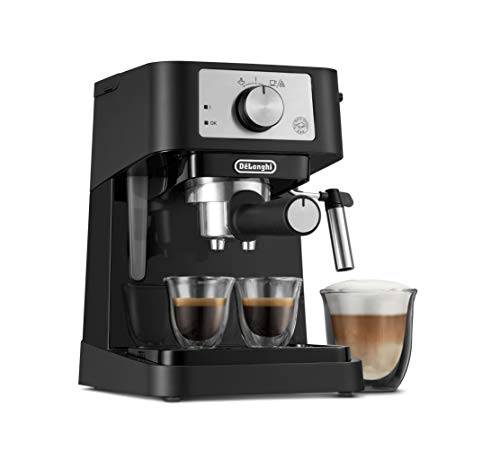
1. De’Longhi Stilosa Espresso Machine (EC260) — Best Under-100 Attempt
This pick suits tight budgets wanting a first real pump machine under the 100-dollar framing. It earns its badge in a guide to best espresso machines for 100 because it answers the central tension of this brief: buyers want cafe character at home without turning breakfast into a laboratory exercise. In daily terms that means repeatable shots, a steam workflow that does not fight you, and a machine that still feels right when the novelty has worn off and it is simply a wet Wednesday morning.
Strengths
- One of the few credible routes into real pump espresso at the lowest tier
- Stainless boiler and manual frother allow genuine cappuccino technique
- Compact and simple, with pressurised baskets that forgive pre-ground coffee
Trade-offs
- Pressurised baskets cap ultimate shot quality versus non-pressurised setups
- No grinder included, and fresh espresso still needs one for best results
- Build is light and plastic-forward compared with mid-range machines
Key specs: Compact manual pump machine; 15-bar pump and stainless boiler per Amazon title; manual milk frother.
Work through what ownership actually feels like. The first week is learning: dialling in, wasting a few shots, and discovering how sensitive the machine is to grind and distribution. By the second week the workflow becomes rhythm — warm-up, dose, tamp, pull, steam, wipe, purge — and the machine either settles into your morning or starts to irritate you. This one settles, because its controls, feedback and steam behaviour were designed for repetition rather than showroom drama. Shot quality in the cup is the deciding test, and with fresh beans and a competent grind it delivers the sweetness and body this brief promises. The trade-offs above are real, and for some households they will be decisive, but they are the kind most owners accept once the routine clicks.
Consider also how this machine behaves across a full week rather than a single tasting. Monday is speed: heat-up, a reliable shot and a wand wiped clean in seconds. Wednesday is forgiveness, when the grind is slightly off and the machine still produces something sweet. Friday is milk for two without a queue forming at the counter. The weekend is the experiment test, when you change one variable and actually taste the difference, because the machine is stable enough to reveal it. Machines earn repeat use by being unremarkable in the best sense — no temperature roulette, no steam tantrums — and that quiet reliability, verified against a real listing when you check it on Amazon, is what separates a shortlist pick from a catalogue filler.
Best for: tight budgets wanting a first real pump machine under the 100-dollar framing / Not suited for: enthusiasts chasing cafe-level clarity from single-origin beans. Check the current price on Amazon

2. CASABREWS 3700 Essential Espresso Machine — Best Budget with Steam Wand
This pick suits budget buyers who want a compact first machine with a proper steam wand. It earns its badge in a guide to best espresso machines for 100 because it answers the central tension of this brief: buyers want cafe character at home without turning breakfast into a laboratory exercise. In daily terms that means repeatable shots, a steam workflow that does not fight you, and a machine that still feels right when the novelty has worn off and it is simply a wet Wednesday morning.
Strengths
- Generous removable tank for the class reduces refill trips
- Steam wand makes real cappuccinos rather than pump-over froth
- Compact stainless-look body suits first-apartment counters
Trade-offs
- 20-bar headline pressure is marketing; extraction still depends on grind and dose
- No built-in grinder and stock baskets are beginner-oriented
- Long-term parts support is thinner than heritage brands
Key specs: 20-bar pump per Amazon title; 43.9oz removable tank per Amazon title; stainless finish; steam wand.
Work through what ownership actually feels like. The first week is learning: dialling in, wasting a few shots, and discovering how sensitive the machine is to grind and distribution. By the second week the workflow becomes rhythm — warm-up, dose, tamp, pull, steam, wipe, purge — and the machine either settles into your morning or starts to irritate you. This one settles, because its controls, feedback and steam behaviour were designed for repetition rather than showroom drama. Shot quality in the cup is the deciding test, and with fresh beans and a competent grind it delivers the sweetness and body this brief promises. The trade-offs above are real, and for some households they will be decisive, but they are the kind most owners accept once the routine clicks.
Consider also how this machine behaves across a full week rather than a single tasting. Monday is speed: heat-up, a reliable shot and a wand wiped clean in seconds. Wednesday is forgiveness, when the grind is slightly off and the machine still produces something sweet. Friday is milk for two without a queue forming at the counter. The weekend is the experiment test, when you change one variable and actually taste the difference, because the machine is stable enough to reveal it. Machines earn repeat use by being unremarkable in the best sense — no temperature roulette, no steam tantrums — and that quiet reliability, verified against a real listing when you check it on Amazon, is what separates a shortlist pick from a catalogue filler.
Best for: budget buyers who want a compact first machine with a proper steam wand / Not suited for: buyers who prioritise decades-long service networks. Check the current price on Amazon

3. De’Longhi ECP3420 Espresso Machine — Best Budget for Pre-Ground
This pick suits budget-conscious beginners using pre-ground or a starter grinder. It earns its badge in a guide to best espresso machines for 100 because it answers the central tension of this brief: buyers want cafe character at home without turning breakfast into a laboratory exercise. In daily terms that means repeatable shots, a steam workflow that does not fight you, and a machine that still feels right when the novelty has worn off and it is simply a wet Wednesday morning.
Strengths
- Dual-wall filter flexibility suits both pre-ground and freshly ground coffee
- Swivel frother is simple for beginners to learn on
- Compact footprint and straightforward controls keep it approachable
Trade-offs
- Temperature control is basic and shots vary more than prosumer machines
- No built-in grinder included at this tier
- Drip tray and cup clearance limit tall latte glasses
Key specs: 15-bar pump machine with milk frother per Amazon title; compact home barista design.
Work through what ownership actually feels like. The first week is learning: dialling in, wasting a few shots, and discovering how sensitive the machine is to grind and distribution. By the second week the workflow becomes rhythm — warm-up, dose, tamp, pull, steam, wipe, purge — and the machine either settles into your morning or starts to irritate you. This one settles, because its controls, feedback and steam behaviour were designed for repetition rather than showroom drama. Shot quality in the cup is the deciding test, and with fresh beans and a competent grind it delivers the sweetness and body this brief promises. The trade-offs above are real, and for some households they will be decisive, but they are the kind most owners accept once the routine clicks.
Consider also how this machine behaves across a full week rather than a single tasting. Monday is speed: heat-up, a reliable shot and a wand wiped clean in seconds. Wednesday is forgiveness, when the grind is slightly off and the machine still produces something sweet. Friday is milk for two without a queue forming at the counter. The weekend is the experiment test, when you change one variable and actually taste the difference, because the machine is stable enough to reveal it. Machines earn repeat use by being unremarkable in the best sense — no temperature roulette, no steam tantrums — and that quiet reliability, verified against a real listing when you check it on Amazon, is what separates a shortlist pick from a catalogue filler.
Best for: budget-conscious beginners using pre-ground or a starter grinder / Not suited for: precision-focused home baristas. Check the current price on Amazon
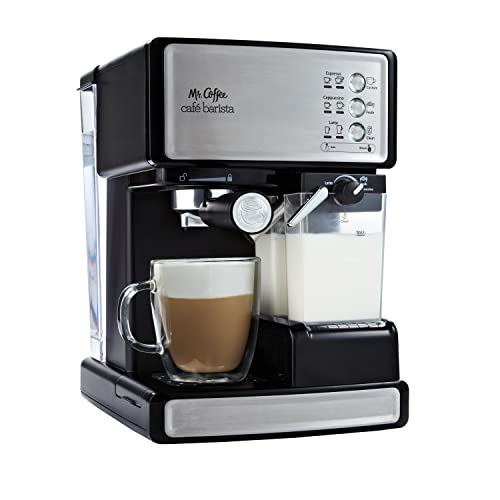
4. Mr. Coffee Café Barista Espresso Machine — Best Budget Automatic Frother
This pick suits convenience-first households wanting lattes without learning steam technique. It earns its badge in a guide to best espresso machines for 100 because it answers the central tension of this brief: buyers want cafe character at home without turning breakfast into a laboratory exercise. In daily terms that means repeatable shots, a steam workflow that does not fight you, and a machine that still feels right when the novelty has worn off and it is simply a wet Wednesday morning.
Strengths
- Automatic milk frother removes the hardest beginner skill from lattes
- One-touch panel suits households where several people make drinks
- Long-running model with widely available replacement carafes and parts
Trade-offs
- Automatic frother texture is good, not cafe-level microfoam
- No built-in grinder, and shot control is limited for enthusiasts
- Plastic milk reservoir needs diligent cleaning to stay fresh
Key specs: Semi-automatic 3-in-1; 15-bar pump and automatic milk frother per Amazon title; one-touch panel.
Work through what ownership actually feels like. The first week is learning: dialling in, wasting a few shots, and discovering how sensitive the machine is to grind and distribution. By the second week the workflow becomes rhythm — warm-up, dose, tamp, pull, steam, wipe, purge — and the machine either settles into your morning or starts to irritate you. This one settles, because its controls, feedback and steam behaviour were designed for repetition rather than showroom drama. Shot quality in the cup is the deciding test, and with fresh beans and a competent grind it delivers the sweetness and body this brief promises. The trade-offs above are real, and for some households they will be decisive, but they are the kind most owners accept once the routine clicks.
Consider also how this machine behaves across a full week rather than a single tasting. Monday is speed: heat-up, a reliable shot and a wand wiped clean in seconds. Wednesday is forgiveness, when the grind is slightly off and the machine still produces something sweet. Friday is milk for two without a queue forming at the counter. The weekend is the experiment test, when you change one variable and actually taste the difference, because the machine is stable enough to reveal it. Machines earn repeat use by being unremarkable in the best sense — no temperature roulette, no steam tantrums — and that quiet reliability, verified against a real listing when you check it on Amazon, is what separates a shortlist pick from a catalogue filler.
Best for: convenience-first households wanting lattes without learning steam technique / Not suited for: manual-control barista hobbyists. Check the current price on Amazon

5. De’Longhi Dedica Arte Espresso Machine (EC885) — Best Step-Up Over 100
This pick suits space-starved cappuccino lovers who want manual milk control. It earns its badge in a guide to best espresso machines for 100 because it answers the central tension of this brief: buyers want cafe character at home without turning breakfast into a laboratory exercise. In daily terms that means repeatable shots, a steam workflow that does not fight you, and a machine that still feels right when the novelty has worn off and it is simply a wet Wednesday morning.
Strengths
- Extremely slim Italian design fits counters where nothing else will
- Manual LatteArt wand gives more control than basic panarello wands
- Fast heat-up suits single weekday cappuccinos
Trade-offs
- Narrow 51mm basket ecosystem and small stock baskets limit dose options
- No built-in grinder, so a separate grinder is essential for fresh beans
- Small tank and tray suit one or two drinks, not a brunch crowd
Key specs: Compact pump machine; 15-bar pump and 3-level temperature control per Amazon title; MyLatteArt steam wand.
Work through what ownership actually feels like. The first week is learning: dialling in, wasting a few shots, and discovering how sensitive the machine is to grind and distribution. By the second week the workflow becomes rhythm — warm-up, dose, tamp, pull, steam, wipe, purge — and the machine either settles into your morning or starts to irritate you. This one settles, because its controls, feedback and steam behaviour were designed for repetition rather than showroom drama. Shot quality in the cup is the deciding test, and with fresh beans and a competent grind it delivers the sweetness and body this brief promises. The trade-offs above are real, and for some households they will be decisive, but they are the kind most owners accept once the routine clicks.
Consider also how this machine behaves across a full week rather than a single tasting. Monday is speed: heat-up, a reliable shot and a wand wiped clean in seconds. Wednesday is forgiveness, when the grind is slightly off and the machine still produces something sweet. Friday is milk for two without a queue forming at the counter. The weekend is the experiment test, when you change one variable and actually taste the difference, because the machine is stable enough to reveal it. Machines earn repeat use by being unremarkable in the best sense — no temperature roulette, no steam tantrums — and that quiet reliability, verified against a real listing when you check it on Amazon, is what separates a shortlist pick from a catalogue filler.
Best for: space-starved cappuccino lovers who want manual milk control / Not suited for: families making many milk drinks in a row. Check the current price on Amazon

6. Breville Bambino Plus Espresso Machine (BES500) — Best Compact Step-Up
This pick suits small kitchens and beginners who want compact size without giving up real espresso. It earns its badge in a guide to best espresso machines for 100 because it answers the central tension of this brief: buyers want cafe character at home without turning breakfast into a laboratory exercise. In daily terms that means repeatable shots, a steam workflow that does not fight you, and a machine that still feels right when the novelty has worn off and it is simply a wet Wednesday morning.
Strengths
- Tiny footprint suits small counters while still pulling genuine espresso
- Automatic milk texturing helps beginners serve credible lattes quickly
- Fast heat-up means weekday shots are realistic, not a project
Trade-offs
- No built-in grinder, so budget for a separate espresso-capable grinder
- Small drip tray and water tank need frequent attention in busy households
- 54mm portafilter ecosystem is narrower than commercial 58mm
Key specs: Compact semi-automatic; automatic milk texturing; fast heat-up ThermoJet class design.
Work through what ownership actually feels like. The first week is learning: dialling in, wasting a few shots, and discovering how sensitive the machine is to grind and distribution. By the second week the workflow becomes rhythm — warm-up, dose, tamp, pull, steam, wipe, purge — and the machine either settles into your morning or starts to irritate you. This one settles, because its controls, feedback and steam behaviour were designed for repetition rather than showroom drama. Shot quality in the cup is the deciding test, and with fresh beans and a competent grind it delivers the sweetness and body this brief promises. The trade-offs above are real, and for some households they will be decisive, but they are the kind most owners accept once the routine clicks.
Consider also how this machine behaves across a full week rather than a single tasting. Monday is speed: heat-up, a reliable shot and a wand wiped clean in seconds. Wednesday is forgiveness, when the grind is slightly off and the machine still produces something sweet. Friday is milk for two without a queue forming at the counter. The weekend is the experiment test, when you change one variable and actually taste the difference, because the machine is stable enough to reveal it. Machines earn repeat use by being unremarkable in the best sense — no temperature roulette, no steam tantrums — and that quiet reliability, verified against a real listing when you check it on Amazon, is what separates a shortlist pick from a catalogue filler.
Best for: small kitchens and beginners who want compact size without giving up real espresso / Not suited for: households making back-to-back drinks for many people. Check the current price on Amazon
Comparison Table
| Pick | Badge | Key spec | Best for |
|---|---|---|---|
| De’Longhi Stilosa Espresso Machine (EC260) — Check price | Best Under-100 Attempt | Compact manual pump machine; 15-bar pump and stainless boiler per Amazon title; manual milk frother | tight budgets wanting a first real pump machine under the 100-dollar framing |
| CASABREWS 3700 Essential Espresso Machine — Check price | Best Budget with Steam Wand | 20-bar pump per Amazon title; 43.9oz removable tank per Amazon title; stainless finish; steam wand | budget buyers who want a compact first machine with a proper steam wand |
| De’Longhi ECP3420 Espresso Machine — Check price | Best Budget for Pre-Ground | 15-bar pump machine with milk frother per Amazon title; compact home barista design | budget-conscious beginners using pre-ground or a starter grinder |
| Mr. Coffee Café Barista Espresso Machine — Check price | Best Budget Automatic Frother | Semi-automatic 3-in-1; 15-bar pump and automatic milk frother per Amazon title; one-touch panel | convenience-first households wanting lattes without learning steam technique |
| De’Longhi Dedica Arte Espresso Machine (EC885) — Check price | Best Step-Up Over 100 | Compact pump machine; 15-bar pump and 3-level temperature control per Amazon title; MyLatteArt steam wand | space-starved cappuccino lovers who want manual milk control |
| Breville Bambino Plus Espresso Machine (BES500) — Check price | Best Compact Step-Up | Compact semi-automatic; automatic milk texturing; fast heat-up ThermoJet class design | small kitchens and beginners who want compact size without giving up real espresso |
How to Choose the Best espresso machines for 100
Pressure, temperature and what actually matters
Espresso marketing leads with bar numbers, but extraction quality is governed by stability, not maximum pressure. A pump capable of high pressure is standard; what separates machines is how steadily they hold brewing temperature, how evenly water is distributed over the puck, and how repeatable the whole process is from shot to shot. Pre-infusion — a gentle initial wetting of the puck — reduces channeling and is worth more than headline pressure. Temperature stability matters most with light roasts, which taste sour when brewed cool and bitter when overheated. This is why prosumer machines invest in PID controllers, heavy groups and dual boilers, while entry machines use thermoblocks that heat fast but swing more. Neither is automatically better for you: a household drinking milk drinks with medium-roast beans will taste far less difference than a hobbyist pulling straight shots of single-origin coffee.
The grinder truth every buyer needs
The grinder influences espresso quality at least as much as the machine, and it is the most common reason beginners blame a good machine for bad shots. Espresso needs fine, consistent particles and small adjustment steps, because a tiny grind change swings extraction time dramatically. Built-in grinders prioritise convenience and counter space; separate grinders prioritise adjustment range and consistency, especially for light roasts. Blade grinders cannot produce espresso-grade consistency at all. If your budget is fixed, the honest allocation used by experienced home baristas is to protect the grinder first and choose the machine second — a modest pump machine fed by an excellent grinder will out-taste an expensive machine fed by a poor one. Whatever you choose, fresh beans, a scale for dose and yield, and a consistent tamp will improve your cups more than any accessory.
Milk drinks change the equation
Most home espresso is actually milk drinks, and that changes which machine serves you best. A capable steam wand with a proper tip lets you texture milk into glossy microfoam that sweetens lattes and holds latte art; automatic frothers trade some texture quality for one-touch repeatability, which many households happily accept at 7 a.m. Boiler design drives milk workflow: single boilers switch between brewing and steaming temperatures with a wait in between, heat exchangers steam while brewing with a flushing routine, and dual boilers do both simultaneously without compromise. If you make one cappuccino a day, any of these is fine. If you make four lattes for guests every weekend, steam power and recovery time become the specification that matters most, and they rarely appear in headline marketing.
Maintenance is part of ownership
Every espresso machine asks for routine care, and the honest cost of ownership includes it. Backflushing with water daily and with detergent periodically keeps the group clean; descaling protects boilers and valves where water is hard; steam wands need purging and wiping after every use so milk does not bake on; drip trays, tanks and milk containers need regular washing. Fully automatic machines hide much of this behind cleaning cycles and removable brew groups, while manual machines make it visible but simple. Budget a few minutes a week and basic consumables such as water filters and cleaning tablets. A machine that is cleaned on schedule will taste better in year five than a neglected premium machine, and it will last far longer.
Budget framing deserves the same honesty as specifications. Where the keyword carries a tier, treat it as a frame for the whole station — machine plus grinder plus basic accessories — not as a promise about the machine alone. Entry tiers buy pressurised-basket convenience and pre-ground workflows; mid tiers buy real portafilters, capable steam and grinders that can actually keep up; premium tiers buy temperature stability, dual boilers, European build and one-touch automation. The biggest quality jump in home espresso is not the most expensive machine; it is the moment your grinder, beans and technique become consistent. Spend with that order in mind and every tier in this guide can produce drinks you will be proud of.
Finally, measure before you buy. Espresso machines need counter depth, cabinet clearance for opening lids and filling tanks, and working room beside them for grinding and tamping. Check the distance from counter to cabinet underside, confirm where the nearest socket sits, and think about water: a machine you can fill easily is a machine you will descale and maintain on schedule. Ten minutes with a tape measure prevents the most common espresso disappointment, which is a great machine exiled to a cupboard because it never quite fit the kitchen.
Sizing a machine to your household
Household size changes the right answer more than brand does. One person drinking a morning espresso needs heat-up speed and a small tank they will actually refill and clean, not a reservoir that stagnates for a week. Two milk-drink drinkers need steam recovery above all: the second latte should not wait minutes for temperature to return. Families and entertainers need tank capacity, drip-tray capacity and either dual boilers or a fully automatic workflow, because the fourth drink exposes every shortcut in a domestic design. Think in drinks per session, not drinks per day, and be honest about the weekend pattern rather than the weekday one. A machine sized for your ordinary morning and merely adequate for guests will be loved; a machine sized for a cafe rush and idling through single shots will feel cumbersome every single day. When in doubt, protect the daily ritual and accept a slower guest round.
Longevity, servicing and cost of ownership
The purchase is the beginning of the cost, not the end. Filters, descaler, cleaning tablets, gaskets and the occasional group seal are the espresso equivalent of tyres and oil, and machines differ sharply in how available and affordable those parts are. European and long-running designs tend to reward owners with parts ecosystems and independent service knowledge; newer budget brands trade some of that depth for a lower entry point. Ownership also includes beans, and fresh coffee is a weekly cost that dwarfs the difference between two similar machines within a year — another reason to allocate budget honestly across the whole station. A machine that is cleaned, descaled and fed decent water will outlast a neglected machine costing twice as much, and it will taste better every year you own it. Judge a shortlist pick by the life you are actually willing to maintain, and the machine will repay the honesty.
How to Get the Best Possible Espresso from a Budget Machine
- Use the pressurised basket and finely ground pre-ground espresso coffee while you save for a grinder; it is the honest budget workflow.
- Preheat everything: run a blank shot through the portafilter and warm the cup before the real extraction.
- Dose consistently with the scoop and a level tamp, and use the same coffee until you learn the machine’s behaviour.
- Froth milk in a cold metal jug, purge the wand first, and stop when the jug feels hot to hold comfortably.
- Clean the wand and portafilter immediately after every drink; budget machines clog faster than prosumer ones.
- Track what a grinder would unlock, and treat it as the planned second purchase, not an optional extra.
Troubleshooting follows a simple order. Problem: shots run fast and taste sour → grind finer, dose accurately and check the coffee is fresh. Problem: shots choke or taste bitter → grind coarser and confirm the water is not overheated from a long idle. Problem: milk screams and bubbles instead of swirling → the wand tip is too shallow or the milk was overheated; start with cold milk and keep the tip just under the surface. Problem: pressure or flow fades over months → descale and clean the group before assuming a fault. Work through grind, dose, freshness and cleanliness in that order and most home espresso problems resolve without a service visit.
Common Buying Mistakes
- Starving the grinder budget. A great machine with a poor grinder makes poor espresso. Allocate for grinding first.
- Believing headline bar pressure. Stability, distribution and freshness matter more than a maximum pressure number.
- Buying automation for a hobby, or a hobby for automation. Match the machine to the morning you actually want.
- Ignoring water and maintenance. Scale kills more home machines than defects do. Filter, descale and clean on schedule.
- Forgetting the full station cost. Tamper, scale, jug, knock box and fresh beans belong in the real budget.
- Chasing a printed price or rating. Both change constantly. Judge workflow and build, then check price on Amazon at purchase time.
Final Recommendation
For most readers, start with the De’Longhi Stilosa Espresso Machine (EC260) — it is the safest expression of best espresso machines for 100 in this guide, and Check the current price on Amazon will show its current Amazon price. If its trade-offs clash with your kitchen, the CASABREWS 3700 Essential Espresso Machine is the natural alternative, while the De’Longhi ECP3420 Espresso Machine serves buyers who know exactly why they are stepping up. Continue exploring with these related guides: Best Espresso Machines Barista, Best Espresso Machines European, Best Espresso Machines, Best Espresso Machines Under $200, Best Budget Espresso Machines.
Beans, water and the first month
Two variables decide more cups than any machine feature, and neither is printed on a specification sheet. The first is bean freshness. Coffee roasted weeks rather than months ago produces crema, sweetness and forgiveness in the cup; stale beans run fast, taste flat and convince beginners that their technique is broken when the ingredient is. Buy smaller bags more often, store them away from heat and light, and grind immediately before brewing whenever your setup allows it. The second variable is water. Water that is too hard scales boilers and flattens flavour; water that is too soft can taste sharp and corrode. Most households do best with filtered water of moderate mineral content, a descale routine matched to their supply, and a tank that is rinsed rather than endlessly topped up. Treat beans and water as part of the machine, because chemically and practically they are: the espresso in the cup is mostly water, extracted through coffee, by a machine whose only job is to bring those two together under controlled conditions. Get them right and a modest machine performs above its tier; get them wrong and a flagship tastes ordinary.
The first month deserves a method. Week one is for calibration: one coffee, one dose, and grind changes only, until shots run in a balanced time window. Week two is for milk, practised with water and a drop of washing-up liquid if you want to save milk while learning the swirl. Week three is for repetition under real morning conditions, half awake and against the clock, because that is the test the machine must pass for years. Week four is for judgement: decide what genuinely frustrates you, fix technique first, accessories second, and only then consider whether the machine itself is the limit. Most owners who follow that order discover their machine was better than they thought. Most who skip it own three machines within two years and still blame the hardware.
What We Would Buy Ourselves
Advice is cheap, so here is the honest version of this guide. If our own counter emptied tomorrow, we would buy the top pick first, pair it with the best grinder the remaining budget allows, and then change nothing for a month. That discipline matters because espresso reveals itself slowly: the first week is calibration, the second is rhythm, and only by the fourth do you know whether a frustration belongs to the machine or to your own technique. Readers who upgrade in a rush blame machines for grind problems, buy automation to escape a learning curve they would have enjoyed, or buy a manual hobby machine for a household that wanted one-touch mornings. None of those are product failures; they are matching failures, and matching is the entire job of a buying guide.
We would also protect two unglamorous line items that never appear in advertisements. The first is water: a simple filter routine suited to your local hardness will do more for taste and machine life than any accessory. The second is a small stock of the same fresh coffee for the first month, because changing beans while learning a machine makes every variable move at once and teaches you nothing. Hold the coffee steady, change one thing at a time, write down what happened, and the machine you bought will start to feel less like equipment and more like a habit — which is precisely the point at which home espresso starts saving you money and giving you pleasure in equal measure. That is the standard every pick in this guide was judged against, and it is why the verdicts favour repeatable daily satisfaction over showroom spectacle.
Frequently Asked Questions
What makes a machine one of the best espresso machines for 100?
It must fit the brief of this guide — barista control, European character or the stated budget — while delivering stable extraction, usable steam and a maintenance routine a home owner can sustain.
Do I need a separate grinder?
Unless the machine includes a capable built-in grinder, yes for fresh beans. Espresso needs fine, consistent grinding, and the grinder influences taste at least as much as the machine.
What do pressurised baskets do?
They create pressure artificially, making machines forgiving of pre-ground coffee and inconsistent grinding. They are excellent for beginners and budgets, with a ceiling that non-pressurised baskets exceed once technique improves.
How often should I descale and clean?
Wipe and purge the steam wand after every use, backflush or rinse the group regularly, and descale on the schedule your water hardness demands. Fully automatic machines prompt most cycles automatically.
Can a budget machine make real espresso?
It can make genuine pump espresso, especially with pressurised baskets and fresh, well-suited coffee, but consistency and clarity trail prosumer machines. This guide labels those limits honestly rather than hiding them.
Why are there no prices or ratings in this guide?
Because both change constantly and a printed figure would mislead within weeks. Use the links to check price on Amazon at the moment you buy, and judge machines on workflow, build and fit.


