Disclosure: airfryerkitchensupply.com is reader-supported. When you buy through links on our site, we may earn an affiliate commission at no extra cost to you.
Where to buy
The 1000 frame is where home espresso stops being an appliance purchase and becomes a hobby investment: dual boilers, temperature control, premium automatics and design-led machines cluster around this tier. Every pick below was confirmed through the site’s Amazon verification step, and per this site’s price-free rule the guide positions each machine within the tier qualitatively — at the heart of the frame, as a stretch above it, or as the value route into it — rather than printing prices that change weekly. Start with the Breville Dual Boiler (BES920XL) for the tier’s defining capability, or the De’Longhi Dinamica Plus if you want this level of drink from an automatic.
Check the current price on Amazon through the links in this guide, and budget the whole station, not just the machine: at this tier a capable grinder, fresh beans and basic accessories are part of the real purchase, and the buying guide below accounts for them honestly.
Introduction
Searching for the best espresso machines 1000 means you have already decided something important: home espresso is worth a serious budget. What that budget buys, spent well, is not a shinier version of a cheap machine — it is a different class of capability. Dual boilers that brew and steam simultaneously at stable temperatures. Temperature and pre-infusion control that let you extract difficult beans properly. Automatics with the depth of menu and refinement that justify replacing a café habit. Machines built to be serviced for a decade rather than replaced in three years.
This guide spends the tier carefully across six verified machines: two Breville semi-automatics at different altitudes, a prosumer E61 machine, a design-led newcomer with pressure profiling, and two premium automatics for buyers who want this level of drink without the ritual. Each review states plainly where the machine sits relative to the 1000 frame — heart of the tier, stretch above it, or the smart value inside it.
One rule governs everything below: at this level, the grinder matters as much as the machine. Where a pick needs a separate grinder, the review says so and the guide budgets for it. A four-figure machine fed by a poor grinder is the most expensive way to make mediocre espresso.
This guide also carries a duty the cheaper guides do not: talking buyers out of the tier when it does not fit. If your household drinks one milk drink a day and wants it at one touch, the heart of this frame is wasted on you — a mid-tier automatic will make you happier for less, and the programme’s other espresso guides say so in detail. The 1000 frame rewards households with volume, curiosity or both; the picks below assume at least one of those is genuinely present.
In this guide
Quick Picks
Six ways to spend a serious espresso budget — by capability, not by badge:
- Best Overall in Tier: Breville Dual Boiler Espresso Machine (BES920XL) — dual boilers, full control — the capability this tier exists to buy.
- Best Automatic in Tier: De’Longhi Dinamica Plus Fully Automatic Espresso Machine — 24+ recipes personalised across 4 user profiles, at one touch.
- Best Prosumer Classic: Diletta Bello+ Espresso Machine — an E61 group, PID temperature control, shot timer and programmable pre-infusion.
- Best New Design: Fellow Espresso Series 1 — pressure profiling and a 58mm portafilter, heating in under two minutes.
- Best Automated Manual-Style: Breville Oracle Touch Espresso Machine (BES990) — a stretch above the frame: automated grinding, tamping and milk on a dual-boiler platform.
- Best Automatic Splurge: Jura Z10 Diamond Black — the stretch automatic: Jura’s flagship cold-extraction speciality machine.
How These Picks Were Chosen
Verification came first on the airfry storefront: each machine’s model and listing were confirmed before ranking, and specifications — the Diletta’s E61 group and PID, the Fellow’s 58mm portafilter and pressure profiling, the Dinamica Plus’s user profiles — are quoted only from those verified listings.
Selection then asked what the tier is actually for. Machines were admitted only if they offer a capability unavailable a clear step below: simultaneous brew-and-steam, meaningful extraction control, automatic performance with genuine depth, or build quality intended for long service. Cosmetic upgrades of mid-tier machines were excluded, however famous the badge.
Positioning within the frame is stated qualitatively and honestly: two picks sit at the heart of the tier, two are stretches above it for buyers who decide the extra capability is their priority, and two are the value routes that deliver most of the tier’s benefit for the frame or less. No prices are printed, per this site’s standing rule — check the current price on Amazon at the moment you buy.
A note on the two stretch picks, because including them needs defending: a guide to a price frame that pretends nothing exists above it fails its readers, who will meet the Oracle Touch and the Z10 in every shop and deserve a judged opinion rather than silence. They are included, labelled as stretches in every mention, and ranked below the frame’s heart — present for completeness, never smuggled into the frame’s arithmetic.
The 6 Best Espresso Machines 1000-Tier Shoppers Should Shortlist

Breville Dual Boiler Espresso Machine (BES920XL) — Best Overall in Tier
Breville Dual Boiler Espresso Machine (BES920XL) — check price on Amazon.
If the 1000 tier has a defining machine, it is this one. The Dual Boiler’s two boilers — one for brewing, one for steam — deliver the capability the money is for: pull a shot and texture milk at the same time, at stable, adjustable temperatures, drink after drink. Add controlled pre-infusion and a shot clock, and you have the full enthusiast toolkit in a machine designed for home counters rather than café benches.
It sits at the heart of the frame and justifies it by being the complete answer for the hands-on buyer: nothing about its extraction is a placeholder for a future upgrade. Pair it with a serious grinder and the limiting factor becomes your palate, which is exactly where a machine at this tier should leave you.
A buyer’s check that separates the Dual Boiler’s true audience: if you regularly make drinks for three or more people in a sitting, its simultaneous steam stops being a luxury and becomes the schedule-keeper of your mornings and dinner parties. Solo drinkers can honestly step down a class without losing cup quality; hosts cannot, and should not let anyone talk them out of the dual boiler on grounds of excess.
Strengths
- Simultaneous brew and steam with stable temperatures
- Adjustable temperature and pre-infusion for difficult beans
- Built and supported as a long-term, serviceable machine
Trade-offs
- No built-in grinder — the grinder budget is additional and real
- Large footprint and a deliberate, unhurried workflow
- Capability is wasted on one-touch drinkers
| Specification | Detail |
|---|---|
| Style | Dual boiler semi-automatic |
| Finish | Brushed stainless steel |
| Model | BES920XL |
The ownership arc matters at this tier: this class of Breville is maintained, not replaced — seals, shower screens and descales on schedule, with parts and knowledge widely available. Cost per year across a decade of service compares well against two mid-tier machines bought and discarded in the same period.
For the enthusiast reader, the verdict is simple: this is the machine the tier is benchmarked against, and it remains the default recommendation for hands-on buyers spending at this level.
One more tier-specific consideration: resale and longevity culture. Machines at this level hold a community of second owners, published service knowledge and available parts, which means a Dual Boiler bought today has both a long first life and a genuine second one. That ecosystem is an unglamorous but real part of what the frame buys, and it simply does not exist for disposable-tier machines.
Best for: enthusiasts who want the tier’s full capability in one machine / Not suited for: automatic drinkers or buyers without a grinder budget
Check on Amazon — check the current price on Amazon before you decide.

De’Longhi Dinamica Plus Fully Automatic Espresso Machine — Best Automatic in Tier
De’Longhi Dinamica Plus Fully Automatic Espresso Machine — check price on Amazon.
The Dinamica Plus is how this tier looks when the buyer wants drinks, not a discipline: more than twenty-four recipes, each personalisable, saved across four user profiles so every household member’s version of a drink is one touch away. It is the automatic that answers the enthusiast’s objection — ‘automatics are all the same drink’ — with genuine per-user depth.
Within the frame it is also the value argument among the automatics here: profile-based personalisation and a deep menu at the heart of the tier, rather than above it. For households replacing a serious café habit, the cost-per-cup arithmetic at this level of automatic is where the tier pays for itself fastest.
The Dinamica Plus also handles the mixed-bean household better than most automatics: with profiles storing drink parameters, the household can standardise around one good house bean and let profiles carry the variety, instead of chasing variety through bean swaps the machine cannot track. It is a small systems insight, but it is how these machines are actually lived with happily.
Strengths
- Four user profiles with per-drink personalisation
- 24+ recipes cover the full café menu at home
- One-touch operation for every user in the house
Trade-offs
- No manual path — the ceiling is the machine’s
- Milk system care is part of the routine
- Profiles and menus are wasted on single-drink households
| Specification | Detail |
|---|---|
| Style | Fully automatic bean-to-cup |
| Menu | 24+ recipes per listing |
| Profiles | Up to 4 user profiles per listing |
Judge this machine as household infrastructure: it serves varied drinkers consistently, remembers preferences like a good café does, and asks only beans, water and routine cleaning in return. That is a different — and for many homes, better — definition of ‘best’ than extraction control.
If your household’s espresso spend is currently leaving the house daily in takeaway cups, the Dinamica Plus is the pick in this guide most likely to repatriate it entirely.
The four-profile system changes household politics in a way worth naming: nobody’s drink gets overwritten. In shared automatics without profiles, the last person to adjust the settings silently reprograms everyone’s coffee, and the morning argument about it is a genre of domestic fiction. Profiles end that permanently — a small feature that households cite, unprompted, among the reasons they would buy the platform again.
Best for: households wanting premium drinks at one touch, personalised per user / Not suited for: hobbyists who want to pull shots manually
Check on Amazon — check the current price on Amazon before you decide.
Diletta Bello+ Espresso Machine — Best Prosumer Classic
Diletta Bello+ Espresso Machine — check price on Amazon.
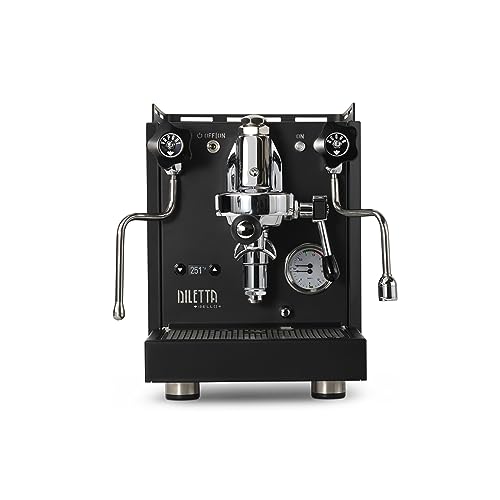
The Bello+ is the traditionalist’s machine in this tier: an E61 group — the thermosyphon design that has anchored prosumer espresso for decades — with modern control layered on top: PID temperature management, a shot timer, and programmable pre-infusion, in a machine handmade in Italy per its verified listing. It is espresso as craft instrument rather than appliance.
That character cuts both ways, honestly. The E61 ritual involves warm-up time and a manual lever routine that automatics and fast Brevilles skip. In exchange you get a machine whose every part is a known quantity to any espresso technician, built to be repaired essentially forever.
For the buyer choosing between the Bello+ and the Dual Boiler at the same frame: decide by your relationship with mornings. The Breville forgives a rushed one — fast heat, forgiving systems; the Diletta rewards a slow one with ritual and feedback. Both will still be making superb espresso in a decade; they simply disagree about what the first half hour of the day is for.
Strengths
- E61 group with PID — stable, controllable extraction
- Programmable preinfusion and a shot timer for repeatability
- Handmade Italian build, designed for long service
Trade-offs
- Warm-up and workflow are deliberately unhurried
- Separate grinder required, as with all prosumer machines
- Aesthetic and ritual will not suit minimalists
| Specification | Detail |
|---|---|
| Group | E61 group per listing |
| Temperature | PID temperature control per listing |
| Timing | Shot timer per listing |
| Pre-infusion | Programmable preinfusion per listing |
| Build | Handmade in Italy per listing |
Buy the Bello+ if the machine itself is part of the pleasure — the lever, the gauge, the weight of the portafilter. Owners of this class describe their machines the way musicians describe instruments, and the tier buys that relationship as much as it buys extraction numbers.
It is also the pick most likely to be the last espresso machine you buy: the E61 ecosystem’s parts and knowledge base span decades, and a handmade machine maintained on schedule does not have a planned end of life.
Heat-up honesty for the E61 format: machines of this class like a proper warm-up — group, portafilter and cups all heat-soaked — before they show their best, and owners build that into a morning rhythm or a timer plug. If your household’s pattern is ‘wake, drink in three minutes’, the Fellow or an automatic serves it better; if your pattern has a natural half-hour in it, the Bello+’s ritual disappears into it completely.
Best for: traditionalists wanting a serviceable, hands-on prosumer machine / Not suited for: impatient mornings or one-touch households
Check on Amazon — check the current price on Amazon before you decide.

Fellow Espresso Series 1 — Best New Design
Fellow Espresso Series 1 — check price on Amazon.
Fellow’s Series 1 is the new-thinking entry at this tier: pressure profiling — the ability to shape extraction pressure through the shot, a feature once reserved for machines far above this frame — delivered in a design-led machine with a full-size 58mm portafilter and heat-up under two minutes per its verified listing. It treats the home barista as a modern user rather than a café nostalgist.
The 58mm standard matters practically: baskets, tampers and accessories from the whole prosumer ecosystem fit, so the machine joins an existing world of parts instead of a proprietary island. For a first-generation product, that standards-based thinking is reassuring.
The Series 1’s fast heat-up changes one more behaviour: it makes the single afternoon espresso realistic. Boiler machines discourage one-off drinks because of warm-up; a machine ready in under two minutes gets used for the 3 p.m. single shot that would otherwise become a café trip. Count those rescued drinks across a year and the Fellow’s design logic prices itself.
Strengths
- Pressure profiling at the heart of the tier
- 58mm portafilter — full accessory ecosystem compatibility
- Heats in under two minutes, suiting real mornings
Trade-offs
- First-generation platform — long-term record still being written
- Separate grinder required to exploit profiling
- Design-led minimalism will not suit traditionalists
| Specification | Detail |
|---|---|
| Extraction | Pressure profiling per listing |
| Portafilter | 58mm per listing |
| Heat-up | Heats under 2 min per listing |
| Control | Temperature control per listing |
Profiling is not a gimmick for the right beans: easing pressure at the end of a shot can rescue a light roast from harshness, and ramping gently can sweeten a delicate coffee. If you buy interesting beans and taste differences shot to shot, this machine gives you a lever on flavour the others in the tier mostly do not.
If instead you value the known quantity, the Dual Boiler above is the safer decade-long bet. The Fellow is the pick for buyers who want the newest capability in the frame and accept a newer platform to get it.
A note on who should wait: Fellow’s platform will gain accessories, firmware maturity and a longer service record with time, and cautious buyers at this tier reasonably value those. The counter-argument is that its core proposition — profiling, 58mm standard, fast heat — is available now and addresses real limitations of the established designs. Both positions are defensible; this guide’s role is to make the trade explicit, not to hide it.
Best for: experimenters who want pressure profiling without leaving the tier / Not suited for: buyers who only trust long-established platforms
Check on Amazon — check the current price on Amazon before you decide.
Breville Oracle Touch Espresso Machine (BES990) — Best Automated Manual-Style
Breville Oracle Touch Espresso Machine (BES990) — check price on Amazon.
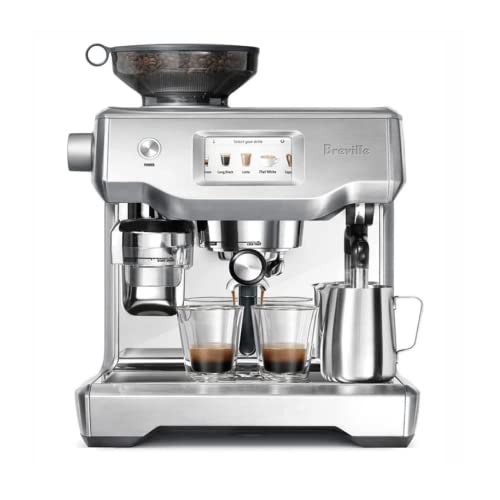
Positioned honestly: the Oracle Touch is the stretch pick, sitting above the heart of the 1000 frame — included because it answers the question this tier’s buyers most often ask next: can I get dual-boiler drinks without doing the work? Its answer automates the grinding, dosing, tamping and milk texturing on a manual-style platform, driven from a touch display of café drinks.
The result is the closest thing to a barista in a box: real portafilter espresso, properly textured milk, and a workflow a guest can operate. What you pay for, above the frame, is the removal of skill from a platform that usually demands it.
A fair warning accompanies the Oracle’s automation: systems that grind, tamp and texture for you still need their burrs cleaned, their milk paths rinsed and their boilers descaled, and the maintenance is a touch more involved than a manual machine’s precisely because there is more machine. Buy the Oracle for effortlessness in making drinks, not for effortlessness in owning — no machine at this tier offers the second.
Strengths
- Dual-boiler-class drinks with the technique automated
- Touch menu makes café drinks accessible to anyone
- Real portafilter extraction, not a sealed automatic brew group
Trade-offs
- Sits above the frame — the stretch must be a deliberate choice
- Automation adds complexity and parts to maintain
- Purists will prefer doing the ritual themselves for less
| Specification | Detail |
|---|---|
| Style | Automated semi-automatic (grind, tamp, milk automated) |
| Interface | Touch display |
| Finish | Brushed stainless steel |
| Model | BES990 (Oracle Touch) |
The Oracle Touch buyer is specific: they entertain, they value the theatre and quality of portafilter drinks, and nobody in the house wants to train as a barista. For that household the stretch buys something no true automatic quite replicates — milk texture and presentation from a real steam platform, without the learning curve.
If that is not your household, the Dinamica Plus delivers one-touch life at the heart of the frame, and the Dual Boiler delivers the same platform’s quality to hands-on owners for less. The Oracle earns its place only where its specific magic is the point.
The Oracle Touch also changes the guest equation at this tier: visitors can operate it from the touch menu and produce a drink they are proud of, which no manual machine in this guide allows and no true automatic matches for presentation. Households whose entertaining style involves a coffee course after dinner get disproportionate value from that — it is the use case the stretch price is actually buying.
Best for: hosts wanting café-style drinks without barista skills / Not suited for: budget-disciplined buyers or ritual lovers
Check on Amazon — check the current price on Amazon before you decide.

Jura Z10 Diamond Black — Best Automatic Splurge
Jura Z10 Diamond Black — check price on Amazon.
The second stretch pick, from the automatic side: the Jura Z10 is the flagship expression of one-touch coffee, built around an eighth-generation brewing unit and famous for its cold extraction specialities — genuine cold-brew-style drinks from a hot machine’s footprint, a trick no other pick in this guide attempts. It sits above the frame, and this guide says so in the open.
What the stretch buys is range and refinement: hot and cold specialities from one machine, Jura’s polish in every interaction, and consistency that makes a heavy-drinking household stop thinking about coffee entirely — it is simply there, at café level, whenever wanted.
The Z10’s buyer should also be honest about beans: a flagship automatic expresses bean quality ruthlessly, and feeding it stale supermarket beans is the most expensive way to drink mediocre coffee ever devised. Budget for fresh beans from a roaster as part of the Z10 decision; the machine’s ceiling is only reachable through its hopper.
Strengths
- Cold extraction specialities no rival here offers
- Flagship automatic refinement and consistency
- Full hot menu from espresso to milk specialities
Trade-offs
- Clearly above the frame — a deliberate splurge
- Sealed system means dealer-level servicing
- Value depends entirely on high household volume
| Specification | Detail |
|---|---|
| Style | Fully automatic bean-to-cup (premium) |
| Brewing | Eighth-generation brewing unit per listing |
| Speciality | Cold extraction drinks per listing positioning |
| Finish | Diamond Black |
The Z10’s economics only work at volume: a household drinking several speciality drinks daily, hot and cold, across years. There, cost per cup against café prices closes even a flagship gap, and the machine’s consistency protects the investment by never giving the household a reason to drift back to buying drinks out.
Buy it as the end of a decision, not the start of one: if you know your household is a high-volume, variety-loving, zero-ritual home, this is the automatic the tier stretches to. Everyone else is better served inside the frame.
Cold extraction deserves its own sentence of caution and praise: the Z10’s cold specialities are genuinely brewed cold-style drinks, not hot coffee poured over ice, and in summer they are the drinks guests ask about. If your household’s year has a long warm season and an iced-coffee habit currently served by cafés, that single capability can carry the stretch decision more honestly than any flagship finish.
Best for: high-volume households wanting flagship automatic range, hot and cold / Not suited for: anyone treating the 1000 frame as a ceiling
Check on Amazon — check the current price on Amazon before you decide.
Comparison Table
| Pick | Badge | Key spec | Best for |
|---|---|---|---|
| Breville Dual Boiler Espresso Machine (BES920XL) | Best Overall in Tier | Dual boiler semi-automatic with temperature control | enthusiasts who want the tier’s full capability in one machine |
| De’Longhi Dinamica Plus Fully Automatic Espresso Machine | Best Automatic in Tier | Fully automatic, 24+ recipes, 4 user profiles | households wanting premium drinks at one touch, personalised per user |
| Diletta Bello+ Espresso Machine | Best Prosumer Classic | E61 group, PID control, programmable preinfusion | traditionalists wanting a serviceable, hands-on prosumer machine |
| Fellow Espresso Series 1 | Best New Design | Pressure profiling, 58mm portafilter, heats under 2 min | experimenters who want pressure profiling without leaving the tier |
| Breville Oracle Touch Espresso Machine (BES990) | Best Automated Manual-Style | Automated semi-automatic, touch display, dual boiler class | hosts wanting café-style drinks without barista skills |
| Jura Z10 Diamond Black | Best Automatic Splurge | Premium fully automatic with cold extraction specialities | high-volume households wanting flagship automatic range, hot and cold |
The table’s honest reading: two machines define the frame’s heart (Dual Boiler for hands, Dinamica Plus for one-touch), two reinterpret it (Bello+ tradition, Fellow experimentation), and two stretch above it (Oracle Touch, Z10) for buyers who decide automation of a higher order is worth leaving the frame for. All six are defensible — for six different households.
How to Choose the Best Espresso Machines Around the 1000 Frame
Spend the tier on capability, not cosmetics. The questions that matter: Do you want to brew and steam at the same time (dual boiler or equivalent)? Do you want extraction variables to adjust — temperature, pre-infusion, pressure profile? Or do you want those decisions made excellently by a machine, per user, at one touch? Each answer points at a different pair of picks above, and none of them is the ‘wrong’ answer — but buying across answers is how four-figure regrets happen.
Then budget the station honestly. Semi-automatic picks here need a grinder capable of matching them — plan a meaningful fraction of the machine’s tier for it — plus a scale, a good tamper if not supplied, and a bean budget that suits the machine. The frame describes the machine; the working station costs more, and guides that hide that do their readers no favours.
- Hands-on, complete: Breville Dual Boiler
- One-touch, personalised: De’Longhi Dinamica Plus
- Traditional prosumer: Diletta Bello+
- Experimentation: Fellow Espresso Series 1
- Stretch for automation of manual-style drinks: Oracle Touch
- Stretch for flagship automatic range: Jura Z10
Finally, think in years. At this tier you are choosing a maintenance relationship — descaling, seals, servicing — as much as a machine. Every pick here has the parts and support ecosystem to be kept; the one that suits your tolerance for that routine is a real part of the choice.
What the Tier Actually Buys: A Capability Ladder
Below this frame, machines compromise on at least one of: thermal stability, simultaneous steaming, extraction control, or build-for-service. The 1000 tier is where those compromises end. Dual boilers end the brew-steam queue. PID control ends temperature guesswork. Profiling and pre-infusion open up light-roast and delicate beans that punish lesser machines. Premium automatics end the trade between convenience and menu depth.
What the tier does not buy is immunity from fundamentals: stale beans, a poor grinder and skipped descaling will defeat every machine in this guide. The money raises the ceiling; your habits decide how close to it you drink.
The Grinder Budget at This Level
For the four picks without a built-in grinder, treat the grinder as a co-purchase, not an accessory. Espresso at this level is ground to order in fine, repeatable steps, and the grinder’s consistency is tasted in every shot — an under-specified grinder under a Dual Boiler or Bello+ produces the frustrating experience of a great machine making ordinary coffee.
Practical guidance: buy the grinder from the same tier thinking as the machine, favour single-dosing or low-retention designs if you switch beans often, and learn both together in the first month. Households that budget this way once rarely touch the setup again for years, which is the quiet luxury this frame is really selling.
Reading This Tier Without Prices: How Positioning Was Judged
This site does not print static prices, because they change constantly and a printed figure misleads within weeks. Positioning in this guide — heart of the frame, value within it, stretch above it — was judged against each machine’s class and its manufacturer’s range structure at verification time: where the model sits within its own brand’s line-up, and what capability step it represents over the model below it. That relative positioning is stable in a way a price tag is not, and it is the information a buyer actually needs from a guide.
The practical instruction follows: use this guide to choose the machine and the class, then check the current price on Amazon at the moment of purchase and judge the final step yourself. If a stretch pick is on promotion into the frame when you look, the guide’s capability analysis still holds — you are simply being offered the higher class at the frame’s money, which is the best outcome this tier produces.
Ownership at This Level: Service, Seals and the Ten-Year View
Machines in this frame are maintained assets. The calendar is simple but non-negotiable: filtered water always, descale on the machine’s schedule, group seals and shower screens replaced when shots begin to spray or channel, and milk systems cleaned the day they are used. Semi-automatic and prosumer owners can do nearly all of it at home with inexpensive parts; automatic owners trade some of that access for sealed convenience and brand servicing, which should be located — actually located, on a map — before purchase, not after a fault.
Run that calendar and the ten-year arithmetic of this tier beats the mid-tier decisively: one machine, serviced, against two or three replacements, with better drinks in every one of those years. Skip the calendar and the tier’s premium buys nothing but a larger repair. The machines here were selected partly for the strength of their parts and knowledge ecosystems, because at this level the ecosystem is part of the product.
Accessories That Matter at This Tier (and Those That Do Not)
Worth buying alongside a machine in this frame: a scale that reads to a tenth of a gram for dosing, a quality tamper if the machine’s is a lightweight placeholder, a knock box, and a milk jug sized to your usual drink. For the automatics, a stock of the maker’s water filters is the entire list. These are working tools that change results measurably, and together they cost a small fraction of the machine.
Not worth it, at least initially: distribution gadgets, replacement baskets in five sizes, and precision accessories marketed at problems you have not yet had. At this tier the correct order is machine, grinder, beans, a month of practice — and only then accessories aimed at a specific, tasted limitation. The guides in this programme exist partly to enforce that order against the internet’s enthusiasm for selling the fifth step first.
Financing the Habit: Cost Per Cup Across the Tier
Run the arithmetic that justifies this frame, because it is genuinely compelling at volume. A household buying two café drinks a day spends, in a year, several times the cost of any machine in this guide. The same household at home spends its money on beans — roughly a bag a week for that volume — plus milk, filters and descaler: a per-cup cost that is a small fraction of the café’s, with the machine’s purchase recovered inside the first year and every subsequent year running at ingredient cost.
At lower volumes the arithmetic stretches but rarely inverts: one café drink a day still recovers a heart-of-frame machine in roughly a year to eighteen months. The honest exception is the household that drinks out for the café itself — the room, the ritual, the walk — because no machine in this guide sells that, and pretending otherwise would be the one truly misleading claim a guide at this tier could make.
Timing the Purchase: When This Tier Goes on Promotion
A practical note for buyers who have chosen their machine but not their moment: premium espresso machines are among the most promotion-driven categories in home appliances, with meaningful reductions appearing around the major retail events of the year and whenever a successor model is rumoured. Because this guide prints no prices, its advice is procedural — choose the machine on capability using the reviews above, set a price alert or check the listing at the moments the retail calendar turns, and buy the chosen machine when the market blinks rather than re-choosing a lesser machine because it blinked first. Patience at this tier is routinely worth a grinder’s worth of savings, and a machine bought one model-year deep at a promotion is identical in the cup to the same machine bought at launch.
How to Dial In a New Espresso Machine at This Tier
Machines at this level reward a structured first week. This dialling-in sequence works whether your pick is manual, profiling or automatic, and it is the difference between a frustrating month and a revelatory one.
- Choose one fresh, medium-roast espresso bean for the whole first week — changing beans while learning the machine makes every result unreadable.
- Set the machine’s temperature to its middle setting and pre-infusion to gentle or default; establish a baseline before touching the advanced controls you paid for.
- Fix your dose by weight and vary only the grind: pull three shots, tasting each, moving finer for sour and fast, coarser for bitter and slow, until the shot tastes balanced.
- On automatics, run the same process through the strength and grind settings, then save the result to your user profile so the machine repeats it at one touch.
- Steam or texture milk only after the espresso baseline is set, and judge the combined drink last — milk hides a multitude of extraction sins during learning.
- Log what worked for this bean (grind setting, dose, temperature) in a notebook or phone note; at this tier, repeatability is a habit, not a feature.
- Only then explore the advanced variable — a profiling curve, a temperature change for a light roast, a longer pre-infusion — one at a time, against your logged baseline.
- At this tier, set a recurring calendar reminder for seal inspection and deep cleaning rather than relying on the machine’s prompts alone; expensive boilers deserve a schedule kept by the owner, not only by the appliance.
- Photograph your dialled-in settings — grind, temperature, profile values — once they are right. A settings photo is the fastest recovery from a reset, a service visit or a helpful relative’s experimentation.
A week of that discipline and the machine stops being new equipment and becomes your café. Skip it, and even the best machine in this guide will feel inconsistent — the tier buys capability, and dialling in is how you collect it.
Common Buying Mistakes
Spending the whole budget on the machine. At this tier the grinder, beans and accessories are part of the purchase. A station budget prevents the classic four-figure disappointment.
Buying control you will never use. Profiling and PID reward tinkerers and punish nobody — but one-touch households should buy the automatic and enjoy the saved mornings instead.
Treating stretch picks as the default. The Oracle Touch and Z10 sit above the frame for specific households. If yours is not one, the heart-of-tier picks are better buys, not lesser ones.
Judging by the first three shots. Every machine here needs dialling in. Judge after a week of structured adjustment, not out of the box.
Neglecting water at this level. Scale damages expensive boilers expensively. Filter, and descale on schedule — the manual at this tier is not optional reading.
Letting a promotion choose the machine. A discount on the wrong style of machine is not a saving. Decide the class and model on capability, then hunt the price — never the reverse.
Final Recommendation
If you spend this frame once, spend it on the Breville Dual Boiler: it is the best espresso machine around the 1000 tier for hands-on buyers because it removes every extraction compromise and then gets out of your way for a decade. Traditionalists should choose the Diletta Bello+ for the same money spent on craft and permanence, and experimenters should look at the Fellow Series 1’s profiling with genuine interest.
For one-touch households, the De’Longhi Dinamica Plus delivers this tier’s drinks with four-profile personalisation at the heart of the frame — the value pick of the six. Stretch only with intent: the Oracle Touch if you want manual-style drinks automated, the Jura Z10 if flagship automatic range, hot and cold, is your household’s definition of enough. At this level there are no bad machines here — only budgets spent against the wrong ritual.
Spend this frame on the capability your household will use daily, keep the water filtered and the calendar kept, and a machine from this list stops being a purchase and becomes the house’s café — the rare expensive thing that quietly pays its rent every morning.
Keep researching with these related guides from the same program: Best Espresso Machines Best Espresso Coffee Machines Best Espresso Coffee Machines For Home Best Espresso Coffee Machines For Home Use Best Espresso Drip Combo Machines Best Coffee Makers
Frequently Asked Questions
What does the 1000 tier buy that cheaper machines cannot do?
Simultaneous brewing and steaming at stable temperatures, real extraction control (temperature, pre-infusion, in one case pressure profiling), premium automatics with per-user profiles, and build quality intended to be serviced for years rather than replaced.
Is a dual boiler worth it at this level?
For milk-drink households and anyone making back-to-back drinks, yes — it is the tier’s defining capability. For a single morning espresso, a good single-heater machine is slower but not worse in the cup.
How much should I budget beyond the machine?
Plan for a capable grinder if your pick lacks one, plus a scale, basic accessories and a fresh-bean supply. As a rule, the working station costs noticeably more than the machine alone — this guide flags grinder needs in every relevant review.
Which is better at this tier, an automatic or a semi-automatic?
Neither — they serve different households. Automatics like the Dinamica Plus and Z10 give everyone café drinks at one touch; semi-automatics give one skilled user a higher ceiling and a ritual. Choose by who drinks and who makes.
Are the stretch picks worth leaving the frame for?
Only for their specific households: the Oracle Touch for hosts wanting manual-style drinks without skills, the Z10 for high-volume variety including cold specialities. For most buyers, the heart-of-tier machines are the smarter spend.
How long should a machine at this tier last?
With filtered water, scheduled descaling and seal maintenance, these machines are multi-year — in the prosumer cases, potentially decade-plus — purchases. Longevity is a core part of what the frame buys.
Is it worth spending this much on a home espresso machine?
At household volumes of two or more café-style drinks a day, yes — the machine typically recovers its cost against café spending within about a year, then serves for years at ingredient cost. At one occasional drink a week, a mid-tier machine is the rational buy instead.
Which machine in this tier is best for a beginner with a serious budget?
The De’Longhi Dinamica Plus if you want drinks without skills, or the Fellow Series 1 if you want to learn with modern assistance. The Dual Boiler and Bello+ reward experience; a beginner can grow into them, but the first month will be tuition either way.


